

George C. Dix Professor in Constitutional Law, Northwestern University Pritzker School of Law
John O. McGinnis is a graduate of Harvard College and Harvard Law School where he was an editor of the Harvard Law Review. He also has an MA degree from Balliol College, Oxford, in philosophy and theology. Professor McGinnis clerked on the U.S. Court of Appeals for the District of Columbia. From 1987 to 1991, he was deputy assistant attorney general in the Office of Legal Counsel at the Department of Justice. He is the author of Accelerating Democracy: Transforming Government Through Technology (Princeton 2013) and Originalism and the Good Constitution (Harvard 2013) (with M. Rappaport). He is a past winner of the Paul Bator award given by the Federalist Society to an outstanding academic under 40. He has been listed by the United States on the roster of panelists who may be called upon to decide World Trade Organization Disputes.
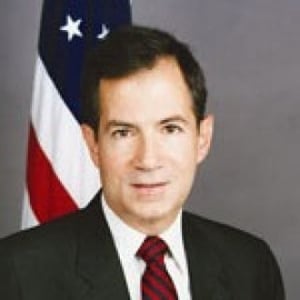
Former General Counsel of the U.S. Immigration and Naturalization, Former United States Ambassador to East Timor
Grover Joseph Rees, a native and resident of Louisiana, served as the first United States Ambassador to East Timor from 2002 to 2006.
From October 2006 until January 2009 Ambassador Rees served as Special Representative for Social Issues in the U.S. Department of State. He was responsible for promoting human dignity, including issues affecting vulnerable persons and the family, within the United Nations system. He served as Acting U.S. Representative to the United Nations Economic and Social Counsel during the fall 2007 session of the UN General Assembly and also served as Deputy Assistant Secretary for International Organizations.
From 1995 until 2002 Rees was a senior staff member on the Foreign Affairs Committee in the United States House of Representatives, where he was responsible for human rights and refugee protection and played a major role in the drafting and enactment of important human rights legislation including the Trafficking Victims Protection Act, the International Religious Freedom Act, and the Torture Victims Relief Act.
Ambassador Rees also formerly served as General Counsel of the United States Immigration and Naturalization Service (1991-93), as Chief Justice of the High Court of American Samoa (1986-1991), and as Special Counsel to the Attorney General of the United States (1985-86).
Prior to his work in Washington, Rees served for seven years as a law professor at the University of Texas. He has written and spoken widely on international law, human rights, refugees, and related issues.
Rees obtained his undergraduate degree from Yale University and his law degree from Louisiana State University Law School, where he served as Editor in Chief of the Louisiana Law Review and was selected for the academic honor society Order of the Coif.
Rees was born in New Orleans, the oldest of 12 children. He is married to Lan Dai Nguyen Rees and has one son. He retired from government service in January 2009 and now lives and works in Lafayette, Louisiana.
In addition to English, Ambassador Rees speaks French, Spanish, Portuguese, Samoan, and Tetum.
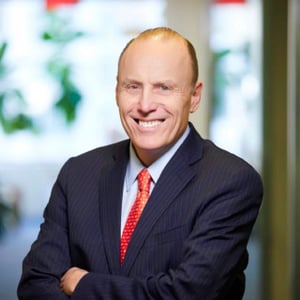
Senior Vice President, UN Foundation and President, the Better World Campaign
One of nation’s most esteemed experts on U.S.-UN affairs, Peter Yeo leads the Better World Campaign’s strategic engagement with Congress, the Administration, and organizations supporting stronger American leadership on the world stage. Yeo’s leadership has helped advance critical legislation in the U.S. Congress to ensure the country meets its obligations to the United Nations, UN Peacekeeping Operations, and UN agencies and organizations.
Yeo joined the Better World Campaign in 2009 with over twenty years of legislative, analytical, and management experience, including senior roles on Capitol Hill and in the State Department. Prior to arriving at UN Foundation, Yeo spent a decade as Deputy Staff Director on the House Foreign Affairs Committee. He has worked on a broad range of foreign policy and foreign aid issues, including leading negotiations for the landmark HIV/AIDS, Tuberculosis and Malaria Act of 2003 — PEPFAR — as well as the $50 billion reauthorization of the law in 2008. He also shepherded into law several measures dealing with China, Tibet, Burma, and East Timor.
Prior to his work with the Committee, Yeo served as a Deputy Assistant Secretary at the U.S. State Department, where he successfully advocated for repayment of the U.S. arrears to the UN, and was part of the U.S. delegation to the climate negotiations in Kyoto.
Yeo holds an master’s in East Asian Studies from Harvard University and a bachelor’s in East Asian Studies from Wesleyan University. He is a member of the Council on Foreign Relations and a Board Member of the U.S. Global Leadership Coalition.
George C. Dix Professor in Constitutional Law, Northwestern University Pritzker School of Law
John O. McGinnis is a graduate of Harvard College and Harvard Law School where he was an editor of the Harvard Law Review. He also has an MA degree from Balliol College, Oxford, in philosophy and theology. Professor McGinnis clerked on the U.S. Court of Appeals for the District of Columbia. From 1987 to 1991, he was deputy assistant attorney general in the Office of Legal Counsel at the Department of Justice. He is the author of Accelerating Democracy: Transforming Government Through Technology (Princeton 2013) and Originalism and the Good Constitution (Harvard 2013) (with M. Rappaport). He is a past winner of the Paul Bator award given by the Federalist Society to an outstanding academic under 40. He has been listed by the United States on the roster of panelists who may be called upon to decide World Trade Organization Disputes.
Former General Counsel of the U.S. Immigration and Naturalization, Former United States Ambassador to East Timor
Grover Joseph Rees, a native and resident of Louisiana, served as the first United States Ambassador to East Timor from 2002 to 2006.
From October 2006 until January 2009 Ambassador Rees served as Special Representative for Social Issues in the U.S. Department of State. He was responsible for promoting human dignity, including issues affecting vulnerable persons and the family, within the United Nations system. He served as Acting U.S. Representative to the United Nations Economic and Social Counsel during the fall 2007 session of the UN General Assembly and also served as Deputy Assistant Secretary for International Organizations.
From 1995 until 2002 Rees was a senior staff member on the Foreign Affairs Committee in the United States House of Representatives, where he was responsible for human rights and refugee protection and played a major role in the drafting and enactment of important human rights legislation including the Trafficking Victims Protection Act, the International Religious Freedom Act, and the Torture Victims Relief Act.
Ambassador Rees also formerly served as General Counsel of the United States Immigration and Naturalization Service (1991-93), as Chief Justice of the High Court of American Samoa (1986-1991), and as Special Counsel to the Attorney General of the United States (1985-86).
Prior to his work in Washington, Rees served for seven years as a law professor at the University of Texas. He has written and spoken widely on international law, human rights, refugees, and related issues.
Rees obtained his undergraduate degree from Yale University and his law degree from Louisiana State University Law School, where he served as Editor in Chief of the Louisiana Law Review and was selected for the academic honor society Order of the Coif.
Rees was born in New Orleans, the oldest of 12 children. He is married to Lan Dai Nguyen Rees and has one son. He retired from government service in January 2009 and now lives and works in Lafayette, Louisiana.
In addition to English, Ambassador Rees speaks French, Spanish, Portuguese, Samoan, and Tetum.
Senior Vice President, UN Foundation and President, the Better World Campaign
One of nation’s most esteemed experts on U.S.-UN affairs, Peter Yeo leads the Better World Campaign’s strategic engagement with Congress, the Administration, and organizations supporting stronger American leadership on the world stage. Yeo’s leadership has helped advance critical legislation in the U.S. Congress to ensure the country meets its obligations to the United Nations, UN Peacekeeping Operations, and UN agencies and organizations.
Yeo joined the Better World Campaign in 2009 with over twenty years of legislative, analytical, and management experience, including senior roles on Capitol Hill and in the State Department. Prior to arriving at UN Foundation, Yeo spent a decade as Deputy Staff Director on the House Foreign Affairs Committee. He has worked on a broad range of foreign policy and foreign aid issues, including leading negotiations for the landmark HIV/AIDS, Tuberculosis and Malaria Act of 2003 — PEPFAR — as well as the $50 billion reauthorization of the law in 2008. He also shepherded into law several measures dealing with China, Tibet, Burma, and East Timor.
Prior to his work with the Committee, Yeo served as a Deputy Assistant Secretary at the U.S. State Department, where he successfully advocated for repayment of the U.S. arrears to the UN, and was part of the U.S. delegation to the climate negotiations in Kyoto.
Yeo holds an master’s in East Asian Studies from Harvard University and a bachelor’s in East Asian Studies from Wesleyan University. He is a member of the Council on Foreign Relations and a Board Member of the U.S. Global Leadership Coalition.
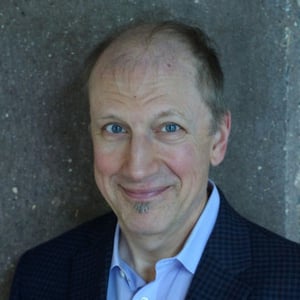
James L. Oberstar Professor of Law and Public Policy, University of St. Thomas School of Law
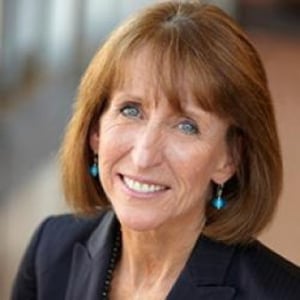
William S. Boyd Professor of Law, University of Nevada, Las Vegas, William S. Boyd School of Law
Dr. Leslie C. Griffin is the William S. Boyd Professor of Law at the University of Nevada, Las Vegas, William S. Boyd School of Law. Professor Griffin, who teaches constitutional law, is known for her interdisciplinary work in law and religion. She holds a Ph.D. in Religious Studies from Yale University and a J.D. from Stanford Law School. She is author of the Foundation Press casebook Law and Religion: Cases and Materials (5th edition, 2022) with Andrew L. Seidel. Practicing Bioethics Law (2d ed. 2021) is co-authored with Joan H. Krause, Dan K. Moore Distinguished Professor of Law at the University of North Carolina School of Law. She and University of Pennsylvania Professor Marci Hamilton published Learning Constitutional Law (Cognella Press, 2023).
She wrote the recent book chapter, Bambi Trauma—Surviving TBI Twice, in Traumatic Brain Injury—Challenges (Dr. Ioannis Mavroudis & Alin Ciobica, eds., IntechOpen, 2024), https://www.intechopen.com/online-first/1179800#. And Catholic Sexual Abuse in Louisiana is in the University of Detroit Mercy Law Review, volume 101, p. 375 (2024).
Another article is What Did Those Sixteen Justices Say?, 58 Willamette L. Rev. 163 (2022). A book chapter entitled Rewritten Opinion, Means v. United States Conference of Catholic Bishops, is in the book Feminist Judgments: Rewritten Health Law Opinions (S. Mohapatra & L. Wiley, eds., Cambridge University Press, 2022). Other recent articles include What is Ethical Discharge?, 10:3 Narrative Inquiry in Bioethics 193 (2020); What Can We Expect of Law and Religion in 2020?, 79 SMU L. Rev. F. 73 (2020); Traumatic Brain Injury: Compassionate Care, Not Clinical Nihilism, 6:2 Journal of Hospital Ethics 87 (Fall 2019) (with Carole S. Anhalt); Conquering Brain Injury, 34:5 Journal of Head Trauma Rehabilitation 366 (2019), Religious Freedom, Human Rights, and Peaceful Coexistence, 50 Loyola University Chicago Law Journal 77 (2018), Pre-or Post Mortem?, 18 Nevada Law Journal 221 (2017). Her rewritten opinion about the abortion funding case, Harris v. McRae, 448 U.S. 297 (1980), is in Feminist Judgments: Rewritten Opinions of the United States Supreme Court (L. Berger, B. Crawford & K. Stanchi, eds., Cambridge University Press, 2016).
Griffin has written numerous amicus briefs defending children's and employees' religious freedom. She blogs for Justia's Verdict column, and posts occasionally on Petrie-Flom’s health law blog.
Other writings include Marriage Rights and Religious Exemptions in the United States, Oxford Handbooks Online (2017), Beyond the Basketball Court: How Brittney Griner’s In My Skin Illustrates Title IX’s Failure to Protect LGBT Athletes at Religious Institutions, 34 Law and Inequality 489 (2016), A Word of Warning from A Woman: Arbitrary, Categorical, and Hidden Religious Exemptions Threaten LGBT Rights, 7 Ala. C.R. & C.L.L. Rev. 97 (2015), and The Catholic Bishops vs. the Contraceptive Mandate, Religions 2015, 6, 1411–1432.
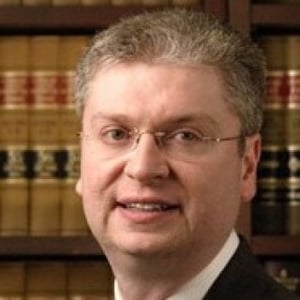
Associate Vice President & Associate Legal Director, Americans United for Separation of Church and State
Alex Luchenitser is the Associate Vice President & Associate Legal Director at Americans United for Separation of Church and State.
Alex has litigated church-state cases throughout the country for Americans United since January 2001. He has led lawsuits challenging religious proselytization of students in public schools, public funding of religious institutions, discriminatory governmental prayer practices, and government-sponsored religious displays. His successful cases include:
Alex has also authored and edited numerous friend-of-the-court briefs filed on behalf of Americans United. After the Covid-19 pandemic began, Alex led Americans United’s efforts to fight lawsuits that sought religious exemptions from public-health orders, filing fifty friend-of-the-court briefs in such cases around the country, including six in the U.S. Supreme Court.
Alex was born in Kyiv, Ukraine, in 1969 and immigrated to the United States in 1977. He received his bachelor’s degree magna cum laude in government and economics from Harvard University in 1991, and he received his Juris Doctor with distinction from Stanford Law School in 1994. After finishing law school, Alex served two one-year judicial clerkships, with Justice Warren W. Matthews Jr. of the Alaska Supreme Court and U.S. Magistrate Judge Wayne D. Brazil of the U.S. District Court for the Northern District of California. Alex then spent four years in private practice in Northern California, participating in the prosecution of class actions on behalf of investors, consumers, and trust beneficiaries.
Alex has spoken about church-state issues in many television and radio appearances and public presentations and has been quoted in numerous major newspapers. His published articles include:
Alex is an active member of the District of Columbia Bar, is an inactive member of the State Bar of California, and has been admitted to practice before the U.S. Supreme Court; the U.S. Courts of Appeals for the First, Second, Third, Fourth, Fifth, Sixth, Seventh, Eighth, Ninth, Tenth, Eleventh, Federal, and District of Columbia Circuits; and the U.S. District Courts for the District of Columbia, the Northern District of California, the District of Colorado, the Eastern District of Michigan, and the Eastern District of Wisconsin.
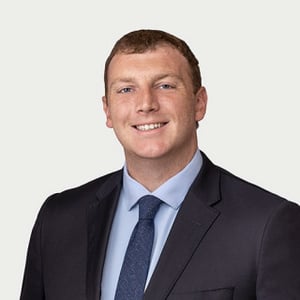
Associate Attorney, Gibson, Dunn & Crutcher LLP
Branton Nestor is an associate in the Orange County office of Gibson Dunn. He practices in the firm’s Litigation Department and is a member of the firm’s Appellate and Constitutional Law Practice Group.
Branton has represented clients in appellate, regulatory, and complex litigation matters across various industries. His experience spans a wide range of subject matters, including constitutional law and administrative law.
He clerked for Judge Diarmuid F. O’Scannlain on the U.S. Court of Appeals for the Ninth Circuit, and Judge Julius N. Richardson on the U.S. Court of Appeals for the Fourth Circuit. He graduated from Harvard Law School in 2019, and Westmont College in 2016. His scholarship has been cited at the U.S. Supreme Court.
Branton is a member of the California bar.
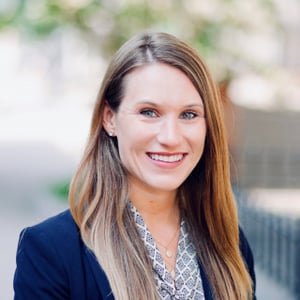
Counsel, Becket Fund for Religious Liberty
Amanda Salz is counsel at the Becket Fund for Religious Liberty, where her practice focuses on First Amendment litigation at both the trial and appellate levels. She is also a member of the Federalist Society’s Religious Liberties Executive Committee.
Before joining Becket, Amanda worked as an associate at Morgan, Lewis & Bockius LLP. As a member of the firm’s appellate group, Amanda litigated many cases involving constitutional and administrative issues. In addition to her experience in private practice, Amanda clerked for the Honorable Andrew S. Oldham of the U.S. Court of Appeals for the Fifth Circuit and the Honorable Reed C. O’Connor of the U.S. District Court for the Northern District of Texas.
James L. Oberstar Professor of Law and Public Policy, University of St. Thomas School of Law
William S. Boyd Professor of Law, University of Nevada, Las Vegas, William S. Boyd School of Law
Dr. Leslie C. Griffin is the William S. Boyd Professor of Law at the University of Nevada, Las Vegas, William S. Boyd School of Law. Professor Griffin, who teaches constitutional law, is known for her interdisciplinary work in law and religion. She holds a Ph.D. in Religious Studies from Yale University and a J.D. from Stanford Law School. She is author of the Foundation Press casebook Law and Religion: Cases and Materials (5th edition, 2022) with Andrew L. Seidel. Practicing Bioethics Law (2d ed. 2021) is co-authored with Joan H. Krause, Dan K. Moore Distinguished Professor of Law at the University of North Carolina School of Law. She and University of Pennsylvania Professor Marci Hamilton published Learning Constitutional Law (Cognella Press, 2023).
She wrote the recent book chapter, Bambi Trauma—Surviving TBI Twice, in Traumatic Brain Injury—Challenges (Dr. Ioannis Mavroudis & Alin Ciobica, eds., IntechOpen, 2024), https://www.intechopen.com/online-first/1179800#. And Catholic Sexual Abuse in Louisiana is in the University of Detroit Mercy Law Review, volume 101, p. 375 (2024).
Another article is What Did Those Sixteen Justices Say?, 58 Willamette L. Rev. 163 (2022). A book chapter entitled Rewritten Opinion, Means v. United States Conference of Catholic Bishops, is in the book Feminist Judgments: Rewritten Health Law Opinions (S. Mohapatra & L. Wiley, eds., Cambridge University Press, 2022). Other recent articles include What is Ethical Discharge?, 10:3 Narrative Inquiry in Bioethics 193 (2020); What Can We Expect of Law and Religion in 2020?, 79 SMU L. Rev. F. 73 (2020); Traumatic Brain Injury: Compassionate Care, Not Clinical Nihilism, 6:2 Journal of Hospital Ethics 87 (Fall 2019) (with Carole S. Anhalt); Conquering Brain Injury, 34:5 Journal of Head Trauma Rehabilitation 366 (2019), Religious Freedom, Human Rights, and Peaceful Coexistence, 50 Loyola University Chicago Law Journal 77 (2018), Pre-or Post Mortem?, 18 Nevada Law Journal 221 (2017). Her rewritten opinion about the abortion funding case, Harris v. McRae, 448 U.S. 297 (1980), is in Feminist Judgments: Rewritten Opinions of the United States Supreme Court (L. Berger, B. Crawford & K. Stanchi, eds., Cambridge University Press, 2016).
Griffin has written numerous amicus briefs defending children's and employees' religious freedom. She blogs for Justia's Verdict column, and posts occasionally on Petrie-Flom’s health law blog.
Other writings include Marriage Rights and Religious Exemptions in the United States, Oxford Handbooks Online (2017), Beyond the Basketball Court: How Brittney Griner’s In My Skin Illustrates Title IX’s Failure to Protect LGBT Athletes at Religious Institutions, 34 Law and Inequality 489 (2016), A Word of Warning from A Woman: Arbitrary, Categorical, and Hidden Religious Exemptions Threaten LGBT Rights, 7 Ala. C.R. & C.L.L. Rev. 97 (2015), and The Catholic Bishops vs. the Contraceptive Mandate, Religions 2015, 6, 1411–1432.
Associate Vice President & Associate Legal Director, Americans United for Separation of Church and State
Alex Luchenitser is the Associate Vice President & Associate Legal Director at Americans United for Separation of Church and State.
Alex has litigated church-state cases throughout the country for Americans United since January 2001. He has led lawsuits challenging religious proselytization of students in public schools, public funding of religious institutions, discriminatory governmental prayer practices, and government-sponsored religious displays. His successful cases include:
Alex has also authored and edited numerous friend-of-the-court briefs filed on behalf of Americans United. After the Covid-19 pandemic began, Alex led Americans United’s efforts to fight lawsuits that sought religious exemptions from public-health orders, filing fifty friend-of-the-court briefs in such cases around the country, including six in the U.S. Supreme Court.
Alex was born in Kyiv, Ukraine, in 1969 and immigrated to the United States in 1977. He received his bachelor’s degree magna cum laude in government and economics from Harvard University in 1991, and he received his Juris Doctor with distinction from Stanford Law School in 1994. After finishing law school, Alex served two one-year judicial clerkships, with Justice Warren W. Matthews Jr. of the Alaska Supreme Court and U.S. Magistrate Judge Wayne D. Brazil of the U.S. District Court for the Northern District of California. Alex then spent four years in private practice in Northern California, participating in the prosecution of class actions on behalf of investors, consumers, and trust beneficiaries.
Alex has spoken about church-state issues in many television and radio appearances and public presentations and has been quoted in numerous major newspapers. His published articles include:
Alex is an active member of the District of Columbia Bar, is an inactive member of the State Bar of California, and has been admitted to practice before the U.S. Supreme Court; the U.S. Courts of Appeals for the First, Second, Third, Fourth, Fifth, Sixth, Seventh, Eighth, Ninth, Tenth, Eleventh, Federal, and District of Columbia Circuits; and the U.S. District Courts for the District of Columbia, the Northern District of California, the District of Colorado, the Eastern District of Michigan, and the Eastern District of Wisconsin.
Associate Attorney, Gibson, Dunn & Crutcher LLP
Branton Nestor is an associate in the Orange County office of Gibson Dunn. He practices in the firm’s Litigation Department and is a member of the firm’s Appellate and Constitutional Law Practice Group.
Branton has represented clients in appellate, regulatory, and complex litigation matters across various industries. His experience spans a wide range of subject matters, including constitutional law and administrative law.
He clerked for Judge Diarmuid F. O’Scannlain on the U.S. Court of Appeals for the Ninth Circuit, and Judge Julius N. Richardson on the U.S. Court of Appeals for the Fourth Circuit. He graduated from Harvard Law School in 2019, and Westmont College in 2016. His scholarship has been cited at the U.S. Supreme Court.
Branton is a member of the California bar.
Counsel, Becket Fund for Religious Liberty
Amanda Salz is counsel at the Becket Fund for Religious Liberty, where her practice focuses on First Amendment litigation at both the trial and appellate levels. She is also a member of the Federalist Society’s Religious Liberties Executive Committee.
Before joining Becket, Amanda worked as an associate at Morgan, Lewis & Bockius LLP. As a member of the firm’s appellate group, Amanda litigated many cases involving constitutional and administrative issues. In addition to her experience in private practice, Amanda clerked for the Honorable Andrew S. Oldham of the U.S. Court of Appeals for the Fifth Circuit and the Honorable Reed C. O’Connor of the U.S. District Court for the Northern District of Texas.
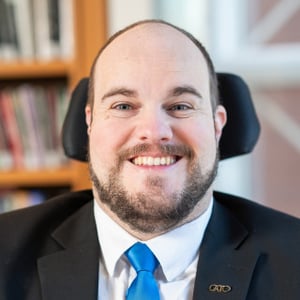
Director, Project on Criminal Justice, Cato Institute
Matthew Cavedon is the Director of the Cato Institute’s Project on Criminal Justice. He focuses on reforming plea-driven mass adjudication, ensuring police accountability, and defending constitutional criminal originalism. Cavedon’s scholarship has been published (or is forthcoming in) publications including the Arizona State Law Journal, Cato Supreme Court Review, Seattle University Law Review, and Georgetown Journal of Law and Public Policy. Formerly a Georgia public defender and fellow at the Institute for Justice, Cavedon has taught law school courses on criminal law and procedure, as well as the First Amendment. Cavedon clerked for a U.S. district court and the Supreme Court of Georgia. He came to Cato following a fellowship at the Emory University Center for the Study of Law and Religion.
Director, Project on Criminal Justice, Cato Institute
Matthew Cavedon is the Director of the Cato Institute’s Project on Criminal Justice. He focuses on reforming plea-driven mass adjudication, ensuring police accountability, and defending constitutional criminal originalism. Cavedon’s scholarship has been published (or is forthcoming in) publications including the Arizona State Law Journal, Cato Supreme Court Review, Seattle University Law Review, and Georgetown Journal of Law and Public Policy. Formerly a Georgia public defender and fellow at the Institute for Justice, Cavedon has taught law school courses on criminal law and procedure, as well as the First Amendment. Cavedon clerked for a U.S. district court and the Supreme Court of Georgia. He came to Cato following a fellowship at the Emory University Center for the Study of Law and Religion.

Daniel Webster Debate Series: Does the First Amendment Permit (or Require?) Public Funding of Religious Charter Schools?
The Federalist Society's Georgetown Law Chapter'sDaniel Webster Debate Series presents Daniel Webster Debate Series: Does...
Topics
Eleventh Circuit Conservatives Split on Gun Sales to Young Adults: Pryor v. Brasher in NRA v. Bondi
Legal debates between leftists and conservatives are rarely as interesting as “intramural” debates between conservatives....
Reform or Withdraw? The United States and the Future of the United Nations
John O. McGinnis, Grover Joseph Rees, Peter Yeo
The United Nations was founded to promote peace, security, and international cooperation, but critics argue...
Reform or Withdraw? The United States and the Future of the United Nations
John O. McGinnis, Grover Joseph Rees, Peter Yeo
The United Nations was founded to promote peace, security, and international cooperation, but critics argue...
The Roots, Applications, and Trajectory of the Church Autonomy Doctrine
Thomas C. Berg, Leslie C. Griffin, Alex J. Luchenitser, Branton J. Nestor, Amanda Salz
The First Amendment’s Religion Clauses guarantee religious entities the freedom to make certain internal governance...
The Roots, Applications, and Trajectory of the Church Autonomy Doctrine
Thomas C. Berg, Leslie C. Griffin, Alex J. Luchenitser, Branton J. Nestor, Amanda Salz
The First Amendment’s Religion Clauses guarantee religious entities the freedom to make certain internal governance...
Courthouse Steps Decision: Delligatti v. United States
Matthew P. Cavedon
Delligatti v. United States concerned whether a crime that requires proof of bodily injury or...
Courthouse Steps Decision: Delligatti v. United States
Matthew P. Cavedon
Delligatti v. United States concerned whether a crime that requires proof of bodily injury or...
Topics
Free State Foundation Conference: Tune In Today for Excellent Policy Discussions!
The Free State Foundation hosts its 17th Annual Policy Conference today at the National Press...
Topics
Court Appears Split in Racial-Gerrymandering Case: Arguments Heard in Louisiana v. Callais
Louisiana v. Callais, which was before the Supreme Court for oral argument today, involves an...