

Co-Owner, Grandview Bed & Breakfast
Gwendolyn Smith is an innkeeper and owner of Grandview Bed & Breakfast in Mount Dora, FL. She has a long history working in hospitality that includes Disney, Marriott and Starwood Hotels. Gwendolyn is a Board Member of the Florida Restaurant Lodging Association, Florida Inns Chapter and serves on the Marketing Council for FRLA. She graduated from Rollins College with a B.A. Degree in Organizational Communication.
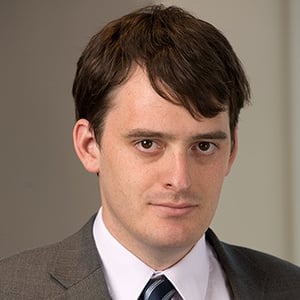
Head of Tech & Innovation, Centre for Policy Studies
Matthew Feeney is Head of Tech & Innovation at Centre for Policy Studies. Before joining CPS, Matthew was the director of Cato Institute’s Project on Emerging Technologies. His writing has appeared in The New York Times, The Washington Post, City A.M., and others. He received both his BA and MA in philosophy from the University of Reading.
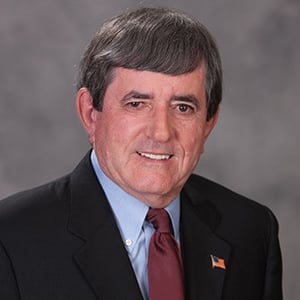
Retired Commissioner, Orange County, Florida
Growing up in a military family, Pete traveled a great deal and lived in Seattle, Germany, Alabama, France and Milton in Northwest Florida. While still a teenager, his father passed away unexpectedly, and his widowed mother moved to the family to Orange County. Pete graduated from Boone High School and subsequently continued his education — earning a Bachelor’s degree in Marine Biology from the University of West Florida. While working for the State of Florida at the Orange County Health Department and later Orange County government’s Health and Family Services Department, he earned Master’s degrees in Education and Public Health from Florida State and in Management from Rollins College Crummer School of Business.
During Pete’s own military service in the Florida Air National Guard, he completed coursework in Hospital Administration/Health Services Management at Sheppard Air Force Base with the United States Air Force. He has furthered his education through FEMA Emergency Management coursework, and is certified in the National Incident Management System. He has completed Leadership Orlando, as well as extensive coursework through the Harvard Kennedy School of Government.
Professionally, Pete’s long-term public career has provided far-reaching benefits for residents and visitors in our entire community. As Deputy Director of the Orange County Health and Family Services Department, he was responsible for services including inmate health care at the Orange County jail, the District Medical Examiner’s office, Animal Services, Mosquito Control, the Great Oaks Village residential services for abused, abandoned and neglected children and teens, the EMS system medical direction, Disaster Management, our Environmental Protection Department, Orange County’s mental health services, Social and Family services, Head Start, Community Action, the county Parks and Recreation Division, the county Veteran’s Services Division, and many other units and programs across Orange County. Those responsibilities included oversight and management of over 1,000 employees and budgets approaching 150-175 million dollars. Under his management, budgeting was taken very seriously and his departments did not over-budget to allow a return of funds at years end.
A visionary leader, Pete is well known as a man who recognizes challenges in our community and strives to develop solutions to needs. Through his extensive history of networking and collaborating with both the private and public sectors, he has provided strategic leadership in creating, developing and managing a number of significant programs benefitting residents and visitors. These include the Primary Care Access Network (Access to Care) offering medical care to the uninsured and underinsured, the After School Zone which provides after school care to all middle school children in Orange County public schools, and the Sexual Assault Treatment Center which provides a safe, secure and sensitive response to the medical, psychological and forensic needs of those who have experienced sexual trauma. He was instrumental in the privatization of the Victims Service Center, and in the creation and development of both the Juvenile Assessment Center and the Central Receiving Center. This brief list is just the beginning, and is clear evidence of Pete’s exceptional ability to bring the right leaders to the table, to facilitate open dialogue regarding challenges and issues, and to get the job done.
Pete’s life is a testament to his belief in, and commitment to, public service. Well before running for office Pete gave of his time to his community through his work on a myriad of local and statewide Boards, Coalitions and groups, focusing on issues important to a wide range of individuals, families, organizations and businesses. His service has included participation in the Health Council of East Central Florida (which addresses health care access and cost issues), the Child Advocacy Center Advisory Board (provider of Child abuse exams), the United Way 211 Advisory Board (which created the 211 system), the Health Care Center for the Homeless Advisory Board, the Senior Resource Alliance Council to promote senior access to services, and the Health Alliance (where he was Past Chair and co-founder) and facilitated the constructed a 26,000 sq. ft. clinic in east Winter Garden. Pete created the Primary Care Access Network (PCAN) which provides access to care for more than 90,000 Orange County residents through a collaborative created in 2000. He has furthered served as past chair of the Lake Eola Charter School Board, and the Shepherds Hope Board, the Low Income Pool Council (a State Appointment) which directed 1 Billion in Medicaid funding to Safety Net Hospitals and local projects, the Florida Public Health Association (Past President; state-wide association), the Drowning Prevention Task Force (ultimately spurring development of funding for swimming lessons for Head Start children in Orange County), Hope Now International (Past Chair and Co-Founder) provider of the largest back pack and health screening program in our area, and the AIDS Resource Alliance (Past Chair/Founding Member) offering a case management not-for-profit created for the Ryan White grant programs.
Following his career with Orange County Government, Pete was tapped to serve as Corporate Director of Community and Governmental Relations for Community Health Centers, Inc. — a local leader in access to health care for our residents. His efforts assured the organization was aligned with community partners and expectations — further evidence of his ability to work and collaborate effectively with both the private and public sectors.
In 2012, Pete was elected as our District 3 County Commissioner and was re-elected in 2016 by a nearly 70% margin. His extensive efforts to help our citizens and community have continued to provide much-needed solutions to the problems and challenges we face today. During his terms he has been honored to have his fellow Board members recognize his leadership and vision, and support many initiatives he proposed, including his Ordinance to allow the additional homestead exemption to our seniors; his Ordinance to require certain businesses to post the Human Trafficking Hot Line information; his Resolution against Fracking; his proposal to provide funding for the first and only adult human trafficking emergency shelter in the state (which has recently opened and is now accepting trafficking survivors); and supported his motion to return to the weekly bulk- item refuse pick up wanted by our residents. Numerous other successes during his service as our Commissioner include Water quality projects for our lakes; additional acreage for Cypress Grove Park; increased athletic fields and a splash pad and all-children’s playground for Barber Park; the Pine Castle/South Orange Avenue corridor plan; the Hoffner Road Overlay and Conway Acres wall; and the Small area studies (Rural Enclaves).
While serving as Orange County’s District 3 Commissioner, Pete’s community involvement continues through his efforts with a number of organizations and interests. These include the local Metro Plan (Vice Chair), the Transportation Disadvantaged Council (Past Chairman), the Central Florida Water Collaborative (Secretary), Community Action Board (Chair), the Citizens’ Commission for Children Advisory Board, the Central Receiving Center/Children’s Mental Health Board of Directors (Chair), Kiwanis Club of Central Orlando (Past President), Florida Abolitionists Board of Directors (dedicated to eradicating Human Trafficking and modern-day slavery), the Urban Caucus, where he serves as co-chair, the Florida Association of Counties, and the Healing the Children Advisory Council. His multi-agency and diverse community involvement further serves to demonstrate his commitment to the entire community and all its residents and visitors.
Pete currently lives in the Conway area with his wonderful wife Cathie, attends and volunteers for Discovery Church, and enjoys golf, riding his “bike” and playing in a classic rock band.
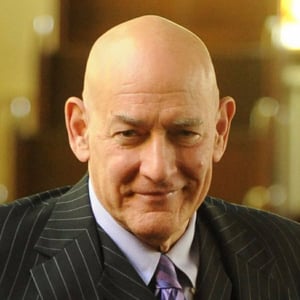
Raoul Berger Professor of Legal History at Northwestern University School of Law
Stephen Presser is a leading American legal historian and expert on shareholder liability for corporate debts. He is frequently an invited witness before committees of the U.S. Senate and House of Representatives on issues of constitutional law. He holds a joint appointment with the J. L. Kellogg Graduate School of Management and also teaches in Northwestern's history department.
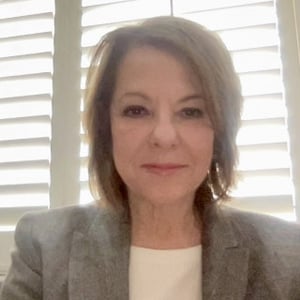
Carol Matheis practices law business litigation and insurance law in Newport Beach, California. She earned her J.D. at Western University College of Law and is a graduate of George Mason University.
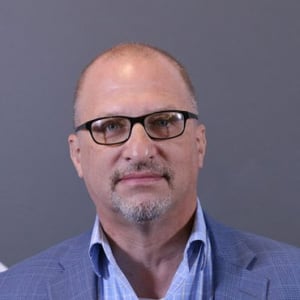
Western Region Director, State Affairs, R Street Institute
Steven Greenhut oversees R Street’s efforts in California, Colorado, Utah, Oregon, Idaho, Washington state, Montana, New Mexico, Nevada, Arizona, Alaska, Wyoming and Hawaii. His duties include authoring op-eds and policy studies, testifying before state and municipal legislative bodies, and representing R Street as a speaker, public commentator and coalition ally in venues where it is possible to move state and local policy in a free-market direction.
He most recently served as California columnist for the San Diego Union-Tribune. In this role, from his base in Sacramento, he wrote a regular reported news column covering the State Capitol and issues outside of San Diego. Previously, he was vice president of journalism at the Franklin Center, where he oversaw a team of watchdog editors and reporters in state capitols.
Steven is the author of two books, Abuse of Power: How the Government Misuses Eminent Domain (2004) and Plunder! How Public Employee Unions are Raiding Treasuries, Controlling Our Lives and Bankrupting the Nation (2009). In 2005, he received the Thomas Paine Award, granted by the Institute for Justice in recognition of his writing to promote liberty. In 2011, he placed second in the International Policy Network R.C. Hoiles Prize for Journalism.
He received his bachelor’s degree in political science with a minor in journalism from George Washington University.
Steven and his wife of 35 years live on an acreage outside of Sacramento and have three adult children, 30 goats, five cats, six chickens and two dogs.
Carol Matheis practices law business litigation and insurance law in Newport Beach, California. She earned her J.D. at Western University College of Law and is a graduate of George Mason University.
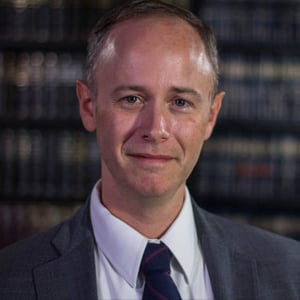
Vice President and Legal Director, National Right to Work Legal Defense and Education Foundation, Inc.
William Messenger is Foundation Vice President and Legal Director. He was a staff attorney for over twenty years and, during that time, represented individuals in numerous cases that sought to expand worker freedom of choice. This includes acting as lead counsel in three cases before the United States Supreme Court. In 2018, Messenger argued Janus v. AFSCME Council 31, where the Supreme Court held it violates the First Amendment for governments and unions to compel individuals to financially support unions and their speech. Originally from Youngstown Ohio, Messenger attended Ohio University as an undergraduate and then the George Washington University School of Law.
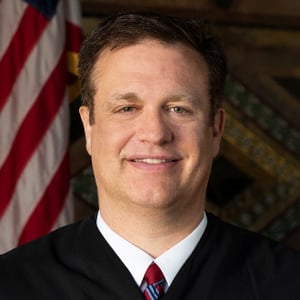
Judge, United States Court of Appeals, Ninth Circuit
Judge Nelson was confirmed to the Ninth Circuit in October 2018, as the youngest Circuit Judge to serve from Idaho and he has chambers in his hometown of Idaho Falls. Prior to his confirmation, Judge Nelson served for nine years as General Counsel of Idaho Falls-based Melaleuca, Inc., a consumer goods company. He previously worked in Washington, DC, where he served in all three branches of the federal government, including as Special Counsel for Supreme Court nominations to the Ranking Member of the Senate Judiciary Committee; Deputy General Counsel to the White House Office of Management and Budget; Deputy Assistant Attorney General in the Environment and Natural Resources Division of the United States Department of Justice; and a law clerk to Judge Henderson of the United States Court of Appeals for the D.C. Circuit. He has argued in most of the federal courts of appeals and worked on dozens of Supreme Court briefs. He started in the Washington, DC office of Sidley Austin as an appellate lawyer, after clerking for Judges Mosk and Brower of the Iran-U.S. Claims Tribunal at The Hague, and for now-Judge Tom Griffith, then-Senate Legal Counsel, during the impeachment trial of President Clinton. Judge Nelson earned his B.A. from Brigham Young University and his J.D., with honors, from BYU Law School. Judge Nelson has been a member of the Federalist Society since 1998.
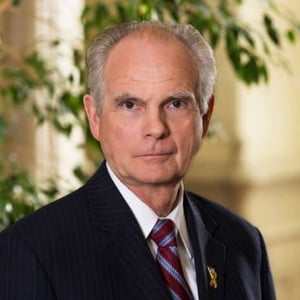
Special Counsel, Hopkins & Carley
Chuck Reed is a member of Hopkins & Carley’s Real Estate Practice in the San Jose office. As Special Counsel to the firm, Chuck brings his years of experience in government to help clients solve complex problems in a variety of practice areas, including:
Chuck was Mayor of San Jose from 2007 to 2014, a member of the City Council from 2000 to 2006, and a city and county Planning Commissioner for 14 years before being elected to office. Before taking office as Mayor of the tenth largest city in the country, he was a lawyer in private practice in San Jose.
Chuck has been recognized as a national leader by the New York Times, the Wall Street Journal, the Washington Post, other national media, the U.S. Conference of Mayors, and the National League of Cities. The story of his work in San Jose has been noted in books, such as Boomerang by Michael Lewis and Fate of the States by Meredith Whitney, and he has been a frequent speaker on pension reform at conferences around the country.
Western Region Director, State Affairs, R Street Institute
Steven Greenhut oversees R Street’s efforts in California, Colorado, Utah, Oregon, Idaho, Washington state, Montana, New Mexico, Nevada, Arizona, Alaska, Wyoming and Hawaii. His duties include authoring op-eds and policy studies, testifying before state and municipal legislative bodies, and representing R Street as a speaker, public commentator and coalition ally in venues where it is possible to move state and local policy in a free-market direction.
He most recently served as California columnist for the San Diego Union-Tribune. In this role, from his base in Sacramento, he wrote a regular reported news column covering the State Capitol and issues outside of San Diego. Previously, he was vice president of journalism at the Franklin Center, where he oversaw a team of watchdog editors and reporters in state capitols.
Steven is the author of two books, Abuse of Power: How the Government Misuses Eminent Domain (2004) and Plunder! How Public Employee Unions are Raiding Treasuries, Controlling Our Lives and Bankrupting the Nation (2009). In 2005, he received the Thomas Paine Award, granted by the Institute for Justice in recognition of his writing to promote liberty. In 2011, he placed second in the International Policy Network R.C. Hoiles Prize for Journalism.
He received his bachelor’s degree in political science with a minor in journalism from George Washington University.
Steven and his wife of 35 years live on an acreage outside of Sacramento and have three adult children, 30 goats, five cats, six chickens and two dogs.
Carol Matheis practices law business litigation and insurance law in Newport Beach, California. She earned her J.D. at Western University College of Law and is a graduate of George Mason University.
Vice President and Legal Director, National Right to Work Legal Defense and Education Foundation, Inc.
William Messenger is Foundation Vice President and Legal Director. He was a staff attorney for over twenty years and, during that time, represented individuals in numerous cases that sought to expand worker freedom of choice. This includes acting as lead counsel in three cases before the United States Supreme Court. In 2018, Messenger argued Janus v. AFSCME Council 31, where the Supreme Court held it violates the First Amendment for governments and unions to compel individuals to financially support unions and their speech. Originally from Youngstown Ohio, Messenger attended Ohio University as an undergraduate and then the George Washington University School of Law.
Judge, United States Court of Appeals, Ninth Circuit
Judge Nelson was confirmed to the Ninth Circuit in October 2018, as the youngest Circuit Judge to serve from Idaho and he has chambers in his hometown of Idaho Falls. Prior to his confirmation, Judge Nelson served for nine years as General Counsel of Idaho Falls-based Melaleuca, Inc., a consumer goods company. He previously worked in Washington, DC, where he served in all three branches of the federal government, including as Special Counsel for Supreme Court nominations to the Ranking Member of the Senate Judiciary Committee; Deputy General Counsel to the White House Office of Management and Budget; Deputy Assistant Attorney General in the Environment and Natural Resources Division of the United States Department of Justice; and a law clerk to Judge Henderson of the United States Court of Appeals for the D.C. Circuit. He has argued in most of the federal courts of appeals and worked on dozens of Supreme Court briefs. He started in the Washington, DC office of Sidley Austin as an appellate lawyer, after clerking for Judges Mosk and Brower of the Iran-U.S. Claims Tribunal at The Hague, and for now-Judge Tom Griffith, then-Senate Legal Counsel, during the impeachment trial of President Clinton. Judge Nelson earned his B.A. from Brigham Young University and his J.D., with honors, from BYU Law School. Judge Nelson has been a member of the Federalist Society since 1998.
Special Counsel, Hopkins & Carley
Chuck Reed is a member of Hopkins & Carley’s Real Estate Practice in the San Jose office. As Special Counsel to the firm, Chuck brings his years of experience in government to help clients solve complex problems in a variety of practice areas, including:
Chuck was Mayor of San Jose from 2007 to 2014, a member of the City Council from 2000 to 2006, and a city and county Planning Commissioner for 14 years before being elected to office. Before taking office as Mayor of the tenth largest city in the country, he was a lawyer in private practice in San Jose.
Chuck has been recognized as a national leader by the New York Times, the Wall Street Journal, the Washington Post, other national media, the U.S. Conference of Mayors, and the National League of Cities. The story of his work in San Jose has been noted in books, such as Boomerang by Michael Lewis and Fate of the States by Meredith Whitney, and he has been a frequent speaker on pension reform at conferences around the country.

Co-Chairman, The Federalist Society for Law and Public Policy Studies
Leonard is Co-Chairman and former Executive Vice President of the Federalist Society, joining the organization over 25 years ago. Since that time he has been instrumental in helping the organization top 70,000, focusing on the growth of lawyers membership, operations and activities advancing limited, constitutional government. In addition to his work at the Society, Leonard has advised President Trump on judicial selection, assisted with the Gorsuch and Kavanaugh Supreme Court selection and confirmation process, and served as a member of the transition team. He also organized the outside coalition efforts in support of the Roberts and Alito U.S. Supreme Court confirmations. Leonard was appointed by President George W. Bush to three terms to the U.S. Commission on International Religious Freedom as chairman. He was also a U.S. Delegate to the UN Council and UN Commission on Human Rights during the Bush Administration. Leonard was the recipient of the 2009 Bradley Prize, along with the other founders and directors of the Federalist Society, for his work in advancing freedom and the rule of law. He is the coeditor of Presidential Leadership: Rating the Best and the Worst in the White House, as well as the author of opinion editorials in the New York Times,The Wall Street Journal, and Washington Post. Leonard holds degrees from Cornell University and Cornell Law School. He presently resides in Northern Virginia, where he and his wife Sally have raised their seven children.
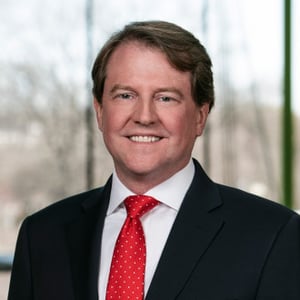
Partner, Jones Day
Don McGahn represents clients before government agencies, in enforcement matters, and in court disputes arising from government regulation or action. He handles litigation, crisis management, regulatory compliance, and political issues.
Prior to rejoining Jones Day in 2019, Don served as Counsel to the President of the United States, advising Donald J. Trump on all legal issues concerning the President and his administration, including constitutional and statutory authority, executive orders, international agreements, tariffs, trade, administrative law, and national security. Don also managed the judicial selection process for the President. During Don's tenure, a historic number of judges were appointed to the federal bench, including two Supreme Court justices. In addition, he spearheaded President Trump's deregulation efforts, which resulted in deregulation at record rates. Following Don's departure from the White House, the President appointed him to the Council of the Administrative Conference of the United States, a nonpartisan, independent agency dedicated to promoting improvement to administrative agency processes.
Don's accomplishments have been recognized at the highest levels of government. Senate Majority Leader Mitch McConnell stated that Don concluded his tenure "not only as the best White House Counsel I've seen on the job, but more broadly, as one of the most successful and consequential aides to any President in recent memory."
Don was nominated by President George W. Bush in 2008, and confirmed in the Senate by unanimous consent, to serve as a member of the Federal Election Commission. He also served as outside Counsel to the Committee on House Administration during the 113th and 114th Congresses and as general counsel to the National Republican Congressional Committee.
Co-Chairman, The Federalist Society for Law and Public Policy Studies
Leonard is Co-Chairman and former Executive Vice President of the Federalist Society, joining the organization over 25 years ago. Since that time he has been instrumental in helping the organization top 70,000, focusing on the growth of lawyers membership, operations and activities advancing limited, constitutional government. In addition to his work at the Society, Leonard has advised President Trump on judicial selection, assisted with the Gorsuch and Kavanaugh Supreme Court selection and confirmation process, and served as a member of the transition team. He also organized the outside coalition efforts in support of the Roberts and Alito U.S. Supreme Court confirmations. Leonard was appointed by President George W. Bush to three terms to the U.S. Commission on International Religious Freedom as chairman. He was also a U.S. Delegate to the UN Council and UN Commission on Human Rights during the Bush Administration. Leonard was the recipient of the 2009 Bradley Prize, along with the other founders and directors of the Federalist Society, for his work in advancing freedom and the rule of law. He is the coeditor of Presidential Leadership: Rating the Best and the Worst in the White House, as well as the author of opinion editorials in the New York Times,The Wall Street Journal, and Washington Post. Leonard holds degrees from Cornell University and Cornell Law School. He presently resides in Northern Virginia, where he and his wife Sally have raised their seven children.
Partner, Jones Day
Don McGahn represents clients before government agencies, in enforcement matters, and in court disputes arising from government regulation or action. He handles litigation, crisis management, regulatory compliance, and political issues.
Prior to rejoining Jones Day in 2019, Don served as Counsel to the President of the United States, advising Donald J. Trump on all legal issues concerning the President and his administration, including constitutional and statutory authority, executive orders, international agreements, tariffs, trade, administrative law, and national security. Don also managed the judicial selection process for the President. During Don's tenure, a historic number of judges were appointed to the federal bench, including two Supreme Court justices. In addition, he spearheaded President Trump's deregulation efforts, which resulted in deregulation at record rates. Following Don's departure from the White House, the President appointed him to the Council of the Administrative Conference of the United States, a nonpartisan, independent agency dedicated to promoting improvement to administrative agency processes.
Don's accomplishments have been recognized at the highest levels of government. Senate Majority Leader Mitch McConnell stated that Don concluded his tenure "not only as the best White House Counsel I've seen on the job, but more broadly, as one of the most successful and consequential aides to any President in recent memory."
Don was nominated by President George W. Bush in 2008, and confirmed in the Senate by unanimous consent, to serve as a member of the Federal Election Commission. He also served as outside Counsel to the Committee on House Administration during the 113th and 114th Congresses and as general counsel to the National Republican Congressional Committee.
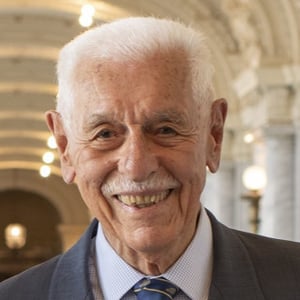
Judge, United States Court of Appeals, Ninth Circuit
Judge Carlos Bea serves as a judge on the United States Court of Appeals for the Ninth Circuit. He received his Bachelor's Degree from Stanford University in 1956 and his J.D. from Stanford Law School in 1958. Judge Bea was born in San Sebastian, Spain, and immigrated with his family to Cuba in 1939. In 1952, he represented Cuba on the Cuban National basketball team in the Helsinki Olympics. Judge Bea became a naturalized citizen of the United States in 1958. He engaged in private practice in San Francisco, principally in the area of civil trials (jury and non-jury), from 1959-75 at Dunne, Phelps & Mills and from 1975-90 at Carlos Bea, A Law Corporation. He taught courses in civil litigation advocacy at Hastings College of Law and Stanford Law School. From 1990 to 2003, Judge Bea served as a judge of the San Francisco Superior Court. He was nominated by President George W. Bush to the United States Court of Appeals for the Ninth Circuit and was confirmed in 2003.
Judge Bea and his wife Louise reside in San Francisco, where they raised their four sons, Sebastian, Alexander, Nicholas, and Dominic.

Dr. John Eastman is the former Henry Salvatori Professor of Law & Community Service and former Dean at Chapman University's Dale E. Fowler School of Law, where he had been a member of the faculty since 1999, specializing in Constitutional Law, Legal History, and Property. He is a founding director of the Center for Constitutional Jurisprudence, a public interest law firm affiliated with the Claremont Institute that he founded in 1999. He has a Ph.D. in Government from the Claremont Graduate School and a J.D. from the University of Chicago Law School, and a B.A. in Politics and Economics from the University of Dallas. He serves as the Chairman of the Board of the National Organization for Marriage.
Prior to joining the Chapman law faculty, Dr. Eastman served as a law clerk to the Honorable Clarence Thomas, Associate Justice, Supreme Court of the United States, and to the Honorable J. Michael Luttig, Judge, United States Court of Appeals for the Fourth Circuit and practiced law with the national law firm of Kirkland & Ellis. Dr. Eastman has also represented numerous clients in important constitutional law matters and has argued before the Supreme Court. On behalf of the Claremont Institute Center for Constitutional Jurisprudence, he has participated as amicus curiae before the Supreme Court of the United States, U.S. Courts of Appeals, and State Supreme Courts in more than one hundred cases of constitutional significance, including Boy Scouts of America v. Dale, Zelman v. Simmons-Harris (the school vouchers case), Kelo v. New London, Ct. (eminent domain), and Van Orden v. Perry (the 10 Commandments case). He has also appeared as an expert legal commentator on numerous television and radio programs, including C-SPAN, Fox News, PBS, NewsHour, and The O'Reilly Factor.
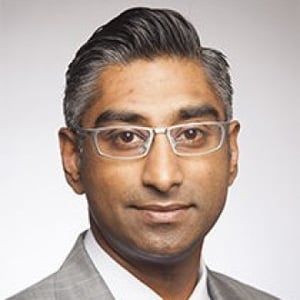
Professor of Law, Santa Clara University School of Law
Professor Gulasekaram teaches Constitutional Law and Immigration Law. His research currently focuses on the political and legal dynamics of state and local immigration regulations, and their effect on federal policies. His co-authored book, The New Immigration Federalism, provides an in-depth empirical and theoretical analysis of the recent resurgence of state and local immigration lawmaking. He has also extensively explored the relationship between the Second Amendment and immigrants, as a way of understanding constitutional protections for noncitizens. In addition to his scholarly publications, his commentary has appeared in the L.A. Times and the Washington Post, and in blogs for various national outlets. He is a graduate of Brown University and Stanford Law School.
Professor Gulasekaram joined the Santa Clara University School of Law faculty in 2007, and has also taught as Visiting Assistant Professor at Stanford Law School, Acting Assistant Professor of Lawyering at New York University School of Law and Visiting Assistant Professor at Loyola University Law School in New Orleans. Prior to academia, he was a litigation associate with O’Melveny & Meyers LLP and Susman Godfrey LLP, both in Los Angeles. He clerked for the Honorable Jacques L. Wiener Jr. on the U.S. Circuit Court of Appeals for the Fifth Circuit in New Orleans. In addition, he is the co-founder of the World Children’s Initiative, Inc., a non-profit organization dedicated to improving health and educational infrastructure for children in developing areas around the world. www.wciprojects.org
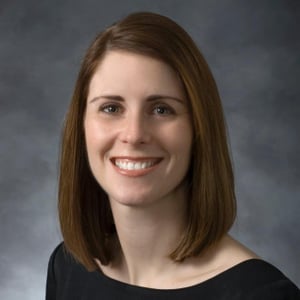
Partner, Bell McAndrews & Hiltachk LLP
Ashlee joined Bell, McAndrews & Hiltachk, LLP in 2004. She maintains a nationwide practice advising individuals, businesses, candidates, political action committees (PACs), lobbyists, and trade associations on compliance with complex campaign finance and advertising, lobbying, and nonprofit tax exempt statutes and regulations. Ashlee also counsels clients on navigating the process of qualifying initiative, referenda and recall ballot measures at state and local levels and all aspects of such campaigns.
Ashlee is a leader organizing efforts to ensure integrity and proper administration of elections in California. Ashlee is an active member of the California Political Attorneys Association, Federalist Society, and Republican National Lawyers Association, and a supporter of the Center for Civic Education.
Prior to joining Bell, McAndrews & Hiltachk, LLP, Ashlee served as a staff member in the California State Legislature and with a congressional campaign.
Ashlee received her Juris Doctor from the University of the Pacific, McGeorge School of Law, and her undergraduate degree with honors in Political Science and a minor in Philosophy from Chatham College in Pittsburgh, Pennsylvania. She was admitted to the State Bar of California in 2003.

Emanuel S. Heller Professor of Law, University of California at Berkeley; Senior Research Fellow, School of Civic Leadership, Civitas Institute, University of Texas at Austin; Nonresident Senior Fellow, American Enterprise Institute
John Yoo is the Emanuel Heller Professor of Law. He is also Distinguished Visiting Scholar, School of Civic Leadership and Senior Research Fellow, Civitas Institute, at the University of Texas at Austin. He is also a Nonresident Senior Fellow at the American Enterprise Institute.
His most recent book, The Politically Incorrect Guide to the Supreme Court, co-authored with Robert Delahunty, was published in 2023. Professor Yoo’s other books include Defender-in-Chief: Trump’s Fight for Presidential Power; Striking Power: How Cyber, Robots, and Space Weapons Change the Rules for War, Point of Attack: Preventive War, International Law, and Global Welfare, and Crisis and Command: A History of Executive Power from George Washington to George Bush.
Professor Yoo has published more than 100 articles in academic journals on subjects including national security, constitutional law, international law, and the Supreme Court. He also regularly contributes to the editorial pages of the Wall Street Journal, New York Times, Washington Post, Los Angeles Times, and National Review, among others.
Professor Yoo has served in all three branches of government. He was an official in the U.S. Department of Justice, where he worked on national security and terrorism issues after the 9/11 attacks. He served as general counsel of the U.S. Senate Judiciary Committee. He has been a law clerk for Supreme Court Justice Clarence Thomas and federal appeals Judge Laurence Silberman. He has been a visiting professor at Seoul National University in South Korea, the Interdisciplinary Center in Israel, Keio University in Japan, Trento University in Italy, the University of Chicago, and the Free University of Amsterdam.
Professor Yoo supervises the Public Law and Policy Program and the California Constitution Center. He also serves on the boards of the Pacific Legal Foundation, the Federalist Society’s Separation of Powers and Federalism Division, the Universidad Cientifica del Sur Law School, and the Asia-Pacific Law Institute at Seoul National University. He is a winner of the Federalist Society’s Paul Bator award and been the Edwin Meese III Originalism Lecturer at the Heritage Foundation.
Professor Yoo graduated from Yale Law School and summa cum laude from Harvard College.

Topics
Update Needed: NAFTA Telecom Trade Provisions
Much of the drama around the Administration’s negotiation of new trade deals like the USMCA...
Here to Stay: The Modern World of Hospitality
Gwendolyn Smith, Matthew Feeney, Pete Clarke
Regulatory Transparency Project's Fourth Branch Video
Do home-sharing platforms like Airbnb need more regulation to protect consumers and the safety of...
The Tenacity of Transformation Theory, and Why Constitutional History Deserves Better
Stephen B. Presser
Federalist Society Review, Volume 20
A review of The Second Creation: Fixing the American Constitution in the Founding Era, by...
Title IX Reform: A California Court Takes the Lead
Carol M. Matheis
State Court Docket Watch
California John Doe v. University of Southern California There are no real...
Topics
Do Members of Congress Have a Duty to Interpret the Constitution for Themselves?
Is Constitutional interpretation only a job for judges? The Hon. James Buckley explains that both...
Panel Three: Post-Janus Labor & Employment Law Issues in the State and Future of Unions
Steve Greenhut, Carol M. Matheis, William L. Messenger, Ryan D. Nelson, Chuck Reed
2019 Annual Western Chapters Conference
How will the Janus decision affect the ability of unions to wield political power and what impact...
Panel Three: Post-Janus Labor & Employment Law Issues in the State and Future of Unions
Steve Greenhut, Carol M. Matheis, William L. Messenger, Ryan D. Nelson, Chuck Reed
2019 Annual Western Chapters Conference
How will the Janus decision affect the ability of unions to wield political power and what impact...
Lunch Address by Don McGahn
Leonard A. Leo, Donald F. McGahn
2019 Annual Western Chapters Conference
On January 26, 2019, the Federalist Society hosted the annual Western Chapters Conference at the...
Lunch Address by Don McGahn
Leonard A. Leo, Donald F. McGahn
2019 Annual Western Chapters Conference
On January 26, 2019, the Federalist Society hosted the annual Western Chapters Conference at the...
Panel Two: What are the Limits of Local Control?
Carlos T. Bea, John C. Eastman, Pratheepan Gulasekaram, Ashlee Nicole Titus, John C. Yoo
2019 Annual Western Chapters Conference
When is it appropriate for states and cities to contradict or ignore federal law? Do...