

Associate Dean for Academic Affairs, Austin E. Owen Research Scholar & Professor of Law, The University of Richmond School of Law
Dean Kristen Jakobsen Osenga teaches and writes in the areas of patent law, antitrust, and legislation and regulation. Some of her recent scholarship focuses on standard development organizations, patent eligible subject matter, patent licensing firms, litigation and remedies for patent infringement, and patent law reform. She has written numerous law review articles on these and other topics, as well as book chapters and op eds on various aspects of patent law. Additionally, she has spoken on these issues at many academic conferences and bar events. Dean Osenga is Chief Policy Counselor for the Inventors Defense Alliance, as well as an active member of the Federal Circuit Bar Association and the American Intellectual Property Law Association.
Dean Osenga received a B.S. degree in Biomedical Engineering from the University of Iowa, an M.S. degree in Electrical Engineering from Southern Illinois University – Carbondale, and a J.D. from the University of Illinois College of Law, where she graduated magna cum laude. After law school, she practiced at the law firm of Finnegan, Henderson, Farabow, Garrett, & Dunner LLP, (now Finnegan) where she did patent prosecution and litigation. She then clerked for the Judge Richard Linn of the U.S. Court of Appeals for the Federal Circuit. After clerking, she entered academia, teaching first at Chicago-Kent College of Law and then at the University of Richmond, where she has been since 2006. She has also been a Visiting Professor at Emory University School of Law and at William & Mary School of Law.

Professor of Law, Southern Illinois University School of Law
Professor Mark F. Schultz joined the faculty in 2003. He teaches and writes primarily in the area of intellectual property.
Professor Schultz is a frequent author and speaker known for his work on the law and economics of the global intellectual property system. In one of his most influential projects, he worked with the Organization for Economic Cooperation and Development (OECD) to construct a groundbreaking global trade secret protection index (the TSPI). The TSPI is influencing policy discussions on this cutting-edge topic in capitals around the world. Other recent projects have included an empirical study that quantified for the first time the backlogs in patent offices worldwide, a report on how patented innovation is meeting global health challenges, and the construction of a new global index of copyright strength.
Professor Schultz is an influential voice in public policy debates regarding intellectual property. He has testified before the U.S. Congress on copyright law at the invitation of the House Judiciary Committee and has briefed the staff of the U.S. Senate Judiciary Committee on trade secret legislation. He speaks frequently around the world about the connection between secure and effective intellectual property rights and flourishing national economies and individual lives, with invitations from the U.S. Patent and Trademark Office, the U.S. Trade Representative, and the U.S. Copyright Office, as well as numerous academic institutions, think tanks, and industry groups. He served as an NGO delegate to the World Intellectual Property Organization (WIPO) for several years during the WIPO Development Agenda talks. He is also one of the organizers of an ongoing multilateral diplomatic dialogue on best practices in national trade secret laws, and is co-founder of the Center for Protection of Intellectual Property (CPIP) at George Mason University in Washington, D.C.
Among the awards and recognition he has received for his scholarship was the School of Law's Outstanding Scholar of the Year award in 2008. He has been a distinguished visiting scholar at the University of Botswana and a visiting professor at DePaul University College of Law.
Professor Schultz graduated with honors from the George Washington University School of Law. Following law school, he was a judicial clerk for the Hon. Daniel M. Friedman of the United States Court of Appeals for the Federal Circuit in Washington, D.C., and the Hon. Eric G. Bruggink of the United States Court of Federal Claims. Prior to joining academia, he practiced law for a decade, serving as outside general counsel to several tech startups and helping technology companies to expand their businesses and commercialize their intellectual property in dozens of countries. He holds a B.A. in International Economics from George Washington University and has done PhD level coursework in development economics at Southern Illinois University.
He is active in leadership roles in local and national organizations. He has served as chair of the Federalist Society's Intellectual Property Practice Group and the AALS Section on Internet and Computer Law. He is an officer of the American Bar Association's International IP Committee of the International Law Section and the American Intellectual Property Law Association’s Trade Secret Law Committee. He currently is chair of the Academic Advisory Board of the Copyright Alliance.
Professor Schultz teaches Copyright Law, Trade Secret Law, Trademark Law, and a senior seminar on Intellectual Property and Global Development. He established and directs both the Specialization in Intellectual Property Law and the IP Semester in Practice Externship Program. He also co-founded a Legal Globalization Class, offered every other year, that takes students to South Africa and Botswana after spending a semester learning about the legal system, culture, history, and politics of southern Africa. The popular course is a once-in-a-lifetime experience that introduces students to leading lawyers, judges, government officials, and human rights advocates, taking them from Cape Town to Johannesburg to Gaborone as well as many popular destinations including game reserves, national parks, the Cape of Good Hope, and the Cradle of Humankind.
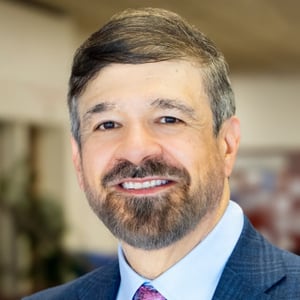
Hugh and Hazel Darling Foundation Professor of Law; Director, Center for the Study of Constitutional Originalism, University of San Diego School of Law

Head of AI Policy, Abundance Institute
Neil Chilson is the Head of AI Policy at the Abundance Institute. Prior to this position, he served as a Senior Research Fellow at the Center for Growth and Opportunity. Chilson is a lawyer, computer scientist, and author of the book “Getting Out of Control: Emergent Leadership in a Complex World.”
Chilson was previously the senior research fellow for Technology and Innovation at Stand Together, where he guided efforts to understand and promote the legal and cultural paradigms that best enable people to discover, innovate, and improve all our lives.
Before Stand Together, Chilson was the Chief Technologist at the Federal Trade Commission, where he focused on the economics of privacy and blockchain-related issues. Previously, he was an attorney advisor to Acting FTC Chairman Maureen K. Ohlhausen. In both roles he advised Chairman Ohlhausen and worked with staff on nearly every major technology-related case, report, workshop, or other FTC proceeding since January 2014. Neil joined the FTC from telecom firm Wilkinson Barker Knauer. Neil is frequently quoted by the press and his work has appeared in numerous news outlets, including The Wall Street Journal, The Washington Post, USAToday, and Newsweek. Neil has a J.D. from The George Washington Law School, a M.S. in computer science from University of Illinois, Urbana-Champaign, and a B.S. in computer science from Harding University.
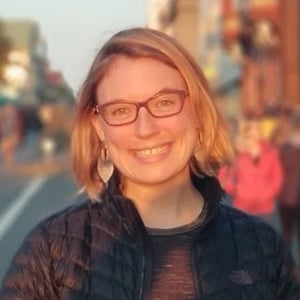
Policy Counsel for Competition, Public Knowledge
Charlotte is Policy Counsel for competition policy at Public Knowledge. Prior to joining Public Knowledge, Charlotte worked in the Anticompetitive Practices Division of the Federal Trade Commission, investigating and litigating antitrust conduct violations, including the 2017 case against 1-800 Contacts for manipulating Google search ad auctions. She previously worked as a Legislative Aide to Senator Al Franken, focusing on Judiciary Committee issues including competition, media, and consumer privacy.
Charlotte received her J.D. from New York University School of Law and B.A. in Government from the University of Virginia.

Professor Emeritus, Paul M. Hebert Law Center, Louisiana State University
In memoriam
Dr. John Baker is Professor Emeritus of Law, and previously the Dale E. Bennett Professor of Law, at Louisiana State University Law School. He is currently Visiting Professor at Peking University School of Transnational Law (via Zoom) and has been Visiting Professor at The Center for the Constitution, Georgetown Law School (2013-2020). He has also been a Visiting Fellow at Oriel College, the University of Oxford (2012-2014) and taught at Blackfriars Hall, Oxford in 2014. Dr. Baker has also been an adjunct Fellow at the Heritage Foundation (Spring, 2008) and a Distinguished Scholar at the Catholic University of America Law School (2011-12). He has taught at Tulane Law School, George Mason Law School, Pepperdine Law School, New York Law School, Hong Kong University, and the University of Dallas, School of Management and also taught and/or lectured in 17 foreign countries. Notable among his foreign visits are the
following: Visiting Professor at the University of Lyon III (France) (1999-2011); Visiting Professor at the Universidad de los Andes, Chile (2012), as a Fulbright Specialist (2006); and a Fulbright Scholar at various universities in the Philippines. Dr. Baker received his J.D., with honors, from the University of Michigan Law School and his B.A., magna cum laude, from the University of Dallas. He also earned a Ph.D. in Political Thought from the University of London. Baker has taught over a dozen different subjects, mostly courses in public law. His main areas of interest are Constitutional Law (particularly federalism and separation of powers), Criminal Law, Anti-Terrorism Law, International Law, Health Care Law, Mediation, and Comparative Law.
In addition to law review articles and book chapters, Dr. Baker’s academic publications include Hall's Criminal Law: Cases and Materials (with Benson, Force and George; 5th ed. Michie, 1993); An Introduction to the Law of the United States (ed. with Levasseur; University Press of America, 1992). He has also published on Forbes.com, FoxNews.com, in The Washington Times, and a number of times in The Wall Street Journal. He argues in federal court, including two oral arguments in the U.S. Supreme Court. For many years, he co-taught courses for the Federalist Society on separation of powers with the late Supreme Court Justice Antonin Scalia. In September 2016, he co-taught a Supreme Court seminar in China with Justice Samuel Alito. Following law school, he served as a law clerk in federal district court and as an assistant district attorney in New Orleans before joining LSU in 1975. While a professor, he has been as a consultant to USAID, USIA (since rolled into the State Department), the Justice Department, the U.S. Senate Judiciary Subcommittee on Separation of Powers, and the Office of Planning in the White House. He served on an ABA Task Force which issued the report, The Federalization of Crime (1998) and later as a consultant to the “Bi-Partisan Task Force on the Over- federalization of Crime” (2012-2014) created by the U.S. House Judiciary Subcommittee on Crime. Dr. Baker was a co-founder of the first iteration (1995) of Stratfor Inc., a global intelligence agency. He co-authored its first book: The Intelligence Edge (with Friedman, Friedman and Chapman; Crown Books/Random House 1997). In 2022, he began a short, weekly video podcast available on YouTube and Rumble, The Baker Brief.
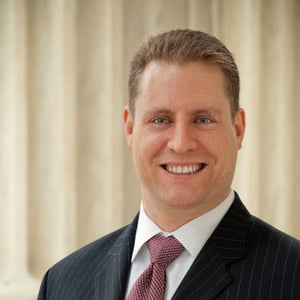
Senior Counsel, Schaerr Jaffe LLP
Ken Klukowski is senior counsel at the law firm Schaerr Jaffe, focusing on constitutional, administrative, and election law, and the federal courts. He has served in politically appointed positions in the U.S. government, including senior counsel in the Civil Division of the U.S. Department of Justice, and prior to that in the White House as special counsel in the Office of Management and Budget. He was also the constitutional rights advisor on the Presidential Transition Team of President Donald J. Trump. In the private sector, he has worked as a senior fellow of the American Constitutional Rights Union, senior counsel at First Liberty Institute, and a legal journalist. He litigates constitutional cases in the U.S. Supreme Court and lower federal courts, and contributes to media coverage of the nation’s highest court and legal issues. Earlier in his career, Klukowski served as special deputy attorney general of Indiana, and worked on faculty at Liberty University School of Law. His academic works have been published by journals such as the Federalist Society’s Harvard Journal of Law & Public Policy, and his columns have appeared in the Wall Street Journal and other national publications. His amicus briefs and nine law review articles have been cited by various federal courts and top legal journals. He has participated in numerous Supreme Court cases, and lectured and debated at 100 law school events nationwide. Klukowski received his bachelor’s degree from the University of Notre Dame, studied history at Arizona State University, earned his law degree from Scalia Law School at George Mason University, and served as a law clerk to Chief Judge Alice Batchelder on the U.S. Court of Appeals for the Sixth Circuit.
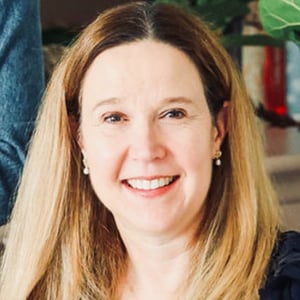
Reporter, SCOTUSblog
Amy Howe is the co-founder of SCOTUSblog, a news site devoted to coverage of the U.S. Supreme Court, and its primary reporter. She was part of the blog team that won a Peabody Award in 2013, as well as a National Press Club Journalism Award for Breaking News. Since the spring of 2025, she has also served as the Supreme Court analyst for the PBS NewsHour. In the fall of 2025, she is a fellow in Georgetown University's Institute of Politics.
Before turning to full-time journalism, Amy was a practicing lawyer and served as a lawyer in over two dozen cases at the Supreme Court, on issues ranging from international child custody to the death penalty, and argued two cases there. She has taught or co-taught courses on Supreme Court litigation at Vanderbilt Law School, Stanford Law School, and Harvard Law School. Amy is a graduate of the University of North Carolina at Chapel Hill and holds a master's in Arab Studies and a law degree from Georgetown University.

Topics
“Risk Corridors” Litigation Shows The U.S. Government Is A Risky Business Partner
Litigation currently pending before the U.S. Supreme Court is poised to determine whether and to...
Topics
Untangling The Guantanamo Military Commissions
Shortly after the September 11, 2001 terrorist attacks, (then-former) Attorney General William Barr told the Senate...
Deep Dive Episode 47 – The Songwriting Industry and Antitrust Consent Decrees
Kristen Osenga, Mark F. Schultz
Regulatory Transparency Project Teleforum
Most people would be surprised to discover that music is among the most regulated of...
Was Friedrich Hayek an Originalist? [POLICYbrief]
Michael B. Rappaport
Short video featuring Michael Rappaport
Did Friedrich Hayek view the Constitution through the lens of originalism? Professor Michael Rappaport, Director...
Topics
Moving the (Over-Regulated) Music Industry into Modern Times
Music - whether it is pop, rock, country, rap, hip-hop, or any other genre –...
Big Tech, Competition, and Antitrust Enforcement
Neil Chilson, Charlotte Slaiman
Regulatory Transparency Project Teleforum
Senator Elizabeth Warren recently claimed that big tech companies like Amazon, Google, and Facebook have...
Courthouse Steps Oral Argument: Department of Commerce v. New York: Citizenship and the Census
John S. Baker, Kenneth A. Klukowski
Sponsored by the Federalism & Separation of Powers Practice Group
On April 23, the Supreme Court will hear oral arguments in Department of Commerce v....
Topics
Defining the "Waters of the United States"
For decades, the Environmental Protection Agency (EPA) and the U.S. Army Corps of Engineers (Corps)...
Topics
Questioning Citizenship vs. Questioning the Question
It will be interesting to see how much of the upcoming Supreme Court argument in Department...
Department of Commerce v. New York [SCOTUSbrief]
Amy Howe
Short video featuring Amy Howe
While the Constitution grants Congress the authority to conduct the census, they have delegated that...