
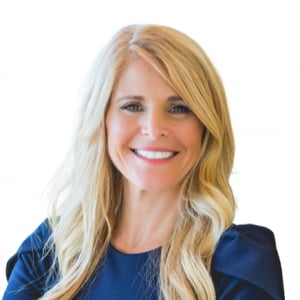
Senior Legal Counsel, Independent Women's Forum
Beth Parlato is the Senior Legal Advisor of Independent Women’s Law Center. Prior to joining IWLC, Beth was a trial litigator in New York State for over 30 years. During her time in private practice, Beth handled an array of matters in the areas of civil, family and business law, including representing not-for-profit organizations and churches. In 2020, she was among the first attorneys in the nation to represent clients in medical freedom and individual liberty litigation across the United States fighting unconstitutional COVID-19 mandates. Beth also served as a judge in New York for 12 years, presiding over criminal and civil matters, and had the honor of being the first female elected judge in Genesee County, NY. She has been a guest contributor to Fox News since 2016, as well as a frequent guest on conservative and Christian radio programs. Beth received a B.A. in Political Science from the University at Buffalo and earned her J.D. from Albany Law School in 1993.
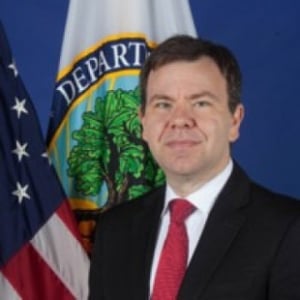
General Counsel, Mountain States Legal Foundation
William E. Trachman is General Counsel for Mountain States Legal Foundation, where he protects the rights of individuals to live freely and securely under the U.S. Constitution. Previously, he was appointed to serve in the Department of Education as Deputy Assistant Secretary in the Office for Civil Rights. Prior to his appointment, he served as General Counsel to the Douglas County School District, where he helped litigate the fight for school choice in the school district. Presently, Mr. Trachman serves as Chair of the Colorado Federalist Society and the Vice Chair of the U.S. Commission on Civil Rights’ Colorado Advisory Board. He previously taught as an Adjunct Professor at the University of Denver, Sturm College of Law. He attended U.C. Berkeley for both undergraduate and law school, and then clerked for the Honorable Harris Hartz on the 10th Circuit Court of Appeals. Mr. Trachman is licensed in Colorado, California, and Washington, D.C.
Senior Legal Counsel, Independent Women's Forum
Beth Parlato is the Senior Legal Advisor of Independent Women’s Law Center. Prior to joining IWLC, Beth was a trial litigator in New York State for over 30 years. During her time in private practice, Beth handled an array of matters in the areas of civil, family and business law, including representing not-for-profit organizations and churches. In 2020, she was among the first attorneys in the nation to represent clients in medical freedom and individual liberty litigation across the United States fighting unconstitutional COVID-19 mandates. Beth also served as a judge in New York for 12 years, presiding over criminal and civil matters, and had the honor of being the first female elected judge in Genesee County, NY. She has been a guest contributor to Fox News since 2016, as well as a frequent guest on conservative and Christian radio programs. Beth received a B.A. in Political Science from the University at Buffalo and earned her J.D. from Albany Law School in 1993.
General Counsel, Mountain States Legal Foundation
William E. Trachman is General Counsel for Mountain States Legal Foundation, where he protects the rights of individuals to live freely and securely under the U.S. Constitution. Previously, he was appointed to serve in the Department of Education as Deputy Assistant Secretary in the Office for Civil Rights. Prior to his appointment, he served as General Counsel to the Douglas County School District, where he helped litigate the fight for school choice in the school district. Presently, Mr. Trachman serves as Chair of the Colorado Federalist Society and the Vice Chair of the U.S. Commission on Civil Rights’ Colorado Advisory Board. He previously taught as an Adjunct Professor at the University of Denver, Sturm College of Law. He attended U.C. Berkeley for both undergraduate and law school, and then clerked for the Honorable Harris Hartz on the 10th Circuit Court of Appeals. Mr. Trachman is licensed in Colorado, California, and Washington, D.C.
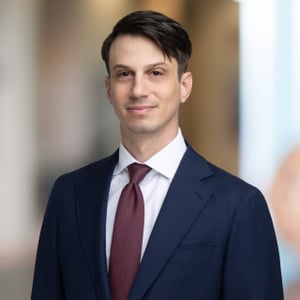
Associate, Alexander Dubose & Jefferson
Adam Shniderman is an associate at Alexander Dubose & Jefferson’s Dallas office, where he focuses on appellate litigation througout Texas.
Prior to joining the firm, Adam served as a staff attorney for Justice Evan A. Young of the Supreme Court of Texas, and a law clerk to Justice Brett Busby of the Supreme Court of Texas and Judge Jay S. Bybee of the U.S. Court of Appeals for the Ninth Circuit. Since law school, Adam has published on a variety of topics at the intersection of insurance coverage and crime. Adam earned his law degree from the University of Michigan Law School, where he graduated Magna Cum Laude and Order of the Coif and served on the law review.
Prior to his legal career, Adam was a tenure-track assistant professor of criminal justice at Texas Christian University. He holds a Ph.D. in Criminology, Law and Society from the University of California at Irvine. His research and publications focused on judgment and decisionmaking and issues relating to scientific evidence. Adam graduated with honors from Amherst College, with a B.A. in Law, Jurisprudence and Social Thought.
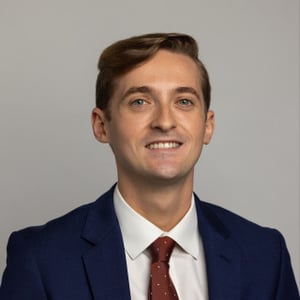
Litigation Fellow, Institute for Justice
Matt Liles is a Litigation Fellow at the Institute for Justice. He returns to IJ after having worked as both a law clerk and intern in IJ’s Arlington, Virginia office. In his role as a Litigation Fellow, Matt litigates cutting-edge constitutional cases protecting Americans' property rights and economic liberty.
Matt received his J.D. from the University of Texas School of Law, where he served on the executive board of the Texas Federalist Society and as Submissions Editor for the Texas Review of Law & Politics. He also received his B.A. in Government from the University of Texas. As an undergraduate, Matt was a plaintiff in a successful First Amendment lawsuit on behalf of campus free speech.
After completing the Fellowship, Matt will serve as a law clerk in the U.S. District Court for the Northern District of Texas. He is a member of the District of Columbia bar.
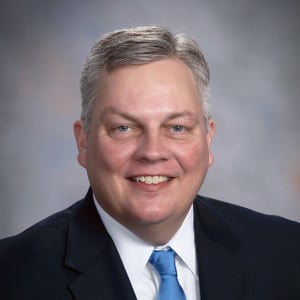
University Professor of Law and Religion and Director of the Eleanor H. McCullen Center for Law, Religion and Public Policy, Villanova University Charles Widger School of Law
Michael P. Moreland was appointed University Professor of Law and Religion and Director of the Eleanor H. McCullen Center for Law, Religion and Public Policy at Villanova University in 2017. Professor Moreland joined the Villanova faculty in 2006 and served as Vice Dean from 2012 to 2015. His research is primarily in the areas of torts, law and religion, constitutional law, and Catholic social thought, and he regularly teaches Torts, First Amendment, seminars in law and religion, and undergraduate courses in ethics.
Professor Moreland is the co-editor of Christianity and Private Law (Routledge, 2021), and his most recent publications include: “The Authority of Tradition: John Henry Newman and Legal Theory” in Christianity and the Making of Irish Law (Routledge, 2025); “Christianity and Torts” in The Oxford Handbook on Christianity and Law, (Oxford University Press, 2023); “Germaneness and Religious Liberty” in the Notre Dame Law Review (2023); “Contingency and Contestation in Christianity and Liberalism” in the Notre Dame Law Review (2023); “Friendship as the Primary Purpose of Law” in The American Journal of Jurisprudence 279 (2022); and “The Moral of Torts” (with Jeffrey Pojanowski) in Christianity and Private Law (Routledge, 2021).
Professor Moreland was a Visiting Professor of Law at the University of Notre Dame and the Mary Ann Remick Senior Visiting Fellow at the Notre Dame Center for Ethics and Culture from 2015 to 2017. He was the Forbes Visiting Fellow at Princeton University in the James Madison Program during academic year 2010-11. He has served as the project leader for grants from the John Templeton Foundation and the Charles Koch Foundation. He serves as the Chair of the Federalist Society’s Religious Liberties Practice Group Executive Committee and the Chair of the Board of Trustees of the Institute for Advanced Catholic Studies at the University of Southern California.
Professor Moreland received his BA in philosophy from the University of Notre Dame, his MA and PhD in theological ethics from Boston College, and his JD from the University of Michigan Law School. Following law school, Professor Moreland clerked for the Honorable Paul J. Kelly Jr., of the United States Court of Appeals for the Tenth Circuit and was an associate at Williams & Connolly LLP in Washington, DC, where he represented clients in First Amendment, professional liability, and products liability matters. Before coming to Villanova, he served as Associate Director for Domestic Policy at the White House under President George W. Bush, where he worked on a range of legal policy issues, including criminal justice, immigration, civil rights, and liability reform.
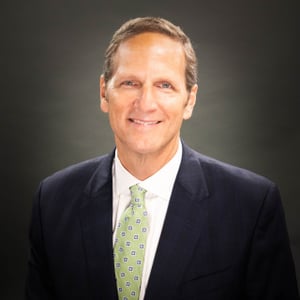
Senior Counsel, Alliance Defending Freedom
Phil Sechler serves as senior counsel at Alliance Defending Freedom, where he focuses on academic and religious freedom.
Before joining ADF, Sechler had a long career in private practice, with substantial first-chair trial experience in courts around the country on a variety of complex litigation matters. Sechler spent most of his career as a partner in the powerhouse law firm of Williams & Connolly LLP in Washington, D.C. He also was a partner in the litigation boutique of Robbins, Russell, Englert, Orseck & Untereiner LLP.
In August 2013, Sechler took a break from law practice to become a Distinguished Visitor from Practice at Penn State Law School, where he spent four years teaching courses in Evidence, Professional Responsibility, and Advocacy. He also taught at the Antonin Scalia School of Law at George Mason University and at the Georgetown University Law Center, where he continues to teach a course on Professional Responsibility.
Sechler received his bachelor’s degree with high distinction from Pennsylvania State University, and he earned his Juris Doctor from Georgetown University Law Center, where he graduated summa cum laude and was Editor-in-Chief of The Georgetown Law Journal. Following law school, he clerked for the Honorable Francis D. Murnaghan, Jr., of the U.S. Court of Appeals for the 4th Circuit.
Sechler is an active member of the District of Columbia Bar and is admitted to practice before the U.S. Supreme Court and numerous federal appellate and trial courts.
University Professor of Law and Religion and Director of the Eleanor H. McCullen Center for Law, Religion and Public Policy, Villanova University Charles Widger School of Law
Michael P. Moreland was appointed University Professor of Law and Religion and Director of the Eleanor H. McCullen Center for Law, Religion and Public Policy at Villanova University in 2017. Professor Moreland joined the Villanova faculty in 2006 and served as Vice Dean from 2012 to 2015. His research is primarily in the areas of torts, law and religion, constitutional law, and Catholic social thought, and he regularly teaches Torts, First Amendment, seminars in law and religion, and undergraduate courses in ethics.
Professor Moreland is the co-editor of Christianity and Private Law (Routledge, 2021), and his most recent publications include: “The Authority of Tradition: John Henry Newman and Legal Theory” in Christianity and the Making of Irish Law (Routledge, 2025); “Christianity and Torts” in The Oxford Handbook on Christianity and Law, (Oxford University Press, 2023); “Germaneness and Religious Liberty” in the Notre Dame Law Review (2023); “Contingency and Contestation in Christianity and Liberalism” in the Notre Dame Law Review (2023); “Friendship as the Primary Purpose of Law” in The American Journal of Jurisprudence 279 (2022); and “The Moral of Torts” (with Jeffrey Pojanowski) in Christianity and Private Law (Routledge, 2021).
Professor Moreland was a Visiting Professor of Law at the University of Notre Dame and the Mary Ann Remick Senior Visiting Fellow at the Notre Dame Center for Ethics and Culture from 2015 to 2017. He was the Forbes Visiting Fellow at Princeton University in the James Madison Program during academic year 2010-11. He has served as the project leader for grants from the John Templeton Foundation and the Charles Koch Foundation. He serves as the Chair of the Federalist Society’s Religious Liberties Practice Group Executive Committee and the Chair of the Board of Trustees of the Institute for Advanced Catholic Studies at the University of Southern California.
Professor Moreland received his BA in philosophy from the University of Notre Dame, his MA and PhD in theological ethics from Boston College, and his JD from the University of Michigan Law School. Following law school, Professor Moreland clerked for the Honorable Paul J. Kelly Jr., of the United States Court of Appeals for the Tenth Circuit and was an associate at Williams & Connolly LLP in Washington, DC, where he represented clients in First Amendment, professional liability, and products liability matters. Before coming to Villanova, he served as Associate Director for Domestic Policy at the White House under President George W. Bush, where he worked on a range of legal policy issues, including criminal justice, immigration, civil rights, and liability reform.
Senior Counsel, Alliance Defending Freedom
Phil Sechler serves as senior counsel at Alliance Defending Freedom, where he focuses on academic and religious freedom.
Before joining ADF, Sechler had a long career in private practice, with substantial first-chair trial experience in courts around the country on a variety of complex litigation matters. Sechler spent most of his career as a partner in the powerhouse law firm of Williams & Connolly LLP in Washington, D.C. He also was a partner in the litigation boutique of Robbins, Russell, Englert, Orseck & Untereiner LLP.
In August 2013, Sechler took a break from law practice to become a Distinguished Visitor from Practice at Penn State Law School, where he spent four years teaching courses in Evidence, Professional Responsibility, and Advocacy. He also taught at the Antonin Scalia School of Law at George Mason University and at the Georgetown University Law Center, where he continues to teach a course on Professional Responsibility.
Sechler received his bachelor’s degree with high distinction from Pennsylvania State University, and he earned his Juris Doctor from Georgetown University Law Center, where he graduated summa cum laude and was Editor-in-Chief of The Georgetown Law Journal. Following law school, he clerked for the Honorable Francis D. Murnaghan, Jr., of the U.S. Court of Appeals for the 4th Circuit.
Sechler is an active member of the District of Columbia Bar and is admitted to practice before the U.S. Supreme Court and numerous federal appellate and trial courts.

Will Maine Lose Federal Funding Over Civil Rights Enforcement?
Beth Parlato, William E. Trachman
Maine Governor Janet Mills and President Trump famously sparred at a lunch earlier this year,...
Will Maine Lose Federal Funding Over Civil Rights Enforcement?
Beth Parlato, William E. Trachman
Maine Governor Janet Mills and President Trump famously sparred at a lunch earlier this year,...
Topics
Executive Action Review: The First 100 Days of Trump’s Environmental Policy
We are now more than 100 days into the second Donald Trump administration, and the...
Topics
DOGE and the Future of Environmental Law
Since Inauguration Day, President Trump and his Cabinet have taken a range of important executive...
Texas Supreme Court Upholds the First New Appellate Court in Nearly Sixty Years
Adam Shniderman
For the first time in nearly sixty years, the Texas Legislature created a new appellate...
Topics
Crowe v. Oregon State Bar: New Cert Petition Urges SCOTUS to Reconsider Keller’s Approval of Mandatory Bar Membership
Imagine being forced to join a political group whose public statements offend your beliefs, simply...
Montana High Court Recognizes Executive-Privilege Exception to State Constitution’s Right-to-Know
Matt Liles
The Montana Constitution protects the right to examine documents held by any arm of the...
Topics
Oral Argument in Mahmoud v. Taylor: Petitioners Likely to Win, But How Far Will the Majority Go?
Last week, the Supreme Court heard oral argument in Mahmoud v. Taylor, with the argument...
Courthouse Steps Oral Argument: Oklahoma Statewide Charter School Board v. Drummond
Michael P. Moreland, Philip A. Sechler
On October 20, 2023, the Oklahoma Attorney General Gentner Drummond sued the Oklahoma Statewide Charter...
Courthouse Steps Oral Argument: Oklahoma Statewide Charter School Board v. Drummond
Michael P. Moreland, Philip A. Sechler
On October 20, 2023, the Oklahoma Attorney General Gentner Drummond sued the Oklahoma Statewide Charter...