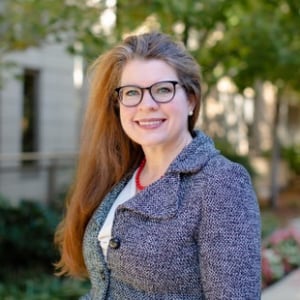
Principal, Legis Matters
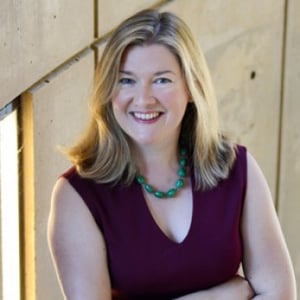
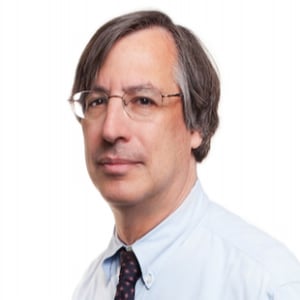
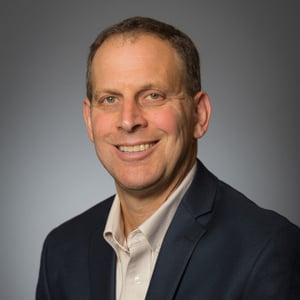
Karl T. Kurtz is principal of Legis Matters, a consulting firm that focuses on strengthening democratic institutions, especially legislatures, at home and abroad. He previously worked for the National Conference of State Legislatures (NCSL) from its founding in 1975 until his retirement in 2014.
Karl has written, consulted and lectured widely on American state legislatures, elections and public opinion. He is coauthor of Republic on Trial: The Case for Representative Democracy and coeditor of Institutional Change in American Politics: The Case of Term Limits. He has provided advice and assistance in the development of democratic institutions to legislators and legislative staff throughout the world. As a consultant to NCSL, Karl is currently leading a national study of how legislatures can overcome problems of political polarization and effectively reach settlements and negotiate differences on critical issues.
Before joining NCSL, Karl taught political science at the University of Georgia. He worked on the staff of the United States Congress as a Congressional Fellow of the American Political Science Association. He holds an AB degree from Oberlin College and a Ph.D. from Washington University (St. Louis).
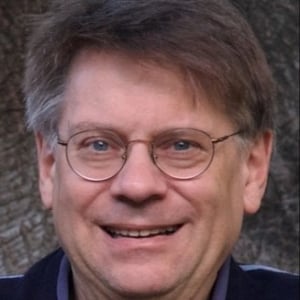
Former Congressman, VP and Dir., Center for Law and Government, Liberty University
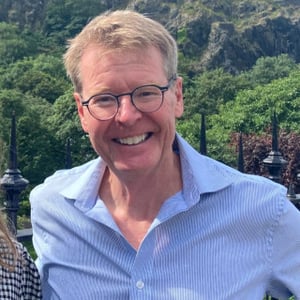
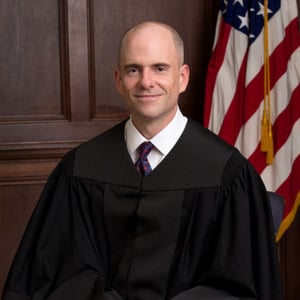
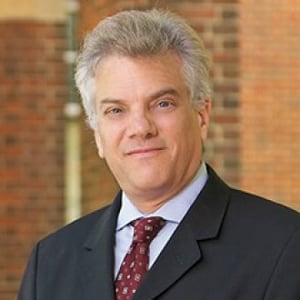
Former Congressman Hurt is the Vice President and Director of the Center for Law and Government at Liberty University. From 2011 to 2017 he represented Virginia’s 5th Congressional District in the U.S. House of Representatives and served on the House Financial Services Committee.
Congressman Hurt began his time in public service in 2001 as a member of the Chatham Town Council. From 2002 to 2007, Hurt served in the Virginia House of Delegates, and from 2008 to 2010, he represented the 19th District in the Senate of Virginia for two years.
Congressman Hurt lives in Chatham, Virginia with his wife, Kathy, and their three sons, Charles, Clement and John.
Principal, Legis Matters
Karl T. Kurtz is principal of Legis Matters, a consulting firm that focuses on strengthening democratic institutions, especially legislatures, at home and abroad. He previously worked for the National Conference of State Legislatures (NCSL) from its founding in 1975 until his retirement in 2014.
Karl has written, consulted and lectured widely on American state legislatures, elections and public opinion. He is coauthor of Republic on Trial: The Case for Representative Democracy and coeditor of Institutional Change in American Politics: The Case of Term Limits. He has provided advice and assistance in the development of democratic institutions to legislators and legislative staff throughout the world. As a consultant to NCSL, Karl is currently leading a national study of how legislatures can overcome problems of political polarization and effectively reach settlements and negotiate differences on critical issues.
Before joining NCSL, Karl taught political science at the University of Georgia. He worked on the staff of the United States Congress as a Congressional Fellow of the American Political Science Association. He holds an AB degree from Oberlin College and a Ph.D. from Washington University (St. Louis).
Former Congressman, VP and Dir., Center for Law and Government, Liberty University
Former Congressman Hurt is the Vice President and Director of the Center for Law and Government at Liberty University. From 2011 to 2017 he represented Virginia’s 5th Congressional District in the U.S. House of Representatives and served on the House Financial Services Committee.
Congressman Hurt began his time in public service in 2001 as a member of the Chatham Town Council. From 2002 to 2007, Hurt served in the Virginia House of Delegates, and from 2008 to 2010, he represented the 19th District in the Senate of Virginia for two years.
Congressman Hurt lives in Chatham, Virginia with his wife, Kathy, and their three sons, Charles, Clement and John.
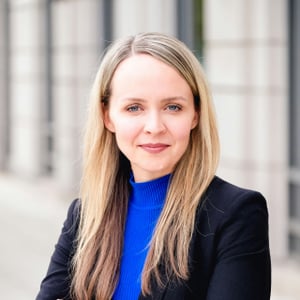
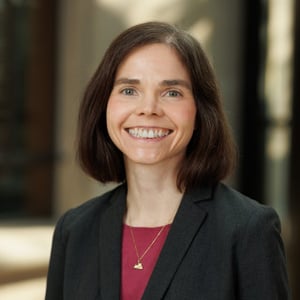
Director, Campaign Finance Strategy, Campaign Legal Center
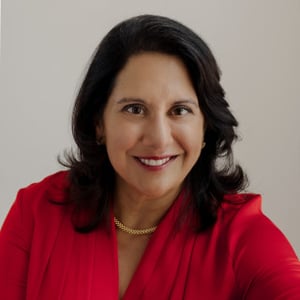
Erin Chlopak joined the Campaign Legal Center in August 2018, after spending nearly a decade working on a wide range of campaign finance issues in the Federal Election Commission’s Office of General Counsel. Her areas of focus include CLC’s appellate and district court litigation and its Federal Reform and State & Local Reform programs.
From 2017 to 2018, Erin served as the head of the FEC’s Policy Division, overseeing all of the Division’s work on FEC regulations, advisory opinions, and other legal policy guidance. From 2009 to 2017, Erin worked in the FEC’s Litigation Division as a staff attorney and then as Assistant General Counsel, litigating numerous constitutional and other campaign finance cases. She has argued before federal district and appellate courts, including before the en banc U.S. Court of Appeals for the D.C. Circuit in Holmes v. FEC, in which the court unanimously upheld the federal per-election limits on individual contributions to candidates.
Erin began her legal career as a litigation associate at Sullivan & Cromwell, after clerking for Judge Helen Gillmor of the U.S. District Court for the District of Hawaii. She received her undergraduate degree from Johns Hopkins University and her law degree from American University’s Washington College of Law.
Senior Attorney, National Taxpayers Union Foundation
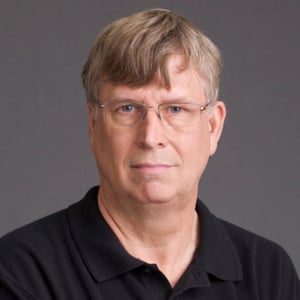
Tyler Martinez is a Senior Attorney at the Taxpayer Defense Center, the strategic litigation arm of National Taxpayers Union Foundation. He has experience setting up nonprofit public interest arms for multiple organizations in the Washington, DC area and thus has experience in First Amendment, Tax, and Administrative Law. He has practiced strategic litigation against government overreach since 2011, handling federal and state cases across the country.
Tyler’s interest in strategic public interest work and in tax law comes down to the simple principle: getting the government out of people’s business. Transparency is for the government, but privacy is for the people. He finds and focuses on examples of government overreach particularly those involving use of private information, dragnet data collection, and other attacks on privacy of association.
Tyler earned his Juris Doctor from the University of Colorado Law School, while winning accolades for his advocacy skills and serving as Executive Editor of the Journal on Telecommunications and High Technology Law. He is licensed to practice law in Colorado and the District of Columbia. He is further admitted to the bars of the following federal courts: Supreme Court of the United States, D.C. Circuit, First Circuit, Second Circuit, Third Circuit, Fourth Circuit, Fifth Circuit, Eighth Circuit, Tenth Circuit, and various federal district courts across the country.
Chief Counsel, Constitutional Accountability Center
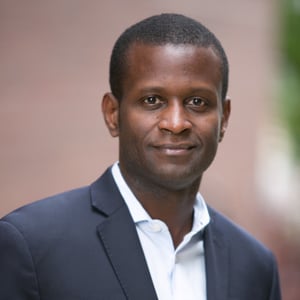
Brianne is Constitutional Accountability Center’s Chief Counsel. Brianne joined CAC from private practice at O'Melveny & Myers (OMM), where she was Counsel in the firm’s Supreme Court and appellate practice. From 2009-11, prior to joining OMM, Brianne was an Attorney-Adviser in the Office of Legal Counsel at the U.S. Department of Justice. She also served as a law clerk for Justice Stephen Breyer on the U.S. Supreme Court, a law clerk for Judge Robert A. Katzmann on the U.S. Court of Appeals for the Second Circuit, and a law clerk for Judge Jed S. Rakoff on the U.S. District Court for the Southern District of New York. Brianne’s academic writings have appeared in the Yale Law Journal, the Duke Law Journal, the Northwestern University Law Review, the Washington Law Review, the American University Law Review, and the Yale Law & Policy Review. Brianne received her J.D. from Yale Law School and her M.A./B.S. from Emory University. Her master's thesis in political science examined judicial behavior on the U.S. Supreme Court.
Professor of Law and Executive Director, Law and Economics Center, Antonin Scalia Law School, George Mason University
Donald Kochan is Professor of Law and Executive Director of the Law & Economics Center (LEC). Professor Kochan is an elected member of the American Law Institute (ALI) and serves as an Adviser to ALI's Restatement of the Law Fourth, Property project. Professor Kochan is a Nonresident Scholar at the Center for the Constitution at Georgetown University Law Center, where he was a Visiting Scholar in residence during Fall 2018. Before joining the Antonin Scalia Law School faculty, he was the Parker S. Kennedy Professor in Law at Chapman University’s Dale E. Fowler School of Law from 2004 to 2020. From 2003 to 2004, Professor Kochan was an Olin Fellow at the University of Virginia School of Law. During 2002-2003, he was a Visiting Assistant Professor of Law at George Mason’s Scalia Law School.
Professor Kochan’s scholarship focuses on areas of property law, constitutional law, administrative law, local government law, natural resources and environmental law, and law & economics. He has published several books and more than 50 scholarly articles and essays in well-regarded law journals. His work has been cited in more than a dozen state and federal court opinions, in more than 75 briefs filed in state and federal courts including more than 25 filed in the U.S. Supreme Court, in dozens of books and treatises, and in more than 800 scholarly articles.
Professor Kochan received his JD from Cornell Law School, where he was a John M. Olin Scholar in Law and Economics and managing editor of the Cornell International Law Journal. During law school, he also served as editor and executive editor of the Harvard Journal of Law & Public Policy symposium issues in 1997 and 1998. He received his BA from Western Michigan University, magna cum laude, with majors in both political science and philosophy, where he studied as the John W. Gill Medallion Scholar and was honored as the Presidential Scholar (awarded to the top graduate in the political science department).
After graduating from law school, Professor Kochan was a law clerk to The Honorable Richard F. Suhrheinrich of the United States Court of Appeals for the Sixth Circuit. Following his clerkship, Professor Kochan was an associate with the firm of Crowell & Moring LLP in Washington, D.C., where he specialized in natural resources & environmental law as well as tort, products, and consumer civil litigation & legislative affairs.
Senior Attorney, Pacific Legal Foundation
Glenn Roper joined Pacific Legal Foundation in 2019. Based in Colorado, he litigates across the country on behalf of individuals and organizations to advance the principles of individual freedom, separation of powers, and the rule of law.
With experience in both private practice and government, Roper has seen the dangers posed to liberty when agencies, bureaucrats, and politicians ignore individual rights in favor of expediency or advancing a political agenda. His interest in combating those dangers spans PLF’s practice areas, including equal protection, separation of powers, environmental law, property rights, and the First Amendment.
Although he grew up in California’s Central Valley, Roper has spent most of his career in the Mountain West. Immediately prior to joining PLF, he served as Deputy Solicitor General in Colorado’s Office of the Attorney General, where he handled select appellate and constitutional litigation on behalf of the State and its agencies and officials. Before joining the Attorney General’s Office, Roper was a partner in a Denver law firm, where he focused on complex civil litigation, e-discovery, and appellate matters. He previously served as Deputy Associate Counsel in the White House Counsel’s Office for President George W. Bush and as a law clerk to Judge David M. Ebel of the Tenth Circuit Court of Appeals. He graduated first in his class from Brigham Young University Law School.
Senior Counsel and VP, Appellate Advocacy, Alliance Defending Freedom
John Bursch is senior counsel and vice president of appellate advocacy with Alliance Defending Freedom. Bursch has argued 12 U.S. Supreme Court cases and more than 30 state supreme court cases since 2011, and a recent study concluded that among all frequent Supreme Court advocates who did not work for the federal government, he had the 3rd highest success rate for persuading justices to adopt his legal position.
Bursch served as solicitor general for the state of Michigan from 2011-2013. He has argued multiple Michigan Supreme Court cases in eight of the last ten terms and has successfully litigated hundreds of matters nationwide, including six with at least $1 billion at stake. As part of his private firm, Bursch Law PLLC, he has represented Fortune 500 companies, foreign and domestic governments, top public officials, and industry associations in high-profile cases, primarily on appeal. He was inducted into the American Academy of Appellate Lawyers and serves as a member of the American Law Institute. His work has resulted in repeated listings in Michigan Super Lawyers and Best Lawyers.
Before entering private practice, Bursch served as a law clerk to the Honorable James B. Loken on the U.S. Court of Appeals for the 8th Circuit. He received his J.D. magna cum laude in 1997 from the University of Minnesota Law School, where he served as Chief Note & Comment Editor for the Minnesota Law Review. Prior to that, he attended Western Michigan University, where he received degrees in mathematics and music performance summa cum laude.
Topics
Hernandez v. Mesa
On November 12, 2019, the Supreme Court will once again take up Hernandez v. Mesa on...
Topics
Nondelegation After Gundy
While the Supreme Court repeatedly has proclaimed that Congress cannot delegate its law-making power, in...
Topics
The Recurring Money Question
As Wayne says, the question of money is always a hot topic. How money fits...
Topics
Questions about Money
A retired university professor, a veteran central bank watcher, the former head of a Federal...
Topics
51 Imperfect Solutions for the Ethical Practice of Law
Each of the States and the District of Columbia regulates the practice of law. In...
Necessary & Proper Episode 50: Laboratories of Democracy, Part 2: Can Congress learn from State Legislatures?
Karl Kurtz, Robert Hurt
The concept of states serving as important test cases for national governance dates to the...
Necessary & Proper Episode 50: Laboratories of Democracy, Part 2: Can Congress learn from State Legislatures?
Karl Kurtz, Robert Hurt
The concept of states serving as important test cases for national governance dates to the...
Is It Transparency or Is It Censorship? Washington Post v. McManus
Erin Chlopak, Tyler Martinez
In Washington Post v. McManus, various newspapers brought suit to strike down a new Maryland law...
Courthouse Steps Preview Teleforum: County of Maui, Hawaii v. Hawaii Wildlife Fund
Brianne Gorod, Donald J. Kochan, Glenn Roper
The oral argument for County of Maui, Hawaii v. Hawaii Wildlife Fund will be heard before...
Sexual Orientation Consolidated - Post-Argument SCOTUScast
John J. Bursch
featuring John Bursch
On October 8, 2019, the U.S. Supreme Court heard argument in two consolidated cases asking...