
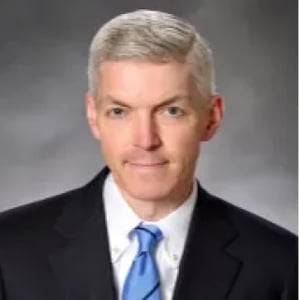
Executive Vice President, Chief Legal Officer, Gates Corporation
Matthew R. A. Heiman joined the Company in May 2026 and has served as the Company’s Chief Legal Officer and Corporate Secretary since June 2026. As Chief Legal Officer, Mr. Heiman is responsible for all legal functions for Gates, including securities and corporate governance, M&A, litigation, commercial, regulatory, compliance, patents and trademarks, real estate, employment and labor, sustainability and environmental matters. Prior to joining Gates, Mr. Heiman held senior legal leadership roles at Waystar, where he served as Chief Legal & Administrative Officer from 2023 to 2025 and as General Counsel and Corporate Secretary from 2020 to 2023. Prior to that, he was with Johnson Controls, where he served as Vice President, Corporate Secretary, and Associate General Counsel. Mr. Heiman has been a Senior Fellow for the National Security Institute at George Mason University’s Antonin Scalia School of Law since 2018.
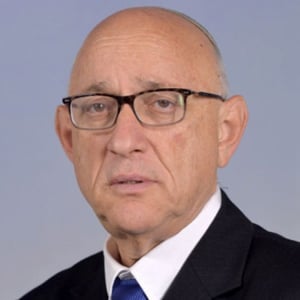
Senior Fellow, Foundation for Defense of Democracies
BG (Res.) Professor Jacob Nagel is a senior fellow at FDD and a visiting professor at the Technion Aerospace Engineering Faculty. Nagel was a career Israeli civil servant official (IDF, Defense Ministry and Prime Minister’s Office) for over 40 years.
From January 2016 to May 2017, Jacob served as the head of Israel’s National Security Council (NSC) and as Prime Minister Benjamin Netanyahu’s National Security Advisor (acting). He led the negotiations and signed the agreement for 38 billion dollar military aid to Israel from 2018 to 2027.
From May 2011 to December 2015, Jacob headed the Strategic and Defense Policy Directorate at Israel’s NSC, where he led the Israeli experts team working with the countries that negotiated the Joint Comprehensive Plan of Action (JCPOA), commonly known as the Iran nuclear deal.
From April 1996 to April 2011, Jacob held various positions at Israel’s Ministry of Defense, Directorate of Defense Research and Development, including the head of military R&D (acting), and Directorate’s Scientific Deputy, he headed the so-called “Nagel Committee,” which was responsible for Israel’s decision to develop Iron Dome as the nation’s short-range defense system.
From October 1979 to April 1996, Jacob served in several positions at the Israel Defense Forces (IDF), in the elite Israel SIGINT National Unit (known as Unit 8200).
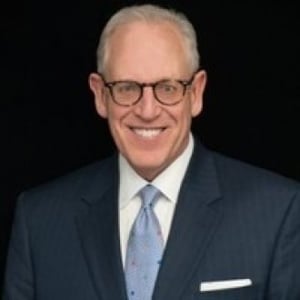
Senior Fellow, George Mason University National Security Institute
Bryan Smith is a Senior Fellow at the George Mason University National Security Institute.
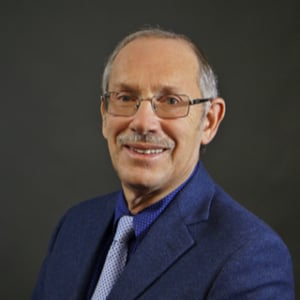
Senior Fellow, CNA
Dov Zakheim is an expert in defense strategy, programs and budgets, defense acquisition and contracting, defense-industrial collaboration, inter-agency process, Iraq, missile defense, and naval strategy, policy and organization. His research and analysis, as well as policymaking responsibilities, span the gamut of defense planning, programming and budgeting issues, wartime contracting and acquisition, and major developments in Europe, the Middle East, North Africa and East and Southeast Asia. He is also an Executive Advisor to the Chief of Naval Operations.
Previously, Zakheim was Senior Vice President of Booz Allen Hamilton, where he led the firm's support of U.S. Combatant Commanders worldwide. He also served as Under Secretary of Defense (Comptroller) and Chief Financial Officer for the Department of Defense, coordinator of DOD's civilian programs in Afghanistan, and Deputy Under Secretary of Defense for Planning and Resources in the Office of the Under Secretary of Defense (Policy). He is a member of the boards of several institutions, including the Atlantic Council, the Center for the National Interest, the Foreign Policy Research Institute and the Defense Business Board of the DOD.
Zakheim has a D.Phil. in Economics and Politics from St. Antony's College at the University of Oxford and a B.A. in Government from Columbia University. He speaks French and Hebrew.
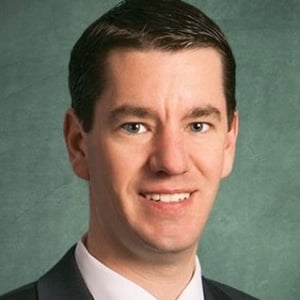
Litigation and Alternative Dispute Resolution Practice Group Member, Bodman PLC
Mr. Rheaume is a member of Bodman's Litigation and Alternative Dispute Resolution Practice Group. He represents clients involved in complex commercial litigation matters and serves as local counsel for national and international law firms.
Mr. Rheaume has been selected to the Michigan Super Lawyers® Rising Stars list since 2013 for business litigation. Prior to joining Bodman, he served as a law clerk to Justice Stephen J. Markman of the Michigan Supreme Court. Based on this experience, Mr. Rheaume is an integral team member of the firm's Appellate Law Practice Group. He has written appellate and amicus briefs in state and federal appellate courts, including the United States Supreme Court.
Mr. Rheaume is President of The Federalist Society-Michigan Chapter. He serves on the alumni board of the Sigma Chi Fraternity of Michigan State University. He is also a board member of the Detroit Economic Club's Young Leader Program.
Mr. Rheaume graduated from Michigan State University College of Law ranked first in his class. While there, he served as an associate editor on The Michigan State Law Review and received Jurisprudence Awards for outstanding achievement in Secured Transactions, Professional Responsibility, Insurance Law, Construction Law, Decedents Estates & Trusts, Bankruptcy, Negotiations, and Income Taxation.
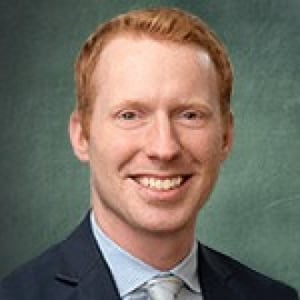
Litigation and Alternative Dispute Resolution Practice Group Member, Bodman PLC
Mr. Kangas is a member of Bodman PLC’s Litigation and ADR Group. He represents diverse clients in complex commercial disputes in both state and federal courts.
Prior to joining Bodman, Mr. Kangas clerked for Hon. Ralph B. Guy, Jr. of the U.S. Court of Appeals for the Sixth Circuit and Hon. Stephen J. Murphy, III of the U.S. District Court for the Eastern District of Michigan. As a law student, he interned with Chief Justice Robert P. Young of the Michigan Supreme Court and Hon. Robert H. Cleland of the U.S. District Court for the Eastern District of Michigan.
While in law school, Mr. Kangas served as Editor of the Michigan Journal of Gender and Law, as President of the Catholic Law Students Association, and as Publicity Chair of the Federalist Society. He also served as a volunteer Student Attorney with the University of Michigan Law School’s Unemployment Insurance Project. Following law school, Mr. Kangas was accepted into the Georgetown Center for the Constitution's Originalism seminar.
Prior to practicing law, Mr. Kangas founded a presentation consulting firm, advising professionals and organizations on persuasive and impactful presentation skills.
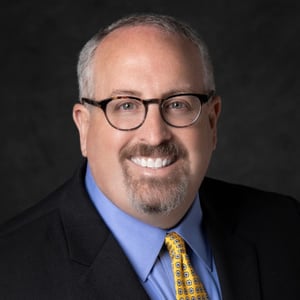
Partner/Member, Hinkle Law Firm
Brad Schlozman is a partner at Hinkle Law Firm in Wichita, KS, where his practice is primarily concentrated on Employee Benefits/ERISA law, as well as government investigations. In his employee benefits work, Brad represents plans, employers, third-party administrators, record-keepers, investment advisors, financial institutions, insurance brokers, and various fiduciaries, helping them to achieve and maintain compliance with the array of laws, regulations, and guidance governing qualified and welfare benefit issues. In his government investigations practice, Brad represents states, municipalities, and law enforcement organizations around the country that are being investigated by the U.S. Department of Justice and state regulatory agencies on various civil rights issues. Representations typically cover voting rights issues, disability matters, as well as a range of policing and law enforcement issues.
Prior to joining the firm, Brad held a series of high-level posts in the Department of Justice, including United States Attorney for the Western District of Missouri, Acting Assistant Attorney General of the Civil Rights Division, and Counsel to the Deputy Attorney General.
Brad graduated from the University of Pennsylvania and received his juris doctor from the George Washington University Law School. After law school, Brad completed a two-year federal judicial clerkship with Chief U.S. District Judge G. Thomas VanBebber of the District of Kansas. He then clerked for an additional year for U.S. Circuit Judge Mary Beck Briscoe of the U.S. Court of Appeals for the Tenth Circuit.
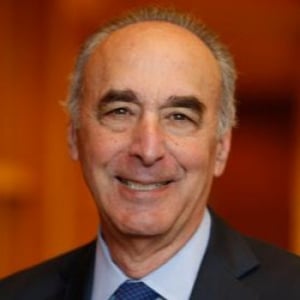
David and Mary Harrison Distinguished Professor of Law, University of Virginia School of Law
Kenneth Abraham is one of the nation’s leading scholars and teachers in the fields of torts and insurance law. He is a fellow of the American Academy of Arts and Sciences and a life member of the American Law Institute. For 20 years he served on the Council of the ALI — the board of lawyers, judges and academics that governs the Institute. He is also an adviser to the ALI’s Restatement of Torts (Third) and Restatement of the Law of Liability Insurance. He has served on a number of other boards and commissions concerned with tort law and insurance reform.
Abraham is a recipient of the All-University of Virginia Outstanding Teacher Award, the Distinguished Faculty Achievement Certificate from the State Council of Higher Education for Virginia for "outstanding achievement in teaching, research and public service,” and the American Bar Association's Robert B. McKay Law Professor Award, given for "outstanding contributions to tort and insurance law." He has been a visiting professor at Harvard Law School and Case Western Reserve Law School.
Abraham is the author of more than 60 law review articles and five books. His first book, "Distributing Risk: Insurance, Legal Theory, and Public Policy" (1986), brought modern legal theory to the study of insurance law. His torts treatise, "The Forms and Functions of Tort Law" (5th ed. 2017), has become a basic text for first-year law students across the country. And his casebook, "Insurance Law and Regulation" (6th ed. 2015) has been used as the principal text in courses on insurance law in more than 100 American law schools.
Abraham has been a consulting counsel and an expert witness in a variety of major insurance coverage cases, involving commercial general liability, directors and officers liability, environmental cleanup liability, toxic tort and products liability, and property insurance claims. He has also served as an arbitrator for the Dalkon Shield Claimants Trust, resolving over 100 claims by women seeking damages for injuries caused by the Dalkon Shield intrauterine device, both in the United States and Europe.
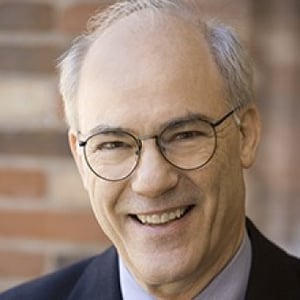
Walter E. Meyer Professor Emeritus of Property and Urban Law and Professorial Lecturer in Law, Yale Law School
Robert C. Ellickson was appointed Walter E. Meyer Professor of Property and Urban Law at Yale Law School in 1988. He has published numerous articles in legal and public policy journals on topics such as land use and housing policy, land tenure systems, social norms, homelessness, and the organization of households, community associations, and cities. Professor Ellickson’s books include Order Without Law: How Neighbors Settle Disputes (1991) (awarded the Order of the Coif Triennial Book Award in 1996), The Household: Informal Order Around the Hearth (2008), Land Use Controls: Cases and Materials (4th edition 2013, with Vicki Been, Roderick M. Hills, Jr. and Christopher Serkin), and Perspectives on Property Law (4th edition 2014, with Carol M. Rose and Henry E. Smith). He has written about ancient systems of land tenure and also periodically teaches a seminar on the history of development of the City of New Haven. Robert Ellickson was a member of the USC Law Faculty in 1970–1981, and the Stanford Law Faculty in 1981–88. He also has been a visiting professor at the Harvard and University of Chicago Law Schools. He was a founding member and later a director of the American Law and Economics Association, and served as its President in 2000–01. In 2016, the Association awarded him the Ronald H. Coase Medal in recognition of his scholarly contributions. Professor Ellickson served as an adviser during the American Law Institute’s preparation of the Restatement, Third, Property—Servitudes, and currently serves in the same capacity for the Restatement (Fourth) of Property. He is a fellow of the American Academy of Arts and Sciences, and, in 2008, received the William & Mary Law School’s Brigham-Kanner Property Rights Prize for Property Scholarship. At Yale Law School he has served as Deputy Dean (1991–92) and, during the reconstruction of the Sterling Law buildings, as chairman of the Building Committee. Prior to entering teaching in 1970, he worked for a Presidential commission on housing policy and then for Levitt & Sons, the homebuilding firm. Professor Ellickson is married to Lynn Hammer and has two children. For many decades he competed in competitive Scrabble tournaments and, during intervals when fortune smiled, was ranked as one of the top 20 players in the United States.
Former Executive Vice President of Academics, Atlas Network
Leonard P. Liggio was the Executive Vice President of Academics at the Atlas Network for the last two decades of his life. He was born July 5, 1933 and died Oct. 14, 2014, at the age of 81.
Leonard’s career advancing liberty spanned seven decades, during which time he served as the President of the Mont Pelerin Society, the Philadelphia Society, and the Institute for Humane Studies, where he later continued to serve as its Distinguished Senior Scholar. He was a professor at George Mason University, a visiting professor at the Universidad Francisco Marroquín, a board member of the Competitive Enterprise Institute, and a Trustee of Liberty Fund.
Leonard’s lifelong work for liberty won him acclaim among diverse audiences. In 2007, he was recognized with the Adam Smith Award, the highest prize bestowed by the Association of Private Enterprise Education. In 2011, he received a Lifetime Achievement Award from the Society for the Development of Austrian Economics. That same year, the then-nascent organization Students for Liberty published an interview with Leonard that called him “The Original Student for Liberty.”
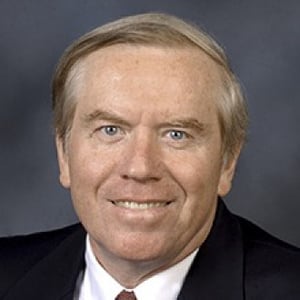
Edward J. Phelps Professor of Law and Economics and Kauffman Distinguished Research Scholar in Law, Economics, and Entrepreneurship, Yale Law School
Professor George L. Priest passed away on Dec. 17, 2024. Please read his obituary here.
George L. Priest is the Edward J. Phelps Professor of Law and Economics and Kauffman Distinguished Research Scholar in Law, Economics, and Entrepreneurship at Yale Law School. An internationally recognized expert, Professor Priest has focused his research over the past two decades on antitrust, the operation of private and public insurance, and the role of the legal system in promoting economic growth. He joined Yale Law School in 1981 and is co-director of the John M. Olin Center for Law, Economics and Public Policy, which facilitates the scholarly work of the Yale law and economics faculty and supports student interest and research in the field. Before coming to Yale, Professor Priest taught law at the University of Chicago, SUNY/Buffalo, and UCLA. His subject areas are antitrust; capitalism; regulated industries; torts; and insurance and public policy. Professor Priest holds a B.A. from Yale and a J.D. from the University of Chicago.
David and Mary Harrison Distinguished Professor of Law, University of Virginia School of Law
Kenneth Abraham is one of the nation’s leading scholars and teachers in the fields of torts and insurance law. He is a fellow of the American Academy of Arts and Sciences and a life member of the American Law Institute. For 20 years he served on the Council of the ALI — the board of lawyers, judges and academics that governs the Institute. He is also an adviser to the ALI’s Restatement of Torts (Third) and Restatement of the Law of Liability Insurance. He has served on a number of other boards and commissions concerned with tort law and insurance reform.
Abraham is a recipient of the All-University of Virginia Outstanding Teacher Award, the Distinguished Faculty Achievement Certificate from the State Council of Higher Education for Virginia for "outstanding achievement in teaching, research and public service,” and the American Bar Association's Robert B. McKay Law Professor Award, given for "outstanding contributions to tort and insurance law." He has been a visiting professor at Harvard Law School and Case Western Reserve Law School.
Abraham is the author of more than 60 law review articles and five books. His first book, "Distributing Risk: Insurance, Legal Theory, and Public Policy" (1986), brought modern legal theory to the study of insurance law. His torts treatise, "The Forms and Functions of Tort Law" (5th ed. 2017), has become a basic text for first-year law students across the country. And his casebook, "Insurance Law and Regulation" (6th ed. 2015) has been used as the principal text in courses on insurance law in more than 100 American law schools.
Abraham has been a consulting counsel and an expert witness in a variety of major insurance coverage cases, involving commercial general liability, directors and officers liability, environmental cleanup liability, toxic tort and products liability, and property insurance claims. He has also served as an arbitrator for the Dalkon Shield Claimants Trust, resolving over 100 claims by women seeking damages for injuries caused by the Dalkon Shield intrauterine device, both in the United States and Europe.
Walter E. Meyer Professor Emeritus of Property and Urban Law and Professorial Lecturer in Law, Yale Law School
Robert C. Ellickson was appointed Walter E. Meyer Professor of Property and Urban Law at Yale Law School in 1988. He has published numerous articles in legal and public policy journals on topics such as land use and housing policy, land tenure systems, social norms, homelessness, and the organization of households, community associations, and cities. Professor Ellickson’s books include Order Without Law: How Neighbors Settle Disputes (1991) (awarded the Order of the Coif Triennial Book Award in 1996), The Household: Informal Order Around the Hearth (2008), Land Use Controls: Cases and Materials (4th edition 2013, with Vicki Been, Roderick M. Hills, Jr. and Christopher Serkin), and Perspectives on Property Law (4th edition 2014, with Carol M. Rose and Henry E. Smith). He has written about ancient systems of land tenure and also periodically teaches a seminar on the history of development of the City of New Haven. Robert Ellickson was a member of the USC Law Faculty in 1970–1981, and the Stanford Law Faculty in 1981–88. He also has been a visiting professor at the Harvard and University of Chicago Law Schools. He was a founding member and later a director of the American Law and Economics Association, and served as its President in 2000–01. In 2016, the Association awarded him the Ronald H. Coase Medal in recognition of his scholarly contributions. Professor Ellickson served as an adviser during the American Law Institute’s preparation of the Restatement, Third, Property—Servitudes, and currently serves in the same capacity for the Restatement (Fourth) of Property. He is a fellow of the American Academy of Arts and Sciences, and, in 2008, received the William & Mary Law School’s Brigham-Kanner Property Rights Prize for Property Scholarship. At Yale Law School he has served as Deputy Dean (1991–92) and, during the reconstruction of the Sterling Law buildings, as chairman of the Building Committee. Prior to entering teaching in 1970, he worked for a Presidential commission on housing policy and then for Levitt & Sons, the homebuilding firm. Professor Ellickson is married to Lynn Hammer and has two children. For many decades he competed in competitive Scrabble tournaments and, during intervals when fortune smiled, was ranked as one of the top 20 players in the United States.
Former Executive Vice President of Academics, Atlas Network
Leonard P. Liggio was the Executive Vice President of Academics at the Atlas Network for the last two decades of his life. He was born July 5, 1933 and died Oct. 14, 2014, at the age of 81.
Leonard’s career advancing liberty spanned seven decades, during which time he served as the President of the Mont Pelerin Society, the Philadelphia Society, and the Institute for Humane Studies, where he later continued to serve as its Distinguished Senior Scholar. He was a professor at George Mason University, a visiting professor at the Universidad Francisco Marroquín, a board member of the Competitive Enterprise Institute, and a Trustee of Liberty Fund.
Leonard’s lifelong work for liberty won him acclaim among diverse audiences. In 2007, he was recognized with the Adam Smith Award, the highest prize bestowed by the Association of Private Enterprise Education. In 2011, he received a Lifetime Achievement Award from the Society for the Development of Austrian Economics. That same year, the then-nascent organization Students for Liberty published an interview with Leonard that called him “The Original Student for Liberty.”
Edward J. Phelps Professor of Law and Economics and Kauffman Distinguished Research Scholar in Law, Economics, and Entrepreneurship, Yale Law School
Professor George L. Priest passed away on Dec. 17, 2024. Please read his obituary here.
George L. Priest is the Edward J. Phelps Professor of Law and Economics and Kauffman Distinguished Research Scholar in Law, Economics, and Entrepreneurship at Yale Law School. An internationally recognized expert, Professor Priest has focused his research over the past two decades on antitrust, the operation of private and public insurance, and the role of the legal system in promoting economic growth. He joined Yale Law School in 1981 and is co-director of the John M. Olin Center for Law, Economics and Public Policy, which facilitates the scholarly work of the Yale law and economics faculty and supports student interest and research in the field. Before coming to Yale, Professor Priest taught law at the University of Chicago, SUNY/Buffalo, and UCLA. His subject areas are antitrust; capitalism; regulated industries; torts; and insurance and public policy. Professor Priest holds a B.A. from Yale and a J.D. from the University of Chicago.
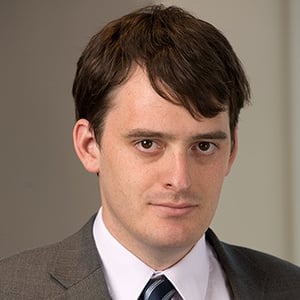
Head of Tech & Innovation, Centre for Policy Studies
Matthew Feeney is Head of Tech & Innovation at Centre for Policy Studies. Before joining CPS, Matthew was the director of Cato Institute’s Project on Emerging Technologies. His writing has appeared in The New York Times, The Washington Post, City A.M., and others. He received both his BA and MA in philosophy from the University of Reading.
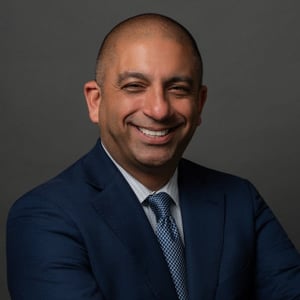
Founder and Executive Director, National Security Institute; Assistant Professor of Law, Antonin Scalia Law School, George Mason University
Jamil N. Jaffer is the Founder and Executive Director of the National Security Institute at the Antonin Scalia Law School at George Mason University where he also serves as an Assistant Professor of Law, Director of the National Security Law and Policy Program, and Director of the Cyber, Intelligence, and National Security LLM Program. Jamil also teaches classes on counterterrorism, intelligence, surveillance, cybersecurity, and other national security matters, as well as a summer course held abroad with U.S. Supreme Court Justice Neil M. Gorsuch. Jamil is also affiliated with Stanford University’s Center for International Security and Cooperation and previously served as a Visiting Fellow at the Hoover Institution from 2016 to 2019.
Jamil is also a Venture Partner with Paladin Capital Group, where he assists the firm with investments across the full range of its themes and theses, including a focus on dual-use national security technologies. Jamil also serves on the board of directors of RangeForce, a cybersecurity training and readiness platform startup and Tozny, a digital identity startup, and on the advisory boards of U.S. Strategic Metals, North America’s largest primary producer of cobalt, a critical mineral used in EV batteries, aerospace, and other national security applications; and Constella Intelligence, a deep and dark web intelligence startup. Jamil also serves as an advisor to Beacon Global Strategies, a strategic advisory firm and Duco, a technology platform startup that connects corporations with geopolitical and international business experts. Jamil is also the managing director of Trigraph Caveat Capital, a private investment vehicle.
Among other things, Jamil currently serves on the Board of Directors for the Greater Washington Board of Trade, the Board of Advisors for the Global Cyber Alliance, and the Advisory Board of the Foundation for the Defense of Democracies’ Center on Cyber and Tech Innovation, the Executive Committee of the Reagan Institute Strategy Group. Jamil is also a Fellow at the Academy for Judaic, Christian, and Islamic Studies, an advisor to the Concordia Summit, and is a member of the Board of Directors for the Center for Intelligence Policy, the Board of Directors of Speech First, and the Executive Committee of the International Law and National Security Practice Group of the Federalist Society.
Immediately prior to his current positions, from 2015-2021, Jamil served as a senior business leader at IronNet Cybersecurity, helping take the company from a bootstrapped first-year technology products startup through two rounds of venture capital fundraising, growing from 40 employees to over 300, and through its listing on New York Stock Exchange. In his role as IronNet's Senior Vice President for Strategy, Partnerships & Corporate Development, Jamil worked directly for the co-CEOs of the company, Gen (ret.) Keith B. Alexander, the former Director of the National Security Agency and Founding Commander of U.S. Cyber Command, and Bill Welch, the former COO of Zscaler and Duo; in that role, Jamil led all of the company’s strategic and technology partnership efforts, including developing go-to-market and technology integration plans with some of the largest cloud platforms and cybersecurity companies in the market, evaluating potential acquisition targets, and developing overall corporate strategy and thought leadership around collective security and collaborative defense in the cyber arena.
Prior to his time at IronNet, Jamil served on the leadership team of the Senate Foreign Relations Committee as Chief Counsel and Senior Advisor under Chairman Bob Corker (R-TN), where he worked on key national security and foreign policy issues, including leading the drafting of the proposed Authorization for the Use of Military Force against ISIS in 2014 and 2015, the AUMF against Syria in 2013, and revisions to the 9/11 AUMF against al Qaeda. Jamil was also the lead architect of the Iran Nuclear Agreement Review Act and two sanctions laws against Russia for its first intervention in Ukraine.
Prior to joining SFRC, Jamil served as Senior Counsel to the House Permanent Select Committee on Intelligence under Chairman Mike Rogers (R-MI) where he led the committee’s oversight of NSA surveillance, NRO intelligence issues, and NGA analytic and collection matters, as well as intelligence community-wide counterterrorism issues. Jamil was also the lead architect of the Cyber Intelligence Sharing and Protection Act, the nation’s first cyber threat intelligence sharing legislation that was signed into law in 2015.
In the Bush Administration, Jamil served in the White House as an Associate Counsel to the President, handling Defense Department, State Department, and intelligence community matters, and serving as one of the White House Counsel’s primary representatives to the National Security Council Deputies Committee.
Prior to the White House, Jamil served on the leadership team of the Justice Department’s National Security Division as Counsel to the Assistant Attorney General for National Security, where he focused on counterterrorism and intelligence matters. At NSD, Jamil helped lead the division’s work on In re: Directives, the first ever two-party litigated matter in the FISA Court and the second case before the FISA Court of Review in its 30-year history. Jamil also led NSD’s efforts on the President’s Comprehensive National Cybersecurity Initiative (CNCI), including the drafting of NSPD-54/HSPD-23, and related classified matters, and advised the National Security Agency (NSA) and U.S. Cyber Command’s predecessor organization, the Joint Function Component Command for Network Warfare (JFCC-NW), on matters related to cyber intelligence collection and offensive cyber activities. For his work on these matters, Jamil was awarded the Assistant Attorney General’s Award for Special Initiative and was among the group of lawyers awarded the Director of National Intelligence’s 2008 Legal Award (Team of the Year – Cyber Legal).
Jamil also served in other positions in the Justice Department, including in the Office of Legal Policy, where he worked on the confirmations of Chief Justice John G. Roberts, Jr. and Justice Samuel A. Alito, Jr. to the United States Supreme Court.
Jamil also served as a lawyer in private practice at Kellogg Huber, a Washington, DC-based litigation boutique, as a policy advisor to Congressman Bob Goodlatte (R-VA), and as a staff member or senior advisor on a number of political campaigns, including two presidential campaigns and a presidential transition team. While in law school, Jamil was a member of the University of Chicago Law Review, managing editor of the Chicago Journal of International Law, and National Symposium Editor of the Harvard Journal of Law & Public Policy. Following law school, Jamil served as a law clerk to Judge Edith H. Jones of the United States Court of Appeals for the Fifth Circuit and, later in his career, as a law clerk to then-Judge Neil M. Gorsuch when he first joined the United States Court of Appeals for the Tenth Circuit as well as a law clerk to Justice Neil Gorsuch when he joined the U.S. Supreme Court.
Jamil has published multiple op-eds and academic articles on national security, foreign policy, cybersecurity, counterterrorism, encryption, and intelligence matters, and is the co-author of a book chapter with former NSA Director Gen. (Ret.) Keith B. Alexander on national security and the press in National Security, Leaks, and the Freedom of the Press: The Pentagon Papers Fifty Years On (2021) and a book chapter with former CIA Director Gen. (ret.) Mike Hayden on ISIS, al Qaeda, and other international terrorist groups in Choosing to Lead: American Foreign Policy for a Disordered World (2015). Jamil has also written book chapters on cybersecurity and surveillance, as well as op-eds and policy papers with former Attorney General Michael B. Mukasey, former National Counterterrorism Center Director Matt Olsen, and Congressman Mike Waltz (R-FL), among others.
Jamil has previously taught graduate-level courses in intelligence law and policy at George Washington University’s Elliott School of International Affairs and the National Intelligence University, served an outside advisor to the Cyberspace Solarium Commission, and has recently testified before committees of the U.S. Senate and House of Representatives on China, cybersecurity, counterterrorism, and other national security matters. Jamil has also recently appeared on a range of national television and radio outlets including CNN, Fox News, Fox Business, MSNBC, Bloomberg, PBS, Voice of America, and National Public Radio, and in various print and online publications, including the Wall Street Journal, New York Times, and the Washington Post on a range of national security matters including cybersecurity, counterterrorism, surveillance, encryption, privacy, and foreign policy issues.
Jamil holds degrees from UCLA (BA, cum laude), the University of Chicago Law School (JD, with honors), and the United States Naval War College (MA, with distinction).

Senior Legal Fellow, The Future of Free Speech, Vanderbilt University
Ashkhen Kazaryan is a renowned expert in First Amendment law and technology policy, specializing in digital free speech, artificial intelligence, and the intersection of constitutional rights with emerging technologies. As a Senior Legal Fellow at the Future of Free Speech at Vanderbilt University, she leads initiatives to protect free expression and shape policies that uphold the First Amendment in the digital age.
Previously, Ashkhen was the lead for North and Latin America on the content regulation team at Meta, where she also served as the company’s policy lead on Section 230. She has also been a Senior Fellow at Stand Together and the Director of Civil Liberties at TechFreedom, where she worked extensively on platform liability, free speech, and internet governance. She is currently Fellow for the First Amendment at the Freedom Forum.
Ashkhen earned her specialist in law degree summa cum laude from Lomonosov Moscow State University in 2012 and later received a master of law degree from Yale Law School in 2016. During her time at Yale, she contributed as an articles editor for the Yale Journal of Law and Feminism, a senior editor for the Yale Law and Policy Review, and an editor for the Yale Journal of Law and Technology, while also serving as co-chair of the Public Interest Fellowship.

Senior Vice President for Legal Studies, Cato Institute
Clark Neily is senior vice president for legal studies at the Cato Institute. His areas of interest include constitutional law, overcriminalization, civil forfeiture, police accountability, and gun rights. Neily is the author of Terms of Engagement: How Our Courts Should Enforce the Constitution’s Promise of Limited Government. His writing has appeared in the Wall Street Journal, Forbes, and National Review Online, as well as various law reviews, including the Harvard Journal of Law and Public Policy, George Mason Law Review, Georgetown Journal of Law and Public Policy, NYU Journal of Law and Liberty, and Texas Review of Law and Politics. Neily is a frequent guest speaker and lecturer for the Federalist Society, Institute for Humane Studies, and American Constitution Society.
Before joining Cato in 2017, Neily was a senior attorney and constitutional litigator at the Institute for Justice and director of the Institute’s Center for Judicial Engagement. He is also an adjunct professor at the University of Texas School of Law, where he teaches constitutional litigation and public-interest law.
Neily served as co-counsel in District of Columbia v. Heller, the historic case in which the Supreme Court held for the first time that the Second Amendment protects an individual right to own a gun for self-defense.
Neily began his legal career as a law clerk to Judge Royce Lamberth on the U.S. District Court for the District of Columbia. After that he spent four years in the trial department of the Dallas-based firm Thompson & Knight. Neily received his undergraduate and law degrees from the University of Texas, where he was Chief Articles Editor of the Texas Law Review.
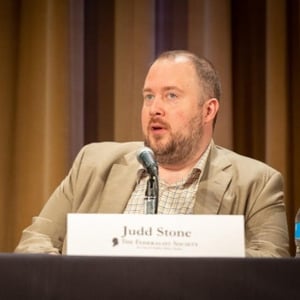
Stone Hilton, Founding Partner
A founding partner of Stone Hilton, Judd Stone is well respected both in Texas and across the nation as an insightful and tenacious appellate litigator. A lifelong Texan, Judd has argued dozens of appeals in both federal and state court, including arguing eight cases before the United States Supreme Court.
Judd began his legal career clerking for United States Supreme Court Justice Antonin Scalia and Fifth Circuit Chief Judge Edith H. Jones. With a J.D. from Northwestern University School of Law where he graduated first in his class, Judd's academic and professional credentials place him among the most distinguished lawyers in the profession. At the helm of countless major legal battles and emergency appeals for the State of Texas, Judd's deep understanding of the law and persuasive advocacy have been instrumental in shaping legal precedents. His tenure as the Solicitor General of Texas is a testament to his expertise and the trust placed in him by high-ranking state officials. Judd's strategic prowess extends beyond the courtroom; his advisory roles have made him a respected figure among policymakers.
His contributions to Stone Hilton and the legal community are characterized by his meticulous approach to cases, his acumen as a counselor, and his unwavering commitment to justice. As a partner at Stone Hilton, Judd continues to apply his formidable talents to advocate for his clients with the utmost dedication and to uphold the pillars of integrity and excellence that the firm stands for.
Senior Vice President for Legal Studies, Cato Institute
Clark Neily is senior vice president for legal studies at the Cato Institute. His areas of interest include constitutional law, overcriminalization, civil forfeiture, police accountability, and gun rights. Neily is the author of Terms of Engagement: How Our Courts Should Enforce the Constitution’s Promise of Limited Government. His writing has appeared in the Wall Street Journal, Forbes, and National Review Online, as well as various law reviews, including the Harvard Journal of Law and Public Policy, George Mason Law Review, Georgetown Journal of Law and Public Policy, NYU Journal of Law and Liberty, and Texas Review of Law and Politics. Neily is a frequent guest speaker and lecturer for the Federalist Society, Institute for Humane Studies, and American Constitution Society.
Before joining Cato in 2017, Neily was a senior attorney and constitutional litigator at the Institute for Justice and director of the Institute’s Center for Judicial Engagement. He is also an adjunct professor at the University of Texas School of Law, where he teaches constitutional litigation and public-interest law.
Neily served as co-counsel in District of Columbia v. Heller, the historic case in which the Supreme Court held for the first time that the Second Amendment protects an individual right to own a gun for self-defense.
Neily began his legal career as a law clerk to Judge Royce Lamberth on the U.S. District Court for the District of Columbia. After that he spent four years in the trial department of the Dallas-based firm Thompson & Knight. Neily received his undergraduate and law degrees from the University of Texas, where he was Chief Articles Editor of the Texas Law Review.
Stone Hilton, Founding Partner
A founding partner of Stone Hilton, Judd Stone is well respected both in Texas and across the nation as an insightful and tenacious appellate litigator. A lifelong Texan, Judd has argued dozens of appeals in both federal and state court, including arguing eight cases before the United States Supreme Court.
Judd began his legal career clerking for United States Supreme Court Justice Antonin Scalia and Fifth Circuit Chief Judge Edith H. Jones. With a J.D. from Northwestern University School of Law where he graduated first in his class, Judd's academic and professional credentials place him among the most distinguished lawyers in the profession. At the helm of countless major legal battles and emergency appeals for the State of Texas, Judd's deep understanding of the law and persuasive advocacy have been instrumental in shaping legal precedents. His tenure as the Solicitor General of Texas is a testament to his expertise and the trust placed in him by high-ranking state officials. Judd's strategic prowess extends beyond the courtroom; his advisory roles have made him a respected figure among policymakers.
His contributions to Stone Hilton and the legal community are characterized by his meticulous approach to cases, his acumen as a counselor, and his unwavering commitment to justice. As a partner at Stone Hilton, Judd continues to apply his formidable talents to advocate for his clients with the utmost dedication and to uphold the pillars of integrity and excellence that the firm stands for.
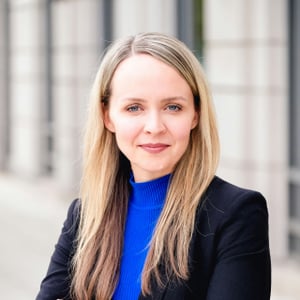
Professor of Law and Faculty Director for the Georgetown Center for the Constitution, Georgetown University Law Center
Stephanie Barclay is a Professor of Law at Georgetown Law School, and the Faculty Director of the Georgetown Center for the Constitution. Her research focuses on the role our different democratic institutions play in protecting minority rights, particularly at the intersection of free speech and religious exercise. Barclay‘s work is published or is forthcoming in leading journals such as the Harvard Law Review, the Chicago Law Review, the University of Pennsylvania Law Review, and the Yale Law Journal Forum. One of her articles was also selected for the 2020 Stanford/Harvard/Yale Junior Faculty Forum. Her work has been featured in many media outlets, including The New York Times, The Wall Street Journal, The Washington Post, USA Today, Bloomberg BNA, The Hill, and Law 360. And her work has also been cited by the U.S. Supreme Court.
Prior to joining Georgetown, Barclay was twice voted Professor of the Year. Barclay has also litigated constitutional cases at both the trial and appellate level, including before the U.S. Supreme Court. Barclay served as a law clerk to Judge N. Randy Smith on the U.S. Court of Appeals for the Ninth Circuit, and to Justice Neil M. Gorsuch of the U.S. Supreme Court.
Barclay is a Faculty Affiliate at the Constitutional Law Center at Stanford Law School; and she is a Nootbaar Fellow at the Nootbaar Institute on Law, Religion, and Ethics at Pepperdine University. She currently serves as the Chair for the AALS Law and Religion Section and as a Member of the Executive Committee for the AALS Constitutional Law Section. She graduated summa cum laude from BYU Law School, where she was elected to the Order of the Coif. She is completing a Ph.D. in Law at Oxford University as a Clarendon Scholar and a Tang Scholar.
Transfer Pricing Senior Associate, PricewaterhouseCoopers LLP
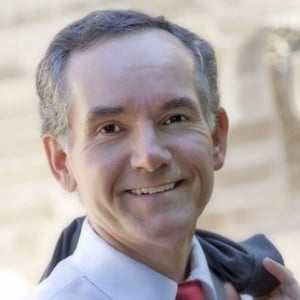
Robert H. McKinney Professor of Law Emeritus and Adjunct Professor of Religious Studies, Indiana University Bloomington - Maurer School of Law
Professor Conkle has been a member of the Maurer School of Law faculty since 1983, Professor Conkle teaches Constitutional Law, the First Amendment, and Law and Religion. His research addresses constitutional law and theory, religious liberty, and the role of religion in American law, politics, and public life. His most recent book is Religion, Law, and the Constitution, Second Edition (Foundation Press, 2022).
Conkle has been honored for his achievements both within and beyond the classroom. He is a two-time recipient of the Leon H. Wallace Teaching Award and has twice won the Gavel Award for outstanding contribution to the graduating class. He has received six faculty fellowships for outstanding scholarship, and in 1999 he was named the Robert H. McKinney Professor of Law. He retired from full-time teaching in December 2017 but continues to be involved in the Law School community.
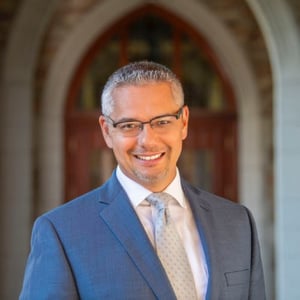
Tocqueville Associate Professor Department of Political Science and Concurrent Associate Professor of Law, University of Notre Dame Law School
Vincent Phillip Muñoz is the Tocqueville Associate Professor of Religion & Public Life in the Department of Political Science at the University of Notre Dame. He is the founding director of Notre Dame's undergraduate minor in Constitutional Studies and directs Notre Dame's Tocqueville Program for Inquiry into Religion and Public Life.
Muñoz writes and teaches across the fields of constitutional law, American politics, and political philosophy with a focus on religious liberty and the American Founding. His first book, God and the Founders: Madison, Washington, and Jefferson (Cambridge University Press, 2009) won the Hubert Morken Award from the American Political Science Association for the best publication on religion and politics in 2009 and 2010. His First Amendment church-state case reader, Religious Liberty and the American Supreme Court: The Essential Cases and Documents (Rowman & Littlefield) was first published in 2013 (revised edition, 2015) and is being used at Notre Dame and other leading universities.
Muñoz's current project is a scholarly monograph on the natural right of religious liberty and the original meaning of the First Amendment's Religion Clauses. Articles from that project have appeared in American Political Science Review, The Harvard Journal of Law and Public Policy, Notre Dame Law Review, American Political Thought, and the University of Pennsylvania's Journal of Constitutional Law.
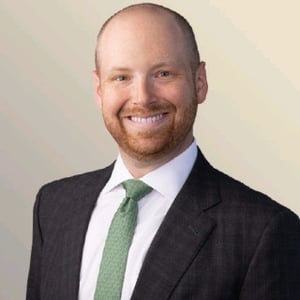
Solicitor General, Iowa Office of the Attorney General
Eric Wessan serves as Iowa’s Solicitor General in the Iowa Attorney General’s Office. In that
role, Wessan leads Iowa’s litigation before State and federal appellate courts, including the Iowa
and U.S. Supreme Courts. Before that role, Wessan worked on complex commercial litigation at
two large law firms in Chicago. Wessan also served as a law clerk for the Honorable James C.
Ho on the U.S. Court of Appeals for the Fifth Circuit and for the Honorable John F. Kness on the
U.S. District Court for the Northern District of Illinois. Wessan is a graduate of the University of
Chicago Law School, with honors, and of the University of Chicago.

Iran Turns East with China Partnership: Should the West Respond?
Matthew R. A. Heiman, Jacob Nagel, Bryan Smith, Dov S. Zakheim
As the United Arab Emirates and Israel agreed to establish diplomatic ties, Iran and China’s...
State Court Docket Watch: Rafaeli, LLC v. Oakland County
James J. Ryan, Gordon J. Kangas
State Court Docket Watch: 2020 Edition
When Rafaeli, LLC underpaid its property tax bill by $8.40, the county auctioned off the...
State Court Docket Watch: Kelly v. Legislative Coordinating Council
Brad Schlozman
State Court Docket Watch: 2020 Edition
Since the November 2018 election of Democrat Laura Kelly as governor of Kansas, the state’s...
Panel V: The Public and Private Realms: The Privatization Movement and Other Developments [Archive Collection]
Kenneth S. Abraham, Robert C. Ellickson, Leonard Liggio, George L. Priest
A Symposium in Celebration of the Bicentennial of the Constitution
On October 16-17, 1987, the Federalist Society hosted a symposium in celebration of the bicentennial...
Panel V: The Public and Private Realms: The Privatization Movement and Other Developments [Archive Collection]
Kenneth S. Abraham, Robert C. Ellickson, Leonard Liggio, George L. Priest
A Symposium in Celebration of the Bicentennial of the Constitution
On October 16-17, 1987, the Federalist Society hosted a symposium in celebration of the bicentennial...
Tech Roundup Episode 11 – TikTok's Running Clock
Matthew Feeney, Jamil N. Jaffer, Ashkhen Kazaryan
Regulatory Transparency Project's Fourth Branch Podcast
Citing national security concerns, the Trump administration has ordered TikTok's Chinese parent company, Bytedance Ltd.,...
What is No. 86?
The No. 86 project continues the conversation our Founders had in the original 85 Federalist...
Qualified Immunity, a Debate--Retain or Abolish?
Clark Neily, Anthony J. Rodregous, Judd Stone
El Paso Lawyers Chapter - Online Event
Created by the Supreme Court in 1967, the legal doctrine of qualified immunity shields government...
Qualified Immunity, a Debate--Retain or Abolish?
Clark Neily, Anthony J. Rodregous, Judd Stone
El Paso Lawyers Chapter - Online Event
Created by the Supreme Court in 1967, the legal doctrine of qualified immunity shields government...
Balancing Religious Freedoms in a Pluralistic Society
Stephanie Barclay, Richard Benson, Daniel O. Conkle, Vincent Phillip Munoz, Eric Wessan
Chicago Lawyers Chapter - Online Event
What should the nature of religious liberty look like in a pluralistic society? The Supreme...