
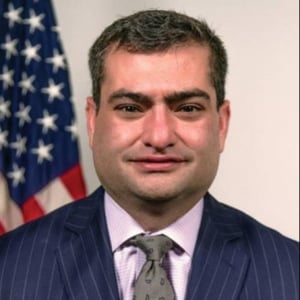
President & CEO, The Permitting Institute
Alex Herrgott is a nationally recognized infrastructure policy and project delivery expert with experience that spans a broad range of industries. He created The Permitting Institute after nearly two decades of creating bipartisan partnerships and common-sense reforms in Congress, the executive branch, and the private sector. His work continues to focus on needed infrastructure improvements that will deliver economic growth while ensuring a comprehensive review of policies in place to minimize impacts on the natural environment.
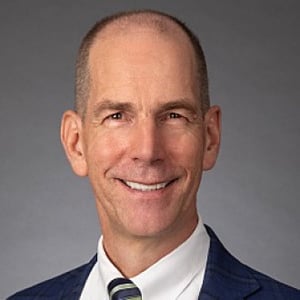
Partner, Perkins Coie LLP
As an associate director at the President’s Council on Environmental Quality (CEQ), Edward (Ted) Boling served as the country’s top National Environmental Policy Act (NEPA) attorney. He currently advises clients on the development of renewable energy, resource development, transportation, and infrastructure, drawing on over 30 years of high-level public service.
Ted served in the U.S. Department of the Interior (DOI), CEQ, and the U.S. Department of Justice (DOJ) in both Democratic and Republican administrations. His experience includes deep involvement in federal infrastructure issues, as well as leadership of the first comprehensive revision of CEQ’s NEPA regulations in 40 years.
Ted’s work at CEQ also included the National Ocean Policy, CEQ’s climate change guidance, and the regulatory response to the Deepwater Horizon disaster. He drafted NEPA guidance on mitigation and monitoring, cumulative impacts analysis, and the development categorical exclusions from detailed NEPA documentation. Ted advised on the establishment of numerous national monuments, including the first marine national monuments in the United States and the largest marine protected areas in the world. He also assisted in briefing three U.S. Supreme Court cases.
At DOI, Ted handled matters involving energy development on the outer continental shelf, including offshore wind power development, and the fast track for solar and wind energy projects on public lands. He has provided legal and policy advice on environmental issues concerning the Federal Columbia River Power System and the California Central Valley Project.
At DOJ, in the first 10 years of his career, Ted litigated significant cases involving NEPA, endangered species, marine mammals, wetland protections, and public lands. He was involved in litigation concerning the Northwest Forest Plan, National Forest management decisions, and Federal Transit Administration decisions in New England.
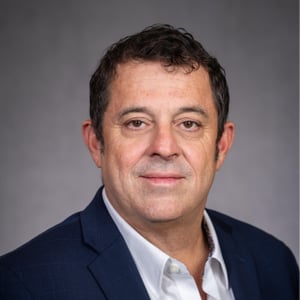
Senior Fellow for Law, Economics, and Technology, The Heritage Foundation; Professor, Florida International University
Mario Loyola is a Senior Fellow for Law, Economics, and Technology at The Heritage Foundation.
Loyola served in the Trump Administration as Associate Director for Regulatory Reform at the White House Council on Environmental Quality. In that role, he was one of the principal drafters of the One Federal Decision policy, which helped to streamline the permitting and environmental review of large infrastructure projects. While at CEQ, he was a member of the U.S. delegation to the USMCA free trade negotiations with Mexico and Canada, as well as the United Nations conference on biodiversity on the high seas. Loyola initially joined the White House in February 2017 as a Presidential Speechwriter, employing his expertise in many areas of foreign and domestic policy.
After beginning his career in M&A and corporate finance law, Loyola served in the Bush 43 Administration as a special assistant to the Undersecretary of Defense for Policy. He left that position to start writing on national defense issues in magazines such as National Review and The Weekly Standard, reporting from the front lines of the war on terrorism in Lebanon, Israel, and Iraq. He finished the Bush Administration as Foreign and Defense Counsel to the U.S. Senate Republican Policy Committee, then under the chairmanship of Senator Kay Bailey Hutchison of Texas. He subsequently moved to Texas and joined the Texas Public Policy Foundation, where he specialized in energy, environment, and federalism.
Loyola is a frequent contributor to The Wall Street Journal, National Review, and The Atlantic, among others. He teaches environmental and administrative law at Florida International University, where he is Founding Director of the Environmental Finance and Risk Management program in FIU’s prestigious Institute of Environment. He received a bachelor’s degree in European history from the University of Wisconsin–Madison and a J.D. from Washington University School of Law.
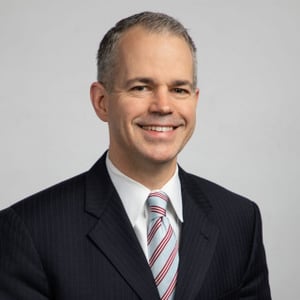
Senior Attorney, Institute for Justice
Michael Bindas is a senior attorney with the Institute for Justice (IJ) and leads IJ’s educational choice team. In this role, he oversees a talented group of IJ attorneys who help policymakers design constitutionally defensible educational choice programs and who defend educational choice programs in courtrooms nationwide. He joined IJ in 2005.
Michael was part of IJ’s litigation team in Espinoza v. Montana Department of Revenue, in which the U.S. Supreme Court held the exclusion of religious options from Montana’s educational choice program unconstitutional, and he led IJ’s defense of the Choice Scholarship Program for elementary and secondary students in Douglas County, Colorado. He also successfully challenged Washington’s denial of special education services to children in religious schools, as well as the state’s exclusion of sectarian options from its state work study program. Currently, he leads IJ’s team in Carson v. Makin, challenging Maine’s exclusion of religious options from its educational choice program.
Prior to leading IJ’s educational choice team, Michael litigated extensively to secure economic liberty, property rights, and freedom of speech throughout the nation. He was counsel of record at the U.S. Supreme Court for Kimbrough Fine Wine & Spirits in Tennessee Wine and Spirits Retailers Association v. Thomas, a successful challenge to Tennessee’s durational residency requirements for retail liquor licenses. He also led successful challenges to the municipal sign codes of St. Louis, Mo. and Norfolk, Va., after those cities attempted to silence protests of their abusive eminent domain practices.
Prior to joining IJ, Michael spent three years as an attorney with Perkins Coie LLP. He is a former law clerk to Judge Rhesa Hawkins Barksdale of the U.S. Court of Appeals for the Fifth Circuit and served as an engineer officer in the United States Army and Pennsylvania Army National Guard before beginning his legal career.
Michael received his law degree cum laude from the University of Pennsylvania Law School in 2001, where he served as Articles Editor for the Journal of Constitutional Law and was elected to the Order of the Coif. He received his undergraduate degree from the United States Military Academy at West Point in 1995.
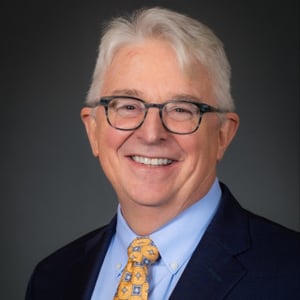
Co-Founder, Defense of Freedom Institute
Jim Blew is a co-founder of DFI, the Defense of Freedom Institute for Public Policy Studies, and president of DFI Action. These DC-based nonprofits promote education freedom, civil rights, and a limited federal role in education and workforce development.
Jim served as U.S. assistant secretary for policy and budget under Betsy DeVos. Prior to his federal service, he worked in state-based education reform for more than 20 years, including leadership roles at StudentsFirst, 50CAN, and the predecessor to the American Federation for Children. He also helped guide the education reform investments of the Walton Family Foundation for nearly a decade until 2014. Before committing himself full time to education reform, Jim worked at political and communications firms in New York and California. He holds a bachelor’s degree from Occidental College and a master’s in business administration from the Yale School of Management.
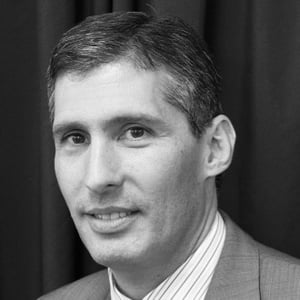
Vice President and Legal Director, Americans United for Separation of Church and State
Richard B. Katskee is the Vice President and Legal Director at Americans United for Separation of Church and State.
Richard is a nationally recognized First Amendment expert and advocate. He has litigated cases under the First Amendment’s Establishment, Free Exercise, and Free Speech Clauses in appellate and trial courts throughout the country, including challenging creationism in the public schools; religiously based discrimination in public accommodations, healthcare, foster care, and the workplace; presentation of official prayer at governmental meetings and functions; and the provision of federal funding for social services that include religious content.
Journalist Lauri Lebo has described Richard as “a First Amendment expert known for his encyclopedic knowledge and the engaging prose he brings to his legal briefs.” Pulitzer Prize-winning author Edward Humes has added that Richard’s “elegantly written briefs are legendary, veritable beach reading in a field better known for its ponderous prose.” Richard is also an accomplished oral advocate who has argued cases before the U.S. Supreme Court, the U.S. Courts of Appeals for the Second, Third, Fifth, Sixth, Ninth and D.C. Circuits, and federal district courts and state courts across the country.
Richard formerly specialized in constitutional litigation as a member of the Supreme Court & Appellate practice at Mayer Brown LLP in Washington, D.C. He also previously served as deputy director of the Program Legal Group in the U.S. Department of Education’s Office for Civil Rights, where he led the development of policy initiatives to implement federal antidiscrimination laws in the nation’s schools, colleges and universities.
Richard received his Juris Doctor from the Yale Law School (where he was an articles editor on the Yale Law Journal), his master’s degree in political science from Harvard University (where he was a National Science Foundation Graduate Fellow) and his bachelor’s degree with highest distinction and high honors from the University of Michigan. He clerked for Judge Stephen Reinhardt on the U.S. Court of Appeals for the Ninth Circuit and for Judge Guido Calabresi on the U.S. Court of Appeals for the Second Circuit; he was a Eugene P. Beard Graduate Fellow in Ethics at Harvard’s Edmond J. Safra Foundation Center for Ethics; he taught courses in professional and political ethics at the John F. Kennedy School of Government and at Harvard College; and he served as an adjunct associate professor of church–state law at the American University Washington College of Law.
Richard is a member of the American Law Institute and an adviser to the Restatement of the Law: Children and the Law. He is Special Adviser to, and former Co-Chair of, the Religious Liberty Committee of the American Bar Association’s Section of Civil Rights and Social Justice. He serves on the Board of Advisers for a new National Museum of American Religion and formerly served on the Board of Directors for the National Center for Science Education. He is a Visiting Fellow with the Council of Independent Colleges. And he regularly delivers guest lectures and participates as a panelist at universities and legal, educational and scientific associations across the country.
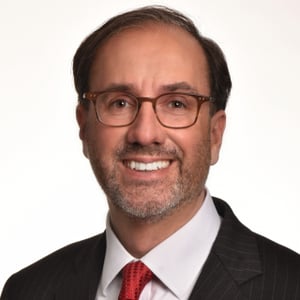
President and CEO, The Buckeye Institute
Robert Alt is the President and Chief Executive Officer of The Buckeye Institute where he has catalyzed exponential growth since he took the organization’s helm in 2012. He has since founded Buckeye’s renowned Economic Research Center and established its impactful Legal Center.
Alt is a distinguished scholar and attorney with particular expertise in legal policy, criminal justice, national security, and constitutional law. He previously worked for former U.S. Attorney General Edwin Meese III, regularly provides commentary on television and radio programs, and his writings have appeared in countless outlets.
In 2004, Alt spent five months in Iraq as an embedded war correspondent.
Alt has testified before Congress multiple times—including at the confirmation hearings for U.S. Supreme Court Justice Elena Kagan—the Federal Election Commission regarding matters of constitutional and administrative law, and numerous state legislatures.
Alt serves as an officer on the boards of The Philadelphia Society and the Federalist Society’s Columbus Lawyers Chapter. He taught national security law, criminal law, and legislation at Case Western Reserve University School of Law, as well as constitutional law and political parties and interest groups at Ashland University.
Alt earned his Doctor of Law degree from The University of Chicago Law School, where he was Symposium Editor and the winner of the Mulroy Prize for Excellence in Appellate Advocacy as well as research assistant to Professor Richard Epstein. Following law school, he clerked for Judge Alice Batchelder on the U.S. Court of Appeals for the Sixth Circuit. Alt graduated with his Bachelor of Arts in philosophy and political science magna cum laude from Azusa Pacific University where he also won the Outstanding Senior Award in Political Science.
Alt is an accomplished high-altitude alpinist and endurance athlete who has successfully climbed 6.75 of the famed Seven Summits of the World including Mount Everest. He is the creator of PROFOUND CLIMBING™ and a frequent speaker across the country and around the world on legal and public policy topics as well as effective leadership, management, decision-making, and teamwork in contexts ranging from extraordinary life/death situations to ordinary professional/business settings.
President and CEO, The Buckeye Institute
Robert Alt is the President and Chief Executive Officer of The Buckeye Institute where he has catalyzed exponential growth since he took the organization’s helm in 2012. He has since founded Buckeye’s renowned Economic Research Center and established its impactful Legal Center.
Alt is a distinguished scholar and attorney with particular expertise in legal policy, criminal justice, national security, and constitutional law. He previously worked for former U.S. Attorney General Edwin Meese III, regularly provides commentary on television and radio programs, and his writings have appeared in countless outlets.
In 2004, Alt spent five months in Iraq as an embedded war correspondent.
Alt has testified before Congress multiple times—including at the confirmation hearings for U.S. Supreme Court Justice Elena Kagan—the Federal Election Commission regarding matters of constitutional and administrative law, and numerous state legislatures.
Alt serves as an officer on the boards of The Philadelphia Society and the Federalist Society’s Columbus Lawyers Chapter. He taught national security law, criminal law, and legislation at Case Western Reserve University School of Law, as well as constitutional law and political parties and interest groups at Ashland University.
Alt earned his Doctor of Law degree from The University of Chicago Law School, where he was Symposium Editor and the winner of the Mulroy Prize for Excellence in Appellate Advocacy as well as research assistant to Professor Richard Epstein. Following law school, he clerked for Judge Alice Batchelder on the U.S. Court of Appeals for the Sixth Circuit. Alt graduated with his Bachelor of Arts in philosophy and political science magna cum laude from Azusa Pacific University where he also won the Outstanding Senior Award in Political Science.
Alt is an accomplished high-altitude alpinist and endurance athlete who has successfully climbed 6.75 of the famed Seven Summits of the World including Mount Everest. He is the creator of PROFOUND CLIMBING™ and a frequent speaker across the country and around the world on legal and public policy topics as well as effective leadership, management, decision-making, and teamwork in contexts ranging from extraordinary life/death situations to ordinary professional/business settings.

Topics
The Latest Energy and Environmental Regulations
Even for experts who regularly track energy and environmental regulations, it can be difficult to...
Topics
Department of Education Proposes Title IX Rule with Opportunity for Public Comment
In line with the Biden administration’s equity and gender identity policy priorities, the Department of...
Deep Dive Episode 229 – Overcoming the Challenges to Clean Infrastructure
Alex Herrgott, Edward Boling, Mario Loyola
Regulatory Transparency Project's Fourth Branch Podcast
On November 15, 2022, President Biden signed the Infrastructure Investment and Jobs Act. On May...
Topics
Flight Attendant Triumphs Over Union and Southwest Airlines in Suit Challenging Illegal Firing; Jury Awards Her $5.1 Million in Damages
Southwest Airlines flight attendant Charlene Carter has prevailed in her federal lawsuit in which she...
Debate on School Choice after Carson v. Makin
Michael Bindas, Jim Blew, Richard B. Katskee
Featuring: Michael Bindas, Senior Attorney, Institute for Justice Richard Katskee, Vice President and Legal Director,...
Topics
What May Be Lurking in the Future of Environmental Law After West Virginia v. EPA
In West Virginia v. EPA, decided in June, the Supreme Court struck down EPA’s attempt...
Criminal Law Update: A Survey of State Law Changes in 2020
Robert Alt
White Paper
Through legislation, local ordinances, ballot initiatives, executive orders, and constitutional amendments, states across the country...
Topics
ABA Proposes Making the Use of Law School Admissions Tests Optional
On May 20, 2022, the Council of the American Bar Association’s Section on Legal...
Criminal Law Update: A Survey of State Law Changes in 2020
Robert Alt
White Paper
Through legislation, local ordinances, ballot initiatives, executive orders, and constitutional amendments, states across the country...
Topics
Originalism’s Still Around, No Matter What Adrian Vermeule Says
I was taken aback when I read Adrian Vermeule’s recent Washington Post op-ed, which alleges...