
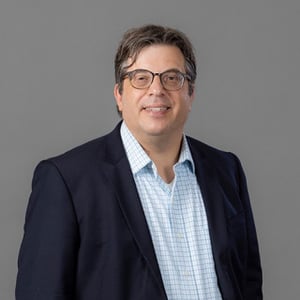
University Professor of Law and Executive Director, Liberty & Law Center, Antonin Scalia Law School, George Mason University
David Bernstein holds a University Professorship chair at the Antonin Scalia Law School, where he has been teaching since 1995. He has also been a visiting professor at the University of Michigan, Georgetown University, William & Mary, Brooklyn Law School, the University of Turin, and Hebrew University. Professor Bernstein teaches Constitutional Law, Evidence, and Products Liability.
A prolific author, Professor Bernstein often challenges the conventional wisdom with prodigious research and sharp, original analysis. He is the author of five books, and coauthor of two more. Professor Bernstein’s book Rehabilitating Lochner was praised across the political spectrum as “intellectual history in its highest form,” a “fresh perspective and a cogent analysis,” “delightful and informative,” “sharp and iconoclastic,” and “a terrific work of historical revisionism.” Columnist George Will praised Bernstein’s most recent book, Classified, The Untold Story of Racial Classification in America, as “perhaps the most consequential American book of 2022.”
Professor Bernstein has also written dozens of articles and essays published in major law reviews, including the California Law Review, Columbia Law Review, Michigan Law Review, and Yale Law Journal. An article he coauthored, Defending Daubert: It’s Time to Amend Federal Rule of Evidence 702, directly inspired a pending amendment to Rule 702.
Professor Bernstein blogs at the Instapundit.com, the Times of Israel, and the Volokh Conspiracy. He is a graduate of the Yale Law School, where he was senior editor of the Yale Law Journal and a John M. Olin Fellow in Law, Economics, and Public Policy.
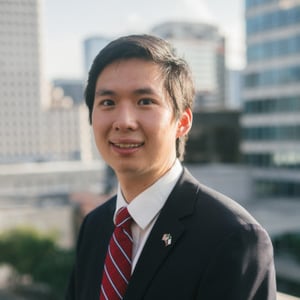
State District Judge, Austin, Texas
Cory Liu is a state district judge in Austin, Texas. He previously served as assistant general counsel to Texas Governor Greg Abbott. Mr. Liu clerked for Judge Andrew Oldham on the U.S. Court of Appeals for the Fifth Circuit and Judge Danny Boggs on the U.S. Court of Appeals for the Sixth Circuit. He was Editor-in-Chief of the Harvard Journal of Law & Public Policy and is a graduate of Harvard Law School and the University of Chicago.
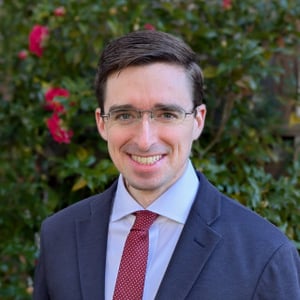
Solicitor General, Alabama Office of the Attorney General
Barrett Bowdre serves as solicitor general in the Alabama Attorney General’s Office, where he oversees the state’s appellate docket and helps defend the state’s interests in courts throughout the country. He previously served as principal deputy solicitor general and, before that, deputy solicitor general. He is a former law clerk to Judge Paul J. Kelly, Jr., of the U.S. Court of Appeals for the Tenth Circuit, then-Chief Judge W. Keith Watkins of the U.S. District Court for the Middle District of Alabama, and then-Chief Judge Ed Carnes of the U.S. Court of Appeals for the Eleventh Circuit. He holds a J.D., summa cum laude, from the University of Alabama School of Law and a B.A., cum laude, from Furman University. Before attending law school, he worked as a research assistant at the American Enterprise Institute, where he researched civic education initiatives and helped compile literary anthologies exploring the American character.
Sean Collins is a member of the University of Alabama School of Law class of 2024. After graduation, he will serve as a law clerk to Judge Allen Winsor of the U.S. District Court for the Northern District of Florida, then as a law clerk to Judge Robert Luck of the U.S. Court of Appeals for the Eleventh Circuit. Before attending law school, he graduated magna cum laude from Hillsdale College, where he studied Classics, Philosophy, and Religion and was a member of one of the only undergraduate Federalist Society chapters in the country.
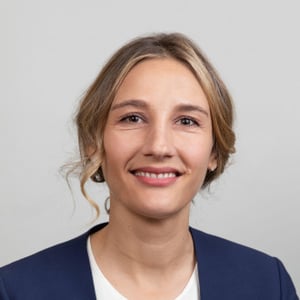
Attorney, Institute for Justice
Anya Bidwell (née Cherkasova) leads IJ’s Project on Immunity and Accountability (“PIA”). Through this project, Anya works to promote judicial engagement and ensure that government officials are held to account when they violate individuals’ constitutional rights. Anya also serves as an adviser on the American Law Institute’s Restatement of the Law, Constitutional Torts project.
One of Anya’s PIA cases—Gonzalez v. Trevino—was heard by the United States Supreme Court on March 20, 2024. She argued the case for the petitioner, with the goal of convincing the Justices that retaliatory arrests not involving on-the-spot decisions by police officers should be actionable under the First Amendment regardless of probable cause. The decision is expected in June.
This was Anya’s third appearance before the U.S. Supreme Court. She second-chaired Brownback v. King (an excessive force case) and Tennessee Wine & Spirits Retailers Association v. Thomas (a commerce clause case) in November 2020 and January 2019 respectfully.
Before joining IJ, Anya worked for a top national law firm, handling cases in trial and appellate courts. She earned her J.D. with honors from the University of Texas. Two years prior to entering law school, Anya received a master’s degree in Global Policy Studies, also from the University of Texas, and wrote a thesis on asymmetric warfare.
Anya spent her childhood in Ukraine and Kyrgyzstan. At 16, she left her family behind and came to America on a university scholarship. Her upbringing motivated her to study law and become an advocate for a strong, independent judiciary.
Anya’s work has been featured in numerous publications, including the Washington Post, the Wall Street Journal, the New York Times, USA Today, and the Guardian. She is also the host of live recordings of our Short Circuit podcast and a co-producer of our documentary-style podcast Bound by Oath.

Partner, Steptoe & Johnson LLP
Stewart Baker is a partner in the law firm of Steptoe & Johnson in Washington, D.C. From 2005 to 2009, he was the first Assistant Secretary for Policy at the Department of Homeland Security. His law practice covers cybersecurity, data protection, homeland security, and travel and foreign investment regulation; he has been awarded one patent.
Mr. Baker has been General Counsel of the National Security Agency and General Counsel of the commission that investigated WMD intelligence failures prior to the Iraq war. He is the author of Skating on Stilts, a book on terrorism, cybersecurity, and other technology issues; he also hosts the weekly Cyberlaw Podcast.
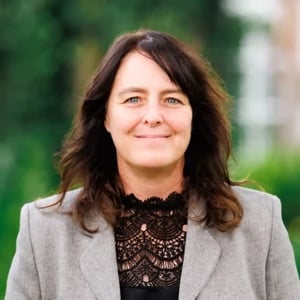
Professor of Law and Journalism, University of Florida
Professor Jane Bambauer is the Brechner Eminent Scholar at the Levin College of Law and at the College of Journalism and Communications. She teaches Torts, First Amendment, Media Law, Criminal Procedure, and Privacy Law.
Professor Bambauer’s research assesses the social costs and benefits of Big Data, AI, and predictive algorithms. Her work analyzes how the regulation of these new information technologies will affect free speech, privacy, law enforcement, health and safety, competitive markets, and government accountability. Professor Bambauer’s research has been featured in over 20 scholarly publications, including the Stanford Law Review, the Michigan Law Review, the California Law Review, and the Journal of Empirical Legal Studies. Her work has also been featured in media outlets, including the Washington Post, the New York Times, Fox News, and Lawfare, where she is a contributing editor.
Professor Bambauer currently serves as the Chair of the National AI Advisory Committee Subcommittee on Law Enforcement, and she has previously served as the deputy director of the Center for Quantum Networks, a multi-institutional engineering research center funded by the National Science Foundation. She holds a B.S. in Mathematics from Yale College and a J.D. from Yale Law School.
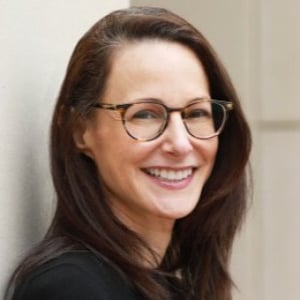
Jefferson Scholars Foundation Schenck Distinguished Professor in Law and Caddell and Chapman Professor of Law, University of Virginia School of Law
Danielle Citron is the Jefferson Scholars Foundation Schenck Distinguished Professor in Law and Caddell and Chapman Professor of Law at UVA, where she writes and teaches about privacy, free expression and civil rights. Her scholarship and advocacy have been recognized nationally and internationally. In 2019, Citron was named a MacArthur Fellow based on her work on cyberstalking and intimate privacy. In 2018, she received the UMD Champion of Excellence award and in 2015, the United Kingdom’s Prospect Magazine named her one of the Top 50 World Thinkers and The Daily Record named her one of the Top 50 Most Influential Marylanders. She serves as the inaugural director of the school’s LawTech Center, which focuses on pressing questions in law and technology.
Her latest book, “The Fight for Privacy: Protecting Dignity, Identity, and Love in the Digital Age” (W.W. Norton and Penguin Vintage UK), will be out in October 2022. Her first book, “Hate Crimes in Cyberspace” (Harvard University Press, 2014), was widely praised in published reviews, discussed in blog posts and named one of the 20 Best Moments for Women in 2014 by the editors of Cosmopolitan magazine. She has published more than 50 articles and essays, including in the Yale Law Journal, Michigan Law Review, California Law Review, Boston University Law Review, Washington University Law Review, Emory Law Journal, Southern California Law Review, Texas Law Review, and many more, which have won professional awards from the International Association of Privacy Professionals and privacy think tank Future of Privacy, and been cited by state and federal courts. She has written more than 50 opinion pieces for major media outlets, including the New York Times, the Washington Post, the Atlantic, the Guardian, Time, CNN and Slate.
For the past decade, Citron has worked with lawmakers, law enforcement and tech companies to combat online abuse and to protect intimate privacy. In June 2019, she testified before Congress about the national security and privacy risks of deepfakes. She has been involved in reform efforts around the regulation of online platforms. In October 2019, she testified before Congress about Section 230 of the Communications Decency Act. From 2014 to 2016, Citron served as an advisor to then-California Attorney General Kamala Harris and as a member of Harris’ Task Force to Combat Cyber Exploitation and Violence Against Women. In 2011, Citron testified about misogynistic cyber hate speech before the Inter-Parliamentary Committee on Anti-Semitism at the House of Commons in the United Kingdom. Since 2011, she has been a member of Facebook’s Non-Consensual Intimate Imagery Task Force and an adviser and a member of Twitter’s Trust and Safety Task Force and as an adviser to the company since 2009. She is an adviser to the dating app Bumble, the music streaming service Spotify, and video sharing platform TikTok.
Citron is the vice president of the Cyber Civil Rights Initiative, a nonprofit devoted to fighting for civil rights and liberties in the digital age founded in 2013 and named after her article “Cyber Civil Rights.” She is the chair of the board of directors of the Electronic Privacy Information Center and serves on the board of directors of the Future of Privacy, as well as on the Advisory Board of the Anti-Defamation League’s Center on Technology and Society and the Center on Investigative Journalism. In 2020, she received a $75,000 grant from the Knight Foundation to study the salutary impact of intimate privacy laws on victims, a project that she is co-leading with Canadian academic Jon Penney.
Citron is an affiliate scholar at the Stanford Center on Internet and Society, Yale Information Society Project, and NYU’s Policing Project. As a member of the American Law Institute, she serves as an adviser to the Restatement Third, Information Privacy Principles Project and Restatement (Third) Torts: Defamation and Privacy.
Citron has appeared on film and television (HBO’s “Vice News,” HBO’s “Last Week Tonight with John Oliver,” Hulu’s “The Weekly,” “Netizens,” and HBO’s “Swiped”); quoted in hundreds of news articles, interviewed on National Public Radio; appeared on podcasts for The New York Times, Slate, Lawfare, The Guardian and The Boston Globe; and given a TED talk, “How Deepfakes Undermine Truth and Democracy,” at the 2019 TED Global Summit. Her TED talk has been viewed more than 3.4 million times. She has given more than 300 talks at major universities, federal and state agencies, the National Holocaust Museum, the Wikimedia Foundation, the National Association of Attorneys General, and think tanks.
Before joining UVA Law, Citron taught at Boston University School of Law and the University of Maryland School of Law. She has been a visiting professor at Fordham Law School and George Washington Law School. In 2016, she was a Dean’s Distinguished Visitor at Washington University School of Law and an interdisciplinary studies fellow at the University of Massachusetts at Amherst.
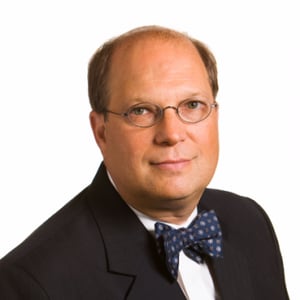
Professorial Lecturer in Law, The George Washington University
Paul Rosenzweig is an accomplished writer and speaker with a national reputation in cyber security and homeland security. He is the founder of Red Branch Consulting PLLC, a homeland security consulting company. He is also a Senior Advisor to The Chertoff Group. Mr. Rosenzweig formerly served as Deputy Assistant Secretary for Policy in the Department of Homeland Security.
He is a Professorial Lecturer in Law at George Washington University, and a Senior Fellow in the Tech, Law & Security Program at the American University, Washington College of Law. He serves as an advisor to and former member of the American Bar Association Standing Committee on Law and National Security, and a Contributing Editor of the Lawfare blog. He is a member of the ABA Cybersecurity Legal Task Force and of the United States Court of Appeals for the District of Columbia Circuit Advisory Committee on Admissions and Grievances. He serves, as well, as a Hearing Committee Member of the District of Columbia Board of Professional Responsibility. In 2011 he was a Carnegie Fellow in National Security Journalism at the Medill School of Journalism, Northwestern University.
Mr. Rosenzweig is a cum laude graduate of the University of Chicago Law School. He has an M.S. in Chemical Oceanography from the Scripps Institution of Oceanography, University of California at San Diego and a B.A from Haverford College. Following graduation from law school he served as a law clerk to the Honorable R. Lanier Anderson, III of the United States Court of Appeals for the Eleventh Circuit.
He is the author of Cyber Warfare: How Conflicts in Cyberspace are Challenging America and Changing the World and of three video lecture series from The Great Courses, Thinking About Cybersecurity: From Cyber Crime to Cyber Warfare; The Surveillance State: Big Data, Freedom, and You; and Investigating American Presidents.
He is the co-author (with James Jay Carafano) of Winning the Long War: Lessons from the Cold War for Defeating Terrorism and Preserving Freedom and co-editor (with Jill D. Rhodes and Robert S. Litt) of the Cybersecurity Handbook (3rd ed.). He is also co-editor (with Timothy McNulty and Ellen Shearer) of two books, Whistleblowers, Leaks and the Media: The First Amendment and National Security, and National Security Law in the News: A Guide for Journalists, Scholars, and Policymakers. Mr. Rosenzweig is a member of the Literary Society of Washington.
Partner, Steptoe & Johnson LLP
Stewart Baker is a partner in the law firm of Steptoe & Johnson in Washington, D.C. From 2005 to 2009, he was the first Assistant Secretary for Policy at the Department of Homeland Security. His law practice covers cybersecurity, data protection, homeland security, and travel and foreign investment regulation; he has been awarded one patent.
Mr. Baker has been General Counsel of the National Security Agency and General Counsel of the commission that investigated WMD intelligence failures prior to the Iraq war. He is the author of Skating on Stilts, a book on terrorism, cybersecurity, and other technology issues; he also hosts the weekly Cyberlaw Podcast.
Professor of Law and Journalism, University of Florida
Professor Jane Bambauer is the Brechner Eminent Scholar at the Levin College of Law and at the College of Journalism and Communications. She teaches Torts, First Amendment, Media Law, Criminal Procedure, and Privacy Law.
Professor Bambauer’s research assesses the social costs and benefits of Big Data, AI, and predictive algorithms. Her work analyzes how the regulation of these new information technologies will affect free speech, privacy, law enforcement, health and safety, competitive markets, and government accountability. Professor Bambauer’s research has been featured in over 20 scholarly publications, including the Stanford Law Review, the Michigan Law Review, the California Law Review, and the Journal of Empirical Legal Studies. Her work has also been featured in media outlets, including the Washington Post, the New York Times, Fox News, and Lawfare, where she is a contributing editor.
Professor Bambauer currently serves as the Chair of the National AI Advisory Committee Subcommittee on Law Enforcement, and she has previously served as the deputy director of the Center for Quantum Networks, a multi-institutional engineering research center funded by the National Science Foundation. She holds a B.S. in Mathematics from Yale College and a J.D. from Yale Law School.
Jefferson Scholars Foundation Schenck Distinguished Professor in Law and Caddell and Chapman Professor of Law, University of Virginia School of Law
Danielle Citron is the Jefferson Scholars Foundation Schenck Distinguished Professor in Law and Caddell and Chapman Professor of Law at UVA, where she writes and teaches about privacy, free expression and civil rights. Her scholarship and advocacy have been recognized nationally and internationally. In 2019, Citron was named a MacArthur Fellow based on her work on cyberstalking and intimate privacy. In 2018, she received the UMD Champion of Excellence award and in 2015, the United Kingdom’s Prospect Magazine named her one of the Top 50 World Thinkers and The Daily Record named her one of the Top 50 Most Influential Marylanders. She serves as the inaugural director of the school’s LawTech Center, which focuses on pressing questions in law and technology.
Her latest book, “The Fight for Privacy: Protecting Dignity, Identity, and Love in the Digital Age” (W.W. Norton and Penguin Vintage UK), will be out in October 2022. Her first book, “Hate Crimes in Cyberspace” (Harvard University Press, 2014), was widely praised in published reviews, discussed in blog posts and named one of the 20 Best Moments for Women in 2014 by the editors of Cosmopolitan magazine. She has published more than 50 articles and essays, including in the Yale Law Journal, Michigan Law Review, California Law Review, Boston University Law Review, Washington University Law Review, Emory Law Journal, Southern California Law Review, Texas Law Review, and many more, which have won professional awards from the International Association of Privacy Professionals and privacy think tank Future of Privacy, and been cited by state and federal courts. She has written more than 50 opinion pieces for major media outlets, including the New York Times, the Washington Post, the Atlantic, the Guardian, Time, CNN and Slate.
For the past decade, Citron has worked with lawmakers, law enforcement and tech companies to combat online abuse and to protect intimate privacy. In June 2019, she testified before Congress about the national security and privacy risks of deepfakes. She has been involved in reform efforts around the regulation of online platforms. In October 2019, she testified before Congress about Section 230 of the Communications Decency Act. From 2014 to 2016, Citron served as an advisor to then-California Attorney General Kamala Harris and as a member of Harris’ Task Force to Combat Cyber Exploitation and Violence Against Women. In 2011, Citron testified about misogynistic cyber hate speech before the Inter-Parliamentary Committee on Anti-Semitism at the House of Commons in the United Kingdom. Since 2011, she has been a member of Facebook’s Non-Consensual Intimate Imagery Task Force and an adviser and a member of Twitter’s Trust and Safety Task Force and as an adviser to the company since 2009. She is an adviser to the dating app Bumble, the music streaming service Spotify, and video sharing platform TikTok.
Citron is the vice president of the Cyber Civil Rights Initiative, a nonprofit devoted to fighting for civil rights and liberties in the digital age founded in 2013 and named after her article “Cyber Civil Rights.” She is the chair of the board of directors of the Electronic Privacy Information Center and serves on the board of directors of the Future of Privacy, as well as on the Advisory Board of the Anti-Defamation League’s Center on Technology and Society and the Center on Investigative Journalism. In 2020, she received a $75,000 grant from the Knight Foundation to study the salutary impact of intimate privacy laws on victims, a project that she is co-leading with Canadian academic Jon Penney.
Citron is an affiliate scholar at the Stanford Center on Internet and Society, Yale Information Society Project, and NYU’s Policing Project. As a member of the American Law Institute, she serves as an adviser to the Restatement Third, Information Privacy Principles Project and Restatement (Third) Torts: Defamation and Privacy.
Citron has appeared on film and television (HBO’s “Vice News,” HBO’s “Last Week Tonight with John Oliver,” Hulu’s “The Weekly,” “Netizens,” and HBO’s “Swiped”); quoted in hundreds of news articles, interviewed on National Public Radio; appeared on podcasts for The New York Times, Slate, Lawfare, The Guardian and The Boston Globe; and given a TED talk, “How Deepfakes Undermine Truth and Democracy,” at the 2019 TED Global Summit. Her TED talk has been viewed more than 3.4 million times. She has given more than 300 talks at major universities, federal and state agencies, the National Holocaust Museum, the Wikimedia Foundation, the National Association of Attorneys General, and think tanks.
Before joining UVA Law, Citron taught at Boston University School of Law and the University of Maryland School of Law. She has been a visiting professor at Fordham Law School and George Washington Law School. In 2016, she was a Dean’s Distinguished Visitor at Washington University School of Law and an interdisciplinary studies fellow at the University of Massachusetts at Amherst.
Professorial Lecturer in Law, The George Washington University
Paul Rosenzweig is an accomplished writer and speaker with a national reputation in cyber security and homeland security. He is the founder of Red Branch Consulting PLLC, a homeland security consulting company. He is also a Senior Advisor to The Chertoff Group. Mr. Rosenzweig formerly served as Deputy Assistant Secretary for Policy in the Department of Homeland Security.
He is a Professorial Lecturer in Law at George Washington University, and a Senior Fellow in the Tech, Law & Security Program at the American University, Washington College of Law. He serves as an advisor to and former member of the American Bar Association Standing Committee on Law and National Security, and a Contributing Editor of the Lawfare blog. He is a member of the ABA Cybersecurity Legal Task Force and of the United States Court of Appeals for the District of Columbia Circuit Advisory Committee on Admissions and Grievances. He serves, as well, as a Hearing Committee Member of the District of Columbia Board of Professional Responsibility. In 2011 he was a Carnegie Fellow in National Security Journalism at the Medill School of Journalism, Northwestern University.
Mr. Rosenzweig is a cum laude graduate of the University of Chicago Law School. He has an M.S. in Chemical Oceanography from the Scripps Institution of Oceanography, University of California at San Diego and a B.A from Haverford College. Following graduation from law school he served as a law clerk to the Honorable R. Lanier Anderson, III of the United States Court of Appeals for the Eleventh Circuit.
He is the author of Cyber Warfare: How Conflicts in Cyberspace are Challenging America and Changing the World and of three video lecture series from The Great Courses, Thinking About Cybersecurity: From Cyber Crime to Cyber Warfare; The Surveillance State: Big Data, Freedom, and You; and Investigating American Presidents.
He is the co-author (with James Jay Carafano) of Winning the Long War: Lessons from the Cold War for Defeating Terrorism and Preserving Freedom and co-editor (with Jill D. Rhodes and Robert S. Litt) of the Cybersecurity Handbook (3rd ed.). He is also co-editor (with Timothy McNulty and Ellen Shearer) of two books, Whistleblowers, Leaks and the Media: The First Amendment and National Security, and National Security Law in the News: A Guide for Journalists, Scholars, and Policymakers. Mr. Rosenzweig is a member of the Literary Society of Washington.
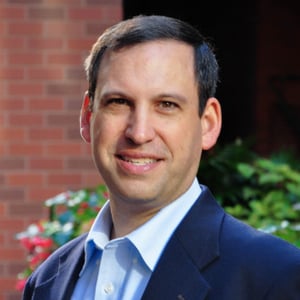
President, Becket Fund for Religious Liberty; Professor of Law and Co-Director of the Center for Religious Liberty, Catholic University; Visiting Professor, Harvard Law School
Mark joined the Becket team in 2011 and splits his time as Associate Professor at The Catholic University of America, Columbus School of Law, and as Visiting Professor at Harvard Law School. Mark teaches constitutional law, religious liberty, torts, and evidence. He has been voted Teacher of the Year three years in a row by the Law School’s Student Bar Association.
Mark has broad experience litigating First Amendment religious exercise and free speech cases. He has represented the winning parties in a variety of Supreme Court First Amendment cases including Hobby Lobby, Little Sisters, Wheaton College, and Holt. In January 2014, Mark argued before the Supreme Court in McCullen v. Coakley, a First Amendment challenge to a Massachusetts speech restriction outside of abortion clinics. The Justices ruled in favor of his clients 9-0. Mark also led a successful eight-year litigation battle against Governor Blagojevich’s effort to force religious pharmacists to distribute the morning-after and week-after pills.
Mark’s academic writing focuses on the First and Fourteenth Amendments, and has appeared in a variety of prestigious journals, including the Harvard Law Review.
Mark is a widely sought after speaker on constitutional issues, particularly concerning abortion and the First Amendment. Professor Rienzi has been invited to discuss these issues at Harvard Law School, Columbia University Law School, Georgetown University Law Center, Boston College Law School, Notre Dame Law School, the National Press Club, and the Capitol. He has been quoted on constitutional law issues on NPR, in the Washington Times, The New York Daily News, and the Chicago Sun-Times. Mark has also been featured on the Kelly File, Fox News Sunday, Your World with Neil Cavuto, Geraldo at Large, CNN Tonight, CNN Live, Andrea Mitchell Reports, and Wall Street Journal Live.
Prior to joining Becket, Mark served as counsel for the litigation department and the intellectual property litigation practice group of WilmerHale LLP. His practice focused on complex civil and appellate litigation with a particular emphasis on intellectual property and First Amendment issues. Prior to joining WilmerHale, he served as law clerk to the Hon. Stephen F. Williams, senior circuit judge for the U.S. Court of Appeals for the D.C. Circuit. Prior to that, Mark was an editor of the Harvard Law Review, and earned his J.D. from Harvard Law School and B.A. from Princeton University, both with honors.
Director of the Program in Human Rights, Catholic University of America
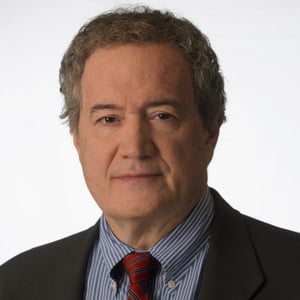
William L. Saunders is Chair Emeritus of the Religious Liberties Practice Group of the Federalist Society. He is also a religious liberty and human rights scholar as well as director of the Center for Human rights at The Catholic University of America. He is Law Fellow with the Institute for Human Ecology, Professor and Director of the Program in Human Rights in the School of Arts & Sciences and Co-director of the Center for Religious Liberty at the Columbus School of Law. Before joining The Catholic University of America, Mr. Saunders served as Senior Vice President and Senior Counsel with Americans United for Life for ten years. From 1999 to 2009, he was Senior Fellow in Bioethics and Human Rights Counsel at the Family Research Council.
Mr. Saunders attended the University of North Carolina at Chapel Hill on a Morehead scholarship. He obtained his degree in law from the Harvard Law School.
Mr. Saunders was featured in Harvard’s first Guide to Conservative Public Interest Law in 2003 and again in the 2008 edition. He served on Harvard’s Advisory Committee for its 2008 celebration of public interest law. A member of the Supreme Court bar, he has authored numerous legal briefs in state, federal, foreign, and international courts.
Mr. Saunders’ book, Unborn Human Life and Fundamental Rights: Leading Constitutional Cases Under Scrutiny, was published in 2019. His articles and book chapters have been published by the university presses of Harvard, Villanova, Brigham Young, Fordham, Georgetown, Houston, Scranton, and the Catholic University of America, as well as by the Intercollegiate Studies Institute, Freedom House, Greenhaven Press, Rowan & Littlefield, Praeger, St. Augustine’s, and Intervarsity press. He has given lectures and participated in debates at many colleges, universities, and law schools, including Princeton, Harvard, Georgetown, and Notre Dame. He delivered the annual J. Michael Miller Lecture at the University of St. Thomas (on international law) in February 2007, the annual R. Wayne Kraft Memorial Lecture (on bioethics) at DeSales University in February 2004 and the annual James Moore Lecture (on human rights violations in Sudan) at Millikin University in 1999. He has also lectured, and/or has been published, in many foreign countries, including Italy, Germany, Poland, Austria, Spain, Greece, Slovakia, Mexico, Qatar, Malaysia, Romania, the Philippines, Hong Kong, and the United Kingdom.
In addition to speaking and writing frequently on bioethics topics, Mr. Saunders has submitted testimony to the President’s Council on Bioethics, as well as to UNESCO’s Committee on Bioethics, and has briefed Congressional staff and state legislatures. He is a regular columnist for the National Catholic Bioethics Quarterly.
Mr. Saunders has appeared often in the media, including BBC World News, CNN, Fox News, Vatican Radio, and National Public Radio. His articles on issues have appeared in a variety of journals, such as First Things, Human Events, Human Life Review, The Legal Times, Communio, The Family in America: A Journal of Public Policy, Ethics & Medics, and Touchstone.
Mr. Saunders served on the official United States delegation to the UN Special Session on Children in 2001/02. In 2011, he was a speaker at an official briefing at the UN, addressing the topic, why euthanasia is not a human right.
In 2004, he served on the NGO Working Committee in connection with the Doha Intergovernmental Conference for the Family.
Mr. Saunders is Senior Fellow with the Religious Freedom Institute, and Affiliated Scholar with the Pellegrino Center for Clinical Ethics at the Georgetown University School of Medicine. He is President of the Fellowship of Catholic Scholars and a member of the boards of the International Association of Catholic Bioethicists, the International Right to Life Federation, the Institute on Religion and Democracy, and the Society of Catholic Social Scientists.
In 1999, Mr. Saunders founded Sudan Relief and Rescue, Inc., to aid the persecuted church in Sudan. He has worked for and written on behalf of the persecuted church for many years.
President, Becket Fund for Religious Liberty; Professor of Law and Co-Director of the Center for Religious Liberty, Catholic University; Visiting Professor, Harvard Law School
Mark joined the Becket team in 2011 and splits his time as Associate Professor at The Catholic University of America, Columbus School of Law, and as Visiting Professor at Harvard Law School. Mark teaches constitutional law, religious liberty, torts, and evidence. He has been voted Teacher of the Year three years in a row by the Law School’s Student Bar Association.
Mark has broad experience litigating First Amendment religious exercise and free speech cases. He has represented the winning parties in a variety of Supreme Court First Amendment cases including Hobby Lobby, Little Sisters, Wheaton College, and Holt. In January 2014, Mark argued before the Supreme Court in McCullen v. Coakley, a First Amendment challenge to a Massachusetts speech restriction outside of abortion clinics. The Justices ruled in favor of his clients 9-0. Mark also led a successful eight-year litigation battle against Governor Blagojevich’s effort to force religious pharmacists to distribute the morning-after and week-after pills.
Mark’s academic writing focuses on the First and Fourteenth Amendments, and has appeared in a variety of prestigious journals, including the Harvard Law Review.
Mark is a widely sought after speaker on constitutional issues, particularly concerning abortion and the First Amendment. Professor Rienzi has been invited to discuss these issues at Harvard Law School, Columbia University Law School, Georgetown University Law Center, Boston College Law School, Notre Dame Law School, the National Press Club, and the Capitol. He has been quoted on constitutional law issues on NPR, in the Washington Times, The New York Daily News, and the Chicago Sun-Times. Mark has also been featured on the Kelly File, Fox News Sunday, Your World with Neil Cavuto, Geraldo at Large, CNN Tonight, CNN Live, Andrea Mitchell Reports, and Wall Street Journal Live.
Prior to joining Becket, Mark served as counsel for the litigation department and the intellectual property litigation practice group of WilmerHale LLP. His practice focused on complex civil and appellate litigation with a particular emphasis on intellectual property and First Amendment issues. Prior to joining WilmerHale, he served as law clerk to the Hon. Stephen F. Williams, senior circuit judge for the U.S. Court of Appeals for the D.C. Circuit. Prior to that, Mark was an editor of the Harvard Law Review, and earned his J.D. from Harvard Law School and B.A. from Princeton University, both with honors.
Director of the Program in Human Rights, Catholic University of America
William L. Saunders is Chair Emeritus of the Religious Liberties Practice Group of the Federalist Society. He is also a religious liberty and human rights scholar as well as director of the Center for Human rights at The Catholic University of America. He is Law Fellow with the Institute for Human Ecology, Professor and Director of the Program in Human Rights in the School of Arts & Sciences and Co-director of the Center for Religious Liberty at the Columbus School of Law. Before joining The Catholic University of America, Mr. Saunders served as Senior Vice President and Senior Counsel with Americans United for Life for ten years. From 1999 to 2009, he was Senior Fellow in Bioethics and Human Rights Counsel at the Family Research Council.
Mr. Saunders attended the University of North Carolina at Chapel Hill on a Morehead scholarship. He obtained his degree in law from the Harvard Law School.
Mr. Saunders was featured in Harvard’s first Guide to Conservative Public Interest Law in 2003 and again in the 2008 edition. He served on Harvard’s Advisory Committee for its 2008 celebration of public interest law. A member of the Supreme Court bar, he has authored numerous legal briefs in state, federal, foreign, and international courts.
Mr. Saunders’ book, Unborn Human Life and Fundamental Rights: Leading Constitutional Cases Under Scrutiny, was published in 2019. His articles and book chapters have been published by the university presses of Harvard, Villanova, Brigham Young, Fordham, Georgetown, Houston, Scranton, and the Catholic University of America, as well as by the Intercollegiate Studies Institute, Freedom House, Greenhaven Press, Rowan & Littlefield, Praeger, St. Augustine’s, and Intervarsity press. He has given lectures and participated in debates at many colleges, universities, and law schools, including Princeton, Harvard, Georgetown, and Notre Dame. He delivered the annual J. Michael Miller Lecture at the University of St. Thomas (on international law) in February 2007, the annual R. Wayne Kraft Memorial Lecture (on bioethics) at DeSales University in February 2004 and the annual James Moore Lecture (on human rights violations in Sudan) at Millikin University in 1999. He has also lectured, and/or has been published, in many foreign countries, including Italy, Germany, Poland, Austria, Spain, Greece, Slovakia, Mexico, Qatar, Malaysia, Romania, the Philippines, Hong Kong, and the United Kingdom.
In addition to speaking and writing frequently on bioethics topics, Mr. Saunders has submitted testimony to the President’s Council on Bioethics, as well as to UNESCO’s Committee on Bioethics, and has briefed Congressional staff and state legislatures. He is a regular columnist for the National Catholic Bioethics Quarterly.
Mr. Saunders has appeared often in the media, including BBC World News, CNN, Fox News, Vatican Radio, and National Public Radio. His articles on issues have appeared in a variety of journals, such as First Things, Human Events, Human Life Review, The Legal Times, Communio, The Family in America: A Journal of Public Policy, Ethics & Medics, and Touchstone.
Mr. Saunders served on the official United States delegation to the UN Special Session on Children in 2001/02. In 2011, he was a speaker at an official briefing at the UN, addressing the topic, why euthanasia is not a human right.
In 2004, he served on the NGO Working Committee in connection with the Doha Intergovernmental Conference for the Family.
Mr. Saunders is Senior Fellow with the Religious Freedom Institute, and Affiliated Scholar with the Pellegrino Center for Clinical Ethics at the Georgetown University School of Medicine. He is President of the Fellowship of Catholic Scholars and a member of the boards of the International Association of Catholic Bioethicists, the International Right to Life Federation, the Institute on Religion and Democracy, and the Society of Catholic Social Scientists.
In 1999, Mr. Saunders founded Sudan Relief and Rescue, Inc., to aid the persecuted church in Sudan. He has worked for and written on behalf of the persecuted church for many years.

Talks With Authors: Classified: The Untold Story of Racial Classification in America
David Bernstein, Cory R. Liu
In his recent book, Classified: The Untold Story of Racial Classification in America, Professor...
State Court Docket Watch: Glass v. City of Montgomery
Barrett Bowdre, Sean Collins
Alabama’s constitution prohibits the legislature from enacting a “local law”—one that applies only in one...
State Court Docket Watch: In re: D.D.
Anya Bidwell
Hard cases make bad law.[1] In re: D.D.[2]—a Maryland policing case involving the odor of...
Deep Dive Episode 234 - Dobbs and the Potential Implications for Data Privacy
Stewart A. Baker, Jane Bambauer, Danielle Citron, Paul Rosenzweig
Regulatory Transparency Project's Fourth Branch Podcast
The Supreme Court’s recent abortion decision in Dobbs v. Jackson Women’s Health Organization will no doubt have...
Topics
Ninth Circuit to California School District: Stop Discriminating Against Religious Students
On Monday, August 29, the Ninth Circuit ruled in favor of the Fellowship of Christian...
Topics
Religious Liberty Update on Congressional and Executive Branch Actions
Congress NEW LAW 1. On August 16, President Biden signed the “Inflation Reduction Act of...
Dobbs and the Potential Implications for Data Privacy
Stewart A. Baker, Jane Bambauer, Danielle Citron, Paul Rosenzweig
A Regulatory Transparency Project Webinar
The Supreme Court’s recent abortion decision in Dobbs v. Jackson Women’s Health Organization will no...
Religious Liberty at the Supreme Court 2022
Mark L. Rienzi, William L. Saunders
Please join these experts as they review religious liberty at the Supreme Court in 2022. Featuring:...
Religious Liberty at the Supreme Court 2022
Mark L. Rienzi, William L. Saunders
Please join these experts as they review religious liberty at the Supreme Court in 2022. Featuring:...
UPDATE: Website and Database Repairs
We believe the previous issues preventing successful event registrations and membership payments have been resolved....