
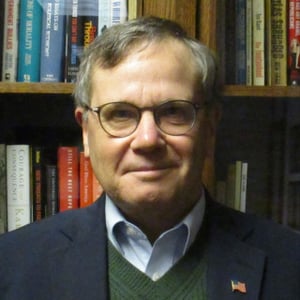
Senior Fellow in Constitutional Jurisprudence, Independence Institute
Professor Robert G. Natelson is a constitutional scholar and author.
Rob’s constitutional scholarship has been cited repeatedly by justices and parties at the U.S. Supreme Court—as well as by federal appeals courts, and at least 18 state supreme courts.
Rob’s research into the Constitution’s original meaning has carried him to libraries throughout the United States and in Britain, including four months at Oxford University. His books and articles span many different parts of the Constitution, including groundbreaking studies of the Necessary and Proper Clause, the Indian Commerce Clause, federalism, Founding-Era interpretation, regulation of elections, and the amendment process of Article V. He created the first-ever online bibliography for 18th century materials used in constitutional research. He is a contributing author to the Encyclopedia of the Supreme Court of the United States (on Magna Carta). He contributed eight essays to the third edition of the Heritage Guide to the Constitution: five on the amendment procedure and one each on the Guarantee Clause, the Postal Clause, and the Recess Appointments Clause.
U.S. Supreme Court justices have relied explicitly on Rob’s research in 41 citations in 13 separate cases.
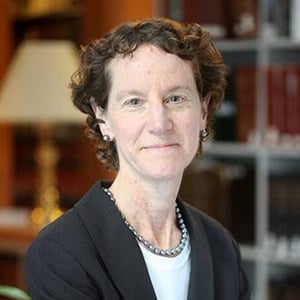
Partner, Arnold & Porter
Debbie Feinstein heads the firm's Global Antitrust group, and brings a wealth of experience to her practice in advising clients on a range of antitrust challenges before US antitrust authorities. She recently re-joined the firm from the US Federal Trade Commission (FTC), where she was Director of the Bureau of Competition. In that capacity, she was responsible for supervising the investigation and enforcement of the US antitrust laws against anticompetitive mergers and conduct. During her tenure from 2013 to 2017, the FTC had substantial litigation success and a number of major merger wins, including challenges to Sysco Corp.'s acquisition of rival US Foods Inc., and Staples Inc.'s merger with Office Depot Inc. She had previously served at the FTC from 1989 to 1991 as Assistant to the Director of the Bureau of Competition and Attorney Advisor.
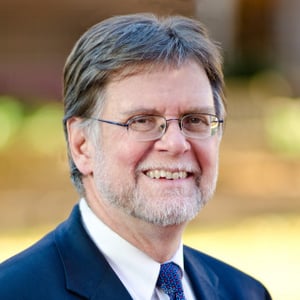
Global Competition Professor of Law and Policy, George Washington University Law School
Before joining the law school in 1999, William E. Kovacic was the George Mason University Foundation Professor at the George Mason University School of Law. From January 2006 to October 2011, he was a member of the Federal Trade Commission and chaired the agency from March 2008 to March 2009. He was the FTC’s General Counsel from June 2001 to December 2004. In 2011 he received the FTC’s Miles W. Kirkpatrick Award for Lifetime Achievement.
Since August 2013, Professor Kovacic has served as a Non-Executive Director with the United Kingdom’s Competition and Markets Authority. From January 2009 to September 2011, he was Vice-Chair for Outreach for the International Competition Network. He has advised many countries and international organizations on antitrust, consumer protection, government contracts, and the design of regulatory institutions.
At GW, Professor Kovacic has taught antitrust, contracts, and government contracts. He is co-editor (with Ariel Ezrachi) of the Journal of Antitrust Enforcement. His publications since returning to GW in 2011 include “Good Agency Practice and the Implementation of Competition Law” in European Yearbook of International Economic Law (Christoph Hermann ed. 2013); “Antitrust in High-Tech Industries: Improving the Federal Antitrust Joint Venture” in George Mason Law Review (2012); “Behavioral Economics: Implications for Regulatory Agency Behavior” in Journal of Regulatory Economics (2012) (with James Cooper); “Competition Agency Design: What’s on the Menu?” in European Competition Journal (2012) (with David Hyman); “Plus Factors and Agreement in Antitrust Law” in Michigan Law Review (2011) (with Robert Marshall, Leslie Marx & Halbert White); “Ensuring Integrity and Competition and Public Procurement Markets: A Dual Challenge for Good Governance” in The WTO Regime on Government Procurement: Challenge and Reform (Sue Arrowsmith & Robert Anderson, eds. 2011) (with Robert Anderson & Anna Caroline Mueller); “The International Competition Network: Its Past, Current, and Future Role” inMinnesota Journal of International Law (2011) (with Hugh Hollman); “The William Humphrey and Abram Myers Years: The FTC from 1925 to 1929” in Antitrust Law Journal (2011) (with Marc Winerman); Professor Kovacic also is co-author (with Andrew Gavil & Jonathan Baker) of Antitrust Law in Perspective: Cases, Concepts and Problems in Competition Policy (2d ed. 2008) and Antitrust Law & Economics in a Nutshell (5th ed. 2004) (with Ernest Gellhorn & Stephen Calkins).
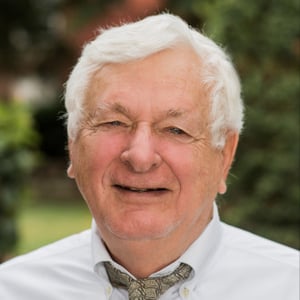
Lyle T. Alverson Professor of Law, George Washington University Law School
Professor Pierce is author of over twenty books and 130 articles on administrative law, government regulation, and the effects of various forms of government intervention on the performance of markets. His books and articles have been cited in hundreds of judicial opinions, including over a dozen opinions of the U.S. Supreme Court.
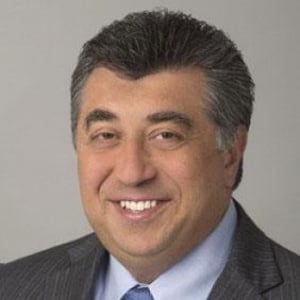
Counsel, Cadwalader, Wickersham & Taft LLP; Senior Competition Counsel, TechFreedom
Bilal Sayyed represents clients before the Federal Trade Commission (FTC) and Department of Justice (DOJ) in significant merger, civil and criminal antitrust matters. A significant portion of his practice involves representing investment funds on antitrust and Hart-Scott-Rodino (HSR) Act compliance matters; he has also provided expert witness services related to HSR compliance. Bilal also counsels clients before the FTC in consumer protection and privacy investigations. He maintains an active amicus and appellate brief writing practice in antitrust litigation and antitrust merger matters.
Prior to joining Cadwalader, Bilal was the Director of the FTC’s Office of Policy Planning (OPP) (2018-2021). In that role, he provided legal and policy advice to the Chairman and Commissioners on antitrust and consumer protection matters and worked closely with the senior and career leadership of the FTC’s Bureaus of Competition, Consumer Protection, and Economics. Bilal previously served as an Attorney Advisor to FTC Chairman Timothy J. Muris from 2001 to 2004. In that role, Bilal advised the Chairman on matters involving a wide spectrum of industries, including chemical and mining, petroleum and natural gas, health care and pharmaceutical, defense and transportation, gaming, various consumer products and retail operations, and professional associations and standard-setting organizations.
Bilal has taught antitrust and competition law at the George Mason University School of Law since 2011.
Bilal received his B.A. from Case Western Reserve University, and a J.D. from George Mason University School of Law. He is admitted to practice in the District of Columbia and the State of New York, as well as before the U.S. District Courts for the District of Colorado and the District of Columbia, the U.S. Court of Appeals for the District of Columbia Circuit, the Fifth Circuit, the Ninth Circuit, and the U.S. Supreme Court.
Bilal is the host of Rethinking Antitrust, a podcast published by TechFreedom that examines the economics, institutions, law, legislation, and policy goals of antitrust enforcement.
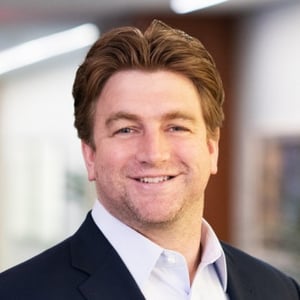
Founding Partner, Lodestar Law and Economics PLLC
Josh is the founder of Lodestar Law and Economics, PLLC. On January 1, 2013, the U.S. Senate unanimously confirmed Wright as a Commissioner of the Federal Trade Commission (FTC). He is a leading scholar in antitrust law, economics, intellectual property, regulation, and consumer protection, and has published more than 100 articles and book chapters, co-authored a leading antitrust casebook, and edited several book volumes focusing on these issues. Commentators have recognized Wright as “widely considered his generation’s greatest mind on antitrust law,” and his academic work ranks him as one of the most cited antitrust academics in the world. Wright was also awarded the Paul M. Bator Award by the Federalist Society in 2014 to “an academic who demonstrated excellence in legal scholarship, a commitment to teaching, a concern for students, and who has made a significant public impact.” Wright also served as the Executive Director of the Global Antitrust Institute, the world’s premiere academic institute focused upon antitrust education for judges and regulators and has taught hundreds of judges and thousands of regulators from dozens of countries.
Wright’s practice focuses upon helping clients solve complex competition, consumer protection, and regulatory problems by providing legal and economic analysis, strategic advice and counseling, and economic expert testimony.
Partner, Arnold & Porter
Debbie Feinstein heads the firm's Global Antitrust group, and brings a wealth of experience to her practice in advising clients on a range of antitrust challenges before US antitrust authorities. She recently re-joined the firm from the US Federal Trade Commission (FTC), where she was Director of the Bureau of Competition. In that capacity, she was responsible for supervising the investigation and enforcement of the US antitrust laws against anticompetitive mergers and conduct. During her tenure from 2013 to 2017, the FTC had substantial litigation success and a number of major merger wins, including challenges to Sysco Corp.'s acquisition of rival US Foods Inc., and Staples Inc.'s merger with Office Depot Inc. She had previously served at the FTC from 1989 to 1991 as Assistant to the Director of the Bureau of Competition and Attorney Advisor.
Global Competition Professor of Law and Policy, George Washington University Law School
Before joining the law school in 1999, William E. Kovacic was the George Mason University Foundation Professor at the George Mason University School of Law. From January 2006 to October 2011, he was a member of the Federal Trade Commission and chaired the agency from March 2008 to March 2009. He was the FTC’s General Counsel from June 2001 to December 2004. In 2011 he received the FTC’s Miles W. Kirkpatrick Award for Lifetime Achievement.
Since August 2013, Professor Kovacic has served as a Non-Executive Director with the United Kingdom’s Competition and Markets Authority. From January 2009 to September 2011, he was Vice-Chair for Outreach for the International Competition Network. He has advised many countries and international organizations on antitrust, consumer protection, government contracts, and the design of regulatory institutions.
At GW, Professor Kovacic has taught antitrust, contracts, and government contracts. He is co-editor (with Ariel Ezrachi) of the Journal of Antitrust Enforcement. His publications since returning to GW in 2011 include “Good Agency Practice and the Implementation of Competition Law” in European Yearbook of International Economic Law (Christoph Hermann ed. 2013); “Antitrust in High-Tech Industries: Improving the Federal Antitrust Joint Venture” in George Mason Law Review (2012); “Behavioral Economics: Implications for Regulatory Agency Behavior” in Journal of Regulatory Economics (2012) (with James Cooper); “Competition Agency Design: What’s on the Menu?” in European Competition Journal (2012) (with David Hyman); “Plus Factors and Agreement in Antitrust Law” in Michigan Law Review (2011) (with Robert Marshall, Leslie Marx & Halbert White); “Ensuring Integrity and Competition and Public Procurement Markets: A Dual Challenge for Good Governance” in The WTO Regime on Government Procurement: Challenge and Reform (Sue Arrowsmith & Robert Anderson, eds. 2011) (with Robert Anderson & Anna Caroline Mueller); “The International Competition Network: Its Past, Current, and Future Role” inMinnesota Journal of International Law (2011) (with Hugh Hollman); “The William Humphrey and Abram Myers Years: The FTC from 1925 to 1929” in Antitrust Law Journal (2011) (with Marc Winerman); Professor Kovacic also is co-author (with Andrew Gavil & Jonathan Baker) of Antitrust Law in Perspective: Cases, Concepts and Problems in Competition Policy (2d ed. 2008) and Antitrust Law & Economics in a Nutshell (5th ed. 2004) (with Ernest Gellhorn & Stephen Calkins).
Lyle T. Alverson Professor of Law, George Washington University Law School
Professor Pierce is author of over twenty books and 130 articles on administrative law, government regulation, and the effects of various forms of government intervention on the performance of markets. His books and articles have been cited in hundreds of judicial opinions, including over a dozen opinions of the U.S. Supreme Court.
Counsel, Cadwalader, Wickersham & Taft LLP; Senior Competition Counsel, TechFreedom
Bilal Sayyed represents clients before the Federal Trade Commission (FTC) and Department of Justice (DOJ) in significant merger, civil and criminal antitrust matters. A significant portion of his practice involves representing investment funds on antitrust and Hart-Scott-Rodino (HSR) Act compliance matters; he has also provided expert witness services related to HSR compliance. Bilal also counsels clients before the FTC in consumer protection and privacy investigations. He maintains an active amicus and appellate brief writing practice in antitrust litigation and antitrust merger matters.
Prior to joining Cadwalader, Bilal was the Director of the FTC’s Office of Policy Planning (OPP) (2018-2021). In that role, he provided legal and policy advice to the Chairman and Commissioners on antitrust and consumer protection matters and worked closely with the senior and career leadership of the FTC’s Bureaus of Competition, Consumer Protection, and Economics. Bilal previously served as an Attorney Advisor to FTC Chairman Timothy J. Muris from 2001 to 2004. In that role, Bilal advised the Chairman on matters involving a wide spectrum of industries, including chemical and mining, petroleum and natural gas, health care and pharmaceutical, defense and transportation, gaming, various consumer products and retail operations, and professional associations and standard-setting organizations.
Bilal has taught antitrust and competition law at the George Mason University School of Law since 2011.
Bilal received his B.A. from Case Western Reserve University, and a J.D. from George Mason University School of Law. He is admitted to practice in the District of Columbia and the State of New York, as well as before the U.S. District Courts for the District of Colorado and the District of Columbia, the U.S. Court of Appeals for the District of Columbia Circuit, the Fifth Circuit, the Ninth Circuit, and the U.S. Supreme Court.
Bilal is the host of Rethinking Antitrust, a podcast published by TechFreedom that examines the economics, institutions, law, legislation, and policy goals of antitrust enforcement.
Founding Partner, Lodestar Law and Economics PLLC
Josh is the founder of Lodestar Law and Economics, PLLC. On January 1, 2013, the U.S. Senate unanimously confirmed Wright as a Commissioner of the Federal Trade Commission (FTC). He is a leading scholar in antitrust law, economics, intellectual property, regulation, and consumer protection, and has published more than 100 articles and book chapters, co-authored a leading antitrust casebook, and edited several book volumes focusing on these issues. Commentators have recognized Wright as “widely considered his generation’s greatest mind on antitrust law,” and his academic work ranks him as one of the most cited antitrust academics in the world. Wright was also awarded the Paul M. Bator Award by the Federalist Society in 2014 to “an academic who demonstrated excellence in legal scholarship, a commitment to teaching, a concern for students, and who has made a significant public impact.” Wright also served as the Executive Director of the Global Antitrust Institute, the world’s premiere academic institute focused upon antitrust education for judges and regulators and has taught hundreds of judges and thousands of regulators from dozens of countries.
Wright’s practice focuses upon helping clients solve complex competition, consumer protection, and regulatory problems by providing legal and economic analysis, strategic advice and counseling, and economic expert testimony.
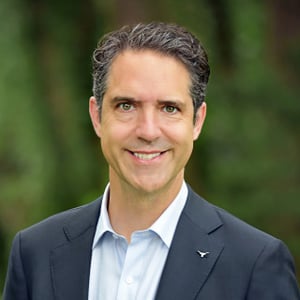
James A. Baker III Chair in the Rule of Law and World Affairs and Associate Dean for Academic Affairs, The University of Texas at Austin School of Law
Bobby Chesney holds the James Baker Chair and also serves as the Associate Dean for Academic Affairs at the University of Texas School of Law. In addition, he is the Director of the Robert S. Strauss Center for International Security and Law, a University-wide research unit bridging across disciplines to improve understanding of international security issues.
In 2009, Professor Chesney served in the Justice Department in connection with the Detention Policy Task Force created by Executive Order 13493. He also previously served the Intelligence Community as an associate member of the Intelligence Science Board and as a member of the Advanced Technology Board. In addition to his current positions at the University of Texas, he is a member of the American Law Institute, and a senior editor for the Journal of National Security Law & Policy, and a former non-resident Senior Fellow of the Brookings Institution.
Professor Chesney is a co-founder and contributor to www.lawfareblog.com, the leading source for analysis, commentary, and news relating to law and national security. In addition to his blogging at Lawfare, those interested in national security law should consider following Professor Chesney on Twitter (@bobbychesney) as well as subscribing to the National Security Law Podcast (which he co-hosts with his colleague Steve Vladeck). Professor Chesney's scholarship focuses on U.S. national security policies and institutions, encompassing both domestic and international law issues. His articles may be downloaded from SSRN here.
Professor Chesney is a magna cum laude graduate of both Texas Christian University and Harvard Law School. After law school he clerked for the Honorable Lewis A. Kaplan of the United States District Court for the Southern District of New York and the Honorable Robert D. Sack of the United States Court of Appeals for the Second Circuit. He then practiced with the firm Davis Polk & Wardwell in New York (litigation), before beginning his academic career with Wake Forest University School of Law. There he received a teacher of the year award from the student body in one year, and from the school's dean in another. In 2008 he came to the University of Texas School of Law as a visiting professor, and then joined UT on a permanent basis in 2009. He became the Associate Dean for Academic Affairs in 2011.
Professor Chesney teaches a variety of courses, including: Constitutional Law, National Security Law, Foundations of Cybersecurity: Law, Institutions, and Policy; Law of the Intelligence Community; History of U.S. Counterterrorism Law & Policy: 1970 to Present; Evidence, Civil Procedure, and an array of seminars. He is from San Antonio.
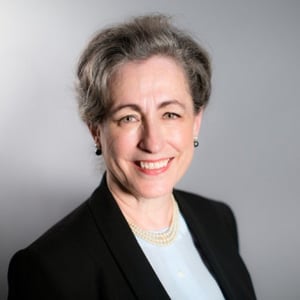
Senior Litigation Counsel, New Civil Liberties Alliance
Peggy Little, Senior Counsel at New Civil Liberties Alliance, a new public interest law firm challenging the administrative state founded in 2017 by Professor Philip Hamburger, has over three decades of experience as a trial and appellate litigator in complex, high-stakes regulatory, mass-tort, class-action, products liability, securities, commercial and civil rights litigation representing individuals and high-profile litigants including Fortune 50 companies, financial institutions, public companies, and universities in state and federal courts, including the United States Supreme Court.
Peggy is a graduate of Yale College and Yale Law School, where she was awarded the Potter Stewart Prize. She was a law clerk to the Hon. Ralph K. Winter on the U.S. Court of Appeals for the Second Circuit. Prior to starting her own trial and appellate law firm in 1997, where she was appellate consulting counsel to the New Haven firefighters in Ricci v.DeStefano, a landmark 2009 United States Supreme Court decision, Peggy was a partner at Tyler, Cooper & Alcorn in New Haven, Connecticut. From 2004 to early 2018, Peggy directed, part-time, the Federalist Society Pro Bono Center.
Peggy has participated in many national conferences and symposia addressing issues of current importance in constitutional law – specifically state and federal constitutional questions regarding the separation of powers and the first amendment – and regularly speaks, blogs and publishes on the topic of the unconstitutional exercise of governmental power. In May of 2017, she presented her paper, Pirates at the Parchment Gates, to a conference of state and federal judges at the Law and Economics Center at the Antonin Scalia Law School. Her work has been published by law reviews, legal publications, the Federalist Society, the Wall Street Journal, Law and Liberty and the Manhattan Institute.
Recent publications include: How the SEC silences its critics, The SEC should listen to Sen. Cotton, Lucia v. SEC, Opening Salvos in the Opioid Litigation Wars, Straight Dope on the Opioid Crisis
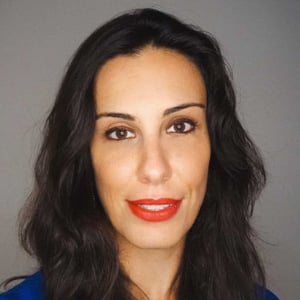
Litigation Counsel, New Civil Liberties Alliance
Jenin Younes is Litigation Counsel for the New Civil Liberties Alliance. Having always been a passionate advocate for individual liberties, Jenin spent the first part of her career as an appellate public defender, providing representation to indigent clients convicted of criminal offenses in New York City. In this capacity, she briefed and argued countless appeals in New York’s Appellate Division, Second Department, and several cases in the New York State Court of Appeals. She also represented individuals at civil hearings in trial court.
Jenin holds a B.A. from Cornell University and a J.D. from New York University School of Law.
Senior Litigation Counsel, New Civil Liberties Alliance
Peggy Little, Senior Counsel at New Civil Liberties Alliance, a new public interest law firm challenging the administrative state founded in 2017 by Professor Philip Hamburger, has over three decades of experience as a trial and appellate litigator in complex, high-stakes regulatory, mass-tort, class-action, products liability, securities, commercial and civil rights litigation representing individuals and high-profile litigants including Fortune 50 companies, financial institutions, public companies, and universities in state and federal courts, including the United States Supreme Court.
Peggy is a graduate of Yale College and Yale Law School, where she was awarded the Potter Stewart Prize. She was a law clerk to the Hon. Ralph K. Winter on the U.S. Court of Appeals for the Second Circuit. Prior to starting her own trial and appellate law firm in 1997, where she was appellate consulting counsel to the New Haven firefighters in Ricci v.DeStefano, a landmark 2009 United States Supreme Court decision, Peggy was a partner at Tyler, Cooper & Alcorn in New Haven, Connecticut. From 2004 to early 2018, Peggy directed, part-time, the Federalist Society Pro Bono Center.
Peggy has participated in many national conferences and symposia addressing issues of current importance in constitutional law – specifically state and federal constitutional questions regarding the separation of powers and the first amendment – and regularly speaks, blogs and publishes on the topic of the unconstitutional exercise of governmental power. In May of 2017, she presented her paper, Pirates at the Parchment Gates, to a conference of state and federal judges at the Law and Economics Center at the Antonin Scalia Law School. Her work has been published by law reviews, legal publications, the Federalist Society, the Wall Street Journal, Law and Liberty and the Manhattan Institute.
Recent publications include: How the SEC silences its critics, The SEC should listen to Sen. Cotton, Lucia v. SEC, Opening Salvos in the Opioid Litigation Wars, Straight Dope on the Opioid Crisis
Litigation Counsel, New Civil Liberties Alliance
Jenin Younes is Litigation Counsel for the New Civil Liberties Alliance. Having always been a passionate advocate for individual liberties, Jenin spent the first part of her career as an appellate public defender, providing representation to indigent clients convicted of criminal offenses in New York City. In this capacity, she briefed and argued countless appeals in New York’s Appellate Division, Second Department, and several cases in the New York State Court of Appeals. She also represented individuals at civil hearings in trial court.
Jenin holds a B.A. from Cornell University and a J.D. from New York University School of Law.

Topics
Nine Agencies Propose Regulations for Partnerships with Faith-Based and Neighborhood Organizations
On January 13, 2023, nine agencies issued a notice of proposed rulemaking (NPRM) titled “Partnerships...
Topics
Partisan Enforcement and Increasing Uncertainty at the FTC: Commissioner Wilson’s Departure and Recent FTC Administrative Actions
The Federal Trade Commission has amped up its administrative activity of late, portending changes in...
Can Congress Regulate Indian Child Placement? [Briefly: The FedSoc Review]
Robert G. Natelson
What is the extent of Congress’s power over Indian affairs? The Supreme Court is considering...
Topics
State Sovereignty at Stake in Dispute Between New York and New Jersey
Can a state surrender some of its sovereignty? Of course. It’s how our current federal...
A Roundtable on Recent Developments at the FTC
Debbie Feinstein, William Kovacic, Richard J. Pierce, Bilal Sayyed, Joshua D. Wright
Recent months have seen a flurry of notable developments at the Federal Trade Commission, including...
A Roundtable on Recent Developments at the FTC
Debbie Feinstein, William Kovacic, Richard J. Pierce, Bilal Sayyed, Joshua D. Wright
Recent months have seen a flurry of notable developments at the Federal Trade Commission, including...
Welcome & Opening Remarks
Robert Chesney
2023 National Student Symposium
Featuring: Welcome: Emmalyn Decker, Symposium Chair, University of Texas School of Law Opening Remarks: Dean Robert "Bobby" Chesney, Dean...
Topics
Education Department Proposes Rescinding Religious Student Group Protections and Requests Info on Campus Free Speech Regulations
On February 22, 2023, the Department of Education (ED) published in the Federal Register a...
Government Censorship, Disinformation, and Scientific Consensus – A Litigation Update on Missouri v. Biden & Hoeg v. Newsom
Margaret A. Little, Jenin Younes
How are we to understand scientific consensus? Who is authorized to speak on behalf of...
Government Censorship, Disinformation, and Scientific Consensus – A Litigation Update on Missouri v. Biden & Hoeg v. Newsom
Margaret A. Little, Jenin Younes
How are we to understand scientific consensus? Who is authorized to speak on behalf of...