Vice President for Research and Technology Transfer, Colorado School of Mines; Former Director, National Institute of Standards and Technology
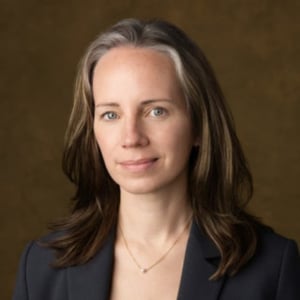
Dr. Walter Copan is senior adviser of the Renewing American Innovation Project at the Center for Strategic and International Studies. Currently, he serves as vice president for research and technology transfer at the Colorado School of Mines in Golden, Colorado. He previously served as under secretary of commerce for standards and technology and 16th director of the National Institute of Standards and Technology (NIST), a position to which he was confirmed unanimously by the Senate. He served as the U.S. principal presidential adviser on standards policy and technology matters and provided high-level oversight and strategic leadership for NIST, a world-leading science and technology institute. Dr. Copan has wide-ranging experience spanning large company, entrepreneurial tech start-up, U.S. government, nonprofit, and other public sector settings. For the U.S. government, he also served with two of the Department of Energy national laboratories: the National Renewable Energy Laboratory and Brookhaven National Laboratory. He is a sought-after speaker and thought leader on matters of science and technology, strategy, entrepreneurship, technology commercialization, intellectual property, and innovation. Dr. Copan began his career in research and development and business leadership at the Lubrizol Corporation. He earned undergraduate degrees and his PhD in physical chemistry from Case Western Reserve University and holds a certificate in advanced business administration studies at Harvard Business School. He was named 2020 laboratory director of the year by the U.S. Federal Laboratory Consortium. The Association of University Technology Managers (AUTM) recognized Dr. Copan with its 2021 Bayh-Dole Award for contributions to innovation and technology transfer.
Senior Counsel for Law and Policy, Committee for Justice
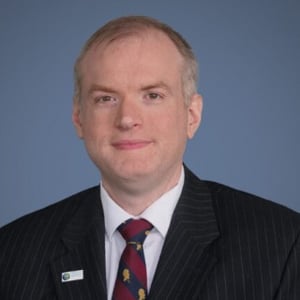
Jeff is a registered patent attorney and an intellectual property and innovation policy professional with a unique combination of training and real-world experience. Jeff is also currently a PhD candidate at the University of Pittsburgh Graduate School of Public and International Affairs (GSPIA). His dissertation is entitled “An Inquiry into the Nature and Causes of American Innovation: An Austrian Economics Perspective.”
Jeff maintains an active intellectual property law practice in the life sciences space. While counseling clients and working on his dissertation and other scholarship, Jeff remains active in the policy analysis and advocacy space. He currently serves as the President of the Association for American Innovation and a member and former Chair of the Public Policy Legal Task Force (PPLTF) for the Association of University of Technology Managers (AUTM).
Jeff has a bachelor’s degree chemical and biomedical engineering with concentrations in molecular biology and fermentation technology and from Carnegie Mellon. He also has a master’s degree in industrial administration (business) from Carnegie Mellon where he concentrated on international management, marketing and finance. He earned his law degree from the Duquesne University School of Law with a focus on intellectual property law.
Crandall Melvin Professor of Law, Director, Syracuse Intellectual Property Law Institute, Syracuse University College of Law
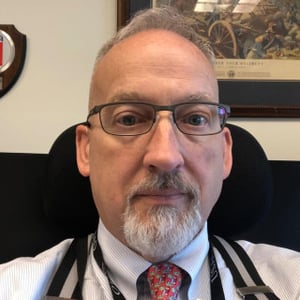
Dr. Shubha Ghosh earned his J.D. from Stanford University, with distinction, and his Ph.D. in Economics from the University of Michigan. He earned his B.A., cum laude, from Amherst College. Prior to joining Syracuse University College of Law, Ghosh taught at the University of Wisconsin Law School as a chaired, tenured professor and co-director of the Innovation cluster, consisting of faculty in the law and business schools.
Ghosh joined the Syracuse University College of Law in January, 2016, as Crandall Melvin Professor of Law and Director of the Technology Commercialization Curricular Program, a unique program which trains students in intellectual property, business law, and the legal foundations for the commercialization of patents, copyrights, trademarks, and other legal property governing technology and innovation. The Program consists of the Syracuse Intellectual Property Law Institute (SIPLI), which Professor Ghosh manages, and the Innovation Law Center, which offers clinical experience for students in the Program.
Ghosh also works through the state-funded New York State Science and Technology Law Center (NYSSTLC), an entity that guides entrepreneurs, start-ups, universities, and research centers in New York State and beyond. In this capacity, Ghosh frequently works with administrators in Albany who focus on economic development and innovation policy in the State. Most recently, he has advised on the risks to 501(c) entities that collaborate with private enterprise and on intellectual property and technology licensing policies for state research entities.
His extensive research focuses on the development and commercialization of intellectual property and technology as a means of promoting economic and social development. He has published extensively on pharmaceutical, design, copyright protection of standards, competition policy, and other intellectual property issues; antitrust law; legal construction of the marketplace; technology transfer; and the role of intellectual property law and policy in shaping these diverse areas. His most recent book, Exhausting Intellectual Property Rights (Cambridge, 2018) was the subject of a panel discussion at the World Trade Organization in Geneva and the AALS Annual Meeting in New Orleans.
Ghosh is also a frequent blogger and commentator in webcasts and webinars, including the JOTWELL section on International & Comparative Law; Hedgehogs and Foxes, a blog on law and popular culture; and the webcast series for SIPLI and the Technology Commercialization Law Program.
Partner, Sullivan & Cromwell LLP
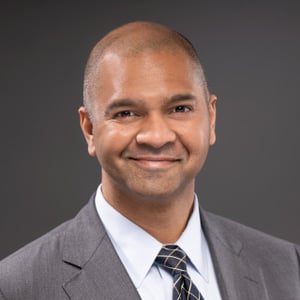
Andrei Iancu is a partner at Sullivan & Cromwell and one of the leading voices in intellectual property law and innovation policy. He is a former Undersecretary of Commerce for Intellectual Property and Director of the U.S. Patent and Trademark Office (USPTO), a position to which he was confirmed unanimously by the Senate. Andrei has decades of experience representing plaintiffs and defendants in IP matters across the technical and scientific spectra, including medical devices, genetic testing, therapeutics, the Internet, telephony, TV broadcasting, video game systems and computer peripherals. He represents clients in litigation and trials before the district courts, the U.S. International Trade Commission and the USPTO, the Federal Circuit and U.S. Supreme Court, and also counsels clients on obtaining, licensing, enforcing and defending against IP rights globally.
Dinsmore & Shohl LLP, Partner
Brian is chair of Dinsmore’s IP Transactions and Licensing Group. He is a past president of the Licensing Executives Society (USA and Canada), Inc. (LES), the leading professional society devoted to commercial transactions and licensing of intangible property. He continues to serve LES as senior vice president for public policy. He has extensive experience in a wide variety of commercial transactions involving intangible property, and is known for creative licensing strategies to promote collaboration and resolve IP-related disputes.
He is a registered patent attorney with more than 30 years of experience before the U.S. Patent and Trademark Office and in structuring global IP portfolios and strategies. He has extensive experience in contested proceedings before the USPTO Patent Trial and Appeal Board (interferences, Inter Partes Reviews and Post Grant Reviews), as well as contested matters in federal courts and the International Trade Commission. His wide-ranging experience affords a broad, informed perspective and facilitates creative approaches to intellectual property management, licensing, and enforcement.
In addition to his leadership of LES, Brian served on the LES Board of Directors 2007 – 2018. In his ongoing role as senior vice president for public policy he is responsible for coordinating the society’s public policy positions, amicus briefs, and congressional outreach. He works with legislators, the executive branch, and the courts toward consistent, reliable, and prudent IP laws and policies that advance innovation and economic development. He has also served LES as trustee for education, and has long served as an author, editor, and faculty member of LES educational programs focusing on best practices in IP licensing.
He is also active in the global society, LES International (LESI). Among his various roles in LESI, he has served as co-chair of the External Relations Committee, coordinating public policy and advocacy for effective IP laws and policies among the 33 regional LES societies, and with various non-governmental organizations such as WIPO and EPO. In 2019, he received the LES International President’s Service Recognition Award.
Brian also serves as Chair of the Board of Directors of the Bayh Dole Coalition, a 501(c)(4) corporation dedicated to promoting and preserving the Bayh Dole Act. He is a member of the Founding Board of Directors of the United States Intellectual Property Alliance (USIPA), an organization dedicated to raising public awareness of, and appreciation for, the role of IP in fostering innovation for the public good; and he has served on the DC Bar Intellectual Property Section Steering Committee (2013 – 2016).
In 2016, Brian testified before the U.S. Senate Committee on Small Business and Entrepreneurship on the effects of the America Invents Act on small business and entrepreneurs in a hearing entitled “An Examination of Changes to the U.S. Patent System & Impacts on America's Small Businesses.”
With his longstanding and diverse patent practice, in both private practice and in-house, Brian advises corporate leaders and entrepreneurs in effective IP procurement practices, and in maximizing value from IP assets. He has been retained as a testifying witness in IP and licensing disputes by the U.S. Department of Justice, the U.S. Department of the Treasury, and by various private enterprises.
Brian has been acknowledged by IAM magazine as among its “IAM Strategy 300”, the world’s leading IP strategists, and among “The World's Leading Patent and Technology Licensing Lawyers.”
He earned B.S. and M.S. degrees from the Department of Chemistry, Rochester Institute of Technology, Rochester, NY; and Juris Doctor from Syracuse University, College of Law, Syracuse, NY (1986).
Brian has served his alma mater as president of the RIT Alumni Association 2005 – 2009; and now serves on the RIT Board of Trustees as a member of its Executive Committee, chair of its Student Life Committee, and vice-chair of its Committee on Trustees. In 2013, Brian was awarded RIT’s Outstanding Alumnus Award, and in 2005 he was awarded the Distinguished Alumnus Award by RIT’s College of Science.
Vice President for Research and Technology Transfer, Colorado School of Mines; Former Director, National Institute of Standards and Technology
Dr. Walter Copan is senior adviser of the Renewing American Innovation Project at the Center for Strategic and International Studies. Currently, he serves as vice president for research and technology transfer at the Colorado School of Mines in Golden, Colorado. He previously served as under secretary of commerce for standards and technology and 16th director of the National Institute of Standards and Technology (NIST), a position to which he was confirmed unanimously by the Senate. He served as the U.S. principal presidential adviser on standards policy and technology matters and provided high-level oversight and strategic leadership for NIST, a world-leading science and technology institute. Dr. Copan has wide-ranging experience spanning large company, entrepreneurial tech start-up, U.S. government, nonprofit, and other public sector settings. For the U.S. government, he also served with two of the Department of Energy national laboratories: the National Renewable Energy Laboratory and Brookhaven National Laboratory. He is a sought-after speaker and thought leader on matters of science and technology, strategy, entrepreneurship, technology commercialization, intellectual property, and innovation. Dr. Copan began his career in research and development and business leadership at the Lubrizol Corporation. He earned undergraduate degrees and his PhD in physical chemistry from Case Western Reserve University and holds a certificate in advanced business administration studies at Harvard Business School. He was named 2020 laboratory director of the year by the U.S. Federal Laboratory Consortium. The Association of University Technology Managers (AUTM) recognized Dr. Copan with its 2021 Bayh-Dole Award for contributions to innovation and technology transfer.
Senior Counsel for Law and Policy, Committee for Justice
Jeff is a registered patent attorney and an intellectual property and innovation policy professional with a unique combination of training and real-world experience. Jeff is also currently a PhD candidate at the University of Pittsburgh Graduate School of Public and International Affairs (GSPIA). His dissertation is entitled “An Inquiry into the Nature and Causes of American Innovation: An Austrian Economics Perspective.”
Jeff maintains an active intellectual property law practice in the life sciences space. While counseling clients and working on his dissertation and other scholarship, Jeff remains active in the policy analysis and advocacy space. He currently serves as the President of the Association for American Innovation and a member and former Chair of the Public Policy Legal Task Force (PPLTF) for the Association of University of Technology Managers (AUTM).
Jeff has a bachelor’s degree chemical and biomedical engineering with concentrations in molecular biology and fermentation technology and from Carnegie Mellon. He also has a master’s degree in industrial administration (business) from Carnegie Mellon where he concentrated on international management, marketing and finance. He earned his law degree from the Duquesne University School of Law with a focus on intellectual property law.
Crandall Melvin Professor of Law, Director, Syracuse Intellectual Property Law Institute, Syracuse University College of Law
Dr. Shubha Ghosh earned his J.D. from Stanford University, with distinction, and his Ph.D. in Economics from the University of Michigan. He earned his B.A., cum laude, from Amherst College. Prior to joining Syracuse University College of Law, Ghosh taught at the University of Wisconsin Law School as a chaired, tenured professor and co-director of the Innovation cluster, consisting of faculty in the law and business schools.
Ghosh joined the Syracuse University College of Law in January, 2016, as Crandall Melvin Professor of Law and Director of the Technology Commercialization Curricular Program, a unique program which trains students in intellectual property, business law, and the legal foundations for the commercialization of patents, copyrights, trademarks, and other legal property governing technology and innovation. The Program consists of the Syracuse Intellectual Property Law Institute (SIPLI), which Professor Ghosh manages, and the Innovation Law Center, which offers clinical experience for students in the Program.
Ghosh also works through the state-funded New York State Science and Technology Law Center (NYSSTLC), an entity that guides entrepreneurs, start-ups, universities, and research centers in New York State and beyond. In this capacity, Ghosh frequently works with administrators in Albany who focus on economic development and innovation policy in the State. Most recently, he has advised on the risks to 501(c) entities that collaborate with private enterprise and on intellectual property and technology licensing policies for state research entities.
His extensive research focuses on the development and commercialization of intellectual property and technology as a means of promoting economic and social development. He has published extensively on pharmaceutical, design, copyright protection of standards, competition policy, and other intellectual property issues; antitrust law; legal construction of the marketplace; technology transfer; and the role of intellectual property law and policy in shaping these diverse areas. His most recent book, Exhausting Intellectual Property Rights (Cambridge, 2018) was the subject of a panel discussion at the World Trade Organization in Geneva and the AALS Annual Meeting in New Orleans.
Ghosh is also a frequent blogger and commentator in webcasts and webinars, including the JOTWELL section on International & Comparative Law; Hedgehogs and Foxes, a blog on law and popular culture; and the webcast series for SIPLI and the Technology Commercialization Law Program.
Partner, Sullivan & Cromwell LLP
Andrei Iancu is a partner at Sullivan & Cromwell and one of the leading voices in intellectual property law and innovation policy. He is a former Undersecretary of Commerce for Intellectual Property and Director of the U.S. Patent and Trademark Office (USPTO), a position to which he was confirmed unanimously by the Senate. Andrei has decades of experience representing plaintiffs and defendants in IP matters across the technical and scientific spectra, including medical devices, genetic testing, therapeutics, the Internet, telephony, TV broadcasting, video game systems and computer peripherals. He represents clients in litigation and trials before the district courts, the U.S. International Trade Commission and the USPTO, the Federal Circuit and U.S. Supreme Court, and also counsels clients on obtaining, licensing, enforcing and defending against IP rights globally.
Dinsmore & Shohl LLP, Partner
Brian is chair of Dinsmore’s IP Transactions and Licensing Group. He is a past president of the Licensing Executives Society (USA and Canada), Inc. (LES), the leading professional society devoted to commercial transactions and licensing of intangible property. He continues to serve LES as senior vice president for public policy. He has extensive experience in a wide variety of commercial transactions involving intangible property, and is known for creative licensing strategies to promote collaboration and resolve IP-related disputes.
He is a registered patent attorney with more than 30 years of experience before the U.S. Patent and Trademark Office and in structuring global IP portfolios and strategies. He has extensive experience in contested proceedings before the USPTO Patent Trial and Appeal Board (interferences, Inter Partes Reviews and Post Grant Reviews), as well as contested matters in federal courts and the International Trade Commission. His wide-ranging experience affords a broad, informed perspective and facilitates creative approaches to intellectual property management, licensing, and enforcement.
In addition to his leadership of LES, Brian served on the LES Board of Directors 2007 – 2018. In his ongoing role as senior vice president for public policy he is responsible for coordinating the society’s public policy positions, amicus briefs, and congressional outreach. He works with legislators, the executive branch, and the courts toward consistent, reliable, and prudent IP laws and policies that advance innovation and economic development. He has also served LES as trustee for education, and has long served as an author, editor, and faculty member of LES educational programs focusing on best practices in IP licensing.
He is also active in the global society, LES International (LESI). Among his various roles in LESI, he has served as co-chair of the External Relations Committee, coordinating public policy and advocacy for effective IP laws and policies among the 33 regional LES societies, and with various non-governmental organizations such as WIPO and EPO. In 2019, he received the LES International President’s Service Recognition Award.
Brian also serves as Chair of the Board of Directors of the Bayh Dole Coalition, a 501(c)(4) corporation dedicated to promoting and preserving the Bayh Dole Act. He is a member of the Founding Board of Directors of the United States Intellectual Property Alliance (USIPA), an organization dedicated to raising public awareness of, and appreciation for, the role of IP in fostering innovation for the public good; and he has served on the DC Bar Intellectual Property Section Steering Committee (2013 – 2016).
In 2016, Brian testified before the U.S. Senate Committee on Small Business and Entrepreneurship on the effects of the America Invents Act on small business and entrepreneurs in a hearing entitled “An Examination of Changes to the U.S. Patent System & Impacts on America's Small Businesses.”
With his longstanding and diverse patent practice, in both private practice and in-house, Brian advises corporate leaders and entrepreneurs in effective IP procurement practices, and in maximizing value from IP assets. He has been retained as a testifying witness in IP and licensing disputes by the U.S. Department of Justice, the U.S. Department of the Treasury, and by various private enterprises.
Brian has been acknowledged by IAM magazine as among its “IAM Strategy 300”, the world’s leading IP strategists, and among “The World's Leading Patent and Technology Licensing Lawyers.”
He earned B.S. and M.S. degrees from the Department of Chemistry, Rochester Institute of Technology, Rochester, NY; and Juris Doctor from Syracuse University, College of Law, Syracuse, NY (1986).
Brian has served his alma mater as president of the RIT Alumni Association 2005 – 2009; and now serves on the RIT Board of Trustees as a member of its Executive Committee, chair of its Student Life Committee, and vice-chair of its Committee on Trustees. In 2013, Brian was awarded RIT’s Outstanding Alumnus Award, and in 2005 he was awarded the Distinguished Alumnus Award by RIT’s College of Science.
Executive Director, Center for Election Confidence
Lisa L. Dixon serves as the Executive Director of the Center for Election Confidence (formerly known as Lawyers Democracy Fund). Lisa is also a consultant for the Republican National Lawyers Association, serving as their Legal Counsel. Previously, Lisa practiced at Holtzman Vogel, where she specialized in tax-exempt organizations, campaign finance and election law, and lobbying compliance.
During law school, she interned for the Office of Chief Counsel, Procedure and Administration, at the Internal Revenue Service and at the Center for Law and Religious Freedom. Before law school, she served as the Assistant Student Division Director at The Federalist Society for Law and Public Policy Studies and interned at The Heritage Foundation’s Center for Legal and Judicial Studies.
Lisa earned a J.D. from the University of Virginia School of Law, an M.A. in History from the University of Virginia, and a B.A. in History from Hillsdale College. After 18 years on the East Coast, mostly in northern Virginia, she recently returned to her native Michigan, where she lives with her husband and three sons.
Professor, Political Science and Public Administration, University of North Carolina at Charlotte
Dr. Martha Kropf is Professor of Political Science & Public Administration at the University of North Carolina at Charlotte. Her Ph.D. is from American University in Washington, DC in Political Science (fields: American Politics, Public Policy and Public Economics). She worked two years at the University of Maryland Survey Research Center (Project Coordinator) and taught at the University of Missouri-Kansas City before coming to UNC Charlotte. Her areas of research include the study of elections and election reform, voting and political mobilization. She has published in the Journal of Politics, Political Research Quarterly and Public Opinion Quarterly. Her work has been funded by the National Science Foundation and the Aspen Institute.
Attorney
Maya M. Noronha is a civil rights attorney.
As special counsel for external affairs at First Liberty Institute, Maya worked for the largest legal organization in the United States dedicated exclusively to defending religious liberty for all Americans.
Previously, Maya worked at the U.S. Department of Health and Human Services, as acting chief of staff of the Administration for Children and Families; principal advisor to the Commissioner of the Administration on Children, Youth, and Families; and senior advisor to the Director of the Office for Civil Rights and regulatory reform officer. She provided advice on federal civil rights laws that prohibit discrimination on the basis of conscience, religion, race, color, national origin, limited English proficiency, sex, disability, age, and health information in both health care and human services.
In the area of election law, Maya has advised officials elected to or candidates for President, U.S. Senate, U.S. House of Representatives, Governor, state legislature, city council, and magisterial district judge. She practiced law at Baker Hostetler LLP, where she was on the Political Law and Federal Advocacy Teams, advising clients on voting rights, redistricting, election integrity, campaign finance, financial reporting, ethics compliance, as well as conducting trial and appellate litigation. She also has delivered legislative testimony, planned continuing legal education conferences on election law, and published about voting rights and election administration.
In addition to addressing the Federalist Society, she has delivered remarks to the White House Initiative on Asian American Pacific Islanders, United States Senate, Women in Government Relations, Georgetown University, George Mason University School of Law, the Columbus School of Law at the Catholic University of America, and Arizona State University Cronkite School of Journalism.
Maya is in Phi Beta Kappa, a member of the Alpha Sigma Nu Jesuit Honor Society, and a John Carroll Scholar. Forbes Magazine recognized Maya as one of its 30 under 30 in Law and Public Policy.
She serves concurrently on the Federalist Society’s Free Speech & Election Law Executive Committee and the American Bar Association’s Standing Committee on Election Law.
Education
· J.D., Georgetown University Law Center, 2011
· A.B., Georgetown University, 2005
Senior Fellow, Cato Institute
Walter Olson is a senior fellow at the Cato Institute’s Robert A. Levy Center for Constitutional Studies and is known for his writing on the American legal system. His books include The Rule of Lawyers, on mass litigation, The Excuse Factory, on lawsuits in the workplace, and most recently Schools for Misrule, on the state of the law schools. His first book, The Litigation Explosion, was one of the most widely discussed general-audience books on law of its time. It led the Washington Post to dub him “intellectual guru of tort reform.” Active on social media, he is known as the founder and principal writer of what is generally considered the oldest blog on law as well as one of the most popular, Overlawyered.com. He has advised many public officials from the White House to town councils and in 2015 was named by Gov. Larry Hogan to be co-chair of the Maryland Redistricting Reform Commission, which issued its report recommendations later that year to acclaim across the state.
Before joining Cato, Olson was a senior fellow at the Manhattan Institute and an editor at the magazine Regulation, then edited by future Supreme Court Justice Antonin Scalia. Olson’s more than 400 broadcast appearances include all the major networks, NPR, the BBC, The Diane Rehm Show, and Oprah.
Executive Director, Center for Election Confidence
Lisa L. Dixon serves as the Executive Director of the Center for Election Confidence (formerly known as Lawyers Democracy Fund). Lisa is also a consultant for the Republican National Lawyers Association, serving as their Legal Counsel. Previously, Lisa practiced at Holtzman Vogel, where she specialized in tax-exempt organizations, campaign finance and election law, and lobbying compliance.
During law school, she interned for the Office of Chief Counsel, Procedure and Administration, at the Internal Revenue Service and at the Center for Law and Religious Freedom. Before law school, she served as the Assistant Student Division Director at The Federalist Society for Law and Public Policy Studies and interned at The Heritage Foundation’s Center for Legal and Judicial Studies.
Lisa earned a J.D. from the University of Virginia School of Law, an M.A. in History from the University of Virginia, and a B.A. in History from Hillsdale College. After 18 years on the East Coast, mostly in northern Virginia, she recently returned to her native Michigan, where she lives with her husband and three sons.
Professor, Political Science and Public Administration, University of North Carolina at Charlotte
Dr. Martha Kropf is Professor of Political Science & Public Administration at the University of North Carolina at Charlotte. Her Ph.D. is from American University in Washington, DC in Political Science (fields: American Politics, Public Policy and Public Economics). She worked two years at the University of Maryland Survey Research Center (Project Coordinator) and taught at the University of Missouri-Kansas City before coming to UNC Charlotte. Her areas of research include the study of elections and election reform, voting and political mobilization. She has published in the Journal of Politics, Political Research Quarterly and Public Opinion Quarterly. Her work has been funded by the National Science Foundation and the Aspen Institute.
Attorney
Maya M. Noronha is a civil rights attorney.
As special counsel for external affairs at First Liberty Institute, Maya worked for the largest legal organization in the United States dedicated exclusively to defending religious liberty for all Americans.
Previously, Maya worked at the U.S. Department of Health and Human Services, as acting chief of staff of the Administration for Children and Families; principal advisor to the Commissioner of the Administration on Children, Youth, and Families; and senior advisor to the Director of the Office for Civil Rights and regulatory reform officer. She provided advice on federal civil rights laws that prohibit discrimination on the basis of conscience, religion, race, color, national origin, limited English proficiency, sex, disability, age, and health information in both health care and human services.
In the area of election law, Maya has advised officials elected to or candidates for President, U.S. Senate, U.S. House of Representatives, Governor, state legislature, city council, and magisterial district judge. She practiced law at Baker Hostetler LLP, where she was on the Political Law and Federal Advocacy Teams, advising clients on voting rights, redistricting, election integrity, campaign finance, financial reporting, ethics compliance, as well as conducting trial and appellate litigation. She also has delivered legislative testimony, planned continuing legal education conferences on election law, and published about voting rights and election administration.
In addition to addressing the Federalist Society, she has delivered remarks to the White House Initiative on Asian American Pacific Islanders, United States Senate, Women in Government Relations, Georgetown University, George Mason University School of Law, the Columbus School of Law at the Catholic University of America, and Arizona State University Cronkite School of Journalism.
Maya is in Phi Beta Kappa, a member of the Alpha Sigma Nu Jesuit Honor Society, and a John Carroll Scholar. Forbes Magazine recognized Maya as one of its 30 under 30 in Law and Public Policy.
She serves concurrently on the Federalist Society’s Free Speech & Election Law Executive Committee and the American Bar Association’s Standing Committee on Election Law.
Education
· J.D., Georgetown University Law Center, 2011
· A.B., Georgetown University, 2005
Senior Fellow, Cato Institute
Walter Olson is a senior fellow at the Cato Institute’s Robert A. Levy Center for Constitutional Studies and is known for his writing on the American legal system. His books include The Rule of Lawyers, on mass litigation, The Excuse Factory, on lawsuits in the workplace, and most recently Schools for Misrule, on the state of the law schools. His first book, The Litigation Explosion, was one of the most widely discussed general-audience books on law of its time. It led the Washington Post to dub him “intellectual guru of tort reform.” Active on social media, he is known as the founder and principal writer of what is generally considered the oldest blog on law as well as one of the most popular, Overlawyered.com. He has advised many public officials from the White House to town councils and in 2015 was named by Gov. Larry Hogan to be co-chair of the Maryland Redistricting Reform Commission, which issued its report recommendations later that year to acclaim across the state.
Before joining Cato, Olson was a senior fellow at the Manhattan Institute and an editor at the magazine Regulation, then edited by future Supreme Court Justice Antonin Scalia. Olson’s more than 400 broadcast appearances include all the major networks, NPR, the BBC, The Diane Rehm Show, and Oprah.
Deputy Assistant Attorney General, Office of Legal Policy, Department of Justice
GianCarlo Canaparo serves as Deputy Assistant Attorney General in the Office of Legal Policy at the Department of Justice. There, he oversees the Office's regulatory work and is the Department's liaison to the Office of Information and Regulatory Affairs. He also assists the White House in the process of selecting nominees for federal judgeships and advises Department leadership on policy and legal matters.
Before joining the Department, Canaparo was a senior legal fellow at The Heritage Foundation’s Edwin Meese III Center for Legal and Judicial Studies where he researched constitutional law, administrative law, and civil rights.
Canaparo’s scholarship has appeared in various law reviews including the Harvard Journal of Law and Public Policy, the Notre Dame Law Review, the Georgetown Journal of Law and Public Policy, the Texas Review of Law and Politics, and the Administrative Law Review. His research has been cited by Justice Neil Gorsuch and featured in the Wall Street Journal and Washington Post. His analysis has appeared in Law & Liberty, Civitas, Fox News, The National Review, Law 360, FedSoc Blog, and other outlets.
Canaparo co-hosted The Heritage Foundation’s SCOTUS 101 podcast, which follows the Supreme Court’s arguments and opinions and features interviews with judges, advocates, and scholars.
After graduating Georgetown law, Canaparo spent three years at the law firm of Skadden, Arps, Slate, Meagher & Flom and two years as a federal law clerk. He earned his bachelor’s degree in economics from the University of California at Davis.
Canaparo is a classical pianist and organist.
Chairman, Center for Equal Opportunity
Linda Chavez is Chairman of the Center for Equal Opportunity. She has published opinions and columns in newspapers across the country and appears regularly on cable news. Chavez is the author of the three books: Out of the Barrio: Toward a New Politics of Hispanic Assimilation, An Unlikely Conservative: The Transformation of an Ex-Liberal, and Betrayal: How Union Bosses Shake Down Their Members and Corrupt American Politics. She has been honored by the Library of Congress as a "Living Legend" and as nominee for Secretary of Labor by President George W. Bush.
Chavez has held many appointed positions and has served on numerous corporate and nonprofit boards. Among her appointed positions has been Chairman, National Commission on Migrant Education (1988-1992); White House Director of Public Liaison (1985); Staff Director of the U.S. Commission on Civil Rights (1983-1985); and member of the Administrative Conference of the United States (1984-1986). Chavez was also the Republican nominee for U.S. Senator from Maryland in 1986 and was elected by the United Nations' Human Rights Commission to serve a four-year term as U.S. Expert to the U.N. Sub-commission on the Prevention of Discrimination and Protection of Minorities.
Chavez earned her BA from the University of Colorado.
Aditi Juneja is the Executive Director of Democracy 2076, an organization founded in 2023 working long-term to change our Constitution, political culture, and political parties. She was most recently Chief of Staff at the Movement Voter Project and previously spent 4 years at Protect Democracy where she led the work of the National Task Force on Election Crises. Her writing has been featured in Vox, NPR, and Talking Points Memo. She received her J.D. from NYU Law School and a B.A. from Connecticut College
Associate Professor of Government; Pre-Law Advisor, Patrick Henry College
Senior Attorney, Pacific Legal Foundation
Oliver Dunford joined the Pacific Legal Foundation in March 2017. He litigates across the country to defend and advance individual liberty and the rule of law. Oliver’s cases involve the separation of powers, economic liberty, property rights, and the First Amendment.
Oliver remains inspired by the Classical Liberal ideals upon which our Founders declared independence and secured the blessings of liberty. The Constitution’s promises, however, are not self-executing. As James Madison explained, “In framing a government which is to be administered by men over men, the great difficulty lies in this: you must first enable the government to control the governed; and in the next place oblige it to control itself.” Oliver feels lucky that his work helps oblige the government to control itself—to the end that all individuals may pursue their rights of life, liberty, and the pursuit of happiness.
Before joining PLF, Oliver clerked at the Ohio Supreme Court and the Ohio Court of Appeals, and spent more than a decade in private practice working on complex commercial litigation. Originally from Cleveland, Oliver is a graduate of the University of Dayton and Cleveland-Marshall College of Law, where he was a managing editor for the Cleveland State Law Review. Oliver is admitted to the state bars of Florida, California, and Ohio, as well as several federal courts including the United States Supreme Court.
Oliver spends all of his free time following the Cleveland Indians.
Felix Frankfurter Professor of Law and Director, Julis-Rabinowitz Program on Jewish and Israeli Law, Harvard Law School
Noah Feldman specializes in constitutional studies, with a particular emphasis on the relationship between law and religion, free speech, constitutional design, and the history of legal theory. Felix Frankfurter Professor of Law at Harvard Law School, he is also a Senior Fellow of the Society of Fellows at Harvard. In 2003 he served as senior constitutional advisor to the Coalition Provisional Authority in Iraq, and subsequently advised members of the Iraqi Governing Council on the drafting of the Transitional Administrative Law or interim constitution. He received his A.B. summa cum laude in Near Eastern Languages and Civilizations from Harvard University in 1992. Selected as a Rhodes Scholar, he earned a D.Phil. in Oriental Studies from Oxford University in 1994. From 1999 to 2002, he was a Junior Fellow of the Society of Fellows at Harvard. Before that he served as a law clerk to Justice David H. Souter of the U.S. Supreme Court (1998 to 1999) and to Chief Judge Harry T. Edwards of the U.S. Court of Appeals for the D.C. Circuit (1997 to 1998). He received his J.D. from Yale Law School in 1997, serving as Book Reviews Editor of the Yale Law Journal. He’s the author of eight books: The Three Lives of James Madison: Genius, Partisan, President (Random House, 2017); Cool War: The Future of Global Competition (Random House, 2013); Scorpions: The Battles and Triumphs of FDR’s Great Supreme Court Justices (Twelve Publishing, 2010); The Fall and Rise of the Islamic State (Princeton University Press, 2008); Divided By God: America's Church-State Problem and What We Should Do About It (Farrar, Straus & Giroux 2005); What We Owe Iraq: War and the Ethics of Nation building (Princeton University Press 2004); and After Jihad: America and the Struggle for Islamic Democracy (Farrar, Straus & Giroux 2003. He also co-authored two textbooks with Kathleen Sullivan: Constitutional Law, Twentieth Edition (Foundation Press, Fall 2019) and First Amendment (Foundation Press, 2016).
Richard and Frances Mallery Professor of Law and Faculty Director, Constitutional Law Center, Stanford Law School
Michael W. McConnell is the Richard and Frances Mallery Professor and Faculty Director of the Constitutional Law Center at Stanford Law School, and a Senior Fellow at the Hoover Institution. From 2002 to 2009, he served as a Circuit Judge on the United States Court of Appeals for the Tenth Circuit. He was nominated by President George W. Bush, a Republican, and confirmed by a Democratic Senate by unanimous consent. McConnell has previously held chaired professorships at the University of Chicago and the University of Utah, and visiting professorships at Harvard and NYU. He teaches courses on constitutional law, constitutional history, First Amendment, and interpretive theory. He has published widely in the fields of constitutional law and theory, especially church and state, equal protection, and separation of powers. His book, “The President Who Would Not Be King: Executive Power Under the Constitution,” was published by Princeton University Press in 2020, based on the Tanner Lectures in Human Values, which he delivered at Princeton in 2019. His latest book, co-authored with Nathan Chapman, “Agreeing to Disagree: How the Establishment Clause Protects Religious Diversity and Freedom of Conscience,” was published by Oxford University Press in mid-2023. McConnell has argued sixteen cases in the United States Supreme Court, most recently Carney v. Adams (2020). defending a provision of the Delaware Constitution requiring political balance on that state’s courts. More recently, he was co-counsel in Gonzalez v. Google. He earned his B.A. from Michigan State University and his J.D. from the University of Chicago, and has received honorary degrees from Notre Dame University and Michigan State. He served as law clerk to Supreme Court Justice William J. Brennan, Jr. and D.C. Circuit Chief Judge J. Skelly Wright. He has been Assistant General Counsel of the Office of Management & Budget, Assistant to the Solicitor General of the Department of Justice, and a member of the President’s Intelligence Oversight Board. He is Senior of Counsel to the law firm Wilson, Sonsini, Goodrich & Rosati, and is co-chair of Meta’s Oversight Review Board.
Judge, United States Court of Appeals, Second Circuit
Judge Menashi was appointed to the U.S. Court of Appeals for the Second Circuit on November 14, 2019. Previously, he served as special assistant and associate counsel to the President in the White House and as acting general counsel at the U.S. Department of Education. He was assistant professor of law at Scalia Law School, George Mason University, where he taught administrative law and civil procedure, and a research fellow at New York University School of Law and Georgetown University Law Center. He was also a partner at Kirkland & Ellis LLP in New York, where he practiced appellate and commercial litigation, and served as a law clerk to Justice Samuel Alito on the Supreme Court of the United States and to Judge Douglas Ginsburg on the U.S. Court of Appeals for the District of Columbia Circuit. He graduated from Stanford Law School, where he was elected to Order of the Coif and served as senior articles editor of the Stanford Law Review, and from Dartmouth College, where he was elected to Phi Beta Kappa.
Is the National Institute of Standards and Technology’s New Proposal on March-in a Price-Control Vehicle?
Walter Copan, Jeffrey E. Depp, Shubha Ghosh, Andrei Iancu, Brian O'Shaughnessy
The Biden Administration recently proposed new regulatory guidelines that would permit agencies to impose price...
Is the National Institute of Standards and Technology’s New Proposal on March-in a Price-Control Vehicle?
Walter Copan, Jeffrey E. Depp, Shubha Ghosh, Andrei Iancu, Brian O'Shaughnessy
The Biden Administration recently proposed new regulatory guidelines that would permit agencies to impose price...
Does Ranked Choice Voting Help or Hurt?
Lisa L. Dixon, Martha Kropf, Maya Noronha, Walter K. Olson
Ranked choice voting, also known as instant runoff voting, is a voting method where voters...
Does Ranked Choice Voting Help or Hurt?
Lisa L. Dixon, Martha Kropf, Maya Noronha, Walter K. Olson
Ranked choice voting, also known as instant runoff voting, is a voting method where voters...
Topics
PWFA Rule Keeps Abortion Accommodations and Fulfills EEOC Wish List
On April 19, 2024, the Equal Employment Opportunity Commission (EEOC) finalized its regulations implementing the...
Equality and Equity: Contemporary Debates about Civil Rights in the Era of DEI
GianCarlo Canaparo, Linda L. Chavez, Aditi Juneja, Jesse Merriam
Join us to hear from experts who will discuss the history, current state, and future...
Topics
Congress Elevates Interest in AI
In February, Congress launched a bipartisan Task Force on Artificial Intelligence (Task Force) that is...
Georgia Supreme Court Rules Certificates of Need Confer Private Rights
Oliver Dunford
In Kennestone Hospital, Inc. v. Emory University, the Supreme Court of Georgia was asked to...
Topics
The Fed Has No Earnings to Send to the CFPB
The relevant text of the Dodd-Frank Act is clear: “Each year (or quarter of such...
Cocktail Hour Reception and Banquet, Arthur N. Rupe Debate and Presentation of the Annual Joseph Story Award and Feddie Awards
Noah Feldman, Michael W. McConnell, Steven J. Menashi
2024 National Student Symposium
Join us for a closing banquet and the Arthur N. Rupe Debate, entitled "Resolved: The...