
Eric Criss is an independent scholar who recently published The Boss of New Orleans: Martin Behrman and Machine Politics in the Crescent City with the LSU Press. He taught advanced public policy at Florida State University, where he earned his PhD in history. Eric earned his MA in Government at John's Hopkins University and BA in Political Science at the University of Florida. Eric began his career with U.S. Senators Don Nickles of Oklahoma and Phil Gramm of Texas at the National Republican Senatorial Committee in Washington, D.C. He later served as staff member or consultant to Fortune 500 corporations, political parties, and presidential, congressional, and gubernatorial campaigns.
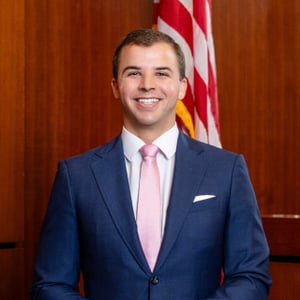
Law Clerk, U.S. Court of Appeals
Jeff Gurley currently serves as a Law Clerk to Judge E. Grady Jolly on the U.S. Court of Appeals for the Fifth Circuit. Prior to this role, he clerked for Judge Sean D. Jordan on the U.S District Court for the Eastern District of Texas.
Jeff received his J.D. from Michigan Law School. While in law school, he served as chapter president of the Federalist Society, research assistant to Professor Christopher J. Walker, and a judicial intern for Judge Joan L. Larsen on the U.S. Court of Appeals for the Sixth Circuit. He earned his B.A. from Washington University in St. Louis, where he studied political science and was an all-conference linebacker on the football team.
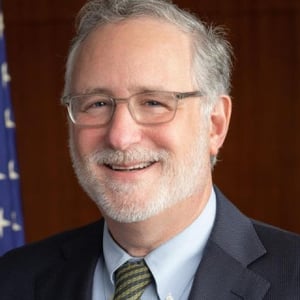
Solicitor, National Labor Relations Board
Fred Jacob is the Solicitor of the National Labor Relations Board. As Solicitor, Mr. Jacob serves as the chief legal adviser and consultant to the entire Board on all questions of law regarding the Board’s general operations and on major questions of law and policy concerning the adjudication of NLRB cases in the Courts of Appeals and the U.S. Supreme Court. The Solicitor also acts as the Board’s legal representative and liaison to the General Counsel and other offices of the Board. From 1997 to 2014, Mr. Jacob worked as an attorney, supervisor, and Deputy Assistant General Counsel in the NLRB’s Appellate and Supreme Court Litigation Branch. Before joining management, he served as Grievance Chair of the NLRB Professional Association, the union representing Washington, DC-based NLRB attorneys.
Prior to his appointment as the NLRB's Solicitor, Mr. Jacob spent four years as Solicitor of the Federal Labor Relations Authority. In that role, he represented the FLRA before all federal courts, advised FLRA components on legal issues arising under the Federal Service Labor-Management Relations Statute, and served as the FLRA’s in-house counsel. Mr. Jacob also clerked on the United States Court of Appeals for the Fourth Circuit and worked in private practice.
Mr. Jacob is also a Professorial Lecturer in Law at The George Washington University Law School and has previously taught labor and employment law courses at Georgetown University Law Center and the College of William and Mary School of Law.
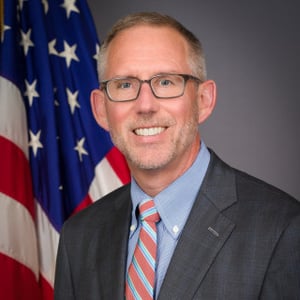
Partner, Morgan, Lewis & Bockius, former Chairman of the National Labor Relations Board
John F. Ring, currently a partner at Morgan, Lewis & Bockius, served as a Board Member of the National Labor Relations Board (NLRB) from 2018 to 2022 and as its Chairman from 2018 to 2021. He has been with Morgan Lewis for almost 30 years, where he served as co-chair of the firm’s Labor / Management Relations practice and Practice Group Leader for the Washington Office Labor and Employment Law Practice. He represented client interests in all aspects of labor law, including collective bargaining, workforce restructuring, employee benefits, labor‐management-related counseling, litigation, and litigation avoidance strategies. Mr. Ring has an extensive background in negotiating and administering collective bargaining agreements most notably in the multi‐employer bargaining context, as well as experience with multi‐employer pension plans. Mr. Ring received his J.D. and B.A. from the Catholic University of America.
Solicitor, National Labor Relations Board
Fred Jacob is the Solicitor of the National Labor Relations Board. As Solicitor, Mr. Jacob serves as the chief legal adviser and consultant to the entire Board on all questions of law regarding the Board’s general operations and on major questions of law and policy concerning the adjudication of NLRB cases in the Courts of Appeals and the U.S. Supreme Court. The Solicitor also acts as the Board’s legal representative and liaison to the General Counsel and other offices of the Board. From 1997 to 2014, Mr. Jacob worked as an attorney, supervisor, and Deputy Assistant General Counsel in the NLRB’s Appellate and Supreme Court Litigation Branch. Before joining management, he served as Grievance Chair of the NLRB Professional Association, the union representing Washington, DC-based NLRB attorneys.
Prior to his appointment as the NLRB's Solicitor, Mr. Jacob spent four years as Solicitor of the Federal Labor Relations Authority. In that role, he represented the FLRA before all federal courts, advised FLRA components on legal issues arising under the Federal Service Labor-Management Relations Statute, and served as the FLRA’s in-house counsel. Mr. Jacob also clerked on the United States Court of Appeals for the Fourth Circuit and worked in private practice.
Mr. Jacob is also a Professorial Lecturer in Law at The George Washington University Law School and has previously taught labor and employment law courses at Georgetown University Law Center and the College of William and Mary School of Law.
Partner, Morgan, Lewis & Bockius, former Chairman of the National Labor Relations Board
John F. Ring, currently a partner at Morgan, Lewis & Bockius, served as a Board Member of the National Labor Relations Board (NLRB) from 2018 to 2022 and as its Chairman from 2018 to 2021. He has been with Morgan Lewis for almost 30 years, where he served as co-chair of the firm’s Labor / Management Relations practice and Practice Group Leader for the Washington Office Labor and Employment Law Practice. He represented client interests in all aspects of labor law, including collective bargaining, workforce restructuring, employee benefits, labor‐management-related counseling, litigation, and litigation avoidance strategies. Mr. Ring has an extensive background in negotiating and administering collective bargaining agreements most notably in the multi‐employer bargaining context, as well as experience with multi‐employer pension plans. Mr. Ring received his J.D. and B.A. from the Catholic University of America.

Senior Legal Fellow, Advancing American Freedom
Amy Swearer is a leading national expert on a wide range of public policy, legal, and constitutional issues, including the Second Amendment, criminal justice, and mental health policy. She has long been a respected conservative voice on gun policy and is routinely asked to testify before state and federal legislative bodies. Her work on birthright citizenship, meanwhile, has been featured extensively in litigation over the meaning of the Fourteenth Amendment’s Citizenship Clause.
Swearer was formerly a Senior Legal Fellow in the Edwin Meese III Center for Legal & Judicial Studies at the Heritage Foundation. At Heritage, she ran the Defensive Gun Use Database and was the primary author of the e-book “The Essential Second Amendment.” She was also a driving force behind the organization’s School Safety Initiative.
She was the 2022 recipient of the Heritage Foundation’s Joseph Shattan Award for “writing that presents conservative ideas in a powerful and compelling fashion to policymakers and the American people.” She was also named the Second Amendment Institute’s 2022 Gun Rights Champion.
Swearer received her law degree from the University of Nebraska College of Law and was a member of the Nebraska Law Review. She holds a B.S. in Criminology & Criminal Justice from the University of Nebraska, where she was a Chancellor’s Scholar and a goalkeeper on the women’s soccer team
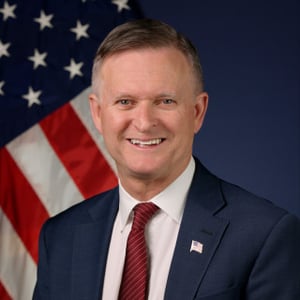
Deputy Secretary of Transportation, US Department of Transportation
Steven G. Bradbury was sworn in as the Deputy Secretary of Transportation on March 13, 2025, following his confirmation by the U.S. Senate on March 11, 2025. In this role, he oversees the Department’s operating administrations and spearheads initiatives to ensure a safe, efficient, and modern transportation system that strengthens economic productivity and global competitiveness. Deputy Secretary Bradbury also assists Secretary Duffy in managing the Department’s activities, including its workforce of over 58,000 employees and an annual budget exceeding $109 billion.
Bradbury previously served as the 23rd General Counsel of the Department of Transportation from 2017 to 2021, as the Acting Deputy Secretary from 2019, and as Acting Secretary of Transportation in 2021. As General Counsel, he was the chief legal officer, advising on all legal matters and ensuring the integrity and compliance of the Department’s policies and programs.
Before rejoining DOT, Bradbury was a Distinguished Fellow at The Heritage Foundation from December 2022 to March 2025. He has extensive experience in the public and private sector, having served as Principal Deputy and Acting Assistant Attorney General at the U.S. Department of Justice and as a partner at Kirkland & Ellis LLP and Dechert LLP. Earlier in his career, he clerked for Justice Clarence Thomas and Judge James L. Buckley.
Bradbury holds a J.D., magna cum laude, from the University of Michigan Law School and a B.A. in English from Stanford University.
Deputy Secretary of Transportation, US Department of Transportation
Steven G. Bradbury was sworn in as the Deputy Secretary of Transportation on March 13, 2025, following his confirmation by the U.S. Senate on March 11, 2025. In this role, he oversees the Department’s operating administrations and spearheads initiatives to ensure a safe, efficient, and modern transportation system that strengthens economic productivity and global competitiveness. Deputy Secretary Bradbury also assists Secretary Duffy in managing the Department’s activities, including its workforce of over 58,000 employees and an annual budget exceeding $109 billion.
Bradbury previously served as the 23rd General Counsel of the Department of Transportation from 2017 to 2021, as the Acting Deputy Secretary from 2019, and as Acting Secretary of Transportation in 2021. As General Counsel, he was the chief legal officer, advising on all legal matters and ensuring the integrity and compliance of the Department’s policies and programs.
Before rejoining DOT, Bradbury was a Distinguished Fellow at The Heritage Foundation from December 2022 to March 2025. He has extensive experience in the public and private sector, having served as Principal Deputy and Acting Assistant Attorney General at the U.S. Department of Justice and as a partner at Kirkland & Ellis LLP and Dechert LLP. Earlier in his career, he clerked for Justice Clarence Thomas and Judge James L. Buckley.
Bradbury holds a J.D., magna cum laude, from the University of Michigan Law School and a B.A. in English from Stanford University.

Partner, Lehotsky Keller Cohn LLP
Andrew Davis has extensive experience litigating and advising on high-stakes and nationally recognized matters. He has served as lead counsel in over 20 cases in state and federal courts, including the U.S. Court of Appeals for the Fifth Circuit and the Texas Supreme Court, has counseled trial teams, and has tried a bench-trial to verdict.
Before joining Lehotsky Keller Cohn LLP, Mr. Davis most recently served as Chief Counsel to Senator Ted Cruz on the Senate Judiciary Committee. In that capacity, Mr. Davis advised the Senator on many of the most important and difficult legal and public policy issues in the country, including the limits on Congressional, Presidential, and agency authority. He also worked closely with outside counsel to lead amicus curiae briefs before the Supreme Court of the United States and advised the Senator on judicial selection.
Prior to serving Senator Cruz, Mr. Davis served as an Assistant Solicitor General in the Office of the Attorney General of Texas. As an Assistant Solicitor General, Mr. Davis both defended Texas and its agencies in appeals across the state and challenged local ordinances that harmed Texas businesses. For example, he successfully defended Texas's redistricting plan at the Supreme Court of the United States, and persuaded an Austin-based appellate court that an Austin ordinance was preempted by the Texas Minimum Wage Act.
Mr. Davis previously practiced law as a trial and appellate litigator at Gibson, Dunn & Crutcher LLP in Washington D.C., where he represented clients across different industry sectors.
After graduating from Columbia Law School, Mr. Davis served as a judicial clerk for Judge Reena Raggi of the U.S. Court of Appeals for the Second Circuit and Judge Sidney Fitzwater of the U.S. District Court for the Northern District of Texas. Before law school, Mr. Davis was a strategy business consultant with Accenture, where he advised power utility companies.

President, Harned Strategies LLC
Karen Harned is President at Harned Strategies LLC. Previously, she served as Executive Director of the National Federation of Independent Business Small Business Legal Center, a post she held from 2002-2022. Prior to joining the Legal Center, Ms. Harned was an attorney at a Washington, D.C. law firm specializing in food and drug law, where she represented several small and large businesses and their respective trade associations before Congress and federal agencies. She also served as Assistant Press Secretary to U.S. Senator Don Nickles of Oklahoma from August of 1989 to March of 1993. Ms. Harned received her B.A. from the University of Oklahoma in 1989 and her J.D. from The George Washington University National Law Center in 1995. She is admitted to practice in the District of Columbia.
As Executive Director of the NFIB Small Business Legal Center, Ms. Harned commented regularly on small business cases before federal and state courts, as well as the U.S. Supreme Court. She has appeared on Fox News, Fox Business, NBC Nightly News, CNN, CNBC and MSNBC, as well as National Public Radio, CBS Radio, and radio outlets across the country. Her opinion editorials and articles regarding healthcare, lawsuit abuse, regulation, and other issues important to small business have been published in newspapers and other publications nationwide.
Ms. Harned has testified before Congress on the small business impact of regulation and the civil justice system. Additionally, she has conducted numerous webinars and legal compliance seminars for small business owners across the country on issues relating to employment law, including unionization and immigration.
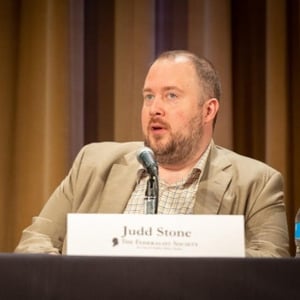
Stone Hilton, Founding Partner
A founding partner of Stone Hilton, Judd Stone is well respected both in Texas and across the nation as an insightful and tenacious appellate litigator. A lifelong Texan, Judd has argued dozens of appeals in both federal and state court, including arguing eight cases before the United States Supreme Court.
Judd began his legal career clerking for United States Supreme Court Justice Antonin Scalia and Fifth Circuit Chief Judge Edith H. Jones. With a J.D. from Northwestern University School of Law where he graduated first in his class, Judd's academic and professional credentials place him among the most distinguished lawyers in the profession. At the helm of countless major legal battles and emergency appeals for the State of Texas, Judd's deep understanding of the law and persuasive advocacy have been instrumental in shaping legal precedents. His tenure as the Solicitor General of Texas is a testament to his expertise and the trust placed in him by high-ranking state officials. Judd's strategic prowess extends beyond the courtroom; his advisory roles have made him a respected figure among policymakers.
His contributions to Stone Hilton and the legal community are characterized by his meticulous approach to cases, his acumen as a counselor, and his unwavering commitment to justice. As a partner at Stone Hilton, Judd continues to apply his formidable talents to advocate for his clients with the utmost dedication and to uphold the pillars of integrity and excellence that the firm stands for.

Integrity or Interference?: Evaluating the Constitutionality of Georgia's Election Integrity Act
Eric Criss
Federalist Society Review, Volume 25
Recent political earthquakes such as the assassination attempt against former president Donald Trump and President...
Topics
Netanyahu Gave a Great Speech, But He Should Not Have Been Invited
Prime Minister Netanyahu’s July 24 address to a joint session of Congress was brilliant, and...
Texas Supreme Court Clarifies Standard for Awarding Noneconomic Damages
Jeff Gurley
The case of Gregory v. Chohan arose out of a tragic highway accident that...
A Discussion of Labor Law: Is the Taft-Hartley Act Being Interpreted as Written?
Fred B. Jacob, John F. Ring
The 1947 Taft-Hartley amendments to the National Labor Relations Act, doggedly opposed by organized labor,...
A Discussion of Labor Law: Is the Taft-Hartley Act Being Interpreted as Written?
Fred B. Jacob, John F. Ring
The 1947 Taft-Hartley amendments to the National Labor Relations Act, doggedly opposed by organized labor,...
Hawaii Supreme Court Rejects Bruen as Inconsistent With “Aloha Spirit”
Amy E. Swearer
In a recent opinion, the Supreme Court of Hawaii held that the Hawaii state constitution...
Topics
The Duty to Address “Sex-based Harassment”: Part II in a Series on the Biden Administration’s Final Title IX Rule
On April 29, 2024, the Department of Education published a 423-page final rule in the...
Courthouse Steps Decision: United States of America v. Donald J. Trump, Waltine Nauta, and Carlos De Oliveira
Steven Gill Bradbury
United States of America v. Donald J. Trump, Waltine Nauta, and Carlos De Oliveira marked...
Courthouse Steps Decision: United States of America v. Donald J. Trump, Waltine Nauta, and Carlos De Oliveira
Steven Gill Bradbury
United States of America v. Donald J. Trump, Waltine Nauta, and Carlos De Oliveira marked...
Private Attorneys General: Bridging Gaps in Law Enforcement?
Andrew Davis, Karen Harned, Judd Stone
Should private attorneys general enforce laws? Proponents argue that this approach allows individuals and private...