
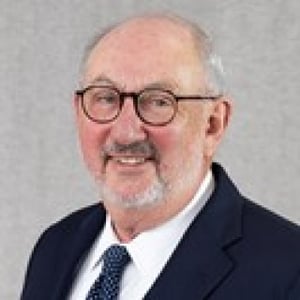
Partner, McGuireWoods LLP
George Terwilliger is co-head of the firm's white collar practice and leads the firm's Strategic Response and Crisis Management practice group. Following his fifteen years of public service in the US Department of Justice, where he began as a law clerk and concluded as Acting Attorney General, George has provided counsel in government and internal investigations, agency enforcement proceedings and in civil and criminal litigation. He has represented many of the nation's and the world's largest corporations, including major financial institutions, energy companies, public institutions as well as leading business and government officials, including members of the US Senate and House as well as cabinet officials. He has also represented lawyers and corporate legal departments in investigations. As a result of both his private sector work and government positions, George is called upon to provide counsel as well as commentary to government officials, Congress and private organizations on national security, homeland defense, terrorism, and other public policy and legal issues. George's work regularly involves providing counsel in the executive suites and boardrooms of major corporations.
In private practice for international law firms, George has represented national and international financial, energy, telecommunications, industrial and healthcare companies. He is a recognized expert in leading credible corporate internal investigations and his experience designing and executing both targeted and global legal compliance reviews has involved work in more than 60 countries around the globe. George is an expert on the Foreign Corrupt Practices Act and regularly provides counsel to companies addressing FCPA issues. No stranger to high stakes litigation and crisis events, George helped lead the Bush-Cheney legal team in the 2000 Florida vote recount, served as special outside counsel to a Senate committee investigating vote fraud allegations, served as counsel to an executive commission on gambling, and has represented many clients in politically charged election law and similar cases. He has guided corporations and individual through high stakes matters of intense public interest. He represented an incumbent president in First Amendment litigation concerning the right to have an inaugural prayer said in a public ceremony.
At the Department of Justice, George served for 10 years as a frontline federal prosecutor, handling hundreds of investigations, trials and appeals, including in white collar and national security cases. President Ronald Reagan appointed him as a U.S. attorney, and he next served as the deputy attorney general and as acting attorney general during the George H.W. Bush administration. As Deputy Attorney General, George ran the Justice Department's operations, overseeing all the nation's federal prosecutors, as well as the FBI and other law enforcement agencies. He also had leadership responsibility in several national and international crises, including a hostage-taking in a federal prison and the federal law enforcement response to domestic unrest in Los Angeles. In several instances, he personally handled negotiations of high-profile criminal and civil matters in the United States and abroad.
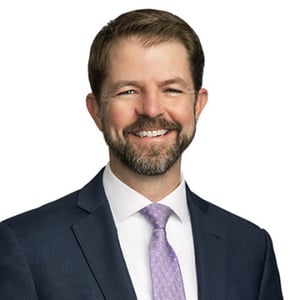
Partner, Baker Botts LLP
Drawing from two decades of experience in senior government, in-house corporate, and private law firm roles, Jeff Wood helps clients with federal enforcement, compliance, litigation, permitting, and policy challenges primarily in the energy and environmental fields.
Prior to joining Baker Botts, Mr. Wood served for almost two years as the Acting Assistant Attorney General (AAG) for the Justice Department's Environment and Natural Resources Division (ENRD). In that capacity, Mr. Wood led ENRD and its more than 600 attorneys and staff representing EPA, Departments of the Interior, Energy, and Defense, and other agencies in civil and criminal enforcement and defensive environmental, energy, and natural resources litigation.
As the top official in ENRD, Mr. Wood managed a complex organization with an annual budget exceeding $200 million and a docket of more than 6,000 cases and matters. E&E News noted that “Wood maintains a strong relationship with ENRD's career staff” (Greenwire, Oct. 31, 2018). He previously served on the staff of the United States Senate Committee on Environment and Public Works.
At the Justice Department, Mr. Wood oversaw the Division's civil and criminal enforcement programs and was responsible for developing legal strategies and approving briefs in key cases including filings before the Supreme Court and Courts of Appeals in coordination with the Office of Solicitor General. In this role, Mr. Wood held the highest level security clearance and worked closely with top leadership at DOJ, EPA, the Interior Department, USDA, the Energy Department, Transportation Department, FERC, NRC and across the Executive Branch, including the White House.
With many years of both private law firm and in-house legal experience, Mr. Wood has handled complex environmental enforcement, regulatory, policy, and litigation matters for electric utilities, energy companies, maritime companies, mining companies, real estate developers, financial institutions, industrial companies and manufacturers, business coalitions, associations, small businesses, and individual property owners. Drawing from his experiences in-house, Mr. Wood brings a common-sense, cost-effective, client-focused approach to his work every day.
With a strong national reputation, Mr. Wood is a frequent speaker on environmental law and policy matters, with recent speeches and presentations at the Environmental Law Institute, Harvard Law School, Vanderbilt Law School, American University Law School, American Bar Association Environmental Law Conferences, the Texas Environmental SuperConference, Air Force Judge Advocate General School's Advanced Environmental Law Course, Baker Institute's Center for Energy Studies (Rice University), and many other venues. He frequently appears in national news to share insights on significant environmental law and policy issues, including recent quotes in the New York Times, Washington Post, Wall Street Journal, Bloomberg, Law360, and E&E News, among others.
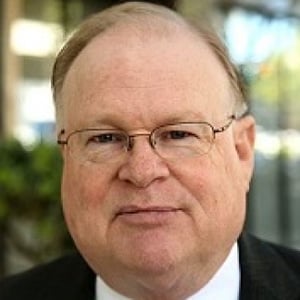
Senior Attorney, Pacific Legal Foundation
Reed Hopper is a Senior Attorney in PLF’s Environmental Law Practice Group. He oversees the Foundation’s Endangered Species Act Program that is designed to ensure that species protections are balanced with individual rights, the rule of law, and other social values. Reed also oversees PLF’s Clean Water Act Project that targets illegal federal regulation of local land and water use.
Reed has always had a strong patriotic spirit and a desire to serve his country. Before joining PLF in 1987, Reed served as an Environmental Protection Officer and Hearing Officer in the U.S. Coast Guard where he gained a love for the law. He also loves our constitutional way of life and cannot tolerate injustice. PLF affords him the opportunity to rectify unjust actions perpetrated by overreaching government. He enjoys getting up each morning to fight for a just cause.
Reed has litigated and won precedent-setting environmental and land use cases at all levels of the state and federal courts, including the U.S. Supreme Court. He has published numerous articles and testified before Congress as an expert witness.
Reed graduated from the University of California, Davis, with a Bachelors Degree in German and major work in biochemistry. He also did graduate business studies at California State University and Tulane University and earned his Juris Doctor Degree from the University of the Pacific, McGeorge School of Law.
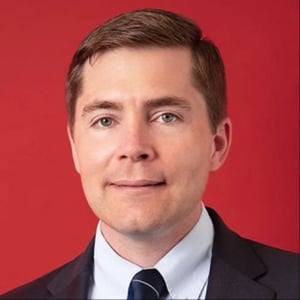
Senior Attorney, Pacific Legal Foundation
Damien Schiff is a senior attorney at Pacific Legal Foundation. He leads its environmental practice group, a unique initiative that draws broadly from PLF’s expertise and success in property rights and separation of powers litigation. Over the years, Damien has represented hundreds of landowners and property rights advocates to defend their liberties against heavy-handed and unwarranted environmental and land-use regulation. His litigation experience includes Sackett v. U.S. Environmental Protection Agency, a groundbreaking decision in which the U.S. Supreme Court upheld the right of landowners to challenge Clean Water Act compliance orders issued by EPA, and Contoski v. Norton, PLF’s successful effort to force the federal government to make good on its promise to delist the bald eagle from the Endangered Species Act.
Besides litigation, Damien has written academic articles on a variety of subjects, including the Endangered Species Act, the Clean Water Act, greenhouse gas torts, the duty to rescue, and international water law. He has appeared on a variety of television and radio programs and has been quoted in The New York Times, The Wall Street Journal, Harper’s Magazine, and The Economist, among other publications.
He obtained his law degree magna cum laude from the University of San Diego School of Law, and his undergraduate degree magna cum laude from Georgetown University. While at USD, he was a research assistant for Professor Bernard Siegan, a leading constitutional theorist and advocate for property rights and economic liberty. Immediately prior to joining PLF, Damien clerked for Judge (and former PLF attorney) Victor Wolski of the United States Court of Federal Claims. Damien credits the mentoring and examples of Professor Siegan and Judge Wolski for his decision to pursue a career in liberty-based public interest litigation.
Damien lives in Sacramento with his wife, two young sons, four chickens, and a cat named Princess. In his off hours he enjoys stamp collecting, Gregorian chant, and martinis—preferably at the same time.
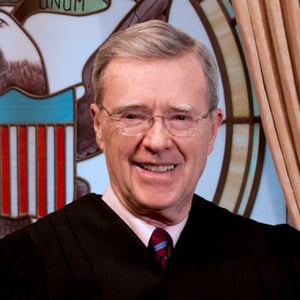
Judge, United States Court of Appeals, Ninth Circuit
Judge O’Scannlain was appointed United States Circuit Judge for the Ninth Circuit by President Reagan on September 26, 1986. He received a J.D. degree in 1963 from Harvard Law School and a B.A. in 1957 from St. John’s University. He also earned the LL.M. (Judicial Process) degree at University of Virginia Law School in 1992. He was awarded the LL.D. (honoris causa) degree by the University of Notre Dame in 2002, the LL.D. (honoris causa) degree by Lewis & Clark College in 2003 and the LL.D. (honoris causa) degree by the University of Portland in 2011.
As a judge on the U.S. Court of Appeals for the Ninth Circuit, Judge O’Scannlain has participated in over 6,000 federal cases and has written hundreds of published opinions on a broad range of subjects including constitutional law, international law, securities law, administrative law, and criminal law. He hears appeals in San Francisco (court headquarters), as well as in Los Angeles (Pasadena), Portland, Seattle, Anchorage and Honolulu. The late Chief Justice Rehnquist appointed Judge O'Scannlain to the Federal Judicial Center's Advisory Committee on Appellate Judge Education. In 2009, Chief Justice Roberts appointed Judge O’Scannlain to the International Judicial Relations Committee of the U.S. Judicial Conference and subsequently appointed him Chairman in 2010.
President George W. Bush appointed Judge O’Scannlain to the Board of Trustees of the James Madison Memorial Fellowship Foundation in 2004. Pope Benedict XVI conferred the Order of Saint Gregory the Great on Judge and Mrs. O’Scannlain in 2007.
Judge O’Scannlain’s professional interests also include judicial administration and reform, and continuing legal education. Judge O’Scannlain is former Chair of the Judicial Division of the American Bar Association and has previously chaired the ABA’s Appellate Judges Conference, its Committee on Appellate Practice, and its 9th Appellate Practice Institute. He has testified before the Senate Judiciary Committee on several occasions, the House Judiciary Subcommittee on Courts and Intellectual Property, and the Commission on Structural Alternatives for the Federal Courts of Appeals on the subject of court reorganization. In addition to serving as a faculty member at numerous federal appellate practice seminars for judges and attorneys, including New York University Law School’s Institute for Judicial Administration, Judge O’Scannlain is an Adjunct Professor at Lewis & Clark Law School where he teaches a seminar on the Supreme Court. He has served as a Moot Court Judge at distinguished law schools across the United States including Harvard, Yale Stanford, Boalt Hall (Berkeley Law), Virginia, Cornell, Notre Dame, Fordham, Alabama, University of Southern California, King Hall (U.C. Davis) and Loyola Marymount University and in China at Xiamen and Renmin Universities.
Between graduation from Harvard and investiture as a federal judge, Judge O’Scannlain was primarily engaged in private law practice. Between 1969 and 1974, he was consecutively the Deputy Attorney General of Oregon, the Public Utility Commissioner of Oregon, and Director of the Oregon Department of Environmental Quality. He retired from the U.S. Army Reserve in 1978 as a Major after 23 years Reserve and National Guard service, including four years as an enlisted man.
A first generation Irish-American son of immigrant parents from Sligo and Derry, Judge O’Scannlain is married to the former Maura Nolan and has eight children: Sean, Jane, Brendan, Kevin, Megan, Christopher, Anne, and Kate, and nineteen grandchildren. His chambers are in the Pioneer Courthouse in Portland, Oregon.
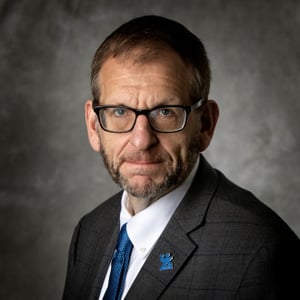
General Counsel, University of Kentucky & Former Solicitor General of Virginia, University of Kentucky
William E. Thro, the General Counsel of the University of Kentucky, is an accomplished university attorney, appellate advocate, and legal scholar.
As the Chief Legal Officer for the University of Kentucky, he provides proactive strategic advice on critical legal and policy issues confronting a public flagship land grant research university with an integrated academic medical center and a high profile athletics program. Before assuming his present position in 2012, he spent more than twenty years representing public universities including eight years as the first in-house counsel at Christopher Newport University.
As Solicitor General of Virginia for four years, he was responsible for the Virginia State Government’s U.S. Supreme Court litigation (except capital cases) as well as lower court appeals involving the constitutionality of statutes or politically sensitive issues. He argued two cases in the U.S. Supreme Court and numerous cases in the lower appellate courts. He co-authored seven U.S. Court merits briefs, eleven U.S. Supreme Court amicus briefs, and more than fifty briefs at the petition stage. He received two Best Brief Awards from the National Association of Attorneys General.
As a legal scholar, he focuses on constitutional law in educational contexts. He has more than sixty publications in law reviews or peer reviewed journals as well as numerous monographs, book chapters, and encyclopedia entries. In recognition of his scholarly work, he received Stetson University’s Kaplin Award for Excellence in Higher Education Law & Policy Scholarship (2014) and became a Fellow of both the National Education Finance Conference (2012) and the National Association of College and University Attorneys (2007).
He has served as President of the Education Law Association, Chair of the Virginia Bar Association’s Appellate Practice Section, Board Chair for a local Red Cross Chapter, on the Boards of both the National Association of College & University Attorneys and the National Education Finance Academy, and an Elder in the Presbyterian Church (U.S.A.).
A native of Kentucky, he received his undergraduate degree summa cum laude from Hanover College. In addition to receiving the Crowe Citation as the outstanding male in his class, he was the first Hanover student to become a Harry S. Truman Scholar. He earned a graduate degree with honours from the University of Melbourne while attending as a Rotary Foundation International Ambassadorial Scholar. His law degree is from the University of Virginia where he was a published member of the VIRGINIA LAW REVIEW and research assistant to constitutional law professor A.E. Dick Howard. He began his legal career as a judicial clerk to the late Judge Ronald E. Meredith of the U.S. District Court for the Western District of Kentucky in Louisville.
He is married to the Rev. Dr. Julie Urback Thro and has two children in college (Sandra, Will) and one in high school (Noah).
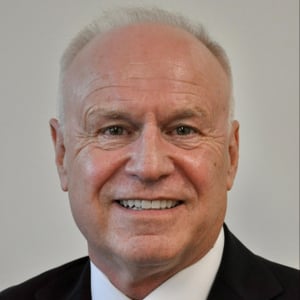
Former Director (consultant), International Affairs, The Federalist Society
From 2005 to 2025, Jim Kelly served on a consulting basis as the Federalist Society’s Director of International Affairs, responsible for outreach to law students, lawyers, and judges in Canada, Europe, and Israel. From 2005 to 2008, he served on the U.S. National Commission to UNESCO, and as Chairman of its Social and Human Sciences Committee. From 2001 to 2008, he served as an official U.S. delegate to five international human rights conferences. In 2019, the U.S. State Department appointed Jim to serve as one of the two U.S. members on the European Commission for Democracy through Law (the “Venice Commission”). In 2020, the State Department named him as an expert to the OSCE Moscow Mechanism. In March 2022, he initiated Ukraine’s consideration and use of the Moscow Mechanism to conduct the first official international investigation of the Russia-Ukraine conflict, which resulted in the Report on Violations of International Humanitarian and Human Rights Law, War Crimes and Crimes Against Humanity Committed in Ukraine (1 April – 25 June 2022). Jim is the Founder of, and Director of Research for, Global Governance Watch, a web-based project that monitors the global governance activities of the UN’s sustainable development and ESG agenda. In 2022, in connection with his position as a Lecturer at the Busch School of Business at Catholic University of America, he authored Evolution of Business, Human Rights, & ESG, consisting of 28 one-hour presentations about the technocratic, anti-democratic, anti-capitalist, and religious nature and practices of the ESG movement. Jim is Founder and President of Solidarity Center for Law and Justice, P.C., which, since 2001, has filed amicus curiae briefs in five landmark U.S. Supreme Court educational and religious liberty cases. He is the Founder and General Counsel of the Georgia GOAL Scholarship Program, Georgia’s largest K-12 tuition tax credit scholarship program, which, since 2008, has awarded scholarships worth $224.3 million to 21,744 students for use at the accredited private K-12 schools of their choice. He has served on the Georgia Judicial Nominating Commission and Georgia Board of Juvenile Justice. In 2005, he authored Christianity, Democracy, and the American Ideal, a collection of the writings of the French-Catholic philosopher, Jacques Maritain. Jim earned his BBA and Law degrees from the University of Georgia. He also earned a Master of Taxation degree from Georgia State University, a Master of Non-Profit Management degree from Regis University, and a Master of International Relations degree from Salve Regina University. Jim and his wife, Lisa, reside in the Atlanta area.
Former Inspector General of the Corporation for National and Community Service
Gerald Walpin, the new Inspector General of the Corporation for National and Community Service, has vowed a vigorous effort to investigate and prosecute all persons who betray the public’s trust by defrauding the Corporation and its programs.
A prominent New York attorney, Walpin was nominated by President George W. Bush, confirmed by the U.S. Senate and sworn into office on January 8, 2007. He leads the Office of Inspector General (OIG), an independent Federal agency charged with oversight over the taxpayer-supported Corporation and its service programs, including AmeriCorps, Volunteers in Service to America (VISTA)and Senior Corps.
“My major objective is to expand upon the good work of this office by preventing, detecting and prosecuting all thefts and frauds,” said Walpin. “The reality is that such misconduct takes precious resources away from deserving people, the same way the theft of a welfare check hurts a single mother who needs that money to buy milk for her children. For that reason, this office will seek out and ensure sanctions for all wrongdoing involving Corporation funds.”
Walpin said his other major goal is to “assist the Corporation in making its services efficient and accessible for all national service stakeholders.”
A New York City native, Walpin graduated from College of the City of New York in 1952. He earnedhis law degree, cum laude, in 1955 from Yale Law School, where he was managing editor of the Yale Law Journal. From 1957-60, he served as a lieutenant in the United States Air Force Judge Advocate General.
His career included a five-year stint as Chief of Prosecutions for the United States Attorney for the Southern District of New York, where he successfully prosecuted a number of high-profile cases. He spent more than 40 years as senior partner and, more recently, of counsel to New York-based Katten Muchin Rosenman LLP.
Mr. Walpin has represented a wide range of clients, including large public corporations, securities brokerage firms, accounting firms, law firms, banks in lender liability claims, and individuals, both American and foreign, in securities litigations, employment litigations, criminal prosecutions, and investigations by the United States Securities and Exchange Commission. Both as an Assistant U.S. Attorney and in his law firm, he was frequently called upon to investigate fraudulent conduct.
Included in the published compilation “The Best Lawyers in America,” Mr. Walpin served from 2002-2004 as president of the Federal Bar Council, the association of attorneys practicing in the Second Circuit Federal courts. In 2003, he was honored with the American Inns of Court Professionalism Award for outstanding professionalism as an attorney and for mentoring younger lawyers.
Walpin and his wife Sheila, married for almost 50 years, have three children and six grandchildren.
Inspector General of the Corporation for National and Community Service
Chief of Prosecutions in the New York U.S. Attorney's Office.
President of the Federal Bar council
Senior Partner of and Council to Katten Muchin Rosenman LLP
Chief of Prosectutions for the US Attornery for the Southern District of New York
Lieutenant in the US Air Force Judge Advocate General
B.A., College of the City of New York, 1952
J.D., Yale Law School
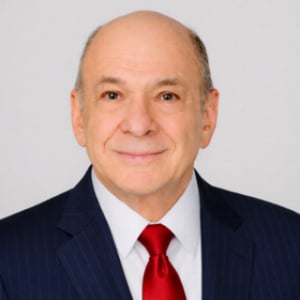
Executive Vice President & General Counsel, Atlantic Legal Foundation
Larry Ebner brings more than 50 years of litigation knowledge, experience, and skills to the Atlantic Legal Foundation, where he is Executive Vice President & General Counsel. He oversees ALF’s judicial advocacy activities, including its renowned, nationwide, amicus curiae (“friend of the court”) program. In addition to monitoring and analyzing cases for possible ALF amicus participation, Larry reviews requests for ALF amicus support and personally authors ALF’s amicus briefs on a wide variety of cutting-edge legal issues in the Supreme Court, federal courts of appeals, and state appellate courts. Since joining ALF in September 2020, Larry has authored or managed more than 100 Supreme Court and other amicus briefs on behalf of the foundation.
Larry began practicing law in 1972 following graduation from Dartmouth College and Harvard Law School. His first legal position was as an Honors Program attorney in the Civil Division of the U.S. Department of Justice. Larry then spent 42 years as a Washington, D.C.-based litigator and appellate practice leader at a now-global law firm, where he focused on federal constitutional, statutory, and regulatory issues . In 2016 Larry launched his own, independent, nationwide appellate litigation boutique, Capital Appellate Advocacy PLLC.
Larry devotes most of his professional time to ALF, where he joins the foundation’s officers, directors, advisors, and supporters in advocating for individual liberty, free enterprise, property rights, limited and responsible government, sound science in judicial and regulatory proceedings, and effective education, including parental rights and school choice.
Larry has been elected as one of approximately 350 Fellows of the American Academy of Appellate Lawyers, whose membership is reserved for highly skilled and experienced appellate advocates. His volunteer professional activities include serving as Chair of the Federation of Defense & Corporate Counsel’s Appellate Law Section. During 2023 & 2024 he was Chair of the DRI Center for Law and Public Policy.
In July 2025 FDCC awarded Larry its John Appleman Award, which “honors the Substantive Law Section Chair who has made the most outstanding contribution to the advancement of the FDCC’s educational goals through the work of his or her Section.”
In October 2024 DRI awarded Larry its Tom Segalla Excellence In Education Award. The Award is given to a “member of DRI whose contributions through legal scholarship exemplify the highest educational standards of the organization and further its mission of improvingthe skills of the defense practitioner.” DRI is the largest bar association of civil defense attorneys and in-house counsel.
Thomson Reuters has repeatedly selected Larry as one of only several Washington, D.C.-based, solo-practitioner Appellate “Super Lawyers.”
Larry is a prolific author and sought-after speaker on appellate practice-related subjects, such as strategic use and effective drafting of amicus briefs.
Barbara and Larry Ebner have been married for 53 years. They enjoy traveling throughout the United States and spending time with their daughters and grandchildren.

"Domestic Unlawful Combatants": A Proposal to Adjudicate Constitutional Detentions
George J. Terwilliger
As was perhaps inevitable, the sense of facing an urgent and deadly danger that gripped...
Commerce Clause Challenges to the Listing of Intrastate, Noncommercial Species Under the Endangered Species Act
Robert P. Fowler, Jeffrey H. Wood, Thomas L. Casey
In the early 1970s, Congress considered a series of bills aimed at instituting a federal...
Rapanos V. United States
M. Reed Hopper, Damien Michael Schiff
The Supreme Court has ruled in consolidated cases that the assertion of jurisdiction under the...
Splitting the Ninth Circuit: Why Chief Judge Schroeder and Split Opponents Should Swap a Broad Circuit for a Broader Perspective
Diarmuid F. O'Scannlain
One month after the opening article in this series appeared in the October 2005 issue...
The Spending Clause Implications of Rumsfeld V. Forum for Academic and Individual Rights
William Thro
In Rumsfeld v. Forum for Academic & Institutional Rights,the Supreme Court of the United States...
Constitutional Rights of the Boy Scouts
Scott H. Christensen
For the past quarter century, Boy Scouts of America has been defending itself against legal...
(Pre)Clarifying the Muddy Red Waters of the Texas Redistricting War
Charles S. Bullock, Ronald Gaddie
The fight for political preeminence in the Texas congressional map unfolded amidst upheaval in governing...
In the Name of Human Security: UNESCO and the Pursuit of Global Governance
James P. Kelly
Recently, the United Nations has been promoting a human security agenda. On January 1, 2001,...
The President's Wiretap IS Constitutional
Gerald Walpin
The quotation above sounds as though it might have come from President Bush or one...
The Blackberry Case—An Alternate Ending
Lawrence S. Ebner
For more than six months I have been ruminating about the BlackBerry patent infringement case...