
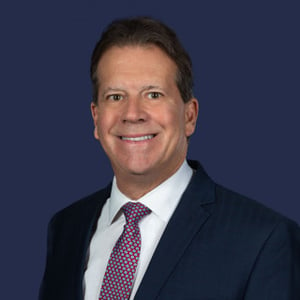
Arbitrator, American Arbitration Association & Former Deputy Director, Office of Federal Contract Compliance Programs (OFCCP), U.S. Department of Labor
Bob Gaglione is an Arbitrator for the American Arbitration Association based in San Diego, California. He also teaches law and politics courses at several universities in Southern California.
From 2019-2021, Mr. Gaglione was a Presidential appointee serving as Deputy Director of the Office of Federal Contract Compliance Programs (OFCCP) at the U.S. Department of Labor.
Mr. Gaglione has over 30 years of legal experience, including most recently, serving as founder and principal of Gaglione Law Group in San Diego, CA, where he practiced civil litigation including business, employment, insurance, real estate, and tort litigation. He previously served as a partner at the law firm of McInnis, Fitzgerald, Rees & Sharkey – one of San Diego’s largest law firms at the time.
For more than a decade, Mr. Gaglione has been as a member of the American Arbitration Association National Roster of Neutrals and Panel of Arbitrators. He served as an Arbitrator or Mediator in close to 100 cases before he went to work for the Department of Labor. .
Mr. Gaglione was elected by his peers to a three-year term on the San Diego County Bar Association Board of Directors from 2011-2014. He is a founding Director of the San Diego Chapter of the Federalist Society and a Chair of the Board of Advisors of this chapter. Mr. Gaglione is a Past President of the Todd American Inn of Court and a past Chair of the Bar History Committee and Litigation Section of the San Diego County Bar Association. He has also served on the Board of Directors of the San Diego-Imperial Council of Boy Scouts of America.
Mr. Gaglione is AV-rated by Martindale Hubbell and has been featured in Best’s Directory of Recommended Insurance Attorneys, Law & Business Directory of Environmental Attorneys and Who’s Who in American Law. Mr. Gaglione has been included in the San Diego Daily Transcript Top Attorneys, was named a Super Lawyer numerous times, and has made the list of Top Lawyers in San Diego Magazine.
Mr. Gaglione has taught law and political science courses at DeVry University, Keller Graduate School of Management, and JP Catholic University. He is also a frequent lecturer at the University of San Diego School of Law, San Diego State University, and California Western School of Law.
Mr. Gaglione hosted a radio show known as Independent Counsel: the news from a legal perspective for over seven years. He is also a frequent legal commentator on radio and television news programs.
Mr. Gaglione received a Bachelor of Science degree in Business Administration from the University of Southern California and a Juris Doctor degree from the University of San Diego School of Law. He is a member of the California, District of Columbia, and New York Bars. He is also admitted to practice before the United States Supreme Court, the Ninth Circuit Court of Appeals, and all United States District Courts in California.
Arbitrator, American Arbitration Association & Former Deputy Director, Office of Federal Contract Compliance Programs (OFCCP), U.S. Department of Labor
Bob Gaglione is an Arbitrator for the American Arbitration Association based in San Diego, California. He also teaches law and politics courses at several universities in Southern California.
From 2019-2021, Mr. Gaglione was a Presidential appointee serving as Deputy Director of the Office of Federal Contract Compliance Programs (OFCCP) at the U.S. Department of Labor.
Mr. Gaglione has over 30 years of legal experience, including most recently, serving as founder and principal of Gaglione Law Group in San Diego, CA, where he practiced civil litigation including business, employment, insurance, real estate, and tort litigation. He previously served as a partner at the law firm of McInnis, Fitzgerald, Rees & Sharkey – one of San Diego’s largest law firms at the time.
For more than a decade, Mr. Gaglione has been as a member of the American Arbitration Association National Roster of Neutrals and Panel of Arbitrators. He served as an Arbitrator or Mediator in close to 100 cases before he went to work for the Department of Labor. .
Mr. Gaglione was elected by his peers to a three-year term on the San Diego County Bar Association Board of Directors from 2011-2014. He is a founding Director of the San Diego Chapter of the Federalist Society and a Chair of the Board of Advisors of this chapter. Mr. Gaglione is a Past President of the Todd American Inn of Court and a past Chair of the Bar History Committee and Litigation Section of the San Diego County Bar Association. He has also served on the Board of Directors of the San Diego-Imperial Council of Boy Scouts of America.
Mr. Gaglione is AV-rated by Martindale Hubbell and has been featured in Best’s Directory of Recommended Insurance Attorneys, Law & Business Directory of Environmental Attorneys and Who’s Who in American Law. Mr. Gaglione has been included in the San Diego Daily Transcript Top Attorneys, was named a Super Lawyer numerous times, and has made the list of Top Lawyers in San Diego Magazine.
Mr. Gaglione has taught law and political science courses at DeVry University, Keller Graduate School of Management, and JP Catholic University. He is also a frequent lecturer at the University of San Diego School of Law, San Diego State University, and California Western School of Law.
Mr. Gaglione hosted a radio show known as Independent Counsel: the news from a legal perspective for over seven years. He is also a frequent legal commentator on radio and television news programs.
Mr. Gaglione received a Bachelor of Science degree in Business Administration from the University of Southern California and a Juris Doctor degree from the University of San Diego School of Law. He is a member of the California, District of Columbia, and New York Bars. He is also admitted to practice before the United States Supreme Court, the Ninth Circuit Court of Appeals, and all United States District Courts in California.

President, Cass & Associates, PC
Ronald A. Cass is Dean Emeritus of Boston University School of Law (where he was Dean from 1990-2004), President of Cass & Associates, PC, former Vice-Chairman and Commissioner of the U.S. International Trade Commission, former faculty member at Boston University School of Law and the University of Virginia Law School, and Distinguished Senior Fellow at the C. Boyden Gray Center for the Study of the Administrative State. Dean Cass also sits as an arbitrator for commercial, international, and intellectual property rights disputes, and is a former United States member of the Panel of Conciliators of the International Centre for Settlement of Investment Disputes. He is a member of the Council of the Administrative Conference of the United States and has received seven presidential appointments, spanning Presidents Ronald Reagan to Donald J. Trump.
As a law professor, lecturer, and scholar, Dean Cass has been teaching and writing about a wide array of legal issues on topics such as administrative law and regulation, antitrust, constitutional law, communications, intellectual property, international trade, separation of powers, and legal process. He has published more than 160 scholarly books, chapters, articles, and papers, including a leading casebook on administrative law. Dean Cass has taught judges as well as students in schools of law, economics, business, and public policy and has held academic appointments in the United States, Europe, and Latin America.
In addition to his academic work, Dean Cass has participated in numerous important legal cases as an amicus, consultant, or expert, and has advised businesses, law firms, investment funds, and government agencies on a range of trade, antitrust, intellectual property, and regulatory issues. He has a broad range of affiliations with professional groups, and has received numerous honors, fellowships and awards.
Dean Cass is a graduate of the University of Virginia and the University of Chicago Law School.
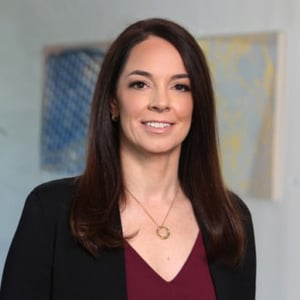
Partner, Hunton Andrews Kurth
A co-leader of Hunton Andrews Kurth’s environmental practice, Deidre is lauded in Chambers USA, 2016 as “extremely capable,” “very familiar with the regulations and agencies,” and excels at giving clients “good insight into getting an expeditious outcome.” Her practice focuses exclusively on environmental, energy and administrative law.
Deidre represents clients on permitting, compliance and litigation relating to the Clean Water Act (CWA), the Endangered Species Act (ESA), the National Environmental Policy Act (NEPA) and other environmental statutes. She frequently counsels clients on administrative rulemaking and policy, providing regulatory clarifications when necessary, and drafting federal and state legislation on myriad intricate issues. She is also well known for negotiating and obtaining permits for complicated energy and development projects. Her clients include development companies, oil and natural gas pipelines, electric utilities, agricultural interests, state and local agencies, and various trade associations.
Prior to entering private practice, Deidre served as assistant general counsel of the Army at the Pentagon, advising the secretary of the Army on environmental and land use issues involving the Corps of Engineers’ Civil Works and section 404 Regulatory program, as well as the Base Realignment and Closure (BRAC) program. Deidre has extensive experience with federal regulatory agencies, military departments and the US Department of Justice.
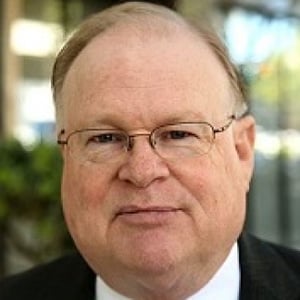
Senior Attorney, Pacific Legal Foundation
Reed Hopper is a Senior Attorney in PLF’s Environmental Law Practice Group. He oversees the Foundation’s Endangered Species Act Program that is designed to ensure that species protections are balanced with individual rights, the rule of law, and other social values. Reed also oversees PLF’s Clean Water Act Project that targets illegal federal regulation of local land and water use.
Reed has always had a strong patriotic spirit and a desire to serve his country. Before joining PLF in 1987, Reed served as an Environmental Protection Officer and Hearing Officer in the U.S. Coast Guard where he gained a love for the law. He also loves our constitutional way of life and cannot tolerate injustice. PLF affords him the opportunity to rectify unjust actions perpetrated by overreaching government. He enjoys getting up each morning to fight for a just cause.
Reed has litigated and won precedent-setting environmental and land use cases at all levels of the state and federal courts, including the U.S. Supreme Court. He has published numerous articles and testified before Congress as an expert witness.
Reed graduated from the University of California, Davis, with a Bachelors Degree in German and major work in biochemistry. He also did graduate business studies at California State University and Tulane University and earned his Juris Doctor Degree from the University of the Pacific, McGeorge School of Law.
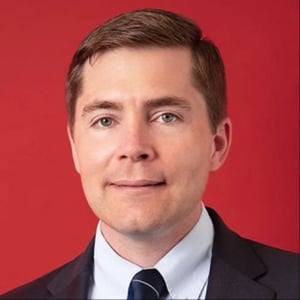
Senior Attorney, Pacific Legal Foundation
Damien Schiff is a senior attorney at Pacific Legal Foundation. He leads its environmental practice group, a unique initiative that draws broadly from PLF’s expertise and success in property rights and separation of powers litigation. Over the years, Damien has represented hundreds of landowners and property rights advocates to defend their liberties against heavy-handed and unwarranted environmental and land-use regulation. His litigation experience includes Sackett v. U.S. Environmental Protection Agency, a groundbreaking decision in which the U.S. Supreme Court upheld the right of landowners to challenge Clean Water Act compliance orders issued by EPA, and Contoski v. Norton, PLF’s successful effort to force the federal government to make good on its promise to delist the bald eagle from the Endangered Species Act.
Besides litigation, Damien has written academic articles on a variety of subjects, including the Endangered Species Act, the Clean Water Act, greenhouse gas torts, the duty to rescue, and international water law. He has appeared on a variety of television and radio programs and has been quoted in The New York Times, The Wall Street Journal, Harper’s Magazine, and The Economist, among other publications.
He obtained his law degree magna cum laude from the University of San Diego School of Law, and his undergraduate degree magna cum laude from Georgetown University. While at USD, he was a research assistant for Professor Bernard Siegan, a leading constitutional theorist and advocate for property rights and economic liberty. Immediately prior to joining PLF, Damien clerked for Judge (and former PLF attorney) Victor Wolski of the United States Court of Federal Claims. Damien credits the mentoring and examples of Professor Siegan and Judge Wolski for his decision to pursue a career in liberty-based public interest litigation.
Damien lives in Sacramento with his wife, two young sons, four chickens, and a cat named Princess. In his off hours he enjoys stamp collecting, Gregorian chant, and martinis—preferably at the same time.
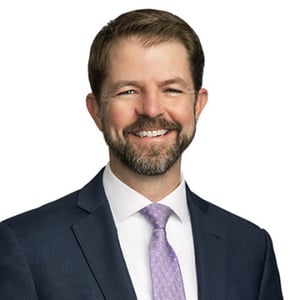
Partner, Baker Botts LLP
Drawing from two decades of experience in senior government, in-house corporate, and private law firm roles, Jeff Wood helps clients with federal enforcement, compliance, litigation, permitting, and policy challenges primarily in the energy and environmental fields.
Prior to joining Baker Botts, Mr. Wood served for almost two years as the Acting Assistant Attorney General (AAG) for the Justice Department's Environment and Natural Resources Division (ENRD). In that capacity, Mr. Wood led ENRD and its more than 600 attorneys and staff representing EPA, Departments of the Interior, Energy, and Defense, and other agencies in civil and criminal enforcement and defensive environmental, energy, and natural resources litigation.
As the top official in ENRD, Mr. Wood managed a complex organization with an annual budget exceeding $200 million and a docket of more than 6,000 cases and matters. E&E News noted that “Wood maintains a strong relationship with ENRD's career staff” (Greenwire, Oct. 31, 2018). He previously served on the staff of the United States Senate Committee on Environment and Public Works.
At the Justice Department, Mr. Wood oversaw the Division's civil and criminal enforcement programs and was responsible for developing legal strategies and approving briefs in key cases including filings before the Supreme Court and Courts of Appeals in coordination with the Office of Solicitor General. In this role, Mr. Wood held the highest level security clearance and worked closely with top leadership at DOJ, EPA, the Interior Department, USDA, the Energy Department, Transportation Department, FERC, NRC and across the Executive Branch, including the White House.
With many years of both private law firm and in-house legal experience, Mr. Wood has handled complex environmental enforcement, regulatory, policy, and litigation matters for electric utilities, energy companies, maritime companies, mining companies, real estate developers, financial institutions, industrial companies and manufacturers, business coalitions, associations, small businesses, and individual property owners. Drawing from his experiences in-house, Mr. Wood brings a common-sense, cost-effective, client-focused approach to his work every day.
With a strong national reputation, Mr. Wood is a frequent speaker on environmental law and policy matters, with recent speeches and presentations at the Environmental Law Institute, Harvard Law School, Vanderbilt Law School, American University Law School, American Bar Association Environmental Law Conferences, the Texas Environmental SuperConference, Air Force Judge Advocate General School's Advanced Environmental Law Course, Baker Institute's Center for Energy Studies (Rice University), and many other venues. He frequently appears in national news to share insights on significant environmental law and policy issues, including recent quotes in the New York Times, Washington Post, Wall Street Journal, Bloomberg, Law360, and E&E News, among others.
Since 1976, Milton L. Chappell has been a staff attorney with the National Right to Work Legal Defense Foundation, a non-profit legsl aid organization located in Springfield, Virginia. During his 38 years of practice, he has specialized in representing nonunion public employees and teachers in litigation before the United States Supreme Court, and other federal and state courts and administrative agencies, against the abuses of compulsory unionism. The litigation has resulted in the establishment of procedures and notices that assist nonunion teachers in reducing the amount of their compulsory union fees the public sector unions spend on political and other non-collective bargaining activities that his clients oppose. In addition to representing clients claiming a political objection to joining or financially supporting a labor union, he has also represented clients claiming a religious objection to unions, as well as defending against numerous union attacks on the Right to Work laws passed in Indiana and Michigan, and Wisconsin’s Act 10, which includes right to work protection for most public employees. Mr. Chappell is an expert in constitutional and labor law, especially the First Amendment. Mr. Chappell has represented clients in Arizona, California, Connecticut, Delaware, Florida, Hawaii, Illinois, Indiana, Kentucky, Maryland, Michigan, New York, Ohio, Oregon, Pennsylvania, Texas, and Virginia, Washington, Wisconsin, and the District of Columbia.
Mr. Chappell is a member of the following bars: Maryland, the District of Columbia, United States Supreme Court, United States Courts of Appeals for the 2nd, 3rd, 4th, 5th, 6th, 7th, 9th, 11th, and District of Columbia Circuits, and the United States District Courts for the Districts of Maryland, Northern California, Western Wisconsin, and the District of Columbia. He is the author of “From Abood to Tierney: The Protection on Nonunion Employees in an Agency Shop,” 15 Ohio Northern University Law Review 1 (1988) and “Seeking a New Foundation,” 16 Government Union Review 1 (1995). He is coauthor of “Protecting the Rights of State Employees Against Compulsory Unionism,” California Public Employee Relations 143 (August 2000).
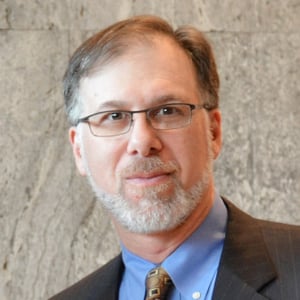
Partner, Schaerr | Jaffe LLP
Erik Jaffe has been involved in appeals on a broad range of legal issues, including First Amendment challenges to campaign finance reform, Commerce Clause challenges to Health Care Reform and other federal legislation, Equal Protection Clause challenges to affirmative action in education, First Amendment challenges to school vouchers, Fifth Amendment challenges to takings of property, Second Amendment challenges to restrictions on gun ownership, and a wide variety of cases involving patents, copyrights, ERISA, securities fraud, federal preemption, environmental regulation, and other state and federal constitutional and statutory matters. He has represented businesses and non-profit groups, Judges, Senators, former government officials, Nobel Prize winners, and a broad cross-section of private individuals. Mr. Jaffe has been involved in over 120 Supreme Court matters, including filing over 30 cert. petitions, representing half-a-dozen parties on the merits, and filing over 70 amicus briefs at both the cert. and merits stages.
A 1990 graduate of the Columbia University School of Law, Mr. Jaffe was a law clerk to Judge Douglas H. Ginsburg of the United States Court of Appeals for the District of Columbia Circuit from 1990 to 1991. Following that clerkship he spent five years in litigation practice with the Washington, D.C. law firm of Williams & Connolly. In the summer of 1996 he left Williams & Connolly to clerk for Supreme Court Justice Clarence Thomas. At the end of that clerkship he started his own practice, and he was a sole practitioner from 1997 to 2018. He joined the firm of Schaerr | Jaffe LLP in 2018.

Former President & CEO, The Federalist Society for Law and Public Policy Studies
Eugene B. Meyer, former President and CEO of the Federalist Society, has served as Executive Director, CEO, and/or President of the organization for more than 40 years. He is responsible for shepherding the organization from a small group of law students to a community of 90,000 lawyers, law students, academics, judges, and others interested in the rule of law. The Society now includes a Student Chapter at nearly every ABA-accredited law school in the country and Lawyers Chapters in 220 major cities across the nation. Gene earned his B.A. in history at Yale in 1975 and his M.A. in political science from the London School of Economics in 1976. Gene currently serves on the boards of the U.S. Chess Center, the Holman Foundation, the Sarah Scaife Foundation, and the advisory board of the Adam Smith Society. He holds the title of International Chess Master.
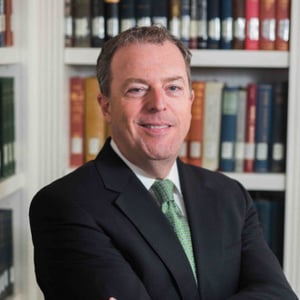
Vice President of Washington Operations and Dean of the Van Andel Graduate School of Government, Hillsdale College
Matthew Spalding is the Kirby Professor in Constitutional Government at Hillsdale College and the Dean of the Van Andel Graduate School of Government at Hillsdale College’s Washington, D.C., campus. As Vice President for Washington Operations, he also oversees the Allan P. Kirby, Jr. Center for Constitutional Studies and Citizenship and the academic and educational programs of Hillsdale in the nation’s capital.
He is the best-selling author of We Still Hold These Truths: Rediscovering Our Principles, Reclaiming Our Future, which details America’s core principles, shows how they have come under assault by modern progressive-liberalism, and lays out a strategy to recover them. Spalding is also executive editor of The Heritage Guide to the Constitution, a line-by-line analysis of each clause of the U.S. Constitution. His other books include A Sacred Union of Citizens: Washington’s Farewell Address and the American Character; Patriot Sage: George Washington and the American Political Tradition; and The Founders’ Almanac: A Practical Guide to the Notable Events, Greatest Leaders & Most Eloquent Words of the American Founding.
Prior to joining Hillsdale, Dr. Spalding was vice president of American Studies at The Heritage Foundation and founding director of its B. Kenneth Simon Center for Principles and Politics. He is a Fellow at the Claremont Institute for the Study of Statesmanship and Political Philosophy, and serves on the boards of the Steamboat Institute and the Philadelphia Society.
He received his B.A. from Claremont McKenna College and his M.A. and Ph.D. in government from the Claremont Graduate School. In addition to teaching at Hillsdale, he has taught at George Mason University, the Catholic University of America, and Claremont McKenna College. He and his wife Elizabeth, a Hillsdale alumna, reside with their two children in Arlington, Virginia.
W. Richard and Mary Eshelman Faculty Scholar; Professor of Law and International Affairs, Pennsylvania State University
Larry Catá Backer (白 轲) is the W. Richard and Mary Eshelman Faculty Scholar, Professor of Law and International Affairs at Pennsylvania State University (B.A. Brandeis University; M.P.P. Harvard University Kennedy School of Government; J.D. Columbia University). He is a member of the American Law Institute, the European Corporate Governance Institute, The European China Law Studies Association, and the Coalition for Peace & Ethics. He researches, writes, and teaches in the areas of regulatory systems including the regulation of global production and data driven governance, economic globalization and human rights, transnational law and institutions, Marxist Leninist political-economic systems with a focus on China and Cuba, and semiotics. He has published over one hundred articles and book chapters in U.S., Latin American, Chinese, and European journals. Books include Lawyers Making Meaning (Springer, 2013, with Jan Broekman); Essays on Contemporary China–Heartland, Periphery, and Silk Roads (LC Backer and M McQuilla (eds) 16(1) (Summer 2021); Hong Kong Between ‘One Country’ and ‘Two Systems’: Essays from the Year that Transformed the Hong Kong Special Administrative Region (June 2019 – June 2020) (Little Sir Press, 2021); Cuba’s Caribbean Marxism (Little Sir Press, 2018). He is currently co-editing (with Bjorn Ahl and Zhu Guobin) The Cambridge Handbook of Chinese Constitutional Law (Cambridge University Press, forthcoming 2025); and on The UN Guiding Principles for Business and Human Rights: A Commentary (OUP, forthcoming), and Elements of Law and the United States Legal System: Policy, Premises, and Practice in National and International Context (Carolina Academic Press, forthcoming 2024). ORCHID No. 0000-0002-7492-4527.
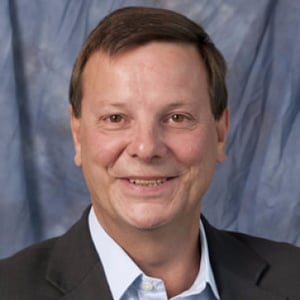
Professor of Law, Antonin Scalia Law School, George Mason University
Professor of Law Michael S. Greve joined the faculty of the Antonin Scalia Law School, George Mason University in fall 2012 after having served as John G. Searle Scholar at the American Enterprise Institute (AEI), where he specialized in constitutional law, courts, and business regulation and served as chairman of the Competitive Enterprise Institute. Prior to joining AEI, Greve was founder and co-director of the Center for Individual Rights, a public interest law firm specializing in constitutional litigation.
Greve has served previously as an adjunct professor at a number of universities, including Cornell and Johns Hopkins Universities, and has been a visiting professor at Boston College since 2004. He was awarded a PhD and an MA in government by Cornell University. Greve also earned a Diploma from the University of Hamburg in Germany.
A prolific writer, Greve is the author of nine books and a multitude of articles appearing in scholarly publications, as well as numerous editorials, short articles, and book reviews. He is a frequent speaker for professional and scholarly organizations and has made many appearances on radio and television.
In addition Greve has provided congressional and state legislative testimony, has lobbied and consulted in federal agency proceedings, and has provided litigation services and management in over 30 cases, including matters before the U.S. Supreme Court.
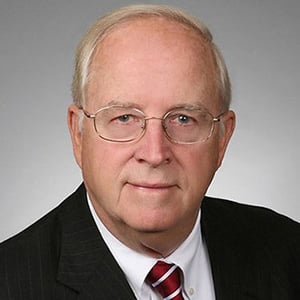
Of Counsel, Kirkland & Ellis LLP
John focuses his practice on labor and employment litigation and counseling employers on mergers, acquisitions and consolidations, downsizing, plant relocations, union representation elections, labor negotiations, strikes and lockouts, NLRB unfair labor practices, arbitration, wage and hour, wrongful discharge and equal employment. John, a former NLRB General Counsel and Labor Department official, was selected as a global leader in the field of employment & labor law in The International Who's Who of Labor and Employment Lawyers by Law Business Research, The Best Lawyers in America, and Super Lawyers.
John earned his B.A. from Brown University and both his J.D. and LL.M. from Georgetown.

The Modern Role of State Attorneys General: A Renewed Activism
Robert J. Gaglione
This paper describes the traditional role of the state attorneys general and contrasts that traditional...
The Modern Role of State Attorneys General: A Renewed Activism
Robert J. Gaglione
This paper describes the traditional role of the state attorneys general and contrasts that traditional...
Marshall v. Marshall and the Probate Exception to Federal Court Jurisdiction
Ronald A. Cass
This spring, the U.S. Supreme Court ventured into an area it had last addressed 60...
Pension Protection Act of 2006
Austin Bramwell
The Pension Protection Act of 2006 (the “Act”), signed into law on August 17, 2006,...
Justice Kennedy's Analysis of Navigable Waters in Rapanos
Virginia S. Albrecht, Deidre G. Duncan
Five years ago in Solid Waste Agency of Northern Cook County v. Army Corps of...
The Rapanos Decision
M. Reed Hopper, Damien Michael Schiff
The Supreme Court has ruled in consolidated cases that the assertion of jurisdiction under the...
Recalibrating the Definition of "Waters of the United States" after Rapanos
Jeffrey H. Wood
The Clean Water Act’s (“CWA”) principal jurisdictional element, i.e., the term “waters of the United...
Limits on the Use of Union Dues: Washington v. Washington Education Association - Event Audio
Frederic Freilicher, Rob McKenna, Milton L. Chappell, Erik S. Jaffe
Labor & Employment Law Practice Group and Free Speech & Election Law Practice Group
In 1988, the U.S. Supreme Court ruled, in Communications Workers of America v. Beck, that...
A Discussion on How Immigration Affects Crime, Demographics, Security, Economics, and Culture
Tamar Jacoby, Eugene B. Meyer, Matthew Spalding
9th Annual Faculty Conference
The Federalist Society's Faculty Division presented this panel discussion at the Ninth Annual Faculty Conference...
A Debate on Wal-Mart and Economic Due Process
Larry C. Backer, Michael S. Greve, John S. Irving
9th Annual Faculty Conference
The Federalist Society's Faculty Division presented this debate at the Ninth Annual Faculty Conference on...