
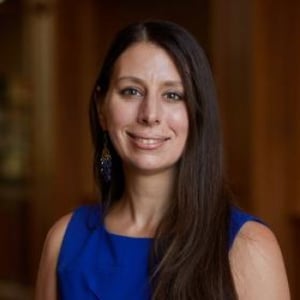
Prof. Sheley joined the College of Law in 2018. Before coming to OU she was an Assistant Professor at the University of Calgary Faculty of Law. She has also served as a Visiting Associate Professor at the George Washington University Law School and an Olin-Searle Fellow at Georgetown University Law Center. Prior to academia she practiced for several years in the litigation group of the Washington, D.C. offices of Gibson, Dunn & Crutcher LLP. While in practice she was commended by the Humane Society of the United States for her pro bono work in the prosecution of dog fighting sponsors. She is proud to have served on the Board of Directors of the Alberta Animal Rescue Crew Society.
Attorney, Enforcement Division of the Securities and Exchange Commission
Matthew R. Estabrook is an attorney in the Enforcement Division of the Securities and Exchange Commission. Prior to working at the SEC, Mr. Estabrook was an associate at Gibson, Dunn & Crutcher's Washington D.C. office.
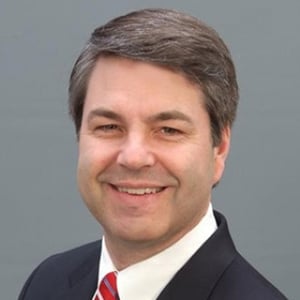
Partner and Co-Chair, Public Policy Group, Shook Hardy & Bacon LLP
Mark Behrens co-chairs Shook's Washington, DC-based Public Policy Practice Group and is a leading national expert on civil justice issues with over thirty years of experience. A substantial part of his practice is working to improve the civil litigation environment through state and federal legislation; in the courts through amicus curiae briefs; through legal scholarship and judicial education; and in the court of public opinion.
Mark is actively involved in civil justice reform efforts at the federal and state levels. He has testified before the U.S. Congress and most state legislatures on behalf of business and civil justice organizations. Mark also has an active amicus brief practice specializing in tort liability and civil justice issues. He has authored or co-authored over 150 amicus briefs in cases before the United States Supreme Court and federal and state appellate courts on behalf of business, civil justice, and defense lawyer organizations. In addition, Mark routinely files comments on behalf of business, civil justice, and defense lawyer organizations regarding potential changes to federal and state court rules. He chairs the International Association of Defense Counsel’s (IADC) Civil Justice Response Committee and serves on the Board of Directors of Lawyers for Civil Justice (LCJ).
Mark is a member of the American Law Institute (ALI). He received his J.D. in 1990 from Vanderbilt University Law School, where he was a member of the Vanderbilt Law Review. He received his B.A. in economics from the University of Wisconsin in 1987.
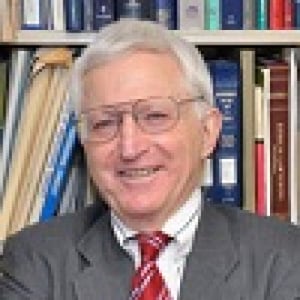
Professor of Law, Yeshiva University Benjamin N. Cardozo School of Law
Professor Brickman teaches Contracts, Professional Responsibility, and Land Use, among other courses. His areas of expertise include legal ethics, contingency fees, mass torts, and asbestos litigation. His writings on these and other subjects are widely cited and he is frequently quoted in the press.
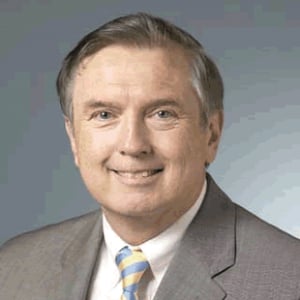
Professor of Law, University of Notre Dame Law School
Gerard V. Bradley is Professor of Law at the University of Notre Dame, where he teaches Legal Ethics and Constitutional Law. At Notre Dame he directs (with John Finnis) the Natural Law Institute and co-edits The American Journal of Jurisprudence, an international forum for legal philosophy. Bradley has been a Visiting Fellow at the Hoover Institution of Stanford University, and a Senior Fellow of the Witherspoon Institute, in Princeton, New Jersey. He served for many years as President of the Fellowship of Catholic Scholars.
Bradley received his B.A and J.D. degrees from Cornell University, graduating Summa cum laude from the law school in 1980. After serving in the Trial Division of the Manhattan District Attorney’s Office he joined the law faculty at the University of Illinois. He moved to Notre Dame in 1992. Bradley has published over one hundred scholarly articles and reviews. His most recent books are an edited collection of essays titled, Challenges to Religious Liberty in the Twenty-First Century (published by Cambridge University Press in 2012), Essays on Law, Religion, and Morality and Unquiet Americans: U.S. Catholics and the Common Good (both to be published in 2014.) He is currently working on a book about regulating obscenity in the Internet Age.
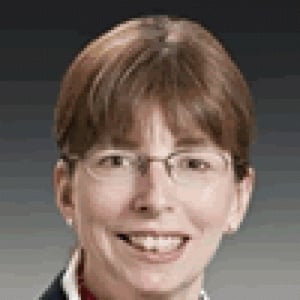
Counsel to the Firm, Cascadia Cross-Border Law
Margaret Stock focuses her practice on immigration and citizenship law. She is a nationally known expert on immigration and national security laws, and has testified regularly before Congressional committees on immigration, homeland security, and military matters. As a retired Lieutenant Colonel in the Military Police, U.S. Army Reserve, Margaret has extensive experience with U.S. military issues. She has also worked as a professor at the United States Military Academy at West Point, and she has served as an adjunct instructor at the University of Alaska. Margaret served as a member of the American Bar Association Commission on Immigration from 2008-2012. She regularly authors articles on military-related immigration issues, and is well-versed on “parole in place” for military family members and the Military Accessions Vital to the National Interest (“MAVNI”) Program. Margaret authored the book Immigration Law & the Military, which was published by the American Immigration Lawyers Association in 2012.

The Pension Protection Act of 2006: Death-knell for Defined Benefit Pension Plans?
Michael J. Collins
The private pension system in the United States has been in deep decline for many...
Ninth Circuit Court of Appeals Holds United Parcel Service, Inc. Violated Americans with Disabilities Act, Forbidding Deaf Drivers
Erin Sheley, Matthew R. Estabrook
Anyone who has traveled on an interstate highway has probably had the same experience: A...
Some Thoughts on the e-Discovery Amendments to the Federal Rules of Procedure
On December 1, 2006, amendments to the Federal Rules of Civil Procedure, addressing the discovery...
Fifth Consecutive State High Court Rejects Medical Monitoring
Mark A. Behrens
Recently, the Mississippi Supreme Court, in Paz v. Brush Engineered Materials, Inc., became the fifth...
Mass Fraud in Mass Tort Litigation?
Lester Brickman
Last year, a U.S. District Court Judge, Janis Jack, described by National Public Radio as...
Morality, Professionalism, and Happiness
Not long ago, with the practice of law came prestige, respect, and personal fulfillment. Not...
The Blaine Amendment: Harbinger of Secularism?
Gerard V. Bradley
In August 1876, both houses of Congress voted on a series of proposals to amend...
Whither Universal Service in the Digital Age?
Chris Moore
Last year marked the tenth anniversary of the Telecommunications Act (“the Act”). Since its passage,...
Remarks by Governor John Engler
John M. Engler
Thank you for the invitation to join this Federalist Society conference on telecommunications. This is...
Margaret D. Stock Reviews Not A Suicide Pact by Richard A. Posner
Margaret D. Stock
Judge Richard A. Posner of the Seventh Circuit Court of Appeals is perhaps the most...