
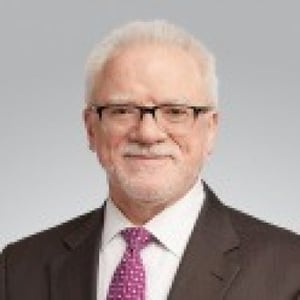
Partner, Williams & John LTD
David L. Applegate is a partner of Williams & John Ltd., where he chairs the firm's intellectual property practice group and is a member of the commercial litigation practice group. He focuses his practice on patent, trademark, copyright, trade secret, unfair competition, and business litigation and arbitration, and on U. S. Supreme Court and related amicus brief practice.
Mr. Applegate is a Fellow of Litigation Counsel of America, the Intellectual Property Institute, and the Diversity Law Institute; a Senior Master Member of the Richard Linn American Inn of Court; a Past President of the Chicago Lincoln American Inn of Court; and a Legal Policy Advisor to The Heartland Institute. He is "AV Preeminent" peer review rated by Martindale-Hubbell, reflecting the highest peer recognition for both ethical standards and legal ability, and has been named by his peers for inclusion in Illinois Leading Lawyers and IllinoisSuper Lawyers in both commercial and intellectual property litigation for decades.
Throughout his career, Mr. Applegate has represented corporations and individuals as both plaintiffs and defendants in state and federal litigation at the trial and appellate levels. He has tried multiple cases to verdict in both jury and bench trials nationwide and has argued appeals in the Illinois appellate courts and the U.S. Court of Appeals for the Seventh and Federal Circuits; his amicus brief was cited twice in the U. S. Supreme Court’s 5-4 majority opinion in the Janus case. Mr. Applegate also has extensive commercial arbitration and private mediation experience in both national and international dispute resolution forums, and is a former member of the Chicago International Dispute Resolution Association. In 2001, the U. S. District Court for the Northern District of Illinois and the Chicago Chapter of the Federal Bar Association recognized him for his outstanding individual commitment to pro bono service to indigent clients throughout the Northern District of Illinois.
In addition to his legal practice, Mr. Applegate has written and spoken frequently on matters of law and public policy, including on both local and national television and radio. He is an avid collector and amateur historian of original comic strip and editorial cartoon art, and has written extensively in that field as well for over three decades.
Managing Director, Lexpat Global Services
Adam R. Pearlman is the Founder and Managing Director of Lexpat Global Services, an international law and consulting services firm specializing in security, defense, investigations, compliance, and training. A Special Advisor to and member of the Executive Committee of the Federalist Society’s International and National Security Law Practice Group, he is National Security Law expert and a proven senior leader with more than fifteen years of experience across the U.S. Departments of Justice, Defense, and State, in the White House, and with the U.S. Federal Judiciary.
Most recently, he served as the Senior Advisor for Legal Policy in the State Department’s Bureau of Counterterrorism, where he counseled senior officials on matters covering the entire spectrum of programs and operations to counter terrorism and violent extremism. While participating in sensitive diplomatic engagements and helping to coordinate military operations, he also advised in the development of sanctions policy and initiatives to build legal and operational capacity in partner nations. Mr. Pearlman also managed the Bureau’s participation in federal litigation and led U.S. delegations in multilateral forums concerning criminal justice and rule of law.
A former Associate Deputy General Counsel of the Department of Defense, Mr. Pearlman was agency counsel for complex civil and criminal national security matters in federal and military courts, and led the Supreme Court and appellate unit of the team dedicated to litigating classified counterterrorism cases. His earlier service in the Department of Justice spanned four litigating divisions and the Office of the Deputy Attorney General. His diverse experience included reviewing complex international transactions and mergers, and advising on immigration removal proceedings, human rights abuses, and terrorist financing investigations. Mr. Pearlman also served with distinction in Iraq as an early advisor to the Iraqi High Tribunal’s prosecution of Saddam Hussein. He was a law clerk for The Honorable Royce C. Lamberth, and during law school interned in the White House Counsel’s Office.
Mr. Pearlman is a Term Member of the Council on Foreign Relations, a Visiting Fellow at the National Security Institute at George Mason University’s Antonin Scalia Law School, a member of the American Bar Association’s Africa Law Initiative Council, and a member of the Center for Strategic & International Studies’ Project on Nuclear Issues. He is a former National Security Fellow at the Foundation for Defense of Democracies, vice chairman of the ABA Section of International Law’s committees on national security, and aerospace and defense, and also previously served as a liaison to the Board of Directors of the ABA’s Rule of Law Initiative. He has been co-editor of the U.S. Intelligence Community Law Sourcebook since 2011 and has published articles in the Harvard National Security Journal, Stanford Law & Policy Review, and Intelligence & National Security.
Mr. Pearlman earned his B.A., with honors, from UCLA, and his J.D., with honors, from The George Washington University Law School, where he was a member of the International Law Review. He also earned a Master of Science of Strategic Intelligence degree from the National Intelligence University, where he was the inaugural recipient of the Kornblum Award for national security law and ethics. Mr. Pearlman speaks and reads Portuguese at the intermediate level and holds certificates in international human rights law from the University of Oxford and in U.S. and international anti-corruption law from American University’s Washington College of Law. He is admitted to the State Bars of California and Virginia, as well as to the Bar of the United States Supreme Court.
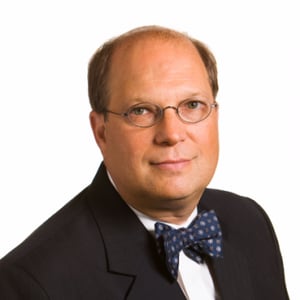
Professorial Lecturer in Law, The George Washington University
Paul Rosenzweig is an accomplished writer and speaker with a national reputation in cyber security and homeland security. He is the founder of Red Branch Consulting PLLC, a homeland security consulting company. He is also a Senior Advisor to The Chertoff Group. Mr. Rosenzweig formerly served as Deputy Assistant Secretary for Policy in the Department of Homeland Security.
He is a Professorial Lecturer in Law at George Washington University, and a Senior Fellow in the Tech, Law & Security Program at the American University, Washington College of Law. He serves as an advisor to and former member of the American Bar Association Standing Committee on Law and National Security, and a Contributing Editor of the Lawfare blog. He is a member of the ABA Cybersecurity Legal Task Force and of the United States Court of Appeals for the District of Columbia Circuit Advisory Committee on Admissions and Grievances. He serves, as well, as a Hearing Committee Member of the District of Columbia Board of Professional Responsibility. In 2011 he was a Carnegie Fellow in National Security Journalism at the Medill School of Journalism, Northwestern University.
Mr. Rosenzweig is a cum laude graduate of the University of Chicago Law School. He has an M.S. in Chemical Oceanography from the Scripps Institution of Oceanography, University of California at San Diego and a B.A from Haverford College. Following graduation from law school he served as a law clerk to the Honorable R. Lanier Anderson, III of the United States Court of Appeals for the Eleventh Circuit.
He is the author of Cyber Warfare: How Conflicts in Cyberspace are Challenging America and Changing the World and of three video lecture series from The Great Courses, Thinking About Cybersecurity: From Cyber Crime to Cyber Warfare; The Surveillance State: Big Data, Freedom, and You; and Investigating American Presidents.
He is the co-author (with James Jay Carafano) of Winning the Long War: Lessons from the Cold War for Defeating Terrorism and Preserving Freedom and co-editor (with Jill D. Rhodes and Robert S. Litt) of the Cybersecurity Handbook (3rd ed.). He is also co-editor (with Timothy McNulty and Ellen Shearer) of two books, Whistleblowers, Leaks and the Media: The First Amendment and National Security, and National Security Law in the News: A Guide for Journalists, Scholars, and Policymakers. Mr. Rosenzweig is a member of the Literary Society of Washington.
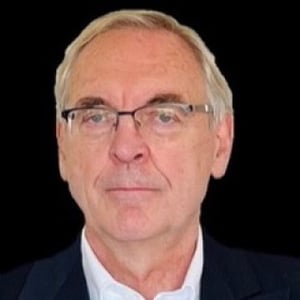
Fellow, National Security Institute, Antonin Scalia Law School, George Mason University
Vince Vitkowsky chaired the Executive Committee of the Federalist Society’s International and National Security Law and Policy Practice Group for over a decade. He is also a Fellow at the National Security Institute of George Mason University Law School. Vince spent 45 years in private practice, primarily in AmLaw 100/200 firms and their spin-offs. His practice included domestic and international commercial arbitration and litigation, as well as cyber risks and liabilities. Vince's current focus is on national security policy, artificial intelligence, cybersecurity, and counterterrorism. He has often written and spoken on national security and other public policy issues. Among other affiliations, Vince has been an Adjunct Fellow at the Center for Law and Counterterrorism of the Foundation for the Defense of Democracies, a member of the Executive Committee of the American Branch of the International Law Association, and Co-Chair of the Committee on Interventions and Trial Observations of the International Bar Association’s Human Rights Institute. He received his B.A. from Northwestern University and his J.D. from Cornell Law School.
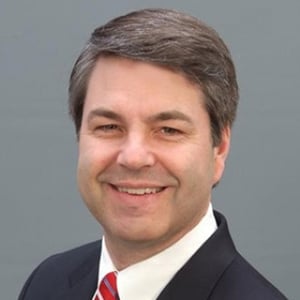
Partner and Co-Chair, Public Policy Group, Shook Hardy & Bacon LLP
Mark Behrens co-chairs Shook's Washington, DC-based Public Policy Practice Group and is a leading national expert on civil justice issues with over thirty years of experience. A substantial part of his practice is working to improve the civil litigation environment through state and federal legislation; in the courts through amicus curiae briefs; through legal scholarship and judicial education; and in the court of public opinion.
Mark is actively involved in civil justice reform efforts at the federal and state levels. He has testified before the U.S. Congress and most state legislatures on behalf of business and civil justice organizations. Mark also has an active amicus brief practice specializing in tort liability and civil justice issues. He has authored or co-authored over 150 amicus briefs in cases before the United States Supreme Court and federal and state appellate courts on behalf of business, civil justice, and defense lawyer organizations. In addition, Mark routinely files comments on behalf of business, civil justice, and defense lawyer organizations regarding potential changes to federal and state court rules. He chairs the International Association of Defense Counsel’s (IADC) Civil Justice Response Committee and serves on the Board of Directors of Lawyers for Civil Justice (LCJ).
Mark is a member of the American Law Institute (ALI). He received his J.D. in 1990 from Vanderbilt University Law School, where he was a member of the Vanderbilt Law Review. He received his B.A. in economics from the University of Wisconsin in 1987.
Partner, Hollingsworth LLP, Washington, DC.
Mr. Lasker litigates a wide variety of complex civil matters, with a current focus on toxic torts, environmental litigation, Alien Tort Statute litigation, and pharmaceutical products liability. Mr. Lasker has also represented clients in a variety of civil and criminal government investigation-related matters involving bank regulatory compliance, False Claims Act claims, and alleged price fixing, and he served as lead counsel in successfully defending a foreign client against a Foreign Corrupt Practices claim in a jury trial that was featured in the Legal Times. He represents clients in jury and bench trials, before arbitral panels and administrative courts, and both at trial and on appeal.
Mr. Lasker has significant experience defending against all matter of legal claims involving FDA- and EPA-regulated products and alleged toxins and environmental contaminants. He has represented clients in pharmaceutical products liability claims involving antipsychotic medications, obstetrical drugs, antifungals, antiepileptics, and cough/cold medicines, and in toxics/environmental matters involving herbicides, asbestos, lead paint, nonionizing radiation, and chemical solvents. He has represented clients in matters arising both in the United States and abroad, and in matters arising under both domestic and international law. Mr. Lasker's practice also includes matters involving sensitive national security issues, and he has represented his clients’ interests in meetings with both U.S. and foreign government officials. He has extensive expertise in developing and implementing sophisticated medical causation and science-based defenses, and he has successfully litigated issues involving Daubert, the federal preemption defense, and natural resource damages claims. He also assists clients in due diligence investigations as relates to environmental and toxics liabilities and through amicus briefing on key legal issues.
Mr. Lasker played a prominent role in helping to establish asbestos defendants’ rights to insurance non-products coverage through a successful amicus effort that secured one of the seminal judicial opinions recognizing the existence of such coverage, litigation efforts resulting in securing several hundreds of millions of dollars in asbestos non-products insurance recoveries, and oral presentations and publications on issues involving non-products coverage. He has also defended personal injury claims in asbestos litigation, advancing medical causation defenses as the asbestos litigation has extended to tertiary and even more remotely-situated corporate defendants.
Mr. Lasker is frequently requested to speak and publish on issues of interest to his clients, and he has been interviewed on such topics in numerous fora, including the AMA's American Medical News, Bloomberg News, the National Law Journal, and thePhiladelphia Inquirer. Mr. Lasker serves on the Board of Editors of LJN's Product Liability Law & Strategy newsletter and he is the Chair of the Toxics & Hazardous Substances Committee of the International Association of Defense Counsel (IADC), an invitation-only professional association for corporate and insurance defense attorneys around the world. He also serves as a member of the Defense Research Institute (DRI).
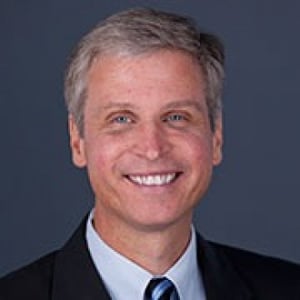
Frank Edwards Tyler Distinguished Professor of Law, University of Kansas School of Law
Stephen Ware is the author of four books, over 50 law review articles, and many other publications. His writings have been cited by the Supreme Court of the United States and in at least 36 other cases. Ware teaches and writes on: Arbitration, Mediation, and Alternative Dispute Resolution, Bankruptcy, Insolvency, and Debt Collection, Contracts and Commercial Law, and Judicial Selection, each with an international or comparative dimension.
Ware has testified before both houses of the U.S. Congress, several state legislatures and, as an expert witness, in court. He is a frequent guest lecturer and speaker at academic and professional conferences—having given such presentations throughout the U.S. and in several other countries. He has appeared on numerous television and radio stations and been quoted in The New York Times, Wall Street Journal, USA Today, Financial Times, National Law Journal and many other news outlets. He is an elected member of the American Law Institute (ALI) and has served, at various times in his career, on the editorial board of the Journal of Legal Education and as an arbitrator for the American Arbitration Association.
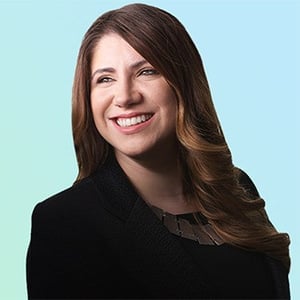
Partner, King & Spalding LLP
A partner in the FDA and Life Sciences practice at King & Spalding LLP, Marisa Maleck focuses on litigation, regulatory matters and public policy, with a focus on consumer products. As a former senior counsel at a bio-tech company and in private practice, Marisa has substantial experience with and is skilled in providing creative solutions in the face of uncertainty.
Marisa represents clients in a variety of matters with a focus on FDA-regulated products like food, beverages, pharmaceuticals, medical devices, wellness products, cosmetics, tobacco and cannabis. As a former senior counsel at an FDA-regulated biotech company and as a former partner in King & Spalding’s Litigation and Global Disputes practice group, she handled hundreds of suits in a multi-district litigation, multiple agency inquiries, an FTC lawsuit and 10+ state Attorney Generals actions. With a special focus on consumer fraud, social-media marketing and personal injury/wrongful death lawsuits, Marisa has successfully drafted and/or argued appellate briefs and critical motions in numerous cases—including class actions and complex litigation—before the U.S. Supreme Court, federal and state courts of appeals, and federal and state trial courts. She has also advocated tirelessly for her clients through engagement with agencies and policy-makers. She also advises her clients about legal risk (and how to avoid it) in investigations, enforcement actions, private litigation and private-equity investments.
Marisa also advocates for her clients’ interests in the court of public opinion. She is often solicited for her balanced legal analysis by members of the media. Marisa has appeared on (tv/radio) MSNBC, MSN, CNBC and NPR, and in (print) Newsweek, the National Law Journal, The Wall Street Journal, The Washington Post and Politico.
In addition, Marisa has an active pro-bono practice representing indigent defendants through federal appellate appointments as part of the Criminal Justice Act program and as a screener for the Mid-Atlantic Innocence Project.
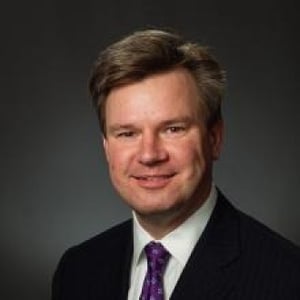
Senior Counsel & Director of the Center for Religious Schools, Alliance Defending Freedom
Gregory S. Baylor serves as senior counsel with Alliance Defending Freedom, where he is the director of the Center for Religious Schools and senior counsel with the Center for Public Policy.
Since joining ADF in 2009, Baylor has focused on defending and advancing the religious freedom of faith-based educational institutions through advice, education, legislative and public advocacy, and representation in disputes. He has testified about religious liberty issues three times before congressional committees and numerous times before state legislative committees.
Greg serves on the board of directors of the International Alliance for Christian Education, the board of directors of the Association for Biblical Higher Education, the board of directors of the Association for Christian Schools International, the board of advisors of the Museum of the Bible, and advisory board of the Center for Academic Faithfulness and Flourishing.
Greg earned his Juris Doctor in 1990 from Duke University School of Law, where he graduated Order of the Coif, with high honors, and served on the editorial board of the Duke Law Journal. He received his bachelor’s degree in Honors English in 1987 from Dartmouth College. Following graduation from law school, he served as law clerk to the Hon. Jerry E. Smith on the U.S. Court of Appeals for the Fifth Circuit. He practiced labor and employment law at two large international law firms for three years before joining the staff of Christian Legal Society’s Center for Law and Religious Freedom, where he served for 15 years prior to joining ADF. He lives in Northern Virginia with his wife (a medical doctor) and two daughters.

Sixty Years Later: Holden Caulfield, Fair Use, and Prior Restraint Under the Copyright Act
David L. Applegate
When J.D. Salinger published The Catcher in the Rye in 1951, he likely had little...
"Promoting the Progress" or Paying for Delay? Balancing Patent and Antitrust Law in the Age of Health Care Reform
Robert G. Pluta
In patent litigation valued between $1 million and $25 million, a patent owner should expect...
Putting Terrorists out of Business: Using Sarbanes-Oxley to Prosecute Terror Financiers
Adam R. Pearlman
Assume a charity solicited contributions from donors willing to support a religious or social cause...
The European Union, the Treaty of Lisbon, and "Justice and Home Affairs"
Paul Rosenzweig
With the vote of the Irish in a referendum and the signature of a reluctant...
International Law Under the Constitution and Transnational Progressives
Vincent Vitkowsky
The U.S. Constitution created the structure for a sovereign nation operating in an international system....
The Future of Work Status Legislation and E-Verify
Samson R. Elsbernd
In the current debate over unauthorized immigration, many policymakers have proposed improvements to the nation’s...
RAND Issues Report on Abuse of Medical Diagnostic Practices in Mass Litigation
Mark A. Behrens, Corey Schaecher
In June 2005, United States District Court Judge Janis Graham Jack of the Southern District...
Holding Pharma Plaintiffs to Their Pleading Burden: Implications of Twombly and Iqbal
Eric Lasker, Michael Junk
State and federal courts nationwide are home to a staggering number of pharmaceutical product liability...
Authorities Split After the Supreme Court's Hall Street Decision: What Is Left of the Manifest Disregard Doctrine?
Stephen J. Ware, Marisa Maleck
Arbitration is a private-sector court. Rather than litigating in a government court (in which a...
Christian Legal Society v. Martinez: Religious Student Groups, Nondiscrimination Rules, and the Constitution
Gregory Baylor
In Christian Legal Society v. Martinez, the United States Supreme Court will decide whether the...