
Managing Member, Political Law Group
Doug Chalmers practices in the area of federal and state political law and litigation. Before establishing the Political Law Group, he was a partner in the political law and litigation practice groups at McKenna, Long & Aldridge LLP. Doug has twice been recognized in Chambers USA: America's Leading Lawyers for Business as one of the leading political law attorneys in the nation. Politics magazine has also identified him as one of the most influential Republicans in Georgia.
Doug advises businesses, nonprofit organizations, chambers of commerce, trade associations, political action committees, elected officials, candidates, political parties, lobbyists and government agencies on the federal and state laws that govern involvement in political activities. This includes election law, campaign finance, lobbying, Federal Communications Commission regulations, government contracts, pay-to-play rules and government ethics. He advises on compliance and handles litigation and administrative law proceedings involving these issues. He also has experience in civil litigation involving libel and defamation, wrongful death, insurance coverage, contract disputes, class action consumer fraud, and other matters.
As part of his practice, Doug has successfully defended clients in numerous high-profile cases. His clients have included a former Speaker of the U.S. House of Representatives; Georgia's former Governor; a Senate President Pro Tempore and two Speakers of the Georgia House of Representatives; the Senate and House Majority Leaders; Justices of the Georgia Supreme Court; Judges on the Georgia Court of Appeals; the Georgia Republican Party, and the Georgia House Republican Caucus. He was the chief lawyer in Georgia for the 2008 McCain presidential campaign, served as Chairman of Lawyers for Rudy Giuliani in the southeastern United States, and was a Co-Chair of Georgia Lawyers for Romney-Ryan. He is also the Chairman of the Political Activities Subcommittee of the Nonprofit Law Section of the State Bar of Georgia.
Doug is also a frequent speaker in the area of political law, and he has addressed CLE seminars around the country. He has testified before legislative committees concerning government ethics and ethics reform, and is regularly contacted by the media on these issues. Law & Politics and Atlanta Magazine have recognized Doug as a Georgia Super Lawyer Rising Star.
Doug is also active in the community and in civic affairs. He was appointed by Governor Sonny Perdue to the Board of Directors of the Georgia Department of Driver Services, and he served as Vice-Chair of the Board. He is on the Board of Governors of the Republican National Lawyers Association, and is the immediate past chairman of the RNLA's Georgia chapter. He is active in the Federalist Society, serving on the Executive Committees of the Atlanta Lawyers Chapter and the Free Speech and Election Law Practice Group. He is an Assistant Scoutmaster of Boy Scout Troop 27 in Johns Creek.
Doug received his undergraduate and law degrees from Duke University. He was an editor of the Duke Law Journal and a member of the Moot Court Board, and he received the James S. Bidlake Award for Superior Achievement in Legal Research and Writing. He clerked for Judge Diarmuid O’Scannlain of the U.S. Court of Appeals for the Ninth Circuit.
Doug is admitted in Georgia and the District of Columbia.
University of San Diego School of Law
Partner, Morrison & Foerster LLP
Partner, Horvitz & Levy LLP
Jeremy Rosen is nationally renowned for his proficiency in numerous issues arising under the First Amendment and California’s anti-SLAPP law. Using that knowledge, Jeremy has helped a wide variety of clients – including churches, private businesses, and individuals – defeat lawsuits that seek to impose liability on clients for exercising their rights of petition, free speech, and free exercise of religion. He has also handled hundreds of appeals in numerous appellate courts, including the Ninth Circuit Court of Appeals, the California Supreme Court, and California’s intermediate appellate courts. In addition to First Amendment and anti-SLAPP cases, his cases have involved numerous important issues regarding anti-trust, class actions, wage and hour law, employment law, breach of contract, California’s Unfair Competition Law, CEQA, the enforceability of arbitration clauses, hospital peer review, the scope of public employee whistleblower protection, and the application of the primary assumption of risk doctrine.
Jeremy is a partner at the firm, which he joined in 2001. He is a California State Bar Certified Appellate Specialist and a member of the California Academy of Appellate Lawyers.
Jeremy directed the Pepperdine University School of Law Ninth Circuit Appellate Advocacy Clinic for 6 years. The Clinic represents individuals in the Ninth Circuit who are identified by the court as needing pro bono counsel. Jeremy also previously served a three-year term where he was appointed by the Ninth Circuit to serve as one of 18 appellate lawyer representatives to the court.
Jeremy is a member of the National Chamber Litigation Center’s California Litigation Advisory Committee. Before joining the firm, Jeremy was a Litigation Associate with Munger, Tolles & Olson.
Former San Diego Superior Court Judge
Hon. Michael B. Orfield (Ret.) was a jurist for 20 years, mostly as a civil independent calendar judge. His experience and expertise as a civil judge spread widely across such diverse areas as catastrophic personal injury, medical and legal malpractice, product and construction defects, breach of warranties, easements, breach of contract, wrongful death and a variety of business disputes. His strength as a mediator "...comes from being able to call upon a broad plain of knowledge, coupled with an attention to detail, empathy for the participants, and a conviction that the resolution should be their own."
Judge Orfield retired as a member of the statewide Continuing Judicial Education Committee, and still has a passion for teaching. He currently teaches "Trying the Complicated Case: From Trial Readiness to Verdict" as well as the LexisNexis Jury Instruction computer program for both civil and criminal jury instructions. He has also taught "Leading Organizational Change" as well as the week long "Civil Overview for Judges".
Judge Orfield was appointed by Chief Justice Ronald George to the original Task Force on Civil Jury Instructions and then to the Advisory Committee on Civil Jury Instructions. Justice George also appointed him a member of the prestigious Judicial Council of the State of California. Judge Orfield has served as a member of the Judicial Council Presiding Judges and Court Executives Advisory Committee and the Judicial Needs Advisory Committee.
Judge Orfield has served on the Board of the San Diego Humane Society and chaired the North County "Bridging the Gap" program for new lawyers. Before transferring to the Vista Courthouse, he co-moderated the San Diego County Bar Association Bridging the Gap program.
In 1972, Judge Orfield earned his Bachelor of Arts degree in Biology from the University of California at San Diego, and obtained his law degree from California Western School of Law in 1977. Judge Orfield also completed one year of graduate study in Microbiology and Immunology at Duke University in 1974.
North Carolina Court of Appeals
Wake County District Court Judge, North Carolina
Appeals Referee, North Carolina Employment Security Commission
North Carolina Court of Appeals
Senior Research Assistant, Supreme Court of North Carolina
North Carolina Court of Appeals
Wake County District Court Judge, North Carolina
Appeals Referee, North Carolina Employment Security Commission
North Carolina Court of Appeals
Senior Research Assistant, Supreme Court of North Carolina
Retired
Tom Gede retired in 2023 as a principal in Morgan Lewis Consulting LLC and of counsel to the firm. He currently consults on a variety of legal and policy matters for both public and private clients. Tom has a national reputation and distinguished background in federal Indian law. Prior to retirement, he represented clients in complex governmental matters in litigation, administrative and regulatory proceedings, including high-profile matters involving state governments. A former senior deputy in the California Attorney General’s office, Tom was amicus coordinator and Supreme Court counsel, and argued cases in the US Supreme Court, the California Supreme Court, and numerous state and federal appellate courts.
Tom also served as executive director of the Conference of Western Attorneys General (CWAG), coordinating activities on key legal and policy issues, such as federal Indian law, energy, environmental, public lands, financial services, and telecommunications, for the attorneys general of 18 western states and territories. In 2016, Tom was elected as a Member of the American Law Institute (ALI), and served as an Adviser on the Restatement of the Law Third - The Law of American Indians. Tom also taught federal Indian law as an adjunct law professor at the University of the Pacific - McGeorge School of Law. He served as an assistant editor for and the author of the Indian gaming chapter in CWAG’s American Indian Law Deskbook (2d & 3d eds.). He has been engaged in Indian gaming and Indian law matters for more than three decades, having focused on the gaming compacts with Indian tribes, as well as complex civil and criminal jurisdiction, land, natural resources, water and law enforcement issues in Indian country. He has testified before Congress on American Indian and Native Alaskan issues. In 2012 he was appointed by Speaker John Boehner to serve on the United States Indian Law and Order Commission, where he examined criminal justice issues in Indian country and Alaska, resulting in the issuance of an important report to the President and Congress.
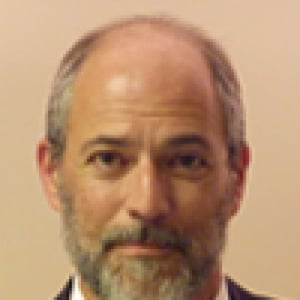
Deputy District Attorney, Philadelphia District Attorney's Office
Ronald Eisenberg heads the Law Division of the Philadelphia District Attorney's Office. The 60 lawyers in the division handle appeals, habeas corpus and civil litigation, and legislative matters. Mr. Eisenberg has appeared at all levels of the state and federal court system, and has argued several cases in the United States Supreme Court.
Mr. Eisenberg is a member of the Pennsylvania Supreme Court Investigating Grand Jury Task Force and the Advisory Committee for the Pennsylvania Suggested Standard Criminal Jury Instructions. He has represented his office on the Pennsylvania Advisory Committee on Wrongful Convictions, was an adjunct professor at Temple University School of Law, teaching legal writing and research, and has served on the Pennsylvania Criminal Rules and Appellate Rules Committees. He is a past president and current board member of the Association of Government Attorneys in Capital Litigation, a national organization of capital prosecutors.
Mr. Eisenberg received his bachelor's degree from Haverford College in 1978 and his law degree from the University of Pennsylvania Law School in 1981.
J.D., University of Pennsylvania
B.A., Haverford College
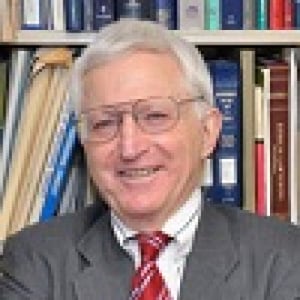
Professor of Law, Yeshiva University Benjamin N. Cardozo School of Law
Professor Brickman teaches Contracts, Professional Responsibility, and Land Use, among other courses. His areas of expertise include legal ethics, contingency fees, mass torts, and asbestos litigation. His writings on these and other subjects are widely cited and he is frequently quoted in the press.

Milton R. Underwood Chair in Free Enterprise, Vanderbilt University Law School
Brian Fitzpatrick is the Milton R. Underwood Chair in Free Enterprise and Professor of Law at Vanderbilt Law School, where his research focuses on class action litigation, federal courts, judicial selection, and constitutional law. He is best known for his empirical studies of class action settlements as well as his book The Conservative Case for Class Actions (University of Chicago Press, 2019). Professor Fitzpatrick joined Vanderbilt's law faculty in 2007 after serving as the John M. Olin Fellow at New York University School of Law. He graduated first in his class from Harvard Law School and went on to clerk for Judge Diarmuid O'Scannlain on the U.S. Court of Appeals for the Ninth Circuit and Justice Antonin Scalia on the U.S. Supreme Court. After his clerkships, Professor Fitzpatrick practiced commercial and appellate litigation for several years at Sidley Austin in Washington, D.C., and served as Special Counsel for Supreme Court Nominations to U.S. Senator John Cornyn. Before earning his law degree, Fitzpatrick graduated summa cum laude with a bachelor's of science in chemical engineering from the University of Notre Dame. He has received the Hall-Hartman Outstanding Professor Award, which recognizes excellence in classroom teaching, for his Civil Procedure and Federal Courts courses.
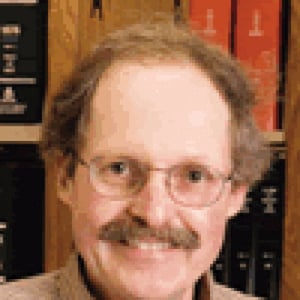
Professor of Law, Western New England College School of Law
Prior to coming to Western New England College in 1980, Professor Miller worked for the National Senior Citizens Law Center, Los Angeles, California, specializing in social security and private pension litigation in the federal courts. Before that, he was an attorney with the U.S. Department of Health, Education, and Welfare. He teaches constitutional law and other public law and litigation related subjects. Professor Miller's primary areas of interest focus on the challenges to the rule of law that have emerged as a result of the attacks of September 11, 2001, and on legal issues that especially affect poor people. He is president of No More Guantanamos, a non-profit advocacy group, and serves on the board of the Rosenberg Fund for Children.
Professor of Law, Yeshiva University Benjamin N. Cardozo School of Law
Professor Brickman teaches Contracts, Professional Responsibility, and Land Use, among other courses. His areas of expertise include legal ethics, contingency fees, mass torts, and asbestos litigation. His writings on these and other subjects are widely cited and he is frequently quoted in the press.
Milton R. Underwood Chair in Free Enterprise, Vanderbilt University Law School
Brian Fitzpatrick is the Milton R. Underwood Chair in Free Enterprise and Professor of Law at Vanderbilt Law School, where his research focuses on class action litigation, federal courts, judicial selection, and constitutional law. He is best known for his empirical studies of class action settlements as well as his book The Conservative Case for Class Actions (University of Chicago Press, 2019). Professor Fitzpatrick joined Vanderbilt's law faculty in 2007 after serving as the John M. Olin Fellow at New York University School of Law. He graduated first in his class from Harvard Law School and went on to clerk for Judge Diarmuid O'Scannlain on the U.S. Court of Appeals for the Ninth Circuit and Justice Antonin Scalia on the U.S. Supreme Court. After his clerkships, Professor Fitzpatrick practiced commercial and appellate litigation for several years at Sidley Austin in Washington, D.C., and served as Special Counsel for Supreme Court Nominations to U.S. Senator John Cornyn. Before earning his law degree, Fitzpatrick graduated summa cum laude with a bachelor's of science in chemical engineering from the University of Notre Dame. He has received the Hall-Hartman Outstanding Professor Award, which recognizes excellence in classroom teaching, for his Civil Procedure and Federal Courts courses.
Professor of Law, Western New England College School of Law
Prior to coming to Western New England College in 1980, Professor Miller worked for the National Senior Citizens Law Center, Los Angeles, California, specializing in social security and private pension litigation in the federal courts. Before that, he was an attorney with the U.S. Department of Health, Education, and Welfare. He teaches constitutional law and other public law and litigation related subjects. Professor Miller's primary areas of interest focus on the challenges to the rule of law that have emerged as a result of the attacks of September 11, 2001, and on legal issues that especially affect poor people. He is president of No More Guantanamos, a non-profit advocacy group, and serves on the board of the Rosenberg Fund for Children.
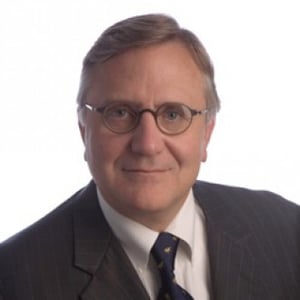
Reed Larson Professor of Labor Law, Ave Maria School of Law and, National Right To Work Legal Defense Foundation
John Raudabaugh is a labor lawyer and former Member of the U.S. National Labor Relations Board. He was a partner in law firms representing management concerning domestic and international labor law matters. Currently, he represents employees seeking relief from union and/or employer unfair labor practices. Mr. Raudabaugh has presented testimony to both Senate and House Committees regarding labor law reform. Professor Raudabaugh teaches Labor Law and a Labor Law Practicum at the Ave Maria School of Law. He is a graduate of the Wharton School of Finance and Commerce and New York State School of Industrial and Labor Relations with B.S. and M.S. degrees in labor economics and a J.D. degree from the University of Virginia Law School of Law.
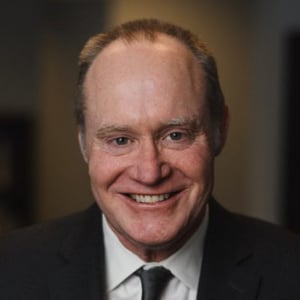
Chief Legal Officer & General Counsel, Americans United for Life
Steven H. Aden serves as Chief Legal Officer & General Counsel at Americans United for Life. Aden joined Americans United for Life in August 2017, overseeing all legal operations of America’s most effective pro-life organization. Aden is a highly experienced litigator, having appeared in court against Planned Parenthood and the abortion industry dozens of times and appointed by the attorneys general of six states to defend prolife laws. Mr. Aden secured court victories that upheld an Arizona law that resulted in six abortion businesses ceasing to offer abortion, applied Missouri’s abortion laws to chemical abortion and upheld the right of Louisiana regulators to shut down dangerous abortion facilities. A prolific author and analyst on sanctity of life issues and constitutional jurisprudence, Aden is admitted to the bars of the District of Columbia, Virginia, and Hawaii (inactive), and is a member of the bars of the U.S. Supreme Court and numerous federal circuit and district courts. He has practiced law since 1990 and earned his J.D. (cum laude) from Georgetown University Law Center and his B.A. from the University of Hawaii.
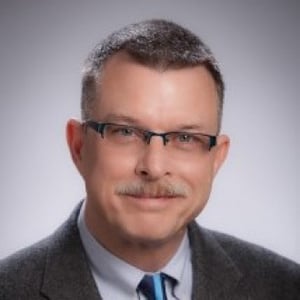
Founder and Senior Director, Institutional Religious Freedom Alliance
Stanley Carlson-Thies is the Founder and Senior Director of the Institutional Religious Freedom Alliance (IRFA), a division of the Center for Public Justice. As part of this role, he convenes the Coalition to Preserve Religious Freedom, a multi-faith alliance of social-service, education, and religious freedom organizations that advocates for the religious freedom of faith-based organizations to Congress and the federal government. In addition he is also a Senior Fellow at the Canadian think tank Cardus.
From 2009-2010 he served on a task force of President Obama’s Advisory Council on Faith-Based and Neighborhood Partnerships, helping to draft recommendations on how to clarify the church-state rules that apply to federal funding of social-service providers, and has consulted with federal departments and several states.
He served with the White House Office of Faith-Based & Community Initiatives from its inception in February 2001 until mid-May 2002. He assisted with writing “Unlevel Playing Field: Barriers to Participation by Faith-Based and Community Organizations in Federal Social Service Programs,” a report released by the White House in August 2001, and “Rallying the Armies of Compassion,” the initial blueprint for President George W. Bush’s faith and community agenda.
Previously, he was Director of Social Policy Studies for CPJ and directed CPJ’s project to track the implementation and impact of the Charitable Choice provision of the 1996 federal welfare reform law. Following his term in the White House, he returned to CPJ as the Director of Faith-based Policy Studies.
He received the William Bentley Ball Life and Religious Liberty Defense Award from the Center for Law and Religious Freedom and the Christian Legal Society in October 2004. He was named as one of 12 advocates who are “reinterpreting God and country” by the National Journal in May 2004. He holds a doctorate in political science from the University of Toronto. His dissertation is on the role of Protestants and Catholics in the development of Dutch politics in the 19th and 20th centuries. Besides the United States, he has lived in Canada, the Netherlands, and Japan, where he was born of missionary parents. He lives in Annapolis, Maryland, with his wife, Christiane. They are the proud parents of Simon.

The Potential Impact on Campaign Finance Regulation of SpeechNow.org v. FEC
Douglas Chalmers, Michael Jablonski
Engage, Volume 11, Issue 2
The decision of the U.S. Court of Appeals for the District of Columbia Circuit in...
State Court Docket Watch Summer 2010
Shaun P. Martin, William L. Stern, H Leviant, Jeremy B. Rosen, Michael Orfield
In an effort to increase dialogue about state court jurisprudence, the Federalist Society presents State...
North Carolina Judicial Candidate Forum
Bob Buckley, Ann Marie Calabria, Rick Elmore, Martha Geer, Jane Gray, Barbara Jackson, Dean R. Poirier, Sanford Steelman, Steven Walker
Piedmont Triad Lawyers Chapter
Candidates for the North Carolina Supreme Court and Court of Appeals answered questions from moderator...
North Carolina Judicial Candidate Forum
Bob Buckley, Ann Marie Calabria, Rick Elmore, Martha Geer, Jane Gray, Barbara Jackson, Dean R. Poirier, Sanford Steelman, Steven Walker
Piedmont Triad Lawyers Chapter
Candidates for the North Carolina Supreme Court and Court of Appeals answered questions from moderator...
Berghuis v. Smith - Post-Decision SCOTUScast
Thomas F. Gede
SCOTUScast 09-08-10 featuring Thomas F. Gede
On March 30, 2010, the Supreme Court announced its decision in Berghuis v. Smith. The...
Holland v. Florida - Post-Decision SCOTUScast
Ronald Eisenberg
SCOTUScast 09-03-10 featuring Ronald Eisenberg
On June 14, 2010, the Supreme Court announced its decision in Holland v. Florida. In...
Do Class Action Lawyers Make Too Much Money?
Lester Brickman, Brian T. Fitzpatrick, Isaac Mass, Bruce K. Miller
Western New England Student Chapter
On September 1, 2010, the Western New England Student Chapter of the Federalist Society hosted...
Do Class Action Lawyers Make Too Much Money?
Lester Brickman, Brian T. Fitzpatrick, Isaac Mass, Bruce K. Miller
Western New England Student Chapter
On September 1, 2010, the Western New England Student Chapter of the Federalist Society hosted...
New Process Steel v. National Labor Relations Board - Post-Decision SCOTUScast
John N. Raudabaugh
SCOTUScast 09-01-10 featuring John N. Raudabaugh
On June 17, 2010, the Supreme Court announced its decision in New Process Steel v....
Catch or Release? The Employment Non-Discrimination Act's Exemption for Religious Organizations
Steven H. Aden, Stanley Carlson-Thies
Engage, Volume 11, Issue 2
The “Employment Non-Discrimination Act” (“ENDA”) currently under consideration in Congress would in effect expand Title...