

Tazewell Taylor Professor of Law and William H. Cabell Research Professor, William & Mary Law School
Jonathan H. Adler joined the William & Mary law faculty as the Tazwell Taylor Professor of Law and William H. Cabell Research Professor in 2025. Prior to joining the faculty, he was the inaugural Johan Verheij Memorial Professor of Law and the founding Director of the Coleman P. Burke Center for Environmental Law at the Case Western Reserve University School of Law.
Professor Adler is the author or editor of seven books, including Climate Liberalism: Perspectives on Liberty, Property and Pollution (Palgrave, 2023), Marijuana Federalism: Uncle Sam and Mary Jane (Brookings Institution Press, 2020), Business and the Roberts Court (Oxford University Press, 2016) and Rebuilding the Ark: New Perspectives on Endangered Species Act Reform (AEI Press, 2011).
His articles have appeared in publications ranging from the Harvard Environmental Law Review and Yale Journal on Regulation to the Wall Street Journal, New York Times, and Washington Post. He has testified before Congress a dozen times, and his work has been cited in the U.S. Supreme Court. A 2024 study identified Professor Adler as the seventh most cited legal academic in administrative and environmental law from 2019 to 2023.
Professor Adler is a contributing editor to Civitas Outlook and a regular contributor to the popular legal blog, The Volokh Conspiracy. A regular commentator on constitutional and regulatory issues, he has appeared on numerous radio and television programs, ranging from the PBS Newshour and National Public Radio to the Fox News Channel and Entertainment Tonight.
Professor Adler is a senior fellow at the Property & Environment Research Center in Bozeman, Montana. In 2018, Professor Adler was elected to membership in the American Law Institute and helped co-found the organization Checks and Balances. In 2024, Professor Adler was appointed a public member of the Administrative Conference of the United States.
Professor Adler clerked for the Honorable David B. Sentelle on the U.S. Court of Appeals for the District of Columbia Circuit.
Max E. Greenberg Professor of Contract Law, New York University School of Law
Professor Clayton Gillette joined the New York University School of Law faculty in 2000. For the prior eight years, he was the Perre Bowen Professor of Law at the University of Virginia School of Law. Professor Gillette began his teaching career at Boston University where he served as the Warren Scholar in Municipal Law and Associate Dean, and has been a visiting professor at the University of Michigan and the University of Virginia as well as at NYU School of Law.
Professor Gillette earned his J.D. from the University of Michigan in 1975 and a B.A. from Amherst College in 1972. After law school, he clerked for Judge J. Edward Lumbard of the United States Court of Appeals for the Second Circuit, and was associated with Cleary, Gottlieb, Steen and Hamilton in New York City.
Gillette's scholarship concentrates on commercial law and local government law. He is the author of casebooks on Local Government Law (with Lynn Baker) and Payment Systems and Credit Instruments (with Alan Schwartz and Robert Scott), and a textbook on Municipal Debt Finance Law (with Robert S. Amdursky). Gillette's numerous articles include studies of long-term commercial contracts, initiatives, relations between localities and their neighbors, privatization of municipal services, and judicial construction of contracts governing homeowners associations. He has also served as the Reporter for the ABA Intersectional Task Force on Initiatives and Referenda and has consulted in litigation ranging from the Agent Orange Products Liability Litigation to the default on municipal bonds by Orange County, California and the Washington Public Power Supply System.
Judge, United States Court of Appeals, District of Columbia Circuit
Judge Katsas was appointed to the D.C. Circuit in December 2017. He graduated from Princeton University and Harvard Law School, where he was an executive editor on the Harvard Law Review. Between 1989 and 1992, he served as a law clerk to Judge Edward Becker on the Third Circuit, to then-Judge Clarence Thomas on the D.C. Circuit, and to Justice Thomas on the Supreme Court. Between 1992 and 2001, he was an associate and then partner in the Washington office of Jones Day, where he specialized in appellate and complex civil litigation. Between 2001 and 2009, he served in many senior positions in the Department of Justice, including as Assistant Attorney General for the Civil Division and as Acting Associate Attorney General. In 2009, he returned to Jones Day. From January to December 2017, he served as Deputy Assistant to the President and Deputy Counsel to the President.
Before joining the bench, Judge Katsas argued more than 75 appeals, including three cases in the Supreme Court, 13 cases in the D.C. Circuit, and cases in every other federal court of appeals. By appointment of the Chief Justice, he served on the Advisory Committee on Appellate Rules from 2013 to 2017. In 2016, he was elected to membership in the American Academy of Appellate Lawyers.

George C. Dix Professor in Constitutional Law, Northwestern University Pritzker School of Law
John O. McGinnis is a graduate of Harvard College and Harvard Law School where he was an editor of the Harvard Law Review. He also has an MA degree from Balliol College, Oxford, in philosophy and theology. Professor McGinnis clerked on the U.S. Court of Appeals for the District of Columbia. From 1987 to 1991, he was deputy assistant attorney general in the Office of Legal Counsel at the Department of Justice. He is the author of Accelerating Democracy: Transforming Government Through Technology (Princeton 2013) and Originalism and the Good Constitution (Harvard 2013) (with M. Rappaport). He is a past winner of the Paul Bator award given by the Federalist Society to an outstanding academic under 40. He has been listed by the United States on the roster of panelists who may be called upon to decide World Trade Organization Disputes.
Carmack Waterhouse Professor of Constitutional Law, Georgetown Law
After graduating from Harvard Law School in 1971, Professor Seidman served as a law clerk for J. Skelly Wright of the D.C. Circuit and U.S. Supreme Court Justice Thurgood Marshall. He then was a staff attorney with the D.C. Public Defender Service until joining the Law Center faculty in 1976. He teaches a variety of courses in the fields of constitutional and criminal law. He is co-author of a constitutional law casebook and the author of many articles concerning criminal justice and constitutional law. His most recent books are Silence and Freedom (Stanford 2007), Our Unsettled Constitution: A New Defense of Constitutionalism and Judicial Review (Yale 2001) and Equal Protection of the Laws (Foundation 2002).
Milton R. Underwood Professor of Law Emeritus and Professor of History Emeritus, Vanderbilt University
James Ely is a renowned legal historian and property rights expert whose career accomplishments were recognized with both the Brigham-Kanner Property Rights Prize and the Owner's Counsel of American Crystal Eagle Award in 2006. He is the author of several books that have received widespread critical acclaim from legal scholars and historians, including The Guardian of Every Other Right: A Constitutional History of Property Rights, The Fuller Court: Justices, Rulings and Legacy in which he examines the work of the Supreme Court between 1888 and 1910, Railroads and American Law in which he systematically explores the way that the rise of the railroad shaped American legal culture, and The Contract Clause: A Constitutional History. He also is the author of numerous articles dealing with the rights of property owners. He served as an editor of both the Oxford Companion to the Supreme Court, and the second edition of the Oxford Guide to Supreme Court Decisions. Professor Ely received the Tennessee History Book Award in 2002 for A History of the Tennessee Supreme Court. Between 1987 and 1999, he served as an associate editor of the American Journal of Legal History. Since Professor Ely joined Vanderbilt faculty in 1972, he has been frequently recognized by students as one of the law school's outstanding teachers.
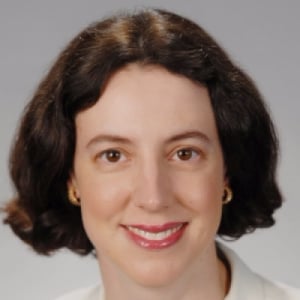
Donald Phillip Rothschild Research Professor, George Washington University Law School
Renée Lettow Lerner is Donald Phillip Rothschild Research Professor of Law at George Washington University Law School.
Professor Lerner works in the fields of U.S. and English legal history, civil and criminal procedure, and comparative law. She advises judges, lawyers, and government officials from the United States and countries in Europe, Latin America, and Asia about the differences between adversarial and nonadversarial legal systems.
She writes extensively about the history of American juries. Her work includes not only scholarly articles, but also online publications intended for a broader audience of legal professionals and the public. In many different settings, she has debated the role of juries with other academics and with lawyers. She has a book forthcoming with Oxford University Press in the Very Short Introduction Series entitled “The Jury.” She is also working on a book about the American civil jury, from the colonial period to the present.
She is the author, with John Langbein and Bruce Smith, of the book History of the Common Law: The Development of Anglo-American Legal Institutions (2009).
Her recent writings include a book review of Amalia D. Kessler’s Inventing American Exceptionalism: The Origins of American Adversarial Legal Culture, 1800-1877, 67 J. Legal Ed. 888 (2018); “How the Creation of Appellate Courts in England and the United States Limited Judicial Comment on Evidence to the Jury,” 40 Journal of the Legal Profession 215 (2016); “The Troublesome Inheritance of Americans in Magna Carta and Trial by Jury,” in Magna Carta and its Modern Legacy 77-98 (Robert Hazell and James Melton eds., Cambridge University Press 2015); and “The Failure of Originalism in Preserving Constitutional Rights to Civil Jury Trial,” 22 William & Mary Bill of Rights Journal 811 (2014).
Professor Lerner received an A.B. summa cum laude in history from Princeton University. She was a Rhodes Scholar at Oxford University, where she studied English legal history. At Yale Law School, she was Articles Editor of the Yale Law Journal. She served as a law clerk to Justice Anthony M. Kennedy of the U.S. Supreme Court and to Judge Stephen F. Williams of the U.S. Court of Appeals for the District of Columbia Circuit. From 2003 to 2005, she served as Deputy Assistant Attorney General in the Office of Legal Counsel at the U.S. Department of Justice.
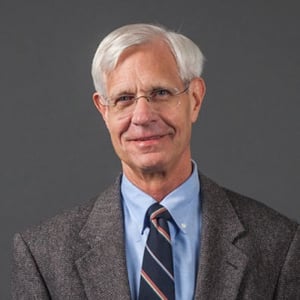
Distinguished University Professor, Antonin Scalia Law School, George Mason University
University Professor Nelson Lund is the author of Rousseau’s Rejuvenation of Political Philosophy: A New Introduction. He has also written widely in the field of constitutional law, including articles on constitutional interpretation, federalism, separation of powers, the Second Amendment, the Commerce Clause, the Speech or Debate Clause, the Equal Protection Clause, and the Uniformity Clause. In addition, he has published articles in the fields of employment discrimination and civil rights, the legal regulation of medical ethics, and the application of economic analysis to legal institutions and legal ethics.
Professor Lund graduated from St. John's College in Annapolis, Maryland, after which he received an MA in philosophy from the Catholic University of America and a PhD in political science from Harvard University. He left the faculty of the University of Chicago to attend its law school, where he served as executive editor of the University of Chicago Law Review and chapter chairman of the Federalist Society for Law and Public Policy Studies. After law school, he held positions at the United States Department of Justice in the Office of the Solicitor General and the Office of Legal Counsel. He also served as a law clerk to the Honorable Patrick E. Higginbotham of the United States Court of Appeals for the Fifth Circuit and to the Honorable Sandra Day O'Connor of the United States Supreme Court. Following his clerkship with Justice O'Connor, Professor Lund served in the White House as associate counsel to the president from 1989 to 1992.
Since joining the faculty at George Mason University's Antonin Scalia Law School, Professor Lund has taught Constitutional Law, Legislation, Federal Election Law, Employment Discrimination, State and Local Government, and seminars on the Second Amendment and on a variety of topics in Jurisprudence.
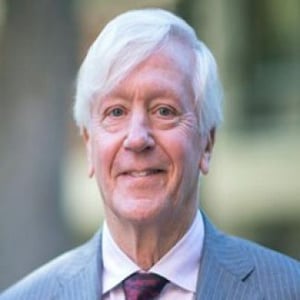
David and Mary Harrison Distinguished Professor of Law, University of Virginia School of Law
G. Edward White joined the Virginia law faculty in 1972 after a clerkship with Chief Justice Earl Warren of the Supreme Court of the United States and a year as visiting scholar at the American Bar Foundation. He was appointed John B. Minor Professor of Law and History in 1987, and held that chair until 2003, when he became David and Mary Harrison Distinguished Professor of Law. In 1992, he was appointed to a University Professorship, which he held until 2003. From 1990 until 1992 and from 2001-03, he was the Sullivan & Cromwell Research Professor; from 1994-97 the E. James Kelly Research Professor; and from 1999-2001 the Class of 1963 Research Professor. He has held visiting appointments at New York Law School, William & Mary School of Law, Brooklyn Law School, Arizona College of Law, the London School of Economics and Political Science, and Harvard Law School. He has been a Guggenheim Fellow, and twice a senior fellow of the National Endowment for the Humanities. He is a fellow of the American Academy of Arts & Sciences, a fellow of the Society of American Historians, and a member of the American Law Institute.He received the Roger and Madeleine Traynor Faculty Achievement Award in 2008.
White's 14 published books have won numerous honors and awards. These include final listing for the Pulitzer Prize in history, the Silver Gavel Award from the American Bar Association, the James Willard Hurst Prize from the Law & Society Association, the Littleton-Griswold Prize from the American Historical Association, the Scribes Award and the Association of American Law Schools' Triennial Coif Award. White's books have garnered 15 such honors and awards since 1976.
White was editor of the Studies in Legal History series for the North Carolina Press from 1980-85, and advisor on law manuscripts for Oxford University Press from 1986-96. He was on the editorial board of the Virginia Quarterly Review from 1980-2002. He has served on the Commission for Undergraduate Education in Law and the Humanities, and has taught summer humanities seminars for lawyers and judges under the auspices of the National Endowment for the Humanities.
White has delivered several endowed lectures, including the inaugural John Marshall Lecture, sponsored by the Boston Bar Association; the inaugural Jerome Hall Lecture at Hastings College of Law; the Swinford Lecture, sponsored by the University of Kentucky School of Law and the Kentucky Bar Association; the Keck Lecture at Amherst College, the Rosenthal Lectures at Northwestern University School of Law; the Neesima Lectures at Doshisha University, Japan; the Fulton Lecture at the University of Chicago School of Law and the Knowlton Distinguished Lecture at the University of South Carolina School of Law. His most recent lecture was the 2010 Hendricks Law and History Lecture at Washington & Lee Law School.
White's 1996 book, Creating the National Pastime: Baseball Transforms Itself, 1903-1953, reflects his life-long participation and interest in athletics. He lettered in four sports in college, formerly coached the Charlottesville High School girls soccer team, and has won a number of state- and citywide tournaments in doubles squash.
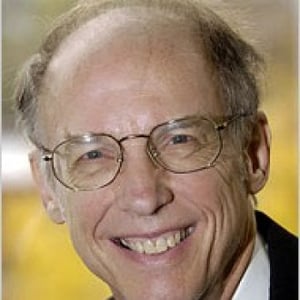
United States Court of Appeals, Fourth Circuit
James Harvie Wilkinson III is an Article III federal judge on the United States Court of Appeals for the Fourth Circuit. He joined the Court in 1984 after being nominated by President Ronald Reagan.
Born in New York City, New York, Wilkinson graduated from Yale University with his Bachelor's degree in 1967. Wilkinson served in the United States Army from 1968 to 1969 and received his Juris Doctor degree from the University of Virginia School of Law in 1972.
On the recommendation of Virginia U.S. Senator John Warner, Wilkinson was nominated to the United States Court of Appeals for the Fourth Circuit by President Ronald Reagan on January 30, 1984 to a seat vacated by John Butzner, Jr.,. Wilkinson was confirmed by the Senate on August 9, 1984 on a Senate vote and received commission on August 13, 1984. Wilkinson served as the Chief Judge of the Court from 1996 to 2003.
Milton R. Underwood Professor of Law Emeritus and Professor of History Emeritus, Vanderbilt University
James Ely is a renowned legal historian and property rights expert whose career accomplishments were recognized with both the Brigham-Kanner Property Rights Prize and the Owner's Counsel of American Crystal Eagle Award in 2006. He is the author of several books that have received widespread critical acclaim from legal scholars and historians, including The Guardian of Every Other Right: A Constitutional History of Property Rights, The Fuller Court: Justices, Rulings and Legacy in which he examines the work of the Supreme Court between 1888 and 1910, Railroads and American Law in which he systematically explores the way that the rise of the railroad shaped American legal culture, and The Contract Clause: A Constitutional History. He also is the author of numerous articles dealing with the rights of property owners. He served as an editor of both the Oxford Companion to the Supreme Court, and the second edition of the Oxford Guide to Supreme Court Decisions. Professor Ely received the Tennessee History Book Award in 2002 for A History of the Tennessee Supreme Court. Between 1987 and 1999, he served as an associate editor of the American Journal of Legal History. Since Professor Ely joined Vanderbilt faculty in 1972, he has been frequently recognized by students as one of the law school's outstanding teachers.
Donald Phillip Rothschild Research Professor, George Washington University Law School
Renée Lettow Lerner is Donald Phillip Rothschild Research Professor of Law at George Washington University Law School.
Professor Lerner works in the fields of U.S. and English legal history, civil and criminal procedure, and comparative law. She advises judges, lawyers, and government officials from the United States and countries in Europe, Latin America, and Asia about the differences between adversarial and nonadversarial legal systems.
She writes extensively about the history of American juries. Her work includes not only scholarly articles, but also online publications intended for a broader audience of legal professionals and the public. In many different settings, she has debated the role of juries with other academics and with lawyers. She has a book forthcoming with Oxford University Press in the Very Short Introduction Series entitled “The Jury.” She is also working on a book about the American civil jury, from the colonial period to the present.
She is the author, with John Langbein and Bruce Smith, of the book History of the Common Law: The Development of Anglo-American Legal Institutions (2009).
Her recent writings include a book review of Amalia D. Kessler’s Inventing American Exceptionalism: The Origins of American Adversarial Legal Culture, 1800-1877, 67 J. Legal Ed. 888 (2018); “How the Creation of Appellate Courts in England and the United States Limited Judicial Comment on Evidence to the Jury,” 40 Journal of the Legal Profession 215 (2016); “The Troublesome Inheritance of Americans in Magna Carta and Trial by Jury,” in Magna Carta and its Modern Legacy 77-98 (Robert Hazell and James Melton eds., Cambridge University Press 2015); and “The Failure of Originalism in Preserving Constitutional Rights to Civil Jury Trial,” 22 William & Mary Bill of Rights Journal 811 (2014).
Professor Lerner received an A.B. summa cum laude in history from Princeton University. She was a Rhodes Scholar at Oxford University, where she studied English legal history. At Yale Law School, she was Articles Editor of the Yale Law Journal. She served as a law clerk to Justice Anthony M. Kennedy of the U.S. Supreme Court and to Judge Stephen F. Williams of the U.S. Court of Appeals for the District of Columbia Circuit. From 2003 to 2005, she served as Deputy Assistant Attorney General in the Office of Legal Counsel at the U.S. Department of Justice.
Distinguished University Professor, Antonin Scalia Law School, George Mason University
University Professor Nelson Lund is the author of Rousseau’s Rejuvenation of Political Philosophy: A New Introduction. He has also written widely in the field of constitutional law, including articles on constitutional interpretation, federalism, separation of powers, the Second Amendment, the Commerce Clause, the Speech or Debate Clause, the Equal Protection Clause, and the Uniformity Clause. In addition, he has published articles in the fields of employment discrimination and civil rights, the legal regulation of medical ethics, and the application of economic analysis to legal institutions and legal ethics.
Professor Lund graduated from St. John's College in Annapolis, Maryland, after which he received an MA in philosophy from the Catholic University of America and a PhD in political science from Harvard University. He left the faculty of the University of Chicago to attend its law school, where he served as executive editor of the University of Chicago Law Review and chapter chairman of the Federalist Society for Law and Public Policy Studies. After law school, he held positions at the United States Department of Justice in the Office of the Solicitor General and the Office of Legal Counsel. He also served as a law clerk to the Honorable Patrick E. Higginbotham of the United States Court of Appeals for the Fifth Circuit and to the Honorable Sandra Day O'Connor of the United States Supreme Court. Following his clerkship with Justice O'Connor, Professor Lund served in the White House as associate counsel to the president from 1989 to 1992.
Since joining the faculty at George Mason University's Antonin Scalia Law School, Professor Lund has taught Constitutional Law, Legislation, Federal Election Law, Employment Discrimination, State and Local Government, and seminars on the Second Amendment and on a variety of topics in Jurisprudence.
David and Mary Harrison Distinguished Professor of Law, University of Virginia School of Law
G. Edward White joined the Virginia law faculty in 1972 after a clerkship with Chief Justice Earl Warren of the Supreme Court of the United States and a year as visiting scholar at the American Bar Foundation. He was appointed John B. Minor Professor of Law and History in 1987, and held that chair until 2003, when he became David and Mary Harrison Distinguished Professor of Law. In 1992, he was appointed to a University Professorship, which he held until 2003. From 1990 until 1992 and from 2001-03, he was the Sullivan & Cromwell Research Professor; from 1994-97 the E. James Kelly Research Professor; and from 1999-2001 the Class of 1963 Research Professor. He has held visiting appointments at New York Law School, William & Mary School of Law, Brooklyn Law School, Arizona College of Law, the London School of Economics and Political Science, and Harvard Law School. He has been a Guggenheim Fellow, and twice a senior fellow of the National Endowment for the Humanities. He is a fellow of the American Academy of Arts & Sciences, a fellow of the Society of American Historians, and a member of the American Law Institute.He received the Roger and Madeleine Traynor Faculty Achievement Award in 2008.
White's 14 published books have won numerous honors and awards. These include final listing for the Pulitzer Prize in history, the Silver Gavel Award from the American Bar Association, the James Willard Hurst Prize from the Law & Society Association, the Littleton-Griswold Prize from the American Historical Association, the Scribes Award and the Association of American Law Schools' Triennial Coif Award. White's books have garnered 15 such honors and awards since 1976.
White was editor of the Studies in Legal History series for the North Carolina Press from 1980-85, and advisor on law manuscripts for Oxford University Press from 1986-96. He was on the editorial board of the Virginia Quarterly Review from 1980-2002. He has served on the Commission for Undergraduate Education in Law and the Humanities, and has taught summer humanities seminars for lawyers and judges under the auspices of the National Endowment for the Humanities.
White has delivered several endowed lectures, including the inaugural John Marshall Lecture, sponsored by the Boston Bar Association; the inaugural Jerome Hall Lecture at Hastings College of Law; the Swinford Lecture, sponsored by the University of Kentucky School of Law and the Kentucky Bar Association; the Keck Lecture at Amherst College, the Rosenthal Lectures at Northwestern University School of Law; the Neesima Lectures at Doshisha University, Japan; the Fulton Lecture at the University of Chicago School of Law and the Knowlton Distinguished Lecture at the University of South Carolina School of Law. His most recent lecture was the 2010 Hendricks Law and History Lecture at Washington & Lee Law School.
White's 1996 book, Creating the National Pastime: Baseball Transforms Itself, 1903-1953, reflects his life-long participation and interest in athletics. He lettered in four sports in college, formerly coached the Charlottesville High School girls soccer team, and has won a number of state- and citywide tournaments in doubles squash.
United States Court of Appeals, Fourth Circuit
James Harvie Wilkinson III is an Article III federal judge on the United States Court of Appeals for the Fourth Circuit. He joined the Court in 1984 after being nominated by President Ronald Reagan.
Born in New York City, New York, Wilkinson graduated from Yale University with his Bachelor's degree in 1967. Wilkinson served in the United States Army from 1968 to 1969 and received his Juris Doctor degree from the University of Virginia School of Law in 1972.
On the recommendation of Virginia U.S. Senator John Warner, Wilkinson was nominated to the United States Court of Appeals for the Fourth Circuit by President Ronald Reagan on January 30, 1984 to a seat vacated by John Butzner, Jr.,. Wilkinson was confirmed by the Senate on August 9, 1984 on a Senate vote and received commission on August 13, 1984. Wilkinson served as the Chief Judge of the Court from 1996 to 2003.

Patrick Hotung Professor of Constitutional Law, Georgetown University Law Center
Randy Barnett is the Patrick Hotung Professor of Constitutional Law at Georgetown University Law Center. He has argued before the United States Supreme Court, tried murder cases to juries as a prosecutor in Chicago, and appeared as a prosecutor in the feature film Inalienable. He is the author of numerous books, including Restoring the Lost Constitution, The Structure of Liberty, Our Republican Constitution, and The Original Meaning of the Fourteenth Amendment. He has published two memoirs, A Life for Liberty: The Making of an American Originalist, and Felony Review: Tales of True Crime and Corruption in Chicago. He is currently working on a new book, Freedom and Flourishing: Libertarianism for the Real World.
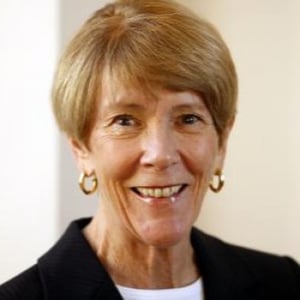
David and Mary Harrison Distinguished Professor of Law Emeritus, University of Virginia School of Law
Lillian BeVier taught constitutional law (with special emphasis on First Amendment issues), intellectual property (trademark, copyright), real property and torts from 1973-2010 at the Law School, and now teaches a January Term course on judicial philosophy.
At Stanford Law School, BeVier was revising editor for the Stanford Law Review and a member of the Order of the Coif. Before coming to Virginia, she was associate professor of law at the University of Santa Clara Law School; practiced law with Spaeth Blase Valentine & Klein in Palo Alto, Calif.; served as research associate to Professor William F. Baxter at Stanford University Law School, working on the FAA-ABA study of the legal aspects of airport noise and the sonic boom; and was assistant to the general secretary and assistant staff legal counsel for Stanford University.
BeVier received the University of Virginia Alumni Association Distinguished Professor Award in 2006. The Raven Society elected her to membership in 1993 and honored her with the faculty award in 2010. She delivered the Henry Miller Memorial Lecture at Georgia State Law School in 2005, the Coen Memorial Lecture at the University of Colorado Law School in 2000, and the David C. Baum Lecture on Civil Rights and Civil Liberties at the University of Illinois Law School in 1996. In 1999, at the invitation of the Supreme Court Historical Society, she spoke to the Society on Free Expression in the Warren and Burger Courts. Suffolk University awarded her an honorary S.J.D. degree in 1998. In the fall of 2003, she was a visiting scholar at the National Constitution Center in Philadelphia.
Having been nominated by President Bush and confirmed by the Senate in 2003, she served as vice-chair of the Board of Directors of the Legal Services Corporation until 2009. She serves on the national Board of Visitors of the Federalist Society. Within the Charlottesville community, BeVier has served as chair of the Board of Trustees of St. Anne’s-Belfield School and of the Martha Jefferson Hospital. She is currently chair of the board of the Martha Jefferson Health Services Corporation and of Piedmont CASA (Court-Appointed Special Advocates).
Judge, United States Court of Appeals, Second Circuit
Judge Livingston was appointed United States Circuit Judge for the Second Circuit on May 17, 2007 and entered on duty June 1, 2007. Prior to her appointment she was the Paul J. Kellner Professor of Law at Columbia Law School, where she also served as Vice Dean from 2005 to 2006. Judge Livingston joined the Columbia faculty in 1994. She continues to serve as a member of that faculty as the Paul J. Kellner Professor.
Judge Livingston received her B.A., magna cum laude, in 1980 from Princeton University, where she was elected to Phi Beta Kappa. She received her J.D., magna cum laude, in 1984 from Harvard Law School, where she was an editor on the Harvard Law Review. Following law school, she served as a law clerk to Judge J. Edward Lumbard of the United States Court of Appeals for the Second Circuit.
Judge Livingston was an Assistant United States Attorney in the Southern District of New York from 1986 to 1991 and she served as a Deputy Chief of Appeals in the Criminal Division from 1990 to 1991. She was an associate with the New York law firm of Paul, Weiss, Rifkind, Wharton & Garrison from 1985 to 1986 and again from 1991 to 1992, when she elected to pursue an academic career. Judge Livingston was a member of the University of Michigan's Law School faculty from 1992 until 1994.
Judge Livingston is a co-author of the casebook, Comprehensive Criminal Procedure, and has published numerous academic articles on legal topics. She has taught courses in evidence, criminal law and procedure, and national security and terrorism. From 1994 to 2003, Judge Livingston was a Commissioner on New York City's Civilian Complaint Review Board.
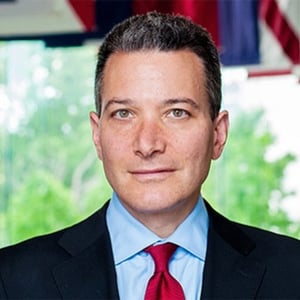
Senior Fellow, FIRE and CEO Emeritus, National Constitution Center
Jeffrey Rosen is a senior FIRE fellow as well as the host of “The Blessings of Liberty” podcast, presented by FIRE. He is also the CEO emeritus of the National Constitution Center, a professor of law at the George Washington University Law School, and a contributing editor of The Atlantic. He was previously the legal affairs editor of The New Republic and a staff writer for The New Yorker.
Rosen is the author of the New York Times bestsellers The Pursuit of Happiness and Conversations with RBG. His new book is The Pursuit of Liberty: How Hamilton vs. Jefferson Ignited the Lasting Battle Over Power in America.
Rosen is a graduate of Harvard College; Oxford University, where he was a Marshall Scholar; and Yale Law School. He is an elected member of the American Philosophical Society and the American Law Institute. In 2024, the French government recognized him as a Chevalier in the Ordre des Arts et des Lettres.
Patrick Hotung Professor of Constitutional Law, Georgetown University Law Center
Randy Barnett is the Patrick Hotung Professor of Constitutional Law at Georgetown University Law Center. He has argued before the United States Supreme Court, tried murder cases to juries as a prosecutor in Chicago, and appeared as a prosecutor in the feature film Inalienable. He is the author of numerous books, including Restoring the Lost Constitution, The Structure of Liberty, Our Republican Constitution, and The Original Meaning of the Fourteenth Amendment. He has published two memoirs, A Life for Liberty: The Making of an American Originalist, and Felony Review: Tales of True Crime and Corruption in Chicago. He is currently working on a new book, Freedom and Flourishing: Libertarianism for the Real World.
David and Mary Harrison Distinguished Professor of Law Emeritus, University of Virginia School of Law
Lillian BeVier taught constitutional law (with special emphasis on First Amendment issues), intellectual property (trademark, copyright), real property and torts from 1973-2010 at the Law School, and now teaches a January Term course on judicial philosophy.
At Stanford Law School, BeVier was revising editor for the Stanford Law Review and a member of the Order of the Coif. Before coming to Virginia, she was associate professor of law at the University of Santa Clara Law School; practiced law with Spaeth Blase Valentine & Klein in Palo Alto, Calif.; served as research associate to Professor William F. Baxter at Stanford University Law School, working on the FAA-ABA study of the legal aspects of airport noise and the sonic boom; and was assistant to the general secretary and assistant staff legal counsel for Stanford University.
BeVier received the University of Virginia Alumni Association Distinguished Professor Award in 2006. The Raven Society elected her to membership in 1993 and honored her with the faculty award in 2010. She delivered the Henry Miller Memorial Lecture at Georgia State Law School in 2005, the Coen Memorial Lecture at the University of Colorado Law School in 2000, and the David C. Baum Lecture on Civil Rights and Civil Liberties at the University of Illinois Law School in 1996. In 1999, at the invitation of the Supreme Court Historical Society, she spoke to the Society on Free Expression in the Warren and Burger Courts. Suffolk University awarded her an honorary S.J.D. degree in 1998. In the fall of 2003, she was a visiting scholar at the National Constitution Center in Philadelphia.
Having been nominated by President Bush and confirmed by the Senate in 2003, she served as vice-chair of the Board of Directors of the Legal Services Corporation until 2009. She serves on the national Board of Visitors of the Federalist Society. Within the Charlottesville community, BeVier has served as chair of the Board of Trustees of St. Anne’s-Belfield School and of the Martha Jefferson Hospital. She is currently chair of the board of the Martha Jefferson Health Services Corporation and of Piedmont CASA (Court-Appointed Special Advocates).
Judge, United States Court of Appeals, Second Circuit
Judge Livingston was appointed United States Circuit Judge for the Second Circuit on May 17, 2007 and entered on duty June 1, 2007. Prior to her appointment she was the Paul J. Kellner Professor of Law at Columbia Law School, where she also served as Vice Dean from 2005 to 2006. Judge Livingston joined the Columbia faculty in 1994. She continues to serve as a member of that faculty as the Paul J. Kellner Professor.
Judge Livingston received her B.A., magna cum laude, in 1980 from Princeton University, where she was elected to Phi Beta Kappa. She received her J.D., magna cum laude, in 1984 from Harvard Law School, where she was an editor on the Harvard Law Review. Following law school, she served as a law clerk to Judge J. Edward Lumbard of the United States Court of Appeals for the Second Circuit.
Judge Livingston was an Assistant United States Attorney in the Southern District of New York from 1986 to 1991 and she served as a Deputy Chief of Appeals in the Criminal Division from 1990 to 1991. She was an associate with the New York law firm of Paul, Weiss, Rifkind, Wharton & Garrison from 1985 to 1986 and again from 1991 to 1992, when she elected to pursue an academic career. Judge Livingston was a member of the University of Michigan's Law School faculty from 1992 until 1994.
Judge Livingston is a co-author of the casebook, Comprehensive Criminal Procedure, and has published numerous academic articles on legal topics. She has taught courses in evidence, criminal law and procedure, and national security and terrorism. From 1994 to 2003, Judge Livingston was a Commissioner on New York City's Civilian Complaint Review Board.
Senior Fellow, FIRE and CEO Emeritus, National Constitution Center
Jeffrey Rosen is a senior FIRE fellow as well as the host of “The Blessings of Liberty” podcast, presented by FIRE. He is also the CEO emeritus of the National Constitution Center, a professor of law at the George Washington University Law School, and a contributing editor of The Atlantic. He was previously the legal affairs editor of The New Republic and a staff writer for The New Yorker.
Rosen is the author of the New York Times bestsellers The Pursuit of Happiness and Conversations with RBG. His new book is The Pursuit of Liberty: How Hamilton vs. Jefferson Ignited the Lasting Battle Over Power in America.
Rosen is a graduate of Harvard College; Oxford University, where he was a Marshall Scholar; and Yale Law School. He is an elected member of the American Philosophical Society and the American Law Institute. In 2024, the French government recognized him as a Chevalier in the Ordre des Arts et des Lettres.
Senior Partner, Grefe & Sidney PLC
Guy R. Cook is a Des Moines, Iowa, native. He has been practicing law more than 25 years. He is a board certified trial lawyer by the National Board of Trial Advocacy. Guy has served as counsel in more than 1000 litigated matters and has tried more than 200 jury trials. He is one of only 20 Iowa attorneys to be inducted into the Million Dollar Advocates Forum for verdicts and settlements in excess of one million dollars. Guy is recognized in both The Best Lawyers in America publication and the list of Iowa Super Lawyers.
Guy has extensive and wide-ranging courtroom experience. He has successfully defended major business litigation, obtained million dollar jury verdicts, and successfully defended significant federal criminal cases. He has tried complex civil and criminal cases throughout the state of Iowa, including wrongful death, serious personal injury, products liability, securities fraud, medical malpractice, semi truck collisions, insurance fraud, sexual assault, false arrest and breach of contract claims.
Guy is a graduate of the University of Iowa and Drake University Law School. He worked his way through school as a union ironworker, campus security officer, and law library assistant. While in school Guy was vice president of the Liberal Arts Student Association, resident advisor for Acacia fraternity, and worked as a legislative intern in the Iowa General Assembly. During law school he was a staff writer and researcher for the Drake Law School Legal Research Service and a prosecutor intern in the Polk County Attorney's Office.
Upon graduation from Law School, Guy served as a judicial law clerk for Justice J.L. Larson of the Iowa Supreme Court, assisting Justice Larson in researching and drafting legal opinions of the Iowa Supreme Court.
In 1983, Guy was appointed Assistant United States Attorney for the Southern District of Iowa. As a federal prosecutor, Guy tried a wide range of criminal cases, including embezzlement, bank robbery, tax fraud, murder for hire, obstruction of justice, narcotic offenses, bank fraud, and kidnapping. Among the cases he prosecuted were the largest insurance fraud in Iowa history, the then largest drug case in Iowa history, and the largest tax evasion case in Iowa history. Guy received written commendations from FBI Directors William Webster and William Sessions. He has also received commendations for his trial work in major criminal cases by the District Director of the IRS and the Resident Agent of the U.S. Secret Service.
In 1987, Guy joined Grefe & Sidney, P.L.C. as a trial attorney. He is a senior partner practicing exclusively in the field of litigation. Guy's extensive courtroom work has taken him to courts across the state of Iowa. He has also appeared in federal courts in Iowa, Nebraska, Minnesota, Missouri and Illinois. He has been involved in nearly all types of litigation.
In addition to his work as a trial lawyer, Guy is past president of the Polk County Bar Association, the largest metropolitan bar in the state of Iowa representing more than one-fourth of all the lawyers in the state. Guy presently serves as a Board of Governor of the Iowa State Bar Association.
Guy was elected to serve as commissioner on the Iowa State Judicial Nominating Commission. He has also served as an appointed member of the Merit Selection Panel for selection of U.S. Magistrate Judges for the U.S. District Court for the Southern District of Iowa. Guy was appointed by the Chief Justice of the Iowa Supreme Court to serve as a member of the Iowa Supreme Court Grievance Commission.
Guy is a member of the American Board of Trial Advocates and has served as membership director for the Iowa chapter. Guy is also a fellow of the Iowa Academy of Trial Lawyers, an invitation only organization, limited to the top 250 trial attorneys in the State of Iowa. He has also been inducted into the Society of Outstanding Lawyers of America and is a certified member of the American College of Master Advocates and Barristers, an invitation only group requiring more than 75 jury trials. He has also been recognized repeatedly as a "leading individual" in litigation in Iowa by Chambers and Partners, a world wide legal publication. Guy has been a guest speaker and lecturer on a number of litigation topics throughout Iowa.
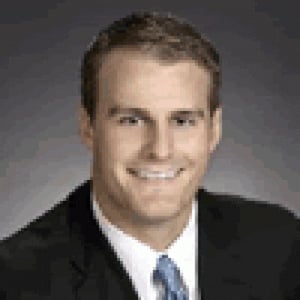
Lt. Governor, State of Iowa
Adam C. Gregg is an associate attorney with BrownWinick. Adam is engaged in the general practice of law, including but not limited to the areas of governmental relations, litigation,agricultural law, environmental law, administrative law andemployment law.
Adam brings extensive political experience to BrownWinick's lobbying practice group. He has been involved in a number of state and federal political campaigns, including work for the 2004 campaign of U.S. Senator John Thune and managing the Iowa Senate campaign of Senator Larry Noble. While studying abroad in London, Adam served as a legislative assistant and campaign staff to Cheryl Gillan, member of the United Kingdom Parliament. As a student, Adam also completed internships in Washington with the U.S. Department of Defense and U.S. Congressman Steve King. Adam has considerable experience in campaign finance and election law, having work experience with the Iowa Ethics and Campaign Disclosure Board and having served as a member of the Executive Committee of the Free Speech and Election Law Practice Group of the national Federalist Society. He has also conducted significant academic research in the area of election law.
Adam graduated, summa cum laude, from Central College in 2006, receiving his B.A. in Political Science and History. While at Central College, Adam was twice honored as the school's top political science student. Adam received his J.D. in 2009, with high honors, from Drake University. At Drake Law School, Adam was a recipient of the Dwight D. Opperman Scholarship. He was also chosen by the faculty to receive the William and Ellen Cooney Hoye Award, given annually to the graduating student who "demonstrates the greatest promise as an advocate, a public servant and practitioner," and who "has demonstrated not only academic promise, but also leadership ability, the speaking and writing skills of an effective advocate, and a commitment to public service and Drake Law School." Adam was chosen as an Iowa Supreme Court Scholar and in that capacity conducted legal research in the area of election law with Justice Mark S. Cady. Additionally, Adam clerked for U.S. Magistrate Judge Celeste F. Bremer through Drake's Honors Judicial Internship program.
Adam also devotes his time to community service and volunteer activities. In March 2008, he organized a group of law students to volunteer with the Pro Bono Project in New Orleans, where he worked primarily on legal issues faced by the homeless. Adam was a founding member and currently serves as Vice President of the Iowa Federalist Society. He also volunteers his time as a member of the Committee on Accountable Government of the Iowa Taxpayers Association.
Adam is a member of the Polk County and Iowa State Bar Associations, and he was admitted to the Iowa bar in 2009.
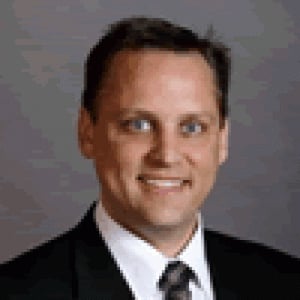
Iowa House of Representatives and Partner, Whitaker Hagenow GBMG
State Representative Chris Hagenow is a founding partner of Whitaker Hagenow GBMG, working in the areas of litigation, trusts and estates, corporations, nonprofit organizations and real estate. Chris is serving his second term in the Iowa Legislature, re-elected in November 2010. Chris represents the west suburbs of the greater Des Moines area, in particular the communities of West Des Moines, Clive and Windsor Heights.
Chris is a sixth-generation Iowan, raised in Cedar Falls. Chris graduated from Northern University High School and went on to receive his BA Magna Cum Laude from the University of Northern Iowa in 1994. He earned his JD from the University of Iowa College of Law in 1997 and is a member of the Iowa State Bar Association. Chris has practiced law in both Waterloo and Des Moines, with experience in criminal defense, real estate, trusts and estates and civil litigation.
In the Iowa House, Chris is the Chairman of the House Committee on Government Oversight. In addition to his role on Government Oversight, Chris also serves on the House committees for Appropriations, Judiciary and Public Safety. He is a member of the Iowa State Bar Association, the American Legislative Exchange Council (ALEC), and also serves on ALEC’s Telecommunications and Information Technology Task Force. Chris sits on the Steering Committee for the Iowa Federalist Society. He is also a member of the Windsor Heights Lions’ Club and the Iowa Prayer Breakfast Committee.
Chris lives in Windsor Heights with his wife Amanda and their sons Owen and Noah. The Hagenow family worships at Westkirk Presbyterian Church in Urbandale.
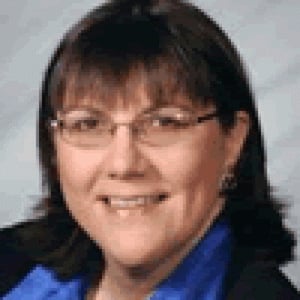
News Director, Radio Iowa
Covering politicians was apparently Kay’s destiny from day one. She was born on election day. Her parents were relieved their bundle of joy was “okay” considering the newborn’s mom was 45 years old, so they named her “O. Kay.” She grew up on the family farm near Lenox, Iowa, and paraded cattle in the show ring during her teenage years. (Kay still has the belt buckle and the 4-H badge to prove it.)
During her years at Iowa State University, Kay served as a statehouse correspondent for WOI-AM, the NPR affiliate in Ames. Between her freshman and sophomore years, she did a three-month, summertime “tour of duty” as the managing editor of the weekly newspaper in her hometown.
In 1987, Kay became one of the three founding members of the Radio Iowa network newsroom. In 1994, she became the network’s news director. You may recognize Kay’s mug from her Sunday television appearances. She’s a featured reporter and commentator on Iowa Public Television’s “Iowa Press.” Kay was the 2002 recipient of the Shelley Award.
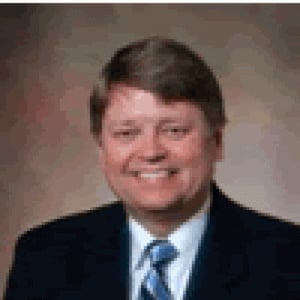
Iowa House of Representatives and Partner, Swaim Law Firm
Kurt Swaim is serving his fourth term in the Iowa House. He is Chair of the Judiciary Committee and also serves on the Economic Growth, Government Oversight, and Appropriations Committees.
Kurt was born and raised in Davis County. He is the son of Basil and Betty Swaim. Basil was a rural mail carrier, and Betty worked as a teacher’s aide when not working in the home.
Kurt graduated from Davis County High School before attending Iowa Wesleyan. After graduating with a degree in economics and business administration, he went to the University of Iowa Law School. He was a member of its Order of the Coif. Kurt’s first job was as an associate attorney with Lundy, Butler, Wilson & Hall in Eldora from 1975-1978. He then served as the Senior Staff Attorney in the Northeast Regional Office of Legal Services Corporation of Iowa in Dubuque from 1978-1981.
Currently, Kurt is a partner in a three-person law firm in Bloomfield with his two sons, Justin and Joshua. In the past, Kurt served as the Davis County Attorney for thirteen years.
Kurt and his wife, Julie, have four children and five grandchildren. Julie works in the law office. Both are active members of the Bloomfield United Methodist Church. Kurt is a past chair of both the church’s administrative board and finance committee. He has also served as Lay Leader and is currently the Lay Representative to the Annual Conference. He has also been active in the Lions Club and the Masons in the past. He served as both president and treasurer of the Lions Club.
Kurt ran for the Statehouse because he believes that government should look beyond its next election cycle to develop long range solutions to the challenges facing the people of Iowa. He believes rural Iowa offers a great quality of life. He wants to work hard to see that rural Iowa is not left out as opportunities are expanded for all Iowans. This includes ensuring that local schools and county governments receive adequate authority from the state so they can be both economically efficient, and accessible to all citizens.
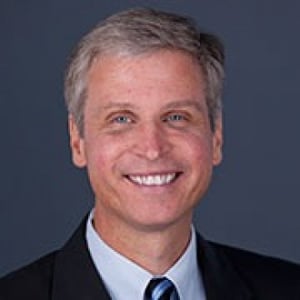
Frank Edwards Tyler Distinguished Professor of Law, University of Kansas School of Law
Stephen Ware is the author of five books, over 60 law review articles and many other publications. His writings have been cited by the Supreme Court of the United States and in at least 37 other cases. Ware teaches and writes on:
each with an international or comparative dimension. An experienced teacher of lawyering skills exercises in which student groups negotiate, mediate, and draft legal documents, Professor Ware takes this approach in his Transnational Dispute Resolution course, which he has customized for universities from Beijing to Istanbul to Kansas.
Ware has testified before both houses of the U.S. Congress, several state legislatures and, as an expert witness, in court. He is a frequent guest lecturer and speaker at academic and professional conferences—having given such presentations throughout the U.S. and in several other countries. He has appeared on numerous television and radio stations and been quoted in The New York Times, Wall Street Journal, USA Today, Financial Times, National Law Journal and many other news outlets. He is an elected member of the American Law Institute (ALI) and has served, at various times in his career, on the editorial board of the Journal of Legal Education and as an arbitrator for the American Arbitration Association.
Ware was named as the Frank Edwards Tyler Distinguished Professor of Law in 2019.
Senior Partner, Grefe & Sidney PLC
Guy R. Cook is a Des Moines, Iowa, native. He has been practicing law more than 25 years. He is a board certified trial lawyer by the National Board of Trial Advocacy. Guy has served as counsel in more than 1000 litigated matters and has tried more than 200 jury trials. He is one of only 20 Iowa attorneys to be inducted into the Million Dollar Advocates Forum for verdicts and settlements in excess of one million dollars. Guy is recognized in both The Best Lawyers in America publication and the list of Iowa Super Lawyers.
Guy has extensive and wide-ranging courtroom experience. He has successfully defended major business litigation, obtained million dollar jury verdicts, and successfully defended significant federal criminal cases. He has tried complex civil and criminal cases throughout the state of Iowa, including wrongful death, serious personal injury, products liability, securities fraud, medical malpractice, semi truck collisions, insurance fraud, sexual assault, false arrest and breach of contract claims.
Guy is a graduate of the University of Iowa and Drake University Law School. He worked his way through school as a union ironworker, campus security officer, and law library assistant. While in school Guy was vice president of the Liberal Arts Student Association, resident advisor for Acacia fraternity, and worked as a legislative intern in the Iowa General Assembly. During law school he was a staff writer and researcher for the Drake Law School Legal Research Service and a prosecutor intern in the Polk County Attorney's Office.
Upon graduation from Law School, Guy served as a judicial law clerk for Justice J.L. Larson of the Iowa Supreme Court, assisting Justice Larson in researching and drafting legal opinions of the Iowa Supreme Court.
In 1983, Guy was appointed Assistant United States Attorney for the Southern District of Iowa. As a federal prosecutor, Guy tried a wide range of criminal cases, including embezzlement, bank robbery, tax fraud, murder for hire, obstruction of justice, narcotic offenses, bank fraud, and kidnapping. Among the cases he prosecuted were the largest insurance fraud in Iowa history, the then largest drug case in Iowa history, and the largest tax evasion case in Iowa history. Guy received written commendations from FBI Directors William Webster and William Sessions. He has also received commendations for his trial work in major criminal cases by the District Director of the IRS and the Resident Agent of the U.S. Secret Service.
In 1987, Guy joined Grefe & Sidney, P.L.C. as a trial attorney. He is a senior partner practicing exclusively in the field of litigation. Guy's extensive courtroom work has taken him to courts across the state of Iowa. He has also appeared in federal courts in Iowa, Nebraska, Minnesota, Missouri and Illinois. He has been involved in nearly all types of litigation.
In addition to his work as a trial lawyer, Guy is past president of the Polk County Bar Association, the largest metropolitan bar in the state of Iowa representing more than one-fourth of all the lawyers in the state. Guy presently serves as a Board of Governor of the Iowa State Bar Association.
Guy was elected to serve as commissioner on the Iowa State Judicial Nominating Commission. He has also served as an appointed member of the Merit Selection Panel for selection of U.S. Magistrate Judges for the U.S. District Court for the Southern District of Iowa. Guy was appointed by the Chief Justice of the Iowa Supreme Court to serve as a member of the Iowa Supreme Court Grievance Commission.
Guy is a member of the American Board of Trial Advocates and has served as membership director for the Iowa chapter. Guy is also a fellow of the Iowa Academy of Trial Lawyers, an invitation only organization, limited to the top 250 trial attorneys in the State of Iowa. He has also been inducted into the Society of Outstanding Lawyers of America and is a certified member of the American College of Master Advocates and Barristers, an invitation only group requiring more than 75 jury trials. He has also been recognized repeatedly as a "leading individual" in litigation in Iowa by Chambers and Partners, a world wide legal publication. Guy has been a guest speaker and lecturer on a number of litigation topics throughout Iowa.
Lt. Governor, State of Iowa
Adam C. Gregg is an associate attorney with BrownWinick. Adam is engaged in the general practice of law, including but not limited to the areas of governmental relations, litigation,agricultural law, environmental law, administrative law andemployment law.
Adam brings extensive political experience to BrownWinick's lobbying practice group. He has been involved in a number of state and federal political campaigns, including work for the 2004 campaign of U.S. Senator John Thune and managing the Iowa Senate campaign of Senator Larry Noble. While studying abroad in London, Adam served as a legislative assistant and campaign staff to Cheryl Gillan, member of the United Kingdom Parliament. As a student, Adam also completed internships in Washington with the U.S. Department of Defense and U.S. Congressman Steve King. Adam has considerable experience in campaign finance and election law, having work experience with the Iowa Ethics and Campaign Disclosure Board and having served as a member of the Executive Committee of the Free Speech and Election Law Practice Group of the national Federalist Society. He has also conducted significant academic research in the area of election law.
Adam graduated, summa cum laude, from Central College in 2006, receiving his B.A. in Political Science and History. While at Central College, Adam was twice honored as the school's top political science student. Adam received his J.D. in 2009, with high honors, from Drake University. At Drake Law School, Adam was a recipient of the Dwight D. Opperman Scholarship. He was also chosen by the faculty to receive the William and Ellen Cooney Hoye Award, given annually to the graduating student who "demonstrates the greatest promise as an advocate, a public servant and practitioner," and who "has demonstrated not only academic promise, but also leadership ability, the speaking and writing skills of an effective advocate, and a commitment to public service and Drake Law School." Adam was chosen as an Iowa Supreme Court Scholar and in that capacity conducted legal research in the area of election law with Justice Mark S. Cady. Additionally, Adam clerked for U.S. Magistrate Judge Celeste F. Bremer through Drake's Honors Judicial Internship program.
Adam also devotes his time to community service and volunteer activities. In March 2008, he organized a group of law students to volunteer with the Pro Bono Project in New Orleans, where he worked primarily on legal issues faced by the homeless. Adam was a founding member and currently serves as Vice President of the Iowa Federalist Society. He also volunteers his time as a member of the Committee on Accountable Government of the Iowa Taxpayers Association.
Adam is a member of the Polk County and Iowa State Bar Associations, and he was admitted to the Iowa bar in 2009.
Iowa House of Representatives and Partner, Whitaker Hagenow GBMG
State Representative Chris Hagenow is a founding partner of Whitaker Hagenow GBMG, working in the areas of litigation, trusts and estates, corporations, nonprofit organizations and real estate. Chris is serving his second term in the Iowa Legislature, re-elected in November 2010. Chris represents the west suburbs of the greater Des Moines area, in particular the communities of West Des Moines, Clive and Windsor Heights.
Chris is a sixth-generation Iowan, raised in Cedar Falls. Chris graduated from Northern University High School and went on to receive his BA Magna Cum Laude from the University of Northern Iowa in 1994. He earned his JD from the University of Iowa College of Law in 1997 and is a member of the Iowa State Bar Association. Chris has practiced law in both Waterloo and Des Moines, with experience in criminal defense, real estate, trusts and estates and civil litigation.
In the Iowa House, Chris is the Chairman of the House Committee on Government Oversight. In addition to his role on Government Oversight, Chris also serves on the House committees for Appropriations, Judiciary and Public Safety. He is a member of the Iowa State Bar Association, the American Legislative Exchange Council (ALEC), and also serves on ALEC’s Telecommunications and Information Technology Task Force. Chris sits on the Steering Committee for the Iowa Federalist Society. He is also a member of the Windsor Heights Lions’ Club and the Iowa Prayer Breakfast Committee.
Chris lives in Windsor Heights with his wife Amanda and their sons Owen and Noah. The Hagenow family worships at Westkirk Presbyterian Church in Urbandale.
News Director, Radio Iowa
Covering politicians was apparently Kay’s destiny from day one. She was born on election day. Her parents were relieved their bundle of joy was “okay” considering the newborn’s mom was 45 years old, so they named her “O. Kay.” She grew up on the family farm near Lenox, Iowa, and paraded cattle in the show ring during her teenage years. (Kay still has the belt buckle and the 4-H badge to prove it.)
During her years at Iowa State University, Kay served as a statehouse correspondent for WOI-AM, the NPR affiliate in Ames. Between her freshman and sophomore years, she did a three-month, summertime “tour of duty” as the managing editor of the weekly newspaper in her hometown.
In 1987, Kay became one of the three founding members of the Radio Iowa network newsroom. In 1994, she became the network’s news director. You may recognize Kay’s mug from her Sunday television appearances. She’s a featured reporter and commentator on Iowa Public Television’s “Iowa Press.” Kay was the 2002 recipient of the Shelley Award.
Iowa House of Representatives and Partner, Swaim Law Firm
Kurt Swaim is serving his fourth term in the Iowa House. He is Chair of the Judiciary Committee and also serves on the Economic Growth, Government Oversight, and Appropriations Committees.
Kurt was born and raised in Davis County. He is the son of Basil and Betty Swaim. Basil was a rural mail carrier, and Betty worked as a teacher’s aide when not working in the home.
Kurt graduated from Davis County High School before attending Iowa Wesleyan. After graduating with a degree in economics and business administration, he went to the University of Iowa Law School. He was a member of its Order of the Coif. Kurt’s first job was as an associate attorney with Lundy, Butler, Wilson & Hall in Eldora from 1975-1978. He then served as the Senior Staff Attorney in the Northeast Regional Office of Legal Services Corporation of Iowa in Dubuque from 1978-1981.
Currently, Kurt is a partner in a three-person law firm in Bloomfield with his two sons, Justin and Joshua. In the past, Kurt served as the Davis County Attorney for thirteen years.
Kurt and his wife, Julie, have four children and five grandchildren. Julie works in the law office. Both are active members of the Bloomfield United Methodist Church. Kurt is a past chair of both the church’s administrative board and finance committee. He has also served as Lay Leader and is currently the Lay Representative to the Annual Conference. He has also been active in the Lions Club and the Masons in the past. He served as both president and treasurer of the Lions Club.
Kurt ran for the Statehouse because he believes that government should look beyond its next election cycle to develop long range solutions to the challenges facing the people of Iowa. He believes rural Iowa offers a great quality of life. He wants to work hard to see that rural Iowa is not left out as opportunities are expanded for all Iowans. This includes ensuring that local schools and county governments receive adequate authority from the state so they can be both economically efficient, and accessible to all citizens.
Frank Edwards Tyler Distinguished Professor of Law, University of Kansas School of Law
Stephen Ware is the author of five books, over 60 law review articles and many other publications. His writings have been cited by the Supreme Court of the United States and in at least 37 other cases. Ware teaches and writes on:
each with an international or comparative dimension. An experienced teacher of lawyering skills exercises in which student groups negotiate, mediate, and draft legal documents, Professor Ware takes this approach in his Transnational Dispute Resolution course, which he has customized for universities from Beijing to Istanbul to Kansas.
Ware has testified before both houses of the U.S. Congress, several state legislatures and, as an expert witness, in court. He is a frequent guest lecturer and speaker at academic and professional conferences—having given such presentations throughout the U.S. and in several other countries. He has appeared on numerous television and radio stations and been quoted in The New York Times, Wall Street Journal, USA Today, Financial Times, National Law Journal and many other news outlets. He is an elected member of the American Law Institute (ALI) and has served, at various times in his career, on the editorial board of the Journal of Legal Education and as an arbitrator for the American Arbitration Association.
Ware was named as the Frank Edwards Tyler Distinguished Professor of Law in 2019.
Vilas Research Fellow & Professor of Law, University of Wisconsin Law School
Shubha Ghosh has taught in the fields of intellectual property, business organizations, tort law, antitrust, property, and law & economics since Fall 1996. He is the author of over fifty articles and book chapters. He is the co-author of two intellectual property casebooks: Intellectual Property: Private Rights, The Public Interest, and the Regulation of Creative Activity (Thomson West 2007) and Intellectual Property in Business Organizations (Lexis-Nexis 2006).
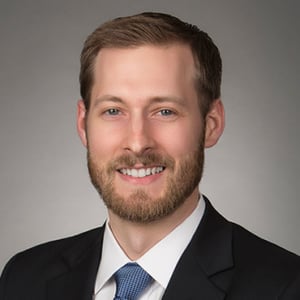
General Counsel, International Mission Board

Panel II: Federalism and Interstate Competition
Jonathan H. Adler, Clayton Gillette, Gregory G. Katsas, John O. McGinnis, Lauren Prieb, Louis Michael Seidman
2011 National Student Symposium
This panel will assess American federalism as a competitive institution that offers a marketplace of...
Panel I: Economic Theory, Civic Virtue and the Meaning of the Constitution
James W. Ely, Renée Lettow Lerner, G. Brinton Lucas, Nelson Lund, G. Edward White, J. Harvie Wilkinson
2011 National Student Symposium
Justice Holmes' dissent in Lochner v. New York is well-known for the statement, "[A] constitution is not...
Panel I: Economic Theory, Civic Virtue and the Meaning of the Constitution
James W. Ely, Renée Lettow Lerner, G. Brinton Lucas, Nelson Lund, G. Edward White, J. Harvie Wilkinson
2011 National Student Symposium
Justice Holmes' dissent in Lochner v. New York is well-known for the statement, "[A] constitution is not...
Debate: Economic Freedoms and the Constitution
Randy E. Barnett, Lillian R. BeVier, Devin Allan DeBacker, Debra Ann Livingston, Ben Massey, Jeffrey Rosen
2011 National Student Symposium
Since West Coast Hotel Co. v. Parrish and the end of the Lochner Era, the Supreme Court has adhered...
Debate: Economic Freedoms and the Constitution
Randy E. Barnett, Lillian R. BeVier, Devin Allan DeBacker, Debra Ann Livingston, Ben Massey, Jeffrey Rosen
2011 National Student Symposium
Since West Coast Hotel Co. v. Parrish and the end of the Lochner Era, the Supreme Court has adhered...
The Future of Judicial Selection in Iowa
Guy R. Cook, Adam C. Gregg, Chris Hagenow, Kay Henderson, Kurt Swaim, Stephen J. Ware
Iowa Lawyers Chapter
On February 22, 2011, the Iowa Lawyers Chapter hosted this event on "The Future of Judicial Selection...
The Future of Judicial Selection in Iowa
Guy R. Cook, Adam C. Gregg, Chris Hagenow, Kay Henderson, Kurt Swaim, Stephen J. Ware
Iowa Lawyers Chapter
On February 22, 2011, the Iowa Lawyers Chapter hosted this event on "The Future of Judicial Selection...
Foxes, Drugs, WMDs, and YouTube: What Kind of Property is Intellectual Property?
Shubha Ghosh
Wisconsin Student Chapter
On February 15, 2011, the Wisconsin Student Chapter hosted an event on intellectual property. The featured speaker was Prof. Shubha...
ABA Watch February 2011
Table of Contents
Task Force on the Preservation of JusticeABA Spirit of Excellence Award HonoreesFederalist Society Question &...
Will the Obama Administration Re-Interpret Federal Law Re: Religious Discrimination When Awarding Federal Grants?
Derek L. Gaubatz
New Federal Initiatives Project
Brought to you by the Religious Liberties Practice Group The Federalist Society takes no position on...