
Michigan State Representative, 37th House District
State Representative Vicki Barnett is serving her second term in the Michigan House. She represents the 37th House District, which includes the cities of Farmington and Farmington Hills.
Before coming to the House, Barnett served on the Farmington Hills City Council from 1995 to 2003 and as Mayor of Farmington Hills from 2003 to 2007. As mayor, Barnett worked with state and federal officials to improve police, fire and emergency communications and crafted legislation to encourage economic redevelopment in metropolitan areas.
Barnett is a graduate of the University of Michigan-Dearborn, receiving her master’s in business administration in 1991. A former investment consultant, Barnett also served as the president of the Michigan Municipal League, chair of the Data Advisory Council for the Southeast Michigan Council of Governments, and as a board member of the National League of Cities.
Barnett and her husband, Mark, live in Farmington Hills. They have two grown children, Samantha and Jordan.
Member, Devaney Jacob Wilson, PLLC
Dennis is a former Board Member of the National Labor Relations Board and Commissioner of the U.S.International Trade Commission. He served as a presidential appointee under four U.S. presidents. His labor and employment practice focuses on traditional labor law, including representation of clients with respect to matters arising under the National Labor Relations Act. He also represents employers in defense of discrimination claims and with respect to collective bargaining agreement negotiation and administration. He counsels employers on all FMLA, ADA, FLSA, ELCRA and other state and federal employment laws, assists in formulating personnel policies, and with respect to litigation before courts, administrative agencies and arbitration tribunals.
Dennis also counsels clients on international trade issues. In 2001, as a Commissioner of the U.S. International Trade Commission, Dennis participated in perhaps the most significant “Section 201” safeguards case ever brought before the Commission. He has also been involved in anti-dumping and countervailing duty proceedings, as well as with respect to U.S. unfair trade cases. Dennis was actively involved in many of the significant international trade initiatives of the last several decades, including creation of the World Trade Organization (WTO), the North American Free Trade Agreement (NAFTA), the Free Trade Area of the Americas (FTAA), bilateral free trade agreements, U.S.-Japan trade relations, and WTO Accession and economic sanctions reform. Dennis also provides advice to employers with respect to executive branch trade issues and before the U.S. Congress.
Dennis is a graduate of Georgetown University Law Center and holds undergraduate and graduate degrees from the University of Maryland. He has served as a visiting professor at several prestigious law schools. Dennis has practiced law for 33 years, 21 of which were in private practice in Washington D.C. and the Detroit area.
Senior Research Associate, National Institute for Labor Relations Research
Stan Greer serves as senior research associate for the National Institute for Labor Relations Research. Mr. Greer holds a bachelor’s degree (1983) from Georgetown University in Washington, D.C., and a master’s degree (1986) from the University of Pittsburgh.
Member, Kienbaum Opperwall Hardy & Pelton, PLC
Mr. Pelton is a founding member of the firm, and serves as its managing member. He has represented employers in litigation and concerning traditional labor matters for 25 years. He has tried, arbitrated, and mediated cases throughout the country. He has also enjoyed representing clients on election law issues and previously served on the Michigan Board of State Canvassers. Mr. Pelton is currently a member of the Michigan Board of Law Examiners having been appointed by the Governor on nomination by the Michigan Supreme Court.
Mr. Pelton has been identified by Chambers USA as a leader in the employment field in Michigan. He is also listed in The Best Lawyers in America in the employment and labor field.
At Syracuse University College of Law, Mr. Pelton served as an Executive Editor of the Law Review. He has conducted many workshops and client seminars on employment and labor law topics, has lectured on wage and hour issues for the prestigious National Employment Law Institute, and has served as an adjunct faculty member at Wayne State University Law School. He is a contributing author of Employment Law in Michigan: An Employer's Guide and State of the Law in Michigan: Employment and Labor Law, both published by the Institute of Continuing Legal Education. Mr. Pelton served as a Commissioner of the State Bar of Michigan, appointed by the Michigan Supreme Court, and serves on the Federalist Society's Labor and Employment Practice Group National Executive Committee.
Michigan State Representative, 65th House District
State Rep. Mike Shirkey was first elected to the Michigan House in November 2010. He represents the 65th District, which includes Springport, Tompkins, Rives, Blackman, Henrietta, Leoni, Waterloo, Grass Lake, Norvell, Columbia and Liberty townships in Jackson County. The district also includes Cambridge Township in Lenawee County and the City of Eaton Rapids along with Hamlin and Brookfield townships in Eaton County.
Shirkey earned a bachelor's degree from General Motors Institute (GMI) in 1978, and a master of science in mechanical engineering from the University of Wisconsin at Madison in 1979.
Mike is the founder and owner of Orbitform, a leading engineering company that manufactures forming, fastening, joining and assembly equipment for a wide range of industries and applications. The company provides world-class prototype engineering services for assembly of parts and specialized forming and fastening. Mike also worked for General Motors in various management and engineering roles for 13 years.
Mike served on the Columbia Central School Board in the 1980s and '90s. Shirkey also is the past board chair of Allegiance Health System and is a current board member.
Asstant Research Scientist, Institute for Research on Labor, Emp, and the Economy
Roland Zullo, PhD, is a labor relations professor and privatization expert at the University of Michigan.
Michigan State Representative, 37th House District
State Representative Vicki Barnett is serving her second term in the Michigan House. She represents the 37th House District, which includes the cities of Farmington and Farmington Hills.
Before coming to the House, Barnett served on the Farmington Hills City Council from 1995 to 2003 and as Mayor of Farmington Hills from 2003 to 2007. As mayor, Barnett worked with state and federal officials to improve police, fire and emergency communications and crafted legislation to encourage economic redevelopment in metropolitan areas.
Barnett is a graduate of the University of Michigan-Dearborn, receiving her master’s in business administration in 1991. A former investment consultant, Barnett also served as the president of the Michigan Municipal League, chair of the Data Advisory Council for the Southeast Michigan Council of Governments, and as a board member of the National League of Cities.
Barnett and her husband, Mark, live in Farmington Hills. They have two grown children, Samantha and Jordan.
Member, Devaney Jacob Wilson, PLLC
Dennis is a former Board Member of the National Labor Relations Board and Commissioner of the U.S.International Trade Commission. He served as a presidential appointee under four U.S. presidents. His labor and employment practice focuses on traditional labor law, including representation of clients with respect to matters arising under the National Labor Relations Act. He also represents employers in defense of discrimination claims and with respect to collective bargaining agreement negotiation and administration. He counsels employers on all FMLA, ADA, FLSA, ELCRA and other state and federal employment laws, assists in formulating personnel policies, and with respect to litigation before courts, administrative agencies and arbitration tribunals.
Dennis also counsels clients on international trade issues. In 2001, as a Commissioner of the U.S. International Trade Commission, Dennis participated in perhaps the most significant “Section 201” safeguards case ever brought before the Commission. He has also been involved in anti-dumping and countervailing duty proceedings, as well as with respect to U.S. unfair trade cases. Dennis was actively involved in many of the significant international trade initiatives of the last several decades, including creation of the World Trade Organization (WTO), the North American Free Trade Agreement (NAFTA), the Free Trade Area of the Americas (FTAA), bilateral free trade agreements, U.S.-Japan trade relations, and WTO Accession and economic sanctions reform. Dennis also provides advice to employers with respect to executive branch trade issues and before the U.S. Congress.
Dennis is a graduate of Georgetown University Law Center and holds undergraduate and graduate degrees from the University of Maryland. He has served as a visiting professor at several prestigious law schools. Dennis has practiced law for 33 years, 21 of which were in private practice in Washington D.C. and the Detroit area.
Senior Research Associate, National Institute for Labor Relations Research
Stan Greer serves as senior research associate for the National Institute for Labor Relations Research. Mr. Greer holds a bachelor’s degree (1983) from Georgetown University in Washington, D.C., and a master’s degree (1986) from the University of Pittsburgh.
Member, Kienbaum Opperwall Hardy & Pelton, PLC
Mr. Pelton is a founding member of the firm, and serves as its managing member. He has represented employers in litigation and concerning traditional labor matters for 25 years. He has tried, arbitrated, and mediated cases throughout the country. He has also enjoyed representing clients on election law issues and previously served on the Michigan Board of State Canvassers. Mr. Pelton is currently a member of the Michigan Board of Law Examiners having been appointed by the Governor on nomination by the Michigan Supreme Court.
Mr. Pelton has been identified by Chambers USA as a leader in the employment field in Michigan. He is also listed in The Best Lawyers in America in the employment and labor field.
At Syracuse University College of Law, Mr. Pelton served as an Executive Editor of the Law Review. He has conducted many workshops and client seminars on employment and labor law topics, has lectured on wage and hour issues for the prestigious National Employment Law Institute, and has served as an adjunct faculty member at Wayne State University Law School. He is a contributing author of Employment Law in Michigan: An Employer's Guide and State of the Law in Michigan: Employment and Labor Law, both published by the Institute of Continuing Legal Education. Mr. Pelton served as a Commissioner of the State Bar of Michigan, appointed by the Michigan Supreme Court, and serves on the Federalist Society's Labor and Employment Practice Group National Executive Committee.
Michigan State Representative, 65th House District
State Rep. Mike Shirkey was first elected to the Michigan House in November 2010. He represents the 65th District, which includes Springport, Tompkins, Rives, Blackman, Henrietta, Leoni, Waterloo, Grass Lake, Norvell, Columbia and Liberty townships in Jackson County. The district also includes Cambridge Township in Lenawee County and the City of Eaton Rapids along with Hamlin and Brookfield townships in Eaton County.
Shirkey earned a bachelor's degree from General Motors Institute (GMI) in 1978, and a master of science in mechanical engineering from the University of Wisconsin at Madison in 1979.
Mike is the founder and owner of Orbitform, a leading engineering company that manufactures forming, fastening, joining and assembly equipment for a wide range of industries and applications. The company provides world-class prototype engineering services for assembly of parts and specialized forming and fastening. Mike also worked for General Motors in various management and engineering roles for 13 years.
Mike served on the Columbia Central School Board in the 1980s and '90s. Shirkey also is the past board chair of Allegiance Health System and is a current board member.
Asstant Research Scientist, Institute for Research on Labor, Emp, and the Economy
Roland Zullo, PhD, is a labor relations professor and privatization expert at the University of Michigan.
Judge, Iowa Court of Appeals
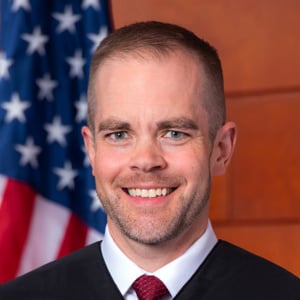
Judge Samuel P. Langholz was appointed to the Iowa Court of Appeals by Governor Kim Reynolds in 2023. Before his appointment, he practiced law in the Iowa Executive Branch for nearly thirteen years, serving as Chief Deputy Attorney General, Assistant Solicitor General, Senior Legal Counsel to the Governor, Chief Administrative Law Judge, and State Public Defender. He also previously worked in private practice at a law firm in Des Moines. He began his legal career as a judicial law clerk to Judge Steven M. Colloton on the U.S. Court of Appeals for the Eighth Circuit.
Judge Langholz earned his law degree from the University of Iowa College of Law with highest distinction and Order of the Coif in 2008 and his undergraduate degree from Washington and Lee University magna cum laude in 2002. He was raised and graduated from high school in Clear Lake. Judge Langholz is married and has two sons.
Justice, Iowa Supreme Court
Justice Mansfield, Des Moines, was appointed to the Supreme Court in 2011.
Justice Mansfield was born and raised in Massachusetts. He received his undergraduate degree from Harvard in 1978, and his law degree from Yale in 1982. After law school he clerked for the U.S. Court of Appeals, Fifth Circuit.
Justice Mansfield worked as an attorney in private practice until his appointment to the Iowa Court of Appeals in 2009. Justice Mansfield also has been an adjunct professor of law at Drake University since 1997.
Justice Mansfield is a member of the Iowa State Bar Association, having served as Chair of the Trade Regulation Section from 2004-2006. He is a member of the Polk County Bar Association and the Iowa Judges Association. Justice Mansfield also serves on the board of directors of Goodwill Industries of Central Iowa, and is a past Chairperson of this organization.
Executive Director, American Civil Liberties Union of Iowa
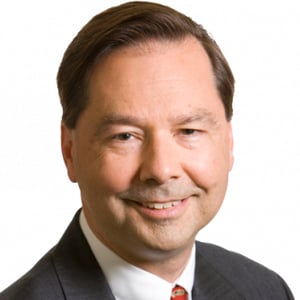
Senior Legal Fellow, Edwin Meese III Institute for the Rule of Law, Advancing American Freedom
Judge, Iowa Court of Appeals
Judge Samuel P. Langholz was appointed to the Iowa Court of Appeals by Governor Kim Reynolds in 2023. Before his appointment, he practiced law in the Iowa Executive Branch for nearly thirteen years, serving as Chief Deputy Attorney General, Assistant Solicitor General, Senior Legal Counsel to the Governor, Chief Administrative Law Judge, and State Public Defender. He also previously worked in private practice at a law firm in Des Moines. He began his legal career as a judicial law clerk to Judge Steven M. Colloton on the U.S. Court of Appeals for the Eighth Circuit.
Judge Langholz earned his law degree from the University of Iowa College of Law with highest distinction and Order of the Coif in 2008 and his undergraduate degree from Washington and Lee University magna cum laude in 2002. He was raised and graduated from high school in Clear Lake. Judge Langholz is married and has two sons.
Justice, Iowa Supreme Court
Justice Mansfield, Des Moines, was appointed to the Supreme Court in 2011.
Justice Mansfield was born and raised in Massachusetts. He received his undergraduate degree from Harvard in 1978, and his law degree from Yale in 1982. After law school he clerked for the U.S. Court of Appeals, Fifth Circuit.
Justice Mansfield worked as an attorney in private practice until his appointment to the Iowa Court of Appeals in 2009. Justice Mansfield also has been an adjunct professor of law at Drake University since 1997.
Justice Mansfield is a member of the Iowa State Bar Association, having served as Chair of the Trade Regulation Section from 2004-2006. He is a member of the Polk County Bar Association and the Iowa Judges Association. Justice Mansfield also serves on the board of directors of Goodwill Industries of Central Iowa, and is a past Chairperson of this organization.
Executive Director, American Civil Liberties Union of Iowa
Senior Legal Fellow, Edwin Meese III Institute for the Rule of Law, Advancing American Freedom

Laurence A. Tisch Professor of Law and Director, Classical Liberal Institute, New York University School of Law; Director, Classical Liberal Institute, Civitas Institute University of Texas at Austin
Richard A. Epstein is the Laurence A. Tisch Professor of Law, at New York University, a senior research fellow at the Civitas Institute at the University of Texas Austin, and a senior Lecturer, the University of Chicago. He received an LL.D., h.c . from the University of Ghent, 2003 , and an LLD h.c . from the University of Siegen in 2018 and the Bradley Prize in 2011. He has been a member of the American Academy of Arts and Sciences since 1985. He has edited both the Journal of Legal Studies (1981-1991) and the Journal of Law and Economics (1991-2001). He is also a founder and director of the Classical Liberal Institute at NYU Law School. His most recent book is The Classical Liberal Constitution: The Uncertain Quest for Limited Government (2014). His other books include Takings: Private Property and the Power of Eminent Domain ( 1985); Bargaining with the State (1993); Simple Rules for a Complex World (1995); Principles for a Free Society: Reconciling Individual Liberty and the Common Good (1998); Skepticism and Freedom: A Modern Theory of Classical Liberalism (2003); Design for Liberty: Private Property, Public Administration and the Rule of Law (2011), and most recently, The Myth of Birthright citizenship—and Beyond (2026). He has taught courses in , administrative law, antitrust, constitutional, contracts, environmental law, land use planning; real property, torts and water law. He has written and spoken extensively on a wide range of topics, and is writes a regular column for Defining Ideas.
President, University of Pennsylvania Student Chapter
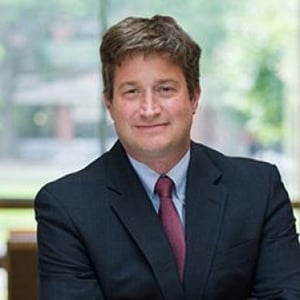
Dean and Bernard G. Segal Professor of Law, University of Pennsylvania Law School
Theodore Ruger brings fresh insight to the study of some of the oldest questions of American law – namely the theoretical justifications for, and empirical contours of, the application of judicial authority. In exploring these issues, Ruger supplements traditional legal analysis with the methods of other disciplines, including history and political science. His work has appeared in the Harvard Law Review, the Columbia Law Review, the University of Pennsylvania Law Review, the University of Pennsylvania Journal of Constitutional Law, the Northwestern Law Review, and as the centerpiece of a symposium in Perspectives on Politics, a leading peer-reviewed political science journal. In addition to his interests in constitutional law and legislation, Ruger also teaches and writes in the area of health law and pharmaceutical regulation. His current research in that field draws on his broader work on judicial power and constitutionalism, and addresses the manner in which American legal institutions – including the U.S. Supreme Court – have shaped the field of health law over the past two centuries.
U.S. Court of Appeals, Third Circuit
Anthony J. Scirica, Chief Judge of the United States Court of Appeals for the Third Circuit, is currently the chair of the Executive Committee of the Judicial Conference of the United States. Chief Judge Scirica is the former chair of the Standing Committee on Rules of Practice and Procedure of the Judicial Conference of the United States and was a member of the Advisory Committee on Civil Rules. He was also chair of the Judicial Conference Working Group on Mass Torts. He is a former member of the Judicial Panel on Multi-District Litigation.
Chief Judge Scirica practiced law in Pennsylvania, where he also served as an ssistant district attorney and a judge of the Court of Common Pleas. He was a member of the Pennsylvania Legislature and also served as chair of the Pennsylvania Sentencing Commission. In 1984 he was appointed to the United States District Court for the Eastern District of Pennsylvania, and in 1987, to the Court of Appeals. He is a member of the American Law Institute.
Laurence A. Tisch Professor of Law and Director, Classical Liberal Institute, New York University School of Law; Director, Classical Liberal Institute, Civitas Institute University of Texas at Austin
Richard A. Epstein is the Laurence A. Tisch Professor of Law, at New York University, a senior research fellow at the Civitas Institute at the University of Texas Austin, and a senior Lecturer, the University of Chicago. He received an LL.D., h.c . from the University of Ghent, 2003 , and an LLD h.c . from the University of Siegen in 2018 and the Bradley Prize in 2011. He has been a member of the American Academy of Arts and Sciences since 1985. He has edited both the Journal of Legal Studies (1981-1991) and the Journal of Law and Economics (1991-2001). He is also a founder and director of the Classical Liberal Institute at NYU Law School. His most recent book is The Classical Liberal Constitution: The Uncertain Quest for Limited Government (2014). His other books include Takings: Private Property and the Power of Eminent Domain ( 1985); Bargaining with the State (1993); Simple Rules for a Complex World (1995); Principles for a Free Society: Reconciling Individual Liberty and the Common Good (1998); Skepticism and Freedom: A Modern Theory of Classical Liberalism (2003); Design for Liberty: Private Property, Public Administration and the Rule of Law (2011), and most recently, The Myth of Birthright citizenship—and Beyond (2026). He has taught courses in , administrative law, antitrust, constitutional, contracts, environmental law, land use planning; real property, torts and water law. He has written and spoken extensively on a wide range of topics, and is writes a regular column for Defining Ideas.
President, University of Pennsylvania Student Chapter
Dean and Bernard G. Segal Professor of Law, University of Pennsylvania Law School
Theodore Ruger brings fresh insight to the study of some of the oldest questions of American law – namely the theoretical justifications for, and empirical contours of, the application of judicial authority. In exploring these issues, Ruger supplements traditional legal analysis with the methods of other disciplines, including history and political science. His work has appeared in the Harvard Law Review, the Columbia Law Review, the University of Pennsylvania Law Review, the University of Pennsylvania Journal of Constitutional Law, the Northwestern Law Review, and as the centerpiece of a symposium in Perspectives on Politics, a leading peer-reviewed political science journal. In addition to his interests in constitutional law and legislation, Ruger also teaches and writes in the area of health law and pharmaceutical regulation. His current research in that field draws on his broader work on judicial power and constitutionalism, and addresses the manner in which American legal institutions – including the U.S. Supreme Court – have shaped the field of health law over the past two centuries.
U.S. Court of Appeals, Third Circuit
Anthony J. Scirica, Chief Judge of the United States Court of Appeals for the Third Circuit, is currently the chair of the Executive Committee of the Judicial Conference of the United States. Chief Judge Scirica is the former chair of the Standing Committee on Rules of Practice and Procedure of the Judicial Conference of the United States and was a member of the Advisory Committee on Civil Rules. He was also chair of the Judicial Conference Working Group on Mass Torts. He is a former member of the Judicial Panel on Multi-District Litigation.
Chief Judge Scirica practiced law in Pennsylvania, where he also served as an ssistant district attorney and a judge of the Court of Common Pleas. He was a member of the Pennsylvania Legislature and also served as chair of the Pennsylvania Sentencing Commission. In 1984 he was appointed to the United States District Court for the Eastern District of Pennsylvania, and in 1987, to the Court of Appeals. He is a member of the American Law Institute.
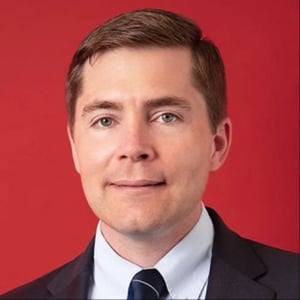
Senior Attorney, Pacific Legal Foundation
Damien Schiff is a senior attorney at Pacific Legal Foundation. He leads its environmental practice group, a unique initiative that draws broadly from PLF’s expertise and success in property rights and separation of powers litigation. Over the years, Damien has represented hundreds of landowners and property rights advocates to defend their liberties against heavy-handed and unwarranted environmental and land-use regulation. His litigation experience includes Sackett v. U.S. Environmental Protection Agency, a groundbreaking decision in which the U.S. Supreme Court upheld the right of landowners to challenge Clean Water Act compliance orders issued by EPA, and Contoski v. Norton, PLF’s successful effort to force the federal government to make good on its promise to delist the bald eagle from the Endangered Species Act.
Besides litigation, Damien has written academic articles on a variety of subjects, including the Endangered Species Act, the Clean Water Act, greenhouse gas torts, the duty to rescue, and international water law. He has appeared on a variety of television and radio programs and has been quoted in The New York Times, The Wall Street Journal, Harper’s Magazine, and The Economist, among other publications.
He obtained his law degree magna cum laude from the University of San Diego School of Law, and his undergraduate degree magna cum laude from Georgetown University. While at USD, he was a research assistant for Professor Bernard Siegan, a leading constitutional theorist and advocate for property rights and economic liberty. Immediately prior to joining PLF, Damien clerked for Judge (and former PLF attorney) Victor Wolski of the United States Court of Federal Claims. Damien credits the mentoring and examples of Professor Siegan and Judge Wolski for his decision to pursue a career in liberty-based public interest litigation.
Damien lives in Sacramento with his wife, two young sons, four chickens, and a cat named Princess. In his off hours he enjoys stamp collecting, Gregorian chant, and martinis—preferably at the same time.

Executive Vice President, The Federalist Society
Dean Reuter is Executive Vice President at the Federalist Society for Law and Public Policy Studies. He has served in two federal government agency Offices of the Inspector General, as Counsel to the Inspector General and Deputy Inspector General, responsible for policing the use of federal funds granted and contracted through those agencies. As such, he helped conduct and oversee criminal investigations across the country. He is the principal author of the non-fiction book, The Hidden Nazi: The Untold Story of America's Deal with the Devil, and editor of Liberty’s Nemesis: The Unchecked Expansion of the State and Confronting Terror: 9/11 and the Future of American National Security. He was appointed by the President and served as Vice-Chairman of the Board of Directors of the Corporation for National and Community Service, and recently served as an appointee on the U.S. Commission on Presidential Scholars. He is a graduate of Hood College (BA with Honors) and the University of Maryland School of Law.
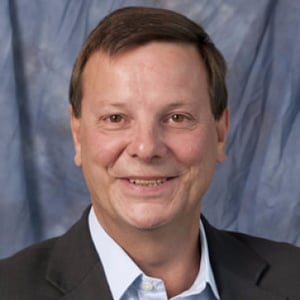
Professor of Law, Antonin Scalia Law School, George Mason University
Professor of Law Michael S. Greve joined the faculty of the Antonin Scalia Law School, George Mason University in fall 2012 after having served as John G. Searle Scholar at the American Enterprise Institute (AEI), where he specialized in constitutional law, courts, and business regulation and served as chairman of the Competitive Enterprise Institute. Prior to joining AEI, Greve was founder and co-director of the Center for Individual Rights, a public interest law firm specializing in constitutional litigation.
Greve has served previously as an adjunct professor at a number of universities, including Cornell and Johns Hopkins Universities, and has been a visiting professor at Boston College since 2004. He was awarded a PhD and an MA in government by Cornell University. Greve also earned a Diploma from the University of Hamburg in Germany.
A prolific writer, Greve is the author of nine books and a multitude of articles appearing in scholarly publications, as well as numerous editorials, short articles, and book reviews. He is a frequent speaker for professional and scholarly organizations and has made many appearances on radio and television.
In addition Greve has provided congressional and state legislative testimony, has lobbied and consulted in federal agency proceedings, and has provided litigation services and management in over 30 cases, including matters before the U.S. Supreme Court.
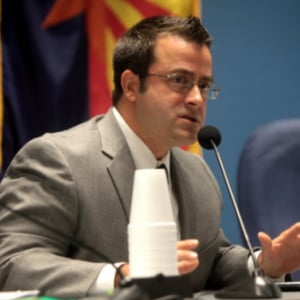
General Counsel, Prospera Group
Dranias serves as NeWay Capital LLC’s General Counsel, handling all corporate legal matters. Prior to this, he was Senior Litigation Counsel with the Government Accountability & Special Litigation Unit of the Arizona Attorney General. He also serves as Policy Advisor and Research Fellow with the Heartland Institute, as an expert and Speaker’s Bureau member with the Federalist Society, a Law and Civil Liberties Speaker for Students for Liberty, a Council of Scholars member with Compact for America Educational Foundation, as well as an Adjunct Instructor teaching Business Ethics and Law at Grand Canyon University.
Previously, Dranias served as President & Executive Director of Compact for America Educational Foundation where he led national efforts to organize the states to propose and ratify a federal Balanced Budget Amendment. Prior to that, Dranias was General Counsel, Policy Development Director and Constitutional Policy Director at the Goldwater Institute. Dranias led the Institute’s successful challenge to Arizona’s system of government campaign financing to the U.S. Supreme Court. Prior to that, he was an attorney with the Institute for Justice for three years and an attorney in private practice in Chicago for eight years, where he served as Young Lawyers Section co-editor of the Chicago Bar Association Record and earned the Oliver Wendell Holmes Award for his service.
Executive Vice President, The Federalist Society
Dean Reuter is Executive Vice President at the Federalist Society for Law and Public Policy Studies. He has served in two federal government agency Offices of the Inspector General, as Counsel to the Inspector General and Deputy Inspector General, responsible for policing the use of federal funds granted and contracted through those agencies. As such, he helped conduct and oversee criminal investigations across the country. He is the principal author of the non-fiction book, The Hidden Nazi: The Untold Story of America's Deal with the Devil, and editor of Liberty’s Nemesis: The Unchecked Expansion of the State and Confronting Terror: 9/11 and the Future of American National Security. He was appointed by the President and served as Vice-Chairman of the Board of Directors of the Corporation for National and Community Service, and recently served as an appointee on the U.S. Commission on Presidential Scholars. He is a graduate of Hood College (BA with Honors) and the University of Maryland School of Law.

Right to Work: Right or Wrong for Michigan?
Vicki Barnett, Dennis Devaney, Stanley Greer, Eric J. Pelton, Mike Shirkey, Roland Zullo
Michigan Lawyers Chapter
The Michigan Lawyers Chapter hosted this panel on March 1, 2012, at Wayne State University Law School...
Right to Work: Right or Wrong for Michigan?
Vicki Barnett, Dennis Devaney, Stanley Greer, Eric J. Pelton, Mike Shirkey, Roland Zullo
Michigan Lawyers Chapter
The Michigan Lawyers Chapter hosted this panel on March 1, 2012, at Wayne State University Law School...
Voter Identification and the Right to Vote
Samuel Langholz, Edward Mansfield, Ben Stone, Hans A. Von Spakovsky
Iowa Lawyers Chapter
In recent years, states across the country have considered or implemented stricter voter identification requirements,...
Voter Identification and the Right to Vote
Samuel Langholz, Edward Mansfield, Ben Stone, Hans A. Von Spakovsky
Iowa Lawyers Chapter
In recent years, states across the country have considered or implemented stricter voter identification requirements,...
Is the Affordable Care Act Constitutional?
Richard A. Epstein, Daniel Pollack, Theodore Ruger, Anthony J. Scirica
Pennsylvania Student Chapter
On February 22, 2012, the University of Pennsylvania Student Chapter of the Federalist Society hosted...
Is the Affordable Care Act Constitutional?
Richard A. Epstein, Daniel Pollack, Theodore Ruger, Anthony J. Scirica
Pennsylvania Student Chapter
On February 22, 2012, the University of Pennsylvania Student Chapter of the Federalist Society hosted...
Sackett v. EPA: When May a Landowner Take the EPA to Court? - Podcast
Damien Michael Schiff, Dean Reuter
Environmental Law & Property Rights Practice Group Podcast
To listen, please right click on the audio file you wish to hear and then...
Magner v. Gallagher - Post-Argument SCOTUScast
SCOTUScast 2-22-12 featuring Roger Clegg
To listen, please right click on the audio file you wish to hear and then select "Save...
Guide to Judicial Selection in State High Courts
State Courts White Paper
This paper outlines the composition of judicial nominating commissions in Missouri Plan and hybrid states.
The Compact Clause and Interstate Compacts
Michael S. Greve, Nicholas C. Dranias, Dean Reuter
Environmental Law & Property Rights Practice Group Podcast
The Compact Clause of the Constitution provides that "[n]o State shall, without the Consent of...