

Supreme Court Correspondent, The Washington Post
Robert Barnes has been a Washington Post reporter and editor since 1987. He joined the paper to cover Maryland politics, and has served in various editing positions including metropolitan editor and national political editor . He has covered the Supreme Court since November 2006. He gave up law school plans for a life in newspapers after taking a journalism class in college. It did not occur to him, as it apparently did to others, that he could do both.
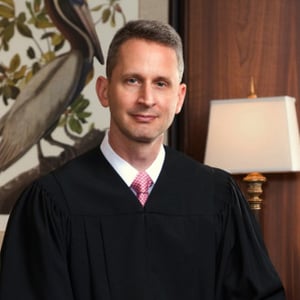
Judge, United States Court of Appeals, Fifth Circuit
Judge Duncan received his B.A. from Louisiana State University in 1994, his J.D. from the Paul M. Hebert Law Center at Louisiana State University in 1997, and his LL.M. from Columbia Law School in 2004.
After graduating from law school, he clerked for Louisiana-based Circuit Judge John Malcolm Duhé Jr. of the United States Court of Appeals for the Fifth Circuit.
From 2008–2012, Duncan served as Appellate Chief for Louisiana's Attorney General's office. From 2012–2014, he served as general counsel of the Becket Fund for Religious Liberty. From 2004-2008, he was an assistant professor of law at the University of Mississippi School of Law.
Before becoming a judge, Duncan practiced at the Washington, D.C. firm of Schaerr Duncan LLP, where he was a founding partner. He was appointed by President Trump to the United States Court of Appeals for the Fifth Circuit on May 1, 2018.

Dr. John Eastman is the former Henry Salvatori Professor of Law & Community Service and former Dean at Chapman University's Dale E. Fowler School of Law, where he had been a member of the faculty since 1999, specializing in Constitutional Law, Legal History, and Property. He is a founding director of the Center for Constitutional Jurisprudence, a public interest law firm affiliated with the Claremont Institute that he founded in 1999. He has a Ph.D. in Government from the Claremont Graduate School and a J.D. from the University of Chicago Law School, and a B.A. in Politics and Economics from the University of Dallas. He serves as the Chairman of the Board of the National Organization for Marriage.
Prior to joining the Chapman law faculty, Dr. Eastman served as a law clerk to the Honorable Clarence Thomas, Associate Justice, Supreme Court of the United States, and to the Honorable J. Michael Luttig, Judge, United States Court of Appeals for the Fourth Circuit and practiced law with the national law firm of Kirkland & Ellis. Dr. Eastman has also represented numerous clients in important constitutional law matters and has argued before the Supreme Court. On behalf of the Claremont Institute Center for Constitutional Jurisprudence, he has participated as amicus curiae before the Supreme Court of the United States, U.S. Courts of Appeals, and State Supreme Courts in more than one hundred cases of constitutional significance, including Boy Scouts of America v. Dale, Zelman v. Simmons-Harris (the school vouchers case), Kelo v. New London, Ct. (eminent domain), and Van Orden v. Perry (the 10 Commandments case). He has also appeared as an expert legal commentator on numerous television and radio programs, including C-SPAN, Fox News, PBS, NewsHour, and The O'Reilly Factor.

Professor from Practice, Georgetown University Law Center
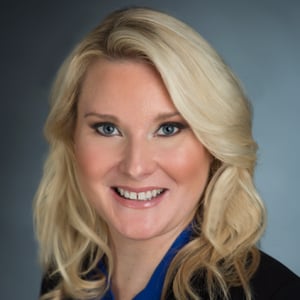
President, Constitutional Accountability Center
Elizabeth is Constitutional Accountability Center’s President. From 2008-2016, she served as CAC's Chief Counsel, representing the Center as well as clients including preeminent constitutional scholars and historians, state and local government organizations, and groups such as the League of Women Voters and the AARP. She frequently participates in Supreme Court litigation and her legal brief writing has been recognized as “exemplary” by the Green Bag Almanac & Reader. Elizabeth has also argued several important cases in the federal courts of appeals on a range of issues, including immigration law, habeas corpus, and sovereign immunity. She joined CAC from private practice at Quinn Emanuel Urquhart & Sullivan in San Francisco, where she was an attorney working with former Stanford Law School Dean Kathleen Sullivan in the firm’s Supreme Court/appellate practice. Previously, Elizabeth was a supervising attorney and teaching fellow at the Georgetown University Law Center appellate litigation clinic, a law clerk for Judge James R. Browning of the U.S. Court of Appeals for the Ninth Circuit, and a lawyer at Pillsbury Winthrop Shaw Pittman, a law firm in Washington. She has appeared as a legal expert for NBC, ABC, PBS, CNN, Fox News, the BBC, Current TV, and NPR, among other outlets. Elizabeth has been quoted extensively in the print media and is a regular contributor to the ABA’s Preview of United States Supreme Court Cases. Her writings have appeared in The New York Times, Reuters, USA Today, Politico, CNN.com, Slate, and on numerous political and legal blogs, such as Huffington Post, SCOTUSblog, and ACSblog. She has also published in the UCLA Journal of Environmental Law & Policy, Syracuse Law Review, The Cato Institute’s Supreme Court Review, and the Yale Journal of International Law. Elizabeth is a graduate of Yale Law School.
Supreme Court Correspondent, The Washington Post
Robert Barnes has been a Washington Post reporter and editor since 1987. He joined the paper to cover Maryland politics, and has served in various editing positions including metropolitan editor and national political editor . He has covered the Supreme Court since November 2006. He gave up law school plans for a life in newspapers after taking a journalism class in college. It did not occur to him, as it apparently did to others, that he could do both.
Judge, United States Court of Appeals, Fifth Circuit
Judge Duncan received his B.A. from Louisiana State University in 1994, his J.D. from the Paul M. Hebert Law Center at Louisiana State University in 1997, and his LL.M. from Columbia Law School in 2004.
After graduating from law school, he clerked for Louisiana-based Circuit Judge John Malcolm Duhé Jr. of the United States Court of Appeals for the Fifth Circuit.
From 2008–2012, Duncan served as Appellate Chief for Louisiana's Attorney General's office. From 2012–2014, he served as general counsel of the Becket Fund for Religious Liberty. From 2004-2008, he was an assistant professor of law at the University of Mississippi School of Law.
Before becoming a judge, Duncan practiced at the Washington, D.C. firm of Schaerr Duncan LLP, where he was a founding partner. He was appointed by President Trump to the United States Court of Appeals for the Fifth Circuit on May 1, 2018.
Dr. John Eastman is the former Henry Salvatori Professor of Law & Community Service and former Dean at Chapman University's Dale E. Fowler School of Law, where he had been a member of the faculty since 1999, specializing in Constitutional Law, Legal History, and Property. He is a founding director of the Center for Constitutional Jurisprudence, a public interest law firm affiliated with the Claremont Institute that he founded in 1999. He has a Ph.D. in Government from the Claremont Graduate School and a J.D. from the University of Chicago Law School, and a B.A. in Politics and Economics from the University of Dallas. He serves as the Chairman of the Board of the National Organization for Marriage.
Prior to joining the Chapman law faculty, Dr. Eastman served as a law clerk to the Honorable Clarence Thomas, Associate Justice, Supreme Court of the United States, and to the Honorable J. Michael Luttig, Judge, United States Court of Appeals for the Fourth Circuit and practiced law with the national law firm of Kirkland & Ellis. Dr. Eastman has also represented numerous clients in important constitutional law matters and has argued before the Supreme Court. On behalf of the Claremont Institute Center for Constitutional Jurisprudence, he has participated as amicus curiae before the Supreme Court of the United States, U.S. Courts of Appeals, and State Supreme Courts in more than one hundred cases of constitutional significance, including Boy Scouts of America v. Dale, Zelman v. Simmons-Harris (the school vouchers case), Kelo v. New London, Ct. (eminent domain), and Van Orden v. Perry (the 10 Commandments case). He has also appeared as an expert legal commentator on numerous television and radio programs, including C-SPAN, Fox News, PBS, NewsHour, and The O'Reilly Factor.
Professor from Practice, Georgetown University Law Center
President, Constitutional Accountability Center
Elizabeth is Constitutional Accountability Center’s President. From 2008-2016, she served as CAC's Chief Counsel, representing the Center as well as clients including preeminent constitutional scholars and historians, state and local government organizations, and groups such as the League of Women Voters and the AARP. She frequently participates in Supreme Court litigation and her legal brief writing has been recognized as “exemplary” by the Green Bag Almanac & Reader. Elizabeth has also argued several important cases in the federal courts of appeals on a range of issues, including immigration law, habeas corpus, and sovereign immunity. She joined CAC from private practice at Quinn Emanuel Urquhart & Sullivan in San Francisco, where she was an attorney working with former Stanford Law School Dean Kathleen Sullivan in the firm’s Supreme Court/appellate practice. Previously, Elizabeth was a supervising attorney and teaching fellow at the Georgetown University Law Center appellate litigation clinic, a law clerk for Judge James R. Browning of the U.S. Court of Appeals for the Ninth Circuit, and a lawyer at Pillsbury Winthrop Shaw Pittman, a law firm in Washington. She has appeared as a legal expert for NBC, ABC, PBS, CNN, Fox News, the BBC, Current TV, and NPR, among other outlets. Elizabeth has been quoted extensively in the print media and is a regular contributor to the ABA’s Preview of United States Supreme Court Cases. Her writings have appeared in The New York Times, Reuters, USA Today, Politico, CNN.com, Slate, and on numerous political and legal blogs, such as Huffington Post, SCOTUSblog, and ACSblog. She has also published in the UCLA Journal of Environmental Law & Policy, Syracuse Law Review, The Cato Institute’s Supreme Court Review, and the Yale Journal of International Law. Elizabeth is a graduate of Yale Law School.
Supreme Court Correspondent, The Washington Post
Robert Barnes has been a Washington Post reporter and editor since 1987. He joined the paper to cover Maryland politics, and has served in various editing positions including metropolitan editor and national political editor . He has covered the Supreme Court since November 2006. He gave up law school plans for a life in newspapers after taking a journalism class in college. It did not occur to him, as it apparently did to others, that he could do both.
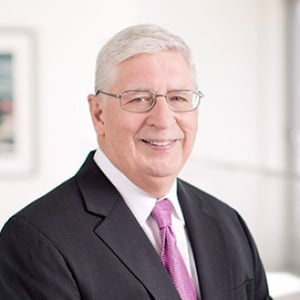
Partner, O'Melveny & Myers LLP
Walter Dellinger is an influential authority on appellate and Supreme Court decisions, lending his experience as a former Solicitor General and decades of legal knowledge to amicus briefs, a multitude of pro bono clients, and public and private companies involved in bet-the-company litigation. A frequent commentator for the Wall Street Journal, Slate, and major television networks, Walter holds the designation of the Douglas B. Maggs Emeritus Professor of Law at Duke University. He was named one of the 100 Most Influential Lawyers in America by the National Law Journal and recognized with a Lifetime Achievement Award from the American Lawyer.
Walter, who formerly served as O’Melveny’s Diversity and Inclusion Partner, helped convince the US Supreme Court that proponents of Proposition 8, California's ban on same-sex marriage, did not have standing to appeal a court order invalidating it. That ruling, Hollingsworth v. Perry, cleared the way for marriage equality in California and eventually nationwide.
Walter served as Assistant Attorney General and head of the Office of Legal Counsel (OLC) from 1993 to 1996. He was acting Solicitor General for the 1996-97 Term of the US Supreme Court. During that time, Walter argued nine cases before the Court, the most by any Solicitor General in more than 20 years. His arguments included cases dealing with physician-assisted suicide, the line item veto, the cable television act, the Brady Act, the Religious Freedom Restoration Act, and the constitutionality of remedial services for parochial school children.
Walter has served as Special Counsel to the Board of Directors of the New York Stock Exchange in connection with the NYSE’s transformation into a publicly held company and its acquisition of an electronic trading company.
After serving in early 1993 in the White House as an advisor to the President on constitutional issues, Walter was nominated by the President to be Assistant Attorney General. He was confirmed by the Senate in October 1993 and served for three years. As head of the OLC, Walter issued opinions on a wide variety of issues, including: the President's authority to deploy United States forces in Haiti and Bosnia; whether the trade agreements required treaty ratification; and a major review of separation of powers questions. He provided extensive legal advice on questions arising out of the shutdown of the federal government, on national debt ceiling issues, and on loan guarantees for Mexico.
Walter has published articles on constitutional issues for scholarly journals including the Harvard Law Review, the Yale Law Journal, and the Duke Law Journal, and has written for the New York Times, the Washington Post, Newsweek, the New Republic, and the London Times. He has been a visiting professor at the Catholic University of Belgium and has given lectures to university faculties in Florence, Siena, Nuremberg, Copenhagen, Leiden, Utrecht, Tilburg, Mexico, and Rio de Janeiro, and has delivered major lectures at Stanford, Yale, Harvard, Michigan, Berkeley, Penn, Duke, Chicago, and other US law schools. He has testified more than 25 times before committees of Congress.
In private practice, Walter’s arguments before the United States Supreme Court have included Exxon Shipping Co. v. Baker, Morgan Stanley Capital Group Inc. v. Public Utility District No. 1 of Snohomish County, Alabama v. North Carolina, Hosanna-Tabor v. EEOC, Heller v. District of Columbia, Jackson v. Birmingham School District, Brown v. Legal Foundation of Washington, US Airways v. Barnett, Utah v. Evans, Hunt v. Cromartie, and Hunt v. Easley. His most notable Court of Appeals and state supreme court arguments include Martha Stewart v. United States, Whiteside v. United States, and Exxon v. Alabama, LCI v. Phillips.
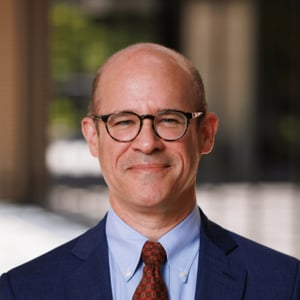
Professor of Law, Stanford Law School
Orin S. Kerr is a Professor of Law at Stanford Law School, where he teaches and writes in the areas of criminal procedure and computer crime law. Kerr earned mechanical engineering degrees from Princeton University and Stanford University before graduating with a J.D. from Harvard Law School. He is a former law clerk to Justice Anthony M. Kennedy at the United States Supreme Court and Judge Leonard I. Garth of the U.S. Court of Appeals for the Third Circuit.
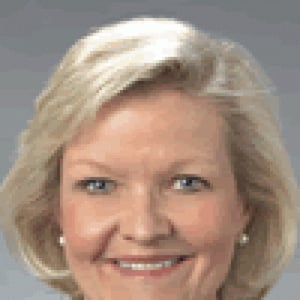
Partner (retd.), Foley & Lardner LLP
Cleta Mitchell was a partner and political law attorney in the Washington, D.C. office of Foley & Lardner LLP and a member of the firm’s Political Law Practice. With more than 40 years of experience in law, politics and public policy, Ms. Mitchell advised nonprofit and issue organizations, corporations, candidates, campaigns, and individuals on state and federal campaign finance law, election law, and compliance issues related to lobbying, ethics and financial disclosure. Ms. Mitchell practiced before the Federal Election Commission, the ethics committees of the US House and Senate and similar state and local enforcement bodies and agencies.
Ms. Mitchell has extensive experience on the federal lobbying and ethics law enacted by Congress in 2007, having taught dozens of seminars on the subject since its passage. In 2008, Ms. Mitchell authored The Lobbying Compliance Handbook, published by Columbia Books, Inc.
Ms. Mitchell represented numerous candidates, campaigns and members of Congress, as well as state and national political party committees. She has served as legal counsel to the National Republican Senatorial Committee and the National Republican Congressional Committee. Ms. Mitchell served as co-counsel for the National Rifle Association in the Supreme Court case involving the 2002 federal campaign finance law.
Ms. Mitchell has testified before Congress on numerous occasions related to election law, campaign finance and lobbying and ethics laws, and is a frequent speaker and guest commentator on political law. In 1999, she authored "The Rise of America’s Two National Pastimes: Baseball and the Law," published by the University of Michigan Law Review, and in 2012, Ms. Mitchell authored “Donor Disclosure: Undermining The First Amendment,” published by the Minnesota Law Review. In 2013, she was interviewed by The Wall Street Journal, “How to Investigate the IRS.”
Ms. Mitchell served on the advisory council to the American Bar Association’s Standing Committee on Election Law and as an advisor on the American Law Institute's Election Law Project entitled, “Principles of Election Law: Dispute Resolution.” She serves on the board of directors of the Lynde and Harry Bradley Foundation, is chairman of the American Conservative Union Foundation, and has served as the president of the Republican National Lawyers Association.
Ms. Mitchell was a member of the Oklahoma House of Representatives from 1976-1984 where she chaired the House Appropriations and Budget Committee. She served on the executive committee of the National Conference of State Legislatures.
Ms. Mitchell was in private law practice in Oklahoma City in litigation and administrative law until 1991 when she became director and general counsel of the Term Limits Legal Institute in Washington, D.C. She litigated cases in state and federal courts nationwide on congressional term limits and served as co-counsel with former U.S. Attorney General Griffin Bell in the Supreme Court of the United States case on term limits for members of Congress.
Ms. Mitchell earned both her B.A., magna cum laude, and J.D. from the University of Oklahoma.

Professor of Law, Georgetown University Law Center
Nicholas Quinn Rosenkranz teaches constitutional law and federal jurisdiction, and he writes articles for the Harvard Law Review and the Stanford Law Review.
He is currently developing a new theory of constitutional interpretation and judicial review. The first installment, entitledThe Subjects of the Constitution, was published in the Stanford Law Review in May of 2010, and it is among the most downloaded articles about constitutional interpretation, judicial review, and/or federal courts in the history of SSRN. The second installment, The Objects of the Constitution, was published in May of 2011, also in the Stanford Law Review. And the comprehensive version is forthcoming as a book by Oxford University Press.
Rosenkranz has served and advised the federal government in a variety of capacities. He clerked for Judge Frank H. Easterbrook on the U.S. Court of Appeals for the Seventh Circuit (1999-2000) and for Justice Anthony M. Kennedy at the U.S. Supreme Court (October Term 2001). He served as an Attorney-Advisor at the Office of Legal Counsel in the U.S. Department of Justice (November 2002 - July 2004). He often testifies before Congress as a constitutional expert—most recently before the House Financial Services Oversight Subcommittee, regarding the Obama Administration's use of bank settlement agreements to circumvent the Appropriations Clause. He has also filed briefs and presented oral argument before the U.S. Supreme Court. His most recent Supreme Court brief, in Los Angeles v. Patel, was cited by Justice Alito in dissent.
Rosenkranz is a member of the New York Bar and the U.S. Supreme Court Bar. He is a Senior Fellow at the Cato Institute. He serves on the Board of Directors of the Foundation for Individual Rights in Education (FIRE). He is a founding member of Heterodox Academy and a member of its Executive Committee. He also serves on the Board of Directors of the Federalist Society and as the faculty advisor to the Georgetown chapter.
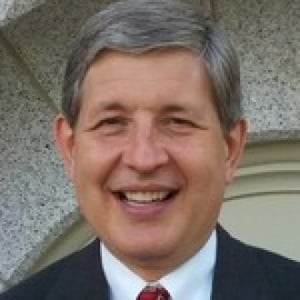
Partner, Schaerr Jaffe LLP
Gene Schaerr specializes in handling—and usually winning—civil appeals, writ proceedings and similar matters, both in appellate courts and in the law-focused proceedings at the trial-court or agency level that often determine success or failure on appeal. He has argued and won dozens of cases in a variety of forums—including the U.S. Supreme Court (where he has argued six cases), every federal circuit, and numerous federal district courts and state appellate courts. His win rate in the dozens of federal appeals he has argued in the past six years is over 75 percent.
He was a coordinator of Sidley Austin's appellate practice from 1993 until 2005, and from 2005 until 2014 was the chair of the nationwide appellate practice at Winston & Strawn—a practice he led to numerous recognitions in such publications as the Appellate Hot List. His personal practice successes have won him repeated recognition in such publications as Best Lawyers in Washington, D.C., Legal 500, D.C. Superlawyers, and Best Lawyers in America. In January 2014, Mr. Schaerr formed his own boutique litigation firm so that he could serve his clients without the conflicts and inefficiencies inherent in big-firm law practice.
Substantively, Mr. Schaerr's experience includes not only virtually every area of federal law, defamation, higher education law, immigration, insurance coverage, labor and employment, patent and trademark, privacy, product liability and warranty, statutory interpretation and tax.He has represented clients in virtually every sector, including automotive, communications, energy, financial services, health care, higher education, insurance, maritime, pharmaceuticals, technology and state and local government. He also teaches courses in Supreme Court litigation, religious freedom litigation and advanced litigation skills as an adjunct professor of law at the Brigham Young University law school.
Mr. Schaerr began law practice in 1987 following clerkships on the U.S. Supreme Court (for Chief Justice Warren Burger and Justice Antonin Scalia) and on the U.S. Court of Appeals for the D.C. Circuit (for then- Judge Kenneth Starr). He graduated in 1985 from the Yale Law School, where he was Editor-in-Chief of the Yale Journal on Regulation and Senior Editor of the Yale Law Journal. From 1991 to 1993, he served in the White House as Associate Counsel to the President, where he had responsibility for a wide range of constitutional and administrative-law issues, including those involving economic regulation, higher education, separation of powers, federalism and religious freedom. He serves as Chairman of the Constitutional Sources Project, a digital resource providing free public access to historical materials relevant to the U.S. Constitution.

The Contraceptive Mandate
Robert Barnes, Stuart Kyle Duncan, John C. Eastman, Martin S. Lederman, Elizabeth B. Wydra
Second Annual Executive Branch Review Conference
Religion has long had a special place in our society and in the Constitution. Has...
The Contraceptive Mandate
Robert Barnes, Stuart Kyle Duncan, John C. Eastman, Martin S. Lederman, Elizabeth B. Wydra
Second Annual Executive Branch Review Conference
Religion has long had a special place in our society and in the Constitution. Has...
Supreme Court October Term 2009: What Is in Store?
Robert Barnes, Walter E. Dellinger, Orin S. Kerr, Cleta Mitchell, Nicholas Quinn Rosenkranz, Gene C. Schaerr
October 5th marks the first day of the 2009 Supreme Court term. Thus far the...