

Professor of Law, South Texas College of Law Houston
Josh Blackman is a national thought leader on constitutional law and the United States Supreme Court. Josh’s work was quoted during two presidential impeachment trials. He has testified before Congress and advises federal and state lawmakers. Josh regularly appears on TV, including NBC, CBS, ABC, Fox, and the BBC. Josh is also a frequent guest on NPR and other syndicated radio programs. He has published commentaries in the New York Times, Wall Street Journal, Washington Post, and leading national publications.
Since 2012, Josh has served as a professor at the South Texas College of Law Houston. He holds the Centennial Chair of Constitutional Law. Josh is an Adjunct Fellow at the Manhattan Institute. Josh has written more than seven dozen law review articles that have been cited more than a thousand times. Josh was selected as the Jurist of the Year by the Texas Journal of Law & Public Policy, received the inaugural Meese III Originalism Award, and was awarded the Inaugural Joseph Story Award. Josh was selected by Forbes Magazine for the “30 Under 30” in Law and Policy. Josh is the President of the Harlan Institute, and founded FantasySCOTUS, the Internet’s Premier Supreme Court Fantasy League. He blogs at the Volokh Conspiracyand posts@JoshMBlackman.

Partner, O'Melveny & Myers LLP
Gregory Jacob is a partner in O’Melveny’s Washington, D.C. office. Greg Jacob represents financial services companies including banks, investment managers, health care payors, and insurers, as well as other employers, in class action and other litigation concerning ERISA and other labor and employment matters. A former Solicitor of Labor, Greg has extensive knowledge on a wide variety of labor and employment issues including ERISA, FLSA, OFCCP, and whistleblower law. He regularly litigates in federal courts throughout the country, defends clients against Department of Labor investigations, and provides counseling to plans and plan sponsors.
Prior to rejoining O’Melveny in 2021, Greg served as Counsel to Vice President Pence and Deputy Assistant to the President. He directly advised the Vice President on all legal issues relating to the Office of the Vice President, and advised the White House Coronavirus Task Force concerning the Defense Production Act and other legal issues related to bolstering the domestic supply chain.
Professor of Law, South Texas College of Law Houston
Josh Blackman is a national thought leader on constitutional law and the United States Supreme Court. Josh’s work was quoted during two presidential impeachment trials. He has testified before Congress and advises federal and state lawmakers. Josh regularly appears on TV, including NBC, CBS, ABC, Fox, and the BBC. Josh is also a frequent guest on NPR and other syndicated radio programs. He has published commentaries in the New York Times, Wall Street Journal, Washington Post, and leading national publications.
Since 2012, Josh has served as a professor at the South Texas College of Law Houston. He holds the Centennial Chair of Constitutional Law. Josh is an Adjunct Fellow at the Manhattan Institute. Josh has written more than seven dozen law review articles that have been cited more than a thousand times. Josh was selected as the Jurist of the Year by the Texas Journal of Law & Public Policy, received the inaugural Meese III Originalism Award, and was awarded the Inaugural Joseph Story Award. Josh was selected by Forbes Magazine for the “30 Under 30” in Law and Policy. Josh is the President of the Harlan Institute, and founded FantasySCOTUS, the Internet’s Premier Supreme Court Fantasy League. He blogs at the Volokh Conspiracyand posts@JoshMBlackman.

Professor of Law, Temple University Beasley School of Law
Professor Gugliuzza is an award-winning scholar and teacher who specializes in civil procedure, federal courts, and intellectual property law, with a particular focus on patent litigation. He has published articles in numerous leading law reviews, including the Emory Law Journal, the Georgetown Law Journal, the Iowa Law Review, the Notre Dame Law Review, the Texas Law Review, the Vanderbilt Law Review, and the Virginia Law Review.
Prior to joining the faculty at Temple, Professor Gugliuzza was a Professor of Law at Boston University School of Law, where he received the Dean’s Award in recognition of his teaching. Professor Gugliuzza’s article, “The Federal Circuit as a Federal Court,” received the annual best article award from the Federal Courts Section of the Association of American Law Schools (AALS). He has testified before both the U.S. Senate and the U.S. House of Representatives on the topic of patent litigation, and his scholarship has been cited in nearly a dozen judicial opinions across all levels of the state and federal courts.
Professor Gugliuzza graduated summa cum laude from Tulane University School of Law. After law school, he clerked for Judge Ronald M. Gould on the U.S. Court of Appeals for the Ninth Circuit, practiced in the Issues and Appeals group at Jones Day in Washington, D.C., and served as a Visiting Assistant Professor at the University of Florida Levin College of Law.

Professor of Law, University of Pittsburgh School of Law
Arthur D. Hellman, a professor of law (emeritus) at the University of Pittsburgh, is a nationally recognized scholar of the federal courts who has also written in the area of the First Amendment. His publications include numerous articles and several books, including casebooks in both areas, Federal Courts: Cases and Materials on Judicial Federalism and the Lawyering Process (5th edition 2022) (with David R. Stras, Ryan W. Scott, F. Andrew Hessick, and Derek T. Muller); and First Amendment Law: Freedom of Speech and Freedom of Religion (5th edition 2022) (with William D. Araiza, Thomas E. Baker, and Ashutosh A. Bhagwat).
In addition to his casebooks and academic writing, Processor Hellman has worked with the Judiciary Committees in the House and Senate in drafting federal courts legislation, including the most recent (2002) revision of the Judicial Conduct and Disability Act (Title 28, Chapter 16). The legislative histories of two major jurisdictional statutes – the Federal Courts Jurisdiction and Venue Clarification Act of 2011 and the “Holmes Group Fix” (enacted as part of the America Invents Act) – acknowledge his contributions.
Professor Hellman has testified as an invited witness at numerous hearings of both Judiciary Committees. His testimony has focused on a wide variety of legislative issues related to the federal courts, including the jurisdiction of the Supreme Court; proposals to divide the Ninth Circuit Court of Appeals; federal judicial discipline; unpublished appellate opinions; and the constitutionality of legislative restrictions on the powers of the federal courts.
In 2005 Professor Hellman was appointed as the inaugural holder of the Sally Ann Semenko Endowed Chair at the University. In 2002 he received the Chancellor’s Distinguished Research Award “as a faculty member who has an outstanding and continuing record of research and scholarly activity.”
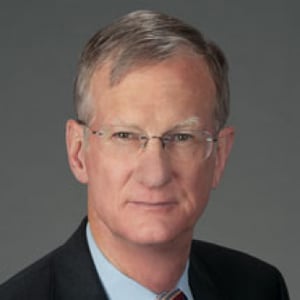
Legal Scholar and Solo Practitioner
Jack received his B.A. in History from the University of Virginia in 1977, graduating with Highest Distinction. After graduating Yale Law School in 1980, he served active duty in the U.S. Army's JAG Corps, rising to the rank of Major, where he represented the United States in more than 250 cases.
He practiced for a decade as an Associate for Bradley Arant in Birmingham, Alabama. He proudly served the State of Alabama in the Office of the Attorney General, both as Deputy and Assistant Attorney General, handling complex civil and criminal litigation cases for the people of Alabama. In 2000, he won the "Best Brief Award" from the National Association of Attorneys General for his brief in a case decided by the U.S. Supreme Court, James Alexander v. Martha Sandoval – a case he won. He was Special Assistant to the Inspector General for the Corporation for National and Community Service, Visiting Legal Fellow for the Center for Judicial and Legal Studies for the Heritage Foundation, Of Counsel at Strickland Brockington Lewis, a solo practitioner, and General Counsel for Indigo Energy.
Most recently, he "re-upped" for military service, volunteering his legal services to the Georgia State Defense Force where twice each month he provided legal services for National Guardsmen who were being deployed. He wore his military uniform for the last time in October 2024.
Jack Park passed away on March 16, 2026.
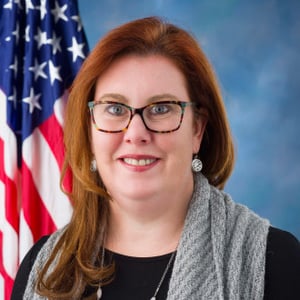
Chief Legal and Government Affairs Officer, BrightStar Care
Cheryl M. Stanton is Chief Legal and Government Affairs Officer at BrightStar Care. Prior to joining BrightStar Care, she served as Administrator of the Department of Labor’s Wage and Hour Division. She was sworn in as WHD’s Administrator by U.S. Secretary of Labor Alexander Acosta on April 29, 2019.
Stanton brought a wealth of experience to WHD, most recently having served as the Executive Director of the South Carolina Department of Employment and Workforce. Under her leadership, South Carolina’s jobless rate dropped to its lowest point in at least 50 years. During that time period, South Carolina’s workforce system helped place over 500,000 South Carolinians into jobs. Stanton also partnered with her colleague at the Department of Corrections to create a job re-entry program for ex-offenders, receiving national accolades. She also oversaw two major information technology modernization projects that improved customer service and increased efficiencies for employees.
Stanton served as the White House’s principal legal liaison to the DOL under President George W. Bush. She is a graduate of Williams College, and earned her law degree from the University of Chicago Law School.
Professor of Law, South Texas College of Law Houston
Josh Blackman is a national thought leader on constitutional law and the United States Supreme Court. Josh’s work was quoted during two presidential impeachment trials. He has testified before Congress and advises federal and state lawmakers. Josh regularly appears on TV, including NBC, CBS, ABC, Fox, and the BBC. Josh is also a frequent guest on NPR and other syndicated radio programs. He has published commentaries in the New York Times, Wall Street Journal, Washington Post, and leading national publications.
Since 2012, Josh has served as a professor at the South Texas College of Law Houston. He holds the Centennial Chair of Constitutional Law. Josh is an Adjunct Fellow at the Manhattan Institute. Josh has written more than seven dozen law review articles that have been cited more than a thousand times. Josh was selected as the Jurist of the Year by the Texas Journal of Law & Public Policy, received the inaugural Meese III Originalism Award, and was awarded the Inaugural Joseph Story Award. Josh was selected by Forbes Magazine for the “30 Under 30” in Law and Policy. Josh is the President of the Harlan Institute, and founded FantasySCOTUS, the Internet’s Premier Supreme Court Fantasy League. He blogs at the Volokh Conspiracyand posts@JoshMBlackman.
Professor of Law, Temple University Beasley School of Law
Professor Gugliuzza is an award-winning scholar and teacher who specializes in civil procedure, federal courts, and intellectual property law, with a particular focus on patent litigation. He has published articles in numerous leading law reviews, including the Emory Law Journal, the Georgetown Law Journal, the Iowa Law Review, the Notre Dame Law Review, the Texas Law Review, the Vanderbilt Law Review, and the Virginia Law Review.
Prior to joining the faculty at Temple, Professor Gugliuzza was a Professor of Law at Boston University School of Law, where he received the Dean’s Award in recognition of his teaching. Professor Gugliuzza’s article, “The Federal Circuit as a Federal Court,” received the annual best article award from the Federal Courts Section of the Association of American Law Schools (AALS). He has testified before both the U.S. Senate and the U.S. House of Representatives on the topic of patent litigation, and his scholarship has been cited in nearly a dozen judicial opinions across all levels of the state and federal courts.
Professor Gugliuzza graduated summa cum laude from Tulane University School of Law. After law school, he clerked for Judge Ronald M. Gould on the U.S. Court of Appeals for the Ninth Circuit, practiced in the Issues and Appeals group at Jones Day in Washington, D.C., and served as a Visiting Assistant Professor at the University of Florida Levin College of Law.
Professor of Law, University of Pittsburgh School of Law
Arthur D. Hellman, a professor of law (emeritus) at the University of Pittsburgh, is a nationally recognized scholar of the federal courts who has also written in the area of the First Amendment. His publications include numerous articles and several books, including casebooks in both areas, Federal Courts: Cases and Materials on Judicial Federalism and the Lawyering Process (5th edition 2022) (with David R. Stras, Ryan W. Scott, F. Andrew Hessick, and Derek T. Muller); and First Amendment Law: Freedom of Speech and Freedom of Religion (5th edition 2022) (with William D. Araiza, Thomas E. Baker, and Ashutosh A. Bhagwat).
In addition to his casebooks and academic writing, Processor Hellman has worked with the Judiciary Committees in the House and Senate in drafting federal courts legislation, including the most recent (2002) revision of the Judicial Conduct and Disability Act (Title 28, Chapter 16). The legislative histories of two major jurisdictional statutes – the Federal Courts Jurisdiction and Venue Clarification Act of 2011 and the “Holmes Group Fix” (enacted as part of the America Invents Act) – acknowledge his contributions.
Professor Hellman has testified as an invited witness at numerous hearings of both Judiciary Committees. His testimony has focused on a wide variety of legislative issues related to the federal courts, including the jurisdiction of the Supreme Court; proposals to divide the Ninth Circuit Court of Appeals; federal judicial discipline; unpublished appellate opinions; and the constitutionality of legislative restrictions on the powers of the federal courts.
In 2005 Professor Hellman was appointed as the inaugural holder of the Sally Ann Semenko Endowed Chair at the University. In 2002 he received the Chancellor’s Distinguished Research Award “as a faculty member who has an outstanding and continuing record of research and scholarly activity.”
Legal Scholar and Solo Practitioner
Jack received his B.A. in History from the University of Virginia in 1977, graduating with Highest Distinction. After graduating Yale Law School in 1980, he served active duty in the U.S. Army's JAG Corps, rising to the rank of Major, where he represented the United States in more than 250 cases.
He practiced for a decade as an Associate for Bradley Arant in Birmingham, Alabama. He proudly served the State of Alabama in the Office of the Attorney General, both as Deputy and Assistant Attorney General, handling complex civil and criminal litigation cases for the people of Alabama. In 2000, he won the "Best Brief Award" from the National Association of Attorneys General for his brief in a case decided by the U.S. Supreme Court, James Alexander v. Martha Sandoval – a case he won. He was Special Assistant to the Inspector General for the Corporation for National and Community Service, Visiting Legal Fellow for the Center for Judicial and Legal Studies for the Heritage Foundation, Of Counsel at Strickland Brockington Lewis, a solo practitioner, and General Counsel for Indigo Energy.
Most recently, he "re-upped" for military service, volunteering his legal services to the Georgia State Defense Force where twice each month he provided legal services for National Guardsmen who were being deployed. He wore his military uniform for the last time in October 2024.
Jack Park passed away on March 16, 2026.
Chief Legal and Government Affairs Officer, BrightStar Care
Cheryl M. Stanton is Chief Legal and Government Affairs Officer at BrightStar Care. Prior to joining BrightStar Care, she served as Administrator of the Department of Labor’s Wage and Hour Division. She was sworn in as WHD’s Administrator by U.S. Secretary of Labor Alexander Acosta on April 29, 2019.
Stanton brought a wealth of experience to WHD, most recently having served as the Executive Director of the South Carolina Department of Employment and Workforce. Under her leadership, South Carolina’s jobless rate dropped to its lowest point in at least 50 years. During that time period, South Carolina’s workforce system helped place over 500,000 South Carolinians into jobs. Stanton also partnered with her colleague at the Department of Corrections to create a job re-entry program for ex-offenders, receiving national accolades. She also oversaw two major information technology modernization projects that improved customer service and increased efficiencies for employees.
Stanton served as the White House’s principal legal liaison to the DOL under President George W. Bush. She is a graduate of Williams College, and earned her law degree from the University of Chicago Law School.

Patrick Hotung Professor of Constitutional Law, Georgetown University Law Center
Randy Barnett is the Patrick Hotung Professor of Constitutional Law at Georgetown University Law Center. He has argued before the United States Supreme Court, tried murder cases to juries as a prosecutor in Chicago, and appeared as a prosecutor in the feature film Inalienable. He is the author of numerous books, including Restoring the Lost Constitution, The Structure of Liberty, Our Republican Constitution, and The Original Meaning of the Fourteenth Amendment. He has published two memoirs, A Life for Liberty: The Making of an American Originalist, and Felony Review: Tales of True Crime and Corruption in Chicago. He is currently working on a new book, Freedom and Flourishing: Libertarianism for the Real World.
Professor of Law, South Texas College of Law Houston
Josh Blackman is a national thought leader on constitutional law and the United States Supreme Court. Josh’s work was quoted during two presidential impeachment trials. He has testified before Congress and advises federal and state lawmakers. Josh regularly appears on TV, including NBC, CBS, ABC, Fox, and the BBC. Josh is also a frequent guest on NPR and other syndicated radio programs. He has published commentaries in the New York Times, Wall Street Journal, Washington Post, and leading national publications.
Since 2012, Josh has served as a professor at the South Texas College of Law Houston. He holds the Centennial Chair of Constitutional Law. Josh is an Adjunct Fellow at the Manhattan Institute. Josh has written more than seven dozen law review articles that have been cited more than a thousand times. Josh was selected as the Jurist of the Year by the Texas Journal of Law & Public Policy, received the inaugural Meese III Originalism Award, and was awarded the Inaugural Joseph Story Award. Josh was selected by Forbes Magazine for the “30 Under 30” in Law and Policy. Josh is the President of the Harlan Institute, and founded FantasySCOTUS, the Internet’s Premier Supreme Court Fantasy League. He blogs at the Volokh Conspiracyand posts@JoshMBlackman.
Patrick Hotung Professor of Constitutional Law, Georgetown University Law Center
Randy Barnett is the Patrick Hotung Professor of Constitutional Law at Georgetown University Law Center. He has argued before the United States Supreme Court, tried murder cases to juries as a prosecutor in Chicago, and appeared as a prosecutor in the feature film Inalienable. He is the author of numerous books, including Restoring the Lost Constitution, The Structure of Liberty, Our Republican Constitution, and The Original Meaning of the Fourteenth Amendment. He has published two memoirs, A Life for Liberty: The Making of an American Originalist, and Felony Review: Tales of True Crime and Corruption in Chicago. He is currently working on a new book, Freedom and Flourishing: Libertarianism for the Real World.
Professor of Law, South Texas College of Law Houston
Josh Blackman is a national thought leader on constitutional law and the United States Supreme Court. Josh’s work was quoted during two presidential impeachment trials. He has testified before Congress and advises federal and state lawmakers. Josh regularly appears on TV, including NBC, CBS, ABC, Fox, and the BBC. Josh is also a frequent guest on NPR and other syndicated radio programs. He has published commentaries in the New York Times, Wall Street Journal, Washington Post, and leading national publications.
Since 2012, Josh has served as a professor at the South Texas College of Law Houston. He holds the Centennial Chair of Constitutional Law. Josh is an Adjunct Fellow at the Manhattan Institute. Josh has written more than seven dozen law review articles that have been cited more than a thousand times. Josh was selected as the Jurist of the Year by the Texas Journal of Law & Public Policy, received the inaugural Meese III Originalism Award, and was awarded the Inaugural Joseph Story Award. Josh was selected by Forbes Magazine for the “30 Under 30” in Law and Policy. Josh is the President of the Harlan Institute, and founded FantasySCOTUS, the Internet’s Premier Supreme Court Fantasy League. He blogs at the Volokh Conspiracyand posts@JoshMBlackman.
Professor of Law, South Texas College of Law Houston
Josh Blackman is a national thought leader on constitutional law and the United States Supreme Court. Josh’s work was quoted during two presidential impeachment trials. He has testified before Congress and advises federal and state lawmakers. Josh regularly appears on TV, including NBC, CBS, ABC, Fox, and the BBC. Josh is also a frequent guest on NPR and other syndicated radio programs. He has published commentaries in the New York Times, Wall Street Journal, Washington Post, and leading national publications.
Since 2012, Josh has served as a professor at the South Texas College of Law Houston. He holds the Centennial Chair of Constitutional Law. Josh is an Adjunct Fellow at the Manhattan Institute. Josh has written more than seven dozen law review articles that have been cited more than a thousand times. Josh was selected as the Jurist of the Year by the Texas Journal of Law & Public Policy, received the inaugural Meese III Originalism Award, and was awarded the Inaugural Joseph Story Award. Josh was selected by Forbes Magazine for the “30 Under 30” in Law and Policy. Josh is the President of the Harlan Institute, and founded FantasySCOTUS, the Internet’s Premier Supreme Court Fantasy League. He blogs at the Volokh Conspiracyand posts@JoshMBlackman.
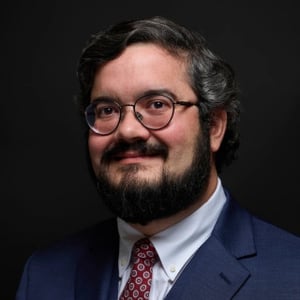
Partner, Torridon Law PLLC
Mike Fragoso is an experienced legal and policy strategist who represents clients before all three branches of the federal government. Most recently he served as chief counsel to the Senate Republican Leader, Mitch McConnell (R-KY). He has negotiated consequential legislation, managed successful congressional oversight, and prepared individuals for the most contentious Senate hearings.
As chief counsel to Leader McConnell, Mike was the Leader’s primary legal advisor and managed the “last mile” of any legislation touching on the Senate Judiciary Committee. He ran the 2024 reauthorization of FISA Section 702 and was involved at the highest levels of the appropriations and budget-reconciliation processes. Mike also repeatedly represented Leader McConnell as counsel of record at the Supreme Court. Leader McConnell said of Mike that he’s “equally at home in the high-minded philosophical discourse of the legal community and the urgent pragmatism of congressional dealmaking,” and that he “maintains a firm grasp on the realm of the possible” but “knows which screws to twist.” He observed that Mike “is so exceptionally competent that he often produces from his desk the work that would normally require, literally, teams of outside counsel.”
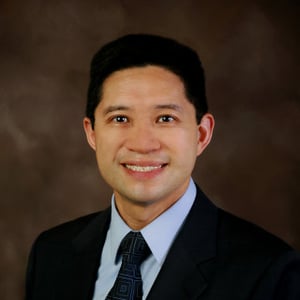
Founder, Original Jurisdiction
David Lat is a lawyer turned writer. He publishes Original Jurisdiction, a newsletter on Substack about law and legal affairs, and he writes for newspapers and magazines, including the New York Times, Washington Post, and Wall Street Journal. Prior to launching Original Jurisdiction, David founded Above the Law, one of the nation's most widely read legal news websites, and Underneath Their Robes, a popular blog about federal judges that he wrote under a pseudonym. He is also the author of a novel set in the world of the federal courts, Supreme Ambitions. Before entering the media world, David worked as a federal prosecutor in Newark, New Jersey; a litigation associate at Wachtell, Lipton, Rosen & Katz, in New York; and a law clerk to Judge Diarmuid F. O’Scannlain of the U.S. Court of Appeals for the Ninth Circuit. David graduated from Harvard College and Yale Law School, where he served as an editor of the Yale Law Journal.

Associate Professor of Law, Antonin Scalia Law School at George Mason University
Robert Luther III was appointed Associate Professor of Law in 2025 after serving as Distinguished Professor of Law from 2024-2025 and Adjunct Professor of Law from 2019-2024. He teaches and writes on the federal courts, legal and judicial ethics, political law, Congress, and professional sports. He has served at high levels in all three branches of the federal government and recently founded Constitutional Solutions PLLC—a law firm that navigates judicial candidates, judges, elected officials, professional athletes, and executives through high-stakes hearings, investigations, and reputational attacks.
Immediately before joining the Scalia Law faculty, Professor Luther spent over five years in the Washington, D.C. office of Jones Day, where his practice focused on strategic counseling, crisis management, and litigation. Prior to joining Jones Day, he served as Associate Counsel to the President of the United States in the White House Counsel’s Office. In the White House, he co-managed the judicial selection process and supervised the preparation of over 150 federal judicial nominees for their successful U.S. Senate confirmation hearings. The New York Times Magazine referred to his work on judicial selection during this period as “unique in White House history.” Before joining the White House, Professor Luther served as Counsel to then–U.S. Senator Jeff Sessions (R-Ala.) on the U.S. Senate Judiciary Committee, where he served as a core member of the team that prepared the Senator for confirmation as United States Attorney General. Professor Luther was also a law clerk to Judge Daniel A. Manion of the U.S. Court of Appeals for the Seventh Circuit. Earlier in his career, Professor Luther practiced civil and appellate litigation at a boutique firm in Williamsburg, Va. and taught at William & Mary Law School.
Professor Luther frequently speaks on the legal profession, political law, and federal judicial selection. His public work has been covered by or appeared in The New York Times, The Washington Post, The Wall Street Journal, Bloomberg, Fox News, The Hill, Politico, the Washington Examiner, National Law Journal, Law360, The Washington Reporter, and elsewhere, while his scholarship is published in the law journals of nearly twenty universities including three journals of Harvard University. He holds active law licenses in Virginia, the District of Columbia, the U.S. Supreme Court, and half of the U.S. Courts of Appeals.
In 2025, Virginia Governor Glenn Youngkin appointed Professor Luther to the Board of Visitors to Mount Vernon. He is an elected member of the American Law Institute (ALI) and serves on the Advisory Board of the Wilson Center for Leadership at Hampden-Sydney College. Since 2019, he has helped over 200 of his students secure clerkships with federal judges.
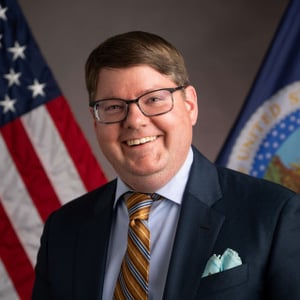
Deputy Secretary of Agriculture, U.S. Department of Agriculture
Judge Stephen Alexander Vaden was appointed as the Deputy Secretary of the U.S. Department of Agriculture on July 7, 2025. Alongside Secretary Brooke L. Rollins, Deputy Secretary Vaden leads the Department’s operations and implements policies that support America’s food and farm systems. A native of Union City, Tennessee, Deputy Secretary Vaden brings expertise in agricultural policy, law, and rural development. Previously, he served as a judge on the U.S. Court of International Trade and as General Counsel of USDA. Throughout Deputy Secretary Vaden’s time as General Counsel, he led successful Supreme Court litigation, advanced regulatory reform, and supported the implementation of the 2018 Farm Bill. He is a graduate of Yale Law School and Vanderbilt University. A public servant with strong agricultural roots, Deputy Secretary Vaden is committed to revitalizing rural America and ensuring an abundant, affordable, and safe U.S. food supply.
Professor of Law, South Texas College of Law Houston
Josh Blackman is a national thought leader on constitutional law and the United States Supreme Court. Josh’s work was quoted during two presidential impeachment trials. He has testified before Congress and advises federal and state lawmakers. Josh regularly appears on TV, including NBC, CBS, ABC, Fox, and the BBC. Josh is also a frequent guest on NPR and other syndicated radio programs. He has published commentaries in the New York Times, Wall Street Journal, Washington Post, and leading national publications.
Since 2012, Josh has served as a professor at the South Texas College of Law Houston. He holds the Centennial Chair of Constitutional Law. Josh is an Adjunct Fellow at the Manhattan Institute. Josh has written more than seven dozen law review articles that have been cited more than a thousand times. Josh was selected as the Jurist of the Year by the Texas Journal of Law & Public Policy, received the inaugural Meese III Originalism Award, and was awarded the Inaugural Joseph Story Award. Josh was selected by Forbes Magazine for the “30 Under 30” in Law and Policy. Josh is the President of the Harlan Institute, and founded FantasySCOTUS, the Internet’s Premier Supreme Court Fantasy League. He blogs at the Volokh Conspiracyand posts@JoshMBlackman.
Partner, Torridon Law PLLC
Mike Fragoso is an experienced legal and policy strategist who represents clients before all three branches of the federal government. Most recently he served as chief counsel to the Senate Republican Leader, Mitch McConnell (R-KY). He has negotiated consequential legislation, managed successful congressional oversight, and prepared individuals for the most contentious Senate hearings.
As chief counsel to Leader McConnell, Mike was the Leader’s primary legal advisor and managed the “last mile” of any legislation touching on the Senate Judiciary Committee. He ran the 2024 reauthorization of FISA Section 702 and was involved at the highest levels of the appropriations and budget-reconciliation processes. Mike also repeatedly represented Leader McConnell as counsel of record at the Supreme Court. Leader McConnell said of Mike that he’s “equally at home in the high-minded philosophical discourse of the legal community and the urgent pragmatism of congressional dealmaking,” and that he “maintains a firm grasp on the realm of the possible” but “knows which screws to twist.” He observed that Mike “is so exceptionally competent that he often produces from his desk the work that would normally require, literally, teams of outside counsel.”
Founder, Original Jurisdiction
David Lat is a lawyer turned writer. He publishes Original Jurisdiction, a newsletter on Substack about law and legal affairs, and he writes for newspapers and magazines, including the New York Times, Washington Post, and Wall Street Journal. Prior to launching Original Jurisdiction, David founded Above the Law, one of the nation's most widely read legal news websites, and Underneath Their Robes, a popular blog about federal judges that he wrote under a pseudonym. He is also the author of a novel set in the world of the federal courts, Supreme Ambitions. Before entering the media world, David worked as a federal prosecutor in Newark, New Jersey; a litigation associate at Wachtell, Lipton, Rosen & Katz, in New York; and a law clerk to Judge Diarmuid F. O’Scannlain of the U.S. Court of Appeals for the Ninth Circuit. David graduated from Harvard College and Yale Law School, where he served as an editor of the Yale Law Journal.
Associate Professor of Law, Antonin Scalia Law School at George Mason University
Robert Luther III was appointed Associate Professor of Law in 2025 after serving as Distinguished Professor of Law from 2024-2025 and Adjunct Professor of Law from 2019-2024. He teaches and writes on the federal courts, legal and judicial ethics, political law, Congress, and professional sports. He has served at high levels in all three branches of the federal government and recently founded Constitutional Solutions PLLC—a law firm that navigates judicial candidates, judges, elected officials, professional athletes, and executives through high-stakes hearings, investigations, and reputational attacks.
Immediately before joining the Scalia Law faculty, Professor Luther spent over five years in the Washington, D.C. office of Jones Day, where his practice focused on strategic counseling, crisis management, and litigation. Prior to joining Jones Day, he served as Associate Counsel to the President of the United States in the White House Counsel’s Office. In the White House, he co-managed the judicial selection process and supervised the preparation of over 150 federal judicial nominees for their successful U.S. Senate confirmation hearings. The New York Times Magazine referred to his work on judicial selection during this period as “unique in White House history.” Before joining the White House, Professor Luther served as Counsel to then–U.S. Senator Jeff Sessions (R-Ala.) on the U.S. Senate Judiciary Committee, where he served as a core member of the team that prepared the Senator for confirmation as United States Attorney General. Professor Luther was also a law clerk to Judge Daniel A. Manion of the U.S. Court of Appeals for the Seventh Circuit. Earlier in his career, Professor Luther practiced civil and appellate litigation at a boutique firm in Williamsburg, Va. and taught at William & Mary Law School.
Professor Luther frequently speaks on the legal profession, political law, and federal judicial selection. His public work has been covered by or appeared in The New York Times, The Washington Post, The Wall Street Journal, Bloomberg, Fox News, The Hill, Politico, the Washington Examiner, National Law Journal, Law360, The Washington Reporter, and elsewhere, while his scholarship is published in the law journals of nearly twenty universities including three journals of Harvard University. He holds active law licenses in Virginia, the District of Columbia, the U.S. Supreme Court, and half of the U.S. Courts of Appeals.
In 2025, Virginia Governor Glenn Youngkin appointed Professor Luther to the Board of Visitors to Mount Vernon. He is an elected member of the American Law Institute (ALI) and serves on the Advisory Board of the Wilson Center for Leadership at Hampden-Sydney College. Since 2019, he has helped over 200 of his students secure clerkships with federal judges.
Deputy Secretary of Agriculture, U.S. Department of Agriculture
Judge Stephen Alexander Vaden was appointed as the Deputy Secretary of the U.S. Department of Agriculture on July 7, 2025. Alongside Secretary Brooke L. Rollins, Deputy Secretary Vaden leads the Department’s operations and implements policies that support America’s food and farm systems. A native of Union City, Tennessee, Deputy Secretary Vaden brings expertise in agricultural policy, law, and rural development. Previously, he served as a judge on the U.S. Court of International Trade and as General Counsel of USDA. Throughout Deputy Secretary Vaden’s time as General Counsel, he led successful Supreme Court litigation, advanced regulatory reform, and supported the implementation of the 2018 Farm Bill. He is a graduate of Yale Law School and Vanderbilt University. A public servant with strong agricultural roots, Deputy Secretary Vaden is committed to revitalizing rural America and ensuring an abundant, affordable, and safe U.S. food supply.
Professor of Law, South Texas College of Law Houston
Josh Blackman is a national thought leader on constitutional law and the United States Supreme Court. Josh’s work was quoted during two presidential impeachment trials. He has testified before Congress and advises federal and state lawmakers. Josh regularly appears on TV, including NBC, CBS, ABC, Fox, and the BBC. Josh is also a frequent guest on NPR and other syndicated radio programs. He has published commentaries in the New York Times, Wall Street Journal, Washington Post, and leading national publications.
Since 2012, Josh has served as a professor at the South Texas College of Law Houston. He holds the Centennial Chair of Constitutional Law. Josh is an Adjunct Fellow at the Manhattan Institute. Josh has written more than seven dozen law review articles that have been cited more than a thousand times. Josh was selected as the Jurist of the Year by the Texas Journal of Law & Public Policy, received the inaugural Meese III Originalism Award, and was awarded the Inaugural Joseph Story Award. Josh was selected by Forbes Magazine for the “30 Under 30” in Law and Policy. Josh is the President of the Harlan Institute, and founded FantasySCOTUS, the Internet’s Premier Supreme Court Fantasy League. He blogs at the Volokh Conspiracyand posts@JoshMBlackman.
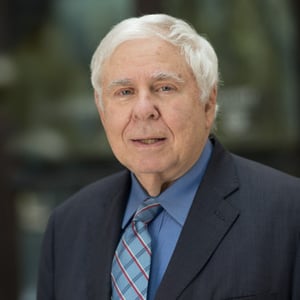
W. St. John Garwood and W. St. John Garwood, Jr. Centennial Chair and Professor of Government, University of Texas at Austin School of Law
Sanford Levinson, who holds the W. St. John Garwood and W. St. John Garwood, Jr. Centennial Chair in Law, joined the University of Texas Law School in 1980. Previously a member of the Department of Politics at Princeton University, he is also a Professor in the Department of Government at the University of Texas. Levinson is the author of approximately 400 articles, book reviews, or commentaries in professional and popular journals--and a regular contributor to the popular blog Balkinization. He has also written six books: Constitutional Faith (1988, winner of the Scribes Award, 2d edition 2011); Written in Stone: Public Monuments in Changing Societies (1998); Wrestling With Diversity (2003); Our Undemocratic Constitution: Where the Constitution Goes Wrong (and How We the People Can Correct It)(2006); Framed: America's 51 Constitutions and the Crisis of Governance (2012); An Argument Open to All: Reading the Federalist in the 21st Century (2015); and, with Cynthia Levinson, Fault Lines in the Constitution: The Framers, Their Fights, and teh Flaws that Affect Us Today (forthcoming, September 2017). Edited or co-edited books include a leading constitutional law casebook, Processes of Constitutional Decisionmaking (6th ed. 2015, with Paul Brest, Jack Balkin, Akhil Amar, and Reva Siegel); Nullification and Secession in Modern Constitutional Thought (2016); Reading Law and Literature: A Hermeneutic Reader (1988, with Steven Mallioux); Responding to Imperfection: The Theory and Practice of Constitutional Amendment (1995); Constitutional Stupidities, Constitutional Tragedies (1998, with William Eskridge); Legal Canons (2000, with Jack Balkin); The Louisiana Purchase and American Expansion (2005, with Batholomew Sparrow); Torture: A Collection (2004, revised paperback edition, 2006); and The Oxford Handbook on the United States Constitution (with Mark Tushnet and Mark Graber, 2015). He received the Lifetime Achievement Award from the Law and Courts Section of the American Political Science Association in 2010.
He has been a visiting faculty member of the Boston University, Georgetown, Harvard, New York University, and Yale law schools in the United States and has taught abroad in programs of law in London; Paris; Jerusalem; Auckland, New Zealand; and Melbourne, Australia. He was a Fellow at the Institute for Advanced Study in Princeton in 1985-86 and a Member of the Ethics in the Professions Program at Harvard in 1991-92. He is also affiliated with the Shalom Hartman Institute of Jewish Philosophy in Jerusalem. A member of the American Law Institute, Levinson was elected to the American Academy of Arts and Sciences in 2001. He is married to Cynthia Y. Levinson, a writer of children's literature, and has two daughters and four grandchildren.

Richard and Frances Mallery Professor of Law and Faculty Director, Constitutional Law Center, Stanford Law School
Michael W. McConnell is the Richard and Frances Mallery Professor and Faculty Director of the Constitutional Law Center at Stanford Law School, and a Senior Fellow at the Hoover Institution. From 2002 to 2009, he served as a Circuit Judge on the United States Court of Appeals for the Tenth Circuit. He was nominated by President George W. Bush, a Republican, and confirmed by a Democratic Senate by unanimous consent. McConnell has previously held chaired professorships at the University of Chicago and the University of Utah, and visiting professorships at Harvard and NYU. He teaches courses on constitutional law, constitutional history, First Amendment, and interpretive theory. He has published widely in the fields of constitutional law and theory, especially church and state, equal protection, and separation of powers. His book, “The President Who Would Not Be King: Executive Power Under the Constitution,” was published by Princeton University Press in 2020, based on the Tanner Lectures in Human Values, which he delivered at Princeton in 2019. His latest book, co-authored with Nathan Chapman, “Agreeing to Disagree: How the Establishment Clause Protects Religious Diversity and Freedom of Conscience,” was published by Oxford University Press in mid-2023. McConnell has argued sixteen cases in the United States Supreme Court, most recently Carney v. Adams (2020). defending a provision of the Delaware Constitution requiring political balance on that state’s courts. More recently, he was co-counsel in Gonzalez v. Google. He earned his B.A. from Michigan State University and his J.D. from the University of Chicago, and has received honorary degrees from Notre Dame University and Michigan State. He served as law clerk to Supreme Court Justice William J. Brennan, Jr. and D.C. Circuit Chief Judge J. Skelly Wright. He has been Assistant General Counsel of the Office of Management & Budget, Assistant to the Solicitor General of the Department of Justice, and a member of the President’s Intelligence Oversight Board. He is Senior of Counsel to the law firm Wilson, Sonsini, Goodrich & Rosati, and is co-chair of Meta’s Oversight Review Board.
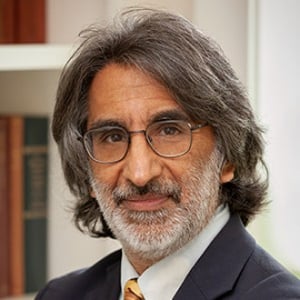
Sterling Professor of Law, Yale Law School
Akhil Reed Amar is Sterling Professor of Law and Political Science at Yale University, where he teaches constitutional law in both Yale College and Yale Law School. After graduating from Yale College, summa cum laude, in 1980 and from Yale Law School in 1984, and clerking for Judge (later Justice) Stephen Breyer, Amar joined the Yale faculty in 1985 at the age of 26. He is Yale’s only living professor to have won the University’s unofficial triple crown — the Sterling Chair for scholarship, the DeVane Medal for teaching, and the Lamar Award for alumni service.
Amar’s work has won awards from both the American Bar Association and the Federalist Society, and he has been cited by Supreme Court justices across the spectrum in more than 50 cases — tops among scholars under age 70. According to both Fred Shapiro’s landmark 2021 study of lifetime scholarly citations and Heinonline’s most recent tabulation of lifetime law-review citations, Amar is America’s second most-cited legal scholar still under age 70. He is a member of the American Academy of Arts and Sciences and has written widely for popular publications, including The New York Times, The Washington Post, The Wall Street Journal, Time, and The Atlantic. He was an informal consultant to the popular TV show The West Wing and his scholarship has been showcased on many broadcasts, including The Colbert Report, Morning Joe, AC360, Velshi, Fox News @ Night with Shannon Bream, Fareed Zakaria GPS, Erin Burnett Outfront, and Constitution USA with Peter Sagal.
He is the author of more than a hundred law review articles and several books, including The Bill of Rights (1998 — winner of the Yale University Press Governors’ Award), America’s Constitution (2005 — winner of the ABA’s Silver Gavel Award), America’s Unwritten Constitution (2012 — named one of the year’s 100 best nonfiction books by The Washington Post), and The Constitution Today (2016 — named one of the year’s top ten nonfiction books by Time magazine). The first volume of his ambitious trilogy on American constitutional history from the Founding to the present, The Words That Made Us: America’s Constitutional Conversation, 1760-1840, came out in May 2021. The second volume, Born Equal: Remaking America’s Constitution, 1840-1920, will be published in September 2025 and is already available for pre-order. All together, his nonfiction books have won two starred reviews from Publishers Weekly and three starred reviews from Kirkus—tops, it is believed, among legal scholars under age 70. Together with Vikram David Amar (YLS ’88), he has a bi-weekly column on the Supreme Court on the distinguished website SCOTUSblog. Along with Andy Lipka, he co-hosts a popular and free weekly podcast, Amarica’s Constitution, whose listeners are eligible for CLE credit in most American jurisdictions. A wide assortment of his articles and op-eds and video links to many of his public lectures and free online courses may be found at akhilamar.com.
Professor of Law, South Texas College of Law Houston
Josh Blackman is a national thought leader on constitutional law and the United States Supreme Court. Josh’s work was quoted during two presidential impeachment trials. He has testified before Congress and advises federal and state lawmakers. Josh regularly appears on TV, including NBC, CBS, ABC, Fox, and the BBC. Josh is also a frequent guest on NPR and other syndicated radio programs. He has published commentaries in the New York Times, Wall Street Journal, Washington Post, and leading national publications.
Since 2012, Josh has served as a professor at the South Texas College of Law Houston. He holds the Centennial Chair of Constitutional Law. Josh is an Adjunct Fellow at the Manhattan Institute. Josh has written more than seven dozen law review articles that have been cited more than a thousand times. Josh was selected as the Jurist of the Year by the Texas Journal of Law & Public Policy, received the inaugural Meese III Originalism Award, and was awarded the Inaugural Joseph Story Award. Josh was selected by Forbes Magazine for the “30 Under 30” in Law and Policy. Josh is the President of the Harlan Institute, and founded FantasySCOTUS, the Internet’s Premier Supreme Court Fantasy League. He blogs at the Volokh Conspiracyand posts@JoshMBlackman.
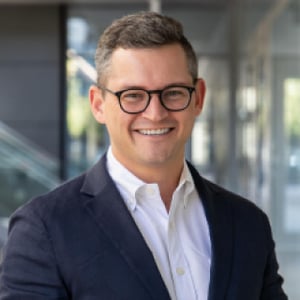
Associate Professor of Law, Sandra Day O'Connor College of Law, Arizona State University
Jonathan Green is an Associate Professor of Law at Arizona State University teaching Civil Procedure and Statutory Interpretation. His scholarship focuses on the history of political and legal thought. He is especially interested in the history of constitutionalism, theories of interpretation, and the concept of judicial power. His research has been published in the Arizona State Law Journal, the Journal of the History of Ideas, Modern Intellectual History, and the Historical Journal.
Prior to joining the ASU faculty in 2024, Professor Green was a Harry A. Bigelow Fellow at the University of Chicago. He previously clerked for Judge Neomi Rao of the U.S. Court of Appeals for the District of Columbia Circuit, and worked as a litigation associate at DLA Piper in Philadelphia.
Professor Green holds a J.D. from Yale Law School, where he was an editor of the Yale Law Journal. He received his PhD from the University of Cambridge, where he was a joint recipient of Prince Consort & Thirwall Prize, awarded annually for the best dissertation in the Cambridge History Faculty. He also received his MPhil from Cambridge, and earned his B.A., summa cum laude, from Northwestern University.
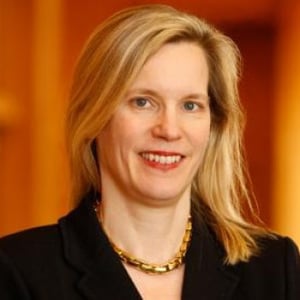
John S. Battle Professor of Law, University of Virginia School of Law
Julia D. Mahoney teaches courses in property, government finance, constitutional law and nonprofit organizations. A graduate of Yale Law School, she joined the University of Virginia faculty as an associate professor in 1999 and is now John S. Battle Professor of Law. She has also taught at the University of Southern California Law School and the University of Chicago Law School, and before entering the legal academy, practiced law at the New York firm Wachtell, Lipton, Rosen & Katz. Her scholarly articles include works on land preservation, eminent domain, health care reform and property rights in human biological materials.
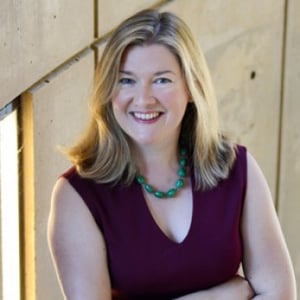
Carl and Shelia Spaeth Professor of Law; Associate Dean for Research and Intellectual Life, Stanford Law School
Bernadette Meyler, JD ’03, is a scholar of British and American constitutional law and of law and the humanities. She returned in 2013 to Stanford Law School, where she had previously served as Leah Kaplan Visiting Professor in Human Rights. Her research and teaching bring together the sometimes surprisingly divided fields of legal history and law and literature. They also examine the long history of constitutionalism, reaching back into the English common law ancestry of the U.S. Constitution. Professor Meyler’s current book projects stem from these respective areas of her scholarship. Theaters of Pardoning (Cornell UP, forthcoming 2019) demonstrates that the representation of pardoning tracks changing conceptions of sovereignty within the plays and politics of seventeenth-century England. In doing so, the book considers how the shared audiences of dramatic and historical tragicomedy—whether Kings, students at the Inns of Court, or potential jurors—brought concepts from the literary into the legal arena and back again. Common Law Originalism shifts to the American context, looking at the multiple eighteenth-century common law meanings—both colonial and English—of various constitutional terms and phrases. Based on this variety, as well as on the practices of common law interpretation with which members of the Founding generation were familiar, the book argues that we should, in large part, reject the pursuit of a singular and determinate original meaning; instead, it contends, we must embrace a more vigorous debate in the present over contested constitutional meanings. Professor Meyler is also the co-editor of several collections of essays in law and the humanities designed to introduce scholars and students to the field, including, with Elizabeth Anker, New Directions in Law and Literature (Oxford UP, 2017) and, with Simon Stern and Maksymilian Del Mar, The Oxford Handbook of Law and the Humanities (Oxford UP, forthcoming 2019).
After receiving her BA in Literature with a focus on Classics at Harvard University, Professor Meyler obtained her JD from Stanford Law School and completed a PhD in English at UC, Irvine as a Mellon Fellow in Humanistic Studies and a Chancellor’s Fellow. Following law school, Professor Meyler clerked for the Hon. Robert A. Katzmann of the U.S. Court of Appeals for the Second Circuit.
Professor Meyler previously taught at Cornell University, where she served, most recently, as Professor of Law and English and Faculty Director of Research at the Cornell Law School. She also visited Princeton University as the inaugural Mellon/LAPA Fellow in Law and the Humanities.
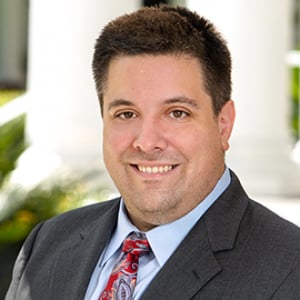
Sheila M. McDevitt Professor of Law and Faculty Director of the Election Law Center, Florida State University College of Law
Professor Morley joined FSU Law in 2018, and teaches and writes in the areas of election law, constitutional law, remedies, and the federal courts. He is best known for his work on election emergencies and post-election litigation, nationwide and other defendant-oriented injunctions, the jurisdiction of the federal courts and their equitable powers more generally. He has testified before congressional committees, made presentations to election officials for the U.S. Election Assistance Commission and participated in bipartisan blue-ribbon groups to develop election reforms. The governor of Florida also appointed Professor Morley to the Criminal Punishment Code Task Force, to propose potential revisions to the legislature.
The U.S. Supreme Court has cited several of his articles, and he was counsel of record for the successful Petitioner in a landmark campaign finance case. Professor Morley has appeared on C-SPAN, Court TV, Fox News and numerous local news programs, and has been quoted in the Washington Post, Los Angeles Times, Roll Call, Politico, U.S. News and World Report, and a wide range of other national publications. His work has been published in many of the nation’s top law reviews, including the Georgetown Law Journal, Northwestern University Law Review, Boston University Law Review and Emory Law Journal.
Before joining FSU Law, Professor Morley was a Climenko Fellow and Lecturer in Law at Harvard Law School. Prior to his experience in academia, he served in government as special assistant to the General Counsel of the Army at the Pentagon, as well as a law clerk for Judge Gerald B. Tjoflat of the U.S. Court of Appeals for the Eleventh Circuit. During his tenure with the Army General Counsel’s office, he was awarded the Meritorious Civilian Service Award and the Army Staff Lapel Pin. He also worked as an associate at Williams & Connolly LLP and the Supreme Court & Appellate group of Winston & Strawn, LLP, both in Washington, D.C.
Professor Morley earned his J.D. from Yale Law School in 2003, where he was a senior editor on the Yale Law Journal; served on the moot court board; and received the Thurman Arnold Prize for Best Oralist in the Morris Tyler Moot Court of Appeals.
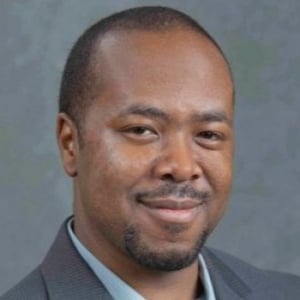
Justice Thurgood Marshall Distinguished Professor of Law, University of Virginia Law
Bertrall Ross joined the law faculty in 2021. He teaches and writes in the areas of constitutional law, constitutional theory, election law, administrative law and statutory interpretation.
Ross’ research is driven by a concern about democratic responsiveness and accountability, as well as the inclusion of marginalized communities in administrative and political processes. His past scholarship has been published in several books and journals, including the Columbia Law Review, New York University Law Review and the University of Chicago Law Review. Two of his articles were selected by the Yale/Harvard/Stanford Junior Faculty Forum.
Ross earned his undergraduate degree in international affairs and history from the University of Colorado, Boulder; his graduate degrees from the London School of Economics and Princeton University’s School of Public and International Affairs; and his law degree from Yale Law School. After law school, he clerked for Judge Dorothy Nelson of the U.S. Court of Appeals for the Ninth Circuit and Judge Myron Thompson of the U.S. District Court for the Middle District of Alabama.
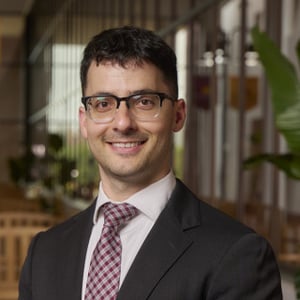
Professor, University of Minnesota Law School
Ilan Wurman is the Julius E. Davis Professor of Law at the University of Minnesota, where he teaches administrative law and constitutional law. He previously taught at Arizona State University. He writes primarily on the Fourteenth Amendment, administrative law, separation of powers, and constitutionalism. His academic writing has appeared in the Yale Law Journal, the Stanford Law Review, the University of Chicago Law Review, the University of Pennsylvania Law Review, the Virginia Law Review, the Duke Law Journal, the Minnesota Law Review, the Notre Dame Law Review, and the Texas Law Review among other journals.
Professor Wurman is the author of a casebook, Administrative Law Theory and Fundamentals: An Integrated Approach (Foundation Press 2d ed. 2024). He is also the author of A Debt Against the Living: An Introduction to Originalism (Cambridge 2017), and The Second Founding: An Introduction to the Fourteenth Amendment (Cambridge 2020). His next book, The Constitution of 1789: A New Introduction, is also forthcoming with Cambridge University Press.
Professor Wurman practices law with the firm Tully Bailey. He has litigated a variety of administrative law and constitutional law cases, including cases involving COVID-19 restrictions, transmission lines, and Appointments Clause challenges. He also devised winning public nuisance theories to force city governments to address the increasingly challenging public camping crises throughout the country.

2023 Ron Rotunda Memorial Webinar: The State of the Legal Profession
Josh Blackman, Gregory Frederick Jacob
In Conversation with Greg Jacob
The 2023 Ron Rotunda Memorial Webinar featured a conversation with Gregory Jacob and Prof. Josh Blackman...
Newman v. Moore: Intra-Federal Circuit Dispute Raises Multiple Cross-Disciplinary Issues
Josh Blackman, Paul R. Gugliuzza, Arthur D. Hellman, John J. Park, Cheryl M. Stanton
Ethics & Anti-Bias CLE Credit Offered
In 1984, Hon. Pauline Newman became the first judge appointed directly to the United States...
Newman v. Moore: Intra-Federal Circuit Dispute Raises Multiple Cross-Disciplinary Issues
Josh Blackman, Paul R. Gugliuzza, Arthur D. Hellman, John J. Park, Cheryl M. Stanton
Ethics & Anti-Bias CLE Credit Offered
In 1984, Hon. Pauline Newman became the first judge appointed directly to the United States...
Topics
The Stealth Impeachment of Judge Newman in the Federal Circuit
This post was originally published at the Volokh Conspiracy. Of late, the media has fixated...
Talks with Authors: An Introduction to Constitutional Law: 100+ Supreme Court Cases Everyone Should Know
Randy E. Barnett, Josh Blackman
Professors Randy Barnett and Josh Blackman will discuss the most important Supreme Court cases of...
Talks with Authors: An Introduction to Constitutional Law: 100+ Supreme Court Cases Everyone Should Know
Randy E. Barnett, Josh Blackman
Professors Randy Barnett and Josh Blackman will discuss the most important Supreme Court cases of...
The Judge’s Role in Choosing a Successor
Josh Blackman, Michael Fragoso, David Lat, Robert Luther, Stephen Alexander Vaden
2022 National Lawyer's Convention
Under the Constitution, two branches of government are formally involved in the selection of federal...
The Judge’s Role in Choosing a Successor
Josh Blackman, Michael Fragoso, David Lat, Robert Luther, Stephen Alexander Vaden
2022 National Lawyer's Convention
Under the Constitution, two branches of government are formally involved in the selection of federal...
Revisiting Jacobson
Josh Blackman, Sanford V. Levinson
In 1905, the U.S. Supreme Court decided Jacobson v. Massachusetts, upholding a state's ability to enforce compulsory...
Pre-Symposium Panel: Young Legal Scholars
Michael W. McConnell, Akhil Reed Amar, Josh Blackman, Jonathan Green, Julia D. Mahoney, Bernadette Meyler, Michael T. Morley, Bertrall Ross, Ilan Wurman
*not part of the 2022 National Student Symposium program
Before the National Student Symposium begins, the Federalist Society's Faculty Division will host a panel of young...