
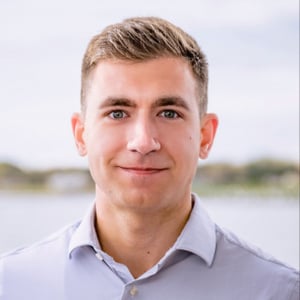
Policy Adviser, American Compass
Mark DiPlacido is a Policy Adviser at American Compass. Before that, he worked on Governor Ron DeSantis's campaign for President. He has also worked as the Deputy Assistant Trade Representative for Public Affairs at the Office of the U.S. Trade Representative, Heritage Action, and the U.S. Senate. He is a graduate of Yale University.
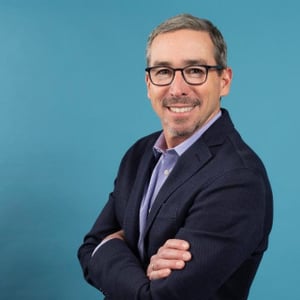
Peter Wertheim Professor in Urban Policy, Harvard Kennedy School
Gordon Hanson is the Peter Wertheim Professor in Urban Policy at Harvard Kennedy School (Remembrance for Peter Wertheim) and Academic Dean for Strategy and Engagement at Harvard Kennedy School. He is best known for his research on the labor market consequences of globalization, including pioneering work on the China trade shock. Hanson’s current research addresses the causes and consequences of regional job loss, the effectiveness of place-based policies in alleviating regional economic distress, and how the energy transition will affect local labor markets. This work is part of the Reimagining the Economy project at the Kennedy School, which Hanson co-directs with Dani Rodrik. Hanson’s related scholarship touches upon immigration, the globalization of production, and economic geography. He has published extensively in top economics journals, is widely cited for his research by scholars from across the social sciences and is frequently quoted in major media outlets. Hanson is a research associate at the National Bureau of Economic Research, a member of the Council on Foreign Relations, and past co-editor of the Journal of Economic Perspectives, the Review of Economics and Statistics, and the Journal of Development Economics. He received his PhD in economics from MIT in 1992 and his BA in economics from Occidental College in 1986. Prior to joining Harvard in 2020, he spent two decades at UC San Diego, where held the Pacific Economic Cooperation Chair in International Economic Relations at UC San Diego and was founding director of the Center on Global Transformation. Hanson previously served on the economics faculties of the University of Michigan and the University of Texas.
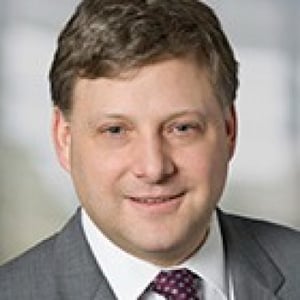
Partner, Sullivan & Cromwell LLP
Eric Kadel is engaged in a wide variety of corporate, transactional and regulatory matters. He is a member of the Firm’s Corporate and Finance, Financial Services, Investment Management, Alternative Investment Management, Cybersecurity, and Commodities, Futures and Derivatives Groups. With regard to financings, Mr. Kadel regularly represents participants in capital markets transactions, and dealers and end users in connection with structuring and documenting a wide variety of swaps and other derivatives, including equity, credit default and commodity swaps, options and forwards. Mr. Kadel’s work in the investment management area includes advising public and private investment companies and investment advisers on a wide variety of transactional, regulatory, compliance and other matters, including registration and regulation. Mr. Kadel also advises clients of the Firm regarding developments in the laws regulating the financial services industry and on cybersecurity issues. Mr. Kadel is currently an adjunct professor at George Washington University Law School.
In addition, Mr. Kadel is one of the principal partners in the Firm’s International Trade and Investment practice. He counsels and represents clients on questions about U.S. economic sanctions, including those administered by the Treasury Department’s Office of Foreign Assets Control (“OFAC”), United States antiboycott requirements under the Export Administration Regulations administered and enforced by the Commerce Department’s Office of Antiboycott Compliance within the Bureau of Industry and Security, Bank Secrecy Act/anti‐money laundering laws and the U.S. Foreign Corrupt Practices Act (“FCPA”). Mr. Kadel’s practice includes analysis of proposed transactions and business relationships; due diligence and design and review of compliance procedures and strategies; and internal investigations, voluntary disclosures and government enforcement actions. Mr. Kadel also regularly advises clients regarding questions arising under Exon-Florio and the transaction review process administered by the Committee on Foreign Investment in the United States (“CFIUS”), and has represented clients before CFIUS on many national security reviews.
Policy Adviser, American Compass
Mark DiPlacido is a Policy Adviser at American Compass. Before that, he worked on Governor Ron DeSantis's campaign for President. He has also worked as the Deputy Assistant Trade Representative for Public Affairs at the Office of the U.S. Trade Representative, Heritage Action, and the U.S. Senate. He is a graduate of Yale University.
Peter Wertheim Professor in Urban Policy, Harvard Kennedy School
Gordon Hanson is the Peter Wertheim Professor in Urban Policy at Harvard Kennedy School (Remembrance for Peter Wertheim) and Academic Dean for Strategy and Engagement at Harvard Kennedy School. He is best known for his research on the labor market consequences of globalization, including pioneering work on the China trade shock. Hanson’s current research addresses the causes and consequences of regional job loss, the effectiveness of place-based policies in alleviating regional economic distress, and how the energy transition will affect local labor markets. This work is part of the Reimagining the Economy project at the Kennedy School, which Hanson co-directs with Dani Rodrik. Hanson’s related scholarship touches upon immigration, the globalization of production, and economic geography. He has published extensively in top economics journals, is widely cited for his research by scholars from across the social sciences and is frequently quoted in major media outlets. Hanson is a research associate at the National Bureau of Economic Research, a member of the Council on Foreign Relations, and past co-editor of the Journal of Economic Perspectives, the Review of Economics and Statistics, and the Journal of Development Economics. He received his PhD in economics from MIT in 1992 and his BA in economics from Occidental College in 1986. Prior to joining Harvard in 2020, he spent two decades at UC San Diego, where held the Pacific Economic Cooperation Chair in International Economic Relations at UC San Diego and was founding director of the Center on Global Transformation. Hanson previously served on the economics faculties of the University of Michigan and the University of Texas.
Partner, Sullivan & Cromwell LLP
Eric Kadel is engaged in a wide variety of corporate, transactional and regulatory matters. He is a member of the Firm’s Corporate and Finance, Financial Services, Investment Management, Alternative Investment Management, Cybersecurity, and Commodities, Futures and Derivatives Groups. With regard to financings, Mr. Kadel regularly represents participants in capital markets transactions, and dealers and end users in connection with structuring and documenting a wide variety of swaps and other derivatives, including equity, credit default and commodity swaps, options and forwards. Mr. Kadel’s work in the investment management area includes advising public and private investment companies and investment advisers on a wide variety of transactional, regulatory, compliance and other matters, including registration and regulation. Mr. Kadel also advises clients of the Firm regarding developments in the laws regulating the financial services industry and on cybersecurity issues. Mr. Kadel is currently an adjunct professor at George Washington University Law School.
In addition, Mr. Kadel is one of the principal partners in the Firm’s International Trade and Investment practice. He counsels and represents clients on questions about U.S. economic sanctions, including those administered by the Treasury Department’s Office of Foreign Assets Control (“OFAC”), United States antiboycott requirements under the Export Administration Regulations administered and enforced by the Commerce Department’s Office of Antiboycott Compliance within the Bureau of Industry and Security, Bank Secrecy Act/anti‐money laundering laws and the U.S. Foreign Corrupt Practices Act (“FCPA”). Mr. Kadel’s practice includes analysis of proposed transactions and business relationships; due diligence and design and review of compliance procedures and strategies; and internal investigations, voluntary disclosures and government enforcement actions. Mr. Kadel also regularly advises clients regarding questions arising under Exon-Florio and the transaction review process administered by the Committee on Foreign Investment in the United States (“CFIUS”), and has represented clients before CFIUS on many national security reviews.
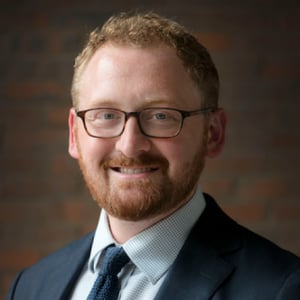
Fellow, Brookings Institution; General Counsel and Senior Editor, Lawfare; Senior Fellow, National Security Law Program,, Columbia Law School
Scott R. Anderson is a Visiting Fellow in Governance Studies at the Brookings Institution, where he was previously a David M. Rubenstein Fellow. He is also a Senior Editor and Counsel for Lawfare and a Senior Fellow with the National Security Law Program at Columbia Law School.
A former U.S. diplomat and government attorney, Mr. Anderson is an expert in foreign relations law, international law, and national security law and policy, particularly as they relate to the Middle East region. In addition to being a regular contributor to Lawfare and the Lawfare podcast, he has written on related issues for numerous publications, including Defense One, Foreign Affairs, Foreign Policy, Texas National Security Review, The Hill, and The Washington Post. He has appeared on a range of national and international television and radio broadcasts, including Al Jazeera English, BBC, CBS News, CNN, Fox News, and NPR, and his analysis and commentary have frequently been cited in the print media, including by the Associated Press, New York Times, Wall Street Journal, and Washington Post. He has been a policy advisor for national political campaigns and has served as a consultant and expert witness in litigation matters. In addition, he has taught at both the Georgetown University Law Center and Columbia Law School.
Mr. Anderson previously served as an attorney-adviser for the U.S. Department of State and as the legal adviser for the U.S. Embassy in Baghdad, Iraq. In these capacities, he advised policymakers on domestic and international legal issues relating to U.S. foreign and national security policy, most often in relation to the Middle East and North Africa. At various times, his portfolio included bilateral relations with Iraq, counter-Islamic State efforts in Iraq and Syria, diplomatic and sovereign immunity issues, the Persian Gulf region, select matters relating to the Israeli-Palestinian conflict, terrorism-related civil litigation, U.S. and international economic sanctions, and the Yemen conflict. He also helped to represent the Department in a number of litigation and international arbitration matters, including matters before the U.S. Supreme Court.
Between his government service and joining the Brookings Institution, Mr. Anderson was a law clerk for the U.S. Court of Appeals for the District of Columbia Circuit and an International Affairs Fellow with the Council on Foreign Relations, in which capacity he was in residence at Harvard Law School and Harvard Kennedy School. He is a graduate of the University of Virginia and Yale Law School and resides with his family in Washington, D.C.
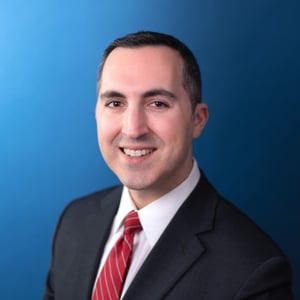
Senior Advisor, Foundation for Defense of Democracies
Richard Goldberg is a senior advisor at FDD. From 2019-2020, Richard served as the Director for Countering Iranian Weapons of Mass Destruction for the White House National Security Council. He previously served as chief of staff for Illinois Governor Bruce Rauner and deputy chief of staff and senior foreign policy adviser to former U.S. Senator Mark Kirk of Illinois in both the U.S. House and Senate.
As a staff associate for the House Appropriations Subcommittee on State-Foreign Operations, Richard worked on a wide range of issues related to U.S. foreign assistance, including foreign military financing, international security assistance, international peacekeeping, development, global health and economic support funds. He was a founding staff director of the House U.S.-China Working Group and was among the first Americans ever to visit China’s human space launch center. A leader in efforts to expand U.S. missile defense cooperation with Israel, Richard played a key role in U.S. funding for the Arrow-3 program, Iron Dome and the deployment of an advanced missile defense radar to the Negev Desert.
In the Senate, Richard emerged as a leading architect of the toughest sanctions imposed on the Islamic Republic of Iran. He was the lead Republican negotiator for three rounds of sanctions targeting the Central Bank of Iran, the SWIFT financial messaging service, and entire sectors of the Iranian economy. Richard also drafted and negotiated legislation promoting human rights and democracy in Iran, including sanctions targeting entities that provide the Iranian regime with the tools of repression. His Iran sanctions work was featured in the book The Iran Wars.
As the governor’s chief of staff, Richard managed government in America’s fifth-largest state with oversight of all day-to-day operations, including homeland security, public safety, and public health. He also spearheaded the first-ever state legislation to divest public pension funds from companies engaged in boycotts of Israel, which sparked a nationwide initiative in state capitols around America.
Partner, Sullivan & Cromwell LLP
Eric Kadel is engaged in a wide variety of corporate, transactional and regulatory matters. He is a member of the Firm’s Corporate and Finance, Financial Services, Investment Management, Alternative Investment Management, Cybersecurity, and Commodities, Futures and Derivatives Groups. With regard to financings, Mr. Kadel regularly represents participants in capital markets transactions, and dealers and end users in connection with structuring and documenting a wide variety of swaps and other derivatives, including equity, credit default and commodity swaps, options and forwards. Mr. Kadel’s work in the investment management area includes advising public and private investment companies and investment advisers on a wide variety of transactional, regulatory, compliance and other matters, including registration and regulation. Mr. Kadel also advises clients of the Firm regarding developments in the laws regulating the financial services industry and on cybersecurity issues. Mr. Kadel is currently an adjunct professor at George Washington University Law School.
In addition, Mr. Kadel is one of the principal partners in the Firm’s International Trade and Investment practice. He counsels and represents clients on questions about U.S. economic sanctions, including those administered by the Treasury Department’s Office of Foreign Assets Control (“OFAC”), United States antiboycott requirements under the Export Administration Regulations administered and enforced by the Commerce Department’s Office of Antiboycott Compliance within the Bureau of Industry and Security, Bank Secrecy Act/anti‐money laundering laws and the U.S. Foreign Corrupt Practices Act (“FCPA”). Mr. Kadel’s practice includes analysis of proposed transactions and business relationships; due diligence and design and review of compliance procedures and strategies; and internal investigations, voluntary disclosures and government enforcement actions. Mr. Kadel also regularly advises clients regarding questions arising under Exon-Florio and the transaction review process administered by the Committee on Foreign Investment in the United States (“CFIUS”), and has represented clients before CFIUS on many national security reviews.
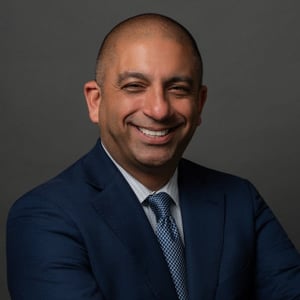
Founder and Executive Director, National Security Institute; Assistant Professor of Law, Antonin Scalia Law School, George Mason University
Jamil N. Jaffer is the Founder and Executive Director of the National Security Institute at the Antonin Scalia Law School at George Mason University where he also serves as an Assistant Professor of Law, Director of the National Security Law and Policy Program, and Director of the Cyber, Intelligence, and National Security LLM Program. Jamil also teaches classes on counterterrorism, intelligence, surveillance, cybersecurity, and other national security matters, as well as a summer course held abroad with U.S. Supreme Court Justice Neil M. Gorsuch. Jamil is also affiliated with Stanford University’s Center for International Security and Cooperation and previously served as a Visiting Fellow at the Hoover Institution from 2016 to 2019.
Jamil is also a Venture Partner with Paladin Capital Group, where he assists the firm with investments across the full range of its themes and theses, including a focus on dual-use national security technologies. Jamil also serves on the board of directors of RangeForce, a cybersecurity training and readiness platform startup and Tozny, a digital identity startup, and on the advisory boards of U.S. Strategic Metals, North America’s largest primary producer of cobalt, a critical mineral used in EV batteries, aerospace, and other national security applications; and Constella Intelligence, a deep and dark web intelligence startup. Jamil also serves as an advisor to Beacon Global Strategies, a strategic advisory firm and Duco, a technology platform startup that connects corporations with geopolitical and international business experts. Jamil is also the managing director of Trigraph Caveat Capital, a private investment vehicle.
Among other things, Jamil currently serves on the Board of Directors for the Greater Washington Board of Trade, the Board of Advisors for the Global Cyber Alliance, and the Advisory Board of the Foundation for the Defense of Democracies’ Center on Cyber and Tech Innovation, the Executive Committee of the Reagan Institute Strategy Group. Jamil is also a Fellow at the Academy for Judaic, Christian, and Islamic Studies, an advisor to the Concordia Summit, and is a member of the Board of Directors for the Center for Intelligence Policy, the Board of Directors of Speech First, and the Executive Committee of the International Law and National Security Practice Group of the Federalist Society.
Immediately prior to his current positions, from 2015-2021, Jamil served as a senior business leader at IronNet Cybersecurity, helping take the company from a bootstrapped first-year technology products startup through two rounds of venture capital fundraising, growing from 40 employees to over 300, and through its listing on New York Stock Exchange. In his role as IronNet's Senior Vice President for Strategy, Partnerships & Corporate Development, Jamil worked directly for the co-CEOs of the company, Gen (ret.) Keith B. Alexander, the former Director of the National Security Agency and Founding Commander of U.S. Cyber Command, and Bill Welch, the former COO of Zscaler and Duo; in that role, Jamil led all of the company’s strategic and technology partnership efforts, including developing go-to-market and technology integration plans with some of the largest cloud platforms and cybersecurity companies in the market, evaluating potential acquisition targets, and developing overall corporate strategy and thought leadership around collective security and collaborative defense in the cyber arena.
Prior to his time at IronNet, Jamil served on the leadership team of the Senate Foreign Relations Committee as Chief Counsel and Senior Advisor under Chairman Bob Corker (R-TN), where he worked on key national security and foreign policy issues, including leading the drafting of the proposed Authorization for the Use of Military Force against ISIS in 2014 and 2015, the AUMF against Syria in 2013, and revisions to the 9/11 AUMF against al Qaeda. Jamil was also the lead architect of the Iran Nuclear Agreement Review Act and two sanctions laws against Russia for its first intervention in Ukraine.
Prior to joining SFRC, Jamil served as Senior Counsel to the House Permanent Select Committee on Intelligence under Chairman Mike Rogers (R-MI) where he led the committee’s oversight of NSA surveillance, NRO intelligence issues, and NGA analytic and collection matters, as well as intelligence community-wide counterterrorism issues. Jamil was also the lead architect of the Cyber Intelligence Sharing and Protection Act, the nation’s first cyber threat intelligence sharing legislation that was signed into law in 2015.
In the Bush Administration, Jamil served in the White House as an Associate Counsel to the President, handling Defense Department, State Department, and intelligence community matters, and serving as one of the White House Counsel’s primary representatives to the National Security Council Deputies Committee.
Prior to the White House, Jamil served on the leadership team of the Justice Department’s National Security Division as Counsel to the Assistant Attorney General for National Security, where he focused on counterterrorism and intelligence matters. At NSD, Jamil helped lead the division’s work on In re: Directives, the first ever two-party litigated matter in the FISA Court and the second case before the FISA Court of Review in its 30-year history. Jamil also led NSD’s efforts on the President’s Comprehensive National Cybersecurity Initiative (CNCI), including the drafting of NSPD-54/HSPD-23, and related classified matters, and advised the National Security Agency (NSA) and U.S. Cyber Command’s predecessor organization, the Joint Function Component Command for Network Warfare (JFCC-NW), on matters related to cyber intelligence collection and offensive cyber activities. For his work on these matters, Jamil was awarded the Assistant Attorney General’s Award for Special Initiative and was among the group of lawyers awarded the Director of National Intelligence’s 2008 Legal Award (Team of the Year – Cyber Legal).
Jamil also served in other positions in the Justice Department, including in the Office of Legal Policy, where he worked on the confirmations of Chief Justice John G. Roberts, Jr. and Justice Samuel A. Alito, Jr. to the United States Supreme Court.
Jamil also served as a lawyer in private practice at Kellogg Huber, a Washington, DC-based litigation boutique, as a policy advisor to Congressman Bob Goodlatte (R-VA), and as a staff member or senior advisor on a number of political campaigns, including two presidential campaigns and a presidential transition team. While in law school, Jamil was a member of the University of Chicago Law Review, managing editor of the Chicago Journal of International Law, and National Symposium Editor of the Harvard Journal of Law & Public Policy. Following law school, Jamil served as a law clerk to Judge Edith H. Jones of the United States Court of Appeals for the Fifth Circuit and, later in his career, as a law clerk to then-Judge Neil M. Gorsuch when he first joined the United States Court of Appeals for the Tenth Circuit as well as a law clerk to Justice Neil Gorsuch when he joined the U.S. Supreme Court.
Jamil has published multiple op-eds and academic articles on national security, foreign policy, cybersecurity, counterterrorism, encryption, and intelligence matters, and is the co-author of a book chapter with former NSA Director Gen. (Ret.) Keith B. Alexander on national security and the press in National Security, Leaks, and the Freedom of the Press: The Pentagon Papers Fifty Years On (2021) and a book chapter with former CIA Director Gen. (ret.) Mike Hayden on ISIS, al Qaeda, and other international terrorist groups in Choosing to Lead: American Foreign Policy for a Disordered World (2015). Jamil has also written book chapters on cybersecurity and surveillance, as well as op-eds and policy papers with former Attorney General Michael B. Mukasey, former National Counterterrorism Center Director Matt Olsen, and Congressman Mike Waltz (R-FL), among others.
Jamil has previously taught graduate-level courses in intelligence law and policy at George Washington University’s Elliott School of International Affairs and the National Intelligence University, served an outside advisor to the Cyberspace Solarium Commission, and has recently testified before committees of the U.S. Senate and House of Representatives on China, cybersecurity, counterterrorism, and other national security matters. Jamil has also recently appeared on a range of national television and radio outlets including CNN, Fox News, Fox Business, MSNBC, Bloomberg, PBS, Voice of America, and National Public Radio, and in various print and online publications, including the Wall Street Journal, New York Times, and the Washington Post on a range of national security matters including cybersecurity, counterterrorism, surveillance, encryption, privacy, and foreign policy issues.
Jamil holds degrees from UCLA (BA, cum laude), the University of Chicago Law School (JD, with honors), and the United States Naval War College (MA, with distinction).
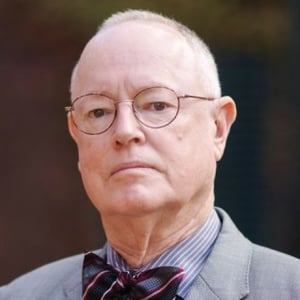
John C. Jeffries, Jr., Distinguished Professor of Law, University of Virginia School of Law
Paul B. Stephan is an expert on international business, international dispute resolution and comparative law, with an emphasis on Soviet and post-Soviet legal systems. In addition to writing prolifically in these fields, Stephan has advised governments and international organizations, taken part in cases in the Supreme Court of the United States, the federal courts, and various foreign judicial and arbitral proceedings, and lectured to professionals and scholarly groups around the world on issues raised by the globalization of the world economy. During 2006-07, he served as counselor on international law in the U.S. Department of State, and in 2020-21 as special counsel to the general counsel in the Department of Defense. He was a coordinating reporter for the American Law Institute’s Restatement (Fourth) of the Foreign Relations Law of the United States.
Stephan received his B.A. and M.A. from Yale University in 1973 and 1974, respectively, and his J.D. from the University of Virginia in 1977. Before returning to Virginia, he clerked for Judge Levin Campbell of the U.S. Court of Appeals for the First Circuit and for U.S. Supreme Court Justice Lewis F. Powell Jr. He has taught as a visiting professor at the Moscow State Institute for International Relations, the University of Vienna, Münster University, Lausanne University, Melbourne University, University of Pantheon-Assas (Paris II), Sciences Po, Paris I, the Interdisciplinary Centre Herzliya, Sydney University, the Peking University School of Transnational Law in Shenzhen, China, the University of Tartu’s Pärna College, and Liverpool University. He also has visited at Columbia Law School and Duke Law School, and served as a scholar in residence in the London office of Wilmer Hale.
After the collapse of the Soviet Union, Stephan took part in a variety of projects involving law reform in former socialist states. He worked in Russia, Georgia, Ukraine, Albania and Slovakia on behalf of the U.S. Treasury and in Kazakhstan and Azerbaijan on behalf of the International Monetary Fund. He also organized training programs for tax administrators and judges from all of the formerly socialist countries under the auspices of the Organization for Economic Cooperation and Development. His casebooks on international business, international trade and investment, and Doing Business in Emerging Markets are used at law schools both in the United States and abroad. He is the co-author, with Robert Scott, of The Limits of Leviathan: Contract Theory and the Enforcement of International Law (Cambridge University Press, 2006), and the author of The World Crisis and International Law: The Knowledge Economy and the Battle for the Future (2023). His current research focuses on the legal issues related to the Russian invasion of Ukraine and legal responses to the rise of big data.

Chief Legal Officer, Castle Island Ventures
Gus Coldebella is the Chief Legal Officer of Castle Island Ventures, a venture capital firm focused on early-stage investing in blockchain technology, where he handles legal, regulatory, policy, and compliance matters for the firm.
Over a career spanning private practice, government, and technology, he has served as a law firm partner, prosecutor, senior federal official, general counsel, and venture capital partner. He previously served as acting general counsel of the U.S. Department of Homeland Security in the George W. Bush administration, leading a team of 1,700 lawyers, and focusing on all major security issues confronting the nation. His private-sector leadership roles have included chief legal officer of Circle; general counsel of Paradigm; partner at True Ventures; and partner in Goodwin Procter’s litigation and investigations practice.
Coldebella holds a J.D. from Cornell Law School and a B.A. from Colgate University, where he later served as vice chair of the Board of Trustees and president of the Alumni Council. He teaches “Artificial Intelligence: Law and Policy” at Boston College Law School.
Partner, Sullivan & Cromwell LLP
Eric Kadel is engaged in a wide variety of corporate, transactional and regulatory matters. He is a member of the Firm’s Corporate and Finance, Financial Services, Investment Management, Alternative Investment Management, Cybersecurity, and Commodities, Futures and Derivatives Groups. With regard to financings, Mr. Kadel regularly represents participants in capital markets transactions, and dealers and end users in connection with structuring and documenting a wide variety of swaps and other derivatives, including equity, credit default and commodity swaps, options and forwards. Mr. Kadel’s work in the investment management area includes advising public and private investment companies and investment advisers on a wide variety of transactional, regulatory, compliance and other matters, including registration and regulation. Mr. Kadel also advises clients of the Firm regarding developments in the laws regulating the financial services industry and on cybersecurity issues. Mr. Kadel is currently an adjunct professor at George Washington University Law School.
In addition, Mr. Kadel is one of the principal partners in the Firm’s International Trade and Investment practice. He counsels and represents clients on questions about U.S. economic sanctions, including those administered by the Treasury Department’s Office of Foreign Assets Control (“OFAC”), United States antiboycott requirements under the Export Administration Regulations administered and enforced by the Commerce Department’s Office of Antiboycott Compliance within the Bureau of Industry and Security, Bank Secrecy Act/anti‐money laundering laws and the U.S. Foreign Corrupt Practices Act (“FCPA”). Mr. Kadel’s practice includes analysis of proposed transactions and business relationships; due diligence and design and review of compliance procedures and strategies; and internal investigations, voluntary disclosures and government enforcement actions. Mr. Kadel also regularly advises clients regarding questions arising under Exon-Florio and the transaction review process administered by the Committee on Foreign Investment in the United States (“CFIUS”), and has represented clients before CFIUS on many national security reviews.
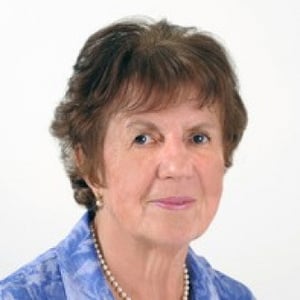
Senior Adviser, Crito Capital
Dr. Oonagh McDonald, CBE is currently a senior adviser to Crito Capital, a private placement company based in New York.
A former British Member of Parliament, she became an international expert in financial regulation, after losing her seat in the General Election, 1987. She worked with the Asian Development Bank, advising regulatory authorities in a number of countries, including Sri Lanka and Indonesia. More recently, she has worked with USAID in Ukraine and Moldova. She has served as a non-executive director on the board of both financial services companies and regulatory authorities. In 1998, she was awarded the CBE (Commander of the British Empire), a national honor by the Queen for her work in financial regulation.
She is the author of numerous articles and seven books, of which the most recent are: “Holding bankers to account: A decade of market manipulation, regulatory failures and regulatory reforms” (Manchester University Press, 2019) and “Cryptocurrencies: Money, Trust and Regulation” (Agenda Publishing, 2021).
K2 Integrity, Global Co-Managing Partner and Chief Strategy Officer
The Honorable Juan Zarate is the global co-managing partner and chief strategy officer for the global consulting firm, K2 Integrity. He is also the co-founder and Chair of the Board of Consilient, an innovative new fintech.
He is the chairman and co-founder of the Center on Economic and Financial Power (CEFP) at the Foundation for Defense of Democracies, senior adviser at the Center for Strategic and International Studies(CSIS), and a senior fellow at West Point’s Combating Terrorism Center. He was a visiting lecturer in law at the Harvard Law School for eight years and is a published author, including his books “Treasury’s War” (2013) and “Forging Democracy” (1994).
Mr. Zarate sits on the boards of various organizations, including Northwestern Mutual, Cambridge Quantum Computing North America Holdings, Guardian Space Technologies Systems, and the Director’s Advisory Board for the National Counterterrorism Center (NCTC). Since 2014, Mr. Zarate has served as an independent advisor to Coinbase, the largest virtual asset service provider in the United States. With two appointments by Pope Francis,Mr. Zarate sat on the board of the Vatican’s Financial Information Authority for over five years; the Boston Dynamics board for over three years; and for seven years, he was the U.S. advisor on HSBC’s Financial System Vulnerabilities Committee (overseeing remediation of the bank’s anti-money laundering system and adherence with the U.S.DOJ deferred prosecution agreement) and remains an advisor to HSBC’s Group Risk Committee.
Mr. Zarate served as the deputy assistant to the president and deputy national security adviser for combating terrorism (“counterterrorism czar”) from 2005 to 2009, where he was responsible for developing and implementing the U.S. counterterrorism strategy and policies related to transnational security threats, including hostage-taking, piracy, anti-money laundering, kleptocracy, transnational organized crime, and international energy infrastructure protection,. He was responsible for conceiving and leading major initiatives in the post 9/11 period, including the establishment of the Global Initiative to Combat Nuclear Terrorism (GICNT).
He was the first ever assistant secretary of the treasury for terrorist financing and financial crimes. In this role, he led the post-9/11 anti-money laundering and sanctions regime expansion in the United States; helped develop the international standards for AML/CFT and proliferation finance; supervised the Financial Crimes Enforcement Network (FINCEN), the Office of Foreign Assets Control (OFAC), and the Treasury’s Executive Office for Asset Forfeiture (TEOAF); drove the innovative use of the Treasury’s national security–related powers and ultimately the establishment of the Office of Terrorism and Financial Intelligence (TFI). He has also led some of the largest asset recovery ventures in history, including the return of over $3 billion in Iraqi assets.
Mr. Zarate is a former federal terrorism prosecutor, prior to 9/11, serving on the prosecution teams in the East Africa bombings and USS Cole cases, among others. He is a magna cum laude graduate of Harvard College, a cum laude graduate of the Harvard Law School, and a Rotary Fellow at the Universidad de Salamanca. At Harvard College, he won the John P. Reardon Award, as the best male student athlete.
Senior Counsel and Director of Global Regulatory Matters, ConsenSys Software
Bill Hughes is senior counsel and director of global regulatory matters for ConsenSys Software, the leading Ethereum blockchain software company. Bill focuses on the diverse and ever evolving crypto global regulatory landscape, and the legal and public policy issues with which ConsenSys and the broader crypto ecosystem is grappling.
Bill joined ConsenSys after serving as an Associate Deputy Attorney General at the Department of Justice, where he managed, among other things, the Department’s work on prospective regulations, legislative proposals, and policies across a broad spectrum of legal and operational issues. He worked closely with the White House and other federal agencies on regulatory and policy initiatives and coordinated DOJ’s law enforcement response to COVID-19-related consumer fraud and money laundering. Bill also has served at the White House, where he oversaw various operational components. Bill began his career by clerking for a federal judge in New York and litigating with the firm of Sullivan & Cromwell LLP. Bill received his JD from the University of Virginia School of Law and his BA from Vanderbilt University.
Partner, Sullivan & Cromwell LLP
Eric Kadel is engaged in a wide variety of corporate, transactional and regulatory matters. He is a member of the Firm’s Corporate and Finance, Financial Services, Investment Management, Alternative Investment Management, Cybersecurity, and Commodities, Futures and Derivatives Groups. With regard to financings, Mr. Kadel regularly represents participants in capital markets transactions, and dealers and end users in connection with structuring and documenting a wide variety of swaps and other derivatives, including equity, credit default and commodity swaps, options and forwards. Mr. Kadel’s work in the investment management area includes advising public and private investment companies and investment advisers on a wide variety of transactional, regulatory, compliance and other matters, including registration and regulation. Mr. Kadel also advises clients of the Firm regarding developments in the laws regulating the financial services industry and on cybersecurity issues. Mr. Kadel is currently an adjunct professor at George Washington University Law School.
In addition, Mr. Kadel is one of the principal partners in the Firm’s International Trade and Investment practice. He counsels and represents clients on questions about U.S. economic sanctions, including those administered by the Treasury Department’s Office of Foreign Assets Control (“OFAC”), United States antiboycott requirements under the Export Administration Regulations administered and enforced by the Commerce Department’s Office of Antiboycott Compliance within the Bureau of Industry and Security, Bank Secrecy Act/anti‐money laundering laws and the U.S. Foreign Corrupt Practices Act (“FCPA”). Mr. Kadel’s practice includes analysis of proposed transactions and business relationships; due diligence and design and review of compliance procedures and strategies; and internal investigations, voluntary disclosures and government enforcement actions. Mr. Kadel also regularly advises clients regarding questions arising under Exon-Florio and the transaction review process administered by the Committee on Foreign Investment in the United States (“CFIUS”), and has represented clients before CFIUS on many national security reviews.
Partner & Chair, National Security Practice, Wiley Rein LLP
Of Counsel, Sullivan & Cromwell LLP
A member of the Firm’s Financial Services Group, Adam Szubin focuses his practice on financial services and national security, with particular emphasis on economic sanctions, export controls, money laundering and counter terrorism.
Prior to joining Sullivan & Cromwell, Mr. Szubin served for two years as Acting Treasury Department Under Secretary for Terrorism and Financial Intelligence. During his nearly 13 year tenure at the Treasury, Mr. Szubin served as the Director of Treasury’s Office of Foreign Assets Control (OFAC) for nine years and Senior Advisor to the Under Secretary for Terrorism and Financial Intelligence.
As the Acting Under Secretary, he led the policy, enforcement, regulatory, and intelligence functions of the Treasury Department aimed at combating threatening states, international terrorist organizations, proliferators of weapons of mass destruction, narcotics traffickers, and others posing a threat to U.S. national security or foreign policy. As the lead national security official at the Treasury Department, Mr. Szubin also advised the Treasury Secretary and National Security Council on a wide range of economic and security issues, including select matters before the Committee on Foreign Investment in the United States (CFIUS).
Earlier in his career, Mr. Szubin served as Counsel to the Deputy Attorney General at the Department of Justice where he also worked as a trial attorney in the Civil Division and was a member of the Terrorism Litigation Task Force.
Partner, Sullivan & Cromwell LLP
Eric Kadel is engaged in a wide variety of corporate, transactional and regulatory matters. He is a member of the Firm’s Corporate and Finance, Financial Services, Investment Management, Alternative Investment Management, Cybersecurity, and Commodities, Futures and Derivatives Groups. With regard to financings, Mr. Kadel regularly represents participants in capital markets transactions, and dealers and end users in connection with structuring and documenting a wide variety of swaps and other derivatives, including equity, credit default and commodity swaps, options and forwards. Mr. Kadel’s work in the investment management area includes advising public and private investment companies and investment advisers on a wide variety of transactional, regulatory, compliance and other matters, including registration and regulation. Mr. Kadel also advises clients of the Firm regarding developments in the laws regulating the financial services industry and on cybersecurity issues. Mr. Kadel is currently an adjunct professor at George Washington University Law School.
In addition, Mr. Kadel is one of the principal partners in the Firm’s International Trade and Investment practice. He counsels and represents clients on questions about U.S. economic sanctions, including those administered by the Treasury Department’s Office of Foreign Assets Control (“OFAC”), United States antiboycott requirements under the Export Administration Regulations administered and enforced by the Commerce Department’s Office of Antiboycott Compliance within the Bureau of Industry and Security, Bank Secrecy Act/anti‐money laundering laws and the U.S. Foreign Corrupt Practices Act (“FCPA”). Mr. Kadel’s practice includes analysis of proposed transactions and business relationships; due diligence and design and review of compliance procedures and strategies; and internal investigations, voluntary disclosures and government enforcement actions. Mr. Kadel also regularly advises clients regarding questions arising under Exon-Florio and the transaction review process administered by the Committee on Foreign Investment in the United States (“CFIUS”), and has represented clients before CFIUS on many national security reviews.
Partner & Chair, National Security Practice, Wiley Rein LLP
Of Counsel, Sullivan & Cromwell LLP
A member of the Firm’s Financial Services Group, Adam Szubin focuses his practice on financial services and national security, with particular emphasis on economic sanctions, export controls, money laundering and counter terrorism.
Prior to joining Sullivan & Cromwell, Mr. Szubin served for two years as Acting Treasury Department Under Secretary for Terrorism and Financial Intelligence. During his nearly 13 year tenure at the Treasury, Mr. Szubin served as the Director of Treasury’s Office of Foreign Assets Control (OFAC) for nine years and Senior Advisor to the Under Secretary for Terrorism and Financial Intelligence.
As the Acting Under Secretary, he led the policy, enforcement, regulatory, and intelligence functions of the Treasury Department aimed at combating threatening states, international terrorist organizations, proliferators of weapons of mass destruction, narcotics traffickers, and others posing a threat to U.S. national security or foreign policy. As the lead national security official at the Treasury Department, Mr. Szubin also advised the Treasury Secretary and National Security Council on a wide range of economic and security issues, including select matters before the Committee on Foreign Investment in the United States (CFIUS).
Earlier in his career, Mr. Szubin served as Counsel to the Deputy Attorney General at the Department of Justice where he also worked as a trial attorney in the Civil Division and was a member of the Terrorism Litigation Task Force.
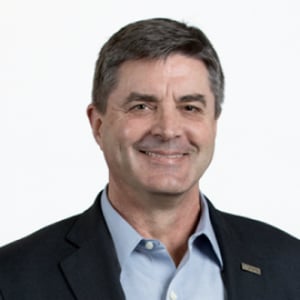
Executive Vice President and Strategic Counselor, Blacklake Group
Jim Haynes is Executive Vice President and Strategic Counselor of Blacklake Group (a privately held holding company) and concurrently advises several early and mid-stage privately held emerging technology companies, Nichols Law, and the Torridon Group.
Twice a partner in a major national law firm, Jim also previously served as a corporate executive at four public companies: General Dynamics Corporation (as Staff Vice President and Associate General Counsel from 1996-1999), Chevron Corporation (as Chief Corporate Counsel from 2008-2012); Siga Technologies, Inc. (as EVP & General Counsel from 2012-2016); and CSRA Inc. (as EVP, General Counsel & Corporate Secretary from 2016-2018, at the end of which the company was acquired for $9.7B.)
Jim has held two presidentially appointed offices requiring Senate confirmation: General Counsel of the Department of the Army from 1990-1993, and General Counsel of the Department of Defense from 2001-2008. Chief Legal Officer and Designated Agency Ethics Officer of both departments during highly consequential times, Jim also served as Director of the Defense Legal Services Agency from 2001-2008.
Jim earned degrees from Davidson College and Harvard Law School, and holds an honorary Doctor of Laws from Stetson Law School. After a judicial clerkship with Judge James B. McMillan (USDJ, WDNC), Jim served four years on active duty in the U.S. Army. He is the recipient of a significant number of awards and medals from the Departments of Defense, Justice, Army, Navy, and Air Force. Jim holds a patent issued in 2025: https://patents.justia.com/patent/12367458.
For several months in 1999, Jim worked in Almaty, Kazakhstan, volunteering assistance for Mercy Corps International in managing microcredit services across six countries in Central Asia. A former Eagle Scout, Jim served on the Board of Directors of the Greater New York City Councils of the Boy Scouts of America from 2013-2023. He has served as director or advisor on many other boards.
He currently is a director or trustee of three boards: Labrynth (labrynth.ai), the Supreme Court Historical Society, and the William T. Coleman, Jr. Foundation.
Partner, Sullivan & Cromwell LLP
Eric Kadel is engaged in a wide variety of corporate, transactional and regulatory matters. He is a member of the Firm’s Corporate and Finance, Financial Services, Investment Management, Alternative Investment Management, Cybersecurity, and Commodities, Futures and Derivatives Groups. With regard to financings, Mr. Kadel regularly represents participants in capital markets transactions, and dealers and end users in connection with structuring and documenting a wide variety of swaps and other derivatives, including equity, credit default and commodity swaps, options and forwards. Mr. Kadel’s work in the investment management area includes advising public and private investment companies and investment advisers on a wide variety of transactional, regulatory, compliance and other matters, including registration and regulation. Mr. Kadel also advises clients of the Firm regarding developments in the laws regulating the financial services industry and on cybersecurity issues. Mr. Kadel is currently an adjunct professor at George Washington University Law School.
In addition, Mr. Kadel is one of the principal partners in the Firm’s International Trade and Investment practice. He counsels and represents clients on questions about U.S. economic sanctions, including those administered by the Treasury Department’s Office of Foreign Assets Control (“OFAC”), United States antiboycott requirements under the Export Administration Regulations administered and enforced by the Commerce Department’s Office of Antiboycott Compliance within the Bureau of Industry and Security, Bank Secrecy Act/anti‐money laundering laws and the U.S. Foreign Corrupt Practices Act (“FCPA”). Mr. Kadel’s practice includes analysis of proposed transactions and business relationships; due diligence and design and review of compliance procedures and strategies; and internal investigations, voluntary disclosures and government enforcement actions. Mr. Kadel also regularly advises clients regarding questions arising under Exon-Florio and the transaction review process administered by the Committee on Foreign Investment in the United States (“CFIUS”), and has represented clients before CFIUS on many national security reviews.
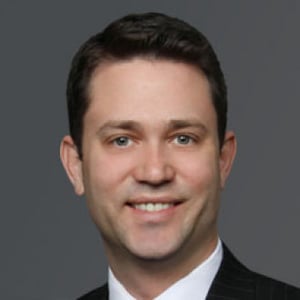
Partner, Mayer Brown
Prof. Tim Keeler, an attorney in the Government and International Trade Group, joined Mayer Brown in 2009, and brings an in-depth knowledge of international trade law and economic policy matters, and a history of working in the Executive Branch and Congress on major economic, legislative and regulatory issues.
Prior to joining Mayer Brown, Professor Keeler served in a variety of senior positions in the U.S. Government for almost 12 years. Most recently he was the Chief of Staff in the Office of the U.S. Trade Representative (USTR) from 2006 - 2009, where he oversaw implementation of U.S. policy, strategy and negotiations involving all aspects of international trade and investment matters. He worked on a number of key issues including: climate change and trade; US and China relations; WTO negotiations and litigation; free trade agreement negotiations and implementation; and CFIUS decisions.
Before working for USTR, Prof. Keeler spent more than five years at the Treasury Department from 2001 – 2006. He joined the Office of Legislative Affairs in 2001 as a Deputy to the Assistant Secretary for International Issues, where he was responsible for Treasury’s legislative strategy on issues including capital market sanctions, foreign exchange rate policy testimony, appropriations for U.S. agreements to replenish the World Bank and other Multilateral Development Banks, multilateral debt relief, and U.S. participation in the International Monetary Fund. He later managed the Office of Legislative Affairs from 2002 - 2006 and assisted on all policy and personnel issues in the Office. This included leading Treasury nominees through the U.S. Senate confirmation process, legislative strategy on Treasury Intelligence and Terrorist Financing matters, and advising on major economic legislative initiatives such as the 2003 tax cuts and social security reform proposals.
Prof. Keeler also served on the Presidential Transition Team in 2000–2001 as a policy coordinator on export control and trade remedy policy, handling the Commerce Department’s Bureau of Export Administration (now called the Bureau of Industry and Security) and the International Trade Commission (ITC).
Earlier in his career, Prof. Keeler served as a professional staff member for international trade on the US Senate Finance Committee under Chairman William V. Roth (R-DE). There he worked on legislation establishing permanent normal trade relations (PNTR) between the U.S. and China, preferential trade programs for Sub-Saharan Africa (the African Growth and Opportunity Act) and the Caribbean basin, the Generalized System of Preferences, legislation to bring the U.S. into compliance with the WTO decision on the Foreign Sales Corporation provisions of the Internal Revenue Code, and the miscellaneous tariff bill.
In recognition of his government service, Prof. Keeler was awarded the USTR Distinguished Service Award, the Treasury Distinguished Service Award, and the Treasury Secretary’s Honor Award twice.
Prof. Keeler is also an adjunct professor at the Georgetown University School of Law, co-teaching a course on U.S. and WTO law, policy, and politics; is a member of the Board of Directors of the Washington International Trade Foundation; and is a term member of the Council on Foreign Relations. Prof. Keeler has spoken at conferences on international trade and economic issues sponsored by, inter alia, the American Bar Association (Climate Change and Trade, March 2009), the Korea Economic Institute (the U.S. – Korea Free Trade Agreement, October 2010), and the U.S.-China Business Council (Sec. 421 tires safeguard case, July 2009; and the U.S. – China Economic and Political Relationship, January 2010).
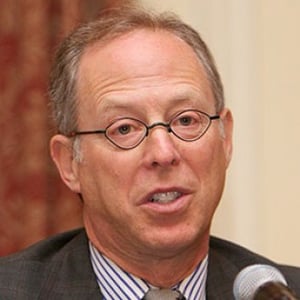
Co-Chair, NYU Center for Cybersecurity; Distinguished Fellow, Center on Law and Security; Professor of Practice, New York University School of Law
Randal Milch is the Co-Chair of the NYU Center for Cybersecurity, a Distinguished Fellow at the Center on Law and Security, and a Professor of Practice at NYU School of Law. He was most recently executive vice president and strategic policy adviser to Verizon’s chairman and CEO. He served as the company’s general counsel from 2008 to 2014, and before that was general counsel of several business divisions within Verizon. At Verizon, Milch chaired the Verizon Executive Security Council, which was responsible for information security across all Verizon entities. Milch was responsible for national security matters at Verizon beginning in 2006, and has served as the senior cleared executive at Verizon. Earlier in his career, Milch was a partner in the Washington, DC office of Donovan Leisure Newton & Irvine. Milch holds a JD from New York University School of Law and a BA from Yale University.
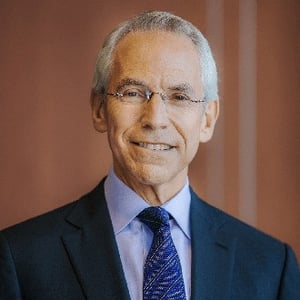
Executive Vice President, General Counsel, and Corporate Secretary, Qualcomm
Donald J. Rosenberg is executive vice president, general counsel and corporate secretary of Qualcomm Incorporated. Mr. Rosenberg reports directly to CEO Steve Mollenkopf and is a member of the company's Executive Committee. In his role as chief legal officer, he is responsible for overseeing Qualcomm's worldwide legal affairs including litigation, intellectual property and corporate matters. Qualcomm's Government Affairs, Internal Audit and Compliance organizations also report to him.
Prior to joining Qualcomm, Mr. Rosenberg served as senior vice president, general counsel and corporate secretary of Apple Inc. Prior to that, he was senior vice president and general counsel of IBM Corporation where he had also held numerous positions including vice president and assistant general counsel for litigation and counsel to IBM's mainframe division.
Mr. Rosenberg has had extensive experience in corporate governance, compliance, law department management, litigation, securities regulation, intellectual property and competition issues.
Mr. Rosenberg is a board member of NuVasive, Inc., Corporate Directors Forum, CONNECT, La Jolla Music Society, La Jolla Playhouse and a trustee of Rady Children's Hospital San Diego and the Sanford Burnham Prebys Medical Discovery Institute. He is immediate past National Co-Chairman of the Board of the Lawyers' Committee for Civil Rights Under Law, where he continues to serve on the Board and the Executive Committee.
Mr. Rosenberg is a member of the International Advisory Board, University of California San Diego (UCSD) School of Global Policy and Strategy. He is also a member of the China Leadership Board for the 21st Century China Center at the UCSD. He has served as an adjunct professor of law at New York's Pace University School of Law, where he taught courses in intellectual property and antitrust law.
Mr. Rosenberg received a Bachelor of Science degree in mathematics from the State University of New York at Stony Brook and his juris doctor from St. John's University School of Law.
Executive Vice President and Strategic Counselor, Blacklake Group
Jim Haynes is Executive Vice President and Strategic Counselor of Blacklake Group (a privately held holding company) and concurrently advises several early and mid-stage privately held emerging technology companies, Nichols Law, and the Torridon Group.
Twice a partner in a major national law firm, Jim also previously served as a corporate executive at four public companies: General Dynamics Corporation (as Staff Vice President and Associate General Counsel from 1996-1999), Chevron Corporation (as Chief Corporate Counsel from 2008-2012); Siga Technologies, Inc. (as EVP & General Counsel from 2012-2016); and CSRA Inc. (as EVP, General Counsel & Corporate Secretary from 2016-2018, at the end of which the company was acquired for $9.7B.)
Jim has held two presidentially appointed offices requiring Senate confirmation: General Counsel of the Department of the Army from 1990-1993, and General Counsel of the Department of Defense from 2001-2008. Chief Legal Officer and Designated Agency Ethics Officer of both departments during highly consequential times, Jim also served as Director of the Defense Legal Services Agency from 2001-2008.
Jim earned degrees from Davidson College and Harvard Law School, and holds an honorary Doctor of Laws from Stetson Law School. After a judicial clerkship with Judge James B. McMillan (USDJ, WDNC), Jim served four years on active duty in the U.S. Army. He is the recipient of a significant number of awards and medals from the Departments of Defense, Justice, Army, Navy, and Air Force. Jim holds a patent issued in 2025: https://patents.justia.com/patent/12367458.
For several months in 1999, Jim worked in Almaty, Kazakhstan, volunteering assistance for Mercy Corps International in managing microcredit services across six countries in Central Asia. A former Eagle Scout, Jim served on the Board of Directors of the Greater New York City Councils of the Boy Scouts of America from 2013-2023. He has served as director or advisor on many other boards.
He currently is a director or trustee of three boards: Labrynth (labrynth.ai), the Supreme Court Historical Society, and the William T. Coleman, Jr. Foundation.
Partner, Sullivan & Cromwell LLP
Eric Kadel is engaged in a wide variety of corporate, transactional and regulatory matters. He is a member of the Firm’s Corporate and Finance, Financial Services, Investment Management, Alternative Investment Management, Cybersecurity, and Commodities, Futures and Derivatives Groups. With regard to financings, Mr. Kadel regularly represents participants in capital markets transactions, and dealers and end users in connection with structuring and documenting a wide variety of swaps and other derivatives, including equity, credit default and commodity swaps, options and forwards. Mr. Kadel’s work in the investment management area includes advising public and private investment companies and investment advisers on a wide variety of transactional, regulatory, compliance and other matters, including registration and regulation. Mr. Kadel also advises clients of the Firm regarding developments in the laws regulating the financial services industry and on cybersecurity issues. Mr. Kadel is currently an adjunct professor at George Washington University Law School.
In addition, Mr. Kadel is one of the principal partners in the Firm’s International Trade and Investment practice. He counsels and represents clients on questions about U.S. economic sanctions, including those administered by the Treasury Department’s Office of Foreign Assets Control (“OFAC”), United States antiboycott requirements under the Export Administration Regulations administered and enforced by the Commerce Department’s Office of Antiboycott Compliance within the Bureau of Industry and Security, Bank Secrecy Act/anti‐money laundering laws and the U.S. Foreign Corrupt Practices Act (“FCPA”). Mr. Kadel’s practice includes analysis of proposed transactions and business relationships; due diligence and design and review of compliance procedures and strategies; and internal investigations, voluntary disclosures and government enforcement actions. Mr. Kadel also regularly advises clients regarding questions arising under Exon-Florio and the transaction review process administered by the Committee on Foreign Investment in the United States (“CFIUS”), and has represented clients before CFIUS on many national security reviews.
Partner, Mayer Brown
Prof. Tim Keeler, an attorney in the Government and International Trade Group, joined Mayer Brown in 2009, and brings an in-depth knowledge of international trade law and economic policy matters, and a history of working in the Executive Branch and Congress on major economic, legislative and regulatory issues.
Prior to joining Mayer Brown, Professor Keeler served in a variety of senior positions in the U.S. Government for almost 12 years. Most recently he was the Chief of Staff in the Office of the U.S. Trade Representative (USTR) from 2006 - 2009, where he oversaw implementation of U.S. policy, strategy and negotiations involving all aspects of international trade and investment matters. He worked on a number of key issues including: climate change and trade; US and China relations; WTO negotiations and litigation; free trade agreement negotiations and implementation; and CFIUS decisions.
Before working for USTR, Prof. Keeler spent more than five years at the Treasury Department from 2001 – 2006. He joined the Office of Legislative Affairs in 2001 as a Deputy to the Assistant Secretary for International Issues, where he was responsible for Treasury’s legislative strategy on issues including capital market sanctions, foreign exchange rate policy testimony, appropriations for U.S. agreements to replenish the World Bank and other Multilateral Development Banks, multilateral debt relief, and U.S. participation in the International Monetary Fund. He later managed the Office of Legislative Affairs from 2002 - 2006 and assisted on all policy and personnel issues in the Office. This included leading Treasury nominees through the U.S. Senate confirmation process, legislative strategy on Treasury Intelligence and Terrorist Financing matters, and advising on major economic legislative initiatives such as the 2003 tax cuts and social security reform proposals.
Prof. Keeler also served on the Presidential Transition Team in 2000–2001 as a policy coordinator on export control and trade remedy policy, handling the Commerce Department’s Bureau of Export Administration (now called the Bureau of Industry and Security) and the International Trade Commission (ITC).
Earlier in his career, Prof. Keeler served as a professional staff member for international trade on the US Senate Finance Committee under Chairman William V. Roth (R-DE). There he worked on legislation establishing permanent normal trade relations (PNTR) between the U.S. and China, preferential trade programs for Sub-Saharan Africa (the African Growth and Opportunity Act) and the Caribbean basin, the Generalized System of Preferences, legislation to bring the U.S. into compliance with the WTO decision on the Foreign Sales Corporation provisions of the Internal Revenue Code, and the miscellaneous tariff bill.
In recognition of his government service, Prof. Keeler was awarded the USTR Distinguished Service Award, the Treasury Distinguished Service Award, and the Treasury Secretary’s Honor Award twice.
Prof. Keeler is also an adjunct professor at the Georgetown University School of Law, co-teaching a course on U.S. and WTO law, policy, and politics; is a member of the Board of Directors of the Washington International Trade Foundation; and is a term member of the Council on Foreign Relations. Prof. Keeler has spoken at conferences on international trade and economic issues sponsored by, inter alia, the American Bar Association (Climate Change and Trade, March 2009), the Korea Economic Institute (the U.S. – Korea Free Trade Agreement, October 2010), and the U.S.-China Business Council (Sec. 421 tires safeguard case, July 2009; and the U.S. – China Economic and Political Relationship, January 2010).
Co-Chair, NYU Center for Cybersecurity; Distinguished Fellow, Center on Law and Security; Professor of Practice, New York University School of Law
Randal Milch is the Co-Chair of the NYU Center for Cybersecurity, a Distinguished Fellow at the Center on Law and Security, and a Professor of Practice at NYU School of Law. He was most recently executive vice president and strategic policy adviser to Verizon’s chairman and CEO. He served as the company’s general counsel from 2008 to 2014, and before that was general counsel of several business divisions within Verizon. At Verizon, Milch chaired the Verizon Executive Security Council, which was responsible for information security across all Verizon entities. Milch was responsible for national security matters at Verizon beginning in 2006, and has served as the senior cleared executive at Verizon. Earlier in his career, Milch was a partner in the Washington, DC office of Donovan Leisure Newton & Irvine. Milch holds a JD from New York University School of Law and a BA from Yale University.
Executive Vice President, General Counsel, and Corporate Secretary, Qualcomm
Donald J. Rosenberg is executive vice president, general counsel and corporate secretary of Qualcomm Incorporated. Mr. Rosenberg reports directly to CEO Steve Mollenkopf and is a member of the company's Executive Committee. In his role as chief legal officer, he is responsible for overseeing Qualcomm's worldwide legal affairs including litigation, intellectual property and corporate matters. Qualcomm's Government Affairs, Internal Audit and Compliance organizations also report to him.
Prior to joining Qualcomm, Mr. Rosenberg served as senior vice president, general counsel and corporate secretary of Apple Inc. Prior to that, he was senior vice president and general counsel of IBM Corporation where he had also held numerous positions including vice president and assistant general counsel for litigation and counsel to IBM's mainframe division.
Mr. Rosenberg has had extensive experience in corporate governance, compliance, law department management, litigation, securities regulation, intellectual property and competition issues.
Mr. Rosenberg is a board member of NuVasive, Inc., Corporate Directors Forum, CONNECT, La Jolla Music Society, La Jolla Playhouse and a trustee of Rady Children's Hospital San Diego and the Sanford Burnham Prebys Medical Discovery Institute. He is immediate past National Co-Chairman of the Board of the Lawyers' Committee for Civil Rights Under Law, where he continues to serve on the Board and the Executive Committee.
Mr. Rosenberg is a member of the International Advisory Board, University of California San Diego (UCSD) School of Global Policy and Strategy. He is also a member of the China Leadership Board for the 21st Century China Center at the UCSD. He has served as an adjunct professor of law at New York's Pace University School of Law, where he taught courses in intellectual property and antitrust law.
Mr. Rosenberg received a Bachelor of Science degree in mathematics from the State University of New York at Stony Brook and his juris doctor from St. John's University School of Law.
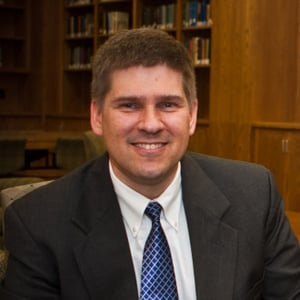
Associate Professor of Law, Brigham Young University J. Reuben Clark Law School
Eric Talbot Jensen teaches and writes in the areas of Public International Law, Criminal Law, The Law of Armed Conflict, International Criminal Law, and National Security Law. His recent scholarship has appeared in the Texas, Temple, Houston, and Israel Law Reviews, as well as the Stanford Law and Policy Review, Virginia Journal of International Law, Vanderbilt Journal of Transnational Law, and Stanford Journal of International Law. Professor Jensen is a co-author on an Oxford University text analyzing application of the laws of war to the war on terror and is also co-authoring a law school casebook on the Law of Armed Conflict for Aspen Publishing.
Prior to joining the BYU law faculty in 2011, Professor Jensen spent 2 years teaching at Fordham Law School in New York City and 20 years in the United States Army as both a Cavalry Officer and as a Judge Advocate. During his time as a Judge Advocate, Professor Jensen served in various positions including as the Chief of the Army’s International Law Branch; Deputy Legal Advisor for Task Force Baghdad; Professor of International and Operational Law at The Judge Advocate General’s Legal Center and School; legal advisor to the US contingent of UN Forces deployed to Skopje, Macedonia as part of UNPREDEP; and legal advisor in Bosnia in support of Operation Joint Endeavor/Guard.
Partner, Sullivan & Cromwell LLP
Eric Kadel is engaged in a wide variety of corporate, transactional and regulatory matters. He is a member of the Firm’s Corporate and Finance, Financial Services, Investment Management, Alternative Investment Management, Cybersecurity, and Commodities, Futures and Derivatives Groups. With regard to financings, Mr. Kadel regularly represents participants in capital markets transactions, and dealers and end users in connection with structuring and documenting a wide variety of swaps and other derivatives, including equity, credit default and commodity swaps, options and forwards. Mr. Kadel’s work in the investment management area includes advising public and private investment companies and investment advisers on a wide variety of transactional, regulatory, compliance and other matters, including registration and regulation. Mr. Kadel also advises clients of the Firm regarding developments in the laws regulating the financial services industry and on cybersecurity issues. Mr. Kadel is currently an adjunct professor at George Washington University Law School.
In addition, Mr. Kadel is one of the principal partners in the Firm’s International Trade and Investment practice. He counsels and represents clients on questions about U.S. economic sanctions, including those administered by the Treasury Department’s Office of Foreign Assets Control (“OFAC”), United States antiboycott requirements under the Export Administration Regulations administered and enforced by the Commerce Department’s Office of Antiboycott Compliance within the Bureau of Industry and Security, Bank Secrecy Act/anti‐money laundering laws and the U.S. Foreign Corrupt Practices Act (“FCPA”). Mr. Kadel’s practice includes analysis of proposed transactions and business relationships; due diligence and design and review of compliance procedures and strategies; and internal investigations, voluntary disclosures and government enforcement actions. Mr. Kadel also regularly advises clients regarding questions arising under Exon-Florio and the transaction review process administered by the Committee on Foreign Investment in the United States (“CFIUS”), and has represented clients before CFIUS on many national security reviews.

Professor Emeritus of Law, Antonin Scalia Law School, George Mason University
Jeremy A. Rabkin is a Professor Emeritus of Law at the Antonin Scalia Law School, George Mason University. Before joining the faculty in June 2007, he was for over two decades a professor in the Department of Government at Cornell University. Professor Rabkin serves on the board of directors of the Center for Individual Rights, a public interest law firm based in Washington, D.C. Previously he was a board member of the U.S. Institute of Peace and the board of academic advisors of the American Enterprise Institute.
Professor Rabkin’s books include Law Without Nations? (Princeton University Press, 2005). He authored “If You Need a Friend, Don’t Call a Cosmopolitan,” a chapter in Varieties of Sovereignty and Citizenship (Sigal R. Ben-Porath & Rogers M. Smith eds., University of Pennsylvania Press, 2012). His articles have appeared in major law reviews and political science journals and his journalistic contributions in a range of magazines and newspapers, including the Washington Post and the Wall Street Journal.
Partner, Sullivan & Cromwell LLP
Eric Kadel is engaged in a wide variety of corporate, transactional and regulatory matters. He is a member of the Firm’s Corporate and Finance, Financial Services, Investment Management, Alternative Investment Management, Cybersecurity, and Commodities, Futures and Derivatives Groups. With regard to financings, Mr. Kadel regularly represents participants in capital markets transactions, and dealers and end users in connection with structuring and documenting a wide variety of swaps and other derivatives, including equity, credit default and commodity swaps, options and forwards. Mr. Kadel’s work in the investment management area includes advising public and private investment companies and investment advisers on a wide variety of transactional, regulatory, compliance and other matters, including registration and regulation. Mr. Kadel also advises clients of the Firm regarding developments in the laws regulating the financial services industry and on cybersecurity issues. Mr. Kadel is currently an adjunct professor at George Washington University Law School.
In addition, Mr. Kadel is one of the principal partners in the Firm’s International Trade and Investment practice. He counsels and represents clients on questions about U.S. economic sanctions, including those administered by the Treasury Department’s Office of Foreign Assets Control (“OFAC”), United States antiboycott requirements under the Export Administration Regulations administered and enforced by the Commerce Department’s Office of Antiboycott Compliance within the Bureau of Industry and Security, Bank Secrecy Act/anti‐money laundering laws and the U.S. Foreign Corrupt Practices Act (“FCPA”). Mr. Kadel’s practice includes analysis of proposed transactions and business relationships; due diligence and design and review of compliance procedures and strategies; and internal investigations, voluntary disclosures and government enforcement actions. Mr. Kadel also regularly advises clients regarding questions arising under Exon-Florio and the transaction review process administered by the Committee on Foreign Investment in the United States (“CFIUS”), and has represented clients before CFIUS on many national security reviews.
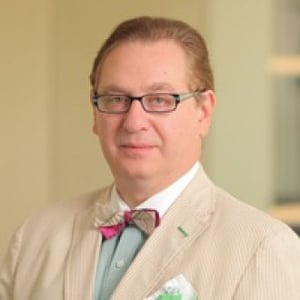
Partner, Baker Hostetler LLP
David Rivkin is a member of the firm's litigation, international and environmental teams and is co-leader of the firm's national appellate practice. He has extensive experience in constitutional, administrative and international law litigation and has been involved in numerous high-profile cases. With his prior experience in the government sector, David draws on a wealth of knowledge when providing compliance advice to companies and handling enforcement proceedings before government agencies on issues arising out of multilateral and unilateral sanctions, the Foreign Corrupt Practices Act (FCPA), anti-boycott issues, bankruptcy and financial fraud matters, and environmental and energy issues.
David has developed and implemented legislative, regulatory and litigation initiatives for two presidential administrations. Over the years, he has published hundreds of articles, op-eds, book reviews and book chapters on a variety of international, legal, constitutional, defense, arms control, foreign policy, environmental and energy issues for various newspapers and magazines, including The Wall Street Journal, The Washington Post, The New York Times, USA Today and The Los Angeles Times, and has been a frequent commentator and guest on TV and radio shows including ABC, CBS, NBC, CNN, Fox News, NPR and PBS.
Partner, Baker & Hostetler LLP
Lee A. Casey focuses on federal environmental, constitutional and international law and Alien Tort Statute issues. He also advises clients on compliance issues under the Foreign Corrupt Practices Act (FCPA), U.S. trade sanctions regimes, and federal ethics requirements. Mr. Casey’s practice includes federal, district and appellate court litigation, as well as matters before federal agencies. Prior to joining BakerHostetler, Mr. Casey was an associate with Hunton & Williams, practicing in international, environmental and constitutional law. From 2004 through 2007 he served as an member of the United Nations Subcommission on the Promotion and Protection of Human Rights.
From 1986 to 1993, Mr. Casey served in various capacities in the federal government, including the Office of Legal Policy (1986-90) and the Office of Legal Counsel (1992-93) at the U.S. Department of Justice and served as Deputy Associate General Counsel at the U.S. Department of Energy (1990-92). The Office of Legal Counsel is responsible for advising the Attorney General and the White House on issues of constitutional law and statutory interpretation. The Office of Legal Policy served as a strategic “think tank” for the Reagan Justice Department and was responsible for reviewing candidates for appointments to the federal bench.
Before joining the government in 1986, Mr. Casey was an associate in the Los Angeles firm of Mitchell, Silberberg & Knupp, practicing in the litigation section, with an emphasis on copyright, contract and First Amendment issues. From 1984 to 1985, Mr. Casey served as Law Clerk to the Honorable Alex Kozinski, then Chief Judge of the United States Claims Court. From 1982 to 1984, he practiced at the Detroit firm of Dykema Gossett, focusing on corporate, securities, commercial and intellectual property litigation, and from 1990 through 1994, he served as an Adjunct Professor of Law at George Mason University School of Law in Arlington, Virginia.
Among the chapters, articles and papers that Mr. Casey has authored or co-authored are: “International Law and the Nation-State at the U.N.,” Reclaiming the Language of Freedom at the United Nations: A Guide for U.S. Policymakers, The Heritage Foundation (2006) (with David B. Rivkin, Jr.); “The Dangerous Myth of Universal Jurisdiction,” A Country I Do Not Recognize (ed. Robert H. Bork) (2005) (with David B. Rivkin, Jr.); “Leashing the Dogs of War,” The National Interest (Fall 2003) (with David B. Rivkin, Jr.); “The Limits of Legitimacy: The Rome Statute’s Unlawful Application to Non-State Parties,” 44 Va.J.Int’l L. 63 (Fall 2003) (with David B. Rivkin, Jr.); “Devil’s Advocates: The Danger of Judging Lawyers By Their Clients,” Policy Review (Feb. and Mar. 2002) (with David B. Rivkin, Jr.); “The Case Against the International Criminal Court,” 25 Fordham Int’l L.J. 840 (2002); “Europe in the Balance: The Alarmingly Undemocratic Drift of the European Union,” Policy Review (June and July 2001) (with David B. Rivkin Jr.); “Against an International Criminal Court,” Commentary, May 1998 (with David B. Rivkin, Jr.); “Federalism (Cont’d.),” Commentary, December 1996 (with David B. Rivkin, Jr.); “Presidents and War Powers: Another View,” Common Sense, Winter 1996 (with David B. Rivkin, Jr.); “How Binding Are Contracts?” The American Enterprise, Nov./Dec. 1993 (with David B. Rivkin, Jr.); and “Pirate Constitutionalism: An Essay in Self-Government,” 8 J. of L. & Politics 477 (1992).
Mr. Casey is a member of the California, Michigan and District of Columbia Bar Associations.
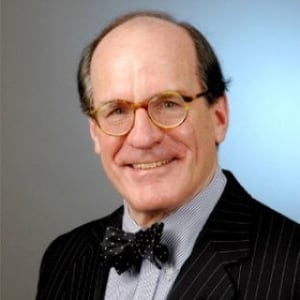
Retired Partner, Sullivan & Cromwell LLP
Upon his resignation as the Legal Adviser of the U.S. Department of State in January 1993, Mr. Williamson rejoined Sullivan & Cromwell's Washington, D.C. office. He originally joined the Firm in 1964 after graduating from New York University School of Law, where he was an editor of the Law Review. He became a partner of the Firm in 1971, moved to its London office in 1976, returned to its New York office in 1979, moved to its Washington, D.C. office in 1988 and became Of Counsel in 2007. In 2018, he retired from the firm.
At Sullivan & Cromwell, Mr. Williamson engaged in a broad and wide-ranging domestic and international financing and transactions practice, as well as advice with respect to corporate governance issues, the United States’ economic sanctions laws, the ethics rules applicable to government officials and the immunities of foreign sovereigns and international organizations.
Mr. Williamson has been an active participant on panels and other forums involving public international law and national security issues, such as the domestic and international bases for the use of force, the role of the United States with respect to the International Criminal Court, the law of the sea and the application of international legal principles in the war against terrorism.
Mr. Williamson is a member of the Council on Foreign Relations and a former member of the Executive Council of the American Society of International Law, the Executive Committees of the Business and Advisory Committee (BIAC) to the OECD and the U.S. Council for International Business, the United States Advisory Board of NTT DoCoMo, Inc. and the Board of Directors of Triton Oil & Gas Limited.
Mr. Williamson has served on the Boards of Regents and Trustees of the University of the South and as chair of the Board of Regents. He is currently a member of the Board of Directors of the American Council of Trustees and Alumni, a higher education watchdog.

The Art of the Tariff: The Trump Administration and Trade
Mark DiPlacido, Gordon Hanson, Eric J. Kadel
Join the Federalist Society for a debate on the role of tariffs during the Trump...
The Art of the Tariff: The Trump Administration and Trade
Mark DiPlacido, Gordon Hanson, Eric J. Kadel
Join the Federalist Society for a debate on the role of tariffs during the Trump...
Panel I: The Economic War: What Has Been Done, What Can Be Done, and What Should Be Done?
Scott R. Anderson, Richard Goldberg, Eric J. Kadel, Jamil N. Jaffer, Paul B. Stephan
The Russia-Ukraine War has been fought not just with bullets, bombs, and bytes, but also...
Panel I: Cryptocurrency and National Security
Gus P. Coldebella, Eric J. Kadel, Oonagh Ann McDonald, Juan C. Zarate, William C. Hughes
Cryptocurrencies have in many ways seized the public imagination. And there are many potential benefits to...
Foreign Policy in the Biden Administration
Eric J. Kadel, Nazak Nikakhtar, Adam J. Szubin
International & National Security Law Practice Group Teleforum
This virtual event examined current national security issues, including relations with China, as well as...
Foreign Policy in the Biden Administration
Eric J. Kadel, Nazak Nikakhtar, Adam J. Szubin
International & National Security Law Practice Group Teleforum
This virtual event examined current national security issues, including relations with China, as well as...
National Security Law & Doing Business Abroad
William J. Haynes, Eric J. Kadel, Timothy J. Keeler, Randal S. Milch, Donald J. Rosenberg
2018 National Lawyers Convention
U.S. businesses operating in the global economy, and non-U.S. businesses operating or looking to invest...
National Security Law & Doing Business Abroad
William J. Haynes, Eric J. Kadel, Timothy J. Keeler, Randal S. Milch, Donald J. Rosenberg
2018 National Lawyers Convention
U.S. businesses operating in the global economy, and non-U.S. businesses operating or looking to invest...
The Third Annual Mike Lewis Memorial Teleforum: Cyberwar and International Law
Eric Jensen, Eric J. Kadel, Jeremy A. Rabkin
There is broad agreement that international law applies to cyber conflict. There is less agreement...
The United States and the International Criminal Court: Concerns and Possible Courses of Action
Eric J. Kadel, David B. Rivkin, Lee A. Casey, Edwin D. Williamson
On July 17, 1998, the United Nations Diplomatic Conference of Plenipotentiaries on the Establishment of...