
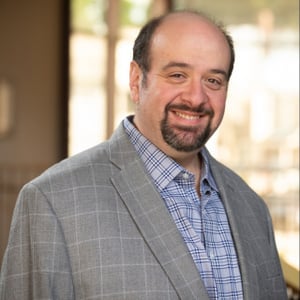
Associate Professor, UNH Franklin Pierce School of Law
Zvi S. Rosen is an Associate Professor at UNH Franklin Pierce School of Law and the Faculty Director of the Franklin Pierce Society for Intellectual Property. He has served as a Assistant Professor at the Southern Illinois University School of Law, as a Visiting Assistant Professor at the Maurice A. Deane School of Law at Hofstra University, and as a Visiting Scholar and Professorial Lecturer in Law at George Washington University School of Law.
In 2015-2016, he was the Abraham L. Kaminstein Scholar in Residence at the U.S. Copyright Office. Mr. Rosen received his J.D. from Northwestern University School of Law in 2005 and LLM in Intellectual Property in 2006 from the George Washington University Law School. He has practiced at Fried, Frank, Harris, Shriver & Jacobson LLP as well as smaller firms and his own practice, and clerked for the Hon. Thomas B. Bennett of the U.S. Bankruptcy Court for the Northern District of Alabama. He has written extensively on the development of modern copyright and trademark law, as well as on bankruptcy law.

Professor of Law, South Texas College of Law Houston
Josh Blackman is a national thought leader on constitutional law and the United States Supreme Court. Josh’s work was quoted during two presidential impeachment trials. He has testified before Congress and advises federal and state lawmakers. Josh regularly appears on TV, including NBC, CBS, ABC, Fox, and the BBC. Josh is also a frequent guest on NPR and other syndicated radio programs. He has published commentaries in the New York Times, Wall Street Journal, Washington Post, and leading national publications.
Since 2012, Josh has served as a professor at the South Texas College of Law Houston. He holds the Centennial Chair of Constitutional Law. Josh is an Adjunct Fellow at the Manhattan Institute. Josh has written more than seven dozen law review articles that have been cited more than a thousand times. Josh was selected as the Jurist of the Year by the Texas Journal of Law & Public Policy, received the inaugural Meese III Originalism Award, and was awarded the Inaugural Joseph Story Award. Josh was selected by Forbes Magazine for the “30 Under 30” in Law and Policy. Josh is the President of the Harlan Institute, and founded FantasySCOTUS, the Internet’s Premier Supreme Court Fantasy League. He blogs at the Volokh Conspiracyand posts@JoshMBlackman.
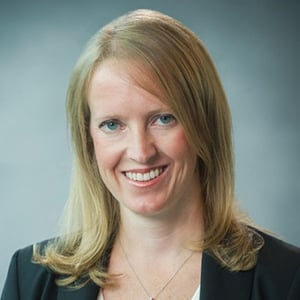
Partner, Clement & Murphy, PLLC
Erin Murphy is founding partner of Clement & Murphy, PLLC. She is widely recognized as one of the nation’s leading Supreme Court and appellate advocates. She has argued dozens of cases in appellate and trial courts throughout the country, including the Supreme Court and nearly all of the federal courts of appeals. Erin has long been ranked by Chambers & Partners rankings as a leading appellate practitioner, and the National Law Journal has named her one of the nation’s “Outstanding Women Lawyers.” Erin also has an active pro bono practice, through which she has successfully represented many religious organizations and adherents, criminal defendants, asylum applicants, adoptive parents, and more.
Erin is an adjunct professor at her alma mater the Georgetown University Law Center, a member and former officer of the Edward Coke Appellate Inn of Court, and a frequent speaker on topics relating to the Supreme Court and appellate advocacy. In her spare time, Erin serves on the board of directors of Street Law.
President, American Constitution Society for Law and Policy
Caroline Fredrickson joined ACS in 2009 and serves as president. She oversees the group and provides a steady hand of leadership to the nation’s leading progressive legal organization.
During her tenure, Caroline has helped grow ACS, which now has more than 40 lawyer chapters across the country, student chapters in nearly every law school in the United States, and thousands of members throughout the nation. She is an eloquent spokesperson for ACS and the progressive movement on issues such as civil and human rights, judicial nominations and the importance of the courts in America, marriage equality, voting rights, the role of money in politics, labor law, anti-discrimination efforts, and so much more.
She has been widely published on a wide range of legal and constitutional issues and is a frequent guest on television and radio shows, including a notable and well-covered appearance on Fox News’ The O’Reilly Factor in 2012 defending the constitutionality of the Affordable Care Act.
Before joining ACS, Caroline served as the director of the ACLU’s Washington legislative office and as general counsel and legal director of NARAL Pro-Choice America. In addition, Caroline was chief of staff to Sen. Maria Cantwell and deputy chief of staff to then-Senate Democratic Leader Tom Daschle. During the Clinton administration, she served as special assistant to the president for legislative affairs.
Caroline graduated summa cum laude from Yale University with a Bachelor of Arts in Russian and East European Studies in 1986 and from Columbia University School of Law with a J.D. in 1992. In law school, she was a Harlan Fiske Stone scholar, served on the Columbia Law Review and co-founded the Columbia Journal of Gender and Law. Following law school she clerked for James L. Oakes of the United States Court of Appeals for the Second Circuit. She currently is a member of Law Students for Reproductive Justice's Advisory Board.
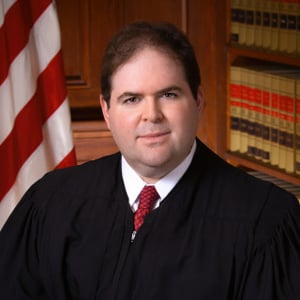
Judge, United States Court of Appeals, Eleventh Circuit
On November 19, 2019, Judge Robert J. Luck was appointed to the United States Court of Appeals for the Eleventh Circuit by President Donald Trump. Prior to serving on the federal bench, he was appointed to the Florida Supreme Court by Governor Ron DeSantis on January 14, 2019. He previously served on the Third District Court of Appeal in Miami after his appointment there by Governor Rick Scott in March 2017.
Earlier, Judge Luck served on the Eleventh Judicial Circuit Court of Florida from September 2013 to March 2017. He presided in the Criminal, Civil, and Appellate Divisions. Judge Luck, in his years as a trial court judge, tried seventy jury trials, and heard dozens of appeals from the county court and municipal agencies. Judge Luck was appointed to the circuit court in 2013 and was elected by the voters of Miami-Dade County to retain his seat in 2016.
Prior to his service on the bench, Judge Luck was an Assistant United States Attorney for the Southern District of Florida. In his years as a federal prosecutor, he was assigned to the Appeals, Major Crimes, and Economic Crimes Sections of the U.S. Attorney’s Office. Judge Luck tried nineteen jury trials before the federal district court and argued three appeals to the United States Court of Appeals for the Eleventh Circuit. In his final year in the Office, he was a Deputy Chief in the Major Crimes Section.
Earlier in his career, Judge Luck was a legislative correspondent for two United States Senators, a law clerk and staff attorney to Circuit Judge Edward E. Carnes on the United States Court of Appeals for the Eleventh Circuit, and a part of the Greenberg Traurig firm’s appellate section. Judge Luck received his Juris Doctor from the University of Florida Levin College of Law magna cum laude and was asked to join the Order of the Coif. Judge Luck also served as Editor-in-Chief of the Florida Law Review. Judge Luck received his Bachelor of Arts in Economics from the University of Florida with highest honors.
Partner, Schaerr-Jaffe
Mark Paoletta represents clients in connection with government investigations, with an emphasis on congressional investigations and hearings. He also counsels clients on how to successfully navigate legislative and regulatory issues before the government. Mr. Paoletta served in senior positions in the Legislative and Executive Branches for more than eighteen years, and he brings that experience to effectively help his clients.
In private practice, Mr. Paoletta has successfully represented many Fortune 500 companies in congressional investigations, including companies in the following areas: pharmaceutical and healthcare; telecommunications and media; privacy and technology; hedge funds and banking; energy; defense contracting and services; and education. He has represented government officials in high-profile inquiries, including a Governor, a Mayor, and a senior White House official.
Mr. Paoletta served for a decade as Chief Counsel for Oversight and Investigations for the Committee on Energy and Commerce in the U.S. House of Representatives. During his tenure, Mr. Paoletta managed nearly 200 investigative hearings, many of which involved high-profile issues and investigating some of the largest U.S. corporations. Many of those investigations led to substantial revisions to federal law, regulations and public awareness on significant issues of the day.
Mr. Paoletta most recently served as General Counsel for the Office of Management & Budget in the Executive Office of the President during the Trump Administration. As General Counsel to what many consider the most powerful agency in Washington, D.C., Mr. Paoletta worked daily with agencies across the federal government to ensure programs were implemented consistent with the President's policies. Mr. Paoletta also worked closely with the other component offices within OMB, such as the Office of Information and Regulatory Affairs (OIRA), which reviews and signs off on every regulation issued by federal agencies. Mr. Paoletta also served as Counsel to Vice President Pence during the first year of the Trump Administration.
During his time in the Trump Administration, Mr. Paoletta helped prepare many nominees for confirmation hearings, including Cabinet nominees, several Court of Appeals nominees, and two Supreme Court nominees.
Mr. Paoletta also served in the White House as Assistant Counsel to President George H.W. Bush. In that position, he played a key role in the successful confirmation effort of United States Supreme Court Justice Clarence Thomas.
Coleman P. Burke Chair in Environmental Law, School of Law, Case Western Reserve University
Victor B. Flatt is the Coleman P. Burke Chair in Environmental Law and the Associate Director of the Burke Center for Environmental Law at Case Western University School of Law. He also holds an appointment as an Energy Fellow UH Energy at the University of Houston.
Professor Flatt is a recognized expert on environmental law, climate law and energy law, and the intersection of these areas. Since 2019, he has created and taught the first law school courses in the country concerning how law relates to sustainability planning and ESG policies in corporations, offering the courses at UHLC, Vermont Law School and Case Western University School of Law.
His research focuses on environmental legislation and enforcement, with particular expertise in the Clean Air Act, NEPA and Climate. He is co-author of a popular environmental law casebook, and has authored more than 50 law review articles, which have appeared in journals such as the Notre Dame Law Review, Ecology Law Quarterly, The Ohio State Law Journal, Washington Law Review, Houston Law Review and the Carolina Law Review. Seven of his articles have been recognized as finalists or winner of the best environmental law review article of the year, and one was recognized by Vanderbilt University Law School and the Environmental Law Institute as one of the three best environmental articles of 2010, leading to a seminar and panel on the article in a congressional staff briefing.
He has been a Visiting Law Professor at the University of Georgia Law School, the University of Washington Law School and Seattle University School of Law. He has been honored as a Distinguished Environmental Scholar in Residence at Vermont Law School, Pace Law School (Elisabeth Haub Distinguished Scholar) and Widener University Delaware Law School. He was previously the inaugural O’Quinn Chair in Environmental Law at UHLC from 2002-2009, and the Dwight Olds Chair in Law at UHLC from 2017-2023. Professor Flatt was also the inaugural Taft Distinguished Professor in Environmental Law and the Director of the Center for Climate, Energy, Environment, and Economics (CE3) at UNC Chapel Hill School of Law.
Professor Flatt has served on the AALS committees on Natural Resources and Environmental Law and was chair of the AALS Teaching Methods Section. He has served on many other board and committees in his career, including the national board of Lambda Legal and the Law School Admission Council’s Gay and Lesbian Interests section.
Professor Flatt received his B.A. in Chemistry and Math from Vanderbilt University where he was a Harold Stirling Vanderbilt Scholar, and his J.D. from Northwestern University, where he was a John Henry Wigmore Scholar. After graduating from Northwestern, Professor Flatt clerked for the Honorable Danny J. Boggs of the United States Sixth Circuit Court of Appeals.
Legal Director and Securities Specialist, Better Markets
Mr. Hall has been with Better Markets since its founding more than 10 years ago, and he serves as its Legal Director and Securities Specialist. His background includes extensive experience in securities and commodities regulation acquired through positions in the Federal government, private practice, and the nonprofit sector.
Mr. Hall oversees a highly accomplished legal team that files amicus briefs in important cases involving financial regulation; initiates litigation or intervenes in cases when necessary to advance the public interest; issues special reports on specific topics surrounding the law and financial regulation; and provides regulatory analysis in the areas of banking, securities, and consumer protection. And his team supports the work of other staff members at Better Markets as they fight for the public interest before the regulatory agencies.
Mr. Hall is one of Better Markets’ most prolific authors, having written or co-written more than 100 comment letters, reports and legal briefs in his nearly decade-long fight for the public interest at the organization.
A sought-after expert for his legal and regulatory expertise, Mr. Hall has testified before Congress and currently serves on the Commission on Sanctions and Fitness of the Certified Financial Planner Board of Standards.
Prior to joining Better Markets in early 2011, Mr. Hall served as Senior Counsel to the Committee on Financial Services of the U.S. House of Representatives. During the Conference leading to passage of the Dodd-Frank Wall Street Reform and Consumer Protection Act, Mr. Hall worked on the titles dealing with securities and derivatives. He also handled other legislative initiatives relating to securities, including corporate governance, limited offering exemptions, the Freedom of Information Act, and the Securities Investor Protection Act.
From 2001 through 2009, Mr. Hall served as counsel to the North American Securities Administrators Association Inc. (NASAA), the association of state securities regulators. He supported all aspects of NASAA’s mission, including regulatory analysis, appellate advocacy, and enforcement. His written work included over 15 amicus briefs addressing a wide range of investor protection issues arising under State and Federal securities law, including four briefs filed in the U.S. Supreme Court. He also advised NASAA on corporate governance and transactional matters.
Mr. Hall began his legal career at the Commodity Futures Trading Commission, where he became Senior Trial Attorney and Associate Director of Enforcement. At the CFTC, he specialized in bringing injunctive actions in federal court against fraudulent commodity sales operations. And for almost a decade in private practice, he handled a wide range of civil litigation matters as well as transactional work in commercial real estate.
Mr. Hall is a graduate of the University of Michigan, and he received his law degree from Georgetown University.
Policy Fellow, Regulatory Policy, Americans for Prosperity Foundation
Marc Marie is a fellow for regulatory policy at Americans for Prosperity, where he focuses on energy, land use, and the administrative state. Before joining Americans for Prosperity, Marc advised early-stage energy companies on regulatory strategy. His government service includes senior counsel at the Department of Justice, Environment and Natural Resources Division; acting deputy solicitor at the Department of the Interior; and counsel to Sen. Mike Lee on the Senate Judiciary Committee, Antitrust Subcommittee.
He holds a Juris Doctor from the University of Maryland and a bachelor's degree from Kenyon College.
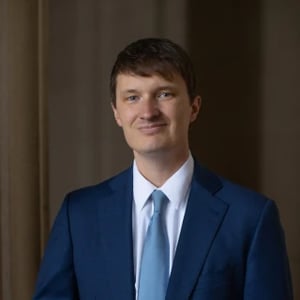
Partner, Boyden Gray PLLC
Trent McCotter is a partner with Boyden Gray PLLC. He previously served as Deputy Associate Attorney General of the United States and as an Assistant U.S. Attorney.
Mr. McCotter maintains an extensive appellate practice. He has considerable experience identifying and briefing cases that draw the Supreme Court’s attention, having persuaded the Court to grant certiorari in numerous cases raising issues of sovereignty, constitutional rights, due process, and criminal law. He has authored and submitted over 60 briefs at the Court.
He has also personally argued more than fifteen federal appeals across the Second, Fourth, Fifth, Sixth, Ninth, Eleventh, Federal, and D.C. Circuits—including once arguing three separate appeals in just four days. He has also twice argued before the 17-judge en banc Fifth Circuit. He has been counsel in over 50 other appeals raising matters from FOIA and the APA to constitutional rights and statutory construction.
As Deputy Associate Attorney General, Mr. McCotter oversaw DOJ’s Civil Appellate and Federal Programs branches, which are responsible for defending nearly all major litigation against the federal government. During his three years as a federal trial attorney in the Eastern District of Virginia’s “Rocket Docket,” Mr. McCotter won the Attorney General’s Award for Distinguished Service.
During his DOJ tenures, Mr. McCotter also assisted with the confirmations of two Supreme Court justices and over a dozen lower-court judges.
Mr. McCotter served as an inaugural clerk to the Hon. Steven J. Menashi on the U.S. Court of Appeals for the Second Circuit and also clerked for the Hon. R. Lanier Anderson III on the U.S. Court of Appeals for the Eleventh Circuit.

Chief Judge, United States Court of Appeals, Eleventh Circuit
William H. Pryor Jr. serves as Chief Circuit Judge on the United States Court of Appeals for the Eleventh Circuit.
In 2013–18, he served on the United States Sentencing Commission and, in 2017–18, served as Acting Chair.
He has taught as a visiting professor at the University of Alabama School of Law and previously taught as an adjunct professor at the Cumberland School of Law of Samford University.
He served as the 45th Attorney General of Alabama from 1997 to 2004. When he took office, he was the youngest attorney general in the nation. In his reelection, he received the highest percentage of votes of any statewide candidate.
He graduated magna cum laude from Tulane Law School where he finished first in the common-law curriculum and was editor in chief of the Tulane Law Review. He then served as a law clerk for Judge John Minor Wisdom of the U.S. Court of Appeals for the Fifth Circuit.
He is a member of The American Law Institute and an Adviser for the RESTATEMENT OF THE LAW THIRD, CONFLICT OF LAWS. He is a coauthor with Bryan Garner, Justices Gorsuch and Kavanaugh, and several other judges of a treatise, THE LAW OF JUDICIAL PRECEDENT. He has published in the Yale Law Journal, Columbia Law Review, Virginia Law Review, Notre Dame Law Review, Harvard Journal of Law & Public Policy, Yale Law & Policy Review, George Mason Law Review, Florida Law Review, Alabama Law Review, Case Western Reserve Law Review, and Tulane Law Review. He has published op-eds in The Wall Street Journal, The New York Times, National Review, and USA Today. He has debated at National Lawyers’ Conventions of the Federalist Society (including on National Public Radio) and at the Oxford Union in the United Kingdom. And he is listed among several “widely admired judicial writers” in Bryan Garner’s The Redbook: A Manual on Legal Style.
He is a member of the Tulane Law School Hall of Fame and has received the Defender of the Constitution Award from the Heritage Foundation, the Jurist of the Year Award from the Texas Review of Law & Politics, and the St. Thomas More Award from the St. Thomas More Society of Atlanta. Judge Pryor is also a proud member of the National Society of the Sons of the American Revolution.
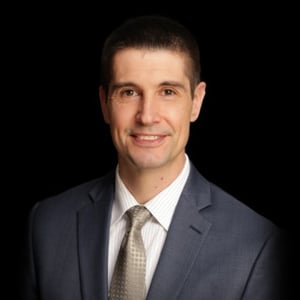
Partner, Cooper & Kirk, PLLC
Pete Patterson is a partner at Cooper & Kirk. His practice includes appellate litigation, constitutional litigation, commercial litigation, and administrative law. In addition, Mr. Patterson for a number of years taught an appellate litigation clinic at the University of Cincinnati College of Law. Mr. Patterson has argued in the U.S. Supreme Court and in nearly every regional federal circuit court of appeals.
Mr. Patterson has extensive experience in complex matters involving important questions of constitutional, statutory, and administrative law. He frequently has represented plaintiffs in cases alleging constitutional or statutory violations by federal, state, and local government officials. He also has represented plaintiffs in class action litigation against corporations and the federal government.
Mr. Patterson joined the firm in 2009. Prior to arriving at Cooper & Kirk, he served as a law clerk to Judge Jeffrey S. Sutton of the United States Court of Appeals for the Sixth Circuit. Mr. Patterson typically works from Cincinnati, Ohio.
Mr. Patterson received his J.D. from Stanford Law School in 2006, earning Order of the Coif honors for finishing in the top 10% of his class. There, he was a member of the Stanford Law Review, serving as an Articles Editor. He also participated in litigation before the United States Supreme Court through the Stanford Supreme Court Litigation Clinic.
Mr. Patterson graduated with University Honors from Carnegie Mellon University in 2000 with a B.S. in Information and Decision Systems. While at Carnegie Mellon, he wrote a regular column for the student newspaper and was a member of the football team.
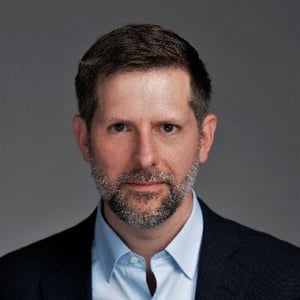
Head of AI Policy, Abundance Institute
Neil Chilson is the Head of AI Policy at the Abundance Institute. Prior to this position, he served as a Senior Research Fellow at the Center for Growth and Opportunity. Chilson is a lawyer, computer scientist, and author of the book “Getting Out of Control: Emergent Leadership in a Complex World.”
Chilson was previously the senior research fellow for Technology and Innovation at Stand Together, where he guided efforts to understand and promote the legal and cultural paradigms that best enable people to discover, innovate, and improve all our lives.
Before Stand Together, Chilson was the Chief Technologist at the Federal Trade Commission, where he focused on the economics of privacy and blockchain-related issues. Previously, he was an attorney advisor to Acting FTC Chairman Maureen K. Ohlhausen. In both roles he advised Chairman Ohlhausen and worked with staff on nearly every major technology-related case, report, workshop, or other FTC proceeding since January 2014. Neil joined the FTC from telecom firm Wilkinson Barker Knauer. Neil is frequently quoted by the press and his work has appeared in numerous news outlets, including The Wall Street Journal, The Washington Post, USAToday, and Newsweek. Neil has a J.D. from The George Washington Law School, a M.S. in computer science from University of Illinois, Urbana-Champaign, and a B.S. in computer science from Harding University.
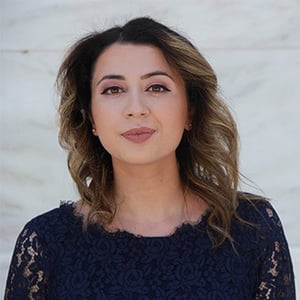
Senior Legal Fellow, The Future of Free Speech, Vanderbilt University
Ashkhen Kazaryan is a renowned expert in First Amendment law and technology policy, specializing in digital free speech, artificial intelligence, and the intersection of constitutional rights with emerging technologies. As a Senior Legal Fellow at the Future of Free Speech at Vanderbilt University, she leads initiatives to protect free expression and shape policies that uphold the First Amendment in the digital age.
Previously, Ashkhen was the lead for North and Latin America on the content regulation team at Meta, where she also served as the company’s policy lead on Section 230. She has also been a Senior Fellow at Stand Together and the Director of Civil Liberties at TechFreedom, where she worked extensively on platform liability, free speech, and internet governance. She is currently Fellow for the First Amendment at the Freedom Forum.
Ashkhen earned her specialist in law degree summa cum laude from Lomonosov Moscow State University in 2012 and later received a master of law degree from Yale Law School in 2016. During her time at Yale, she contributed as an articles editor for the Yale Journal of Law and Feminism, a senior editor for the Yale Law and Policy Review, and an editor for the Yale Journal of Law and Technology, while also serving as co-chair of the Public Interest Fellowship.
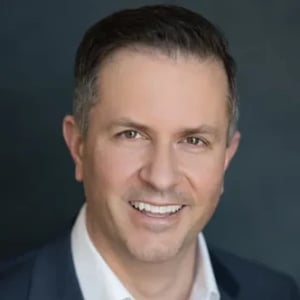
Founder and CEO, Chamber of Progress
Adam Kovacevich (Kuh-VACK-uh-VITCH) is the Founder and CEO of Chamber of Progress, a center-left tech industry policy coalition promoting technology’s progressive future.
Chamber of Progress – which Adam founded in March 2021 – works to ensure that all Americans benefit from technological leaps, and that the tech industry operates responsibly and fairly. It has been called “one of the most powerful tech lobby groups,” (New York Times), “one of the tech industry’s most prominent allies in Washington,” (Washington Post) and “a significant voice in the progressive movement” (Washingtonian).
Adam is a veteran Democratic tech industry leader who has had a front row seat for more than 20 years in the tech industry’s political maturation. He is an expert in helping lead technology companies through today’s challenging political environment.
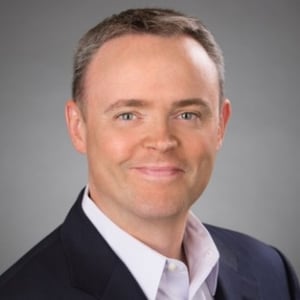
Senior Fellow, R Street Institute
Prior to R Street, Adam spent 12 years as a senior fellow at the Mercatus Center at George Mason University. Before the Mercatus Center, he served as the president of the Progress and Freedom Foundation. Adam has also worked for the Adam Smith Institute, the Heritage Foundation and the Cato Institute.
Adam has published 10 books on a wide range of topics, including online child safety, internet governance, intellectual property, telecommunications policy, media regulation and federalism.
In 2008, Adam received the Family Online Safety Institute’s “Award for Outstanding Achievement.”
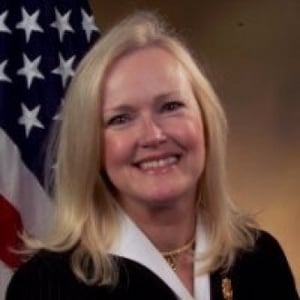
Founder, Law Office of Eileen J. O'Connor PLLC
After nearly 30 years as a national tax specialist with the IRS and major accounting firms, Eileen J. O’Connor, now an attorney in private practice, was Assistant Attorney General for the Justice Department’s Tax Division for six years during the administration of President George W. Bush and a member of then-President-elect Trump’s Treasury Department Transition Team. She focuses on federal administrative and tax law.
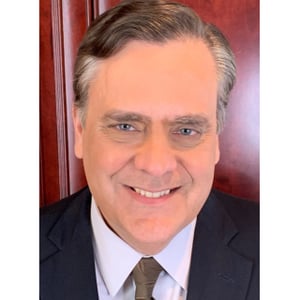
J.B. and Maurice C. Shapiro Professor of Public Interest Law; Director of the Environmental Law Advocacy Center; Executive Director, Project for Older Prisoners, The George Washington University Law School
Jonathan Turley is a nationally recognized legal scholar who has written extensively in areas ranging from constitutional law to legal theory to tort law. After a stint at Tulane Law School, Professor Turley joined the GW Law faculty in 1990, and in 1998, became the youngest chaired professor in the school’s history.
He is the founder and executive director of the Project for Older Prisoners (POPS). He has written more than three dozen academic articles that have appeared in a variety of leading law journals including those of Cornell, Duke, Georgetown, Harvard, and Northwestern Universities, among others. He most recently completed a three-part study of the historical and constitutional evolution of the military system.
Professor Turley has served as counsel in some of the most notable cases in the last two decades, including his representation of the Area 51 workers at a secret air base in Nevada; the nuclear couriers at Oak Ridge, Tennessee; the Rocky Flats grand jury in Colorado; Dr. Eric Foretich, the husband in the Elizabeth Morgan custody controversy; and four former U.S. Attorney Generals during the Clinton impeachment litigation. Professor Turley also has served as counsel in a variety of national security and terrorism cases, and has been ranked as one of the top 10 lawyers handling military cases.
He has served as a consultant on homeland security and constitutional issues, and is a frequent witness before the House and Senate on constitutional and statutory issues as well as tort reform legislation. He also is a nationally recognized legal commentator; he ranked 38th in the top 100 most cited ‘public intellectuals’ in a recent study by Judge Richard Posner and was found to be the second most cited law professor in the country.
He is a member of the USA Today board of contributors and the recipient of the “2005 Single Issue Advocate of the Year” – the annual opinion award for the Aspen Institute and The Week magazine. More than 400 of his articles on legal and policy issues regularly appear in national newspapers. He also has worked as the CBS and NBC legal analyst, respectively, during national controversies.

What is Fair Use After the Warhol Case?
Zvi Rosen
A Regulatory Transparency Project Fourth Branch Video
Fair Use allows for copyrighted works to be used in certain circumstances. When Fair Use...
2024 Ron Rotunda Memorial Webinar: Profiles in Courage in the Legal Profession
Josh Blackman, Erin E. Murphy
Professor Ron Rotunda wrote seminal law books that are still used in law schools across...
Executive Power Under Fire: The Biden Administration’s Response to Houthi Attacks
Since last November, the Houthis have targeted over 100 ships in the Red Sea, raising...
Daniel Webster Debate Series: Do President Biden's Proposed SCOTUS Reforms Deserve Support?
Caroline Fredrickson, Robert J. Luck, Mark Paoletta
The Federalist Society's Georgetown Law Chapter'sDaniel Webster Debate Series presents Daniel Webster Debate Series:...
U.S. Out of Africa? Then What?
Last month, the last American troops left Niger, following withdrawal of U.S. troops in Chad...
Climate Disclosure Litigation: Examining Legal Battles Against California and the SEC
Victor Flatt, Stephen Hall, Marc Marie, Trent McCotter
A Regulatory Transparency Project Webinar
A panel of distinguished legal scholars and practitioners will provide an overview of the current...
SOC! SIDEBAR: College Football
William H. Pryor
The Federalist Society's Student Division & Yale Law School Chapter
The Federalist Society's Student Division & Yale Law School Chapterpresent SOC! SIDEBAR:College Football featuring Hon....
Courthouse Steps Oral Argument: Garland v. VanDerStok
Peter A. Patterson
Garland v. VanDerStok concerns whether the ATF's 2022 update to its regulations under the Gun Control...
What Should the Next Administration Do About AI?
Neil Chilson, Ashkhen Kazaryan, Adam Kovacevich, Adam Thierer
This virtual event explored the potential trajectories of AI policy under the upcoming shift in presidential...
Talks with Authors: The Indispensable Right
Eileen J. O'Connor, Jonathan R. Turley
In his new book The Indispensable Right: Free Speech in an Age of Rage, Professor...