
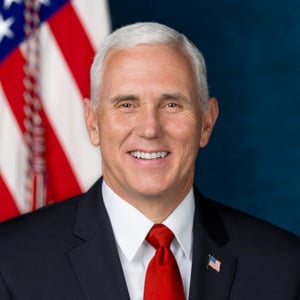
48th Vice President of the United States
Michael R. Pence was born in Columbus, Indiana, on June 7, 1959, one of six children born to Edward and Nancy Pence. As a young boy he had a front row seat to the American Dream. After his grandfather immigrated to the United States when he was 17, his family settled in the Midwest. The future Vice President watched his Mom and Dad build everything that matters—a family, a business, and a good name. Sitting at the feet of his mother and his father, who started a successful convenience store business in their small Indiana town, he was raised to believe in the importance of hard work, faith, and family.
Vice President Pence set off for Hanover College, earning his bachelor’s degree in history in 1981. While there, he renewed his Christian faith which remains the driving force in his life. He later attended Indiana University School of Law and met the love of his life, Second Lady Karen Pence.
After graduating, Vice President Pence practiced law, led the Indiana Policy Review Foundation, and began hosting The Mike Pence Show, a syndicated talk radio show and a weekly television public affairs program in Indiana. Along the way he became the proud father to three children, Michael, Charlotte, and Audrey.
Growing up in Indiana, surrounded by good, hardworking Hoosiers, Vice President Pence always knew that he needed to give back to the state and the country that had given him so much. In 2000, he launched a successful bid for his local congressional seat, entering the United States House of Representatives at the age of 40.
The people of East-Central Indiana elected Vice President Pence six times to represent them in Congress. On Capitol Hill he established himself as a champion of limited government, fiscal responsibility, economic development, educational opportunity, and the U.S. Constitution. His colleagues quickly recognized his leadership ability and unanimously elected him to serve as Chairman of the House Republican Study Committee and House Republican Conference Chairman. In this role, the Vice President helped make government smaller and more effective, reduce spending, and return power to state and local governments.
In 2013, Vice President Pence left the nation’s capital when Hoosiers elected him the 50th Governor of Indiana. He brought the same limited government and low tax philosophy to the Indiana Statehouse. As Governor, he enacted the largest income tax cut in Indiana history, lowering individual income tax rates, the business personal property tax, and the corporate income tax in order to strengthen the State’s competitive edge and attract new investment and good-paying jobs. Due to his relentless focus on jobs, the state’s unemployment rate fell by half during his four years in office, and at the end of his term, more Hoosiers were working than at any point in the state’s 200-year history.
As Governor of Indiana, Vice President Pence increased school funding, expanded school choice, and created the first state-funded Pre-K plan in Indiana history. He made career and technical education a priority in every high school. Under Vice President Pence’s leadership, Indiana, known as “The Crossroads of America,” invested more than $800 million in new money for roads and bridges across the state. Despite the record tax cuts and new investments in roads and schools, the state remained fiscally responsible, as the Vice President worked with members of the Indiana General Assembly to pass two honestly balanced budgets that left the state with strong reserves and AAA credit ratings that were the envy of the nation.
It was Indiana’s success story, Vice President Pence’s record of legislative and executive experience, and his strong family values that prompted President Donald Trump to select Mike Pence as his running mate in July 2016. The American people elected President Donald Trump and Vice President Pence on November 8, 2016. President Donald Trump and Vice President Pence entered office on January 20, 2017.
In February 2021, Vice President Mike Pence joined the Heritage Foundation as a distinguished visiting fellow. The Heritage Foundation helped shape Vice President Mike Pence’s conservative philosophy for decades and played a pivotal role advancing conservative policies throughout the Trump Administration. Vice President Pence also joined Young America’s Foundation as the Ronald Reagan Presidential Scholar. Long before Mike Pence became Vice President to President Donald Trump, the vision and leadership of Ronald Reagan inspired his youth.
Vice President Mike Pence remains grateful for the grace of God, the love and support of his family, and the blessings of liberty that are every American’s birthright.
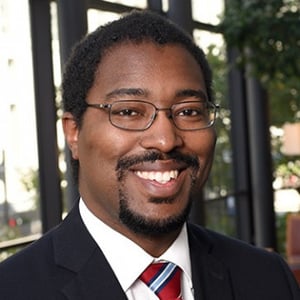
Partner, Taft Stettinius & Hollister LLP
Philip litigates complex matters in state and federal courts. He has briefed appeals in multiple U.S. Courts of Appeals, including the Sixth, Seventh, and Ninth Circuits, as well as state appellate courts in Ohio, Kentucky, and Georgia. Philip has also represented amici at both the cert petition and merits stages in the U.S. Supreme Court.
Prior to joining Taft, Philip served as a law clerk for Judge Raymond M. Kethledge of the U.S. Court of Appeals for the Sixth Circuit, Judge Amul R. Thapar of the U.S. District Court for the Eastern District of Kentucky, and Judge Lavenski R. Smith of the U.S. Court of Appeals for the Eighth Circuit.
Philip serves on the board of directors for the Cincinnati and Northern Kentucky lawyers chapters of the Federalist Society. He was a 2018 James Wilson Fellow with the James Wilson Institute, a 2013 John Marshall Fellow with the Claremont Institute Center for Constitutional Jurisprudence, and a 2011 Blackstone Fellow with the Alliance Defending Freedom.
Philip received his undergraduate degree, with Highest Honors, from Ouachita Baptist University. He received his J.D. from the University of Virginia School of Law, where he served as the submissions review editor for the Journal of Law and Politics.
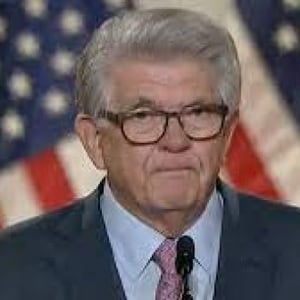
Founder and President, Sunshine Gasoline Distributors
Because of his humble beginnings, Maximo Alvarez has always believed in helping the community, as well as the industry in which he has spent most of his career. Mr. Alvarez has been very involved in the Florida Petroleum Marketers Association and was elected Chairman of the Board in 2000 and inducted into its Hall of Fame in 2005. He has worked closely with the Petroleum Council as a tireless advocate for the industry. He has also received awards for his work in Hope for Vision and the Transplant Foundation. In 2006, Maximo became a trustee of Pedro Pan Group, a non-profit organization for immigrant children. In 2010, he was inducted into the Belmont Abbey Wall of Fame. He later received a doctorate of laws honoris causa from Belmont Abbey in 2015. Mr. Alvarez serves as a trustee for The First Tee, a junior program that sets out to positively impact the lives of young people through the game of golf. In 2016, he was appointed by Rick Scott, the governor of Florida, to serve on the Florida State University Board of Trustees. In addition, he is also serving as chairman of the Florida Department of Agriculture and Consumer Services’ Florida Consumers’ Council, appointed by the Florida Commissioner of Agriculture, Adam Putnam. Sunshine Gasoline has been a constant sponsor of Miami Children’s Hospital and the Muscular Dystrophy Association. Mr. Alvarez’s biggest dream was recently fulfilled when Centro Hispano Catolico opened its door to over 300 children. The Centro Hispano Catolico is a day care center for under privileged children created in honor of Monsignor Bryan O. Walsh. Mr. Alvarez is a strong believer in the philosophy that every new generation must be better than the last. This philosophy is carried out by his legacy of generosity that began when he was thirteen years old. Ever grateful of the country that allowed him to be where he is today and proud of his success, he states; “If I were to give back everything I have today, it would only be 10% of what was given to me”.
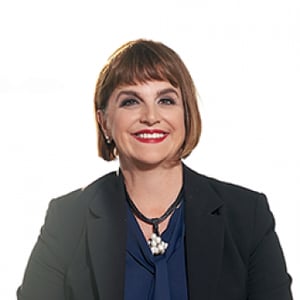
Former Vice Chair, U.S. Commission on International Religious Freedom
Kristina Arriaga is a passionate communicator with a storied life. Early on in her career, she orchestrated the rescue of a Cuban woman and her two children, for which she was featured in Vanity Fair and Reader’s Digest. More recently, she visited American Pastor Andrew Brunson in a prison in Turkey where she advocated for his release in Congress, in Turkey, and through the pages of The Wall Street Journal. In her other life, as President and CEO of Intrinsic Communications, she helps her clients elevate their stories in the court of public opinion.
Arriaga also serves with the inaugural group of seven trustees who oversee a newly created Oversight Board, an independent entity that makes biding decisions on content moderation for Meta’s 2.9 billion users. Its 20-member Board includes Judge Michael McConnell (Stanford Law School), Helle Thorning-Schmidt (former prime minister of Denmark), and Tawakkol Karman (first Arab woman to win a Nobel prize), among other notable freedom of expression experts.
Formerly, in 2016, the U.S. Congress appointed her to the U.S. Commission on International Religious Freedom, where she was elected Vice Chair for two consecutive terms. During her 3-year tenure, she met with high-ranking government officials to advocate for human rights in Iraq, Saudi Arabia, Bahrain, Egypt, Nigeria, Turkey, and many other countries. In protest over legislation that turned the watchdog agency into a government lapdog, she resigned with an explanatory op-ed for the Wall Street Journal.
Before the Commission, Arriaga was a member of the U.S. delegation to the UN Human Rights Commission and the executive director of a public interest law firm that defends free expression. During her tenure at the law firm, she oversaw several strategic public relations campaigns on landmark cases before the U.S. Supreme Court.
Arriaga is the recipient of the 2017 Newseum Free Expression Award along with Apple’s CEO Tim Cook, ABC’s correspondent Martha Raddatz, and civil rights champion John Lewis.
A sought-after speaker, she has appeared on BBC, MSNBC, C-Span, CNN, and NPR, among many others. She has lectured in numerous universities worldwide. Her 2020 op-ed for USAToday, “My family fled Fidel Castro's Cuba, where 'cancel culture' was deadly serious” went viral. Her recent interviews include an extended feature by Crux entitled: “Cuban Americans cling to both U.S., Cuban identities.”
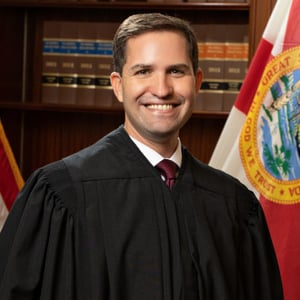
Chief Justice, Florida Supreme Court
John D. Couriel is the 58th Chief Justice of the State of Florida and the 90th Justice of the Florida Supreme Court. Justice Couriel was born in Miami, Florida in 1978. He is married to Rebecca L. Toonkel, M.D. They have two children.
Justice Couriel received his A.B. magna cum laude from Harvard College in 2000 and his J.D. from Harvard Law School in 2003. He clerked for the Honorable John D. Bates of the United States District Court for the District of Columbia before joining Davis Polk & Wardwell in New York. His practice there included securities offerings, mergers and acquisitions, bankruptcy matters, and investigations. In 2009, he became an Assistant United States Attorney for the Southern District of Florida. He prosecuted hundreds of federal offenses, including international money laundering, public integrity, healthcare fraud, and human trafficking crimes. In 2013, he joined Kobre & Kim LLP, where he specialized in cross-border disputes and investigations relating to financial products and services, asset recovery, and government enforcement defense, with an emphasis on clients in Latin America.
Justice Couriel is a native speaker of Spanish. His parents emigrated from Cuba in the 1960s, his father as one of approximately 14,000 unaccompanied minors welcomed to the United States as part of Operation Pedro Pan.
He was appointed to the Florida Supreme Court by Governor Ron DeSantis on June 1, 2020.

Host, Hola Ota-Ola!
Alexander Otaola is a Cuban-American actor, social media influencer, and political activist. Otaola is the host of the web show Hola Ota-Ola!, an informative and satirical program that covers entertainment, news and politics. His show debuted on Cubanos por el Mundo: a cross platform media initiative, website, and YouTube channel that covers politics, news, and celebrity culture in Cuba and the Cuban exile community. Alexander Otaola is a vocal opponent of the communist regime in Cuba denouncing its human rights violations and crimes in all his shows.
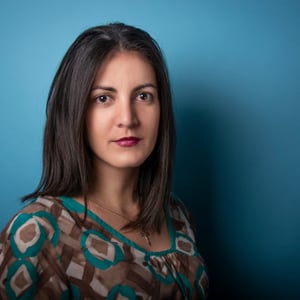
Founder, Cuba Decide
Rosa María Payá Acevedo is a Cuban democracy activist and human rights
defender. In 2015, she founded the citizen initiative Cuba Decide, a movement in
favor of changing the political and economic systems in Cuba towards democracy,
through a plebiscite. She is the daughter of the late Oswaldo Payá, the recipient of
the European Parliament's Sakharov Prize and two-time nominee of the Nobel
Peace Prize, who was killed by the regime in 2012. Rosa María is a graduate of
Physics at the University of Havana and of the Global Competitive Leadership
program at Georgetown University. She has been a lecturer and guest of honor at
various universities throughout the United States and Latin America, as well as at
the UN, the Concordia Summit of the Americas, the Freedom Forum, the US
Congress, and multiple parliaments in Europe and the Americas.
In 2020, she was the recipient of the Congressional Hispanic Leadership Institute
(CHLI) Ileana Ros-Lehtinen International Leadership Award for her global advocacy
and leadership. In 2019 she was the winner of the Morris Abram Human Rights
Award granted by UN Watch. She has also been granted the Casa Cuba Award in
Tampa, Florida, and with the Keys of the City of Miami, a city that has established
an annual day in honor of this Cuban activist and that, thanks to the work of Cuba
Decide platform, has declared July 22 as the Day of Victims of Communism in
America. In 2013, she was selected as one of the “25 most powerful women”
according to People en Español magazine.
She is the Honorary President of the Latin American Youth Network for Democracy,
an organization with which she established, in collaboration with the Pan American
Democracy Foundation, the Oswaldo Payá Prize “Libertad y Vida” that, since 2016,
seeks to recognize people and institutions that have made extraordinary
contributions to the defense of democracy.
Her work has made her part of the Global Americans New Generation of Public
Intellectuals initiative in 2018. In recent years, Payá Acevedo has been a
contributor to a number of periodical publications of global relevance, including The
Washington Post and CNN.
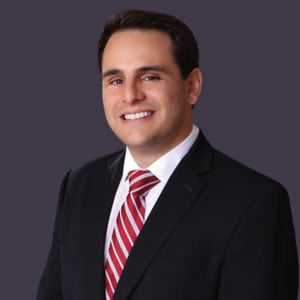
Former U.S. Ambassador to the Organization of American States
Carlos Trujillo, Ambassador, Retired, and Partner at Continental Strategy based in Washington, D.C. with offices in Miami, is a prominent Florida attorney and politician with a thorough understanding of Latin American politics and business. He served as United States Ambassador to the Organization of American States (2018-2021), as a member of the Florida House of Representatives (2010-2018) and as Founding Partner of Trujillo, Vargas, Gonzalez and Hevia LLP (2011–2017) and as an Assistant State Attorney in Florida’s 11th Judicial District (2007-2011).
After being appointed by former President Donald J. Trump to serve as the U.S. Permanent Representative to the Organization of American States, Trujillo was unanimously confirmed by the United States Senate and served as Ambassador from March 30, 2018 until January 20, 2021. During his time at the OAS, Trujillo served as Chair of the Permanent Council, Budget Committee and the Economic Development Committee. He also led the effort to re-elect Secretary General Luis Almagro.
Trujillo also was appointed by President Trump and served as a Representative of the United States to the 72nd General Assembly of the United Nations under former Ambassador Nikki Haley and was nominated to serve as Assistant Secretary of State for the Western Hemisphere. Trujillo, a native Spanish speaker, is known for his strong ties to the Hispanic community, legal acumen and leadership, and has a wealth of knowledge and connections in Latin American politics.
Prior to serving as Ambassador, Trujillo was elected as State Representative for the 105th District in the Florida House of Representatives, where he served in various capacities, including as Chairman of the Florida House Appropriations Committee, he appropriated and oversaw an $83.5 billion dollar budget. He also served as Chair of the Economic Development Subcommittee, and Chair of Criminal Justice Subcommittee.
Trujillo was a Founding Partner of Trujillo, Vargas, Gonzalez and Hevia LLP, based in Coral Gables, Florida. Under his leadership, the firm grew to more than 50 employees and generated over $10 million in annual revenue. Previously, Trujillo served as Assistant State Attorney, Miami Dade County State Attorney’s Office, Miami, Florida (2007–2011) were he served as a training attorney and Felony Prosecutor. Prior to founding Trujillo Vargas, LLP Carlos was an Assistant State Attorney for the 11th Judicial Circuit of Florida, where he was responsible for felony prosecutions. While working as an Assistant State Attorney, he tried 54 criminal trials, 26 jury trials to verdict and was served as first chair on 20 jury selections. Previously, Carlos was a training attorney in the County Court Division, and also served in the Juvenile Court Division
He currently serves on the Board of Florida International University, as a member and manager of multiple real-estate holding companies in Coral Gables, Florida, and has also served as a Board Member on the Public Health Trust of Jackson Memorial Hospital, Miami, Florida (2015–2016) and as a member of the Electoral College in 2016.
Trujillo earned a B.S. in Business Administration from Spring Hill College in Mobile, Alabama (2004) and a J.D. from Florida State University College of Law, Tallahassee, Florida (2007). He is an active member of the Florida Bar since 2007 and received an AV rating by Martindale-Hubbell. He is married to Carmen Maria Mir and they have four children – Carlos, Isabella, Juan Pablo and Felipe.
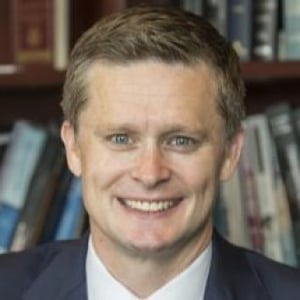
Donald M. Ephraim Professor of Law and Economics, University of Chicago Law School
Tony Casey is an expert on business law, finance, and corporate bankruptcy. His research—which has been published in the Yale Law Journal, the Columbia Law Review, the Supreme Court Review, and the University of Chicago Law Review—examines the intersection of finance and law. He has also written about the role of intellectual property law in the organization and financing of creative projects and about how technological innovation is changing the foundations of our legal system more generally.
Before entering academics, Professor Casey was a partner at Kirkland and Ellis, LLP. Before joining Kirkland & Ellis, he was an associate at Wachtell, Lipton, Rosen & Katz. His legal practice focused on corporate bankruptcy, merger litigation, white-collar investigations, securities litigation, and complex class actions. Casey also served as a law clerk for Chief Judge Joel M. Flaum of the United States Court of Appeals for the Seventh Circuit.
Professor Casey received his JD with High Honors in 2002 from the University of Chicago Law School. He received the John M. Olin Prize for the outstanding student of law and economics.
Professor Casey teaches courses and seminars in corporate governance, business law, bankruptcy and reorganization, finance, litigation strategy, civil procedure, and law and technology.
Senior Writer, National Review
Ramesh Ponnuru is a senior editor for National Review, a columnist for Bloomberg View, and a visiting fellow at the American Enterprise Institute. Ponnuru grew up in Kansas City and graduated summa cum laude from Princeton’s history department. Ponnuru has published articles in numerous newspapers including the New York Times, the Washington Post, the Wall Street Journal, the Financial Times, Newsday, and the New York Post. He has also written for First Things, Policy Review, The Weekly Standard, The New Republic,Reason, and other publications. He has appeared on numerous television news programs. He is the author of The Party of Death: The Democrats, the Media, the Courts, and the Disregard for Human Life. He is also the author of the monograph The Mystery of Japanese Growth (American Enterprise Institute/Centre for Policy Studies).
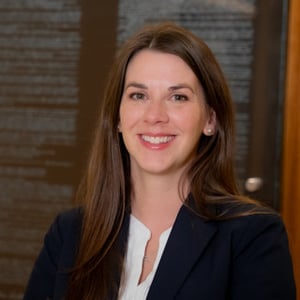
Vice President, Practice Groups, The Federalist Society
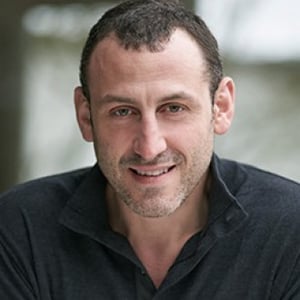
Professor of Law, Northwestern University Pritzker School of Law
Joshua Kleinfeld teaches and writes about political, legal, and moral philosophy, criminal law, and criminal procedure. He also practices law in Northwestern's Juvenile Criminal Defense Clinic. He is a full professor with tenure at the Northwestern Pritzker School of the Law and (by courtesy) in Northwestern’s philosophy department. In 2017-18, he was a visiting professor at Harvard and Stanford Law Schools. He is the recipient of the Bator Award, given annually to one American law professor under the age of 40 who has demonstrated "excellence in legal scholarship, a commitment to teaching, a concern for students, and who has made a significant public impact."
In philosophy, Kleinfeld's research focuses on the idea of "embodied ethical life," as developed in the socio-theoretic tradition of Hegel, Weber, and Durkheim. This tradition aims to understand and critique social life by bringing to light the normative ideas implicit in social practices and institutions. In law, this means that the most interesting philosophical concepts are often those reflected or actualized in legal practice – in the law as judges and lawyers think of it and wield it.
In criminal law and procedure, Kleinfeld has developed a theory known as "reconstructivism," which holds that the chief office of criminal law is not to dole out retributive justice, nor to optimize crime and cost control, but to reconstruct a violated normative order in the wake of a crime. This work, which draws on the thought of Hegel, Durkheim, Jean Hampton, and Antony Duff, develops an alternative to retributive and utilitarian theories of criminal law by focusing on the distinctive social function and sense of justice at work in the criminal system.
Kleinfeld is also involved in practical criminal justice reform. In this vein, he defends children accused of homicide in the Northwestern Juvenile Criminal Defense clinic and assists in litigation efforts meant to reform American criminal law through the courts. He has also developed a view of criminal justice reform known as "democratization," which holds that the root of the American criminal justice crisis is a set of bureaucratic attitudes, structures, and incentives divorced from the American public’s concerns and sense of justice, and that the primary solution is to make criminal justice more community-focused and responsive to lay influences. Working with others, he has developed a number of policy proposals meant to reform American criminal justice in a democratic direction.
Kleinfeld holds a JD from Yale Law School, a PhD in philosophy from the Goethe University of Frankfurt (supervised by Axel Honneth, Klaus Günther, and Rainer Forst), and a BA in philosophy from Yale College. He clerked for Judge J. Harvie Wilkinson on the United States Court of Appeals for the Fourth Circuit; Judge Janice Rogers Brown on the United States Court of Appeals for the D.C. Circuit; and President (chief justice) Aharon Barak of the Supreme Court of Israel. He worked as an Associate at Debevoise & Plimpton LLP in Frankfurt, Germany, in the area of corporate criminal law. Before law school, he worked as a Senior Research Analyst at the White House’s Council on Bioethics.

Professor of Law, University of Michigan Law School
Christopher J. Walker is a Professor of Law at the University of Michigan. Prior to joining Michigan law faculty in 2022, he spent a decade teaching at The Ohio State University Moritz College of Law. He previously clerked for Justice Anthony Kennedy of the U.S. Supreme Court, worked on the Civil Appellate Staff at the U.S. Department of Justice, and served on the Senate Judiciary Committee staff for the Gorsuch Supreme Court confirmation. Professor Walker’s research focuses on administrative law, regulation, and law and policy at the agency level. Outside the law school, he chaired the American Bar Association’s Section of Administrative Law and Regulatory Practice in 2020-21 and served as one of forty Public Members of the Administrative Conference of the United States from 2016-2022, and he continues to serve in both organizations in various capacities. He also works of counsel at the U.S. Chamber Litigation Center. In 2022, he received the Federalist Society’s Joseph Story Award.
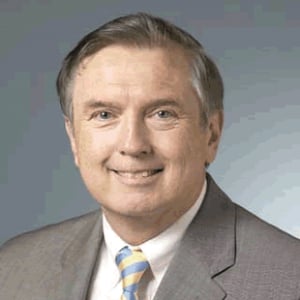
Professor of Law, University of Notre Dame Law School
Gerard V. Bradley is Professor of Law at the University of Notre Dame, where he teaches Legal Ethics and Constitutional Law. At Notre Dame he directs (with John Finnis) the Natural Law Institute and co-edits The American Journal of Jurisprudence, an international forum for legal philosophy. Bradley has been a Visiting Fellow at the Hoover Institution of Stanford University, and a Senior Fellow of the Witherspoon Institute, in Princeton, New Jersey. He served for many years as President of the Fellowship of Catholic Scholars.
Bradley received his B.A and J.D. degrees from Cornell University, graduating Summa cum laude from the law school in 1980. After serving in the Trial Division of the Manhattan District Attorney’s Office he joined the law faculty at the University of Illinois. He moved to Notre Dame in 1992. Bradley has published over one hundred scholarly articles and reviews. His most recent books are an edited collection of essays titled, Challenges to Religious Liberty in the Twenty-First Century (published by Cambridge University Press in 2012), Essays on Law, Religion, and Morality and Unquiet Americans: U.S. Catholics and the Common Good (both to be published in 2014.) He is currently working on a book about regulating obscenity in the Internet Age.
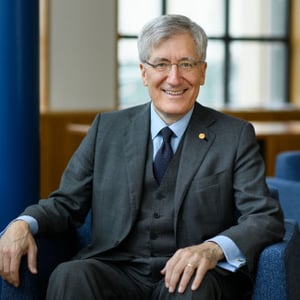
McCormick Professor of Jurisprudence; Director, James Madison Program, Princeton University
Robert P. George is McCormick Professor of Jurisprudence and Director of the James Madison Program in American Ideals and Institutions at Princeton University. He has several times been a Visiting Professor at Harvard Law School. He has served as Chairman of the U.S. Commission on International Religious Freedom and on the U.S. Commission on Civil Rights and the President’s Council on Bioethics. He has also served as the U.S. member of UNESCO’s World Commission on the Ethics of Scientific Knowledge and Technology. He was a Judicial Fellow at the Supreme Court of the United States, where he received the Justice Tom C. Clark Award. A Phi Beta Kappa graduate of Swarthmore, he holds the degrees of J.D. and M.T.S. from Harvard University and the degrees of D.Phil., B.C.L., D.C.L., and D.Litt. from Oxford University, in addition to twenty-one honorary doctorates. He is a recipient of the U.S. Presidential Citizens Medal, the Honorific Medal for the Defense of Human Rights of the Republic of Poland, the Canterbury Medal of the Becket Fund for Religious Liberty, the Bradley Prize, the Irving Kristol Award of the American Enterprise Institute, and Princeton University’s President’s Award for Distinguished Teaching. His books include Making Men Moral: Civil Liberties and Public Morality and In Defense of Natural Law (both published by Oxford University Press), as well as The Clash of Orthodoxies and Conscience and Its Enemies (both published by ISI Books).
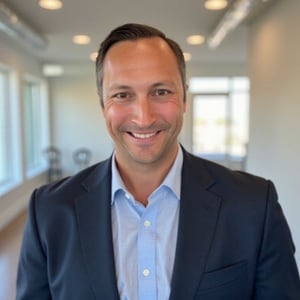
Vice President, Head of Global Litigation Strategy, Meta Platforms
Ethan Davis is Vice President, Head of Global Litigation Strategy at Meta Platforms. In that role, he helps oversee the company’s overall strategies to address litigation and enforcement actions in the United States and around the world. Ethan’s responsibilities also include the defense of investigations commenced by Congress, the FTC, DOJ, the SEC, and state Attorneys General. Before joining Meta, Ethan was a white-collar partner at King & Spalding in San Francisco, where he represented companies and individuals in civil litigation and civil and criminal government investigations. Earlier in his career, Ethan served as the acting Assistant Attorney General in charge of the U.S. Justice Department’s Civil Division, where he oversaw the lion’s share of the federal government’s civil litigation as well as the Civil Division’s affirmative enforcement efforts. Ethan clerked for Judge Diarmuid F. O’Scannlain on the Ninth Circuit, and Justice Neil Gorsuch on the Supreme Court. He is a graduate of Amherst College and Yale Law School.

Professor of Law, Washington University in St. Louis
Professor Daniel Epps teaches first-year criminal law, upper-level courses in criminal procedure, and a seminar on public law theory. His research lies at the intersection of constitutional law and theory, criminal law and procedure, and federal courts. His scholarship has appeared or will appear in the Harvard Law Review, the Yale Law Journal, the Michigan Law Review, the NYU Law Review, the University of Pennsylvania Law Review, the Southern California Law Review, and the Vanderbilt Law Review, and his writing for popular audiences has appeared in the New York Times, the Washington Post, The Guardian, The Boston Globe, Vox, The Atlantic, and the Washington Monthly.
Professor Epps is a nationally recognized expert on the Supreme Court who is regularly quoted in the media. He has particular expertise in Supreme Court reform, where his work is influencing major policy debates. After Presidential candidate Mayor Pete Buttigieg endorsed his and Ganesh Sitaraman’s proposal to restructure the Supreme Court, the plan received widespread attention from the popular press. A pioneering legal podcaster, he currently co-hosts (with William Baude) Divided Argument, a podcast that analyzes the Court’s decisions. Professor Epps is also an experienced Supreme Court litigator; his notable practice experience includes serving as co-counsel for the defendant in Ocasio v. United States, which addressed the scope of criminal conspiracy liability for public-sector extortion, and the successful petition for certiorari and merits briefing in Walden v. Fiore. He also served as co-counsel on the brief of Prof. Stephen E. Sachs as amicus curiae in Atlantic Marine Construction Co. v. U.S. District Court, which The Green Bag Almanac & Reader included on its list of “Exemplary Legal Writing” for 2013.
Professor Epps received his A.B. summa cum laude with highest distinction in Philosophy from Duke University and his J.D. magna cum laude from Harvard Law School, where he was Articles Co-Chair of the Harvard Law Review and won the John M. Olin Law & Economics prize. After law school, he clerked for Judge J. Harvie Wilkinson III of the U.S. Court of Appeals for the Fourth Circuit and for Justice Anthony M. Kennedy of the Supreme Court of the United States. He then spent several years as an appellate specialist at King & Spalding LLP in Washington, D.C. While in practice, he also co-taught Supreme Court Decisionmaking at the University of Virginia School of Law. Immediately prior to joining Washington University Law, he was a Climenko Fellow and Lecturer on Law at Harvard Law School.
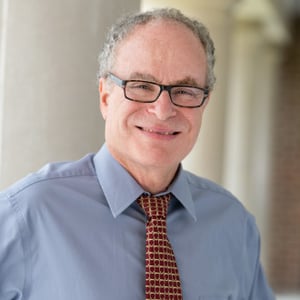
William Rand Kenan, Jr. Distinguished Professor of Law, University of North Carolina School of Law
William (Bill) Marshall joined the Carolina Law faculty in 2001 and serves as the William R. Kenan Jr. Distinguished Professor of Law. His teaching and research interests include the first amendment, presidential power, election law, federal jurisdiction, federal judicial selection, civil procedure, and media law. Marshall is the author of numerous book chapters, articles, and essays on free speech, separation of powers, the Establishment Clause, and the Free Exercise Clause. His work has appeared in the Harvard Law Review, the Yale Law Journal, the Supreme Court Review, and the University of Chicago Law Review, among others.
Marshall received his law degree from the University of Chicago and his undergraduate degree from the University of Pennsylvania. Marshall was Deputy Counsel to the President and Deputy Assistant to the President during the Clinton Administration and also served as the Solicitor General for the State of Ohio. He has taught at the Northwestern, Boston University, Vanderbilt, Ohio State, DePaul, Case Western Reserve, William and Mary, and the University Connecticut law schools. Prior to beginning his teaching career, Marshall was a Special Assistant Attorney General for the State of Minnesota.

Executive Vice President, The Federalist Society
Dean Reuter is Executive Vice President at the Federalist Society for Law and Public Policy Studies. He has served in two federal government agency Offices of the Inspector General, as Counsel to the Inspector General and Deputy Inspector General, responsible for policing the use of federal funds granted and contracted through those agencies. As such, he helped conduct and oversee criminal investigations across the country. He is the principal author of the non-fiction book, The Hidden Nazi: The Untold Story of America's Deal with the Devil, and editor of Liberty’s Nemesis: The Unchecked Expansion of the State and Confronting Terror: 9/11 and the Future of American National Security. He was appointed by the President and served as Vice-Chairman of the Board of Directors of the Corporation for National and Community Service, and recently served as an appointee on the U.S. Commission on Presidential Scholars. He is a graduate of Hood College (BA with Honors) and the University of Maryland School of Law.
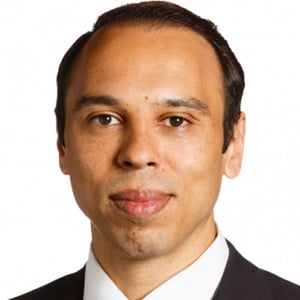
Vice President of Domestic and Economic Policy, The Heritage Foundation
Roger Severino is Vice President of Economic and Domestic Policy, and the Joseph C. and Elizabeth A. Anderlik Fellow at The Heritage Foundation.
Severino is a national authority on civil rights, conscience and religious freedom, the administrative state, and information privacy, particularly as applied to health care law and policy. Find his tweets at @RogerSeverino_.
Severino spearheaded the HHS Accountability Project while a Senior Fellow at EPPC from 2021 to 2023. Previously, Severino was Director of HHS’ Office for Civil Rights, where he led a team of over 250 staff enforcing our nation’s civil rights, conscience and religious freedom, and health information privacy laws. He served from 2017 to 2021 and was the longest-serving OCR director of the past three decades.
Prior to joining HHS, Severino served for two years as Director of the DeVos Center for Religion and Civil Society at Heritage, advocating for life, family, and religious-freedom policies. Before that, he was a trial attorney for seven years at the U.S. Department of Justice’s Civil Rights Division where he enforced the Fair Housing Act and the Civil Rights Act of 1964. Severino started his legal career at the Becket Fund for Religious Liberty, where he was Legal Counsel and Chief Operations Officer and defended the rights of people of all faiths under federal and international law.
Severino has been profiled in The New York Times, The Atlantic, The Wall Street Journal, and The Hill and has appeared on Fox News, CNN, MSNBC, NPR, and PBS, among others. In 2020, The New York Times dubbed him and his wife Carrie, “a conservative power couple” to be reckoned with.
Severino holds a JD from Harvard Law School, a master’s degree in public policy, with highest distinction, from Carnegie Mellon University, and a bachelor’s degree in business from the University of Southern California. He was appointed by President Trump to the Administrative Conference of the United States and is a member of the District of Columbia and the Commonwealth of Virginia bars.
As OCR director, Severino founded the federal government’s first division dedicated exclusively to conscience and religious freedom compliance and enforcement. He enforced the Weldon Amendment for the first time against a state (California) after it coerced families and religious organizations into paying for abortion insurance coverage, leading to a $200 million federal funding disallowance. He also enforced laws protecting pro-life pregnancy resource centers from discrimination by states hostile to their message and enforced laws prohibiting forced participation in abortions by medical professionals.
With respect to civil rights, Severino protected older persons and people with disabilities from being denied life-saving care due to discriminatory “quality of life” judgments, especially during the COVID-19 pandemic. He also achieved a landmark sexual harassment resolution with Michigan State University in the wake of the Larry Nassar sexual assault scandal and protected the rights of non-English speakers to have equal access to health and human services.
In the area of health privacy, he secured the largest HIPAA monetary settlement in history and achieved the largest number of enforcement resolutions both in a single year and across four years. He also facilitated the transformational use of Skype, Zoom, and Facetime for delivery of telehealth during the COVID-19 pandemic and beyond.
His regulatory reform activities resulted in a comprehensive conscience protection regulation and proposed a life-affirming disability rights regulation. He achieved regulatory savings of $3.6 billion in health care industry costs over five years and identified and proposed an additional $3.2 billion in cost savings from the repeal of ineffective and unnecessary regulatory burdens.
Severino is a Spanish speaker who teaches salsa and west coast swing in his spare time.
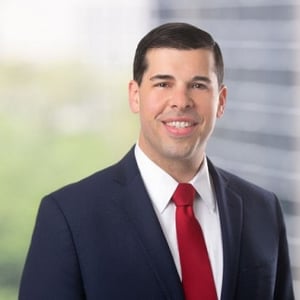
Partner, Boies Schiller Flexner LLP
Jesse, the former third-ranking official at the U.S. Department of Justice, helps clients with their most difficult litigation and regulatory issues─whether that means defending against an enforcement action, pursuing high-stakes litigation and appeals, navigating regulatory thickets at federal and state agencies, or crafting a comprehensive strategy to manage a crisis. He approaches these problems with the knowledge gained both from his broad private-practice experience and from having served at the highest levels of federal and state government.
Jesse has experience across a range of substantive and regulatory areas. He has sued the federal government and has also been one of its top law-enforcement officials; he has represented states and has also navigated their regulatory agencies on behalf of clients; and he has represented companies in business disputes, both as defendants and plaintiffs.
Before joining the firm, Jesse was the Acting Associate Attorney General at the United States Department of Justice. In that role, he oversaw the civil and criminal work of the Antitrust, Civil, Civil Rights, Environment and Natural Resources, and Tax Divisions. During Jesse’s tenure, the Associate’s office closely managed the Department’s most significant litigation, including matters involving large financial institutions, healthcare companies, automakers, energy companies, and state and local governments. In addition, Jesse served as Chair of DOJ’s Regulatory Reform Task Force and Vice Chair of DOJ’s Task Force on Market Integrity and Consumer Fraud. Jesse regularly provided legal and strategic advice to the highest-level decision makers in the federal government, including the Attorney General and Deputy Attorney General, general counsels across the spectrum of federal agencies, and White House officials.
Jesse served for three years as the secretary of Florida’s labor, economic-development, and land-use agency, the Florida Department of Economic Opportunity. Before that, he served as Governor (now Senator) Rick Scott’s general counsel.
Jesse maintains offices in both Washington D.C. and Florida. From Washington, he focuses on federal litigation and crisis management. In Florida, in addition to federal litigation, Jesse employs his knowledge of state government and regulation to help clients in courts across the state, from trial through the Florida Supreme Court.
Jesse currently serves on the Florida Supreme Court Judicial Nominating Commission, the body that provides the governor with nominees for appointment to the Florida Supreme Court. Jesse is also a fellow at the Center for the Study of the Administrative State at the Scalia Law School at George Mason University, where he writes and speaks about administrative law.
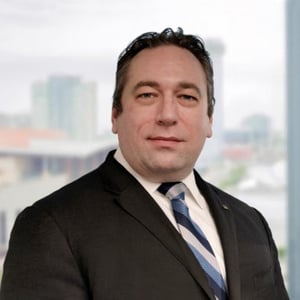
Member, Sherrard Roe Voigt Harbison
Chris Sabis heads the firm’s Government Compliance & Investigations group. Chris concentrates his practice in the areas of Government Investigations and Litigation. He has extensive experience in False Claims Act (FCA) matters involving allegations of healthcare and procurement fraud, white-collar fraud investigations, commercial litigation, and government investigations under the Americans with Disabilities Act (ADA) and Mutual Legal Assistance Treaties (MLATs). Chris has significant experience in the mediation of FCA cases and is a Rule 31 Listed General Civil Mediator by the Tennessee Supreme Court. He also has advised clients on provisions of the Families First Coronavirus Response Act (FFCRA) and the CARES Act, including emergency leave provisions and the Paycheck Protection Program enacted in response to the COVID-19 pandemic.
Before joining the firm, Chris served nearly a decade as an Assistant United States Attorney in the Middle District of Tennessee. In addition to his regular duties, he was the District’s Elder Justice Coordinator and International Affairs Coordinator. Before becoming an AUSA, Chris represented clients in complex commercial litigation at Drinker Biddle & Reath in Washington, D.C. Chris was a law clerk to the Honorable Noël Anketell Kramer of the D.C. Court of Appeals and the Honorable Joan Zeldon of the D.C. Superior Court.
Chris earned his J.D. at Georgetown University Law Center, where he was Senior Notes Editor of the Georgetown Journal of Legal Ethics. He graduated magna cum laude with a B.A. in History and Political Science from the University of Rochester.
Chris serves as a Hearing Examiner for the Tennessee Board of Professional Responsibility. He is a member of the Harry Phillips American Inn of Court and of the Tennessee Bar Association, where he has served as Chair and Vice Chair of the Federal Practice Section. He is a member of the Nashville Bar Association and Chair and former Secretary of its Historical Committee. Chris is also a member of the American Health Law Association, the Health Care Compliance Association, and the American Bar Association.
Active in the community, Chris is the Past Chair of the Board for Stars Nashville, a non-profit that provides prevention, intervention, treatment, and training programs addressing bullying, substance abuse, violence, and social and emotional barriers to success in Tennessee schools. He is a board member and the Board Secretary of Autism Tennessee and is a member of the Rotary Club of Nashville. Chris has been an Adjunct Professor of Law at Belmont University. He enjoys hockey, theater, and spending time with his wife and two young boys.
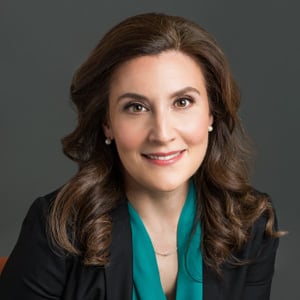
Board Member, U.S. Privacy and Civil Liberties Oversight Board
Beth A. Williams is a Board Member of the United States Privacy and Civil Liberties Oversight Board, an agency whose mission is to ensure that the federal government's efforts to prevent terrorism are balanced with the need to protect privacy and civil liberties.
Prior to her Board service, Ms. Williams was the Assistant Attorney General for the Office of Legal Policy at the United States Department of Justice from August 2017 to December 2020. In that role, she served as the primary policy advisor to the Attorney General and the Deputy Attorney General, and as the Chief Regulatory Officer for the Department. Ms. Williams also led the judicial nomination process for the Department, assisting in the selection and confirmation of more than 230 Article III judges to the bench.
Prior to becoming Assistant Attorney General, Ms. Williams was a litigation and appellate partner at a national law firm, where her practice focused on complex commercial, securities, appellate, and First Amendment litigation. From 2005-2006, Ms. Williams served as Special Counsel to the United States Senate Committee on the Judiciary, where she assisted with the confirmation of Chief Justice John G. Roberts, Jr. and Associate Justice Samuel A. Alito, Jr. to the United States Supreme Court.
Ms. Williams clerked for the Hon. Richard C. Wesley on the United State Court of Appeals for the Second Circuit. She graduated from Harvard College magna cum laude, with a degree in History and Literature, and she earned her law degree from Harvard Law School, where she served as Executive Editor of the Harvard Journal of Law and Public Policy.

Keynote Address by Vice President Michael R. Pence
Mike Pence
Eighth Annual Florida Chapters Conference
Former Vice President Michael R. Pence delivered the Keynote Address at the Eighth Annual Florida...
Courthouse Steps Decision Webinar: Cameron v. EMW Women’s Surgical Center
Philip D. Williamson
On March 3, 2022, the U.S. Supreme Court decided Cameron v. EMW Women's Surgical Center. Writing for...
Luncheon and Roundtable Discussion: Cuba and The Rule of Law
Maximo Alvarez, Kristina Arriaga, John D. Couriel, Alexander Otaola, Rosa María Payá, Carlos Trujillo
Eighth Annual Florida Chapters Conference
Maximo Alvarez, President, Sunshine Gasoline Distributors Kristina Arriaga, Former Vice Chair, U.S. Commission on International Religious Freedom...
Litigation Update: In re: LTL Management
Anthony J. Casey
In October 2021, LTL Management LLC (LTL), a newly created and separate subsidiary of Johnson...
Justice Breyer: His Legacy and Thoughts on His Replacement
Ramesh Ponnuru, Elizabeth Slattery
Minnesota Lawyers Chapter
The Minnesota Lawyers Chapter of the Federalist Society held a Zoom webinar discussing Justice Breyer, his...
Morissette v. United States [SCOTUSbrief]
Joshua Kleinfeld
Short video featuring Joshua Kleinfeld
Morissette v. United States is a landmark case in American law. How did a case...
FedSoc Study Break: Administrative Law
Christopher J. Walker
30 Minutes. Your Questions. Their Answers.
The Federalist Society's Student Division & NYU School of Law Chapter present Administrative Law Featuring:...
Book Review: Unborn Human Life and Fundamental Rights: Leading Constitutional Cases under Scrutiny
Gerard V. Bradley, Robert P. George
In Unborn Human Life and Fundamental Rights: Leading Constitutional Cases under Scrutiny (Peter Lang, 2019), editors William...
The Future of the Supreme Court
Ethan P. Davis, Daniel Epps, William P. Marshall, Dean Reuter, Roger Severino
Please join the Practice Groups for a timely webinar on how the upcoming Supreme Court...
Switchbacks at the DOJ: the Sessions, Brand, and Garland Memos
Jesse Panuccio, Christopher C. Sabis, Beth A. Williams
During President Biden’s first year in office, Attorney General Merrick Garland rescinded two key memos...