Driverless Cars: Technology & Regulation
Regulatory Transparency Project's Fourth Branch Video
The progression of driverless car technology towards widespread availability has raised a number of important questions. How should policymakers balance safety and innovation when regulating the technology? How should the technology’s potentially life-changing impact on the disabled community be taken into account? Do we need national standards, or should states be left to regulate the technology as they see fit? In this Fourth Branch video, experts and advocates discuss these questions and more.
Visit our website – https://www.RegProject.org – to learn more, view all of our content, and connect with us on social media.
* * * * *
As always, the Federalist Society takes no position on particular legal or public policy issues; all expressions of opinion are those of the speaker.

Executive Director, International Center for Law & Economics
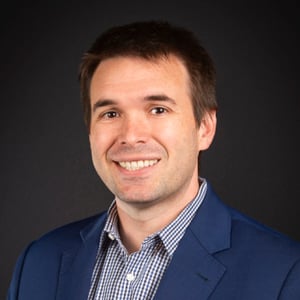
Ian Adams joined ICLE as Executive Director in April 2020. He is responsible for ICLE’s strategic planning, programmatic implementation, and organizational growth. Ian’s substantive policy work focuses on the disruptive impact of burgeoning technologies on law and regulation, with a particular concentration on automation and the future of work, privacy and insurance.
Earlier in his career, Ian was Vice President of Policy at TechFreedom. Before that, he worked as Associate Vice President of Government Affairs at the R Street Institute and held staff roles in the California and Oregon state legislatures. Ian is also a public policy attorney at the international law firm of Orrick, Herrington & Sutcliffe LLP.
Ian is a graduate of Seattle University, with bachelor’s degrees in history and philosophy, and received his juris doctor from the University of Oregon. He is a member of the California, District of Columbia, and Illinois bars.
Policy Director, Community Living Policy Center, University of California, San Francisco
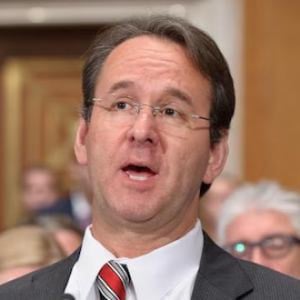
Henry Claypool is the former Director of the Health and Human Services Office on Disability and a founding Principal Deputy Administrator of the Administration for Community Living. He also served as a presidentially-appointed member of the Federal Commission on Long-Term Care, advising Congress on how long-term care can be better provided and financed for the nation’s older adults and people with disabilities, now and in the future, and was Executive Vice President of the American Association of People with Disabilities, which promotes equal opportunity, economic power, independent living and political participation for people with disabilities. He is Affiliated Faculty at the Institute for Health & Aging at UCSF and principal of Claypool Consulting.
Executive Director, Jernigan Institute, National Federation of the Blind
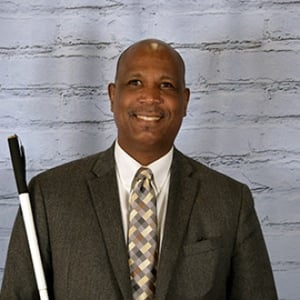
Anil Lewis was born in 1964 in Atlanta, Georgia. He is the third of four children. Both his older brother and older sister became legally blind at an early age from retinitis pigmentosa. Lewis was originally labeled educably mentally retarded but eventually became the first member of his family to graduate from college. He has excelled academically, received many awards, participated as a leader in many extracurricular activities, and received several college scholarships. Although he was finally diagnosed at age nine with retinitis pigmentosa, his vision was fairly unaffected until age twenty-five.
Currently employed as the executive director for Blindness Initiatives for the National Federation of the Blind, located in Baltimore, Maryland, he coordinates outreach, marketing, and fundraising activities for a national nonprofit organization. He leads a dynamic team of individuals responsible for the creation, development, implementation, and replication of innovative projects and programs throughout a nationwide network of affiliates that work to positively affect the education, employment, and quality of life of all blind people.
As the director of Advocacy and Policy for the NFB, Lewis was responsible for a variety of public policy and strategic programs. Most notably, he was the legislative lead of the NFB’s efforts to repeal Section 14(c) of the Fair Labor Standards Act, an obsolete provision that allows employers to pay workers with disabilities less than the federal minimum wage. As the director of Strategic Communications for the NFB, Lewis coordinated the public relations campaign for the NFB’s Blind Driver Challenge™, an innovative research project to develop nonvisual access technology that made it possible for a blind person to safely and independently operate an automobile.