Commandeering for Conservation?
Event Video




In Bear Warriors United v. Secretary, Florida Department of Environmental Protection the Eleventh Circuit is considering the question of whether the Endangered Species Act can hold states responsible for the harms of regulated private parties without running afoul of the Constitution's anti-commandeering doctrine.
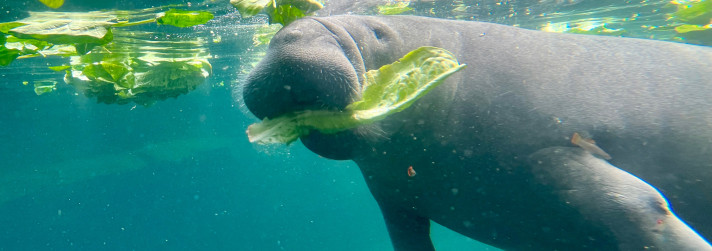
The Endangered Species Act prohibits anyone, including a state, from harming an endangered or threatened species. But threats to species are often driven by many small harms, which makes enforcement difficult. In Florida, manatee habitat is degraded by nitrogen released from septic tanks, none of which contributes substantially to the problem on their own. Bear Warriors United, an environmental group, sued Florida's Department of Environmental Protection alleging that it is liable for these harms as the regulator of septic tanks. A Florida district court agreed, ordering the state to prohibit new septic tanks in the watershed, to implement various conservation programs, and to maintain these policies unless and until a federal agency authorizes the state to change them.
The anti-commandeering doctrine prohibits the federal government from "seeking to control or influence the manner in which States regulate private parties." But every court to have considered the question so far has held that enforcing the ESA against states for harms created by private permittees does not run afoul of the doctrine. Will the Eleventh Circuit be the first to go the other way?
Join us as a panel of experts explore this conflict between anti-commandeering, preemption, and conservation.
Featuring:
- Prof. William Snape, III, Director of the Program on Environmental and Energy Law, Assistant Dean of Adjunct Faculty Affairs, and Fellow in Environmental Law, American University Washington College of Law
- Jonathan Wood, Vice President of Law and Policy, Property and Environment Research Center
- (Moderator) Prof. Jonathan Adler, Tazewell Taylor Professor of Law, William H. Cabell Research Professor, William & Mary Law School
*******
As always, the Federalist Society takes no position on particular legal or public policy issues; all expressions of opinion are those of the speaker.