A quiet revolution in the scope of the President's constitutionally prescribed "lawmaking" powers took place during the administrations of Presidents Ronald Reagan and George Bush. Nowhere was this more evident than in the successful campaign the two Presidents launched to make far more aggressive use of presidential signing statements than had their predecessors. The presidential signing statement initiative was developed and spearheaded by former Attorney General Edwin Meese III and was then continued during the Bush years by former White House Counsel C. Boyden Gray. The initiative quickly drew fire from both academics and legislators who denounced it as a usurpation of Congress's constitutionally exclusive power over lawmaking.

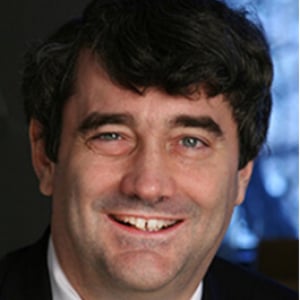
Clayton J. and Henry R. Barber Professor of Law, Northwestern University Pritzker School of Law and Co-Chairman, Board of Directors, The Federalist Society
STEVEN GOW CALABRESI is the Clayton J. & Henry R. Barber Professor at Northwestern Pritzker School of Law. He has also co-taught in the Fall semester at Yale Law School from 2013 to the present. Calabresi clerked for Justice Antonin Scalia and Judges Robert H. Bork and Ralph K. Winter. He was a Special Assistant to Attorney General Meese from 1985 to 1987 and worked with Ken Cribb as his deputy in 1987 on the second floor of the West Wing of the Reagan White House. Calabresi has written books on presidential power and comparative constitutional law and the origins of judicial review. He and Gary Lawson are the co-editors of a casebook on U.S. Constitutional Law, and Calabresi is also the co-editor of a casebook on comparative constitutional law. He has written over seventy law review articles since 1990.