2007
Proposals to End Judicial Elections in Minnesota
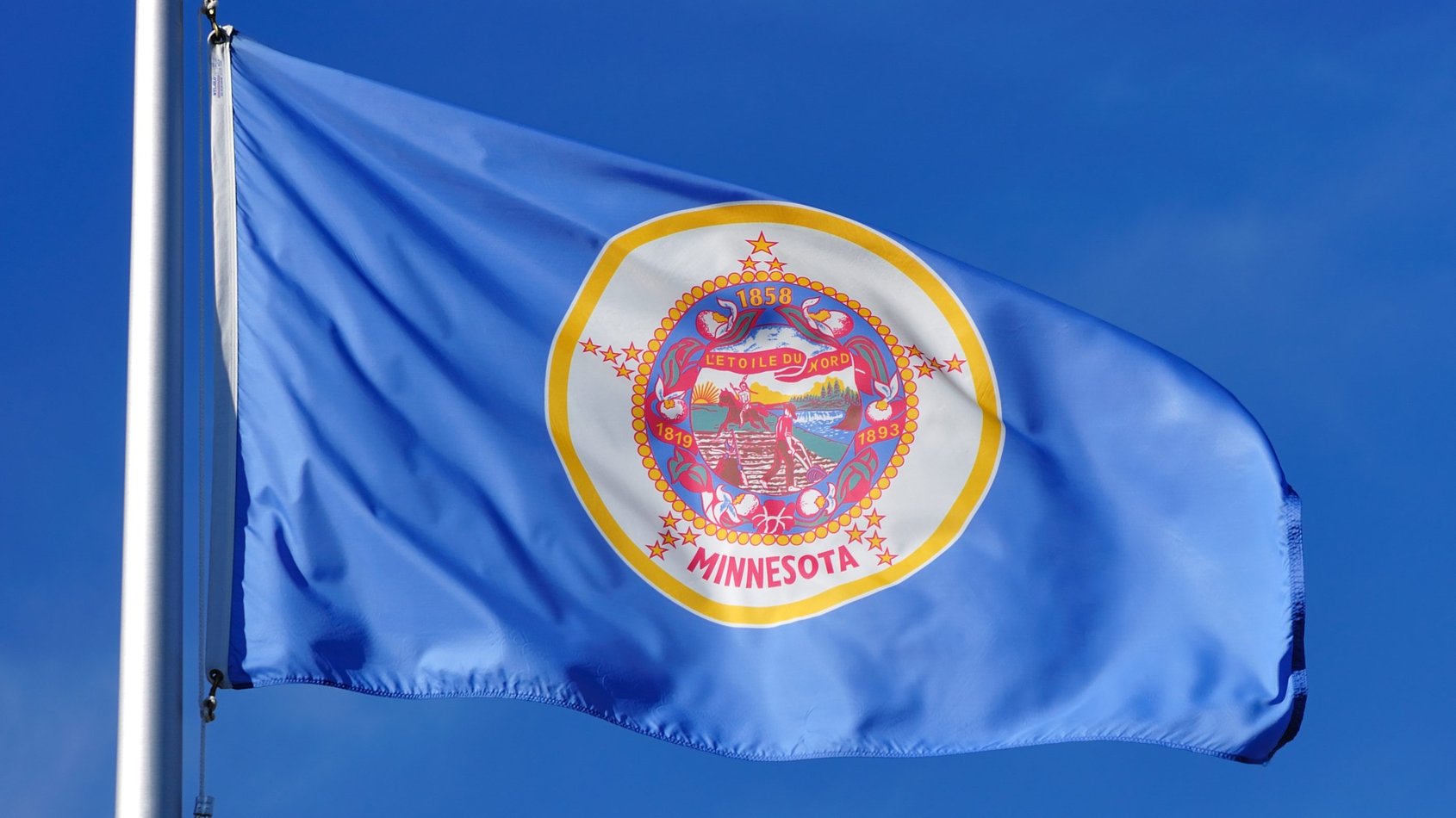
The subject of judicial selection has received considerable attention in Minnesota this year. There are various proposals on the table, which may be considered by the state legislature in 2008. No apparent consensus exists among the bar and public officials, however—which indicates that reform may be unlikely in the near future.
The Minnesota Constitution provides for the direct election of judges at six-year intervals, but the constitution also provides that, if a judgeship becomes vacant midterm, the governor may appoint a successor. The appointed judge then must stand for (re)election between one and three years after the appointment.1
As a practical matter, the exception swallows the rule because judges almost always retire mid-term. For the district courts, a statutorily required Judicial Selection Commission screens applicants and recommends finalists to the governor. Although the governor is not required to select a judge from among the finalists, that is the norm.
Thus, there are very few elections for open judicial seats. Some judges are challenged in each election cycle, but those challenges are usually unsuccessful. In recent decades, fewer than twenty lawyers have successfully challenged a sitting judge, and all of them were at the trial court level.2 Appellate court judges have been challenged only by little-known candidates who do not mount serious, state-wide campaigns.
Lately there has been renewed interest in amending the constitution so as to eliminate public elections. The primary motive appears to be the desire to prevent expensive, divisive judicial campaigns. The argument in favor of reform is that big-dollar judicial campaigns undermine judicial independence and that, if no action is taken, they eventually will occur in Minnesota.
The Chief Justice of the Minnesota Supreme Court, Russell A. Anderson, addressed the issue in his most recent annual “state of the judiciary” message. He praised the Minnesota court system’s “reputation for professionalism, efficiency, innovation, and fairness,” but also warned of “storm clouds on the horizon;” namely, “the prospect of partisan, expensive, and harshly negative judicial campaigns.3 He referred to recent examples in Wisconsin, Washington State, and Alabama.4
Due to this concern, the Minnesota Citizens Commission for an Impartial Judiciary was formed in 2006 to study the issue.5 The commission—commonly known as the “Quie Commission” because it is chaired by Albert H. Quie, a moderate Republican governor from 1979 to 1983—held three public hearings in 2006 and issued a report in March 2007.
In its report, the Quie Commission recommended the creation of an Appellate Court Merit Selection Commission, which would resemble the commission that presently screens applicants for the district courts, and recommended that the governor be required to select a judge from among the finalists recommended by both commissions. This procedure would become the sole means of selecting new judges.6
The Quie Commission also recommended that Minnesota replace contested judicial elections with “retention” elections.7 To facilitate the retention vote, the Quie Commission recommended the creation of a Judicial Performance Evaluation Commission, which would review the performance of judges and provide information to voters, such as by placing the words “qualified” or “not qualified” on the ballots next to the names of incumbent judges.8
The Quie Commission voted 14 to 11 in favor of the final report. Several dissenting members, led by Brian Melendez, wrote separately to argue that judges should not face the electorate in any manner after being appointed (but perhaps should face a re-appointment commission). Some members of the minority suggested that the state legislature should confirm judges nominated by the governor and perhaps also confirm them to renewed terms.9
On the heels of the Quie Commission report, the Minnesota State Bar Association took up the issue at its annual convention in June 2007. The Association’s Assembly10 adopted, by a 33 to 31 vote, a resolution stating that the organization “supports and prefers” the minority report of the Quie Commission authored by Mr. Melendez but also “finds acceptable, and does not oppose” the majority view of the Quie Commission.11 At the same convention, Mr. Melendez became President of the Association. Meanwhile, he also serves as Chair of the state’s Democratic-Farmer-Labor Party (i.e., the Democratic Party in Minnesota).
It appears that no consensus has developed among Minnesota lawyers and lawmakers. Most observers believe that it would be difficult to persuade Minnesota voters to relinquish their right to elect and re-elect state court judges. Moreover, some people who previously favored reform are having second thoughts. For example, the President of the Ramsey County Bar Association recently wrote a column in the association’s monthly newsletter in which he said, “Originally I favored a change and was impressed with the Quie Commission’s proposals. I must admit, however, that my thinking has changed somewhat....”12
At present, there appears to be only one bill pending in the state legislature on this topic. In January 2007, Sen. Thomas M. Neuville, a Republican lawyer, introduced S.F. 324, which would put a referendum on the 2008 general ballot that would amend the state constitution to eliminate judicial elections and, instead, provide for appointment of judges by the governor with the advice and consent of the state Senate.13 Additional bills may be offered when the legislature re-convenes in February 2008.
Endnotes
1 Minn. Const. art. VI, §§ 7, 8.
2 Hon. Stephen C. Aldrich, Minnesota Judicial Elections: Better Than the “Missouri Plan,” Bench & Bar, Oct. 2002 (reprinted at <http://www2.mnbar.org/[-]benchandbar/2002/oct02/lawyer-atlarge.htm>).
3 Hon. Russell A. Anderson, The State of the Judiciary, Bench & Bar, Aug. 2007, at 17.
4 Id. at 17-18.
5 Available at <http://www.keepmnjusticeimpartial.org>.
6 Minnesota Citizens Comm’n for an Impartial Judiciary, Final Report and Recommendations, at 12-14 (Mar. 27, 2007) (reprinted at http://www.keepmnjustice[-]impartial.org/FinalReportAndRecommendation.pdf).
7 Id. at 21-23.
8 Id. at 16.
9 Id. at 25-33.
10 Available at http://www2.mnbar.org/governance/assembly/index.htm.
11 Available at http://www2.mnbar.org//JudIndependence/Document/MSBA-%20Judicial%20selection.doc.
12 Richard H. Kyle, Jr., Maintaining an Independent Judiciary, R.C.B.A. Barrister, Sept. 2007, at 2.
13 Available at http://www.revisor.leg.state.mn.us/bin/bldbill.php?bill=S0324.0.html[-] &session=ls85.
Note from the Editor: The Federalist Society takes no positions on particular legal and public policy matters. Any expressions of opinion are those of the author. We welcome responses to the views presented here. To join the debate, please email us at info@fedsoc.org.