
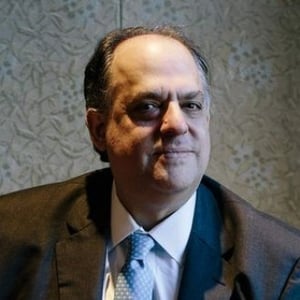
Director of Litigation and Senior Attorney, Hamilton Lincoln Law Institute
Theodore H. Frank is director at the Hamilton Lincoln Law Institute and the Center for Class Action Fairness. Frank founded and ran CCAF as a non-profit, public interest law firm in 2009.
Frank has won several landmark appeals and tens of millions of dollars for consumers and other plaintiffs through his class action work. Adam Liptak of The New York Times calls Frank “the leading critic of abusive class action settlements” and the American Lawyer Litigation Daily referred to him as “the indefatigable scourge of underwhelming class action settlements.”
Previously, Frank clerked for the Honorable Frank H. Easterbrook on the Seventh Circuit Court of Appeals, and was a litigator at firms in Washington and Los Angeles and a resident fellow at the American Enterprise Institute. Frank is a frequent public speaker and has testified before Congress multiple times on legal issues. He has been profiled by The Wall Street Journal, Forbes, GQ, and the ABA Journal, among other publications.
In 2008, Frank was elected to membership in the American Law Institute. He also serves on the Executive Committee of the Federalist Society Litigation Practice Group. Frank graduated from The University of Chicago Law School in 1994 with high honors and as a member of the Order of the Coif and the Law Review. He is a member of the District of Columbia Bar and the state bars of California and Illinois.
Associate, Greehan, Taves, Pandak & Stoner, PLLC

Distinguished University Professor, Antonin Scalia Law School, George Mason University
University Professor Nelson Lund is the author of Rousseau’s Rejuvenation of Political Philosophy: A New Introduction. He has also written widely in the field of constitutional law, including articles on constitutional interpretation, federalism, separation of powers, the Second Amendment, the Commerce Clause, the Speech or Debate Clause, the Equal Protection Clause, and the Uniformity Clause. In addition, he has published articles in the fields of employment discrimination and civil rights, the legal regulation of medical ethics, and the application of economic analysis to legal institutions and legal ethics.
Professor Lund graduated from St. John's College in Annapolis, Maryland, after which he received an MA in philosophy from the Catholic University of America and a PhD in political science from Harvard University. He left the faculty of the University of Chicago to attend its law school, where he served as executive editor of the University of Chicago Law Review and chapter chairman of the Federalist Society for Law and Public Policy Studies. After law school, he held positions at the United States Department of Justice in the Office of the Solicitor General and the Office of Legal Counsel. He also served as a law clerk to the Honorable Patrick E. Higginbotham of the United States Court of Appeals for the Fifth Circuit and to the Honorable Sandra Day O'Connor of the United States Supreme Court. Following his clerkship with Justice O'Connor, Professor Lund served in the White House as associate counsel to the president from 1989 to 1992.
Since joining the faculty at George Mason University's Antonin Scalia Law School, Professor Lund has taught Constitutional Law, Legislation, Federal Election Law, Employment Discrimination, State and Local Government, and seminars on the Second Amendment and on a variety of topics in Jurisprudence.
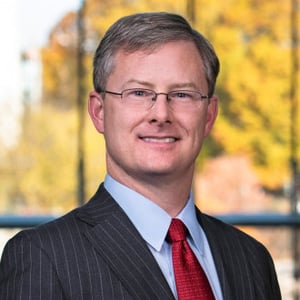
Partner, Jones Day
Kevin Marshall provides clients analysis, strategy, and advocacy involving novel or complex legal issues, particularly in white collar and other compliance matters and in civil litigation arising out of criminal matters or alleged fraud. This includes appeals, dispositive and other critical motions, and prelitigation analyses.
Kevin oversaw trial and appellate briefing, and argued on appeal, in the successful defense of lawsuits arising out of the wiretapping prosecution of a private investigator who had served Jones Day's clients. He also has overseen briefing of, and successfully argued, motions for R.J. Reynolds in connection with arbitration under the Federal Arbitration Act, and the partial settlement, of billion dollar disputes with states under the Master Settlement Agreement. His assistance with investigations and related litigation has included the Foreign Corrupt Practices Act, false claims acts, RICO, civil and criminal fraud, reckless manslaughter, and the intersection of products liability and bankruptcy. Kevin was part of the team representing the National Federation of Independent Business in challenging the constitutionality of the Patient Protection and Affordable Care Act before the Eleventh Circuit and U.S. Supreme Court. He also has advised on and briefed issues under the Consumer Product Safety Improvement Act (CPSIA).
Before joining Jones Day, Kevin was a deputy assistant attorney general in the U.S. Department of Justice's Office of Legal Counsel. He provided authoritative written legal opinions and other legal advice, throughout the executive branch, on the Constitution, treaties, international law including the law of war, and federal statutes and regulations. He also testified three times before Congress.
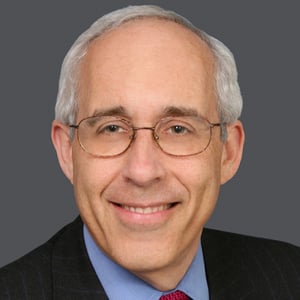
Partner, Mayer Brown LLP
Andrew Pincus is a partner in Mayer Brown LLP resident in Washington, D.C. His practice focuses on Supreme Court and appellate litigation.
Andy has argued 29 cases in the Supreme Court of the United States, including Lamps Plus, Inc. v. Varela and Frank v. Gaos in the October 2018 Term; as well as his recent victories in Impression Products, Inc. v. Lexmark International, Inc. (2017); Kindred Nursing Home Centers Limited Partnership v. Clark (2017); and Spokeo, Inc. v. Robins (2016). Law360 ranked Andy’s victory in AT&T Mobility v. Concepcion (2011), as the most important Supreme Court class action decision of the last 15 years.
Andy appears regularly before federal and state appellate courts and federal district courts. His practice also includes written and oral advocacy before Congress, other legislative bodies, and regulatory agencies regarding a variety of policy and legal issues.
A former Assistant to the Solicitor General in the United States Department of Justice (1984-1988), Andy co-founded and serves as co-director of the Yale Law School's Supreme Court Advocacy Clinic (2006-present), which provides pro bono representation in 10-15 Supreme Court cases each year.
While serving as General Counsel of the United States Department of Commerce (1997-2000), Andy had principal responsibility for the Digital Millennium Copyright Act and the Electronic Signatures in Global and National Commerce Act. He also participated in formulation of policy concerning privacy, domain name management, taxation of electronic commerce, export controls, international trade, and consumer protection.
Andy is a graduate of Yale College and Columbia Law School, where he was a Notes & Comments Editor of the Columbia Law Review. He served as Law Clerk to the Honorable Harold H. Greene, United States District Court for the District of Columbia (1981-1982).
Former Adjunct Professor of Law; former Special Counsel to the President; former federal prosecutor, Georgetown Law (ret.)
Bill Otis is a former Adjunct Professor of Law at Georgetown University, a one-time federal prosecutor, and a former Special White House Counsel for President George H. W. Bush. After graduating from Stanford Law School, he started his career in the Criminal Division of the Justice Department, then became chief of appeals for the US Attorney's Office for the Eastern District of Virginia. In the 1980's he served on the Department's "Train the Trainer" team, which taught US Attorneys Offices across the county how to implement the then-new Sentencing Reform Act. He has held several posts in the federal government, including Special Assistant to the Secretary of Energy and Counselor to the head of the Drug Enforcement Administration, in addition to the White House post. He has testified before Congress on issues in criminal procedure, illegal drugs, the US Sentencing Commission, and the death penalty, and has given numerous media interviews on those and other subjects. He currently teaches a seminar at Georgetown Law titled "Conservatism in Law in America" with his wife, Federalist Society co-founder Lee Liberman Otis.
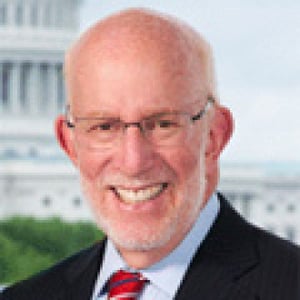
Partner, Jones Day
Ben Ginsberg represents numerous political parties, political campaigns, candidates, members of Congress and state legislatures, governors, corporations, trade associations, vendors, donors, and individuals participating in the political process. He represents a variety of clients on election law issues, particularly those involving federal and state campaign finance laws, ethics and gifts rules, pay-to-play laws, election administration, government investigations, redistricting, communications law, and election recounts and contests.
Prior to joining Jones Day in 2014, Mr. Ginsberg served as national counsel to the Bush-Cheney presidential campaigns in the 2004 and 2000 election cycles and played a central role in the 2000 Florida recount. In 2012 and 2008, he served as national counsel to the Romney for President campaign. He also has represented the campaigns and leadership PACs of numerous members of the Senate and House as well as the national party committees. He serves as counsel to the Republican Governors Association and has extensive experience on the state legislative level through Republican redistricting efforts.
Before entering law school, Mr. Ginsberg spent five years as a newspaper reporter at The Boston Globe, Philadelphia Evening Bulletin, The Berkshire Eagle (Massachusetts), and The Riverside Press-Enterprise (California). He has been a guest lecturer at the Stanford University Law School, a Fellow at Harvard University's Institute of Politics, and an adjunct professor of law at Georgetown University Law Center. Mr. Ginsberg recently served as co-chair of the Presidential Commission on Election Administration.
Georgetown University Law Center, J.D., 1982
University of Pennsylvania, A.B., 1974
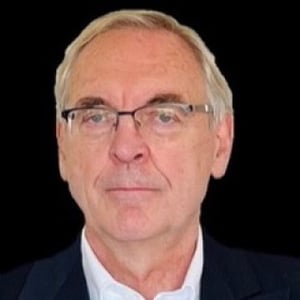
Fellow, National Security Institute, Antonin Scalia Law School, George Mason University
Vince Vitkowsky chaired the Executive Committee of the Federalist Society’s International and National Security Law and Policy Practice Group for over a decade. He is also a Fellow at the National Security Institute of George Mason University Law School. Vince spent 45 years in private practice, primarily in AmLaw 100/200 firms and their spin-offs. His practice included domestic and international commercial arbitration and litigation, as well as cyber risks and liabilities. Vince's current focus is on national security policy, artificial intelligence, cybersecurity, and counterterrorism. He has often written and spoken on national security and other public policy issues. Among other affiliations, Vince has been an Adjunct Fellow at the Center for Law and Counterterrorism of the Foundation for the Defense of Democracies, a member of the Executive Committee of the American Branch of the International Law Association, and Co-Chair of the Committee on Interventions and Trial Observations of the International Bar Association’s Human Rights Institute. He received his B.A. from Northwestern University and his J.D. from Cornell Law School.
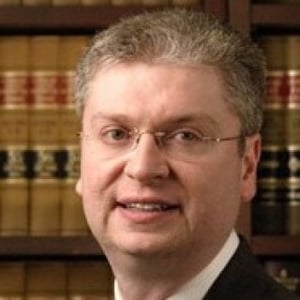
Associate Vice President & Associate Legal Director, Americans United for Separation of Church and State
Alex Luchenitser is the Associate Vice President & Associate Legal Director at Americans United for Separation of Church and State.
Alex has litigated church-state cases throughout the country for Americans United since January 2001. He has led lawsuits challenging religious proselytization of students in public schools, public funding of religious institutions, discriminatory governmental prayer practices, and government-sponsored religious displays. His successful cases include:
Alex has also authored and edited numerous friend-of-the-court briefs filed on behalf of Americans United. After the Covid-19 pandemic began, Alex led Americans United’s efforts to fight lawsuits that sought religious exemptions from public-health orders, filing fifty friend-of-the-court briefs in such cases around the country, including six in the U.S. Supreme Court.
Alex was born in Kyiv, Ukraine, in 1969 and immigrated to the United States in 1977. He received his bachelor’s degree magna cum laude in government and economics from Harvard University in 1991, and he received his Juris Doctor with distinction from Stanford Law School in 1994. After finishing law school, Alex served two one-year judicial clerkships, with Justice Warren W. Matthews Jr. of the Alaska Supreme Court and U.S. Magistrate Judge Wayne D. Brazil of the U.S. District Court for the Northern District of California. Alex then spent four years in private practice in Northern California, participating in the prosecution of class actions on behalf of investors, consumers, and trust beneficiaries.
Alex has spoken about church-state issues in many television and radio appearances and public presentations and has been quoted in numerous major newspapers. His published articles include:
Alex is an active member of the District of Columbia Bar, is an inactive member of the State Bar of California, and has been admitted to practice before the U.S. Supreme Court; the U.S. Courts of Appeals for the First, Second, Third, Fourth, Fifth, Sixth, Seventh, Eighth, Ninth, Tenth, Eleventh, Federal, and District of Columbia Circuits; and the U.S. District Courts for the District of Columbia, the Northern District of California, the District of Colorado, the Eastern District of Michigan, and the Eastern District of Wisconsin.
David R. and Sherry Kirschner Berz Research Professor of Law and, GWU Law School
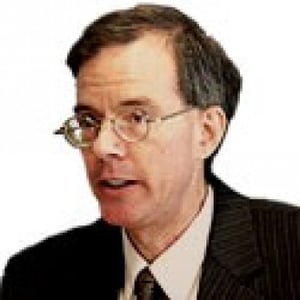
Senior Litigation Counsel, American Center for Law and Justice
Walter M. Weber is Senior Counsel for the ACLJ in the Washington, D.C. office. A highly regarded legal writer, Weber received his bachelor’s degree from Princeton University and his law degree from Yale Law School.
Weber emphasizes First Amendment law and has written briefs in many landmark cases at the Supreme Court including NOW v. Scheidler, Lamb’s Chapel v. Center Moriches School District and Bray v. Alexandria Women’s Health Clinic.
Weber has argued more than a dozen times in appeals before federal and state courts. Prior to joining the ACLJ, Weber served as a staff attorney with the Catholic League for Religious and Civil Rights.
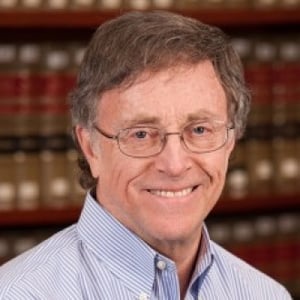
F. Elwood and Eleanor Davis Professor Emeritus of Law, The George Washington University Law School
Professor Lupu joined the law school in 1990. After graduating from law school, where he was case editor of the Harvard Law Review, he practiced law with the Boston firm of Hill & Barlow and then joined the law faculty at Boston University, where he taught from 1973 to 1989. During that time, he also served as a visiting professor at Northeastern University and at the University of California, Berkeley. In 1989–90, he was the professor-in-residence on the Appellate Staff of the Civil Division of the U.S. Department of Justice.
Professor Lupu is a nationally recognized scholar in constitutional law, with an emphasis in his writings on the religion clauses of the First Amendment. Together with his colleague Professor Robert Tuttle, Professor Lupu is the co-author of Secular Government, Religious People (Eerdmans Pub. Co., 2014) and many law journal articles.
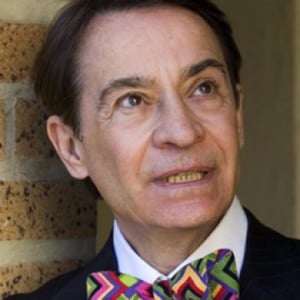
Doy & Dee Henley Chair and Distinguished Professor of Jurisprude, Chapman University Dale E. Fowler School of Law
Ronald D. Rotunda was the Doy & Dee Henley Chair and Distinguished Professor of Jurisprudence, at Chapman University, the Dale E. Fowler School of Law. He joined the faculty in 2008. Before that, he was University Professor and Professor of Law at George Mason University School of Law. From 2002 to 2006, he was the George Mason University Foundation Professor of Law. Before that, he was the Albert E. Jenner, Jr. Professor of Law, at the University of Illinois. He was a magna cum laude graduate of both Harvard College and Harvard Law School, where he was a member of Harvard Law Review. He joined the University of Illinois faculty in 1974 after clerking for Judge Walter R. Mansfield of the United States Court of Appeals for the Second Circuit, practicing law in Washington, D.C., and serving as assistant majority counsel for the Senate Watergate Committee. He has co-authored the most widely used course book on legal ethics, Problems and Materials on Professional Responsibility(Foundation Press, 12th ed. 2014) and was the author of a leading course book on constitutional law, Modern Constitutional Law (West Academic Co., 11th ed. 2015)(Abridged & Unabridged editions). He was the coauthor of, Legal Ethics: The Lawyer's Deskbook on Professional Responsibility (ABA- West/Thompson Reuters Publishing, St. Paul, Minnesota, 2016-2017 ed.) (Jointly published by the ABA and West/Thompson Reuters Publishing) (with John Dzienkowski). Rotunda also co-authored (with John Nowak) the six-volume Treatise on Constitutional Law (West/Thompson Reuters Publishing, 5th ed. 2012)(with annual updates), and a one volume Treatise on Constitutional Law (West Academic, 8th ed. 2010). He was also the author of several other books and more than 500 articles in various law reviews, journals, newspapers, and books in this country and abroad. His works have been translated into French, Portuguese German, Romanian, Czech, Russian, Japanese, and Korean. These books and articles have been cited more than 2000 times by law reviews, by state and federal courts at every level, from trial courts to the U.S. Supreme Court, and by foreign courts in Europe, Africa, Asia, and South America. He has been interviewed on radio and television on legal issues, both in this country and abroad. In 1993 he was the Constitutional Law Adviser to the Supreme National Council of Cambodia and assisted that country in writing its first democratic constitution. He has consulted with various new democracies in Eastern Europe and the former Soviet Union, including Moldova, Romania, and Ukraine, on their proposed constitutions and judicial codes. He chaired the subcommittee that drafted the American Bar Association's Model Rules for Lawyer Disciplinary Enforcement; was a member of the Publications Board of the A.B.A. Center for Professional Responsibility from 1994 to 2016; was a member of the A.B.A. Standing Committee on Professional Discipline (1991-1997); and was Liaison to the A.B.A. Standing Committee on Ethics and Professional Responsibility (1994-1997). He was a Fulbright Professor in Venezuela in 1986 and a Fulbright Research Scholar in Italy in 1981. In 1996 he assisted the Czech Republic in drafting the first Rules of Ethics for lawyers in that country. During the Spring, 1999 semester, he was Visiting Professor at the University of Alabama School of Law, holding the John S. Stone Endowed Chair of Law. During the summer and fall of 2000, he was the Visiting Senior Fellow in Constitutional Studies at the Cato Institute, in Washington, DC. In the fall of 2001, he was visiting professor at George Mason University School of Law. During November-December, 2002, he was Visiting Scholar, Katholieke Universiteit Leuven, Faculty of Law, Leuven, Belgium. In May, 2004, and December, 2005, he was visiting lecturer at the Institute of Law and Economics, Institut für Recht und Ökonomik, at the University of Hamburg. From early June 2004 to May 2005, he was the Special Counsel to the Department of Defense. He was on the Panel of Contributing Editors that produced, Black's Law Dictionary (West/Thompson Reuters Publishing, 8th ed. 2004; Thomson-Reuters, 10th ed. 2014). From 2005-2006, he was a member of the Task Force on Judicial Functions of the Commission on Virginia Courts in the 21st Century: To Benefit All, to Exclude None.
In May, 2000, American Law Media, publisher of The American Lawyer, the National Law Journal, and the Legal Times picked Professor Rotunda as one of the ten most influential Illinois Lawyers. Also in 2000, a lengthy study that the University of Chicago Press published, which sought to determine the influence, productivity, and reputations of law professors over the last several decades, listed Professor Rotunda as the 17th highest in the nation. The 2002-2003 New Educational Quality Ranking of U.S. Law Schools (EQR) [the last year for which such records are available] ranks Professor Rotunda as the eleventh most cited of all law faculty in the United States. Seehttp://www.leiterrankings.com/faculty/2002faculty_impact_cites.shtml.
In July, 2007, he was one of the main speakers at the International Judicial Conference hosted by the United States Embassy, the Supreme Court of Latvia, and the Latvian Ministry of Justice. The other main speakers were Justice Samuel Alito, the President of Latvia, the Prime Minister of Latvia, the Chief Justice of Latvia, and the Minister of Justice of Latvia. On February 27, 2008, President George W. Bush nominated Ronald D. Rotunda to become a member of the Privacy and Civil Liberties Oversight Board (PCLOB) for an initial four-year term and sent his nomination to the Senate Committee on Homeland Security and Governmental Affairs for confirmation hearings on the nominees. He was selected the Best Lawyer in Washington, DC, in 2009 in Ethics and Professional Responsibility Law, as published in November 2008 in the Washington Post in association with the Legal Times. When he moved to California, he was also selected as one of the Best Lawyers in Southern California, in 2009, 2010, 2011, 2012, 2013, 2014, 2015, 2016, 2017, also in Ethics and Professional Responsibility Law as published in the Los Angeles Times, U.S. News, and American Law Media. On June 17, 2009, he became a Commissioner of the Fair Political Practices Commission, a state regulatory agency (analogous to the Federal Election Commission) that is California's independent political watchdog. He served until January 31, 2013, when his term expired. In 2012, he became a Distinguished International Research Fellow at the World Engagement Institute, a non-profit, multidisciplinary and academically-based non-governmental organization with the mission to facilitate professional global engagement for international development and poverty reduction http://www.weinstitute.org/fellows.html. In 2012, Chapman University honored him with The Chapman University Excellence In Scholarly/Creative Work Award, 2011-2012. Since 2014, he has been a member of the Editorial Board of, The International Journal of Sustainable Human Security (IJSHS), a peer-reviewed publication of the World Engagement Institute (WEI). Rotunda was a Member of the Editorial Board of ABA's Journal of Legal Education (2014 to 2016).

SCOTUScast 7-2-08 featuring Ted Frank
Theodore "Ted" Frank
Exxon v. Baker
On June 25, 2008, the Supreme Court decided Exxon v. Baker, a case involving the...
SCOTUScast 7-2-08 featuring Alan Smith
Alan Smith
Kentucky Retirement Systems v. EEOC and Meacham v. Knolls Atomic Power Laboratory
On June 19, 2008, the Supreme Court decided two Age Discrimination in Employment Act (ADEA)...
SCOTUScast 6-30-08 featuring Nelson Lund
Nelson Lund
District of Columbia v. Heller
On June 26, 2008, the Supreme Court decided the District of Columbia v. Heller case....
SCOTUScast 6-30-08 featuring C. Kevin Marshall
C. Kevin Marshall
District of Columbia v. Heller
On June 26, 2008, the Supreme Court decided the District of Columbia v. Heller case. The...
Securities Litigation Reform
John Cornyn, Holt M. Lackey, Andrew J. Pincus
Corporations, Securities, and Antitrust Practice Group
On May 19, William Lerach, formerly of the law firm of Milberg, Weiss, Bershad, Hynes...
SCOTUScast 6-26-08 featuring William Otis
William G. Otis
Kennedy v. Louisiana
On June 25, 2008, the Supreme Court decided Kennedy v. Louisiana, holding that the Eighth...
SCOTUScast 6-26-08 featuring Ben Ginsberg
Benjamin L. Ginsberg
Davis v. Federal Election Commission
On June 26, 2008, the Supreme Court decided Davis v. Federal Election Commission, holding that...
SCOTUScast 6-24-08 featuring Vince Vitkowsky
Vincent Vitkowsky
Republic of the Philippines v. Pimentel
On June 12, 2008, the Supreme Court decided Republic of the Philippines v. Pimentel, a...
Hein, One Year Later: The Future of Church-State Litigation
Alex J. Luchenitser, Robert W. Tuttle, Walter M. Weber, Ira C. “Chip” Lupu
Religious Liberties Practice Group, The Constitution Project, and The Pew Forum on Religion & Public Life
In June 2007, the U.S. Supreme Court held, in Hein v. Freedom From Religion Foundation,...
SCOTUScast 6-17-08 featuring Ron Rotunda
Ronald D. Rotunda
Munaf v. Geren
On June 12, the Supreme Court decided Munaf v. Geren. The Court held that the habeas statute...