
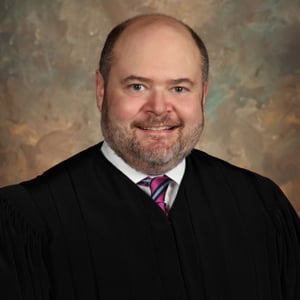
Judge, United States Court of Appeals, Eighth Circuit
David Stras became a judge on the United States Court of Appeals for the Eighth Circuit on January 31, 2018. Before serving on the Eighth Circuit, Judge Stras was an Associate Justice of the Minnesota Supreme Court, a position he occupied from July 1, 2010 until his appointment to the Eighth Circuit.
Prior to becoming a judge, Stras was a member of the faculty of the University of Minnesota Law School from 2004 through 2010. He taught and wrote in the areas of federal courts and jurisdiction, constitutional law, criminal law, and law and politics.
Judge Stras received his Bachelor of Arts degree, with highest distinction, in 1995 and his Master of Business Administration in 1999, both from the University of Kansas. He also received his law degree from the University of Kansas School of Law in 1999, where he served as Editor-in-Chief of the Criminal Procedure Edition of the Kansas Law Review.
Following law school, Stras clerked for The Honorable Melvin Brunetti of the United States Court of Appeals for the Ninth Circuit and then for The Honorable J. Michael Luttig of the United States Court of Appeals for the Fourth Circuit.
From 2001 to 2002, he practiced white-collar criminal and appellate litigation with the Washington, D.C., office of Sidley Austin Brown & Wood. Following his year in practice, he clerked for The Honorable Clarence Thomas of the Supreme Court of the United States.
Deputy District Attorney, Philadelphia District Attorney's Office
Ronald Eisenberg heads the Law Division of the Philadelphia District Attorney's Office. The 60 lawyers in the division handle appeals, habeas corpus and civil litigation, and legislative matters. Mr. Eisenberg has appeared at all levels of the state and federal court system, and has argued several cases in the United States Supreme Court.
Mr. Eisenberg is a member of the Pennsylvania Supreme Court Investigating Grand Jury Task Force and the Advisory Committee for the Pennsylvania Suggested Standard Criminal Jury Instructions. He has represented his office on the Pennsylvania Advisory Committee on Wrongful Convictions, was an adjunct professor at Temple University School of Law, teaching legal writing and research, and has served on the Pennsylvania Criminal Rules and Appellate Rules Committees. He is a past president and current board member of the Association of Government Attorneys in Capital Litigation, a national organization of capital prosecutors.
Mr. Eisenberg received his bachelor's degree from Haverford College in 1978 and his law degree from the University of Pennsylvania Law School in 1981.
J.D., University of Pennsylvania
B.A., Haverford College
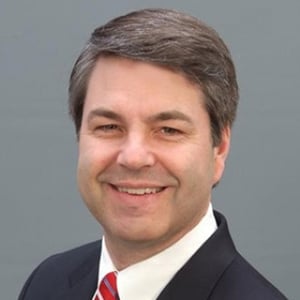
Partner and Co-Chair, Public Policy Group, Shook Hardy & Bacon LLP
Mark Behrens co-chairs Shook's Washington, DC-based Public Policy Practice Group and is a leading national expert on civil justice issues with over thirty years of experience. A substantial part of his practice is working to improve the civil litigation environment through state and federal legislation; in the courts through amicus curiae briefs; through legal scholarship and judicial education; and in the court of public opinion.
Mark is actively involved in civil justice reform efforts at the federal and state levels. He has testified before the U.S. Congress and most state legislatures on behalf of business and civil justice organizations. Mark also has an active amicus brief practice specializing in tort liability and civil justice issues. He has authored or co-authored over 150 amicus briefs in cases before the United States Supreme Court and federal and state appellate courts on behalf of business, civil justice, and defense lawyer organizations. In addition, Mark routinely files comments on behalf of business, civil justice, and defense lawyer organizations regarding potential changes to federal and state court rules. He chairs the International Association of Defense Counsel’s (IADC) Civil Justice Response Committee and serves on the Board of Directors of Lawyers for Civil Justice (LCJ).
Mark is a member of the American Law Institute (ALI). He received his J.D. in 1990 from Vanderbilt University Law School, where he was a member of the Vanderbilt Law Review. He received his B.A. in economics from the University of Wisconsin in 1987.
Solicitor General, Kansas, and Professor of Law, University of Kansas School of Law
 Stephen R. McAllister is a native Kansan who grew up in Lucas, Kansas and graduated from Lucas-Luray High School. Growing up, he also lived in Hiawatha and Chanute, Kansas. He received both his B.A. and his J.D. degrees from the University of Kansas.
Following his graduation from law school, Steve clerked for Judge Richard Posner of the United States Court of Appeals for the Seventh Circuit in Chicago, and then for Justices Byron White and Clarence Thomas of the Supreme Court of the United States. After his clerkships Steve worked in the Washington, D.C. office of the Los Angeles law firm, Gibson, Dunn & Crutcher.
In 1993, Steve returned to his alma mater as a visiting professor of law. In 1999 he received tenure and promotion to the rank of full Professor. He served as Dean of the KU Law School from 2000 – 2005.
As a professor, Steve teaches constitutional law, constitutional litigation and torts. He won the Frederick J. Moreau Award for student advising in 1997, and a W.T. Kemper Award for excellence in teaching in 1999. As a scholar, Steve has written on a variety of constitutional topics, including affirmative action, capital punishment, federalism, and sex offender laws. Steve is an elected a Fellow of the American Bar Foundation and a Trustee of the Supreme Court Historical Society.
Steve also has appeared before the Supreme Court of the United States several times. From 1999 – 2003, he served as the first State Solicitor for Kansas, assisting the Kansas Attorney General’s office in state cases raising important constitutional issues. In both 2001 and 2002, Supreme Court briefs that Steve authored for the State of Kansas won Best Brief Prizes at the annual summer meeting of the National Association of Attorneys General.
From May 2006 until March 2007, Steve served as Legislative Counsel for Kansas, advising the legislature regarding legal issues. In that capacity, Steve participated in the Kansas school finance litigation in the Kansas Supreme Court, filing a brief on behalf of the Kansas Legislature and presenting oral argument on behalf of the State as a special assistant attorney general. Since May 2007, Steve has served as Solicitor General of Kansas in the office of the Kansas Attorney General, briefing and arguing important cases involving abortion, the death penalty, freedom of speech, and right to a jury trial.
Steve speaks regularly on a variety of constitutional topics, as well as judicial confirmation and the Supreme Court as an institution.
Clerk, Judge Richard Posner, U.S. Court of Appeals, 7th Circuit 1988-89; Clerk, Justice Byron White, U.S. Supreme Court 1989-91; Clerk, Justice Clarence Thomas, U.S. Supreme Court 1991-1992; Associate, Gibson, Dunn & Crutcher, DC, 1992-93; Visiting Associate Professor, Kansas 1993-95, Associate Professor, Kansas 1995-98, Professor since 1999; Associate Dean of Academic Affairs 1999-2000; Dean 2000-2005; Interim Director, Dole Institute of Politics 2003-04.
J.D. 1988, Kansas, Articles Editor, University of Kansas Law Review; B.A. 1985, Kansas
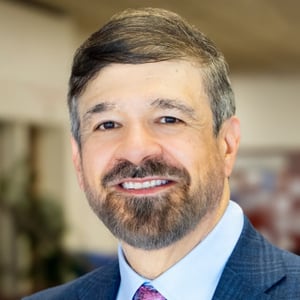
Hugh and Hazel Darling Foundation Professor of Law; Director, Center for the Study of Constitutional Originalism, University of San Diego School of Law
Associate, Covington & Burling LLP
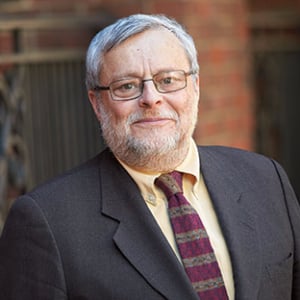
Dwight D. Opperman Professor of Law; Director, Center for Labor, New York University School of Law
Samuel Estreicher is a nationally preeminent scholar in US and international-comparative labor and employment law and arbitration law. He has authored more than a dozen books, including Beyond Elite Law: Access to Civil Justice in America (with Joy Radice, Cambridge Univ. 2016); leading casebooks on legislation and regulatory state, labor law and employment discrimination and employment law; and published more than 200 articles in professional and academic journals. He served as Chief Reporter for the American Law Institute’s Restatement of Employment Law (2015). After clerking for Judge Harold Leventhal of the US Court of Appeals for the DC Circuit, practicing in a labor law firm, and clerking for Justice Lewis F. Powell Jr. of the US Supreme Court, Prof. Estreicher joined the NYU School of Law faculty in 1978. In addition to serving as counsel to major law firms, he is the former secretary of the Labor and Employment Law Section of the American Bar Association, a former chair of the Committee on Labor and Employment Law of the Association of the Bar of the City of New York.15). He maintains an active appellate and ADR practice. The Labor and Employment Research Association awarded him its 2010 Susan C. Eaton Award for Outstanding Scholar-Practitioner. In recent years, Estreicher also has published work in public international law and authored several briefs in the Supreme Court and US courts of appeals on employment and US foreign relations law issues. Prof. Estreicher received his BA from Columbia College, his MS in industrial relations from Cornell University, and his JD from Columbia Law School, where he was editor-in-chief of the Columbia Law Review. He is a member of the College of Labor and Employment Lawyers and was appointed in 2016 by the UN Secretary General as a member of the UN’s Internal Justice Commission.

Clayton J. and Henry R. Barber Professor of Law, Northwestern University Pritzker School of Law and Co-Chairman, Board of Directors, The Federalist Society
STEVEN GOW CALABRESI is the Clayton J. & Henry R. Barber Professor at Northwestern Pritzker School of Law. He has also co-taught in the Fall semester at Yale Law School from 2013 to the present. Calabresi clerked for Justice Antonin Scalia and Judges Robert H. Bork and Ralph K. Winter. He was a Special Assistant to Attorney General Meese from 1985 to 1987 and worked with Ken Cribb as his deputy in 1987 on the second floor of the West Wing of the Reagan White House. Calabresi has written books on presidential power and comparative constitutional law and the origins of judicial review. He and Gary Lawson are the co-editors of a casebook on U.S. Constitutional Law, and Calabresi is also the co-editor of a casebook on comparative constitutional law. He has written over seventy law review articles since 1990.
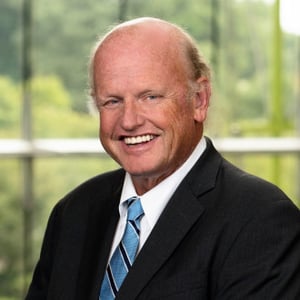
In his 35 years at the Justice Department and in private practice, Mike Carvin was one of the leading appellate and trial lawyers challenging state and federal regulations on constitutional and statutory grounds, with 10 Supreme Court arguments and numerous high-profile victories. In addition to his numerous cases in the United States Supreme Court, he argued in virtually every federal appeals court. His major cases include the recent constitutional challenge to the Affordable Care Act and the decisions invalidating Sarbanes-Oxley's accounting board, preventing the Justice Department from obtaining monetary relief against the tobacco industry under RICO, overturning the federal government's plan to statistically adjust the census, limiting the Justice Department's ability to create "majority-minority" districts, and upholding Proposition 209's ban on racial preferences in California.
Mike was one of the lead lawyers, and argued before the Florida Supreme Court, on behalf of George W. Bush in the 2000 presidential election Florida recount controversy. He also has represented state governments, financial institutions, telecommunications, and energy companies in "takings," First Amendment, civil rights, and statutory challenges to federal government actions.
Director of the National Research Initiative, American Enterprise Institute
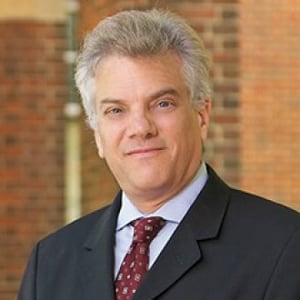
Sudler Family Professor of Constitutional Law, New York University School of Law
Richard H. Pildes is one of the nation’s leading scholars of constitutional law and a specialist in legal issues affecting democracy. He is a Member of the American Academy of Arts and Sciences and the American Law Institute, and has received recognition as a Guggenheim Fellow and a Carnegie Scholar. His acclaimed casebook, The Law of Democracy: Legal Structure of the Political Process (now in its fourth edition), helped create an entirely new field of study in the law schools. The Law of Democracy systematically explores legal and policy issues concerning the structure of democratic elections and institutions, such as the role of money in politics, the design of election districts, the regulation of political parties, the design of voting systems, the representation of minority interests in democratic institutions, and similar issues. He has written extensively on the rise of political polarization in the United States, the Voting Rights Act, the dysfunction of America’s political processes, the role of the Supreme Court in overseeing American democracy, the powers of the American President and Congress, and he has criticized excessively “romantic” understandings of democracy. In addition to his scholarship on these issues, he has written on national-security law, the design of the regulatory state, and American constitutional history and theory.
Respect for his expertise in these areas is reflected in frequent citations of his work in U.S. Supreme Court opinions, the translation of his work into many languages, and his frequent public lectures and appearances around the world, including his nomination with the NBC News Team for an Emmy Award for coverage of the 2000 Presidential election litigation.
His work has been translated and published in Chinese, French, Spanish, and Portuguese. In addition to his scholarship, Professor Pildes plays an active role litigating in these areas. He has won two cases before the United States Supreme Court, including a 2015 victory in Alabama Democratic Conference v. Alabama, a case involving race and redistricting. He served as counsel to a group of former chairmen of the Securities and Exchange Commission in litigation defending the constitutionality of the Sarbanes-Oxley Act; as counsel in election litigation to the Puerto Rico Electoral Commission; as counsel to the government of Puerto Rico; as a federal court-appointed independent expert on voting rights litigation; and as counsel in successful Supreme Court litigation that challenged the way the United States Tax Court operated. He was also a senior legal advisor to the 2008 and 2012 campaigns of President Obama.
Pildes received his A.B. in physical chemistry summa cum laude from Princeton, and his J.D. magna cum laude from Harvard, where he served as Supreme Court Note Editor on the Harvard Law Review. He clerked for Judge Abner J. Mikva of the U.S. Court of Appeals for the District of Columbia Circuit and for Justice Thurgood Marshall of the U.S. Supreme Court. After practicing law in Boston, he began his academic career at the University of Michigan Law School, before joining the NYU School of Law in 2001.
Vice-chair, U.S. Commission on Civil Rights, and Adjunct Scholar, American Enterprise Institute
Abigail Thernstrom is the vice-chair of the U.S. Commission on Civil Rights, and an adjunct scholar at the American Enterprise Institute. She was a senior fellow at the Manhattan Institute in New York from 1993 to 2009, and a member of the Massachusetts State Board of Education for more than a decade until her third term ended in November 2006. She also serves on the board of advisors of the U.S. Election Assistance Commission. She received her Ph.D. in 1975 from the Department of Government, Harvard University.
In 2007 she and her husband, Stephan Thernstrom, along with James Q. Wilson, Martin Feldstein, and John Bolton, were the recipients of a Bradley Foundation prizes for Outstanding Intellectual Achievement.
Thernstrom and her husband, Harvard historian Stephan Thernstrom, are the co-authors of No Excuses: Closing the Racial Gap in Learning (Simon & Schuster, October 2003), which has been awarded the 2007 Fordham Foundation prize for “for distinguished scholarship,” and was named by both the Los Angeles Times and the American School Board Journal as one of the best books of 2003.
They also collaborated on America in Black and White: One Nation, Indivisible (Simon & Schuster), which the New York Times Book Review, in its annual end-of-the-year issue, named as one of the notable books of 1997.
They are the editors of a Beyond the Color Line: New Perspectives on Race and Ethnicity. Their lengthy review of William G. Bowen and Derek Bok's much-noticed work, The Shape of the River, appeared in the June 1999 issue of the UCLA Law Review.
Whose Votes Count? Affirmative Action and Minority Voting Rights (Harvard University Press) won four awards, including the American Bar Association's Certificate of Merit, and the Anisfield-Wolf prize for the best book on race and ethnicity. It was named the best policy studies book of that year by the Policy Studies Organization (an affiliate of the American Political Science Association), and won the Benchmark Book Award from the Center for Judicial Studies. Along with her husband, she also won the 2004 Peter Shaw Memorial Award given by National Association of Scholars.
She is currently completing a book entitled Voting Rights and Wrongs: The Elusive Quest for Racially Fair Elections, and is working, as well, with her husband on another book with the tentative title of Don’t Call it Segregation: The Myth of Contemporary Apartheid. She (and two co-authors) submitted an amicus brief in Parents Involved in Community Schools v. Seattle, challenging the constitutionality of Seattle's racial balancing plan.
Her frequent media appearances have included Fox News Sunday, Good Morning America, and This Week with George Stephanopoulos. For some years, she was a stringer for The Economist, and continues to write for a variety of journals and newspapers, including the Wall Street Journal, the Los Angeles Times, the New York Times and the (London) Times Literary Supplement.
She serves on several boards, and from 1992 to 1997 was a member of the Aspen Institute's Domestic Strategy Group.

SCOTUScast 6-24-09 featuring Peter Jaffe
Peter Jaffe
Flores-Figueroa v. United States
On Monday, May 4, the Supreme Court announced its decision in Flores-Figueroa v. United States....
SCOTUScast 6-23-09 featuring David Stras
David R. Stras
Iraq v. Beaty
On Monday, June 8, the Supreme Court announced its decision in Iraq v. Beaty. In...
SCOTUScast 6-19-09 featuring Ronald Eisenberg
Ronald Eisenberg
Arizona v. Johnson
On Monday, January 26, the Supreme Court announced its decision in Arizona v. Johnson. In...
SCOTUScast 6-17-09 featuring Mark Behrens
Mark A. Behrens
CSX Transportation v. Hensley
On Monday, June 1, the Supreme Court announced its decision in CSX Transportation v. Hensley...
SCOTUScast 6-17-09 featuring Stephen McAllister
Stephen R. McAllister
Van de Kamp v. Goldstein
On Monday, January 26, the Supreme Court announced its decision in Van de Kamp v....
SCOTUScast 6-17-09 featuring Michael Rappaport
Michael B. Rappaport
Montejo v. Louisiana
On Tuesday, May 26, the Supreme Court announced its decision in Montejo v. Louisiana. In...
SCOTUScast 6-17-09 featuring Brian Foster
Brian Foster
Carlsbad Technology v. HIF Bio
On Monday, May 4, the Supreme Court announced its decision in Carlsbad Technology v. HIF...
SCOTUScast 6-15-09 featuring Samuel Estreicher
Samuel Estreicher
14 Penn Plaza LLC v. Pyett
On Wednesday, April 1, the Supreme Court announced its decision in 14 Penn Plaza LLC...
SCOTUScast 6-15-09 featuring Steven Calabresi
Steven G. Calabresi
Free Enterprise Fund v. Public Company Accounting Oversight Board
On Wednesday, May 20, the Supreme Court granted certiorari in Free Enterprise Fund v. Public...
Voting Rights--and Wrongs: The Elusive Quest for Racially Fair Elections
Michael A. Carvin, Henry Olsen, Richard H. Pildes, Abigail Thernstrom
Civil Rights Practice Group and the American Enterprise Institute
Has the 1965 Voting Rights Act, the crown jewel of American civil rights legislation, become...