
John M. Rounds Professor of Law and Associate Dean, University of Kansas School of Law
Chris Drahozal is an internationally known scholar whose writing focuses on the law and economics of dispute resolution, particularly arbitration. He is the author of multiple books and numerous articles on commercial arbitration, and has taught and given presentations on the subject in Europe, Canada and the United States. He is serving as an Associate Reporter for the ALI's Restatement (Third) of the U.S. Law of International Commercial Arbitration. Drahozal also is a well-respected teacher and received the Immel Award for Teaching Excellence in 2004. Prior to coming to KU, Professor Drahozal practiced law with Sidley & Austin in Washington, D.C., and served as a law clerk for Chief Judge Charles Clark of the United States Court of Appeals for the Fifth Circuit, Justice Byron R. White of the United States Supreme Court, and Judge George H. Aldrich of the Iran-United States Claims Tribunal in The Hague, The Netherlands.
Governance Counsel, Institutional Shareholders Services, Inc.
Charles Edward (“Ted”) Allen III is Governance Counsel and Head of Publications at ISS, where he has overseen the company’s newsletters on corporate governance and securities litigation since 2004. He oversees the ISS Governance Insight blog, and his postings and articles are frequently cited by the Financial Times’ Agenda newsletter, TheCorporateCounsel.net, The Motley Fool, and other news sources. Allen has appeared on panels hosted by the American Bar Association and other legal groups. Prior to joining ISS, he worked as a legal news editor for Bloomberg News, The Deal, and Legal Times. He also worked as an associate at the law firms of Proskauer Rose and Semmes, Bowen & Semmes and clerked for a Maryland trial court judge. Allen received his law degree (with honors) from Georgetown University and has a master’s degree in journalism from Columbia University and a bachelor’s degree from Duke University.
William D. Warren Professor of Law, UCLA School of Law
Stephen Bainbridge is the William D. Warren Distinguished Professor of Law at UCLA School of Law, where he currently teaches Business Associations, Advanced Corporation Law, and Mergers and Acquisitions. In past years, he has also taught Corporate Finance, Securities Regulation, Unincorporated Business Associations and Catholic Social Thought and the Law. Professor Bainbridge previously taught at the University of Illinois Law School (1988-1996). He has also taught at Harvard Law School as the Joseph Flom Visiting Professor of Law and Business (2000-2001), and as a visiting professor at La Trobe University in Melbourne (2005 and 2007) and at Aoyama Gakuin University in Tokyo (1999).
In 2008, Bainbridge received the UCLA School of Law's Rutter Award for Excellence in Teaching. In 1990, the graduating class of the University of Illinois College of Law voted him "Professor of the Year."
Professor Bainbridge is a prolific scholar, whose work covers a variety of subjects, but with a strong emphasis on the law and economics of public corporations. He has written over 100 law review articles which have appeared in such leading journals as the Harvard Law Review, Virginia Law Review, Northwestern University Law Review, Cornell Law Review, Stanford Law Review, and Vanderbilt Law Review. Bainbridge has also written 19 books, including seven in multiple editions. His most recent books include: Outsourcing the Board: How Board Service Providers Can Improve Corporate Governance (Cambridge University Press, 2018) (with M. Todd Henderson); Business Associations: Cases and Materials on Agency, Partnerships, and Corporations (Foundation Press, 10th ed., 2018) (with Klein and Ramseyer); Mergers and Acquisitions: A Transactional Perspective (Foundation Press, 2017) (with Iman Anabtawi).
According to Gregory Sisk and Brian Leiter’s rankings of law professors by scholarly impact, Professor Bainbridge was the third most-frequently cited scholar in corporate and securities law for the period 2013-2017. According to Hein Online, Bainbridge is the 29th most frequently cited scholar in their database of legal publications over the last 10 years and the 23rd most cited for the period January 2018 through August 2019. In SSRN.com’s ranking of the top 3000 legal authors by all-time downloads, Bainbridge is ranked 10th. By that metric, he is the highest ranked member of the UCLA law school faculty. In SSRN.com’s ranking of the top 3000 legal authors by all-time citations to their work, Bainbridge is ranked 55th. By that metric, he is the second highest ranked member of the UCLA law school faculty.
Professor Bainbridge has been a Salvatori Fellow with the Heritage Foundation, a member of the American Bar Association’s Committee on Corporate Laws, a member of the Editorial Advisory Board of the Journal of Markets and Morality, and Chair of the Executive Committee of the Federalist Society’s Corporations, Securities & Antitrust Practice Group.
In May 2014, Professor Bainbridge was the Cameron Fellow at the University of Auckland Faculty of Law. He was the Francis G. Pileggi Distinguished Lecturer in Law at Widener University School of Law in September 2005, and a Distinguished Visiting Scholar at the University of Maryland School of Law in November 2005.
In 2008, 2011, and 2012, Professor Bainbridge was named by the National Association of Corporate Directors' Directorship magazine to its list of the 100 most influential people in the field of corporate governance.
His blog, ProfessorBainbridge.com, was named by the ABA Journal as one of the Top 100 Law Blogs of 2007, 2008, 2010, 2011, and 2012.
Partner, Gibson, Dunn & Crutcher, and Former United States Secretary of Labor
Eugene Scalia is a partner in the Washington, D.C. office of Gibson, Dunn & Crutcher, co-chair of the firm’s Administrative Law and Regulatory Practice Group, and a senior member of the firm’s Labor and Employment Practice Group and Financial Institutions Practice Group. He returned to the firm after serving as U.S. Secretary of Labor from September 2019 to January 2021.
Mr. Scalia has a nationally-prominent practice in two areas: Labor and employment law, and advice and litigation regarding the regulatory obligations of federal administrative agencies. He also has extensive appellate experience. Federal regulatory actions he has challenged include the SEC’s “proxy access” rule; the CFTC’s “position limits’” rule; MetLife’s designation as “too big to fail” by the Financial Services Oversight Council; the Labor Department’s “fiduciary” rule; and OSHA’s “cooperative compliance program.”
As Labor Secretary, Mr. Scalia engaged at the highest level with national employment policy and matters affecting the financial services industry and international trade, overseeing the enforcement and administration of more than 180 federal employment laws covering more than 150 million workers and 10 million workplaces. He also served as Chair of the Board of Directors of the Pension Benefit Guaranty Corporation and as a member of the White House Coronavirus Task Force. He was closely involved in the drafting and implementation of the CARES Act and other coronavirus-related legislation. Laws administered by the Labor Department also include the workplace safety requirements of OSHA and the Mine Safety and Health Administration, federal minimum wage and overtime protections, the anti-discrimination requirements applicable to federal contractors, and ERISA’s protection of the more than $11 trillion held in employee retirement plans and health plans.
Mr. Scalia served from 2002 to 2003 as Solicitor of the U.S. Department of Labor, with responsibility for all Labor Department litigation and legal advice on rulemakings and administrative law. He is the only person to have served as both Solicitor and Secretary of Labor.
He also served at the U.S. Department of Justice as a Special Assistant to the Attorney General, receiving the Department’s Edmund J. Randolph Award in 1993.
In private practice, Mr. Scalia has represented employers in high-profile matters under the National Labor Relations Act and in class actions and collective actions under Title VII, the Americans with Disabilities Act, the Age Discrimination in Employment Act, ERISA, and federal and state wage hour laws. He has extensive experience in federal district court, the courts of appeals, and in the arbitration of employment disputes. He has been a leading authority on “whistleblower” investigations and litigation since the 2002 enactment of the Sarbanes-Oxley Act. Mr. Scalia also counsels employers on reductions-in-force and the proper conduct of harassment and discrimination investigations. He has provided pro bono representation to workers in discrimination matters, wrongful separation disputes, and other matters.
Mr. Scalia is a Senior Fellow of the Administrative Conference of the United States, a federal agency that makes recommendations to Congress and the Executive Branch on ways to improve the administrative process. He is the author of more than 30 articles and papers on labor and employment law, administrative law, and other subjects. Among other accolades, he has been named an “Employment MVP,” a “Securities MVP,” and an “Appellate MVP” by Law360. The National Law Journal recognized Mr. Scalia as a “Visionary” for his litigation against financial regulatory agencies, and the Nation magazine has called him a “fearsome litigator.” He has been a Lecturer in labor and employment law at the University of Chicago Law School.
Mr. Scalia graduated cum laude from the University of Chicago Law School, where he was editor-in-chief of the Law Review. He graduated With Distinction from the University of Virginia in 1985 and was a speechwriter for Education Secretary William J. Bennett before attending law school. Mr. Scalia and his wife Trish have seven children.
Professor of Law and Rouse Chairholder, Antonin Scalia Law School, George Mason University
Professor Miller holds an Allison and Dorothy Rouse Chair in Law at the Antonin Scalia Law School. An elected member of the American Law Institute and a research member of the European Corporate Governance Institute, Professor Miller is also a Fellow and the Co-Director of the Program on Organizations, Business and Markets at the Classical Liberal Institute at the New York University Law School, an Adjunct Fellow at the Manhattan Institute, and an Affiliated Scholar at the James Wilson Institute on Natural Rights and the American Founding. Prior to joining George Mason University in 2025, Professor Miller was the F. Arnold Daum Chair in Corporate Finance and Law and a Professor of Law at the University of Iowa College of Law, where he had also served as the Associate Dean for Faculty Development.
Professor Miller’s research concerns corporate and securities law, the economic analysis of law, and the philosophy of law. He is particularly interested in applying economic concepts and methods to understand provisions in contracts between sophisticated commercial parties. He has written on material adverse effect clauses under Delaware law, the fiduciary duties of corporate directors, director oversight liability, the history and development of Delaware corporate law, and much more. His articles and working papers are available on his SSRN page.
Professor Miller has been cited by federal and state courts in the United States, including the Delaware Supreme Court and the Delaware Court of Chancery, as well as by the Commercial Court of the United Kingdom and the Ontario Superior Court of Justice (Commercial List) in Canada. Additionally, he is a member of the Committee on Mergers, Acquisitions & Corporate Control Contests and a former chair of the Corporation Law Committee of the New York City Bar Association.
Earlier in his career, Professor Miller was a Professor of Law at the Villanova University School of Law and the Associate Director of the Matthew J. Ryan Center for the Study of Free Institutions and the Public Good at Villanova University. He has been a Visiting Professor of Law at the University of Pennsylvania Law School, a Visiting Assistant Professor of Law at the Cardozo Law School, and an Olin Fellow in Law and Economics at the Columbia Law School.
Before entering academia, Professor Miller was an associate with Wachtell, Lipton, Rosen & Katz. He earned his J.D. from the Yale Law School where he was a Senior Editor of the Yale Law Journal and an Olin Fellow in Law, Economics and Public Policy. He earned his M.A. and M.Phil. degrees in philosophy from Columbia University, where he held a Mellon Fellowship in the Humanities from the Woodrow Wilson National Fellowship Foundation and a Western Civilization Fellowship from the Intercollegiate Studies Institute. He earned his B.A. in philosophy and mathematics from Columbia College.

Executive Vice President, The Federalist Society
Dean Reuter is Executive Vice President at the Federalist Society for Law and Public Policy Studies. He has served in two federal government agency Offices of the Inspector General, as Counsel to the Inspector General and Deputy Inspector General, responsible for policing the use of federal funds granted and contracted through those agencies. As such, he helped conduct and oversee criminal investigations across the country. He is the principal author of the non-fiction book, The Hidden Nazi: The Untold Story of America's Deal with the Devil, and editor of Liberty’s Nemesis: The Unchecked Expansion of the State and Confronting Terror: 9/11 and the Future of American National Security. He was appointed by the President and served as Vice-Chairman of the Board of Directors of the Corporation for National and Community Service, and recently served as an appointee on the U.S. Commission on Presidential Scholars. He is a graduate of Hood College (BA with Honors) and the University of Maryland School of Law.
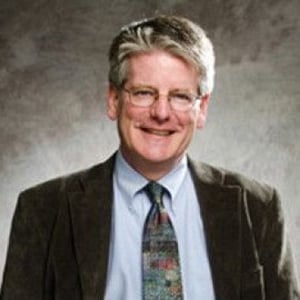
Professor, University of Denver Sturm College of Law
For more than two decades, J. Robert Brown has taught corporate and securities law, with a particular emphasis on corporate governance. He has authored numerous publications in the area and several of his articles have been cited by the US Supreme Court. Brown has also spent considerable time abroad, particularly in the former Soviet Union, advising governments in these areas. From 2000-2004, Brown served the University of Denver Sturm College of Law as an associate dean for academic affairs. He is an arbitrator for the FINRA and, among other outside activities, serves as the chairman of the board of directors of the Colorado Coalition for the Homeless.

Laurence A. Tisch Professor of Law and Director, Classical Liberal Institute, New York University School of Law; Director, Classical Liberal Institute, Civitas Institute University of Texas at Austin
Richard A. Epstein is the Laurence A. Tisch Professor of Law, at New York University, a senior research fellow at the Civitas Institute at the University of Texas Austin, and a senior Lecturer, the University of Chicago. He received an LL.D., h.c . from the University of Ghent, 2003 , and an LLD h.c . from the University of Siegen in 2018 and the Bradley Prize in 2011. He has been a member of the American Academy of Arts and Sciences since 1985. He has edited both the Journal of Legal Studies (1981-1991) and the Journal of Law and Economics (1991-2001). He is also a founder and director of the Classical Liberal Institute at NYU Law School. His most recent book is The Classical Liberal Constitution: The Uncertain Quest for Limited Government (2014). His other books include Takings: Private Property and the Power of Eminent Domain ( 1985); Bargaining with the State (1993); Simple Rules for a Complex World (1995); Principles for a Free Society: Reconciling Individual Liberty and the Common Good (1998); Skepticism and Freedom: A Modern Theory of Classical Liberalism (2003); Design for Liberty: Private Property, Public Administration and the Rule of Law (2011), and most recently, The Myth of Birthright citizenship—and Beyond (2026). He has taught courses in , administrative law, antitrust, constitutional, contracts, environmental law, land use planning; real property, torts and water law. He has written and spoken extensively on a wide range of topics, and is writes a regular column for Defining Ideas.

Richard and Frances Mallery Professor of Law and Faculty Director, Constitutional Law Center, Stanford Law School
Michael W. McConnell is the Richard and Frances Mallery Professor and Faculty Director of the Constitutional Law Center at Stanford Law School, and a Senior Fellow at the Hoover Institution. From 2002 to 2009, he served as a Circuit Judge on the United States Court of Appeals for the Tenth Circuit. He was nominated by President George W. Bush, a Republican, and confirmed by a Democratic Senate by unanimous consent. McConnell has previously held chaired professorships at the University of Chicago and the University of Utah, and visiting professorships at Harvard and NYU. He teaches courses on constitutional law, constitutional history, First Amendment, and interpretive theory. He has published widely in the fields of constitutional law and theory, especially church and state, equal protection, and separation of powers. His book, “The President Who Would Not Be King: Executive Power Under the Constitution,” was published by Princeton University Press in 2020, based on the Tanner Lectures in Human Values, which he delivered at Princeton in 2019. His latest book, co-authored with Nathan Chapman, “Agreeing to Disagree: How the Establishment Clause Protects Religious Diversity and Freedom of Conscience,” was published by Oxford University Press in mid-2023. McConnell has argued sixteen cases in the United States Supreme Court, most recently Carney v. Adams (2020). defending a provision of the Delaware Constitution requiring political balance on that state’s courts. More recently, he was co-counsel in Gonzalez v. Google. He earned his B.A. from Michigan State University and his J.D. from the University of Chicago, and has received honorary degrees from Notre Dame University and Michigan State. He served as law clerk to Supreme Court Justice William J. Brennan, Jr. and D.C. Circuit Chief Judge J. Skelly Wright. He has been Assistant General Counsel of the Office of Management & Budget, Assistant to the Solicitor General of the Department of Justice, and a member of the President’s Intelligence Oversight Board. He is Senior of Counsel to the law firm Wilson, Sonsini, Goodrich & Rosati, and is co-chair of Meta’s Oversight Review Board.
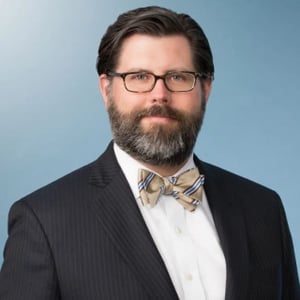
Partner, Faegre Drinker Biddle & Reath LLP
Brian J. Paul is an appellate lawyer and leads law teams in high-stakes commercial litigation. He has briefed and argued everything from weighty abstract constitutional issues to dollars-and-cents business issues and everything in-between, both on appeal and in trial courts around the country. A member of the American Law Institute, recent past-president of the Seventh Circuit Bar Association and top-tier ranked Chambers appellate lawyer, Brian had one client say about him: “Brian is one of the most respected and skilled appellate lawyers, not only in Indianapolis but across the country. He is trusted to deliver timely guidance on complex issues.” Another said: “He is excellent. I enjoyed working with him. He is able to put things into layman’s terms and explains things really well. His written and oral advocacy are short, crisp and to the point.”
Clients hire Brian to digest the complex, and make the complex simple and compelling for busy, generalist judges. In his writing, he strives to cut through jargon and legalese, and distill things down to what’s important. In his oral advocacy, by intense preparation, he strives to be the advocate whom judges trust for the right answers. In the dozens of cases he has argued, Brian has helped clients win on both sides of the “v.” His recent representations include:
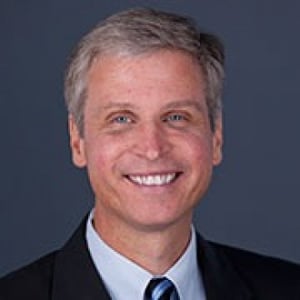
Frank Edwards Tyler Distinguished Professor of Law, University of Kansas School of Law
Stephen Ware is the author of four books, over 50 law review articles, and many other publications. His writings have been cited by the Supreme Court of the United States and in at least 36 other cases. Ware teaches and writes on: Arbitration, Mediation, and Alternative Dispute Resolution, Bankruptcy, Insolvency, and Debt Collection, Contracts and Commercial Law, and Judicial Selection, each with an international or comparative dimension.
Ware has testified before both houses of the U.S. Congress, several state legislatures and, as an expert witness, in court. He is a frequent guest lecturer and speaker at academic and professional conferences—having given such presentations throughout the U.S. and in several other countries. He has appeared on numerous television and radio stations and been quoted in The New York Times, Wall Street Journal, USA Today, Financial Times, National Law Journal and many other news outlets. He is an elected member of the American Law Institute (ALI) and has served, at various times in his career, on the editorial board of the Journal of Legal Education and as an arbitrator for the American Arbitration Association.
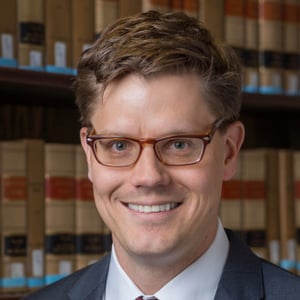
Associate Professor, University of Notre Dame Law School
Jeffrey Pojanowski joined the faculty and community of Notre Dame Law School in 2010. He teaches and writes in the areas of administrative law, jurisprudence, and torts. At present, his scholarship focuses on the legal theory of administrative action, as well as the philosophy and intellectual history of legal reasoning.
Prof. Pojanowski earned his A.B. in Public Policy with highest honors from Princeton University and graduated magna cum laude from Harvard Law School in 2004, where he was Articles Co-Chair for the Harvard Law Review. After law school, he served as a law clerk to then-Judge John Roberts on the United States Court of Appeals for the D.C. Circuit and then to Justice Anthony Kennedy on the Supreme Court of the United States. He then practiced law with Latham & Watkins in Washington, D.C., where he specialized in appellate litigation and administrative-law matters.
Indiana University School of Law
Professor Geyh's teaching and scholarship focus on the operation of state and federal courts in relation to the political branches of government and the legal profession. He is the author of "When Courts and Congress Collide: The Struggle for Control of America's Judicial System" (University of Michigan Press 2006), coauthor of "Judicial Conduct and Ethics" (Fourth ed., Lexis Law Publishing 2007) (With Alfini, Lubet and Shaman), and "Disqualification: An Analysis Under Federal Law (2d ed. Federal Judicial Center, forthcoming 2010). His work on judicial independence, accountability, administration and ethics has appeared in over 40 books, articles, book chapters and reports.
Geyh currently chairs the editorial committee for the journalJudicature, and is Director of the ABA Judicial Disqualification Project and has previously served as Reporter to four ABA Commissions (the Joint Commission to Evaluate the Model Code of Judicial Conduct, the Commission on the 21st Century Judiciary, the Commission on the Public Financing of Judicial Campaigns, and the Commission on the Separation of Powers and Judicial Independence). He has likewise served on the Board of Directors of the Justice at Stake Campaign; as Reporter to the Constitution Project Task Force on the Distinction Between Intimidation and Legitimate Criticism of Judges; as Director of the American Judicature Society's Center for Judicial Independence; as Consultant to the Parliamentary Development Project on Judicial Independence and Administration for the Supreme Rada of Ukraine; as assistant special counsel to the Pennsylvania House of Representatives on the impeachment and removal of Pennsylvania Supreme Court Justice Rolf Larsen; as Consultant to the National Commission on Judicial Discipline & Removal; and as legislative liaison to the Federal Courts Study Committee. He is a member of the American Law Institute.
A recipient of the Leon Wallace Teaching Award and a two-time recipient of the IU Trustees' Teaching Award, Geyh teaches courses on civil procedure, legal ethics, federal courts, and the relationship between courts and legislatures.
Following graduation from University of Wisconsin Law School, he clerked for Judge Thomas A. Clark of the U.S. Court of Appeals for the Eleventh Circuit. He then worked as an associate at Covington & Burling in Washington, D.C., and served as counsel to the U.S. House of Representatives Committee on the Judiciary. Professor Geyh began his teaching career in 1991 at the Widener University School of Law and joined the law faculty at Indiana in 1998.
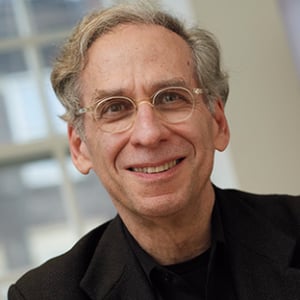
Elihu Root Professor of Law, New York University School of Law
Stephen Gillers has been a professor of law at New York University School of Law since 1978 and Vice Dean from 1999-2004. He holds the Elihu Root chair. He does most of his research and writing on the regulation of the legal profession. His courses include Regulation of Lawyers, Evidence, and Law and Literature (with University Professor Catharine Stimpson, former dean of the graduate school).
Professor Gillers has written widely on legal and judicial ethics in law reviews and in the legal and popular press. He has taught legal ethics as a visitor at other law schools and has spoken on lawyer regulatory issues at hundreds of events in the U.S. and in Europe, Asia, and South America - often for legal ethics CLE credit - including at federal and state judicial conferences, law firms, corporate general counsel's offices, government law offices, ABA meetings, state and city bar meetings nationwide, in oral and written submissions to Congress, and in law school lectureships. For many years, four or five times each year, he has lectured on legal ethics at the New York City Bar Association CLEs.
Professor Gillers is the author of Regulation of Lawyers: Problems of Law and Ethics, a widely used law school casebook first published by Little, Brown (now Aspen) in 1985 with a 10th edition in 2015. With Roy Simon (and Andrew Perlman as of 2008 and Dana Remus as of 2016), he has edited Regulation of Lawyers: Statutes and Standards, published annually by Little, Brown, then Aspen, since 1989. He is also the author of Regulation of the Legal Profession (Aspen 2009)(the "Essentials" series).
From 2000-2002, Professor Gillers was a member of the ABA's Multijurisdictional Practice Commission which proposed rule changes (all of them accepted) to recognize the cross-border nature of legal practice. In 2009, Professor Gillers was selected to be a member of the ABA 20/20 Commission, 2010-2013, which studied the effects of technology and globalization on the regulation of lawyers leading to amendments to the Model Rules and recommended rule changes all of which were accepted. He was chair of the Policy Implementation Committee of the ABA's Center for Professional Responsibility (2004-2008) and was a member from 2002-2010. He was a member of the International Issues Committee of the ABA Section on Legal Education (2008-2009) and
In 2011, he received the Michael Franck Award from the ABA’s Center for Professional Responsibility. The Award is given annually for “significant contributions to the work of the organized bar….noteworthy scholarly contributions made in academic settings, [and] creative judicial or legislative initiatives undertaken to advance the professionalism of lawyers…are also given consideration.” The American Bar Foundation gave him the Outstanding Scholar Award in 2015.
Following a clerkship with Chief Judge Gus J. Solomon in Federal District Court in Portland, Oregon, Professor Gillers practiced law for nine years in various settings in New York City before joining the NYU Law School faculty. He is often quoted on issues of legal ethics in the legal and popular media.
Professor Gillers' latest scholarship is A Rule to Forbid Bias and Harassment in Law Practice: A Guide for State Courts Considering Model Rule 8.4(g), 30 Geo. J. Legal Ethics ____ (2017); Guns, Fruits, Drugs, and Documents: A Criminal Defense Lawyer's Responsibility for Real Evidence, 63 Stan. L. Rev. 813 (2011); A Profession, If You Can Keep It: How Information Technology and Fading Borders Are Reshaping the Law Marketplace and What We Should Do About It, 63 Hastings L. J. 953 (2012); How To Make Rules for Lawyers: The Professional Responsibility of the Legal Profession, 40 Pepperdine L. Rev. 365 (2013)(Symposium issue on The Lawyer of the Future); and Lowering the Bar: How Lawyer Discipline in New York Fails to Protect the Public, 17 J. Legis. & Public Policy 485 (2014).
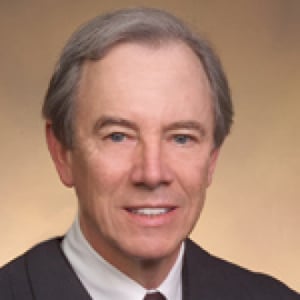
Judge, United States Court of Appeals, D.C. Circuit
Judge Randolph was confirmed by the Senate and appointed to the United States Court of Appeals for the District of Columbia Circuit by President George H. W. Bush in July 1990.
Judge Randolph received his B.S. degree in 1966 from Drexel University, majoring in economics and basic engineering. At Drexel, he was president of the debate society, vice president of the Student Senate, and a member of the varsity wrestling squad. In 1969, he received his J.D. from the University of Pennsylvania, summa cum laude. Judge Randolph ranked first in his law school class all three years and was managing editor of the Law Review.
After graduation, Judge Randolph served as a law clerk to Judge Henry J. Friendly of the United States Court of Appeals for the Second Circuit in New York.
Admitted to the California Bar in 1970 (and to the District of Columbia bar in 1973), Judge Randolph worked as Assistant to the Solicitor General, U.S. Department of Justice, in Washington, D.C., 1970-1973.
After two years in private practice, Judge Randolph was named Deputy Solicitor General of the United States, a position he held from 1975-1977.
In 1979, Judge Randolph was appointed Special Counsel to the Committee on Standards of Official Conduct (the Ethics Committee) of the United States House of Representatives, remaining in this position until 1980.
In the 1980s, Judge Randolph held a number of positions while in private practice, including Special Assistant Attorney General for the states of New Mexico (1985 90), Utah (1986-1990) and Montana (1983-1990). He also served as a Member of the Advisory Panel of the Federal Courts Study Committee.
From 1971-1990, Judge Randolph argued 23 times in the United States Supreme Court, winning 20 of his cases.
As an Adjunct Professor of Law at Georgetown University Law Center from 1974-1978 he taught courses in civil procedure and injunctions. In 1992 he taught a course in constitutional law. He is a Distinguished Adjunct Professor of Law at George Mason School of Law and for the past ten years has been teaching First Amendment law. He also serves on the Judicial Advisory Board of the George Mason University Law and Economics Center.
From 1993 through 1995 Judge Randolph was a member of the Committee on Codes of Conduct of the Judicial Conference of the United States, and from 1995 to 1998 served as the Committee's chairman. He also served as the judicial liaison to the American Bar Association’s Administrative Law Section.
Judge Randolph is a member of the Board of Visitors at Drexel University Law School and was named to the “Drexel One Hundred” as a leading alumnus. In 2002 he was presented the James Wilson Award by the University of Pennsylvania Law School. In November 2005 he delivered the Fifth Annual Barbara K. Olson Memorial Lecture at the Annual Lawyers Convention of the Federalist Society. He has published numerous articles, the most recent of which is in the June 2006 issue of the Harvard Journal of Law and Public Policy.
Judge Randolph is married to the Honorable Eileen J. O’Connor, formerly Assistant Attorney General, Tax Division, U.S. Department of Justice. His son John Trevor Randolph is an investment banker in New York. His daughter Cynthia Lee Randolph is an artist living in San Francisco.
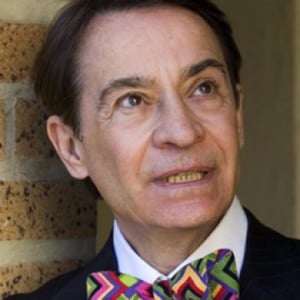
Doy & Dee Henley Chair and Distinguished Professor of Jurisprude, Chapman University Dale E. Fowler School of Law
Ronald D. Rotunda was the Doy & Dee Henley Chair and Distinguished Professor of Jurisprudence, at Chapman University, the Dale E. Fowler School of Law. He joined the faculty in 2008. Before that, he was University Professor and Professor of Law at George Mason University School of Law. From 2002 to 2006, he was the George Mason University Foundation Professor of Law. Before that, he was the Albert E. Jenner, Jr. Professor of Law, at the University of Illinois. He was a magna cum laude graduate of both Harvard College and Harvard Law School, where he was a member of Harvard Law Review. He joined the University of Illinois faculty in 1974 after clerking for Judge Walter R. Mansfield of the United States Court of Appeals for the Second Circuit, practicing law in Washington, D.C., and serving as assistant majority counsel for the Senate Watergate Committee. He has co-authored the most widely used course book on legal ethics, Problems and Materials on Professional Responsibility(Foundation Press, 12th ed. 2014) and was the author of a leading course book on constitutional law, Modern Constitutional Law (West Academic Co., 11th ed. 2015)(Abridged & Unabridged editions). He was the coauthor of, Legal Ethics: The Lawyer's Deskbook on Professional Responsibility (ABA- West/Thompson Reuters Publishing, St. Paul, Minnesota, 2016-2017 ed.) (Jointly published by the ABA and West/Thompson Reuters Publishing) (with John Dzienkowski). Rotunda also co-authored (with John Nowak) the six-volume Treatise on Constitutional Law (West/Thompson Reuters Publishing, 5th ed. 2012)(with annual updates), and a one volume Treatise on Constitutional Law (West Academic, 8th ed. 2010). He was also the author of several other books and more than 500 articles in various law reviews, journals, newspapers, and books in this country and abroad. His works have been translated into French, Portuguese German, Romanian, Czech, Russian, Japanese, and Korean. These books and articles have been cited more than 2000 times by law reviews, by state and federal courts at every level, from trial courts to the U.S. Supreme Court, and by foreign courts in Europe, Africa, Asia, and South America. He has been interviewed on radio and television on legal issues, both in this country and abroad. In 1993 he was the Constitutional Law Adviser to the Supreme National Council of Cambodia and assisted that country in writing its first democratic constitution. He has consulted with various new democracies in Eastern Europe and the former Soviet Union, including Moldova, Romania, and Ukraine, on their proposed constitutions and judicial codes. He chaired the subcommittee that drafted the American Bar Association's Model Rules for Lawyer Disciplinary Enforcement; was a member of the Publications Board of the A.B.A. Center for Professional Responsibility from 1994 to 2016; was a member of the A.B.A. Standing Committee on Professional Discipline (1991-1997); and was Liaison to the A.B.A. Standing Committee on Ethics and Professional Responsibility (1994-1997). He was a Fulbright Professor in Venezuela in 1986 and a Fulbright Research Scholar in Italy in 1981. In 1996 he assisted the Czech Republic in drafting the first Rules of Ethics for lawyers in that country. During the Spring, 1999 semester, he was Visiting Professor at the University of Alabama School of Law, holding the John S. Stone Endowed Chair of Law. During the summer and fall of 2000, he was the Visiting Senior Fellow in Constitutional Studies at the Cato Institute, in Washington, DC. In the fall of 2001, he was visiting professor at George Mason University School of Law. During November-December, 2002, he was Visiting Scholar, Katholieke Universiteit Leuven, Faculty of Law, Leuven, Belgium. In May, 2004, and December, 2005, he was visiting lecturer at the Institute of Law and Economics, Institut für Recht und Ökonomik, at the University of Hamburg. From early June 2004 to May 2005, he was the Special Counsel to the Department of Defense. He was on the Panel of Contributing Editors that produced, Black's Law Dictionary (West/Thompson Reuters Publishing, 8th ed. 2004; Thomson-Reuters, 10th ed. 2014). From 2005-2006, he was a member of the Task Force on Judicial Functions of the Commission on Virginia Courts in the 21st Century: To Benefit All, to Exclude None.
In May, 2000, American Law Media, publisher of The American Lawyer, the National Law Journal, and the Legal Times picked Professor Rotunda as one of the ten most influential Illinois Lawyers. Also in 2000, a lengthy study that the University of Chicago Press published, which sought to determine the influence, productivity, and reputations of law professors over the last several decades, listed Professor Rotunda as the 17th highest in the nation. The 2002-2003 New Educational Quality Ranking of U.S. Law Schools (EQR) [the last year for which such records are available] ranks Professor Rotunda as the eleventh most cited of all law faculty in the United States. Seehttp://www.leiterrankings.com/faculty/2002faculty_impact_cites.shtml.
In July, 2007, he was one of the main speakers at the International Judicial Conference hosted by the United States Embassy, the Supreme Court of Latvia, and the Latvian Ministry of Justice. The other main speakers were Justice Samuel Alito, the President of Latvia, the Prime Minister of Latvia, the Chief Justice of Latvia, and the Minister of Justice of Latvia. On February 27, 2008, President George W. Bush nominated Ronald D. Rotunda to become a member of the Privacy and Civil Liberties Oversight Board (PCLOB) for an initial four-year term and sent his nomination to the Senate Committee on Homeland Security and Governmental Affairs for confirmation hearings on the nominees. He was selected the Best Lawyer in Washington, DC, in 2009 in Ethics and Professional Responsibility Law, as published in November 2008 in the Washington Post in association with the Legal Times. When he moved to California, he was also selected as one of the Best Lawyers in Southern California, in 2009, 2010, 2011, 2012, 2013, 2014, 2015, 2016, 2017, also in Ethics and Professional Responsibility Law as published in the Los Angeles Times, U.S. News, and American Law Media. On June 17, 2009, he became a Commissioner of the Fair Political Practices Commission, a state regulatory agency (analogous to the Federal Election Commission) that is California's independent political watchdog. He served until January 31, 2013, when his term expired. In 2012, he became a Distinguished International Research Fellow at the World Engagement Institute, a non-profit, multidisciplinary and academically-based non-governmental organization with the mission to facilitate professional global engagement for international development and poverty reduction http://www.weinstitute.org/fellows.html. In 2012, Chapman University honored him with The Chapman University Excellence In Scholarly/Creative Work Award, 2011-2012. Since 2014, he has been a member of the Editorial Board of, The International Journal of Sustainable Human Security (IJSHS), a peer-reviewed publication of the World Engagement Institute (WEI). Rotunda was a Member of the Editorial Board of ABA's Journal of Legal Education (2014 to 2016).
Duane and Kelly Roberts Dean and Professor of Law, Pepperdine University School of Law
Dean Tacha is Duane and Kelly Roberts Dean of the School of Law and professor of law. Previously, she was a Circuit Judge, U.S. Court of Appeals for the Tenth Circuit, since January, 1986. She served as Chief Judge from January 2001 through 2007. Dean Tacha earned her bachelor of arts degree from the University of Kansas in 1968 and her juris doctorate from the University of Michigan in Ann Arbor in 1971, and was a White House Fellow (1971-1972).
She returned to the University of Kansas where she served as associate professor at its School of Law from 1974-1977 and as professor of law from 1977-1985. She served as associate dean from 1977-1979, as associate vice chancellor for Academic Affairs from 1979-1981, and as vice chancellor for Academic Affairs between 1981-1985. In 1992, Dean Tacha received the KU Alumni Association's Fred Ellsworth Medallion for extraordinary service to the university and received its most prestigious award, the Distinguished Service Citation, in 1996. In January of 2010, she was named "Kansan of the Year" by the organization Native Sons and Daughters of Kansas.
Prior to joining the University of Kansas, she practiced law in Washington, D.C. and Kansas, and was for three years Director of the Douglas County Legal Aid Clinic (1974-1977). During her distinguished career, Dean Tacha served as a member of the Judicial Conference of the United States and was named in 2006 by U.S. Supreme Court Chief Justice John Roberts to the Conference's Executive Committee. Previously, Chief Justice Rehnquist appointed her to serve two terms as Chair of the Conference's Committee on the Judicial Branch which oversees the federal judiciary's relationship with Congress and the executive branch. Dean Tacha also was a member of the United States Sentencing Commission which is responsible for studying and making recommendations to Congress about federal sentencing policy.
She has represented the judiciary of the United States internationally on several occasions, including participating in the American College of Trial Lawyers Anglo-American Legal Exchange among members of the bench and bar in the United States and in the United Kingdom. In 1992, the American Bar Association selected Dean Tacha as a member of a delegation of lawyers and judges who traveled to Albania to assist that nation in developing a new constitution and government, and in 2007, Judge Tacha represented American judges in the Canadian-American Legal Exchange.
As a spokesperson for enhanced ethics, professionalism, and civility in the legal profession, Dean Tacha has been active in the American Inns of Court movement. She helped found the Judge Hugh Means American Inn of Court in Lawrence, served on the national Board of Trustees of the American Inns of Court, and was its national president from 2004-2008. Her contributions to the legal profession were recognized when she was named recipient of the Devitt Award in 2007, the highest honor given to a federal judge for distinguished lifetime service. In 2008, she was recipient of the John Marshall Award, which the American Bar Association bestows for positively impacting the justice system.
Dean Tacha holds professional memberships in the American Bar Association, American Bar Foundation (Life Member), American Law Institute, Kansas Bar Association, Phi Beta Kappa, and Order of Coif and she is admitted to the Bar in Kansas, Missouri, and the District of Columbia. Additionally, she is a past chair of the Appellate Judges Conference and a former member of the ABA's Commission on Women in the Profession.
Dean Tacha has held leadership positions in numerous civic and charitable organizations including chairing the Kansas Territorial Sesquicentennial Commission, the Lawrence/Douglas County Heritage Area Commission, and the Freedom's National Heritage Area Board of Trustees. She has served as a member of the board of directors or as a trustee at Kansas State Historical Society, Kansas Health Foundation, Baker University, Saint Paul School of Theology, Lawrence Arts Center, and First United Methodist Church, Lawrence, to name a few.
Indiana University School of Law
Professor Geyh's teaching and scholarship focus on the operation of state and federal courts in relation to the political branches of government and the legal profession. He is the author of "When Courts and Congress Collide: The Struggle for Control of America's Judicial System" (University of Michigan Press 2006), coauthor of "Judicial Conduct and Ethics" (Fourth ed., Lexis Law Publishing 2007) (With Alfini, Lubet and Shaman), and "Disqualification: An Analysis Under Federal Law (2d ed. Federal Judicial Center, forthcoming 2010). His work on judicial independence, accountability, administration and ethics has appeared in over 40 books, articles, book chapters and reports.
Geyh currently chairs the editorial committee for the journalJudicature, and is Director of the ABA Judicial Disqualification Project and has previously served as Reporter to four ABA Commissions (the Joint Commission to Evaluate the Model Code of Judicial Conduct, the Commission on the 21st Century Judiciary, the Commission on the Public Financing of Judicial Campaigns, and the Commission on the Separation of Powers and Judicial Independence). He has likewise served on the Board of Directors of the Justice at Stake Campaign; as Reporter to the Constitution Project Task Force on the Distinction Between Intimidation and Legitimate Criticism of Judges; as Director of the American Judicature Society's Center for Judicial Independence; as Consultant to the Parliamentary Development Project on Judicial Independence and Administration for the Supreme Rada of Ukraine; as assistant special counsel to the Pennsylvania House of Representatives on the impeachment and removal of Pennsylvania Supreme Court Justice Rolf Larsen; as Consultant to the National Commission on Judicial Discipline & Removal; and as legislative liaison to the Federal Courts Study Committee. He is a member of the American Law Institute.
A recipient of the Leon Wallace Teaching Award and a two-time recipient of the IU Trustees' Teaching Award, Geyh teaches courses on civil procedure, legal ethics, federal courts, and the relationship between courts and legislatures.
Following graduation from University of Wisconsin Law School, he clerked for Judge Thomas A. Clark of the U.S. Court of Appeals for the Eleventh Circuit. He then worked as an associate at Covington & Burling in Washington, D.C., and served as counsel to the U.S. House of Representatives Committee on the Judiciary. Professor Geyh began his teaching career in 1991 at the Widener University School of Law and joined the law faculty at Indiana in 1998.
Elihu Root Professor of Law, New York University School of Law
Stephen Gillers has been a professor of law at New York University School of Law since 1978 and Vice Dean from 1999-2004. He holds the Elihu Root chair. He does most of his research and writing on the regulation of the legal profession. His courses include Regulation of Lawyers, Evidence, and Law and Literature (with University Professor Catharine Stimpson, former dean of the graduate school).
Professor Gillers has written widely on legal and judicial ethics in law reviews and in the legal and popular press. He has taught legal ethics as a visitor at other law schools and has spoken on lawyer regulatory issues at hundreds of events in the U.S. and in Europe, Asia, and South America - often for legal ethics CLE credit - including at federal and state judicial conferences, law firms, corporate general counsel's offices, government law offices, ABA meetings, state and city bar meetings nationwide, in oral and written submissions to Congress, and in law school lectureships. For many years, four or five times each year, he has lectured on legal ethics at the New York City Bar Association CLEs.
Professor Gillers is the author of Regulation of Lawyers: Problems of Law and Ethics, a widely used law school casebook first published by Little, Brown (now Aspen) in 1985 with a 10th edition in 2015. With Roy Simon (and Andrew Perlman as of 2008 and Dana Remus as of 2016), he has edited Regulation of Lawyers: Statutes and Standards, published annually by Little, Brown, then Aspen, since 1989. He is also the author of Regulation of the Legal Profession (Aspen 2009)(the "Essentials" series).
From 2000-2002, Professor Gillers was a member of the ABA's Multijurisdictional Practice Commission which proposed rule changes (all of them accepted) to recognize the cross-border nature of legal practice. In 2009, Professor Gillers was selected to be a member of the ABA 20/20 Commission, 2010-2013, which studied the effects of technology and globalization on the regulation of lawyers leading to amendments to the Model Rules and recommended rule changes all of which were accepted. He was chair of the Policy Implementation Committee of the ABA's Center for Professional Responsibility (2004-2008) and was a member from 2002-2010. He was a member of the International Issues Committee of the ABA Section on Legal Education (2008-2009) and
In 2011, he received the Michael Franck Award from the ABA’s Center for Professional Responsibility. The Award is given annually for “significant contributions to the work of the organized bar….noteworthy scholarly contributions made in academic settings, [and] creative judicial or legislative initiatives undertaken to advance the professionalism of lawyers…are also given consideration.” The American Bar Foundation gave him the Outstanding Scholar Award in 2015.
Following a clerkship with Chief Judge Gus J. Solomon in Federal District Court in Portland, Oregon, Professor Gillers practiced law for nine years in various settings in New York City before joining the NYU Law School faculty. He is often quoted on issues of legal ethics in the legal and popular media.
Professor Gillers' latest scholarship is A Rule to Forbid Bias and Harassment in Law Practice: A Guide for State Courts Considering Model Rule 8.4(g), 30 Geo. J. Legal Ethics ____ (2017); Guns, Fruits, Drugs, and Documents: A Criminal Defense Lawyer's Responsibility for Real Evidence, 63 Stan. L. Rev. 813 (2011); A Profession, If You Can Keep It: How Information Technology and Fading Borders Are Reshaping the Law Marketplace and What We Should Do About It, 63 Hastings L. J. 953 (2012); How To Make Rules for Lawyers: The Professional Responsibility of the Legal Profession, 40 Pepperdine L. Rev. 365 (2013)(Symposium issue on The Lawyer of the Future); and Lowering the Bar: How Lawyer Discipline in New York Fails to Protect the Public, 17 J. Legis. & Public Policy 485 (2014).
Judge, United States Court of Appeals, D.C. Circuit
Judge Randolph was confirmed by the Senate and appointed to the United States Court of Appeals for the District of Columbia Circuit by President George H. W. Bush in July 1990.
Judge Randolph received his B.S. degree in 1966 from Drexel University, majoring in economics and basic engineering. At Drexel, he was president of the debate society, vice president of the Student Senate, and a member of the varsity wrestling squad. In 1969, he received his J.D. from the University of Pennsylvania, summa cum laude. Judge Randolph ranked first in his law school class all three years and was managing editor of the Law Review.
After graduation, Judge Randolph served as a law clerk to Judge Henry J. Friendly of the United States Court of Appeals for the Second Circuit in New York.
Admitted to the California Bar in 1970 (and to the District of Columbia bar in 1973), Judge Randolph worked as Assistant to the Solicitor General, U.S. Department of Justice, in Washington, D.C., 1970-1973.
After two years in private practice, Judge Randolph was named Deputy Solicitor General of the United States, a position he held from 1975-1977.
In 1979, Judge Randolph was appointed Special Counsel to the Committee on Standards of Official Conduct (the Ethics Committee) of the United States House of Representatives, remaining in this position until 1980.
In the 1980s, Judge Randolph held a number of positions while in private practice, including Special Assistant Attorney General for the states of New Mexico (1985 90), Utah (1986-1990) and Montana (1983-1990). He also served as a Member of the Advisory Panel of the Federal Courts Study Committee.
From 1971-1990, Judge Randolph argued 23 times in the United States Supreme Court, winning 20 of his cases.
As an Adjunct Professor of Law at Georgetown University Law Center from 1974-1978 he taught courses in civil procedure and injunctions. In 1992 he taught a course in constitutional law. He is a Distinguished Adjunct Professor of Law at George Mason School of Law and for the past ten years has been teaching First Amendment law. He also serves on the Judicial Advisory Board of the George Mason University Law and Economics Center.
From 1993 through 1995 Judge Randolph was a member of the Committee on Codes of Conduct of the Judicial Conference of the United States, and from 1995 to 1998 served as the Committee's chairman. He also served as the judicial liaison to the American Bar Association’s Administrative Law Section.
Judge Randolph is a member of the Board of Visitors at Drexel University Law School and was named to the “Drexel One Hundred” as a leading alumnus. In 2002 he was presented the James Wilson Award by the University of Pennsylvania Law School. In November 2005 he delivered the Fifth Annual Barbara K. Olson Memorial Lecture at the Annual Lawyers Convention of the Federalist Society. He has published numerous articles, the most recent of which is in the June 2006 issue of the Harvard Journal of Law and Public Policy.
Judge Randolph is married to the Honorable Eileen J. O’Connor, formerly Assistant Attorney General, Tax Division, U.S. Department of Justice. His son John Trevor Randolph is an investment banker in New York. His daughter Cynthia Lee Randolph is an artist living in San Francisco.
Doy & Dee Henley Chair and Distinguished Professor of Jurisprude, Chapman University Dale E. Fowler School of Law
Ronald D. Rotunda was the Doy & Dee Henley Chair and Distinguished Professor of Jurisprudence, at Chapman University, the Dale E. Fowler School of Law. He joined the faculty in 2008. Before that, he was University Professor and Professor of Law at George Mason University School of Law. From 2002 to 2006, he was the George Mason University Foundation Professor of Law. Before that, he was the Albert E. Jenner, Jr. Professor of Law, at the University of Illinois. He was a magna cum laude graduate of both Harvard College and Harvard Law School, where he was a member of Harvard Law Review. He joined the University of Illinois faculty in 1974 after clerking for Judge Walter R. Mansfield of the United States Court of Appeals for the Second Circuit, practicing law in Washington, D.C., and serving as assistant majority counsel for the Senate Watergate Committee. He has co-authored the most widely used course book on legal ethics, Problems and Materials on Professional Responsibility(Foundation Press, 12th ed. 2014) and was the author of a leading course book on constitutional law, Modern Constitutional Law (West Academic Co., 11th ed. 2015)(Abridged & Unabridged editions). He was the coauthor of, Legal Ethics: The Lawyer's Deskbook on Professional Responsibility (ABA- West/Thompson Reuters Publishing, St. Paul, Minnesota, 2016-2017 ed.) (Jointly published by the ABA and West/Thompson Reuters Publishing) (with John Dzienkowski). Rotunda also co-authored (with John Nowak) the six-volume Treatise on Constitutional Law (West/Thompson Reuters Publishing, 5th ed. 2012)(with annual updates), and a one volume Treatise on Constitutional Law (West Academic, 8th ed. 2010). He was also the author of several other books and more than 500 articles in various law reviews, journals, newspapers, and books in this country and abroad. His works have been translated into French, Portuguese German, Romanian, Czech, Russian, Japanese, and Korean. These books and articles have been cited more than 2000 times by law reviews, by state and federal courts at every level, from trial courts to the U.S. Supreme Court, and by foreign courts in Europe, Africa, Asia, and South America. He has been interviewed on radio and television on legal issues, both in this country and abroad. In 1993 he was the Constitutional Law Adviser to the Supreme National Council of Cambodia and assisted that country in writing its first democratic constitution. He has consulted with various new democracies in Eastern Europe and the former Soviet Union, including Moldova, Romania, and Ukraine, on their proposed constitutions and judicial codes. He chaired the subcommittee that drafted the American Bar Association's Model Rules for Lawyer Disciplinary Enforcement; was a member of the Publications Board of the A.B.A. Center for Professional Responsibility from 1994 to 2016; was a member of the A.B.A. Standing Committee on Professional Discipline (1991-1997); and was Liaison to the A.B.A. Standing Committee on Ethics and Professional Responsibility (1994-1997). He was a Fulbright Professor in Venezuela in 1986 and a Fulbright Research Scholar in Italy in 1981. In 1996 he assisted the Czech Republic in drafting the first Rules of Ethics for lawyers in that country. During the Spring, 1999 semester, he was Visiting Professor at the University of Alabama School of Law, holding the John S. Stone Endowed Chair of Law. During the summer and fall of 2000, he was the Visiting Senior Fellow in Constitutional Studies at the Cato Institute, in Washington, DC. In the fall of 2001, he was visiting professor at George Mason University School of Law. During November-December, 2002, he was Visiting Scholar, Katholieke Universiteit Leuven, Faculty of Law, Leuven, Belgium. In May, 2004, and December, 2005, he was visiting lecturer at the Institute of Law and Economics, Institut für Recht und Ökonomik, at the University of Hamburg. From early June 2004 to May 2005, he was the Special Counsel to the Department of Defense. He was on the Panel of Contributing Editors that produced, Black's Law Dictionary (West/Thompson Reuters Publishing, 8th ed. 2004; Thomson-Reuters, 10th ed. 2014). From 2005-2006, he was a member of the Task Force on Judicial Functions of the Commission on Virginia Courts in the 21st Century: To Benefit All, to Exclude None.
In May, 2000, American Law Media, publisher of The American Lawyer, the National Law Journal, and the Legal Times picked Professor Rotunda as one of the ten most influential Illinois Lawyers. Also in 2000, a lengthy study that the University of Chicago Press published, which sought to determine the influence, productivity, and reputations of law professors over the last several decades, listed Professor Rotunda as the 17th highest in the nation. The 2002-2003 New Educational Quality Ranking of U.S. Law Schools (EQR) [the last year for which such records are available] ranks Professor Rotunda as the eleventh most cited of all law faculty in the United States. Seehttp://www.leiterrankings.com/faculty/2002faculty_impact_cites.shtml.
In July, 2007, he was one of the main speakers at the International Judicial Conference hosted by the United States Embassy, the Supreme Court of Latvia, and the Latvian Ministry of Justice. The other main speakers were Justice Samuel Alito, the President of Latvia, the Prime Minister of Latvia, the Chief Justice of Latvia, and the Minister of Justice of Latvia. On February 27, 2008, President George W. Bush nominated Ronald D. Rotunda to become a member of the Privacy and Civil Liberties Oversight Board (PCLOB) for an initial four-year term and sent his nomination to the Senate Committee on Homeland Security and Governmental Affairs for confirmation hearings on the nominees. He was selected the Best Lawyer in Washington, DC, in 2009 in Ethics and Professional Responsibility Law, as published in November 2008 in the Washington Post in association with the Legal Times. When he moved to California, he was also selected as one of the Best Lawyers in Southern California, in 2009, 2010, 2011, 2012, 2013, 2014, 2015, 2016, 2017, also in Ethics and Professional Responsibility Law as published in the Los Angeles Times, U.S. News, and American Law Media. On June 17, 2009, he became a Commissioner of the Fair Political Practices Commission, a state regulatory agency (analogous to the Federal Election Commission) that is California's independent political watchdog. He served until January 31, 2013, when his term expired. In 2012, he became a Distinguished International Research Fellow at the World Engagement Institute, a non-profit, multidisciplinary and academically-based non-governmental organization with the mission to facilitate professional global engagement for international development and poverty reduction http://www.weinstitute.org/fellows.html. In 2012, Chapman University honored him with The Chapman University Excellence In Scholarly/Creative Work Award, 2011-2012. Since 2014, he has been a member of the Editorial Board of, The International Journal of Sustainable Human Security (IJSHS), a peer-reviewed publication of the World Engagement Institute (WEI). Rotunda was a Member of the Editorial Board of ABA's Journal of Legal Education (2014 to 2016).
Duane and Kelly Roberts Dean and Professor of Law, Pepperdine University School of Law
Dean Tacha is Duane and Kelly Roberts Dean of the School of Law and professor of law. Previously, she was a Circuit Judge, U.S. Court of Appeals for the Tenth Circuit, since January, 1986. She served as Chief Judge from January 2001 through 2007. Dean Tacha earned her bachelor of arts degree from the University of Kansas in 1968 and her juris doctorate from the University of Michigan in Ann Arbor in 1971, and was a White House Fellow (1971-1972).
She returned to the University of Kansas where she served as associate professor at its School of Law from 1974-1977 and as professor of law from 1977-1985. She served as associate dean from 1977-1979, as associate vice chancellor for Academic Affairs from 1979-1981, and as vice chancellor for Academic Affairs between 1981-1985. In 1992, Dean Tacha received the KU Alumni Association's Fred Ellsworth Medallion for extraordinary service to the university and received its most prestigious award, the Distinguished Service Citation, in 1996. In January of 2010, she was named "Kansan of the Year" by the organization Native Sons and Daughters of Kansas.
Prior to joining the University of Kansas, she practiced law in Washington, D.C. and Kansas, and was for three years Director of the Douglas County Legal Aid Clinic (1974-1977). During her distinguished career, Dean Tacha served as a member of the Judicial Conference of the United States and was named in 2006 by U.S. Supreme Court Chief Justice John Roberts to the Conference's Executive Committee. Previously, Chief Justice Rehnquist appointed her to serve two terms as Chair of the Conference's Committee on the Judicial Branch which oversees the federal judiciary's relationship with Congress and the executive branch. Dean Tacha also was a member of the United States Sentencing Commission which is responsible for studying and making recommendations to Congress about federal sentencing policy.
She has represented the judiciary of the United States internationally on several occasions, including participating in the American College of Trial Lawyers Anglo-American Legal Exchange among members of the bench and bar in the United States and in the United Kingdom. In 1992, the American Bar Association selected Dean Tacha as a member of a delegation of lawyers and judges who traveled to Albania to assist that nation in developing a new constitution and government, and in 2007, Judge Tacha represented American judges in the Canadian-American Legal Exchange.
As a spokesperson for enhanced ethics, professionalism, and civility in the legal profession, Dean Tacha has been active in the American Inns of Court movement. She helped found the Judge Hugh Means American Inn of Court in Lawrence, served on the national Board of Trustees of the American Inns of Court, and was its national president from 2004-2008. Her contributions to the legal profession were recognized when she was named recipient of the Devitt Award in 2007, the highest honor given to a federal judge for distinguished lifetime service. In 2008, she was recipient of the John Marshall Award, which the American Bar Association bestows for positively impacting the justice system.
Dean Tacha holds professional memberships in the American Bar Association, American Bar Foundation (Life Member), American Law Institute, Kansas Bar Association, Phi Beta Kappa, and Order of Coif and she is admitted to the Bar in Kansas, Missouri, and the District of Columbia. Additionally, she is a past chair of the Appellate Judges Conference and a former member of the ABA's Commission on Women in the Profession.
Dean Tacha has held leadership positions in numerous civic and charitable organizations including chairing the Kansas Territorial Sesquicentennial Commission, the Lawrence/Douglas County Heritage Area Commission, and the Freedom's National Heritage Area Board of Trustees. She has served as a member of the board of directors or as a trustee at Kansas State Historical Society, Kansas Health Foundation, Baker University, Saint Paul School of Theology, Lawrence Arts Center, and First United Methodist Church, Lawrence, to name a few.
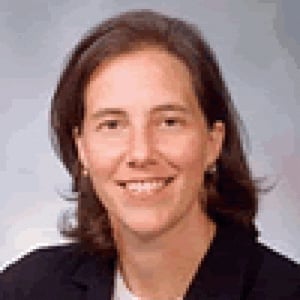
Executive Director and Executive Vice President, American Society of International Law
Elizabeth (Betsy) Andersen is Executive Director and Executive Vice President of the American Society of International Law (ASIL), a position she has held since 2006. Previously she served as the Executive Director of the American Bar Association's Central European and Eurasian Law Initiative (ABA CEELI), and as Executive Director of Human Rights Watch's Europe and Central Asia Division. Earlier in her career, she served as Legal Assistant to Judge Georges Abi-Saab of the International Criminal Tribunal for the former Yugoslavia and as a law clerk to Judge Kimba M. Wood of the U.S. District Court of the Southern District of New York.
Ms. Andersen is a graduate of Yale Law School, the Woodrow Wilson School of Public and International Affairs at Princeton University, and Williams College, from which she received the College’s Bicentennial Medal in 2006. Her area of expertise is international humanitarian, human rights, and refugee law. She serves as co-editor of the ASIL Studies in Transnational Legal Theory Series; as a member of the governing boards of the Washington Foreign Law Society and Friends of the Law Library of Congress; and as a member of the advisory committees of the American University Academy on Human Rights and Humanitarian Law, the International Senior Lawyers Project, and the Journal of International Humanitarian Legal Studies.
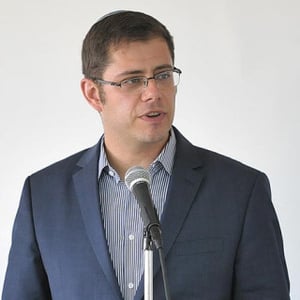
Professor of Law and Director, Center for the Middle East and International Law, George Mason University Antonin Scalia Law School
Professor of Law Eugene Kontorovich is one of the world’s preeminent experts on universal jurisdiction and maritime piracy, as well as international law and the Israel-Arab conflict. He is also the Director of Scalia Law School's Center for the Middle East and International Law. Professor Kontorovich joined the Scalia Law School from Northwestern University Pritzker School of Law where he was a Professor of Law from 2011 to 2018 and an Associate Professor from 2007 to 2011. Previously, he was a Visiting Professor at the University of Chicago from 2005 to 2007 and an Assistant Professor at George Mason School of Law from 2003 to 2007.
Professor Kontorovich has published over thirty major scholarly articles and book chapters in leading law reviews and peer-reviewed journals in the United States and Europe, including the American Journal of International Law, International Review of Law & Economics, Stanford Law Review, California Law Review, University of Pennsylvania Law Review, and Virginia Law Review. His scholarship has been cited in leading foreign relations and international law
His expertise is often sought out and quoted by major news organizations such the New York Times, Wall Street Journal, NPR News, The New Yorker, Los Angeles Times, and numerous television and radio programs. Prof. Kontorovich’s popular writings have appeared in the New York Times, Wall Street Journal, Los Angeles Times, POLITICO, Commentary, Haaretz, and numerous other leading publications. He is also a regular contributor to the Washington Post’s Volokh Conspiracy legal blog.
He attended the University of Chicago for college and law school. After law school, he clerked for Judge Richard Posner on the United States Court of Appeals for the Seventh Circuit. He has been honored with a fellowship at the Institute for Advanced Study in Princeton, in 2011-12, and with the Federalist Society’s prestigious Bator Award, given annually to a young scholar (under 40), for outstanding scholarship and teaching.
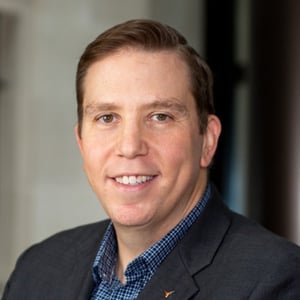
Agnes Williams Sesquicentennial Professor of Federal Courts, Georgetown Law
Stephen I. Vladeck is a professor of law at the Georgetown University Law Center, and is a nationally recognized expert on the federal courts; the Supreme Court; national security law; and military justice.
Vladeck is author of the New York Times bestselling book, “The Shadow Docket: How the Supreme Court Uses Stealth Rulings to Amass Power and Undermine the Republic,” which won the 2023 Writers’ League of Texas Book Award for Non-Fiction and was a finalist for the 2024 ABA Silver Gavel Award for Media and the Arts. Vladeck is also a highly regarded appellate advocate, having argued three cases before the U.S. Supreme Court and over a dozen before various lower federal civilian and military courts. He has received numerous awards for his influential and widely cited legal scholarship, his prolific popular writing, his teaching, and his service to the legal profession—including the 2024 University of Texas President’s Research Impact Award and his selection by the Order of the Coif to serve as its Distinguished Visiting Professor for 2025.
Vladeck is CNN’s Supreme Court analyst and editor and author of “One First,” a popular weekly newsletter about the Supreme Court. Together with Bobby Chesney, Vladeck co-hosts the popular and award-winning “National Security Law Podcast.” He is also a co-author of Aspen Publishers’ leading national security law and counterterrorism law casebooks. And he is a member of the Board of Trustees of EarthJustice—the nation’s premier nonprofit public interest environmental law organization.
Vladeck graduated from Yale Law School in 2004—where he was executive editor of the Yale Law Journal and won the Harlan Fiske Stone Prize for outstanding moot court oralist and shared the Potter Stewart Prize for best moot court team performance. After law school, he clerked for the Honorable Marsha S. Berzon on the U.S. Court of Appeals for the Ninth Circuit and the Honorable Rosemary Barkett on the U.S. Court of Appeals for the Eleventh Circuit. He earned a B.A. summa cum laude with Highest Distinction in History and Mathematics from Amherst College in 2001—where he wrote his senior thesis on “Leipzig’s Shadow: The War Crimes Trials of the First World War and Their Implications from Nuremberg to the Present.” A native New Yorker and hopeless Mets fan, Vladeck lives in the District with his wife, Karen (Founder and Managing Partner of Risepoint Search Partners); their daughters, Madeleine and Sydney; and their eleven-year-old pug, Roxanna.

CompuCredit v. Greenwood - Post-Decision SCOTUScast
Christopher Drahozal
SCOTUScast 01-20-12 featuring Christopher Drahozal
On January 10, 2012, the Supreme Court announced its decision in CompuCredit Corp. v. Greenwood. This...
Business Roundtable v. SEC and the Future of Proxy Access
Ted Allen, Stephen Bainbridge, Eugene Scalia, Robert T. Miller, Dean Reuter, J. Robert Brown
Corporations, Securities, and Antitrust Practice Group Podcast
Although corporations are creatures of state law and corporate elections are governed by state law,...
Coleman v. Maryland Court of Appeals - Post-Argument SCOTUScast
Elizabeth Price Foley
SCOTUScast 01-18-12 featuring Elizabeth Price Foley
On January 11, 2012, the Supreme Court heard oral argument in Coleman v. Maryland Court of...
Pacific Operators Offshore, LLP v. Valladolid - Post-Decision SCOTUScast
Richard A. Epstein
SCOTUScast 01-17-12 featuring Richard Epstein
On January 11, 2012, the Supreme Court announced its decision in Pacific Operators Offshore LLP v....
Hosanna-Tabor Evangelical Lutheran Church and School v. EEOC - Post-Decision SCOTUScast
Michael W. McConnell
SCOTUScast 01-13-12 featuring Michael McConnell
On January 11, 2012, the Supreme Court announced its decision in Hosanna-Tabor Evangelical Lutheran Church and...
The Case Against Indiana's Methods of Selecting Judges
Brian J. Paul, Stephen J. Ware
Indianapolis Lawyers Chapter
On January 10, 2012, the Indianapolis Lawyers Chapter of the Federalist Society hosted an event...
Judulang v. Holder - Post-Decision SCOTUScast
Jeffrey Pojanowski
SCOTUScast 01-11-12 featuring Jeffrey Pojanowski
On December 12, 2011 the Supreme Court announced its decision in Judulang v. Holder. This case...
Panel 3: Judicial Ethics
Charles Gardner Geyh, Stephen Gillers, A. Raymond Randolph, Ronald D. Rotunda, Deanell Reece Tacha
14th Annual Faculty Conference
The Federalist Society's Facutly Division hosted this panel on "Judicial Ethics" on Friday, January 6,...
Panel 3: Judicial Ethics
Charles Gardner Geyh, Stephen Gillers, A. Raymond Randolph, Ronald D. Rotunda, Deanell Reece Tacha
14th Annual Faculty Conference
The Federalist Society's Facutly Division hosted this panel on "Judicial Ethics" on Friday, January 6,...
Luncheon Debate: The Alien Tort Statute, International Law, and the Judiciary
Elizabeth Andersen, Eugene Kontorovich, Stephen I. Vladeck
14th Annual Faculty Conference
The Federalist Society's Facutly Division hosted this panel on "The Alien Tort Statute, International Law,...