
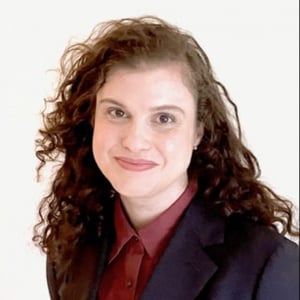
Associate Professor of Law & Dean’s Scholar in Intellectual Property, Texas Tech School of Law
Barbara Lauriat has taught and conducted research in most areas of intellectual property law, including copyright, patents, and trademarks; her work often takes a comparative approach, using examples from different national legal systems and drawing on legal history. Educated in the United States and the United Kingdom, she began her legal academic career in England, teaching intellectual property law to undergraduate, L.L.M., and Ph.D. students at King's College London from 2011-2022, after serving as the Career Development Fellow in Intellectual Property Law and a Fellow of St. Catherine's College at the University of Oxford from 2008-2010. She has previously held visiting positions as the Frank H. Marks Fellow in Intellectual Property Law at George Washington University Law School, a Faculty Fellow at the Notre Dame Institute for Advanced Study, a Faculty Associate at the Berkman Klein Center for the Internet & Society at Harvard University, a Faculty Research Fellow of the Oxford Intellectual Property Research Centre at the University of Oxford, a Scholar-in-Residence in the International Arbitration Department at WilmerHale London, a Visiting Senior Research Fellow at the New Zealand Centre for International Economic Law, a Hauser Global Research Fellow at New York University School of Law, and a Visiting Scholar at the University of British Columbia. She was appointed an Academic Fellow of the Honourable Society of the Inner Temple (2013-2016) and thereafter an Associate Academic Fellow. Lauriat won first prize in the International Association for the Advancement of Teaching and Research in Intellectual Property (ATRIP) Essay Competition in 2013 and was the winner of the Copyright Society of the U.S.A.'s Seton Award in 2015.
Lauriat earned her B.A. from Boston University and her J.D. from Boston's School of Law. She has also recieved her D.Phil at the University of Oxford. As a law student, Lauriat served as an editor on the BU Law Review and was later elected General Editor of the Oxford University Commonwealth Law Journal (2007/2008). She currently serves on the editorial board of Arbitration International.
Lauriat is a member of the Bars of Massachusetts and New Hampshire (inactive) and was Called to the Bar of England and Wales in 2018.
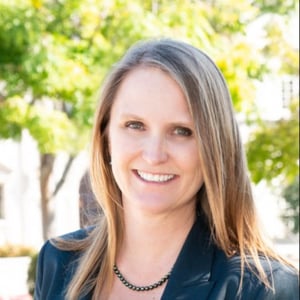
Professor of Law, University of San Diego School of Law
Lisa Ramsey is a Professor of Law at the University of San Diego School of Law, where she is a founding member of the Center for Intellectual Property Law and Markets. She teaches and writes in the intellectual property and international intellectual property law area and is an expert on trademark law. Professor Ramsey is an active member of the American Intellectual Property Law Association and has given presentations on trademark law to attorneys, professors, and students throughout the United States and around the world. Before joining the USD law faculty, she was an intellectual property litigator at Gray Cary Ware & Freidenrich and served as a judicial law clerk for the Honorable Rebecca Beach Smith in the United States District Court for the Eastern District of Virginia. Professor Ramsey’s scholarship focuses on potential conflicts between trademark laws and free speech rights, and explains how trademark protection of inherently valuable words, symbols, and product features can harm fair competition and freedom of expression.
Examples of Professor Ramsey’s publications include Protectable Trademark Subject Matter in Common Law Countries and the Problem with Flexibility in The Cambridge Handbook of International and Comparative Trademark Law (Irene Calboli & Jane Ginsburg eds., Cambridge University Press 2020); Using Failure to Function Doctrine to Protect Free Speech and Competition in Trademark Law in the Iowa Law Review Online (2020); Non-Traditional Trademarks and Inherently Valuable Expression in The Protection of Non-Traditional Trademarks (Irene Calboli & Martin Senftleben eds., Oxford University Press 2018); Free Speech Challenges to Trademark Law After Matal v. Tam in the Houston Law Review (2018); A Free Speech Right to Trademark Protection? in the Trademark Reporter (2016); and Free Speech and International Obligations to Protect Trademarks in the Yale Journal of International Law (2010). Her article Descriptive Trademarks and the First Amendment in the Tennessee Law Review (2003) was judged by the editor of the Intellectual Property Law Review to be one of the best intellectual property law articles of 2003.
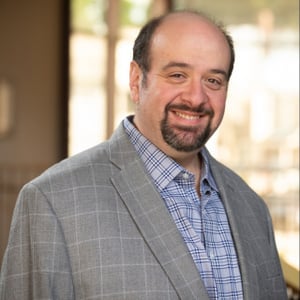
Associate Professor, UNH Franklin Pierce School of Law
Zvi S. Rosen is an Associate Professor at UNH Franklin Pierce School of Law and the Faculty Director of the Franklin Pierce Society for Intellectual Property. He has served as a Assistant Professor at the Southern Illinois University School of Law, as a Visiting Assistant Professor at the Maurice A. Deane School of Law at Hofstra University, and as a Visiting Scholar and Professorial Lecturer in Law at George Washington University School of Law.
In 2015-2016, he was the Abraham L. Kaminstein Scholar in Residence at the U.S. Copyright Office. Mr. Rosen received his J.D. from Northwestern University School of Law in 2005 and LLM in Intellectual Property in 2006 from the George Washington University Law School. He has practiced at Fried, Frank, Harris, Shriver & Jacobson LLP as well as smaller firms and his own practice, and clerked for the Hon. Thomas B. Bennett of the U.S. Bankruptcy Court for the Northern District of Alabama. He has written extensively on the development of modern copyright and trademark law, as well as on bankruptcy law.

Thomas M. Siebel Senior Fellow, The Hoover Institution, Stanford University; Gary T. Schwartz Distinguished Professor of Law Emeritus, UCLA School of Law
Eugene Volokh is the Thomas M. Siebel Senior Fellow at the Hoover Institution (Stanford), as well as the Gary T. Schwartz Distinguished Professor of Law Emeritus and Distinguished Research Professor at UCLA School of Law. He recently retired from teaching at UCLA, after 30 years there, and is now focusing on research.
Volokh is the author of the textbooks The First Amendment and Related Statutes (8th ed. 2023), and Academic Legal Writing (5th ed. 2016), as well as over 100 academic law journal articles, mostly on First Amendment law. He is a member of The American Law Institute; the editor-in-chief of the Journal of Free Speech Law; and the creator and coauthor of The Volokh Conspiracy, a leading legal blog founded in 2002 (hosted at the Washington Post from 2014 to 2017 and now at Reason Magazine).
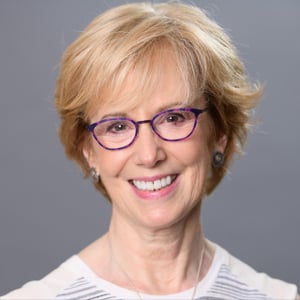
Director, GW Regulatory Studies Center & Distinguished Professor of Practice, Trachtenberg School of Public Policy & Public Administration, The George Washington University
Susan Dudley is the Founder and Director of the George Washington University Regulatory Studies Center, established in 2009 to raise awareness of regulations’ effects and improve regulatory policy through research, education, and outreach. She is also a distinguished professor of practice in the Trachtenberg School of Public Policy and Public Administration. She is past-president of the Society for Benefit Cost Analysis, a senior fellow of the Administrative Conference of the United States, and on the Regulatory Transparency Project Regulatory Practice Working Group. Her book, Regulation: A Primer, with Jerry Brito, is available on Amazon.com.
From April 2007 through January 2009, Professor Dudley served as the Presidentially-appointed Administrator of the Office of Information and Regulatory Affairs in the U.S. Office of Management and Budget and was responsible for the review of draft executive branch regulations under Executive Order 12866, the collection of federal-government-wide information under the Paperwork Reduction Act, the development and implementation of government-wide policies in the areas of information policy, privacy, and statistical policy, and international regulatory cooperation efforts.
Prior to OIRA, she directed the Regulatory Studies Program at the Mercatus Center at George Mason University, and taught courses on regulation at the George Mason University School of Law. Earlier in her career, Professor Dudley served as an economist at OIRA, as well as the Environmental Protection Agency and the Commodity Futures Trading Commission. She was also a consultant to government and private clients at Economists Incorporated. She holds a Master of Science degree from the Sloan School of Management at MIT and a Bachelor of Science degree (summa cum laude) in Resource Economics from the University of Massachusetts, Amherst.
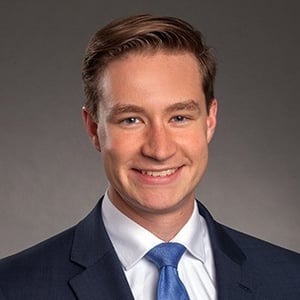
Assistant Attorney General, Office of Legal Counsel, U.S. Department of Justice
T. Elliot Gaiser is the Office of Legal Counsel’s 27th Assistant Attorney General. He was nominated by President Donald Trump on April 29, 2025, confirmed by the United States Senate on July 30, 2025, and sworn in as AAG by Attorney General Pam Bondi on August 4, 2025.
Prior to joining the Office of Legal Counsel, Mr. Gaiser served as the 11th Solicitor General of Ohio. In that role, he represented his home state and its agencies before the Supreme Court of the United States, the United States Court of Appeals for the Sixth Circuit, the Supreme Court of Ohio, and other state and federal courts. He also advised Ohio Attorney General Dave Yost on significant legal and constitutional matters important to the people of Ohio.
Mr. Gaiser clerked for Justice Samuel A. Alito, Jr. of the Supreme Court of the United States, Judge Neomi Rao of the United States Court of Appeals for the D.C. Circuit, and Judge Edith H. Jones of the United States Court of Appeals for the Fifth Circuit. In the private sector, Mr. Gaiser worked at the law firms Jones Day, Boyden Gray, and Gibson Dunn. He graduated from the University of Chicago Law School and Hillsdale College. He is also a husband and father.
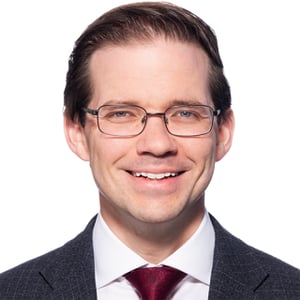
Of Counsel, Covington & Burling LLP
The Honorable Paul J. Ray is currently Of Counsel at Covington & Burling LLP where he advises clients on regulatory opportunities and challenges and helps them formulate and execute advocacy strategies for their regulatory policy priorities before the executive branch and Congress.
During the first Trump Administration, Paul held various senior positions at the Office of Information and Regulatory Affairs (OIRA) within the White House’s Office of Management and Budget, including as acting, and then Senate-confirmed, head of the office. As OIRA Administrator (the "regulations czar"), Paul supervised the review of hundreds of regulations from across the government, drafted numerous executive orders governing the regulatory process, and led the Administration’s regulatory reform effort. As a result of this experience, Paul is well-positioned to help clients understand and achieve regulatory policy priorities in the context of the government’s regulatory agenda and ongoing reform efforts.
Most recently, Paul was also the Director of the Roe Institute for Economic Policy Studies at The Heritage Foundation. In that role, he supervised the formulation of the Foundation’s economic and regulatory policy recommendations and provided technical assistance to congressional committees and staff regarding legislative changes to the regulatory process. In addition to his role at The Heritage Foundation, Paul also served as a Senior Advisor at a strategic advisory firm. Before his time in government, Paul practiced law at a law firm in Washington, specializing in administrative law matters.
Prior to his role at the White House, Paul was Counselor to the Secretary at the U.S. Department of Labor. There he led departmental efforts in high-profile rulemakings and helped formulate the Department’s legal positions and strategy.
Paul served as a law clerk to Supreme Court Justice Samuel Alito and as a law clerk to the Honorable Debra Livingston of the U.S. Court of Appeals for the Second Circuit.
Paul is a thought leader in the conservative legal movement and is a frequent commentator and speaker on regulatory policy and reform matters, including at law schools, professional gatherings, and other venues. He is the Chairman of Innovations in Peacebuilding International and the Regulatory Process Working Group of the Federalist Society’s Regulatory Transparency Project and a public member of the Administrative Conference of the United States. Paul is also an adjunct lecturer at the Hillsdale College School of Government.

Adjunct Professor of Law, Scalia Law; Google, Corporate Counsel
Kathryn Ciano Mauler currently serves as a Corporate Counsel at Google. Prior to Google, Kathryn was Senior Regulatory Counsel at Uber Technologies, and also spent three years at i360, LLC as General Counsel. Before this, she also worked at a boutique law firm in Washington, D.C. and at the Institute for Justice.
She received her B.A. from the University of Florida. She also received her business degree from the University of Florida - Warrington College of Business, studying at the Ecole supérieure de Commerce de Toulouse in France. Kathryn's J.D. is from the George Mason University School of Law.
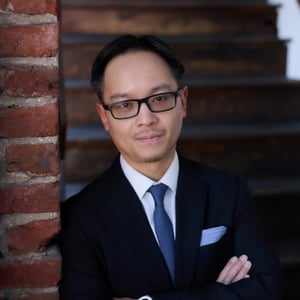
Partner, Vantage Legal
Eric Wang is a renowned and respected authority on political law. His practice is notable for its breadth and depth. Eric’s professional experience includes serving as counsel to a commissioner at the Federal Election Commission, serving as in-house counsel to Americans for Prosperity, and practicing political law at one of D.C.’s largest law firms. These varied interactions with the law—as a regulator, client, adviser, and advocate—inform Eric’s practical approach to helping clients achieve their goals while navigating a thicket of complex laws.
Eric’s mastery of campaign finance laws is not limited to the federal level: he also has advised clients on the campaign finance laws in all 50 states and in many municipalities. In addition, he has guided clients through federal, state, and local lobbying, government ethics, and “pay-to-play” laws.
Eric is frequently published on political law issues in USA Today, Roll Call, The Hill, Politico, The Washington Times, and the Washington Examiner. Since 2013, Eric has been a pro bono Senior Fellow at the Institute for Free Speech, where he helps advocate for reducing the regulatory burden on clients exercising their First Amendment rights.
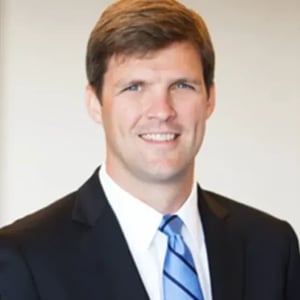
Judge, United States District Court for the Western District of Kentucky
Prior to joining the bench, Judge Beaton was a Partner at Squire Patton Boggs LLP, where he co-chaired the firm’s Appellate & Supreme Court practice group. Judge Beaton’s represented clients engaged in complex commercial litigation in Federal and State courts, and before administrative agencies. Judge Beaton also served as an adjunct professor at the University of Louisville Brandeis School of Law, where he taught constitutional interpretation. Before joining Squire Patton Boggs, Judge Beaton practiced in the Washington, D.C. office of Sidley Austin, LLP, and also served as a legal fellow with the International Justice Mission in Kampala, Uganda. Upon graduation from law school, Judge Beaton served as a law clerk to Justice Ruth Bader Ginsburg of the United States Supreme Court, and to Judge A. Raymond Randolph of the United States Court of Appeals for the D.C. Circuit. Judge Beaton earned his B.A., summa cum laude, from Centre College, and his J.D. from Columbia Law School, where he served as an Articles Editor on the Columbia Law Review.
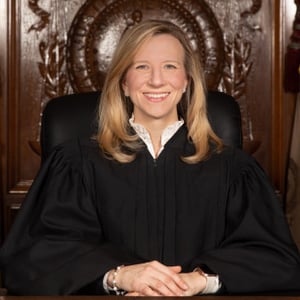
Justice, Supreme Court of Tennessee
Justice Sarah Campbell was confirmed to the Tennessee Supreme Court in 2022. She previously served as an Associate Solicitor General in the Tennessee Attorney General’s Office and as an associate at the law firm of Williams & Connolly LLP in Washington, DC. Justice Campbell earned her law degree from Duke University School of Law, a Master of Public Policy degree from Duke University, and her undergraduate degree from the University of Tennessee, where she received the Torchbearer Award. She served as a law clerk for Justice Samuel A. Alito, Jr. on the United States Supreme Court and Judge William H. Pryor Jr. on the U.S. Court of Appeals for the Eleventh Circuit.
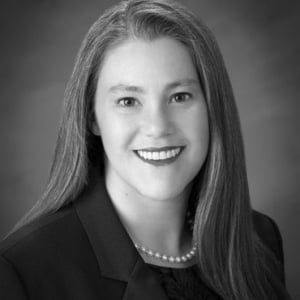
Judge, Arizona Court of Appeals, Division One
The Honorable Jennifer M. Perkins began service on the Arizona Court of Appeals, Division One, on October 30, 2017. At the time of her appointment by Governor Douglas Ducey, Judge Perkins was Assistant Solicitor General for the State of Arizona.
Judge Perkins was born in Portales, New Mexico, and primarily raised in Albuquerque. She attended the prestigious Albuquerque Academy from 1988-1995, before moving to Washington D.C. to attend the Elliott School of International Affairs at the George Washington University as a National Merit Scholar. Therafter, she relocated again to Dallas, Texas, and earned her juris doctor from the SMU Dedman School of Law, graduating cum laude in 2002.
Judge Perkins started her career at the law firm of Browning & Peifer (now Peifer, Hanson, Mullins, and Baker) in Albuquerque, New Mexico. While there, she litigated complex commercial matters including class action plaintiff and defense work, and assisted with employment and contract litigation. In 2003, the judge accompanied the Honorable James O. Browning in transitioning to the federal district court bench, serving as his first law clerk.
After her clerkship, Judge Perkins moved to Arizona to work for the Institute for Justice, Arizona Chapter, a public interest law firm. She spent five years with IJ-AZ litigating civil rights cases in Arizona and across the country. In 2009, the judge became Disciplinary Counsel for the Arizona Commission on Judicial Conduct, where she reviewed and prosecuted ethics complaints against state court judges throughout Arizona. After five years serving the state in this capacity, Judge Perkins entered private practice by joining an appellate law firm in Phoenix. While there, she worked on state and federal appeals involving a wide range of legal subjects, including complex business disputes, property rights, judicial ethics, and personal injury matters.
In January 2015, Judge Perkins joined the Office of the Arizona Attorney General to serve as the first Assistant Solicitor General; in that capacity, she was responsible for oversight of Attorney General Opinions and served as ethics counsel to the entire office. In addition to these two primary roles, the judge assisted on a variety of matters including trial and appellate litigation of election-related matters; federal appellate litigation with the Federalism Unit; state criminal appeals; and drafting amicus briefs on behalf of Arizona in state and federal courts.

Associate Justice, New Jersey Supreme Court
Justice Rachel Wainer Apter was nominated by Gov. Phil Murphy and was sworn in as an associate justice on Oct. 21, 2022.
Born on July 22, 1980, Justice Wainer Apter grew up in Rockaway. She graduated from the University of Pennsylvania and received her law degree from Harvard Law School. After law school, she served as a law clerk for U.S. District Judge Jed Rakoff, U.S. Circuit Judge Robert Katzmann, and U.S Supreme Court Associate Justice Ruth Bader Ginsburg.
At the time of her appointment, Justice Wainer Apter was serving as director of the New Jersey Division on Civil Rights. She previously served as counsel to the New Jersey Attorney General and assistant attorney general.
Before joining the Attorney General’s Office, Justice Wainer Apter worked as a senior staff attorney at the American Civil Liberties Union (ACLU) and in the Supreme Court and Appellate practice at Orrick, Herrington & Sutcliffe.
Justice Wainer Apter and her husband have three children.
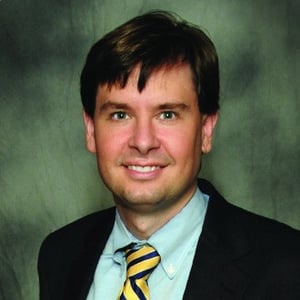
Policy Director, Fulcrun Foundation
Reeve T. Bull is Director of the Virginia Office of Regulatory Management. In this position, he leads the Commonwealth's efforts to streamline regulations and promote a transparent permitting process and to develop and implement artificial intelligence policy. Prior to this role, he was the Research Director of the Administrative Conference of the United States. In his time at ACUS, Mr. Bull worked on projects related to international regulatory cooperation, the use of science by administrative agencies, presidential review of agency rulemaking, and regulatory benefit-cost analysis, among other things.
Mr. Bull is an elected member of the American Law Institute. Mr. Bull has served on the Council of the ABA Administrative Law and Regulatory Practice Section and also co-chairs the Section's Rulemaking Committee. Mr. Bull serves as an Adjunct Professor at George Washington University, where he teaches a class on regulatory law. He has also served as an Adjunct Professor at George Mason University Law School, teaching a course on Legislation and Statutory Interpretation.
Mr. Bull has published a number of articles in leading law journals, including the Administrative Law Review, George Washington Law Review, and Law and Contemporary Problems. His articles explore enhanced judicial review of agency regulatory impact analysis, removing unnecessary trade barriers through enhanced international regulatory cooperation, and reducing regulatory burdens through retrospective review of existing rules, among other topics. For a list of these publications, please visit his SSRN page.
Mr. Bull previously worked in the private sector as an associate with the law firm Gibson, Dunn & Crutcher LLP and in government service as a law clerk to the Honorable Alvin A. Schall of the Federal Circuit Court of Appeals. During his time as an associate with Gibson Dunn, Mr. Bull worked on a variety of litigation and regulatory matters. He participated in cases appearing before the United States Supreme Court, several federal Courts of Appeals, and numerous federal district courts and state trial courts. His experience spanned a variety of practice areas, including administrative, constitutional, intellectual property, antitrust, environmental, securities, and white collar criminal law. During his clerkship for Judge Schall, Mr. Bull assisted with appeals in cases spanning a variety of areas, with particular emphasis on administrative and patent law.
Mr. Bull attended law school at Duke University, where he graduated with highest honors and was inducted into the Order of the Coif. He was one of two recipients of the Willis Smith Award for compiling the most outstanding academic record in the graduating class and the recipient of the James S. Bidlake Memorial Award for achieving the highest grade in his first year legal writing section. Mr. Bull also served as a Note Editor on the Duke Law Journal. Prior to law school, Mr. Bull attended the University of Oklahoma, where he graduated summa cum laude with a Bachelors in Chemistry and was inducted into Phi Beta Kappa.
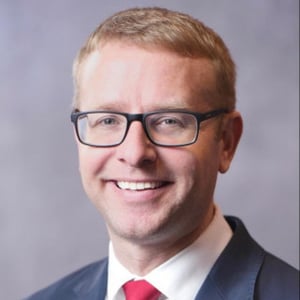
Alex J. Adams, PharmD, MPH, serves as director of the Idaho Department of Health and Welfare. He was appointed to lead the department by Gov. Brad Little in May 2024.
Prior to leading the department, Dr. Adams spent more than five years as Governor Little’s budget and regulatory director. In this capacity, he oversaw the state’s first upgrade to a AAA credit rating with both Fitch Ratings and Moody’s. He helped lead development of major policy initiatives such as Idaho LAUNCH and the financing of $1.5 billion in school facility infrastructure improvements. He helped build the rainy-day funds to the largest fund balance in state history. He also led the Governor’s zero-based regulation initiative, which led to Idaho becoming the least regulated state in the nation, eliminating more than 2,700 pages of regulations.
He earned his bachelor’s degree and Doctor of Pharmacy degree from the University of Toledo in Ohio, graduating as class valedictorian, and his Master of Public Health degree from Johns Hopkins University Bloomberg School of Public Health in Baltimore. Dr. Adams lives in Eagle with his wife, Jennifer, and daughter, Emerson.
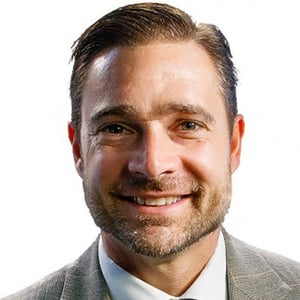
Will Skillman Fellow in Education, Center for Education Policy, The Heritage Foundation
Jonathan Butcher is the Will Skillman Fellow in Education at The Heritage Foundation. He is the author of Splintered: Critical Race Theory and the Progressive War on Truth (Bombardier Books, April 2022). He co-edited and wrote chapters in The Critical Classroom (The Heritage Foundation, 2022), discussing the racial prejudice that comes from the application of critical race theory in K-12 schools. In 2021, South Carolina Gov. Henry McMaster nominated Jonathan to serve on the board of the South Carolina Public Charter School District, a statewide charter school authorizer. He has researched and testified on education policy around the U.S.
Jonathan co-edited and wrote chapters in the book The Not-So-Great Society, which provides conservative solutions to the problems created by the ever-expanding federal footprint in preschool, K-12, and higher education.
In 2018 the Federal Commission on School Safety cited comments from his testimony in the commission’s final report. He has appeared on local and national TV outlets, including C-SPAN, Fox News, and HBO’s Vice News Tonight, and he has been a guest on many radio programs. His commentary has appeared nationally in places such as the Wall Street Journal, Education Week, National Review Online, Newsweek.com, and Forbes.com, along with newspapers around the country.
In 2017 he was a co-recipient of the State Policy Network’s Bob Williams Award for Most Influential Research for a proposal to protect free speech on campus, alongside Stanley Kurtz of the Ethics and Public Policy Center and Jim Manley of the Goldwater Institute.
Jonathan previously served as the education director at the Goldwater Institute, where he remains a senior fellow. He was a member of the Arizona Department of Education’s first Steering Committee for Empowerment Scholarship Accounts, the nation’s first education savings account program. He is also a Senior Fellow with The Beacon Center of Tennessee, a nonpartisan research organization, and a contributing scholar for the Georgia Center for Opportunity.
Prior to joining Goldwater, Jonathan was the director of accountability for the South Carolina Public Charter School District. Jonathan previously studied education policy at the Department of Education Reform at the University of Arkansas and worked with the School Choice Demonstration Project, the research team that evaluated voucher programs in Washington, D.C. and Milwaukee, Wisc.
Jonathan holds a B.A. in English from Furman University and an M.A. in economics from the University of Arkansas.
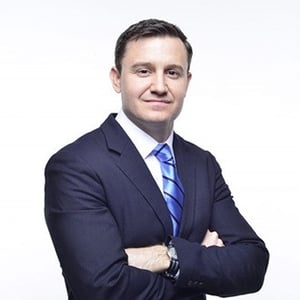
Vice President for Litigation & General Counsel, Goldwater Institute
Jon Riches is the Vice President for Litigation for the Goldwater Institute’s Scharf-Norton Center for Constitutional Litigation and General Counsel for the Institute. He litigates in federal and state trial and appellate courts in the areas of economic liberty, regulatory reform, free speech, taxpayer protections, public labor issues, government transparency, and school choice, among others.
Jon has developed and authored several pieces of legislation, including the landmark Right to Earn a Living Act, which provides some of the greatest protections in the country to job-seekers and entrepreneurs facing arbitrary licensing regulations. He also developed legislation eliminating deference to administrative agencies in Arizona—a first-of-its-kind regulatory reform that can serve as a model for the rest of the country.
His work at the Institute has been covered by national media, including the Wall Street Journal, New York Times, CBS This Morning, Bloomberg News, and Politico. Jon is also a member of the Federalist Society’s Regulatory Transparency Project: State and Local Working Group.
Prior to joining the Goldwater Institute, Jon served on active duty in the U.S. Navy Judge Advocate General’s (JAG) Corps. While on active duty, Jon represented hundreds of clients, litigated dozens of court-martial cases, and advised commanders on a vast array of legal issues.
He previously clerked for Sen. Jon Kyl on the U.S. Senate Judiciary Committee, worked for the Rules Committee in the Arizona State Senate, and clerked in the Office of Counsel to the President at the White House. Jon received his B.A. from Boston College, where he graduated magna cum laude and Phi Beta Kappa. He earned his J.D. from the University of Arizona, James E. Rogers College of Law.
Jon served as a presidentially appointed Panel Member on the Federal Service Impasses Panel. He is an officer in the U.S. Navy Reserve and an Adjunct Professor at Arizona State University School of Law. Jon is a native of Phoenix.
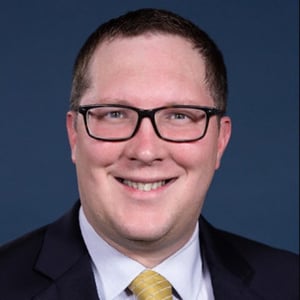
Attorney, Pacific Legal Foundation
Luke A. Wake is an attorney at the Pacific Legal Foundation. Prior to joining PLF, he was a senior staff attorney at the NFIB Small Business Legal Center.
Wake has particular expertise on environmental and land use issues, and has worked on numerous other constitutional issues and matters of importance to small business owners. He is an ardent defender of private property rights, which he believes are essential to the free enterprise system and the foundation of American liberty. As a strong advocate of individual rights and economic liberties, he has built his career defending small business interests.
Wake has focused on a whole host of issues, from employment law matters to regulatory compliance. In addition to serving as a resource for small business owners, Wake is committed to ensuring that the voice of small business is heard in the nation’s courts. As an appellate practitioner, Wake has focused particularly on informing the courts on matters of administrative law and on issues under the Fifth Amendment’s Takings Clause. He is also working to advance small business interests in law review articles, and was recently published in the Berkeley Journal of Law & Ecology. See R.S. Radford & Luke A. Wake, Deciphering and Extrapolating: Searching for Sense in Penn Central, 38 Ecology L.Q. 731, 746-747 (2011).
Before joining the Legal Center’s team, Wake completed a prestigious two-year fellowship as an attorney in the Pacific Legal Foundation’s College of Public Interest Law. Wake is a graduate of Case Western Reserve University School of Law in Cleveland Ohio, and is a member of the California Bar. He completed his undergraduate studies at Elon University in North Carolina in 2006 where he focused on political theory and corporate communications.
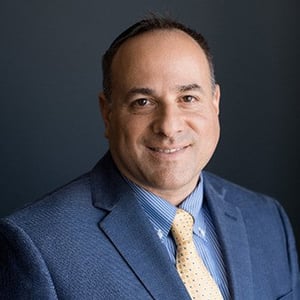
Policy Advisor, Heartland Institute
Jeff Stier is a policy advisor to the Heartland Institute.
He is widely quoted in the media and has written health policy op-eds for The Wall Street Journal, the Los Angeles Times, USA Today, The New York Post, The Washington Examiner, and Foxnews.com. The New York Times, the Associated Press, Reuters, CNN, Fox News, CNBC, MSNBC, NPR and other major outlets have interviewed and quoted Stier on a wide range of topics.
Stier has testified at state and local legislatures throughout the U.S., at FDA scientific hearings and at the Office of Management and Budget. He has also been a voice for freedom at hearings at the United Nations and in Israel’s Knesset. During more than two decades of advancing public health and defending liberty, Stier has been a speaker at CPAC, policy retreats for elected officials and medical and legal conferences.
Stier advises leading investment firms on regulatory and legal risk.
Earlier, Mr. Stier crafted health and environmental policy in the Office of the Mayor during the Giuliani administration in New York City.
Mr. Stier serves on the boards of the non-profit Jewish International Connections and Park City Jewish Collective. While earning his law degree at the Benjamin N. Cardozo School of Law, Mr. Stier served two terms as Editor-In-Chief of the Cardozo Law Forum. Jeff and his canine, BB, served as a Certified Crisis Response Strike Team with NATIONAL Crisis Response Canines, supporting survivors and first-responders.
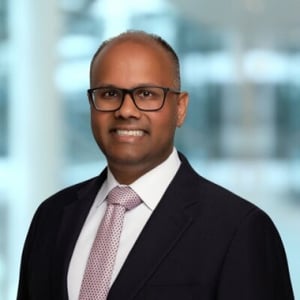
Partner, Holtzman Vogel Baran Torchinsky & Josefiak PLLC
Abhishek (Abhi) Kambli is a partner at Holtzman Vogel who represents clients in high-stakes appellate and complex litigation, constitutional challenges, and matters involving state attorneys general and federal agencies. He is one of a handful of lawyers nationally who has both led federal litigation from inside the Department of Justice and multi-state coalition work from a State Attorney General’s office—giving clients a 360-degree perspective on government enforcement, regulatory challenges, and constitutional advocacy.
Prior to joining Holtzman Vogel, Abhi served as Deputy Associate Attorney General at the United States Department of Justice, where he acted as lead counsel in high-priority matters for the Trump Administration, oversaw the Department’s civil components on behalf of the Associate Attorney General, advised the White House Counsel’s Office and federal agencies on litigation risk and strategy, and developed the Department’s national affirmative civil litigation strategy.
Earlier, he served as Deputy Attorney General and Division Chief of the Special Litigation and Constitutional Issues Division at the Kansas Attorney General’s Office, where he launched the division and led multi-state coalitions in trial and appellate courts nationwide, including the United States Supreme Court. He began his career as an Assistant United States Attorney in the Southern District of Indiana, prosecuting more than 100 federal cases from investigation through appeal.
Abhi is also a Lieutenant Colonel in the United States Air Force Judge Advocate General's Corps, having served on active duty and in the reserves since 2013. His military service includes criminal trials as both prosecutor and defense attorney, appellate representation before the Court of Appeals for the Armed Forces, and representation of a high-profile detainee before the Military Commissions at Guantánamo Bay.
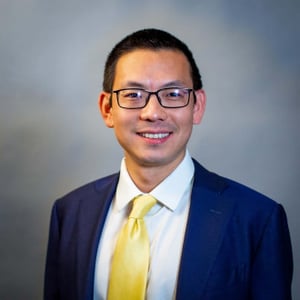
Litigation Counsel, New Civil Liberties Alliance
Sheng Li is Litigation Counsel for the New Civil Liberties Alliance. Prior to joining NCLA, Sheng served as Counselor to the Administrator of Wage and Hour at the U.S. Department of Labor. In that role, he led numerous efforts to remove or simplify unduly burdensome regulations. He has also worked in the private sector as a litigation associate at Patterson Belknap Webb & Tyler and at Kirkland & Ellis.
Sheng is a graduate of Johns Hopkins University and Yale Law School, where he was managing editor of the Yale Journal of International Law. After graduating law school, Sheng served as law clerk to the Hon. Danny J. Boggs on the U.S. Court of Appeals for the Sixth Circuit.
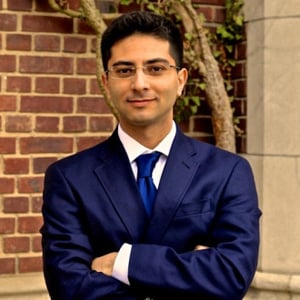
Associate Professor of Law, University of Notre Dame Law School
Sherif Girgis joined Notre Dame Law School in 2021. Prior to joining Notre Dame Law, Sherif practiced law at Jones Day in Washington, D.C., where he focused on appellate and complex civil litigation. Before that, Girgis served as a law clerk to Justice Samuel Alito, Jr., of the U.S. Supreme Court and Judge Thomas B. Griffith of the U.S. Court of Appeals for the D.C. Circuit. Now completing his Ph.D. in philosophy at Princeton, Girgis earned his J.D. at Yale Law School, where he served as an editor of the Yale Law Journal and won the Felix S. Cohen Prize for best paper in legal philosophy. Before law school, he earned a master's degree (B.Phil.) in philosophy from the University of Oxford as a Rhodes Scholar, and his bachelor's degree in philosophy from Princeton, Phi Beta Kappa and summa cum laude. Girgis is coauthor of What Is Marriage? Man and Woman: A Defense, cited in a dissent in United States v. Windsor, and Debating Religious Liberty and Discrimination, released by Oxford University Press in 2017. His work at the intersection of philosophy and law--including criminal law, constitutional liberties, and jurisprudence--has appeared in academic and popular venues including the Yale Law Journal, the Virginia Law Review, the University of Pennsylvania Law Review, the Harvard Journal of Law and Public Policy, the American Journal of Jurisprudence, the Cambridge Companion to Philosophy of Law, The New York Times, and The Wall Street Journal.
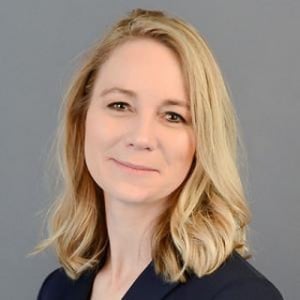
Supreme Court & Appellate Litigation Chair, Lex Politica; Of Counsel, Alliance Defending Freedom
Erin Morrow Hawley serves as Chair of Lex Politica's Supreme Court and Appellate Practice overseeing the firm’s strategic appellate litigation and critical motions practice in the trial courts. Erin is an experienced litigator who represents clients in constitutional, regulatory, and appellate matters in federal and state courts throughout the country.
Erin has represented dozens of clients before the Supreme Court of the United States, served as lead counsel in high-profile cases raising novel constitutional and statutory issues, and authored numerous successful petitions for certiorari and briefs in opposition. She has argued in state and federal appellate and trial courts throughout the country, including the Supreme Court of the United States. Erin represents diverse clients in high-stakes litigation from state governments to faith-based nonprofits to Fortune 100 companies. She possesses expertise on a wide range of subject matters including administrative law, the First Amendment, religious liberty, federal jurisdiction, federal preemption, equitable jurisdiction, tax law, the Affordable Care Act, and Title IX.
Erin represents clients in cases where public communications strategy is paramount. She is a sought-after speaker and writer, has testified multiple times before Congress, and is a frequent presenter on constitutional and administrative law issues, including at the Oxford Union, the National Federalist Society Convention, and university campuses across the country. She is a frequent commentator to media outlets, including Fox News, MSNBC, the Wall Street Journal, WORLD, USA Today, the Federalist, and the Hill.
Erin previously oversaw Alliance Defending Freedom’s--where she still serves as Of Counsel--litigation strategies to empower women and protect the dignity of life, defend pregnancy centers’ First Amendment rights from government overreach, and safeguard Americans’ freedoms from the ever-encroaching administrative state.
Brenden Mann Foundation Chair in Law and Religion and Co-Director of the Nootbaar Institute for Law, Pepperdine Caruso School of Law
Professor Michael Helfand is the Brenden Mann Foundation Chair in Law and Religion and Co-Director of the Nootbaar Institute for Law, Religion and Ethics at Pepperdine Caruso School of Law. During the Spring, he serves as the Florence Rogatz Visiting Professor at Yale Law School. In addition to his academic appointments, Professor Helfand serves as the Senior Legal Advisor to the Orthodox Union’s Teach Coalition and a Senior Fellow at the Shalom Hartman Institute.
An expert on questions of church and state, Professor Helfand’s work considers how U.S. law treats religious law, custom and practice. His academic articles have appeared in numerous law journals, including the Yale Law Journal, New York University Law Review, Duke Law Journal, Minnesota Law Review, Washington University Law Review, and Southern California Law Review. In addition, Professor Helfand often provides commentary on clashes between law and religion, writing for various public audience publications, including the Wall Street Journal, the Los Angeles Times, and the Forward.
Professor Helfand joined the Pepperdine Caruso Law faculty in 2010 where he has taught Contracts, Arbitration Law, Jewish Law and seminars in Law and Religion as well as Multiculturalism and the Law. Prior to joining the Pepperdine Caruso Law faculty, Professor Helfand was an associate at Davis Polk & Wardwell LLP, where his practice focused on complex commercial litigation. Before entering private practice, Professor Helfand clerked for the Honorable Julia Smith Gibbons of the U.S. Court of Appeals for the Sixth Circuit.
Associate Dean and Professor of Law, Case Western Reserve University School of Law
Jessie Hill’s teaching and scholarship focus on constitutional law, civil rights, reproductive rights, and law and religion. Her articles have been published in the Michigan Law Review, Duke Law Journal, Georgetown Law Journal, and Texas Law Review, among others. She has also appeared in numerous local and national press outlets, including CNN, the New York Times, Ms. Magazine, and NPR.
She is the founding director of the Reproductive Rights Law Initiative at the School of Law, which provides education and legal support relating to reproductive rights. Her work was recently profiled in the Case Law-Med magazine. She is a recipient of the university’s Distinguished Research Award. She has also been appointed a Nootbaar Fellow in Law and Religion at Pepperdine University Caruso School of Law. In 2023, she received both the Black Law Students Association Faculty Award and the Champion for Women Award from the Cuyahoga Democratic Women’s Caucus, and she has been recognized by the ACLU of Ohio for her reproductive rights advocacy.
Professor Hill joined the faculty in 2003 after practicing First Amendment and civil rights law with the firm of Berkman, Gordon, Murray & DeVan in Cleveland. Before entering private practice, Professor Hill worked at the Reproductive Freedom Project of the National ACLU office in New York. She also served as law clerk to the Honorable Karen Nelson Moore of the United States Court of Appeals for the Sixth Circuit. She received her JD, magna cum laude, from Harvard University and her AB, magna cum laude, from Brown University.
University Professor of Law and Religion and Director of the Eleanor H. McCullen Center for Law, Religion and Public Policy, Villanova University Charles Widger School of Law
Michael P. Moreland was appointed University Professor of Law and Religion and Director of the Eleanor H. McCullen Center for Law, Religion and Public Policy at Villanova University in 2017. Professor Moreland joined the Villanova faculty in 2006 and served as Vice Dean from 2012 to 2015. His research is primarily in the areas of torts, law and religion, constitutional law, and Catholic social thought, and he regularly teaches Torts, First Amendment, seminars in law and religion, and undergraduate courses in ethics.
Professor Moreland is the co-editor of Christianity and Private Law (Routledge, 2021), and his most recent publications include: “The Authority of Tradition: John Henry Newman and Legal Theory” in Christianity and the Making of Irish Law (Routledge, 2025); “Christianity and Torts” in The Oxford Handbook on Christianity and Law, (Oxford University Press, 2023); “Germaneness and Religious Liberty” in the Notre Dame Law Review (2023); “Contingency and Contestation in Christianity and Liberalism” in the Notre Dame Law Review (2023); “Friendship as the Primary Purpose of Law” in The American Journal of Jurisprudence 279 (2022); and “The Moral of Torts” (with Jeffrey Pojanowski) in Christianity and Private Law (Routledge, 2021).
Professor Moreland was a Visiting Professor of Law at the University of Notre Dame and the Mary Ann Remick Senior Visiting Fellow at the Notre Dame Center for Ethics and Culture from 2015 to 2017. He was the Forbes Visiting Fellow at Princeton University in the James Madison Program during academic year 2010-11. He has served as the project leader for grants from the John Templeton Foundation and the Charles Koch Foundation. He serves as the Chair of the Federalist Society’s Religious Liberties Practice Group Executive Committee and the Chair of the Board of Trustees of the Institute for Advanced Catholic Studies at the University of Southern California.
Professor Moreland received his BA in philosophy from the University of Notre Dame, his MA and PhD in theological ethics from Boston College, and his JD from the University of Michigan Law School. Following law school, Professor Moreland clerked for the Honorable Paul J. Kelly Jr., of the United States Court of Appeals for the Tenth Circuit and was an associate at Williams & Connolly LLP in Washington, DC, where he represented clients in First Amendment, professional liability, and products liability matters. Before coming to Villanova, he served as Associate Director for Domestic Policy at the White House under President George W. Bush, where he worked on a range of legal policy issues, including criminal justice, immigration, civil rights, and liability reform.
James T. Jensen Endowed Professor for Transactional Law & Director of the Program on Intellectual Property and Technology Law, University of Utah S.J. Quinney College of Law
Jorge L. Contreras is a Distinguished University Professor, the James T. Jensen Endowed Professor for Transactional Law and Director of the Program on Intellectual Property and Technology Law. He teaches and researches in the areas of intellectual property, property law, technical standardization, antitrust and science policy. In 2020 he received the University of Utah's Distinguished Research Award and is an elected member of the American Law Institute. He has testified before the U.S. Senate and House Subcommittees on Intellectual Property, and was awarded the Rossman Memorial Award by the Patent & Trademark Office Society in 2022.
Professor Contreras has written or edited fourteen books and published more than 150 scholarly articles and chapters. His book, The Genome Defense: Inside the Epic Legal Battle to Determine Who Owns Your DNA (NY: Hachette/Algonquin, 2021), has been praised by the NY Times, Wall St. Journal, Nature and numerous other outlets, and was named "Best Patent Law Book of the Year" by the international IPKat blog. His scholarly articles have appeared in leading scientific, legal and policy journals including Science, Nature, NYU Law Review, Georgetown Law Journal, Iowa Law Review and Antitrust Law Journal. He has been quoted by media outlets around the world including the New York Times, Wall Street Journal, Economist, Bloomberg, Washington Post, Korea Times and has been featured on C-SPAN, NPR, PRI and BBC shows and a range of podcasts and online news programs.
Professor Contreras currently serves Co-Chair of the Interdisciplinary Division of the ABA's Section of Science & Technology Law and a member of the Advisory Board of the American Antitrust Institute. He has previously served as Co-Chair of the National Conference of Lawyers and Scientists, a member of the National Academy of Sciences (NAS) Committee on Intellectual Property Management in Standard-Setting Processes, the National Institutes of Health (NIH) Council of Councils, the Advisory Council of NIH's National Center for the Advancement of Translational Sciences (NCATS), the National Advisory Council for Human Genome Research, and the Intellectual Property Rights Policy Committee of the American National Standards Institute (ANSI). In 2021 he served as Chair of the Art Law Section of the Association of American Law Schools (AALS) and currently serves as Chair of the AALS Remedies Section.
Professor Contreras has previously taught at American University Washington College of Law and Washington University in St. Louis. Prior to entering academia he was a partner at the international law firm Wilmer Cutler Pickering Hale and Dorr LLP, where he practiced transactional and intellectual property law in Boston, London and Washington DC. He is a cum laude graduate of Harvard Law School (JD) and Rice University (BA, BSEE) and clerked for Chief Justice Thomas R. Philips of the Texas Supreme Court.
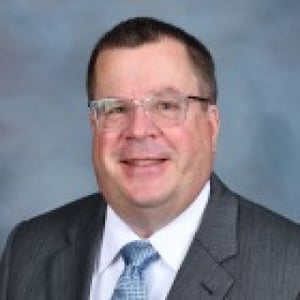
Visiting Assistant Professor of Law, University of Akron School of Law
Michael Doane joined the Akron Law faculty as a full-time visiting assistant professor of law in 2023. He had been teaching as a part-time adjunct faculty member for several years.
Doane was previously general counsel at Kent Displays, Inc., in Kent, Ohio. Prior to that, he was principal at Miles & Stockbridge P.C., in Tysons Corner, Va. Earlier, he was a partner at the Washington, D.C., law firm Adduci, Mastriani & Schaumberg LLP. He specialized in international trade and intellectual property litigation.
Doane earned a Juris Doctor from the University of Washington School of Law and a Master of Laws in International and Comparative Law from Georgetown University Law Center. He holds a Bachelor of Arts in Economics and Political Science from Kent State University and a Master of Arts in International Studies from the University of Washington.
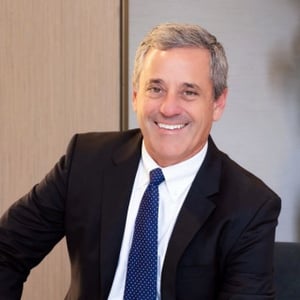
Partner, Friedland Cianfrani LLP
Mike has three decades of IP enforcement experience. He has represented clients in more than 270 intellectual property cases in state and federal courts in California and 23 other states and before the Trademark Trials and Appeals Board.
Mike’s practice includes patent, trademark, trade secret, and copyright cases. His cases have spanned a wide range of industries and technologies, including consumer products, semiconductors, tactical products, medical devices, computer software, apparel, restaurants, and financial services. He has represented brand-name companies including Oakley, Luxottica, Tesla, 5.11 Tactical, ITT, Makita, Pacific Life Insurance Company, Carl’s Jr., Microsemi, NASCAR, Daytona International Speedway, Game Show Network, Razor, Volcom, Specialized Bicycle, Mexicana Airlines, and SRS Labs, among others.
Mike was a partner at Knobbe Martens for more than two decades. At Knobbe, Mike served as co-chair of the Litigation Department. He had previously served as co-chair of the Trademark/Brand Protection group and the Consumer Products practice group.
World Trademark Review 1000 has several times named Mike a “Leading Trademark Lawyer." In the 2022 edition, WTR 1000 commended him for his “advanced state of preparedness,” and included a client remark that, “there’s nothing he hasn’t seen.”
In the 2021 edition, WTR described him as a “backbone of [his former firm's] litigation practice,” and noted his ability to litigate “cases associated with all categories of IP rights.”
In the 2020 edition, WTR described him as having been “on the cutting edge of enforcement for three decades.” In that edition, a client said he was “a sophisticated and thoughtful professional who understands how to get things done.”
In 2023, Legal 500 named Mike to its list of preeminent patent litigators. Thompson/Reuters has regularly named him a “Southern California Super Lawyer” in the category of IP litigation since 2004.
He frequently speaks on intellectual property litigation subjects, including to the AIPLA, OCBA, OCIPLA, LAIPLA, ABA, ACC, INTA, Harvard Law School Association, Harvard Business School Association, MIT Alumni Association, and the Federalist Society. Mike’s articles on IP subjects have been featured in publications including American Marketer, Luxury Roundtable, IP Watchdog, Law 360, IP 360, The Trademark Lawyer, The Los Angeles Daily Journal, The Recorder, ABA Landslide, Orange County Business Journal, Engage, and Stanford Technology Review.
Mike has taught as an adjunct professor at Whittier School of Law and served as a JAG with the California State Military Reserve. For 16 years, he served as a Reserve Deputy with the Orange County Sheriff’s Department, retiring as a Lieutenant.
Mike serves on the Harvard Law School Association’s Senior Advisory Committee, is a board member of the Federal Bar Association of Orange County, and the vice-chair of the Executive Committee of the Federalist Society's Intellectual Property Practice Group. He is a former member of Law360's Intellectual Property Editorial Board, a former member and former Secretary of the Harvard Law School Association's Executive Committee, and a former president of the Harvard Law School Association of Orange County.

Stevenson Bernard Professor, George Washington University Law School
The Honorable F. Scott Kieff is the Stevenson Bernard Professor at George Washington University Law School and a Visiting Fellow at Stanford University’s Hoover Institution.
He served as Commissioner of the U.S. International Trade Commission from 2013-2017. He also served during the Bush, Obama, and Trump Administrations in the part-time leadership of the national security defense-intelligence community.
He was previously a professor of law and medicine at Washington University in Saint Louis and a Senior Fellow at Hoover. A former law clerk to U.S. Circuit Judge Giles S. Rich, he is a graduate of Penn Law School and MIT, where he studied molecular biology and microeconomics. He was elected to the European Academy of Sciences and Arts in 2012 and the Academia Europaea in 2024.
His private sector work through Kieff Strategies LLC (www.kieffstrategies.com) provides neutral services including mediation and compliance, and expert services including crisis management, advising, and testimony.

The First Amendment in Trademark Law after Vidal v. Elster
Barbara Lauriat, Lisa P. Ramsey, Zvi Rosen, Eugene Volokh
In Vidal v. Elster (the “Trump Too Small” case), the Supreme Court unanimously upheld a...
West Virginia v. EPA, Two Years Later: Updates on the Major Questions Doctrine
Susan E. Dudley, T. Elliot Gaiser, Paul J. Ray
Experts will examine the major questions doctrine, its role in regulatory litigation, and its place...
Explainer Episode 73 - Changing Presidential Candidates
Kathryn Ciano Mauler, Eric Wang
RTP's Fourth Branch Podcast
Kathryn Ciano Mauler and Eric Wang join the podcast to discuss the FEC rules behind...
Certification of State-Law Questions by Federal Courts
Benjamin Beaton, Sarah Keeton Campbell, Jennifer Perkins, Rachel Wainer Apter
In Lindenberg v. Jackson National Life Ins. Co., 912 F.3d 348 (2018), the Sixth Circuit declared...
Explainer Episode 71 - Regulatory Modernization in Idaho and Virginia: What lessons can be learned?
Reeve T. Bull, Alex J. Adams
RTP's Fourth Branch Podcast
Alex J. Adams, Director of Idaho's Department of Health and Welfare is joined by Reeve...
Explainer Episode 72 - Parental Rights & Student Privacy in Education
Jonathan Butcher, Jonathan Riches, Luke A. Wake
RTP's Fourth Branch Podcast
Legal experts Jonathan Butcher and Jon Riches discuss the debate between parental rights and children’s...
Explainer Episode 70 - Litigation Update III: The Supreme Court takes the Vape case--Food and Drug Administration v. Wages and White Lion Investments, LLC
Jeff Stier
RTP's Fourth Branch Podcast
On July 2, 2024, the US Supreme Court granted certiorari in the case, Food and...
Litigation Update: Challenges to the SAVE Plan
Abhishek Kambli, Sheng Li
Since its earliest days, the Biden Administration has been clear as to its goal of...
Free Exercise and Abortion
Sherif Girgis, Erin M. Hawley, Michael A. Helfand, Jessie Hill, Michael P. Moreland
In the wake of the Supreme Court’s decision in Dobbs v. Jackson Women’s Health Organization...
What is the Role of the ITC in Patent Cases?
Jorge L. Contreras, Michael Doane, Michael K. Friedland, F. Scott Kieff
The U.S. International Trade Commission (ITC), long a favored forum for patent infringement disputes, has...