
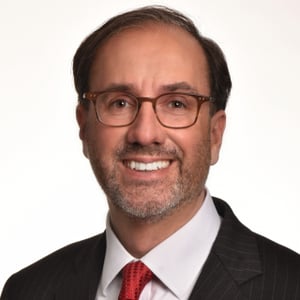
President and CEO, The Buckeye Institute
Robert Alt is the President and Chief Executive Officer of The Buckeye Institute where he has catalyzed exponential growth since he took the organization’s helm in 2012. He has since founded Buckeye’s renowned Economic Research Center and established its impactful Legal Center.
Alt is a distinguished scholar and attorney with particular expertise in legal policy, criminal justice, national security, and constitutional law. He previously worked for former U.S. Attorney General Edwin Meese III, regularly provides commentary on television and radio programs, and his writings have appeared in countless outlets.
In 2004, Alt spent five months in Iraq as an embedded war correspondent.
Alt has testified before Congress multiple times—including at the confirmation hearings for U.S. Supreme Court Justice Elena Kagan—the Federal Election Commission regarding matters of constitutional and administrative law, and numerous state legislatures.
Alt serves as an officer on the boards of The Philadelphia Society and the Federalist Society’s Columbus Lawyers Chapter. He taught national security law, criminal law, and legislation at Case Western Reserve University School of Law, as well as constitutional law and political parties and interest groups at Ashland University.
Alt earned his Doctor of Law degree from The University of Chicago Law School, where he was Symposium Editor and the winner of the Mulroy Prize for Excellence in Appellate Advocacy as well as research assistant to Professor Richard Epstein. Following law school, he clerked for Judge Alice Batchelder on the U.S. Court of Appeals for the Sixth Circuit. Alt graduated with his Bachelor of Arts in philosophy and political science magna cum laude from Azusa Pacific University where he also won the Outstanding Senior Award in Political Science.
Alt is an accomplished high-altitude alpinist and endurance athlete who has successfully climbed 6.75 of the famed Seven Summits of the World including Mount Everest. He is the creator of PROFOUND CLIMBING™ and a frequent speaker across the country and around the world on legal and public policy topics as well as effective leadership, management, decision-making, and teamwork in contexts ranging from extraordinary life/death situations to ordinary professional/business settings.
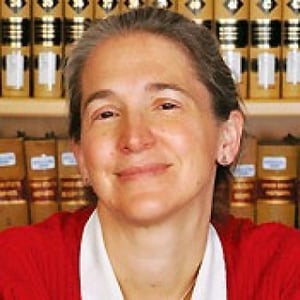
Carter C. Kissell Professor of Law, The Ohio State University Michael E. Moritz College of Law
In law school, Professor Hébert served as editor-in-chief of the Kansas Law Review and was elected to Order of the Coif. Following graduation from law school, she clerked for Judge James K. Logan of the U.S. Court of Appeals for the Tenth Circuit and practiced labor and employment law, representing management, for five years with Spencer, Fane, Britt, and Browne in Kansas City, Mo.
Professor Hébert has published a number of law review articles on employment discrimination, sexual harassment, employee privacy, and alternative dispute resolution (ADR). Her treatise Employee Privacy Lawwas published in 1993 and is supplemented annually.
Professor Hébert makes frequent presentations to academic and professional audiences on issues of sexual harassment and employee privacy, including genetic testing and electronic surveillance. Professor Hébert served as Chair of the Employment Discrimination Section of the Association of American Law Schools in 1998. She currently serves as a member of the Workplace Mediation Advisory Committee of the State of Ohio Commission on Dispute Resolution and Conflict Management.
From 1997 to 2000, Professor Hébert served as associate dean for academic affairs at the Moritz College of Law. Professor Hébert is a member of the Associated Graduate Faculty of the Department of Womens Studies at Ohio State. Professor Hébert’s courses include Employment Discrimination Law, Employment Law, Employee Benefits,Alternative Dispute Resolution in the Workplace, Legal Writing and Analysis, and a Sexual Harassment seminar. She taught Comparative Employment Discrimination and Comparative Dispute Resolution during the Oxford semester program in 2010.
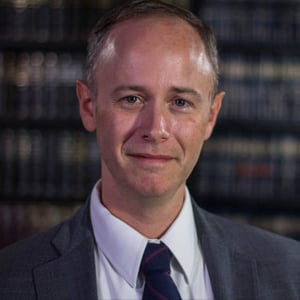
Vice President and Legal Director, National Right to Work Legal Defense and Education Foundation, Inc.
William Messenger is Foundation Vice President and Legal Director. He was a staff attorney for over twenty years and, during that time, represented individuals in numerous cases that sought to expand worker freedom of choice. This includes acting as lead counsel in three cases before the United States Supreme Court. In 2018, Messenger argued Janus v. AFSCME Council 31, where the Supreme Court held it violates the First Amendment for governments and unions to compel individuals to financially support unions and their speech. Originally from Youngstown Ohio, Messenger attended Ohio University as an undergraduate and then the George Washington University School of Law.

Tazewell Taylor Professor of Law and William H. Cabell Research Professor, William & Mary Law School
Jonathan H. Adler joined the William & Mary law faculty as the Tazwell Taylor Professor of Law and William H. Cabell Research Professor in 2025. Prior to joining the faculty, he was the inaugural Johan Verheij Memorial Professor of Law and the founding Director of the Coleman P. Burke Center for Environmental Law at the Case Western Reserve University School of Law.
Professor Adler is the author or editor of seven books, including Climate Liberalism: Perspectives on Liberty, Property and Pollution (Palgrave, 2023), Marijuana Federalism: Uncle Sam and Mary Jane (Brookings Institution Press, 2020), Business and the Roberts Court (Oxford University Press, 2016) and Rebuilding the Ark: New Perspectives on Endangered Species Act Reform (AEI Press, 2011).
His articles have appeared in publications ranging from the Harvard Environmental Law Review and Yale Journal on Regulation to the Wall Street Journal, New York Times, and Washington Post. He has testified before Congress a dozen times, and his work has been cited in the U.S. Supreme Court. A 2024 study identified Professor Adler as the seventh most cited legal academic in administrative and environmental law from 2019 to 2023.
Professor Adler is a contributing editor to Civitas Outlook and a regular contributor to the popular legal blog, The Volokh Conspiracy. A regular commentator on constitutional and regulatory issues, he has appeared on numerous radio and television programs, ranging from the PBS Newshour and National Public Radio to the Fox News Channel and Entertainment Tonight.
Professor Adler is a senior fellow at the Property & Environment Research Center in Bozeman, Montana. In 2018, Professor Adler was elected to membership in the American Law Institute and helped co-found the organization Checks and Balances. In 2024, Professor Adler was appointed a public member of the Administrative Conference of the United States.
Professor Adler clerked for the Honorable David B. Sentelle on the U.S. Court of Appeals for the District of Columbia Circuit.

Judge, United States Court of Appeals, District of Columbia Circuit
Judge Katsas was appointed to the D.C. Circuit in December 2017. He graduated from Princeton University and Harvard Law School, where he was an executive editor on the Harvard Law Review. Between 1989 and 1992, he served as a law clerk to Judge Edward Becker on the Third Circuit, to then-Judge Clarence Thomas on the D.C. Circuit, and to Justice Thomas on the Supreme Court. Between 1992 and 2001, he was an associate and then partner in the Washington office of Jones Day, where he specialized in appellate and complex civil litigation. Between 2001 and 2009, he served in many senior positions in the Department of Justice, including as Assistant Attorney General for the Civil Division and as Acting Associate Attorney General. In 2009, he returned to Jones Day. From January to December 2017, he served as Deputy Assistant to the President and Deputy Counsel to the President.
Before joining the bench, Judge Katsas argued more than 75 appeals, including three cases in the Supreme Court, 13 cases in the D.C. Circuit, and cases in every other federal court of appeals. By appointment of the Chief Justice, he served on the Advisory Committee on Appellate Rules from 2013 to 2017. In 2016, he was elected to membership in the American Academy of Appellate Lawyers.
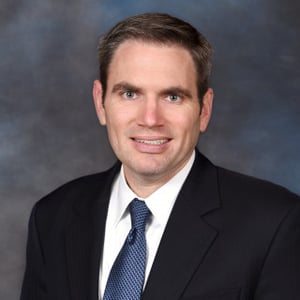
Judge, United States Court of Appeals, Sixth Circuit
Eric Murphy has been a Judge on the United States Court of Appeals for the Sixth Circuit since March 2019. He previously served as the ninth State Solicitor of Ohio. In that role, Eric briefed and argued appellate cases on behalf of Ohio and its state agencies and officers in the U.S. Supreme Court, the U.S. Court of Appeals for the Sixth Circuit, and the Ohio Supreme Court. Before his appointment as State Solicitor, Eric practiced appellate litigation at Jones Day. After graduation from law school, he served as a law clerk for Justice Anthony M. Kennedy of the Supreme Court of the United States, and Judge J. Harvie Wilkinson III of the United States Court of Appeals for the Fourth Circuit. He received his law degree from the University of Chicago and his undergraduate degree from Miami University.
Jacob E. Davis and Jacob E. Davis II Chair in Law, Moritz Colleg, The Ohio State University
Professor Shane came to Ohio State in 2003 from Carnegie Mellon University's H. John Heinz III School of Public Policy and Management. He is an internationally recognized scholar in administrative law, with a specialty in separation of powers law, and has co-authored leading casebooks on each subject. He has served on the faculty at the University of Iowa College of Law and was dean at the University of Pittsburgh School of Law.
In addition to his outstanding law teaching and scholarship, Professor Shane has received a National Science Foundation grant for interdisciplinary study related to cyberspace and democracy. At Ohio State, he provides strong leadership in interdisciplinary scholarship and teaching.

Judge, United States Court of Appeals, Sixth Circuit
Judge Readler earned his undergraduate and law degrees from the University of Michigan. After graduating, he served as a law clerk to Judge Alan Norris of the United States Court of Appeals for the Sixth Circuit. Judge Readler then began practicing law in the Columbus office of the international law firm Jones Day, eventually spending ten years as a partner in the firm’s Issues and Appeals Practice Group. While at Jones Day, Judge Readler appeared in state and federal trial and appellate courts around the country, most frequently the Supreme Court of Ohio and the Sixth Circuit. Judge Readler also successfully argued before the United States Supreme Court in McQuiggin v. Perkins on behalf of an inmate claiming actual innocence. His other pro bono representations include representing capital defendants before the Tenth Circuit and the Supreme Court of Ohio, as well as representing defendants sentenced to life in prison before the Sixth Circuit. While at Jones Day, Judge Readler traveled to Nairobi with Lawyers Without Borders to train Kenyan lawyers in prosecuting domestic violence cases, and he was also a recipient of the American Marshall Memorial Fellowship awarded by the German Marshall Fund of the United States. Following his career in private practice, Judge Readler served as Acting Assistant Attorney General for the Civil Division of the United States Department of Justice from 2017 to 2019. In that role, Judge Readler led and supervised over 1,000 lawyers in the Department’s largest litigating division, briefing and arguing several cases on behalf of the United States in federal courts across the country, including high-profile cases significant to the Administration and the Department. In March 2019, Judge Readler was confirmed to serve as a Circuit Judge on the Sixth Circuit. He resides in Columbus.
Senior Vice President, HSBC Bank USA, N.A.’s Office of Public Affairs
Michael Geffroy is Senior Vice President in HSBC Bank USA, N.A.’s Office of Public Affairs, where he is responsible for public policy and government affairs at the federal level.
Prior to joining HSBC, Mr. Geffroy had extensive experience in the U.S Congress, and in the Executive Branch. Most recently, he was the General Counsel for the U.S. Senate Select Committee on Intelligence (2014-2017), and he previously served in the U.S. House of Representatives as the Deputy Chief of Staff and Chief Counsel to the Committee on Homeland Security (2012-2014).
Mr. Geffroy’s tenure in the Executive branch includes his time as the Assistant Director for Enforcement at the Department of the Treasury’s Office of Foreign Assets Control, Counselor to the Assistant Attorney General of the Criminal Division, Department of Justice, and as an Assistant U.S. Attorney in the District of Columbia.
Mr. Geffroy is a Lieutenant Colonel in the U.S. Marine Corps Reserve (ret). His military service includes tours of duty in Afghanistan and Iraq.
Mr. Geffroy is admitted to practice law in the District of Columbia, Maryland, Rhode Island, and Massachusetts. He is a graduate of Brown University and the Columbus School of Law at the Catholic University of America.
Partner, Eversheds Sutherland LLP
Michael Bahar, a partner in the Washington DC office of Eversheds Sutherland (US) LLP, is the US leader of the global cybersecurity and privacy practice and a member of the firm’s Litigation practice. As former Deputy Legal Advisor to the National Security Council at the White House, former Minority Staff Director and General Counsel for the US House Intelligence Committee, and as a former Active Duty Navy JAG, Mr. Bahar provides advice on cybersecurity and privacy, international law and national security law. While with the House Intelligence Committee, he was lead drafter and negotiator for the Cybersecurity Act of 2015, the USA Freedom Act (which reformed certain key surveillance authorities) and four annual Intelligence Authorization Acts. More recently, he was a leader of the Committee’s investigation into the Russian hacking of the 2016 election. Michael offers clients a wealth of knowledge about cybersecurity, information sharing, privacy, crisis management and establishing cybersecurity programs that are not only in accordance with evolving laws and regulations but that also find business opportunities.
His in-depth knowledge and deep understanding of these topics—particularly in assessing the appropriate levels of cybersecurity investment based on litigation and regulatory risk analysis—allows Mr. Bahar to effectively advise clients and has made him a sought-after speaker at industry and corporate conferences across the country.
Mr. Bahar’s previous experience includes serving nearly 10 years on Active Duty with the Navy's Judge Advocate General (JAG) Corps, where he litigated felony court-martials, dealt with cutting-edge legal issues involving the laws of war, led the capture and investigation of the US Navy’s first set of captured pirates in generations, led a team of lawyers deployed to Afghanistan in support of a Special Operations Task Force, and completed two Pentagon tours. He has received two Defense Meritorious Service Medals, six Navy Commendation Medals and one Navy Achievement Medal, in addition to earning his Navy Parachutist Wings.
Mr. Bahar is admitted to the New York State Bar. He has submitted his application to The District of Columbia Bar. His work is supervised by District of Columbia Bar members.
Executive Vice President, Chief Legal Officer, Gates Corporation
Matthew R. A. Heiman joined the Company in May 2026 and has served as the Company’s Chief Legal Officer and Corporate Secretary since June 2026. As Chief Legal Officer, Mr. Heiman is responsible for all legal functions for Gates, including securities and corporate governance, M&A, litigation, commercial, regulatory, compliance, patents and trademarks, real estate, employment and labor, sustainability and environmental matters. Prior to joining Gates, Mr. Heiman held senior legal leadership roles at Waystar, where he served as Chief Legal & Administrative Officer from 2023 to 2025 and as General Counsel and Corporate Secretary from 2020 to 2023. Prior to that, he was with Johnson Controls, where he served as Vice President, Corporate Secretary, and Associate General Counsel. Mr. Heiman has been a Senior Fellow for the National Security Institute at George Mason University’s Antonin Scalia School of Law since 2018.
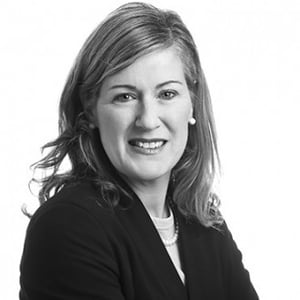
Senior Vice President, Cornerstone Government Affairs
Heather Molino joined Cornerstone in 2015 after two decades of Capitol Hill and communications experience, where she developed significant expertise in cyber, defense, space, intelligence and national security. Prior to joining Cornerstone, Ms. Molino was the minority staff director for the House Permanent Select Committee on Intelligence (HPSCI) under Ranking Member C.A. Dutch Ruppersberger (D-MD).
As staff director, Ms. Molino helped returned the House Intelligence Committee to the business of passing budget bills and other important legislation. Her achievements include helping pass into law five Intelligence Authorization Acts in four years, for Fiscal Year 2011 through 2015. Heather and her team helped create a coalition of business support to pass the most prominent cyber legislation in the House, the Cyber Intelligence Sharing and Protection Act (CISPA), as well as major intelligence reform legislation, the USA Freedom Act, all by strong bipartisan margins.
In her role, Ms. Molino was also responsible for advising Members of the Committee on policy, politics and communications to ensure U.S. intelligence professionals have the resources, capabilities and authorities needed to keep our country safe. Heather also organized and managed Democratic staff, handled the committee’s budget, oversaw press strategy and ensured proper and efficient oversight of our nation’s intelligence agencies. Before joining the committee, Heather served as deputy chief of staff and director of communications in Congressman Ruppersberger’s personal office.
Prior to Capitol Hill, Ms. Molino worked in broadcast journalism for over 10 years. She was a TV reporter and anchor in Washington, D.C., Virginia, Washington State and North Carolina. Ms. Molino holds a B.A. in Economics and Government from Cornell University. She is married to West Point graduate, Michael Molino. The couple has three small children.
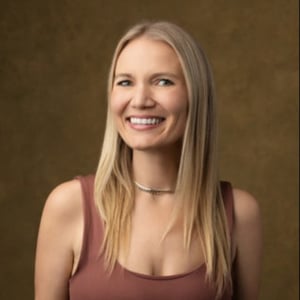
Constitutional Scholarship Director and Senior Legal Analyst, Pacific Legal Foundation
Anastasia Boden is Director of Constitutional Scholarship at Pacific Legal Foundation, where she leads the organization’s Supreme Court commentary and directs scholarly analysis in support of the firm’s litigation. She has represented entrepreneurs and small businesses nationwide in challenges to onerous licensing regimes, anti-competitive titling restrictions, Certificate of Need (“competitor’s veto”) laws, and other forms of unnecessary red tape that block economic opportunity.
Prior to this role, Anastasia developed nearly a dozen constitutional challenges to Certificate of Need laws across the country, helping spur legislative reform in Montana, Pennsylvania, and West Virginia. Her victories include a ruling invalidating Houston’s busking restrictions, multiple appellate decisions expanding access to the courts for civil rights plaintiffs, and the legislative repeal of Virginia’s happy-hour advertising ban.
Her writings on law and liberty have been featured in USA Today, The Washington Post, The Wall Street Journal, the Los Angeles Times, the Chicago Tribune, Forbes, and more, and she has appeared on Headline News, CBS News, Fox News, ReasonTV, Newsmax, and John Stossel. In 2020, she was featured on Libertarian Party presidential candidate Jo Jorgensen’s Supreme Court shortlist.
Anastasia earned her BA with dean’s honors from the University of California, Santa Barbara, and her JD from Georgetown University Law Center, where she was research assistant to Professor Randy E. Barnett—the “intellectual godfather” of the constitutional challenge to Obamacare. She is the co-creator of the podcast Dissed, about infamous Supreme Court dissents. She authors the biweekly newsletter SCOTUS Scoop and the column, “In Dissent” for SCOTUSblog.

Founder, Chef, Chef Geoff's
Geoff graduated from Georgetown University in 1995 with a degree in theology. He then went on to graduate first in his class at the Culinary Institute of America in Hyde Park, NY. Geoff opened Chef Geoff’s in 2000 and Chef Geoff’s Downtown in 2002. Both were opened before he reached the age of 30. In 2006 Geoff opened his third restaurant, LIA’S in Chevy Chase, MD. In late 2008 Geoff opened Hank’s Tavern & Eats in Hyattsville, MD. He operates the 200 seat restaurant in partnership with his brother Chris Tracy. Geoff’s fifth restaurant, Chef Geoff’s Tysons Corner opened in 2009 in Vienna, VA. The sixth restaurant, Chef Geoff’s Rockville, opened in 2012.
Geoff, along with a very talented team, oversees restaurant operations as well as managing the concept, menu development, marketing, finances, and growth at each of the restaurants. The restaurants serve 750,000 guests every year and employ more than 400 amazing people.
Geoff is also the co-author of the New York Times Best Seller, Baby Love. Baby Love teaches busy parents how to feed “Healthy, Easy, Delicious Meals for Your Baby and Toddler”. The book is published by St. Martin’s Press.
As an active member of the Washington DC community, Geoff serves as vice chairman on the executive board of the Restaurant Association of Metropolitan Washington. Additionally, Geoff contributes to more than 150 charities and organization every year in the form of silent auctions, fundraising appearances, and even the Chef Geoff sponsored Little League team. Geoff is also a member of the Washington Baltimore chapter of the Young Presidents Organization.
In 2006 the National Restaurant Association awarded Chef Geoff’s The Best Neighbor Award for its contributions to the community. In 2009 Geoff was awarded the Albert Uster “Chef of the Year Award”. In 2010 Geoff was named one of the top 40 business people under the age of 40 by Washington Business Journal. In 2011 Chef Geoff’s Tysons won the RAMMY award for “Hottest Restaurant Bar Scene”. In 2009 and 2011 Lia’s was selected as “Best Restaurant in Chevy Chase” by Bethesda Magazine in its annual Reader’s Choice Awards. In 2012, the readers of Washingtonian Magazine selected Geoff as “Best Local Chef”.
Geoff is extraordinarily fortunate to be married to the love of his life and CBS This Morning Anchor Norah O’Donnell. They reside in both New York City and Washington DC with their three beautiful children Grace, Henry, and Riley.

Professor of Law, South Texas College of Law Houston
Josh Blackman is a national thought leader on constitutional law and the United States Supreme Court. Josh’s work was quoted during two presidential impeachment trials. He has testified before Congress and advises federal and state lawmakers. Josh regularly appears on TV, including NBC, CBS, ABC, Fox, and the BBC. Josh is also a frequent guest on NPR and other syndicated radio programs. He has published commentaries in the New York Times, Wall Street Journal, Washington Post, and leading national publications.
Since 2012, Josh has served as a professor at the South Texas College of Law Houston. He holds the Centennial Chair of Constitutional Law. Josh is an Adjunct Fellow at the Manhattan Institute. Josh has written more than seven dozen law review articles that have been cited more than a thousand times. Josh was selected as the Jurist of the Year by the Texas Journal of Law & Public Policy, received the inaugural Meese III Originalism Award, and was awarded the Inaugural Joseph Story Award. Josh was selected by Forbes Magazine for the “30 Under 30” in Law and Policy. Josh is the President of the Harlan Institute, and founded FantasySCOTUS, the Internet’s Premier Supreme Court Fantasy League. He blogs at the Volokh Conspiracyand posts@JoshMBlackman.

Professor of Law, Antonin Scalia Law School, George Mason University
ILYA SOMIN is Professor of Law at George Mason University and the B. Kenneth Simon Chair in Constitutional Studies at the Cato Institute. His research focuses on constitutional law, property law, democratic theory, federalism, and migration rights. He is the author of Free to Move: Foot Voting, Migration, and Political Freedom (Oxford University Press, revised and expanded edition, 2022), Democracy and Political Ignorance: Why Smaller Government is Smarter (Stanford University Press, revised and expanded second edition, 2016), and The Grasping Hand: Kelo v. City of New London and the Limits of Eminent Domain (University of Chicago Press, 2015, rev. paperback ed., 2016), coauthor of A Conspiracy Against Obamacare: The Volokh Conspiracy and the Health Care Case (Palgrave Macmillan, 2013), and co-editor of Eminent Domain: A Comparative Perspective (Cambridge University Press, 2017). Democracy and Political Ignorance has been translated into Italian and Japanese.
Somin’s work has appeared in numerous scholarly journals, including the Yale Law Journal, Stanford Law Review, Northwestern University Law Review, Georgetown Law Journal, Critical Review, and others. Somin has also published articles in a variety of popular press outlets, including the New York Times, Washington Post, Wall Street Journal, Los Angeles Times, CNN, NBC, The Atlantic, USA Today, Boston Globe, US News and World Report, South China Morning Post, National Law Journal and Reason. He has been quoted or interviewed by the New York Times, Washington Post, Wall Street Journal, Time, Newsweek, The Economist, the Christian Science Monitor, the Financial Times, The Guardian, the Associated Press, CBS, MSNBC, NPR, BBC, Reuters, the Canadian Broadcasting Corporation, the Australian Broadcasting Corporation, Radio Free Europe/Radio Liberty, Al Jazeera, and the Voice of America, among other media.
Somin’s writings have been cited in decisions by the United States Supreme Court, multiple state supreme courts and lower federal courts, and the Supreme Court of Israel. He is co-counsel for the plaintiffs in VOS Selections, Inc. v. Trump, a case challenging the constitutionality of President Trump’s “Liberation Day” tariffs. Somin has testified on the use of drones for targeted killing in the War on Terror before the US Senate Judiciary Subcommittee on the Constitution, Civil Rights, and Human Rights. In 2009, he testified on property rights issues at the United States Senate Judiciary Committee confirmation hearings for Supreme Court Justice Sonia Sotomayor. Somin writes regularly for the popular Volokh Conspiracy law and politics blog, now affiliated with Reason magazine (previously affiliated with the Washington Post from 2014 to 2017). From 2006 to 2013, he served as Co-Editor of the Supreme Court Economic Review, one of the country’s top-rated law and economics journals.
Somin has served as a visiting professor at the University of Pennsylvania Law School. He has also been a visiting professor or scholar at the Georgetown University Law Center, the University of Hamburg, Germany, the University of Torcuato Di Tella in Buenos Aires, Argentina, Uriel Reichman University in Israel, and Zhengzhou University in China. He is a University Affiliate of the Schar School of Policy and Government at George Mason University, and an affiliated faculty member of the George Mason University Institute for Immigration Research. Before joining the faculty at George Mason, Somin was the John M. Olin Fellow in Law at Northwestern University Law School in 2002-2003. In 2001-2002, he clerked for the Hon. Judge Jerry E. Smith of the U.S. Court of Appeals for the Fifth Circuit. Professor Somin earned his B.A., Summa Cum Laude, at Amherst College, M.A. in Political Science from Harvard University, and J.D. from Yale Law School.
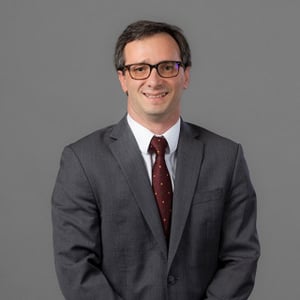
Assistant Professor of Law, George Mason University, Antonin Scalia Law School
Robert Leider is an Assistant Professor of Law at Antonin Scalia Law School, George Mason University. His scholarly interests are in criminal law, criminal procedure, and constitutional law, especially concerning questions about the use of force and the rule of law. He has written on the law of self-defense, the constitutional allocation of military power, and gun control. Among other places, he has published in the Florida Law Review (forthcoming), the Indiana Law Journal, and the Wall Street Journal.
Before joining Antonin Scalia Law School, Professor Leider was at Arnold & Porter in Washington, DC. He was previously with Mayer Brown LLP and was an Olin-Searle-Smith Fellow at the University of Pennsylvania Law School. He has clerked for Judge Diane S. Sykes, of the U.S. Court of Appeals for the Seventh Circuit, and Justice Clarence Thomas. Professor Leider earned a BA, summa cum laude, from The George Washington University, a JD from Yale Law School, and a PhD in Philosophy (dissertation defended with distinction) from Georgetown University. While at Yale, he served as an articles editor for the Yale Law Journal.
Professor Leider teaches criminal law and torts.
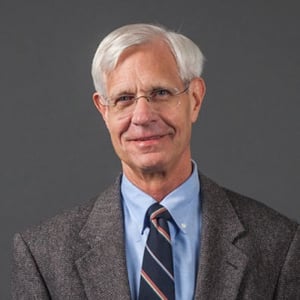
Distinguished University Professor, Antonin Scalia Law School, George Mason University
University Professor Nelson Lund is the author of Rousseau’s Rejuvenation of Political Philosophy: A New Introduction. He has also written widely in the field of constitutional law, including articles on constitutional interpretation, federalism, separation of powers, the Second Amendment, the Commerce Clause, the Speech or Debate Clause, the Equal Protection Clause, and the Uniformity Clause. In addition, he has published articles in the fields of employment discrimination and civil rights, the legal regulation of medical ethics, and the application of economic analysis to legal institutions and legal ethics.
Professor Lund graduated from St. John's College in Annapolis, Maryland, after which he received an MA in philosophy from the Catholic University of America and a PhD in political science from Harvard University. He left the faculty of the University of Chicago to attend its law school, where he served as executive editor of the University of Chicago Law Review and chapter chairman of the Federalist Society for Law and Public Policy Studies. After law school, he held positions at the United States Department of Justice in the Office of the Solicitor General and the Office of Legal Counsel. He also served as a law clerk to the Honorable Patrick E. Higginbotham of the United States Court of Appeals for the Fifth Circuit and to the Honorable Sandra Day O'Connor of the United States Supreme Court. Following his clerkship with Justice O'Connor, Professor Lund served in the White House as associate counsel to the president from 1989 to 1992.
Since joining the faculty at George Mason University's Antonin Scalia Law School, Professor Lund has taught Constitutional Law, Legislation, Federal Election Law, Employment Discrimination, State and Local Government, and seminars on the Second Amendment and on a variety of topics in Jurisprudence.
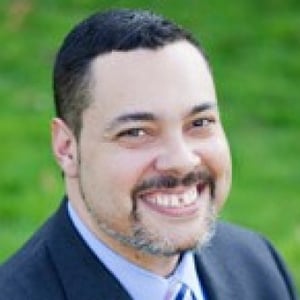
Professor of Law, Duke University School of Law
Darrell Miller writes and teaches in the areas of civil rights, constitutional law, civil procedure, state and local government law, and legal history. His scholarship on the Second and Thirteenth Amendments has been published in leading law reviews such as the Yale Law Journal, the University of Chicago Law Review, and the Columbia Law Review, and has been cited by the Supreme Court of the United States, the United States Courts of Appeals, the United States District Courts, and in congressional testimony and legal briefs.
Before coming to Duke, Miller taught at the University of Cincinnati College of Law where he twice received the Goldman Award for Excellence in Teaching. Prior to joining the academy, Miller practiced complex and appellate litigation in Columbus, Ohio. He is a former clerk to Chief Judge R. Guy Cole, Jr. of the United States Court of Appeals for the Sixth Circuit.
Miller graduated cum laude from Harvard Law School and served as an editor of the Harvard Law Review. In addition to his law degree, Miller holds degrees from Oxford University, where he studied as a Marshall Scholar, and from Anderson University.
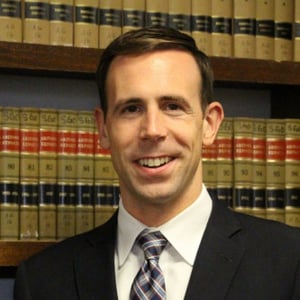
Shareholder, Greenberg Traurig, LLP
Dominic E. Draye has litigated at every level of the state and federal judiciary—from state trial court to the Supreme Court of the United States. His practice focuses on constitutional, regulatory, and environmental matters, and he has represented clients in both the public and private sectors. In the federal appellate courts, Mr. Draye has represented clients in the Second, Fifth, Seventh, Ninth, and D.C. Circuits.
Before joining Greenberg, Mr. Draye served as the Solicitor General of Arizona, where he briefed and argued the State’s highest-profile civil and criminal appeals and served as lead counsel for several multi-state coalitions litigating over agency rulemaking in the D.C. Circuit. Prior to government service, Mr. Draye was a litigator in the Washington, D.C., office of Kirkland & Ellis LLP, where his practice focused on legal issues and appeals.
Mr. Draye is a sought-after speaker on topics of administrative and constitutional law. He clerked for Hon. Edith H. Jones on the United States Court of Appeals for the Fifth Circuit and attended the University of Pennsylvania Law School.

Professor Emeritus, Paul M. Hebert Law Center, Louisiana State University
In memoriam
Dr. John Baker is Professor Emeritus of Law, and previously the Dale E. Bennett Professor of Law, at Louisiana State University Law School. He is currently Visiting Professor at Peking University School of Transnational Law (via Zoom) and has been Visiting Professor at The Center for the Constitution, Georgetown Law School (2013-2020). He has also been a Visiting Fellow at Oriel College, the University of Oxford (2012-2014) and taught at Blackfriars Hall, Oxford in 2014. Dr. Baker has also been an adjunct Fellow at the Heritage Foundation (Spring, 2008) and a Distinguished Scholar at the Catholic University of America Law School (2011-12). He has taught at Tulane Law School, George Mason Law School, Pepperdine Law School, New York Law School, Hong Kong University, and the University of Dallas, School of Management and also taught and/or lectured in 17 foreign countries. Notable among his foreign visits are the
following: Visiting Professor at the University of Lyon III (France) (1999-2011); Visiting Professor at the Universidad de los Andes, Chile (2012), as a Fulbright Specialist (2006); and a Fulbright Scholar at various universities in the Philippines. Dr. Baker received his J.D., with honors, from the University of Michigan Law School and his B.A., magna cum laude, from the University of Dallas. He also earned a Ph.D. in Political Thought from the University of London. Baker has taught over a dozen different subjects, mostly courses in public law. His main areas of interest are Constitutional Law (particularly federalism and separation of powers), Criminal Law, Anti-Terrorism Law, International Law, Health Care Law, Mediation, and Comparative Law.
In addition to law review articles and book chapters, Dr. Baker’s academic publications include Hall's Criminal Law: Cases and Materials (with Benson, Force and George; 5th ed. Michie, 1993); An Introduction to the Law of the United States (ed. with Levasseur; University Press of America, 1992). He has also published on Forbes.com, FoxNews.com, in The Washington Times, and a number of times in The Wall Street Journal. He argues in federal court, including two oral arguments in the U.S. Supreme Court. For many years, he co-taught courses for the Federalist Society on separation of powers with the late Supreme Court Justice Antonin Scalia. In September 2016, he co-taught a Supreme Court seminar in China with Justice Samuel Alito. Following law school, he served as a law clerk in federal district court and as an assistant district attorney in New Orleans before joining LSU in 1975. While a professor, he has been as a consultant to USAID, USIA (since rolled into the State Department), the Justice Department, the U.S. Senate Judiciary Subcommittee on Separation of Powers, and the Office of Planning in the White House. He served on an ABA Task Force which issued the report, The Federalization of Crime (1998) and later as a consultant to the “Bi-Partisan Task Force on the Over- federalization of Crime” (2012-2014) created by the U.S. House Judiciary Subcommittee on Crime. Dr. Baker was a co-founder of the first iteration (1995) of Stratfor Inc., a global intelligence agency. He co-authored its first book: The Intelligence Edge (with Friedman, Friedman and Chapman; Crown Books/Random House 1997). In 2022, he began a short, weekly video podcast available on YouTube and Rumble, The Baker Brief.
Professor of Law, South Texas College of Law Houston
Josh Blackman is a national thought leader on constitutional law and the United States Supreme Court. Josh’s work was quoted during two presidential impeachment trials. He has testified before Congress and advises federal and state lawmakers. Josh regularly appears on TV, including NBC, CBS, ABC, Fox, and the BBC. Josh is also a frequent guest on NPR and other syndicated radio programs. He has published commentaries in the New York Times, Wall Street Journal, Washington Post, and leading national publications.
Since 2012, Josh has served as a professor at the South Texas College of Law Houston. He holds the Centennial Chair of Constitutional Law. Josh is an Adjunct Fellow at the Manhattan Institute. Josh has written more than seven dozen law review articles that have been cited more than a thousand times. Josh was selected as the Jurist of the Year by the Texas Journal of Law & Public Policy, received the inaugural Meese III Originalism Award, and was awarded the Inaugural Joseph Story Award. Josh was selected by Forbes Magazine for the “30 Under 30” in Law and Policy. Josh is the President of the Harlan Institute, and founded FantasySCOTUS, the Internet’s Premier Supreme Court Fantasy League. He blogs at the Volokh Conspiracyand posts@JoshMBlackman.

Lunch Discussion: Janus v. AFSCME
Robert Alt, L. Camille Hébert, William L. Messenger
2018 Ohio Lawyers Chapters Conference
Earlier this year the U.S. Supreme Court heard oral arguments in Janus v. American Federation...
Introduction to Originalism and Federalism: Where Are the Courts Heading?
Jonathan H. Adler, Gregory G. Katsas, Eric E. Murphy, Peter M. Shane
2018 Ohio Lawyers Chapters Conference
Since the 1980s, the originalist approach to constitutional interpretation has gained greater and greater acceptance...
Opening Remarks by Chad A. Readler
Chad A. Readler
2018 Ohio Lawyers Chapters Conference
Introduction to the 2018 Ohio Chapters Conference made by Chad A. Readler, Acting Assistant Attorney...
The Role of Congressional Intelligence Committees
Michael Geffroy, Michael Bahar, Matthew R. A. Heiman, Heather Molino
International & National Security Law Practice Group and Article I Teleforum
Former Minority Staff Director and General Counsel for the House Permanent Select Committee on Intelligence...
Virginia’s (Un)happy Hour: Is the State Restricting Ads and Economic Rights?
Anastasia P. Boden, Geoffrey Tracy
Regulatory Transparency Project Teleforum
In Virginia, it’s perfectly legal to have a happy hour; it’s just illegal to talk...
Preview: Trump v. Hawaii
Josh Blackman, Ilya Somin
International & National Security Law Practice Group Teleforum
On April 25, the Supreme Court will hear oral argument in Trump v. Hawaii, the...
Tenth Anniversary of Heller
Robert Leider, Nelson Lund, Darrell A. H. Miller
This year marks the tenth anniversary of Heller v. District of Columbia. Before Heller, courts...
Ayestas v. Davis - Post-Decision SCOTUScast
Dominic Draye
SCOTUScast featuring Dominic Draye
On March 21, 2018, the Supreme Court decided Ayestas v. Davis. In 2009 Manuel Ayestas,...
Citizenship and the Census
John S. Baker
Litigation Practice Group Teleforum
On March 26, the Commerce Department announced that the 2020 census will include a question...
The Importance of Free Speech on Campus
Josh Blackman
CUNY Student Chapter
On Thursday, March 29, Professor Josh Blackman was invited to speak at CUNY Law about...