
Professor of Law and Herbert Hannoch Scholar, Rutgers Law School
Bernard W. Bell is a constitutional law expert who specializes in property and privacy law. He clerked for U.S. Supreme Court Justice Byron R. White, practiced with Sullivan and Cromwell in New York and served as senior litigation counsel and as Assistant U.S. Attorney in the U.S. Attorney’s Office for the Southern District of New York.
Partner, Boyden Gray PLLC
Jimmy Conde is partner at Boyden Gray PLLC, specializing in energy, environmental, and administrative law, with particular expertise in the Clean Air Act. He has protected clients against agency overreach in cutting-edge and complex legal proceedings, including challenges to EPA, DOE, DOT, and California rules seeking to compel electrification of motor vehicles, the FCC’s universal service fund, Department of Labor Wage & Hour Division rules, and HHS rules interfering with the practice of medicine and sound insurance practices. His written commentary has been published and referenced in the Wall Street Journal, the Washington Examiner, Concurrences (an antitrust publication), and Newsweek, among others.
Mr. Conde began his legal career as an associate with Boyden Gray PLLC. He clerked for Judge Douglas H. Ginsburg in the U.S. Court of Appeals for the D.C. Circuit and Judge David J. Porter in the U.S. Court of Appeals for the Third Circuit.
Antonin Scalia Professor of Law, Harvard Law School
Stephen E. Sachs is the Antonin Scalia Professor of Law at Harvard Law School, where he teaches civil procedure, conflict of laws, and seminars on constitutional law. His research focuses on the law and theory of constitutional interpretation, the jurisdiction of state and federal courts, the history of procedure and private law, and the role of the general common law in the U.S. legal system.
Sachs has authored numerous articles, essays, and book chapters. He is an elected member of the American Law Institute, an adviser to the ALI’s project on the Restatement of the Law (Third), Conflict of Laws, a former member of the Judicial Conference’s Advisory Committee on Appellate Rules, and a founding member of the Academic Freedom Alliance.
In 2020, Sachs received the Federalist Society’s Joseph Story Award, which recognizes a young academic who has demonstrated excellence in legal scholarship, a commitment to teaching, a concern for students, and who has made a significant public impact in a manner that advances the rule of law in a free society.
Sachs previously taught at Duke University School of Law and as a visiting professor at the University of Chicago Law School. Before entering academia, he practiced in the Washington, D.C., litigation group of Mayer Brown LLP, and he clerked for Chief Justice John G. Roberts Jr. as well as for Judge Stephen F. Williams of the U.S. Court of Appeals for the D.C. Circuit.
Sachs received his J.D. from Yale Law School, where he was executive editor of the Yale Law Journal and served both as executive editor and articles editor of the Yale Law & Policy Review. A Rhodes Scholar, he graduated from Oxford University with a first-class BA (Hons) degree in philosophy, politics, and economics. He received his A.B. degree summa cum laude in history from Harvard University, earning the Sophia Freund Prize.
Sachs is a licensed attorney in Massachusetts and the District of Columbia, and he is authorized to practice before the D.C. Circuit, the Second Circuit, the Seventh Circuit, and the Supreme Court of the United States.
Lecturer in Law, University of Chicago Law School
Robert Gasaway is a Lecturer in Law at the University of Chicago Law School. He was formerly a Partner at Kirkland & Ellis LLP in their Washington office. He has represented and advised corporate clients on a wide variety of matters before federal courts, state courts, federal administrative agencies, and federal and state legislative bodies. Mr. Gasaway focuses his practice on appellate litigation, representing clients in the preparation of integrated, multiforum trial and appellate strategies in high-risk sets of related cases.
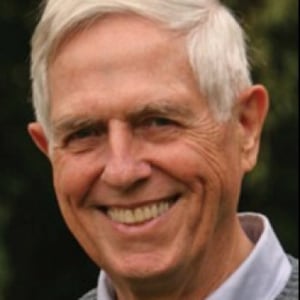
U.S. Court of Appeals for the D.C. Circuit (ret.) and former U.S. Senator
James L. Buckley was born in New York City in 1923, grew up in rural Connecticut, and received his B.A. degree from Yale. Following service as a naval officer in World War II, he returned to New Haven to secure his law degree. After several years in private practice, he joined a group of small companies engaged in oil exploration abroad. He was elected to the United States Senate in 1970 as the candidate of New York's Conservative Party. He failed of re-election; but he has since served as an under secretary of state in the Reagan administration, as president of Radio Free Europe/Radio Liberty in Munich, Germany, and, most recently, as a judge on the U.S. Court of Appeals for the District of Columbia Circuit. He retired in 2000 and now resides in Bethesda, Maryland.
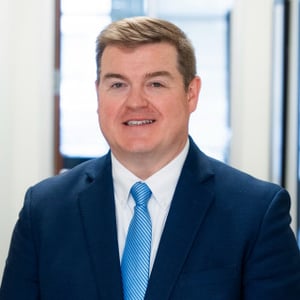
Vice President, Networks, The Federalist Society for Law and Public Policy Studies
Nathan Kaczmarek is Vice President for Networks at the Federalist Society. He began his legal career in Detroit representing nationwide clients in all phases of healthcare litigation and complex medical malpractice claims. He has since served as a Senior Legal and Policy Advisor in the U.S. House of Representatives and as Counsel for the Subcommittee on Regulatory Affairs and Federal Management in the U.S. Senate. Prior to overseeing the Networks, he was Director of the Practice Groups, the Regulatory Transparency Project, and the Article I Initiative for the Federalist Society.
Nathan holds degrees from Hillsdale College and Thomas M. Cooley Law School. He is a Liaison Representative for The Administrative Conference of the United States. He also serves as Vice President of the Associates of St. John Bosco, a Virginia based non-profit dedicated to Catholic high school and college students.
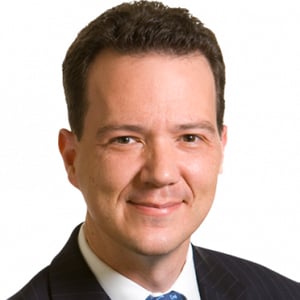
Senior Research Fellow in Anglo-American Relations, Margaret Thatcher Center for Freedom, The Heritage Foundation
Theodore "Ted" R. Bromund studies and writes on Anglo-American relations, U.S. and British relations with Europe and the European Union, America’s leadership role in the world, and international organizations and treaties as senior research fellow in The Heritage Foundation’s Margaret Thatcher Center for Freedom.
Bromund, who joined Heritage in 2008, previously served nine years as associate director of International Security Studies at Yale University, a center dedicated to the study and teaching of diplomatic history and grand strategy. He was a lecturer in history beginning in 1999, and in international affairs for the master of arts program beginning in 2004.
A columnist for Newsday, Forbes, and Great Britain’s Yorkshire Post, Bromund also writes regularly for National Review, The Weekly Standard, and FoxNews.com, and, in Britain, CapX. He has been interviewed or cited by BBC News, CBS News, Fox News Channel, CNN, Fox Business, Politifact, Radio Free Europe, The Christian Science Monitor, Time, and Financial Times, among others.
Besides contributing articles to scholarly journals, Bromund is the author of a chapter on former British Prime Minister Tony Blair and the fall of Iraqi dictator Saddam Hussein in the book The Blair Legacy: Politics, Policy, Governance, and Foreign Affairs (Palgrave Macmillan, 2009).
In 2013, Bromund was recognized by the Second Amendment Foundation as its Scholar of the Year for his analysis of the Arms Trade Treaty.
Bromund received his doctorate in history in 1999 from Yale. His thesis on Britain’s first application to the European Economic Community won the Samuel H. Beer Dissertation Prize from the American Political Science Association’s British Politics Group. In 2016, he received Heritage’s Joseph Shattan Award in recognition of the quality of his writing.
He is an adjunct professor of strategic studies in the Strategic Studies Program at the Johns Hopkins University School of Advanced International Studies, where he teaches courses on grand strategy. He also holds two master’s degrees in history from Yale as well as a bachelor of arts degree from Iowa’s Grinnell College.
A native of Wooster, Ohio, he currently resides in Washington, D.C.
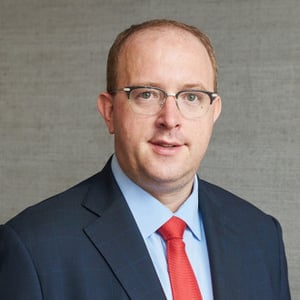
Partner, Sullivan & Cromwell LLP
Ben Perry practices primarily English law and advises on a wide range of corporate and finance transactions including cross-border mergers and acquisitions, private equity, leveraged and project finance and capital markets. He is recommended in the 2015, 2016, 2017 and 2018 editions of IFLR1000, the 2014, 2015, 2016 and 2017 editions of The Legal 500 United Kingdom, and the 2013 and 2014 editions of Super Lawyers for his M&A and private equity work.
Since 2010, Ben has overseen the development of a trainee solicitor programme in the London office, which welcomed its first trainee solicitors in 2013. Ben was named “Best Training Principal” at the LawCareers.Net Training and Recruitment Awards in 2014 and 2016. He is also a member of the Training Committee of the City of London Law Society.

Commentary Writer, The Washington Examiner
Tom Rogan is a commentary writer for the Washington Examiner. An American writer based in the Washington area, he grew up in London, England. He’s a former columnist for the National Review and Opportunity Lives, a former book reviewer for The Washington Free Beacon, and a Senior Fellow at The Steamboat Institute. Tom was educated at King’s College London, the School of Oriental and African Studies, and the College of Law, London.
Vice President of Regulatory and Corporate Affairs, Cogeco Inc.
Paul Beaudry is Vice President, Regulatory and Corporate Affairs at Cogeco Inc. He leads Cogeco’s regulatory function in Canada and the United States, and represents the company in proceedings before the CRTC, the Federal Communications Commission and other government departments and regulatory agencies. He also oversees compliance with regulatory requirements imposed on the company at each level of government, in both countries. In addition, Paul leads Cogeco’s Sustainability team and the strategy for public disclosure of ESG matters. He joined Cogeco in November 2020 and has since held progressively larger leadership roles within the organization.
Prior to joining Cogeco, Paul served as Director of Regulatory Affairs at TELUS in Calgary. He also practiced competition and foreign investment law at Stikeman Elliott LLP and Ogilvy Renault LLP (now Norton Rose Fulbright) and served as a senior policy advisor to Canada’s Minister of Industry.
Paul is a graduate of the University of Montreal Faculty of Law and is a member of the Quebec Bar. He serve on the boards of the Institut national de santé publique du Québec, the Cable Public Affairs Channel (CPAC), La Fondation La Rue des Femmes and the Canadian chapter of the International Institute of Communications. He also sits on the Governors Council of Golf Canada.
Principal, MHRyan Law
Michael H. Ryan is a lawyer specialising in international telecommunications, Internet and media law and regulation, withexperience in policy analysis and regulatory economics.
Senior Policy Counsel and Director, Government Affairs, Telecommunications Industry Association (TIA)
Dileep Srihari is Senior Policy Counsel and Director, Government Affairs at the Telecommunications Industry Association (TIA). He represents information and communications technology companies – those that manufacture chips, routers, switches, cell phones, base stations, and more – through policy development and advocacy before Congress and the FCC.
Srihari currently focuses on spectrum and broadband infrastructure deployment issues, including topics ranging from millimeter-wave spectrum for 5G to regulatory reform and funding for broadband deployment. He also provide counsel and supervise others on work spanning across TIA's Government Affairs department, including leading projects on national security issues related to the ICT supply chain as well as Internet of Things issues.
Srihari was previously an associate at law firm WilmerHale where he was a member of the firm’s Communications practice group. His work involved regulatory advocacy and appellate litigation on topics including wireless interference protections, television program access, and process safety management. He also previously worked on Capitol Hill for a somewhat-recognizable U.S. senator.
He holds a J.D. from Georgetown and a B.S. in Electrical Engineering and Computer Science from Cornell.
Shareholder, Greenberg Traurig LLP
Troy A. Eid focuses his litigation, mediation and transactional practice on government enforcement, investigations and compliance, environmental law, energy and natural resource development, and Federal Indian law and Native American and Alaska Native tribal law. Troy is a trusted advocate and mediator in the Rocky Mountain West and in federal, state and tribal trial and appellate courtrooms across the country.
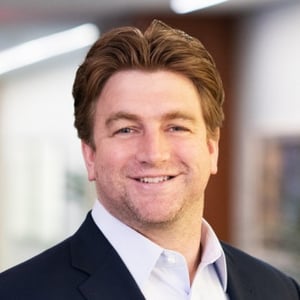
Founding Partner, Lodestar Law and Economics PLLC
Josh is the founder of Lodestar Law and Economics, PLLC. On January 1, 2013, the U.S. Senate unanimously confirmed Wright as a Commissioner of the Federal Trade Commission (FTC). He is a leading scholar in antitrust law, economics, intellectual property, regulation, and consumer protection, and has published more than 100 articles and book chapters, co-authored a leading antitrust casebook, and edited several book volumes focusing on these issues. Commentators have recognized Wright as “widely considered his generation’s greatest mind on antitrust law,” and his academic work ranks him as one of the most cited antitrust academics in the world. Wright was also awarded the Paul M. Bator Award by the Federalist Society in 2014 to “an academic who demonstrated excellence in legal scholarship, a commitment to teaching, a concern for students, and who has made a significant public impact.” Wright also served as the Executive Director of the Global Antitrust Institute, the world’s premiere academic institute focused upon antitrust education for judges and regulators and has taught hundreds of judges and thousands of regulators from dozens of countries.
Wright’s practice focuses upon helping clients solve complex competition, consumer protection, and regulatory problems by providing legal and economic analysis, strategic advice and counseling, and economic expert testimony.
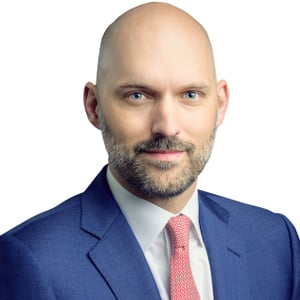
Partner, Freshfields Bruckhaus Deringer LLP
Jan represents clients on a range of antitrust issues relating to the US merger control and review process, multijurisdictional merger control, joint ventures, civil antitrust litigation, and investigations before the US Department of Justice (DOJ) and the Federal Trade Commission (FTC).
Prior to rejoining Freshfields in 2015, Jan served as an attorney adviser to a FTC Commissioner. While at the FTC, Jan advised on a range of competition and consumer protection issues, including providing merger and conduct enforcement recommendations, developing legislation and policy initiatives with Congress, and drafting formal statements, policy speeches, and Congressional testimony.
Jan has published several articles on antitrust law and policy. Jan was awarded the 2019 Antitrust Writing Award, a joint initiative between Concurrences Review and the George Washington University Law School, in the Best Business Article, General category for "Hipster Antitrust Meets Public Choice Economics: The Consumer Welfare Standard, Rule of Law, and Rent Seeking." Jan also was award the 2017 Antitrust Writing Award in the Best Academic Article, Mergers category for his article “A Hedgehog in Fox’s Clothing? The Misapplication of GUPPI Analysis.”
Jan is an Adjunct Professor and Senior Fellow at the Global Antitrust Institute at the Antonin Scalia Law School at George Mason University, where he teaches courses in antitrust law and economics. Jan is an active member of the ABA’s Antitrust Section and currently serves as an Editor for the Antitrust Law Journal, a leading publication for antitrust law, policy, and economics that is widely read by the antitrust bar.
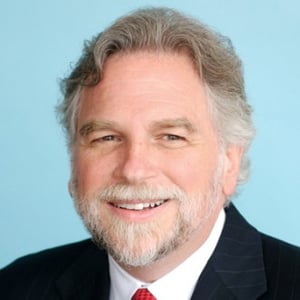
Partner, Gibson, Dunn & Crutcher LLP
Randy M. Mastro, a partner in the New York office of Gibson, Dunn & Crutcher, is Co-Chair of the Firm’s Litigation Practice Group, which The American Lawyer has named “Litigation Department of the Year” three out of its last five competitions and a finalist five times in a row – both unprecedented achievements. He also serves on the Firm’s Management and Executive Committees.
Mr. Mastro routinely ranks among the nation’s leading litigators and trial lawyers in surveys of corporate counsel and other practitioners. Last year, Mr. Mastro was named “Trial Lawyer of the Year” by Chambers USA, a “Litigation Trailblazer” by The National Law Journal, and a “Trial Lawyer MVP” by Law360. Indeed, in each of the last four years, he has been nominated “Trial Lawyer of the Year” by Chambers USA or Benchmark or both, receiving top honors twice. The National Law Journal named him among the “100 Most Influential Lawyers in America,” recognizing him as one of the “100 lawyers in the United States who have shaped the legal world through their work,” and noting that “his ease in the courtroom, delivery of arguments and command of the law have made Randy one of the most in-demand attorneys in the country by big-name clients.” The American Lawyer cited him among “the best known, most-respected litigators in the country.” In Chambers USA, he is described as “one of the top litigators” and “trial lawyers” “in the country,” praised for his “exceptional public reputation” as a “tough, smart,” “outstanding” trial lawyer who is “in a class by himself,” “masters the facts of a case quicker than anyone I’ve ever met,” “delivers fantastically well in court,” “can take on anyone,” is “so persuasive,” and “has a great mind.” In The Legal 500—US Edition, he has been featured among the “Leading Trial Lawyers” in the country, with corporate counsel saying he is “immensely impressive,” “simply excellent,” “flawless,” “captivating,” “in a league of his own” in the courtroom, and “deserves an Academy Award” for “bringing a sense of drama and theater to his courtroom appearances.” Benchmark has described him as a “brilliant and effective litigator” who is “perennially revered” and “always brings a fresh perspective and will fight you to the end,” with peers noting, “You do not want to meet Randy down a dark alley, but you REALLY don’t want to meet him in a lighted courtroom,” and “I’ve seen him at work and I can only imagine that going against him must be like wrestling an alligator.” Benchmark also honored his achievements in “National Impact Cases” in 2015, 2017 and 2018. The New York Times has called him “the go-to lawyer for companies” suing the government, a “household name,” and a “fierce and combative litigator;” and The New Yorker has described him as a “merciless litigator,” “even by the pugilistic standards of the New York bar,” who “springs to life” and “is transfixing” in “the courtroom.”
Among many high-profile matters, Mr. Mastro won a two-month RICO trial barring the enforcement of a $9 billion Ecuadorian judgment against Chevron that The American Lawyer called “The Case of the Century.” Moreover, he won a month-long trial against the SEC, obtaining the dismissal of all charges against high-profile entrepreneur, Lynn Tilton, and thereby defeating the largest individual enforcement action the SEC ever brought before its in-house tribunal, where it typically wins 90 percent of the time. Mr. Mastro also led the successful effort to defeat New York City’s controversial West Side Stadium project, and he represented the State of New Jersey in conducting a high-profile investigation into allegations concerning the “Bridgegate” controversy. He has tried dozens of cases in private practice and as a federal prosecutor, and he has also argued more than 100 appeals in federal and state appellate courts throughout the country.
Mr. Mastro has represented such clients as AIG, Chevron, Amazon, Empire Blue Cross Blue Shield, Estee Lauder, Madison Square Garden, Cablevision, Dow Jones, Verizon, Dart, DraftKings, Home Depot, Daimler, Wynn, JPMorgan, GE Capital, Park Place/Caesar’s, Quest Diagnostics, IAC, Bear Stearns, Bank of New York Mellon, Empire Merchants, Edison Schools, Lynn Tilton, Peter Kalikow, Vornado, LeFrak Organization, Saks, Ziff Davis, UBS Financial Services, Octagon, Martina Hingis, Anna Kournikova, and Steffi Graf.
Before returning to Gibson Dunn in 1998, Mr. Mastro served as Mayor Rudolph Giuliani’s Chief of Staff and then as New York City’s Deputy Mayor for Operations. In that capacity, he was responsible for overseeing all of the City’s operating agencies and budget, and served as the Mayor’s chief liaison with elected officials. In the Mayor’s absence, he was authorized to act on the Mayor’s behalf. While in the Giuliani administration from 1994 to 1998, Mr. Mastro spearheaded City initiatives to remove organized crime from the Fulton Fish Market, private carting industry, and San Gennaro Festival. For two consecutive years, NY1-TV named Mr. Mastro one of City government’s “Winners of the Year,” and Manhattan File magazine featured him among the “45 Most Powerful New Yorkers 45 and Under.”
In the early 1990s, Mr. Mastro was a Gibson Dunn litigation partner. In 1990, he served as Associate Counsel on the Independent Counsel investigation of HUD Secretary Samuel Pierce. In 1991, he was appointed Special Master and Monitor of the assets of a Saudi tycoon implicated in the BCCI scandal.
From 1985 to 1989, Mr. Mastro served as Assistant United States Attorney and Deputy Chief of the Civil Division in the U.S. Attorney’s Office for the Southern District of New York, where he specialized in organized crime cases and spearheaded the federal government’s landmark racketeering suit that put the International Brotherhood of Teamsters into court supervision. Seven Days magazine named him one of “the 25 prosecutors and defenders other lawyers most admire, fear and talk about.” From 1982 to 1985, Mr. Mastro was a litigation associate at Cravath, Swaine & Moore, where he was part of the successful libel defense trial team in Westmoreland v. CBS. Before that, upon graduating cum laude from Yale College and the University of Pennsylvania Law School, where he was the school’s moot court champion, Mr. Mastro clerked for Justice Alan B. Handler of the New Jersey Supreme Court.
During his tenure as a federal prosecutor, Mr. Mastro received the Attorney General’s Distinguished Service Award, the John Marshall Award for Outstanding Legal Achievement, and the Director’s Award for Superior Performance, among other honors. Since then, he has been honored many times, receiving, for example, the Simon Rifkind Award from the Jewish Theological Seminary, the Civic Leadership Award from the Citizens Union of the City of New York, and the Lumbard Bowl, awarded annually by the U.S. Attorney for the Southern District of New York (in consultation with prior U.S. Attorneys) to distinguished alumni.
Mr. Mastro has taught as an adjunct professor at the University of Pennsylvania and Fordham Law Schools. He authored articles in the Federal Communications Law Journal, Fordham Law Review, University of Michigan Journal of Law Reform, and Seton Hall Law Review. His op-ed pieces have appeared in The New York Times, Daily News, and New York Post, and he also wrote for the Washington Post and Time. He co-authored the chapters, “White Collar Crime,” in Business and Commercial Litigation in Federal Courts, and, “Energy,” in Commercial Litigation in New York State Courts.
Mr. Mastro has been a member of the bars of New York, New Jersey, Pennsylvania, and many federal courts, including the U.S. Supreme Court. He chaired two New York City Charter Revision Commissions. In addition, Mr. Mastro serves as Chair of the Citizens Union of the City of New York, Co-Chair of the Hamptons International Film Festival, and Vice Chair of the Legal Aid Society of New York City, as well as on the Board of Overseers of the University of Pennsylvania Law School.
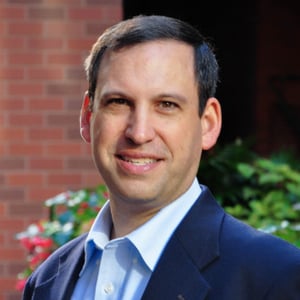
President, Becket Fund for Religious Liberty; Professor of Law and Co-Director of the Center for Religious Liberty, Catholic University; Visiting Professor, Harvard Law School
Mark joined the Becket team in 2011 and splits his time as Associate Professor at The Catholic University of America, Columbus School of Law, and as Visiting Professor at Harvard Law School. Mark teaches constitutional law, religious liberty, torts, and evidence. He has been voted Teacher of the Year three years in a row by the Law School’s Student Bar Association.
Mark has broad experience litigating First Amendment religious exercise and free speech cases. He has represented the winning parties in a variety of Supreme Court First Amendment cases including Hobby Lobby, Little Sisters, Wheaton College, and Holt. In January 2014, Mark argued before the Supreme Court in McCullen v. Coakley, a First Amendment challenge to a Massachusetts speech restriction outside of abortion clinics. The Justices ruled in favor of his clients 9-0. Mark also led a successful eight-year litigation battle against Governor Blagojevich’s effort to force religious pharmacists to distribute the morning-after and week-after pills.
Mark’s academic writing focuses on the First and Fourteenth Amendments, and has appeared in a variety of prestigious journals, including the Harvard Law Review.
Mark is a widely sought after speaker on constitutional issues, particularly concerning abortion and the First Amendment. Professor Rienzi has been invited to discuss these issues at Harvard Law School, Columbia University Law School, Georgetown University Law Center, Boston College Law School, Notre Dame Law School, the National Press Club, and the Capitol. He has been quoted on constitutional law issues on NPR, in the Washington Times, The New York Daily News, and the Chicago Sun-Times. Mark has also been featured on the Kelly File, Fox News Sunday, Your World with Neil Cavuto, Geraldo at Large, CNN Tonight, CNN Live, Andrea Mitchell Reports, and Wall Street Journal Live.
Prior to joining Becket, Mark served as counsel for the litigation department and the intellectual property litigation practice group of WilmerHale LLP. His practice focused on complex civil and appellate litigation with a particular emphasis on intellectual property and First Amendment issues. Prior to joining WilmerHale, he served as law clerk to the Hon. Stephen F. Williams, senior circuit judge for the U.S. Court of Appeals for the D.C. Circuit. Prior to that, Mark was an editor of the Harvard Law Review, and earned his J.D. from Harvard Law School and B.A. from Princeton University, both with honors.
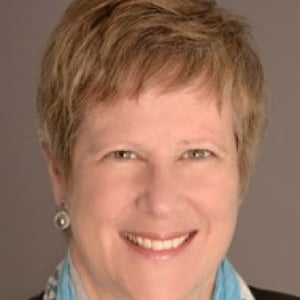
Director, Washington Ofice, Levin Center for Oversight and Democracy
Elise Bean became counsel to U.S. Sen. Carl Levin, D-Mich., on the U.S. Senate Homeland Security and Governmental Affairs Committee in 1985. She worked for him on three subcommittees, under the leadership of Linda Gustitus. In 2003, Levin appointed Bean as staff director and chief counsel of the committee's Permanent Subcommittee on Investigations, which he chaired. Bean retired from the Senate with Levin at the end of 2014.
During her tenure, Bean handled a variety of investigations, hearings and legislation, including matters involving offshore tax abuses, money laundering, foreign corruption, unfair credit card practices, health care fraud, abuses involving derivatives and structured finance, and shell companies with hidden owners. Investigations headed by her included inquiries into the 2008 financial crisis, HSBC money laundering problems, London whale trades at JPMorgan Chase, collapse of Enron, and offshore tax avoidance by Apple, Microsoft and Caterpillar.
In 2016 and 2015, she was included in the Global Tax 50, a list compiled by International Tax Review of the year's top 50 individuals and organizations influencing tax policy and practice. In 2013 and 2011, the Washingtonian magazine named her one of Washington's 100 most powerful women. In 2010, she was selected by the National Law Journal as one of Washington's most influential women lawyers.
Bean graduated Phi Beta Kappa from Wesleyan University in 1978 and earned her law degree, cum laude, from the University of Michigan Law School in 1982. She served as a law clerk to former Chief Judge of the U.S. Claims Court Alex Kozinski, who later served as the chief judge of the Ninth Circuit Court of Appeals. She worked for two years as a trial attorney with the U.S. Department of Justice Civil Frauds Section. Earlier in her career, she worked for U.S. Rep. John Joseph Moakley, D-Mass.
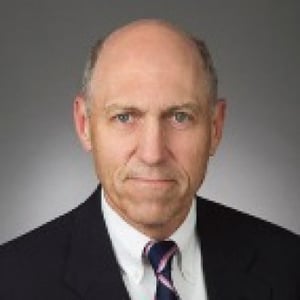
Senior Counsel, Akin Gump
Stanley M. Brand’s practice covers all levels of state and federal courts, with an emphasis on defending the rights of witnesses involved in government investigations.
Mr. Brand has represented numerous individuals and organizations investigated by and/or called to testify before the U.S. Congress. He has developed particular experience in the application of the separation-of-powers doctrine. His diverse litigation and counseling practice also includes representing corporations, trade associations, labor unions and individuals in major Department of Justice, grand jury, and independent counsel investigations and trial proceedings, including Whitewater, Housing and Urban Development, the savings and loan crisis, and the campaign finance task force investigations. Mr. Brand has also represented individuals and entities involved in contested election proceedings.
From 1976 to 1983, Mr. Brand served as general counsel to the U.S. House of Representatives under Speaker Thomas P. “Tip” O'Neill, Jr. and was the House's chief legal officer responsible for representing the House, its members, officers and employees in connection with legal procedures and litigation arising from the conduct of their official activities. Since leaving the House, Mr. Brand has had a succession of high-profile, political and public corruption cases and clients, including former White House aide George Stephanopoulos in the Whitewater investigation, former congressman and Gore 2000 campaign manager Tony Coelho, former House Majority Whip Bill Gray, congressmen Dan Rostenkowski and Joe McDade, and former executive agency officials.
Prior to joining Akin Gump, Mr. Brand was the founding partner of Brand Law Group, a Washington, D.C.-based law firm specializing in matters at the intersection of politics and criminal law.
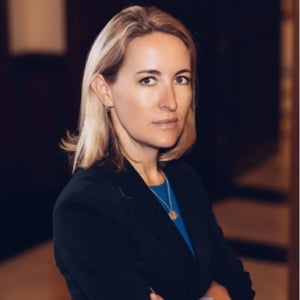
Founder, Quell Strategies
Machalagh Carr is a trusted and strategic counselor with decades of private sector and government experience. She has nimbly navigated the intersection of congressional investigations and oversight, law, geopolitics, and policy, most recently as the top staffer in Article I as Chief of Staff to Speaker of the House Kevin McCarthy.
Prior to her role as Chief of Staff, she served as General Counsel for the Speaker and Office of the Republican Leader at the U.S. House of Representatives. Previously, she served as General Counsel & Parliamentarian for the Committee on Ways and Means, where she handled all legal and procedural issues for the Committee. Before that, she was the Oversight Staff Director at the Committee where she led the investigations and oversight of all issues within the Committee’s jurisdiction. Prior to joining Ways and Means, she served as the Director of Oversight and Investigations for the Committee on Oversight and Government Reform and as Senior Oversight Counsel at the Committee on Natural Resources.
Previously, Machalagh served in the Office of Global Compliance of an international energy company where she conducted internal anti-corruption investigations, audits, and compliance reviews for the company. Before her in-house experience she practiced in the Litigation, White Collar, and Government Investigations Group at Sonnenschein Nath and Rosenthal LLP (now Dentons). Directly after law school, Machalagh clerked for the Chief Judge of the U.S. Court of Appeals for the Armed Forces.
She taught Trial Practice at Catholic University of America, Columbus School of Law and lives in Virginia with her husband and three sons.
Vice President, Networks, The Federalist Society for Law and Public Policy Studies
Nathan Kaczmarek is Vice President for Networks at the Federalist Society. He began his legal career in Detroit representing nationwide clients in all phases of healthcare litigation and complex medical malpractice claims. He has since served as a Senior Legal and Policy Advisor in the U.S. House of Representatives and as Counsel for the Subcommittee on Regulatory Affairs and Federal Management in the U.S. Senate. Prior to overseeing the Networks, he was Director of the Practice Groups, the Regulatory Transparency Project, and the Article I Initiative for the Federalist Society.
Nathan holds degrees from Hillsdale College and Thomas M. Cooley Law School. He is a Liaison Representative for The Administrative Conference of the United States. He also serves as Vice President of the Associates of St. John Bosco, a Virginia based non-profit dedicated to Catholic high school and college students.
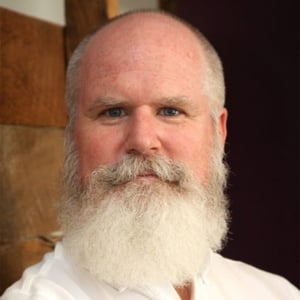
Director of the Congressional Oversight Initiative, The Project On Government Oversight
Justin Rood directs POGO's Congressional Oversight Initiative. The Initiative aims to improve and enhance Congress's ability to do effective oversight by providing information, advice, and other assistance.
Previously, Rood served under Senator Tom Coburn (R-OK) on his Homeland Security and Governmental Affairs Committee as director of investigations on Homeland Security matters.
Prior to that, he worked under Senator Coburn as senior investigator on the Permanent Subcommittee on Investigations, Minority Staff. There he led a 2012 investigation into domestic intelligence fusion centers, finding them "pools of ineptitude, waste, and civil liberties intrusions," in the words of The Washington Post's front-page coverage of the report.
Before joining Senator Coburn’s staff, Rood was an award-winning investigative producer and reporter with ABC News and other outlets. At ABC, Rood helped uncover the D.C. Madam scandal, which led to a number of resignations including that of Deputy Secretary of State Randall Tobias. In 2006, while at Talking Points Memo, Rood was part of a two-person reporting/blogging team that broke the story about the Bush administration dismissing seven U.S. Attorneys during a midterm purge. The story earned Talking Points Memo a Polk Award.
Rood is a 2015 non-resident fellow with the Yale Law School's Information Society Project.
A native Washingtonian, Rood is also co-founder of the Funk Parade, a celebration of local music, arts, and culture that brings the diverse communities of the city together.
Chief Counsel for Oversight (R), Committee on Financial Services, U.S. House of Representatives

Courthouse Steps Preview: PDR Network, LLC v. Carlton & Harris Chiropractic
Bernard Bell, James Conde
Administrative Law & Regulation Practice Group and Regulatory Transparency Project Teleforum
Once upon a time, businesses would offer their products or services by sending you a...
Franchise Tax Board of California v. Hyatt - Post-Argument SCOTUScast
Stephen E. Sachs
SCOTUScast featuring Stephen Sachs
On January 9, 2019, the Supreme Court heard argument in Franchise Tax Board of California...
Necessary & Proper Episode 36: A Conversation with James L. Buckley
Robert R. Gasaway, James L. Buckley, Nathan Kaczmarek
The Hon. James L. Buckley and Robert Gasaway recently joined us to discuss the current...
Understanding Brexit – Facts, Law, Policy, and Principle
Ted R. Bromund, Ben Perry, Tom Rogan
On March 29, Britain will exit the European Union. That simple statement raises a seemingly...
Supply-chain Security in a 5G World: What to do about Huawei and ZTE?
Paul Beaudry, Michael H. Ryan, Dileep Srihari
On March 6th, Huawei announced it was suing the United States government over policies banning...
Carpenter v. Murphy - Post-Argument SCOTUScast
Troy A. Eid
SCOTUScast featuring Troy Eid
On November 27, 2018, the Supreme Court heard argument in Carpenter v. Murphy, a case...
Litigation Update: AT&T and Time Warner Cable
Joshua D. Wright, Jan M. Rybnicek
Corporations, Securities, & Antitrust Practice Group Teleforum
The AT&T/Time Warner merger marks the first time in 40 years that a court has...
A Texas Trade Secrets Case May Have Broader Implications for U.S. Companies
Randy M. Mastro
Last year, a jury in Texas awarded California-based startup HouseCanary a $706 million verdict, one...
Courthouse Steps Oral Argument: The World War I Cross Cases
Mark L. Rienzi
What is the nature of government involvement in religious matters, and what is the future...
Panel III: Bipartisanship and High Profile Congressional Oversight
Elise Bean, Stanley M. Brand, Machalagh Carr, Nathan Kaczmarek, Justin Rood, Jon Skladany
Legislative Branch Review Conference
On February 6, 2019, the Federalist Society's Article I Initiative and the Georgetown Student Chapter...