
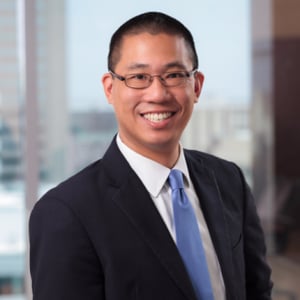
Chair, Issues & Appeals, Hunton Andrews Kurth LLP
The former Solicitor General of West Virginia, Mr. Lin has been on the front lines of many precedent-setting cases in appellate courts across the country, including in a US Supreme Court victory that George Will called “the court’s most severe rebuke of a president” since the Truman administration. Having argued more than 60 appeals, he brings to clients a well-honed ability to identify the most persuasive issues for appeal and a practiced understanding of how best to frame complex legal questions in appellate courts.
With experience in the private sector and multiple branches of government, Mr. Lin’s practice has spanned a wide range of issues, including major questions of constitutional and administrative law at the federal and state levels. On behalf of more than two dozen states, he won a stay from the US Supreme Court of the EPA’s Clean Power Plan. Described by the New York Times as an “unprecedented” order, the stay was the first time the Supreme Court had ever put a regulation on hold before review by a federal appeals court. In that same case, Elbert argued before the en banc DC Circuit in an historic proceeding that one commenter quoted in E&E News compared to “the NBA All-Star Game.” At the state level, Elbert led the effort that persuaded the West Virginia Supreme Court of Appeals to overturn an injunction of the state’s right-to-work law.
In 2013, Mr. Lin was appointed the Solicitor General of West Virginia. During his four-and-a-half year tenure, he served as a member of the Attorney General’s senior management team, oversaw all civil and criminal appeals, and argued nearly two dozen cases in federal and state appellate courts. He authored more than twenty-five briefs in the US Supreme Court and more than forty-five formal Opinions of the Attorney General.
Earlier in his career, Mr. Lin served as a trial attorney in the Federal Programs Branch of the US Department of Justice’s Civil Division, where he received a Special Service Award. He has also been a law clerk at all three levels of the federal judiciary: for Justice Clarence Thomas on the US Supreme Court; for Judge William H. Pryor Jr. on the US Court of Appeals for the Eleventh Circuit; and for Senior Judge Robert E. Keeton on the US District Court for the District of Massachusetts.
Mr. Lin speaks regularly on a wide variety of topics, including constitutional law, administrative law, environmental law, state and federal relations, the US Supreme Court, and appellate practice. He has testified before Congress, and has spoken at the national conventions of the American Bar Association, the Association of Corporate Counsel, the National Asian Pacific American Bar Association, the Federalist Society, Americans for Prosperity, and the American Legislative Exchange Council. He is an elected member of the American Law Institute, a public member of the Administrative Conference of the United States, and a fellow of the American Academy of Appellate Lawyers.
Mr. Lin is admitted to practice in the following federal courts: the Supreme Court of the United States; the First, Second, Third, Fourth, Fifth, Sixth, Seventh, Eighth, Ninth, Eleventh, D.C., and Federal Circuits; the District of Massachusetts; the Northern and Southern Districts of West Virginia; and the Eastern and Western Districts of Virginia.
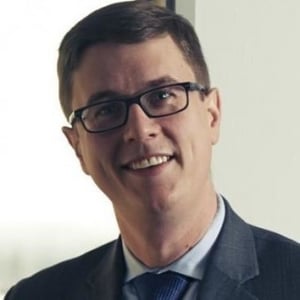
Solicitor General, West Virginia
Michael Williams is the Solicitor General for the State of West Virginia. In that role, Michael represents the State in appeals before state and federal courts, including the U.S. Supreme Court. Michael also coordinates strategic affirmative litigation on the State’s behalf, including litigation against the federal government.
Before joining the Attorney General’s Office, Michael co-led the complex briefing and appeals group at a Michigan boutique firm, representing Fortune 50 companies and others in actions across the country. He also practiced in the litigation groups of two Washington, D.C. firms and clerked with the Appellate Division of the U.S. Attorney’s Office for the District of Maine.
Michael’s work has been honored with a Best Brief Award from the National Associationof Attorneys General and a Leader in the Law Award from Michigan Lawyers Weekly. He often speaks and writes on appellate-related issues.
Michael clerked twice in the Fourth Circuit: once with then-Chief Judge Deborah Chasanow of the U.S. District Court for the District of Maryland and later with Judge G. Steven Agee of the U.S. Court of Appeals for the Fourth Circuit. He attended George Washington University Law School and Bates College.
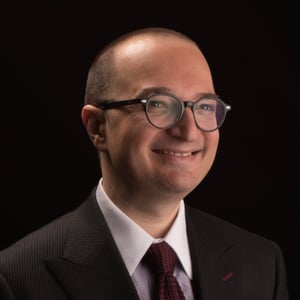
Professor of Law, University of Baltimore School of Law (on leave); Senior Counsel, U.S. Department of Justice
Professor Dolin’s scholarship centers on patent law with a specific focus on how the patent regime affects innovation, especially in bio-pharmaceutical areas. His work in these areas includes a number of scholarly articles, presentations, amicus briefs, and congressional testimony.
Dr. Dolin is currently on leave from his academic duties while he serves as Senior Counsel in the Civil Rights Division of the United States Department of Justice.
From January 2020 to January 2022, Professor Dolin served as a resident Associate Justice of the Supreme Court of the Republic of Palau. In this role, he (together with other members of the Court) heard appeals in civil, criminal, administrative, and constitutional law matters.
Prior to joining the University of Baltimore School of Law, Professor Dolin held visiting appointments in other law schools. He also served as a law clerk to the Hon. Pauline Newman, of the U.S. Court of Appeals for the Federal Circuit and the late Hon. H. Emory Widener Jr., of the U.S. Court of Appeals for the Fourth Circuit.
Rumors that he has a real Russian bear in his office are entirely true.
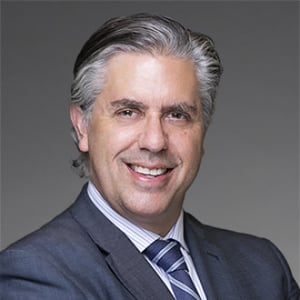
Partner at K&L Gates, Former OFCCP Director, and President-Elect of the Bar Association of the District of Columbia
Craig E. Leen is a partner in the Washington, DC office of K&L Gates, where he is a member of the Labor, Employment, and Workplace Safety practice group. Mr. Leen is also the President-Elect of the Bar Association of the District of Columbia.
Mr. Leen was formerly the Director of the Office of Federal Contract Compliance Programs (OFCCP) at the U.S. Department of Labor, where he reported directly to the Secretary and Deputy Secretary of Labor.
Mr. Leen serves as a Professorial Lecturer in Law and Professor of Government Lawyering at The George Washington University Law School, as Vice Chair of the District of Columbia Advisory Committee to the U.S. Commission on Civil Rights, as Co-Chair of the DC Family Support Council, and as Chair of the Civil and Human Rights Committee of the Bar Association of the District of Columbia.
Prior to his federal service at OFCCP, Mr. Leen was the City Attorney of the City of Coral Gables, and before that was Chief of the Appeals Section and then Chief of the Federal Litigation Section at the Miami-Dade County Attorney's Office. Earlier in his career, Mr. Leen served as a law clerk to the Honorable Robert E. Keeton, United States District Judge, District of Massachusetts.
In recognition of his public service, Mr. Leen received the Secretary's Exceptional Achievement Award - Professional while at the U.S. Department of Labor, and the Paul S. Buchman Award for Outstanding Contribution in the Area of Legal Public Service while in local government.
Mr. Leen is admitted to practice law in the District of Columbia, Florida, Massachusetts, and New York, and is also board certified by The Florida Bar in city, county, and local government law.
Mr. Leen received his Juris Doctorate from Columbia Law School, graduating as a Harlan Fiske Stone Scholar, and having served as a teaching fellow in both Contracts and Torts. Mr. Leen received his Bachelor of Arts, cum laude, from Georgetown University, where he majored in both Government and Economics.
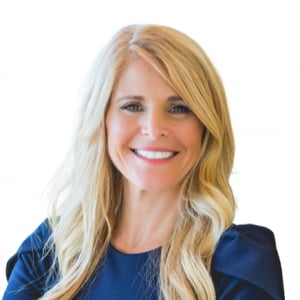
Senior Legal Counsel, Independent Women's Forum
Beth Parlato is the Senior Legal Advisor of Independent Women’s Law Center. Prior to joining IWLC, Beth was a trial litigator in New York State for over 30 years. During her time in private practice, Beth handled an array of matters in the areas of civil, family and business law, including representing not-for-profit organizations and churches. In 2020, she was among the first attorneys in the nation to represent clients in medical freedom and individual liberty litigation across the United States fighting unconstitutional COVID-19 mandates. Beth also served as a judge in New York for 12 years, presiding over criminal and civil matters, and had the honor of being the first female elected judge in Genesee County, NY. She has been a guest contributor to Fox News since 2016, as well as a frequent guest on conservative and Christian radio programs. Beth received a B.A. in Political Science from the University at Buffalo and earned her J.D. from Albany Law School in 1993.
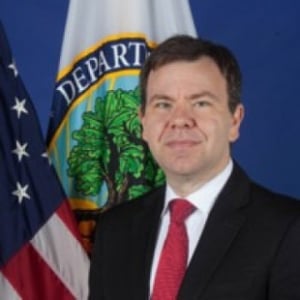
General Counsel, Mountain States Legal Foundation
William E. Trachman is General Counsel for Mountain States Legal Foundation, where he protects the rights of individuals to live freely and securely under the U.S. Constitution. Previously, he was appointed to serve in the Department of Education as Deputy Assistant Secretary in the Office for Civil Rights. Prior to his appointment, he served as General Counsel to the Douglas County School District, where he helped litigate the fight for school choice in the school district. Presently, Mr. Trachman serves as Chair of the Colorado Federalist Society and the Vice Chair of the U.S. Commission on Civil Rights’ Colorado Advisory Board. He previously taught as an Adjunct Professor at the University of Denver, Sturm College of Law. He attended U.C. Berkeley for both undergraduate and law school, and then clerked for the Honorable Harris Hartz on the 10th Circuit Court of Appeals. Mr. Trachman is licensed in Colorado, California, and Washington, D.C.
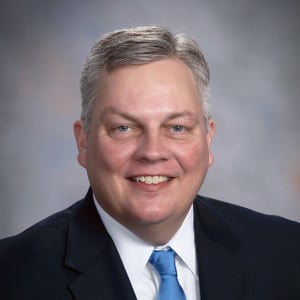
University Professor of Law and Religion and Director of the Eleanor H. McCullen Center for Law, Religion and Public Policy, Villanova University Charles Widger School of Law
Michael P. Moreland was appointed University Professor of Law and Religion and Director of the Eleanor H. McCullen Center for Law, Religion and Public Policy at Villanova University in 2017. Professor Moreland joined the Villanova faculty in 2006 and served as Vice Dean from 2012 to 2015. His research is primarily in the areas of torts, law and religion, constitutional law, and Catholic social thought, and he regularly teaches Torts, First Amendment, seminars in law and religion, and undergraduate courses in ethics.
Professor Moreland is the co-editor of Christianity and Private Law (Routledge, 2021), and his most recent publications include: “The Authority of Tradition: John Henry Newman and Legal Theory” in Christianity and the Making of Irish Law (Routledge, 2025); “Christianity and Torts” in The Oxford Handbook on Christianity and Law, (Oxford University Press, 2023); “Germaneness and Religious Liberty” in the Notre Dame Law Review (2023); “Contingency and Contestation in Christianity and Liberalism” in the Notre Dame Law Review (2023); “Friendship as the Primary Purpose of Law” in The American Journal of Jurisprudence 279 (2022); and “The Moral of Torts” (with Jeffrey Pojanowski) in Christianity and Private Law (Routledge, 2021).
Professor Moreland was a Visiting Professor of Law at the University of Notre Dame and the Mary Ann Remick Senior Visiting Fellow at the Notre Dame Center for Ethics and Culture from 2015 to 2017. He was the Forbes Visiting Fellow at Princeton University in the James Madison Program during academic year 2010-11. He has served as the project leader for grants from the John Templeton Foundation and the Charles Koch Foundation. He serves as the Chair of the Federalist Society’s Religious Liberties Practice Group Executive Committee and the Chair of the Board of Trustees of the Institute for Advanced Catholic Studies at the University of Southern California.
Professor Moreland received his BA in philosophy from the University of Notre Dame, his MA and PhD in theological ethics from Boston College, and his JD from the University of Michigan Law School. Following law school, Professor Moreland clerked for the Honorable Paul J. Kelly Jr., of the United States Court of Appeals for the Tenth Circuit and was an associate at Williams & Connolly LLP in Washington, DC, where he represented clients in First Amendment, professional liability, and products liability matters. Before coming to Villanova, he served as Associate Director for Domestic Policy at the White House under President George W. Bush, where he worked on a range of legal policy issues, including criminal justice, immigration, civil rights, and liability reform.
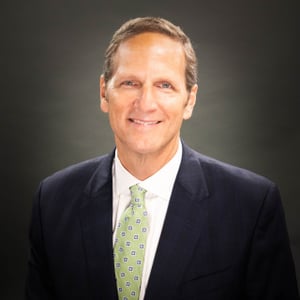
Senior Counsel, Alliance Defending Freedom
Phil Sechler serves as senior counsel at Alliance Defending Freedom, where he focuses on academic and religious freedom.
Before joining ADF, Sechler had a long career in private practice, with substantial first-chair trial experience in courts around the country on a variety of complex litigation matters. Sechler spent most of his career as a partner in the powerhouse law firm of Williams & Connolly LLP in Washington, D.C. He also was a partner in the litigation boutique of Robbins, Russell, Englert, Orseck & Untereiner LLP.
In August 2013, Sechler took a break from law practice to become a Distinguished Visitor from Practice at Penn State Law School, where he spent four years teaching courses in Evidence, Professional Responsibility, and Advocacy. He also taught at the Antonin Scalia School of Law at George Mason University and at the Georgetown University Law Center, where he continues to teach a course on Professional Responsibility.
Sechler received his bachelor’s degree with high distinction from Pennsylvania State University, and he earned his Juris Doctor from Georgetown University Law Center, where he graduated summa cum laude and was Editor-in-Chief of The Georgetown Law Journal. Following law school, he clerked for the Honorable Francis D. Murnaghan, Jr., of the U.S. Court of Appeals for the 4th Circuit.
Sechler is an active member of the District of Columbia Bar and is admitted to practice before the U.S. Supreme Court and numerous federal appellate and trial courts.
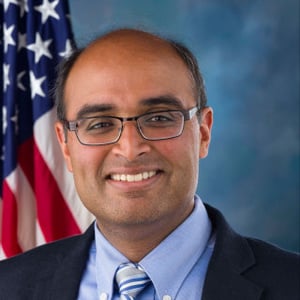
Consultant, American Edge Project and U.S. Chamber of Commerce
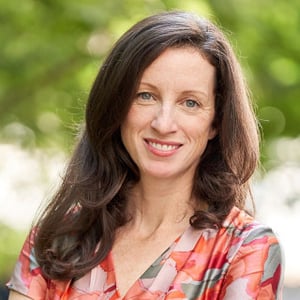
David Daniels Allen Distinguished Chair of Law, Vanderbilt University Law School
Rebecca Haw Allensworth studies antitrust and professional licensing. Her work on antitrust focuses on how to adapt competition policy to address competition problems posed by tech platforms and her research on professional licensing explores how lawmakers should balance the need for expertise in regulating the professions with the problems that can arise from self-regulation. She is currently writing The Licensing Racket, a book about professional licensing and self-regulation. Her article about medical licensing boards and unethical prescribers, “Licensed to Pill,” appeared in The New York Review of Books in July 2020. Her work has been cited by the U.S. Supreme Court and has received the thirteenth annual Jerry S. Cohen Memorial Fund Writing Award for groundbreaking antitrust scholarship.
Professor Allensworth earned her undergraduate degree from Yale and an M.Phil. from Cambridge University before earning her J.D. at Harvard Law School, where she served as articles editor of the Harvard Law Review. She served as law clerk to Judge Richard A. Posner of the U.S. Court of Appeals for the Seventh Circuit and then as a Climenko Fellow at Harvard Law School before coming to Vanderbilt. She held the Tarkington Chair of Teaching Excellence before her appointment to a David Daniels Allen Chair in Law in 2022.
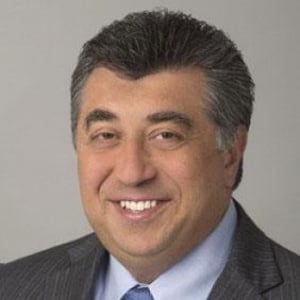
Counsel, Cadwalader, Wickersham & Taft LLP; Senior Competition Counsel, TechFreedom
Bilal Sayyed represents clients before the Federal Trade Commission (FTC) and Department of Justice (DOJ) in significant merger, civil and criminal antitrust matters. A significant portion of his practice involves representing investment funds on antitrust and Hart-Scott-Rodino (HSR) Act compliance matters; he has also provided expert witness services related to HSR compliance. Bilal also counsels clients before the FTC in consumer protection and privacy investigations. He maintains an active amicus and appellate brief writing practice in antitrust litigation and antitrust merger matters.
Prior to joining Cadwalader, Bilal was the Director of the FTC’s Office of Policy Planning (OPP) (2018-2021). In that role, he provided legal and policy advice to the Chairman and Commissioners on antitrust and consumer protection matters and worked closely with the senior and career leadership of the FTC’s Bureaus of Competition, Consumer Protection, and Economics. Bilal previously served as an Attorney Advisor to FTC Chairman Timothy J. Muris from 2001 to 2004. In that role, Bilal advised the Chairman on matters involving a wide spectrum of industries, including chemical and mining, petroleum and natural gas, health care and pharmaceutical, defense and transportation, gaming, various consumer products and retail operations, and professional associations and standard-setting organizations.
Bilal has taught antitrust and competition law at the George Mason University School of Law since 2011.
Bilal received his B.A. from Case Western Reserve University, and a J.D. from George Mason University School of Law. He is admitted to practice in the District of Columbia and the State of New York, as well as before the U.S. District Courts for the District of Colorado and the District of Columbia, the U.S. Court of Appeals for the District of Columbia Circuit, the Fifth Circuit, the Ninth Circuit, and the U.S. Supreme Court.
Bilal is the host of Rethinking Antitrust, a podcast published by TechFreedom that examines the economics, institutions, law, legislation, and policy goals of antitrust enforcement.
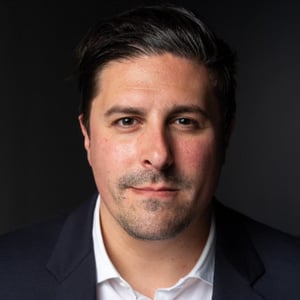
President, Digital Progress Institute
Joel Thayer, President of the Digital Progress Institute, previously was an associate at Phillips Lytle. Before that, he served as Policy Counsel for ACT | The App Association, where he advised on legal and policy issues related to antitrust, telecommunications, privacy, cybersecurity and intellectual property in Washington, DC. His experience also includes working as legal clerk for FCC Chairman Ajit Pai and FTC Commissioner Maureen Ohlhausen. Additionally, Joel served as a congressional staffer for the Hon. Lee Terry and Hon. Mary Bono.
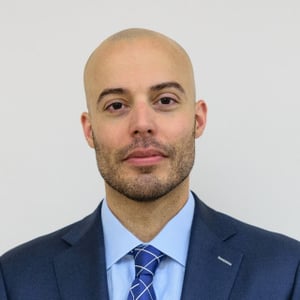
Executive Director, Wyoming Stable Token Commission
Anthony Apollo is the Exeuctive Director of the Wyoming Stable Token Commission, which is responsible for developing and issuing the first publicly-issued, fully-reserved stablecoin in the United States, the Wyoming Stable Token (WYST). The WYST is backed by U.S. Treasury securities and cash, and is designed to be redeemable for U.S. dollars.
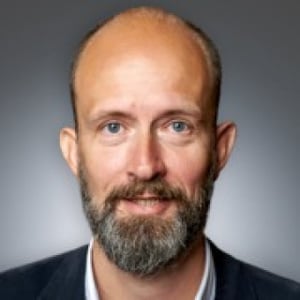
Beth and Marc Goldberg Professor of Law, Cornell Law School
Dan Awrey is the Beth and Marc Goldberg Professor of Law at Cornell Law School. Dan’s teaching and research interests reside in the field of financial regulation, including the regulation of banks, investment funds, derivatives markets, payment systems, and financial market infrastructure. Dan has undertaken research and provided advice at the request of organizations including the Bank for International Settlements, U.S. Treasury Department, Federal Reserve Board, the President’s Working Group on Financial Markets, Her Majesty’s Treasury, UK Financial Conduct Authority, Commonwealth Secretariat, Canadian Department of Finance, and European Securities and Markets Authority. His research has been featured in publications including the Yale Law Journal, New York University Law Review, Georgetown Law Journal, Duke Law Journal, Cornell Law Review, Yale Journal on Regulation, Harvard Business Law Review, and the Journal of Comparative Economics. Dan is a co-author of one of the leading textbooks on financial regulation, Principles of Financial Regulation, published by Oxford University Press. He is also a founding co-managing editor of the Journal of Financial Regulation. His latest book, Beyond Banks: Technology, Regulation, and the Future of Money was published by Princeton University Press in October 2024.
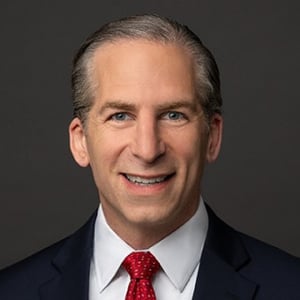
Partner, Cahill Gordon & Reindel LLP; Special Professor of Law, Maurice A. Dean School of Law, Hofstra University
Gary E. Kalbaugh is a nationally recognized leader in commodities, futures, and derivatives law.
Gary is a partner in the New York office of Cahill Gordon & Reindel LLP as well as a Special Professor of Law at the Maurice A. Deane School of Law at Hofstra University, where he teaches derivatives law and banking law.
A preeminent authority in the derivatives field, Gary is the author of the principal treatise Derivatives Law and Regulation (3rd ed. 2021) and serves as Editor-in-Chief of the Futures and Derivatives Law Report, the foremost industry publication. He is a past chair of the New York City Bar Association’s Committee on the Regulation of Futures and Derivatives and has over 15 years of experience as a professor teaching derivatives and banking law.
Gary is the leading derivatives lawyer in the digital assets space, and one of few to truly understand the technical side of emerging financial technology. He serves on the CFTC’s Future of Finance Subcommittee, reflecting his recognized leadership at the intersection of financial regulation and emerging technologies. A frequent speaker, writer, and commentator on derivatives, banking law, artificial intelligence, and digital assets regulation, he has served as conference co-chair for the American Bar Association’s “Artificial Intelligence and Derivatives Market” conference and regularly speaks at major industry conferences on cutting-edge issues in financial regulation and technology. Gary is sought after as a thought leader on the evolving landscape of digital asset regulation and the regulatory implications of AI in financial markets.
At ING, Gary served as Deputy General Counsel and Director, where he chaired swap dealer and security-based swap dealer regulatory committees and provided strategic leadership on U.S., European, and other regulations impacting the organization. He had global responsibility for U.S. derivatives regulatory issues and maintained strong relationships with regulators. Gary also co-developed ING legal’s global artificial intelligence training program and was responsible for U.S. regulatory issues relating to ING’s blockchain-based pilot programs and crypto initiatives.
Previously, Gary served as a lecturer-in-law at Columbia Law School and held senior roles at WestLB, where he was executive director, counsel, and chief U.S. data protection officer and chaired the global Dodd-Frank and underwriting committees. He began his career as an associate at a notable international firm.
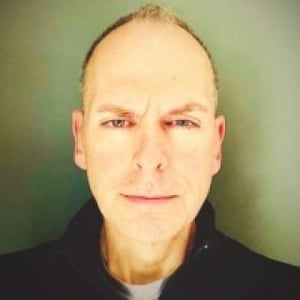
Head of Legal for Blockchain, Crypto and Digital Currencies, Paypal Inc.
Jerome Roche is an experienced legal professional specializing in blockchain, cryptocurrency, and digital currencies, currently serving as the Head of Legal at PayPal. Previously, Jerome held partner positions at Linklaters and Mayer Brown, and served as Associate General Counsel at TIAA-CREF, along with an associate role at WilmerHale. Jerome earned a Juris Doctor from the University of Michigan Law School (1994-1997) and a Bachelor of Science in Mathematics from Purdue University (1988-1992)
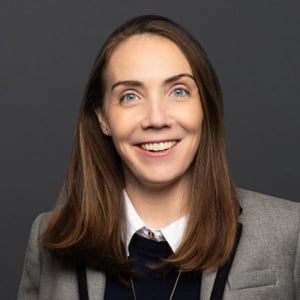
General Counsel and Corporate Secretary, Circle
Sarah is responsible for leading Circle’s legal function to progress the company’s vision and priorities across commercial and M&A transactions, regulatory and product initiatives, corporate governance, and litigation. Sarah honed her corporate legal practice at Sullivan & Cromwell LLP before transitioning in-house, most recently serving as the Chief Legal Officer of a PE-backed company.
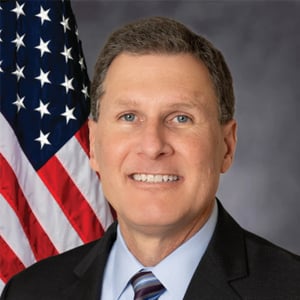
United States Attorney, Eastern District of California
Mr. Grant was appointed by Attorney General Pam Bondi to serve as the United States Attorney for the Eastern District of California beginning on August 11, 2025. Pursuant to 28 U.S.C. § 546(d), he was further appointed by the district court effective December 9, 2025.
Mr. Grant is a veteran of the Department of Justice, having served twice in Washington, D.C.: from 1991 to 1993 as an Attorney-Adviser in the Office of Legal Counsel, and from 2017 to 2021 as a Deputy Assistant Attorney General in the Environment and Natural Resources Division (ENRD). During his tenure at ENRD, he supervised more than a hundred Department litigators advancing the interests of the United States and its agencies in both enforcement and defensive matters, both civil and criminal.
In addition to his service in the Department, Mr. Grant has decades of experience in private practice in Washington, D.C. and Sacramento. That experience includes arguments in the U.S. Supreme Court, the California Supreme Court, and numerous other federal and state courts.
Mr. Grant served as a law clerk to Chief Justice Warren E. Burger (retired) and Associate Justice Clarence Thomas during the Supreme Court’s October 1994 Term. Earlier he served as a law clerk to Judge Edith H. Jones of the U.S. Court of Appeals for the Fifth Circuit in Houston, Texas.
Mr. Grant grew up in Modesto, California and raised his family in Sacramento County. He attended the University of California, Berkeley, from which he earned a bachelor’s degree in economics (1986) and a law degree (1990).
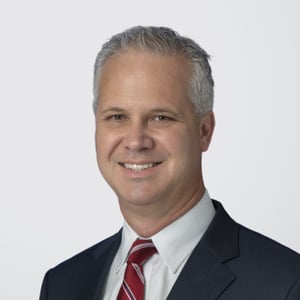
Partner, Hunton Andrews Kurth
Mr. Leopold is a Partner with the law firm of Hunton Andrews Kurth in Washington, DC. He is the former Senate-confirmed general counsel of the U.S. EPA from 2018-2020, and he previously was a litigator at the U.S. Department of Justice, Environment and Natural Resources Division form 2007-2013. As EPA General Counsel, he counseled on the development and defense of EPA’s most significant rulemakings, including the Affordable Clean Energy Rule, the Navigable Waters Protection Rule, and the Safe Affordable Fuel‐Efficient (SAFE) Vehicles Rule, as well as several pesticide actions. He was personally involved in defending EPA in litigation, including the County of Maui v. Hawaii Wildlife Fund in the U.S. Supreme Court. Mr. Leopold’s prior government service also includes working in Florida as general counsel of the Florida Department of Environmental Protection. He now represents clients in regulatory advocacy before federal agencies, litigates federal environmental actions, and defends clients with EPA enforcement issues.
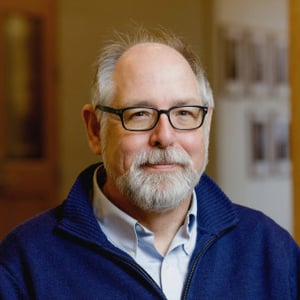
Emmett Visiting Assistant Clinical Professor of Law in Environmental Law, Harvard Law School
Andrew Mergen is a Visiting Assistant Clinical Professor of Law and Faculty Director of the Emmett Environmental Law & Policy Clinic. Prior to joining the Harvard Law School faculty, Andrew Mergen served in the Appellate Section of the Environment & Natural Resources Division (ENRD) at the United States Department of Justice. Professor Mergen began his career at the Justice Department in the Honors Program and concluded his career as Chief of ENRD’s Appellate Section. He has presented oral arguments in all 13 federal courts of appeals, including two en banc courts, and before several state intermediate and supreme courts. He has also worked on over a dozen merits cases in the Supreme Court of the United States. In addition, in 2009, Professor Mergen assisted the Office of White House Counsel on the confirmation of the Honorable Sonia Sotomayor as Associate Justice of the Supreme Court. During his career at the Justice Department, Professor Mergen received the Attorney General’s Award for Distinguished Service three times. He also received ENRD’s Muskee-Chafee Award, honoring his work’s significant contribution to protecting the environment.
Before entering clinical teaching, Professor Mergen taught at several law schools including, Harvard Law School (Advanced Environmental Law), the University of Michigan Law School (Natural Resources Law) and the William S. Richardson School of Law, University of Hawaii-Manoa (Administrative Law). Professor Mergen has written about federal water rights in “A Misplaced Sensitivity: The Draft Opinions in Wyoming v. United States” (68 Colo. L. Rev. 683 (1997), with Sylvia F. Liu); energy development on public lands in “Surface Tension: The Problem of Federal Private Split Estates” (33 Land & Water L. Rev. 419 (1998)); climate change and the Endangered Species Act in “The Role of Climate Change in ESA Listing Decisions” (53 Rocky Mt. Min. L. Fdn. 67 (2016), with Murray Feldman) and the accommodation of Native American sacred sites on federal land in “Finding the Path Forward for Indigenous Sacred and Cultural Spaces on Federal Public Land,” 68 Nat. Resources & Energy L. Inst. 32-1 (2022). Professor Mergen is a graduate of the University of Wisconsin—Madison and the George Washington University Law School.
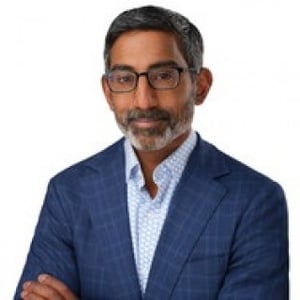
Senior Vice President of Programs, Earthjustice
Sam Sankar is Earthjustice’s Senior Vice President for Programs. Sam leads our Program Leadership Team, which develops Earthjustice’s strategy for carrying out our mission through litigation, lobbying and regulatory advocacy, and communications.
Sam has been working on environmental issues throughout his career, which has included service as a line attorney at the Justice Department’s Environment and Natural Resources Division, as a senior executive at General Electric, and as deputy chief counsel of a presidential commission formed to investigate the 2010 Deepwater Horizon oil spill. He has also worked as a boat captain, machinist, and senior advisor to The Nature Conservancy.
Sam received his B.S. in civil engineering from Cornell University, an M.S. in environmental engineering from Stanford University, and his law degree from the University of California, Berkeley. After law school, he clerked for Judge William Fletcher of the Ninth Circuit, Judge Louis Pollak of the Eastern District of Pennsylvania, and Justice Sandra Day O’Connor of the U.S. Supreme Court.
Sam lives in Washington, D.C., with his wife and two children.
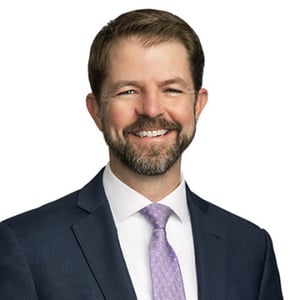
Partner, Baker Botts LLP
Drawing from two decades of experience in senior government, in-house corporate, and private law firm roles, Jeff Wood helps clients with federal enforcement, compliance, litigation, permitting, and policy challenges primarily in the energy and environmental fields.
Prior to joining Baker Botts, Mr. Wood served for almost two years as the Acting Assistant Attorney General (AAG) for the Justice Department's Environment and Natural Resources Division (ENRD). In that capacity, Mr. Wood led ENRD and its more than 600 attorneys and staff representing EPA, Departments of the Interior, Energy, and Defense, and other agencies in civil and criminal enforcement and defensive environmental, energy, and natural resources litigation.
As the top official in ENRD, Mr. Wood managed a complex organization with an annual budget exceeding $200 million and a docket of more than 6,000 cases and matters. E&E News noted that “Wood maintains a strong relationship with ENRD's career staff” (Greenwire, Oct. 31, 2018). He previously served on the staff of the United States Senate Committee on Environment and Public Works.
At the Justice Department, Mr. Wood oversaw the Division's civil and criminal enforcement programs and was responsible for developing legal strategies and approving briefs in key cases including filings before the Supreme Court and Courts of Appeals in coordination with the Office of Solicitor General. In this role, Mr. Wood held the highest level security clearance and worked closely with top leadership at DOJ, EPA, the Interior Department, USDA, the Energy Department, Transportation Department, FERC, NRC and across the Executive Branch, including the White House.
With many years of both private law firm and in-house legal experience, Mr. Wood has handled complex environmental enforcement, regulatory, policy, and litigation matters for electric utilities, energy companies, maritime companies, mining companies, real estate developers, financial institutions, industrial companies and manufacturers, business coalitions, associations, small businesses, and individual property owners. Drawing from his experiences in-house, Mr. Wood brings a common-sense, cost-effective, client-focused approach to his work every day.
With a strong national reputation, Mr. Wood is a frequent speaker on environmental law and policy matters, with recent speeches and presentations at the Environmental Law Institute, Harvard Law School, Vanderbilt Law School, American University Law School, American Bar Association Environmental Law Conferences, the Texas Environmental SuperConference, Air Force Judge Advocate General School's Advanced Environmental Law Course, Baker Institute's Center for Energy Studies (Rice University), and many other venues. He frequently appears in national news to share insights on significant environmental law and policy issues, including recent quotes in the New York Times, Washington Post, Wall Street Journal, Bloomberg, Law360, and E&E News, among others.
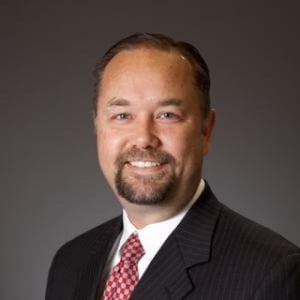
Senior Counsel, Director of Center for Academic Freedom, Alliance Defending Freedom
Tyson Langhofer serves as senior counsel and director of the Center for Academic Freedom with Alliance Defending Freedom.
Langhofer represents students and faculty at public high schools and colleges in defending their First Amendment rights. For example, in Denton v. Hecht, he successfully defended a Florida State University student after he was removed as Student Senate President simply for sharing his Catholic views in a private group chat. In Cross v. Loudoun County Public Schools, he successfully defended an elementary school gym teacher after the school suspended him for peacefully sharing his views on a proposed policy at a public school board meeting.
Langhofer has extensive experience in civil litigation and constitutional law. Before joining ADF, Langhofer was a partner with Stinson LLP, where he worked as a commercial litigation attorney from 2000 until he joined ADF in 2015.
Langhofer is Peer Review Rated AV® Preeminent in Martindale-Hubbell. He is a sought-after speaker on legal and cultural issues. He regularly comments on free speech issues in television, radio, and print media. He has appeared as a guest and written pieces for numerous major media outlets, including The Washington Post, The Washington Times, USA Today, Townhall, The Federalist, and The Daily Wire.
Langhofer earned his Juris Doctor from Regent University School of Law in 1999, graduating cum laude. Langhofer is admitted to practice in multiple states, the Supreme Court, and numerous federal district and appellate courts.
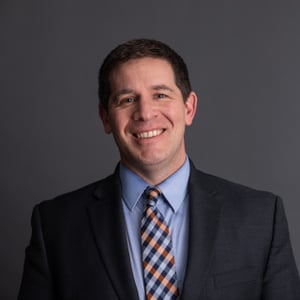
Vice President for Legal Strategy, Stand Together
Casey Mattox is Vice President for Legal Strategy at Stand Together and Senior Advisor at
Americans for Prosperity. In these roles he advocates for and creates strategies and
partnerships to ensure a constitutionally limited government that protects the civil liberties of all
Americans. Prior to joining Stand Together and AFP Casey’s legal career focused on defending
the First Amendment rights of students, faculty, healthcare workers and religious organizations.
Casey has a J.D. from Boston College School of Law and an undergraduate degree from the
University of Virginia. You can find him on Twitter at @CaseyMattox_ and on LinkedIn at
@Casey-Mattox-ST.
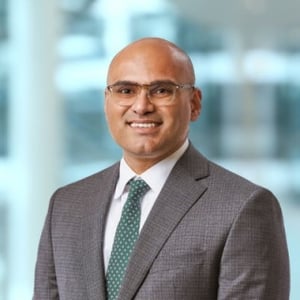
Partner, Holtzman Vogel
Mohammad “Mo” Jazil is a partner with Holtzman Vogel. His broad litigation practice includes state and federal constitutional cases, financial disputes, environmental disputes, white-collar criminal matters, and government investigations. Mohammad has served as first chair in federal and state court trials. He has briefed and argued dispositive motions and appeals before the federal courts, state appellate courts, and state supreme courts. He has also briefed cases before the U.S. Supreme Court, though he has never argued a case there.
Chambers USA calls Mohammad “a very good thinker,” “fantastic,” and “an excellent litigator.”
Since the summer of 2018, Mohammad has represented two Florida Governors and four Florida Secretaries of State on election-related and redistricting matters before federal and state trial courts, the Florida Supreme Court, the Eleventh Circuit, and the U.S. Supreme Court. Notably, this work includes wins in nine federal cases related to Florida’s 2018 recounts; the successful defense of Florida’s felon re-enfranchisement program; federal and state-court decisions upholding Florida’s most recent congressional plan; and the defense of various election-related statutes.
Mohammad represents other public officials as well. He has represented two Speakers of the Florida House of Representatives on issues as varied as cannabis regulation and transportation policy. And he has represented Florida’s Surgeon General, members of Florida’s Boards of Medicine and Osteopathic Medicine, and the head of Florida’s Medicaid agency on health-policy issues.
Finally, Mohammad routinely represents companies and individuals on a variety of issues. This work includes pricing and tax disputes involving some of the country’s largest companies, commercial disputes where he has obtained and collected on eight-figure trial judgments, and criminal proceedings.
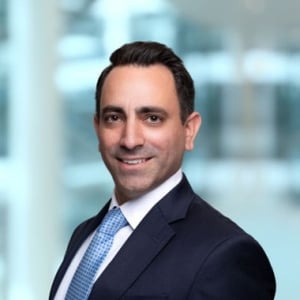
Partner, Holtzman Vogel
Mark Pinkert is a litigation and appellate partner with Holtzman Vogel. He represents clients at every stage of litigation, in state and federal courts around the country. He has extensive experience in constitutional law, administrative law, political law, antitrust, white collar defense, and complex commercial disputes. Additionally, Mark maintains an active practice focused on religious freedom, First Amendment rights, and combatting antisemitism, especially on college campuses.
Mark is a formidable writer and advocate. He has drafted letters, white papers to government agencies, legal memoranda, regulatory comments, complaints, dispositive motions, motions in limine, appellate briefs, and several briefs in the U.S. Supreme Court. His incisive and persuasive writing style has helped him earn key victories for his clients. Mark has argued a Daubert motion in a multi-billion-dollar environmental dispute and was recently appointed lead counsel by the Eleventh Circuit Court of Appeals to represent an indigent petitioner in a habeas corpus appeal. Mark’s legal commentary has been published in The Wall Street Journal, National Review, Times of Israel, Daily Business Review, University of Miami Law Review, and many others.
Mark is also an adept legal strategist, advising some of the largest companies in the world on their most pressing issues. Rather than merely react to problems, he provides holistic thinking and anticipates issues before they arise. He helps clients develop proactive plans of action that mitigate risks, avoid conflict, and reduce costs.
Before joining Holtzman Vogel, Mark worked at a global law firm and clerked for the Honorable Adalberto Jordan (11th Cir.) and the Honorable Roy K. Altman (S.D. Fla.). Clerking at both the trial and appellate levels has given him rare insight into the federal court system and has sharpened his advocacy.
At Yale Law School, Mark was an Articles Editor for the Yale Law Journal and an editor for the Yale Journal of Law & Humanities. He was also a research assistant and taught constitutional law to high school students in New Haven.
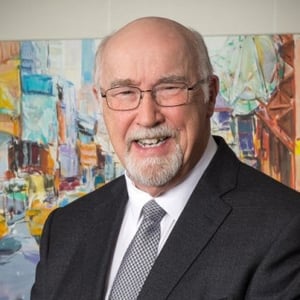
Principal, Dennis R. Adams Consulting; former CEO, American Share Insurance
Dennis R. Adams is currently the Principal of Dennis R. Adams Consulting, assisting credit unions, financial organizations, and businesses around the country. He is also the former President and CEO American Share Insurance. During the 1990s and early 2000s, Dennis was an adjunct instructor of finance with undergraduates at Franklin University,Ashland University, and Capital University’s MBA programs in his hometown of Columbus, Ohio.
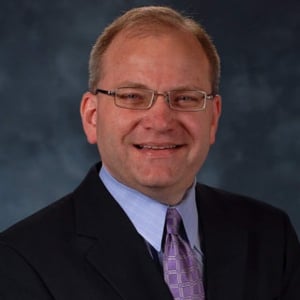
Partner, Manatt, Phelps & Phillips, LLP
Bryan Schneider is partner in Manatt’s Chicago office and a member of the firm’s industry-leading consumer financial services practice, where he focuses on advising clients through the gamut of consumer financial services regulatory and enforcement matters, particularly as it relates to supervision, enforcement and fair lending.
Prior to joining the firm, Bryan served as Associate Director for the Division of Supervision, Enforcement and Fair Lending at the Consumer Financial Protection Bureau (CFPB). In this role, he was tasked with overseeing issues related to student loan origination and servicing, mortgage origination/services, auto finance, credit card account management, debt collection, and payday and other small dollar lending. He was also a member of key interagency governing organizations including the Task Force of Supervision of the Federal Financial Institutions Examination Council.
Bryan’s experience also includes serving as Secretary of the Illinois Department of Financial and Professional Regulation, a cabinet-level agency, under Governor Bruce Rauner. During this time, Bryan led numerous initiatives to place the state at the forefront of innovation in the financial services industry, including leading the conversion to the first-ever online, paperless process for professional licensure and achieving the first credit union section accreditation by the National Association of State Credit Union Supervisors. He also led the creation of the Illinois Blockchain Initiative, where he advised organizations on how they can leverage blockchain technology to create more efficient, integrated and trusted services.
Before his tenure in government, Bryan held health care-related leadership positions at the largest retail, infusion and specialty pharmacy provider in the United States. While in this role, he helped develop policies concerning health care services and reimbursement, and provided regulatory and transactional support for joint ventures with hospitals, health systems and 340B programs. Bryan also served on Corporate Compliance and Disclosure Committees responsible for ensuring compliance with applicable health care and SEC securities requirements.
Bryan has served on the Executive Committee of the Conference of State Bank Supervisors (CSBS) and chaired its Non-Depository Supervisory Committee. He also served on the committee that was responsible for the administration of the Nationwide Multistate Licensing System & Registry (NMLS). Additionally, Bryan served on the Executive Committee of the National Association of State Credit Union Supervisors (NASCUS).
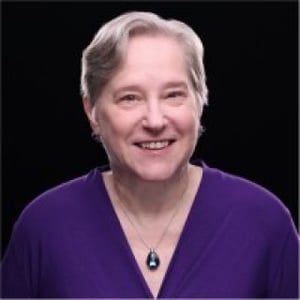
Partner, Davis Polk & Wardwell LLP
Meg is head of Davis Polk's Financial Institutions practice and a member of its Fintech team. She provides strategic bank and financial regulatory advice to many of the largest U.S. and non-U.S. financial institutions, regional banks, fintechs, cryptocurrency exchanges and other digital assets companies.
In 2023, she led teams representing the Signature and Silicon Valley bridge banks and advised JPMorgan on its acquisition of First Republic. This work built on years of representing more than two dozen clients on living wills.
She has been involved in several regional bank combinations. She also advises on corporate governance, consent order remediation, bank chartering, payment systems, fintech partnerships, bank powers and activities, cryptocurrencies, digital assets, securities disclosure, capital and liquidity and the Federal Reserve’s liquidity programs.
Meg is a member of the FDIC’s Systemic Resolution Advisory Committee. She co-authored Financial Regulation: Law and Policy, a leading textbook, and FinTech Law: The Case Studies.
In 2023, she was named a Law360 “Banking MVP” and an NYLJ “Dealmaker of the Year.”

Courthouse Steps Preview: Trump v. CASA, Inc.
Elbert Lin, Michael R. Williams
On January 20, 2025, President Trump issued an executive order effectively ending birthright citizenship for...
Courthouse Steps Decision: Feliciano v. Department of Transportation
Gregory Dolin, Craig E. Leen
Feliciano v. Department of Transportation the Court was presented with the question of whether a...
Will Maine Lose Federal Funding Over Civil Rights Enforcement?
Beth Parlato, William E. Trachman
Maine Governor Janet Mills and President Trump famously sparred at a lunch earlier this year,...
Courthouse Steps Oral Argument: Oklahoma Statewide Charter School Board v. Drummond
Michael P. Moreland, Philip A. Sechler
On October 20, 2023, the Oklahoma Attorney General Gentner Drummond sued the Oklahoma Statewide Charter...
Ad It Again: A Second Google Antitrust Verdict
Asheesh Agarwal, Rebecca Haw Allensworth, Bilal Sayyed, Joel Thayer
On April 17, the U.S. District Court for the Eastern District of Virginia held that...
Stablecoins Unpacked: Law, Policy, and Practice
Anthony Apollo, Dan Awrey, Gary Kalbaugh, Jerome Roche, Sarah Wilson
Stablecoins are important emerging financial products, and this webinar will explore their benefits, opportunities, and...
An Environmental Law Revolution: Will DOGE and the Second Trump Administration Achieve Lasting Positive Change?
Eric Grant, Matthew Z. Leopold, Andrew Mergen, Sambhav Sankar, Jeffrey H. Wood
Theories of Presidential Power Series
Since Inauguration Day, President Trump and his Cabinet have taken a range of important executive...
Litigation Update: Associated Press v. Budowich
Tyson Langhofer, Casey Mattox
In January, President Trump renamed the "Gulf of Mexico" the "Gulf of America." The Associated...
Courthouse Steps Oral Argument: Diamond Alternative Energy LLC v. Environmental Protection Agency
Mohammad Jazil, Mark I. Pinkert
In 2019, the Environmental Protection Agency withdrew California’s previously-granted waiver to implement its Advanced Clean...
The Future of Deposit Insurance and Opposing Costs
Dennis R. Adams, Bryan Schneider, Margaret E. Tahyar
Currently, the FDIC and NCUA—apart from a limited number of state credit unions—maintain a government-enforced...