

Laurence A. Tisch Professor of Law and Director, Classical Liberal Institute, New York University School of Law; Director, Classical Liberal Institute, Civitas Institute University of Texas at Austin
Richard A. Epstein is the Laurence A. Tisch Professor of Law, at New York University, a senior research fellow at the Civitas Institute at the University of Texas Austin, and a senior Lecturer, the University of Chicago. He received an LL.D., h.c . from the University of Ghent, 2003 , and an LLD h.c . from the University of Siegen in 2018 and the Bradley Prize in 2011. He has been a member of the American Academy of Arts and Sciences since 1985. He has edited both the Journal of Legal Studies (1981-1991) and the Journal of Law and Economics (1991-2001). He is also a founder and director of the Classical Liberal Institute at NYU Law School. His most recent book is The Classical Liberal Constitution: The Uncertain Quest for Limited Government (2014). His other books include Takings: Private Property and the Power of Eminent Domain ( 1985); Bargaining with the State (1993); Simple Rules for a Complex World (1995); Principles for a Free Society: Reconciling Individual Liberty and the Common Good (1998); Skepticism and Freedom: A Modern Theory of Classical Liberalism (2003); Design for Liberty: Private Property, Public Administration and the Rule of Law (2011), and most recently, The Myth of Birthright citizenship—and Beyond (2026). He has taught courses in , administrative law, antitrust, constitutional, contracts, environmental law, land use planning; real property, torts and water law. He has written and spoken extensively on a wide range of topics, and is writes a regular column for Defining Ideas.
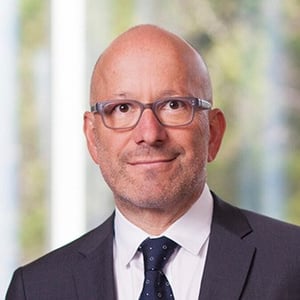
Partner, Vinson & Elkins LLP
Eric Groten is an accomplished Clean Air Act practitioner with nearly 35 years of experience navigating state and federal air quality laws. His work covers the full array of legal work generated by air quality laws, including defending enforcement actions, applying for the permits they require, transacting emissions rights, counseling clients on compliance and lobbying to change rules and the laws themselves. He has represented upstream, midstream and petrochemical facilities, power generators, and extractive industries in enforcement actions brought by EPA, by state agencies and by citizen groups.
Chambers USA described Eric as “a highly experienced air emissions lawyer, distinguished in the market by the sizable volume of contested air permitting work he undertakes,” and “creative in thinking through how to find an interpretation that’s going to get you the result you need” (2019). Indeed, Eric relishes the opportunity to help a client that’s willing to actively defend itself when it believes it has operated within the law. And to find a way through permitting disputes that stand in the way of capital projects that modernize our industrial base.
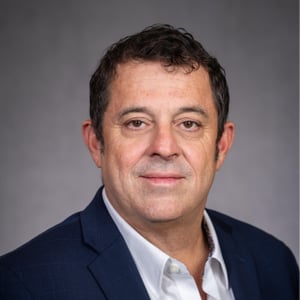
Senior Fellow for Law, Economics, and Technology, The Heritage Foundation; Professor, Florida International University
Mario Loyola is a Senior Fellow for Law, Economics, and Technology at The Heritage Foundation.
Loyola served in the Trump Administration as Associate Director for Regulatory Reform at the White House Council on Environmental Quality. In that role, he was one of the principal drafters of the One Federal Decision policy, which helped to streamline the permitting and environmental review of large infrastructure projects. While at CEQ, he was a member of the U.S. delegation to the USMCA free trade negotiations with Mexico and Canada, as well as the United Nations conference on biodiversity on the high seas. Loyola initially joined the White House in February 2017 as a Presidential Speechwriter, employing his expertise in many areas of foreign and domestic policy.
After beginning his career in M&A and corporate finance law, Loyola served in the Bush 43 Administration as a special assistant to the Undersecretary of Defense for Policy. He left that position to start writing on national defense issues in magazines such as National Review and The Weekly Standard, reporting from the front lines of the war on terrorism in Lebanon, Israel, and Iraq. He finished the Bush Administration as Foreign and Defense Counsel to the U.S. Senate Republican Policy Committee, then under the chairmanship of Senator Kay Bailey Hutchison of Texas. He subsequently moved to Texas and joined the Texas Public Policy Foundation, where he specialized in energy, environment, and federalism.
Loyola is a frequent contributor to The Wall Street Journal, National Review, and The Atlantic, among others. He teaches environmental and administrative law at Florida International University, where he is Founding Director of the Environmental Finance and Risk Management program in FIU’s prestigious Institute of Environment. He received a bachelor’s degree in European history from the University of Wisconsin–Madison and a J.D. from Washington University School of Law.
Professor Emeritus of Law and C. William Trout Senior Fellow in Public Interest Law, Shepard Broad College of Law, Nova Southeastern University
Joel Mintz has been a faculty member at Nova Southeastern University Shepard Broad College of Law since 1982. He teaches courses in Environmental Law, Torts, and Environmental Enforcement, and he has taught courses and seminars in Land Use Planning, State and Local Government Law, and Comparative Environmental Law.
Professor Mintz’s scholarship focuses primarily on environmental law and policy, environmental enforcement, sustainable development, regulation of hazardous wastes, and state and local taxation and finance. Mintz is the author of a well-received monograph, Enforcement at the EPA: High Stakes and Hard Choices (University of Texas Press, 1995) (revised edition, 2012), and a treatise on the federal environmental liabilities of state and local governments; and he has co-authored two casebooks, a “law-in-a-nutshell” work, and a handbook for attorneys on municipal finance. His law review articles have appeared in numerous journals and his articles and book contributions have been widely cited, quoted, and excerpted in texts, scholarly books, and articles. He has also published op-ed articles, perspective pieces, book reviews, and other works.
Prior to joining the College of Law faculty, Professor Mintz was an attorney and chief attorney with the U.S. Environmental Protection Agency in Chicago and Washington, D.C. He is an elected member of the American Law Institute, a Fellow of the American Bar Foundation, a member scholar of the Center for Progressive Reform and the President of the Board of Directors of the Everglades Law Center, a not-for-profit environmental public interest law firm.
Mintz received his B.A. from Columbia University, his J.D. from N.Y.U. School of Law, and his LL.M. and J.S.D. from Columbia Law School. He serves as the newsletter editor of the Association of American Law School’s Section on State and Local Government Law, and he is an elected member of both the Commission on Environmental Law of the International Union for the Conservation of Nature and the International Council of Environmental Law. He is also a member of the bar of the State of New York and of several federal courts.
Professor Mintz’s outside interests include spending time with his family, canoeing, bicycling, reading, and attending concerts, films, and sporting events.
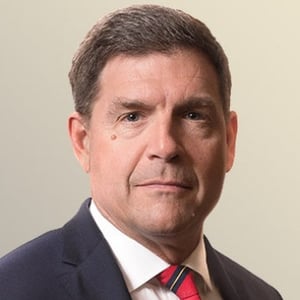
Partner, King & Spalding
John Richter is a trial and investigations partner in the Special Matters and Investigations Practice Group, and represents and defends companies, Boards of Directors, Board committees, and individuals facing a variety of white-collar criminal and regulatory enforcement matters, parallel civil litigation, and internal corporate investigations. John previously served as the Acting Assistant Attorney General in charge of the Criminal Division at the U.S. Department of Justice and as the U.S. Attorney for the Western District of Oklahoma, having been nominated by President George W. Bush and confirmed by unanimous consent of the U.S. Senate.
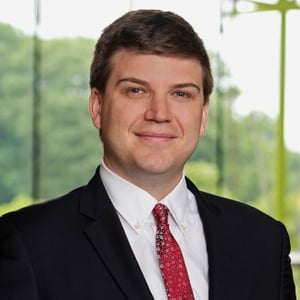
Partner, Jones Day
Anthony Dick's practice focuses on constitutional, appellate, and complex civil litigation, with a particular focus on challenges to government regulation. He has successfully briefed several cases in the U.S. Supreme Court and has argued cases in multiple U.S. Courts of Appeals, including the Fourth, Sixth, Seventh, and Ninth Circuits.
Anthony has worked on several high-profile First Amendment matters, including those involving free speech and Anti-SLAPP laws. His constitutional experience also includes representing the City of Detroit regarding the constitutional issues involved in reducing its public pension obligations in the largest municipal bankruptcy in history.
Before joining the Firm, Anthony served as a law clerk to Justice Samuel A. Alito Jr. of the United States Supreme Court and Judge Thomas B. Griffith of the U.S. Court of Appeals for the D.C. Circuit.
Anthony is a member of the Edward Coke Appellate Inn of Court. He also serves as Chairman of the Board of Directors of the Foundation for Individual Rights in Education (FIRE).
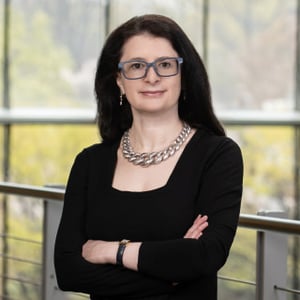
Senior Associate General Counsel/Senior Legal Advisor, Office of Management and Budget/CFPB
Victoria Dorfman is a Senior Associate General Counsel at the Office of Management and Budget and is a Senior Legal Advisor at the Consumer Financial Protection Bureau. At the OMB, she advises on constitutional and statutory issues. At the CFPB, she is primarily responsible for Enforcement, Supervision, Fair Lending, Oversight, and the Bureau’s litigation.
Prior to entering government service, Victoria was a partner at Jones Day, in Washington, D.C. and in New York, where she represented clients in appellate and complex commercial litigation in U.S. courts and in international arbitration. She has successfully briefed cases at all stages of litigation and argued before federal and state courts of appeals.
Victoria's areas of in-depth experience include jurisdiction and civil procedure, arbitration, bankruptcy, antitrust, and general commercial litigation. She maintained an active First Amendment Establishment and Free Exercise practice and represents religious institutions. Victoria's representations included obtaining unanimous victories in intergovernmental tax immunity and forum non conveniens cases in the U.S. Supreme Court; bankruptcy confirmations, including in appellate and Supreme Court proceedings, of Chrysler, the City of Detroit, Caesar's, Adelphia, and Relativity Media; UNCITRAL and BIT arbitrations; victories for Bayer in antitrust patent challenges to agreements regarding a blockbuster drug's production; and a damages award for Chevron against the government, including a sanction for bad faith litigation conduct.
Prior to joining Jones Day, Victoria clerked for Justice Clarence Thomas of the United States Supreme Court and Judge Michael J. Luttig of the Fourth Circuit Court of Appeals. Victoria received her A.B. from Harvard College (cum laude) and J.D. from Harvard Law School (magna cum laude), where she was Articles, Books and Commentaries editor on Harvard Law Review.
Victoria is a native speaker of Russian, and is proficient in French and Portuguese. She published articles on Religion Clauses, bankruptcy, federal jurisdiction and statutory interpretation, and is a contributing author and editor of The Practitioner's Guide to Appellate Advocacy.
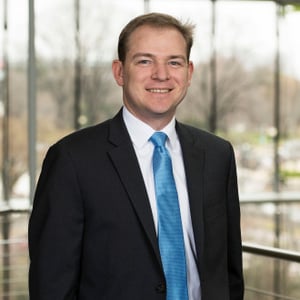
Partner, Jones Day
David Raimer focuses his practice on appellate advocacy and coordinating briefings in complex, multijurisdictional proceedings. He has experience in a wide range of substantive legal areas, including labor and employment law, efforts to obtain discovery in aid of foreign proceedings, the Employee Retirement Income Security Act (ERISA), contract disputes, and cases involving First Amendment or religious freedom issues.
David has litigated matters at all levels of the U.S. court system, including the United States Supreme Court, and has represented clients in cases pending before international and domestic arbitration tribunals. In the process, he has presented oral argument before appellate and district courts, drafted dozens of appellate briefs and dispositive motions, and coordinated parallel proceedings across multiple jurisdictions. Among other things, David helped an employer secure a rare victory before the Second Circuit in a case challenging a National Labor Relations Board (NLRB) unit determination. He was also part of the team that successfully obtained relief for more than 60 religious nonprofit organizations in a challenge to federal regulations that had made it impossible for those entities to offer health coverage in a manner consistent with their beliefs.
David maintains an active pro bono practice and has represented clients in appeals involving compelled speech, First Amendment retaliation claims, and immigration law.
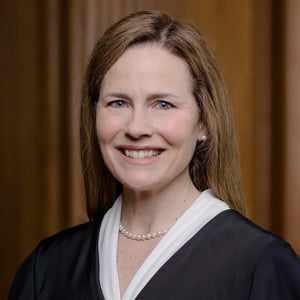
Associate Justice, United States Supreme Court
The Honorable Amy Coney Barrett is an Associate Justice of the Supreme Court of the United States. She was nominated by President Donald Trump and was confirmed on October 27, 2020. She is the fifth woman to serve on the Court.
Justice Barrett earned her J.D., summa cum laude, from Notre Dame, where she was a Kiley Fellow, earned the Hoynes Prize, the Law School’s highest honor, and served as executive editor of the Notre Dame Law Review. She clerked for Judge Laurence H. Silberman of the U.S. Court of Appeals for the D.C. Circuit and for Associate Justice Antonin Scalia of the U.S. Supreme Court. As an associate at Miller, Cassidy, Larroca & Lewin in Washington, D.C., she litigated constitutional, criminal, and commercial cases in both trial and appellate courts.
In 2002, Justice Barrett joined the faculty of Notre Dame Law School. She continued to teach following her appointment to the U.S. Court of Appeals for the Seventh Circuit in November 2017. Justice Barrett also served by appointment of the Chief Justice on the Advisory Committee for the Federal Rules of Appellate Procedure from 2010 to 2016.
Justice Barrett has published widely in the areas of federal courts, constitutional law, and statutory interpretation. Her scholarship in these fields has been published in leading journals, including the Columbia, Virginia, and Texas Law Reviews.
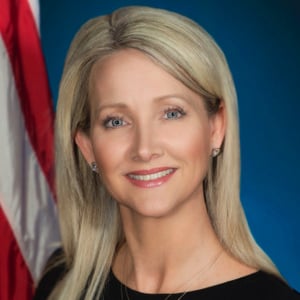
United States District Judge, Middle District of Florida
Judge Berger was raised in Jacksonville, Florida. She received her undergraduate degree from The Florida State University in 1990 and her law degree from The Florida State University College of Law in 1992, where she was a member of Law Review. Judge Berger served as an Assistant State Attorney in the Seventh Judicial Circuit from 1993 – 2000. In January 2001, Judge Berger left the State Attorney’s Office to serve as an Assistant General Counsel to Governor Jeb Bush. Judge Berger served in Governor Bush’s administration from January 2001 until May 2005, when she was appointed by the governor to serve as a Circuit Judge in the Seventh Judicial Circuit. During her service on the circuit court, Judge Berger presided over the civil and probate divisions (2005-2006) and adult felony division (2006-2012) in St. Augustine. She was also the presiding judge of the St. Johns County Adult Drug Court Program (2005-2012).
Judge Berger is currently a member of the St. Johns County Bar Association, the Orange County Bar Association, The Florida Supreme Court Committee on Civil Jury Instructions, the Florida Bar Criminal Procedure Rules Committee, the Florida Bar Appellate Practice Section’s Executive Council, the Dunn Blount Inn of Court, and the Federalist Society. She has prior service on the Florida Bar’s Judicial Administration and Evaluation Committee (2008 – 2013), the Judicial Administration Selection and Tenure Committee (2001-2004), the Florida Supreme Court Subcommittee on Postconviction Relief (2010-2011), the Statewide Diversity Team (2009-2012), and has been a member of both the National Association of Drug Court Professionals and the Florida Association of Drug Court Professionals.
Judge Berger has lectured on a wide range of topics including practicing with professionalism, judicial diversity, the judicial appointment process, effective oral arguments, fundamentals of extradition, capital cases, gender bias in the media, drug court, and drug and alcohol prevention.
Active in her community, Judge Berger served as a member of the St. Johns County Consortium on Substance Abuse as well as the St. Johns County Public Safety Committee. She is a member of the St. Augustine Rotary Club (Paul Harris Fellow) and is a steering committee member of The Marketplace Christian Professional Resources. She volunteers in the schools, has served as a reading mentor, and participates in the PACT Prevention Coalition’s Safe Prom Event. Judge Berger is also an active member of Trinity Episcopal Parish.
Judge Berger and her husband, Larry, live in St. Augustine with their two children.
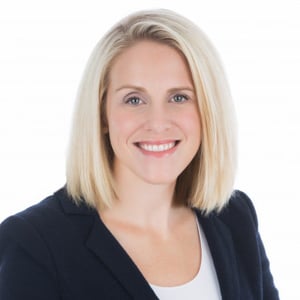
Judge, The 15th Judicial Circuit of Florida
The Honorable Paige Gillman is a Palm Beach County Court Judge appointed by now Senator Rick Scott in 2018. She currently presides in and is the Administrative Judge for the County Civil Division. Additionally, she serves as the Administrative Judge for the Civil Traffic Division of the Circuit. In June of 2020, Governor Ron Desantis appointed Judge Gillman to the Palm Beach Circuit Court. She will transition to the Circuit bench in January 2021.
Judge Gillman received both her undergraduate and Juris Doctor degrees from the University of Florida. Prior to taking the bench, Judge Gillman served as an Assistant State Attorney in the 19th Judicial Circuit, as a complex commercial and intellectual property litigator with Mracheck Law and finally as Staff Counsel for Allstate, Esurance and Encompass handling a broad range of auto and property matters.
Judge Gillman currently serves on the Florida Bar Small Claims Rules Committee and the Florida Supreme Court Civil Jury Instruction Committee.
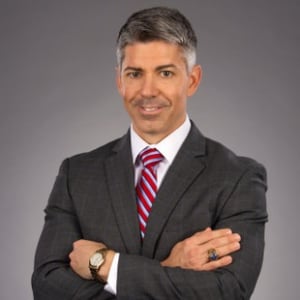
General Counsel & Wealth Advisor, Ullmann Wealth Partners
Patrick Kilbane is the General Counsel and a Wealth Advisor for Ullmann Wealth Partners headquartered in Jacksonville Beach, FL. Ullmann Wealth Partners is an independent wealth management firm that manages half a billion dollars of client assets in custody at Fidelity. Before joining Ullmann Wealth Partners, Pat was a Shareholder at Gray Robinson, P.A. where he had a thriving specialty litigation practice. Pat was recognized multiple times by Florida Trend and Super Lawyers Magazine for his skills and professionalism.
Pat serves the Northeast Florida Region in several roles. He’s received five gubernatorial appointments to the Judicial Nominating Commission for Florida’s Fourth Judicial Circuit and the Jacksonville Aviation Authority Board of Directors. His fellow board members elected him Chairman of both boards. Further, Pat is the President of the Jacksonville Lawyers Chapter of the Federalist Society. In 2014-2015, Pat was elected President of the Young Lawyers Section of the Jacksonville Bar Association.
In 2005, Pat received his Juris Doctor degree from the University of Notre Dame. He received his Bachelor of Business Administration degree, summa cum laude, from Adrian College, where he earned the full-ride, merit-based Dawson Scholarship and was named the Outstanding Graduate by faculty vote for the Class of 2002.
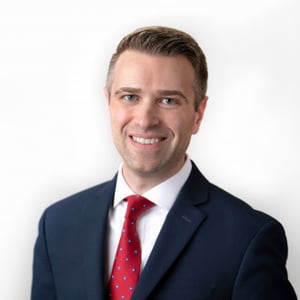
Managing Partner, Cramer Multhauf LLP
Attorney Matthew Fernholz focuses his practice on commercial litigation, trust and fiduciary disputes, business torts, trade secrets, non-compete agreements, defamation, and appellate work. In addition, he has developed one of the preeminent political and election law practices in the State of Wisconsin, and has handled several high-profile matters, from representing candidates for statewide office, successfully challenging the Governor’s emergency powers, arguing before the Wisconsin Elections Commission, and representing the Speaker of the Assembly.
Matthew frequently and successfully tries cases to verdict, and believes a lawyer unwilling to try a case should not take on a client in a litigation matter. In addition to this trial work, he has handled dozens of appeals, and countless dispositive motions.
His work has also been published in law review journals and newspapers alike.
Senior Litigation Counsel, New Civil Liberties Alliance
General Counsel, Office of Sen. Marsha Blackburn
Jon Adame serves as General Counsel to Senator Marsha Blackburn, where he advises her on all tech-related issues across her committee assignments (Commerce, Judiciary, Armed Services). He previously worked for her on the House Energy & Commerce Committee. Jon graduated from the University of Colorado School of Law, and received his B.A. from the University of New Mexico.
Professor of Law, Michigan State University (currently serving as FCC General Counsel)
Professor Candeub joined the MSU Law faculty in fall 2004. He is also a Fellow with MSU's Institute of Public Utilities. Prior to joining MSU, he served as an advisor at the Federal Communications Commission (FCC). From 1998 to 2000, Professor Candeub was a litigation associate for the Washington D.C. firm of Jones, Day, Reavis & Pogue and also has served as a corporate associate with Cleary, Gottlieb, Steen & Hamilton, also in Washington, D.C. Immediately following law school, he clerked for Chief Judge J. Clifford Wallace, U.S. Court of Appeals for the Ninth Circuit. While in law school, Professor Candeub was an articles editor for the University of Pennsylvania Law Review.
Professor Candeub's scholarly interests focus on the law and regulation of communications, internet, technology. His numerous law review articles and scholarly papers have placed him at the center of legal and policy controversies, and he often writes for popular outlets such as the Wall Street Journal and US News. Federal courts, including the U.S. Supreme Court, have cited and relied upon his work.
He joined the Trump administration in 2019 as Deputy Assistant Secretary of Commerce for Telecommunications and Information and assumed the role of Acting Assistant Secretary. He later joined the Department of Justice as Deputy Associate Attorney General.
Professor Candeub is a senior fellow at the D.C.-based Center of Renewing America.
Professor of Law and Co-Director, High Tech Law Institute, Santa Clara University School of Law
Eric Goldman is a Professor of Law, and Co-Director of the High Tech Law Institute, at Santa Clara University School of Law. Before he became a full-time academic in 2002, he practiced Internet law for 8 years in the Silicon Valley. His research and teaching focuses on Internet, IP and advertising law topics, and he blogs on these topics at the Technology & Marketing Law Blog [http://blog.ericgoldman.org]. Managing IP magazine has twice named him to a shortlist of North American “IP Thought Leaders,” and he has been named an “IP Vanguard” by the California State Bar’s IP Section.
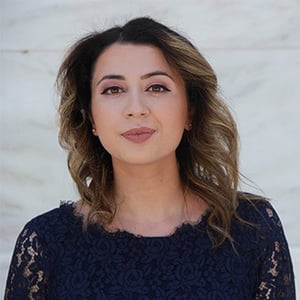
Senior Legal Fellow, The Future of Free Speech, Vanderbilt University
Ashkhen Kazaryan is a renowned expert in First Amendment law and technology policy, specializing in digital free speech, artificial intelligence, and the intersection of constitutional rights with emerging technologies. As a Senior Legal Fellow at the Future of Free Speech at Vanderbilt University, she leads initiatives to protect free expression and shape policies that uphold the First Amendment in the digital age.
Previously, Ashkhen was the lead for North and Latin America on the content regulation team at Meta, where she also served as the company’s policy lead on Section 230. She has also been a Senior Fellow at Stand Together and the Director of Civil Liberties at TechFreedom, where she worked extensively on platform liability, free speech, and internet governance. She is currently Fellow for the First Amendment at the Freedom Forum.
Ashkhen earned her specialist in law degree summa cum laude from Lomonosov Moscow State University in 2012 and later received a master of law degree from Yale Law School in 2016. During her time at Yale, she contributed as an articles editor for the Yale Journal of Law and Feminism, a senior editor for the Yale Law and Policy Review, and an editor for the Yale Journal of Law and Technology, while also serving as co-chair of the Public Interest Fellowship.
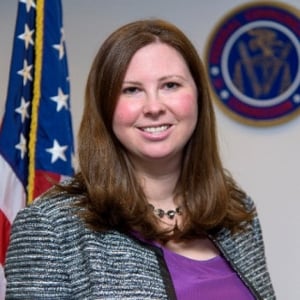
Legislative Director for Senator Marsha Blackburn, U.S. Senate
Jamie Susskind is the Legislative Director for Senator Marsha Blackburn (R-TN). Prior to becoming Legislative Director, she served for two years as the Senator’s Technology Policy Advisor. In that role, she advised on issues such as data privacy, cybersecurity, broadband, spectrum, content moderation, and antitrust, in addition to staffing the Senator on the Senate Commerce Subcommittee on Consumer Protection, Product Safety, and Data Security. Susskind previously worked on the Hill as Chief Counsel to Senator Deb Fischer (R-NE) and as an FCC Detailee for the Senate Committee on Commerce, Science, and Transportation. She also served as Chief of Staff to FCC Commissioner Brendan Carr and as Vice President of Policy and Regulatory Affairs at the Consumer Technology Association. A native Michigander, Susskind earned a Juris Doctor from the Antonin Scalia Law School and a Bachelor of Arts degree from the University of Michigan (Go Blue!).
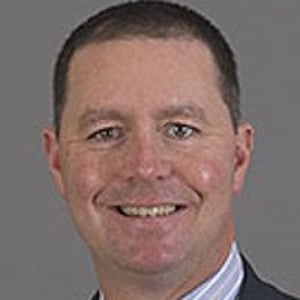
Judge, United States District Court, Northern District of Illinois
John Fitzgerald Kness is a judge on the United States District Court for the Northern District of Illinois. He was nominated by President Donald Trump on June 24, 2019. The United States Senate confirmed Kness on February 12, 2020, by a vote of 81-12.
Kness was the general counsel of the College of DuPage from 2016 to 2020.
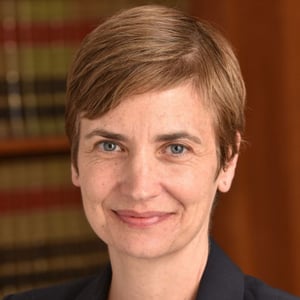
Vice Dean for Faculty Development and Professor of Law, UCLA Law
Joanna Schwartz is Vice Dean for Faculty Development and Professor of Law at UCLA School of Law. She teaches Civil Procedure and a variety of courses on police accountability and public interest lawyering. In 2015, she received UCLA's Distinguished Teaching Award.
Professor Schwartz is one of the country's leading experts on police misconduct litigation. Professor Schwartz additionally studies the dynamics of modern civil litigation. She is co-author, with Stephen Yeazell, of a leading casebook, Civil Procedure (9th Edition), and her scholarship has appeared in the New York University Law Review, the Texas Law Review, the UCLA Law Review, and the Yale Law Journal, among others.
Professor Schwartz is a graduate of Brown University and Yale Law School. After law school, Professor Schwartz clerked for Judge Denise Cote of the Southern District of New York and Judge Harry Pregerson of the Ninth Circuit Court of Appeals. She was then associated with Emery Celli Brinckerhoff & Abady LLP, in New York City, where she specialized in police misconduct, prisoners' rights, and First Amendment litigation.
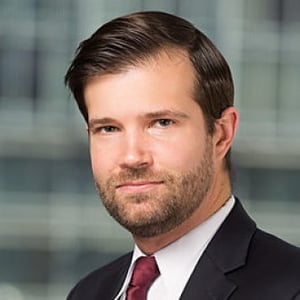
Research Fellow, CATO Institute
Jay Schweikert is a research fellow with the Cato Institute’s Project on Criminal Justice. His research and advocacy focuses on accountability for prosecutors and law enforcement, plea bargaining, Sixth Amendment trial rights, and the provision and structuring of indigent defense.
Before joining Cato, Schweikert spent four years doing civil and criminal litigation at Williams & Connolly LLP. He holds a JD from Harvard Law School, where he was an articles editor for the Harvard Law Review, and chaired the Harvard Federalist Society’s student colloquium program. Following law school, Schweikert clerked for Judge Diane Sykes of the U.S. Court of Appeals for the Seventh Circuit and Judge Laurence Silberman of the U.S. Court of Appeals for the DC Circuit.
He holds a BA in political science and economics from Yale University.
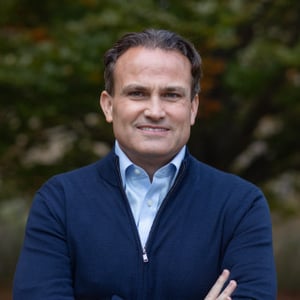
Professor of Law, University of Michigan Law School
Christopher J. Walker is a Professor of Law at the University of Michigan. Prior to joining Michigan law faculty in 2022, he spent a decade teaching at The Ohio State University Moritz College of Law. He previously clerked for Justice Anthony Kennedy of the U.S. Supreme Court, worked on the Civil Appellate Staff at the U.S. Department of Justice, and served on the Senate Judiciary Committee staff for the Gorsuch Supreme Court confirmation. Professor Walker’s research focuses on administrative law, regulation, and law and policy at the agency level. Outside the law school, he chaired the American Bar Association’s Section of Administrative Law and Regulatory Practice in 2020-21 and served as one of forty Public Members of the Administrative Conference of the United States from 2016-2022, and he continues to serve in both organizations in various capacities. He also works of counsel at the U.S. Chamber Litigation Center. In 2022, he received the Federalist Society’s Joseph Story Award.
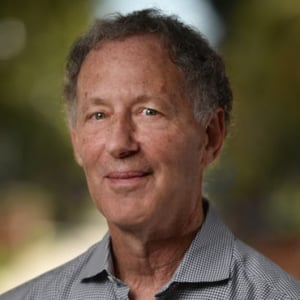
James C. Gaither Professor of Law; Vice Dean, Stanford Law School
Mark Kelman has tried, over the course of his career, to utilize the insights of neoclassical and behavioral economics, cognitive psychology, and political theory to illuminate a wide range of legal and policy controversies. He has paid special attention to antidiscrimination law (and most particularly disability law), criminal law, and taxation. He has written both articles and books that emphasize basic theory (e.g. THE HEURISTICS DEBATE, Oxford University Press 2011 or A GUIDE TO CRITICAL LEGAL STUDIES, Harvard University Press 1987, and a project on INJURIES that he is working on now, attempting both to elucidate what it means to be injured and why certain practices or outcomes – poverty, discrimination, sexual harassment, and death – are or are not injurious) as well as works that apply theoretical insights more directly to legal controversies (e.g. JUMPING THE QUEUE, with Gillian Lester, Harvard University Press, 1997 and the recently published, WHAT IS IN A NAME? TAXATION AND REGULATION ACROSS CONSTITUTIONAL DOMAINS, Carolina Academic Press, 2019). He employs a wide variety of methods in his work, from experiments (e.g. “Playing with Trolleys: Intuitions About the Permissibility of Aggregation,” with Tamar Kreps, JELS, 2014) to doctrinal analysis (e.g. “Untangling Horne, Resuscitating Nollan,” 104 Cornell Law Review Online, 2018) to eclectic pieces that blend empirical and conceptual analyses of contested social practices (e.g. “Concepts of Discrimination in ‘General Ability’ Job Testing,” Harvard Law Review, 1991 and “Hard Choices and Deficient Choosers,” Northwestern Journal of Law and Policy, 2018). He has, for many decades, taught first year courses in Property and Criminal Law and will, for the first time this academic year, offer a course attempting to synthesize the recurring themes and arguments that cut across the law school curriculum. He has also now served as Vice Dean at the Law School for the past fifteen years. Before joining the Stanford Law faculty in 1977, he served as Director of Criminal Justice Projects at the Fund for the City of New York.
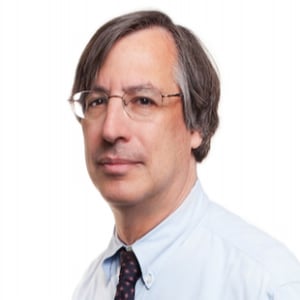
Levin, Mabie & Levin Professor of Law, University of Florida Levin College of Law
Professor Gary Lawson joined the University of Florida Levin College of Law faculty on July 1, 2024, after twenty-four years at Boston University School of Law and eleven years at Northwestern University School of Law. While at Boston University, he was named a William Fairfield Warren Distinguished Professor in 2022 – the highest faculty honor within the university. He has authored or co-authored nine editions of a textbook on administrative law, a textbook on constitutional law, five university press books, one popular press book, and more than one hundred scholarly articles on topics ranging from aspects of constitutional theory and history to the proof of legal propositions. His works have been cited in more than twenty opinions of United States Supreme Court justices. He is a founding member, and serves on the Board of Directors, of the Federalist Society for Law and Public Policy Studies and is on the Editorial Advisory Board of the Heritage Guide to the Constitution.
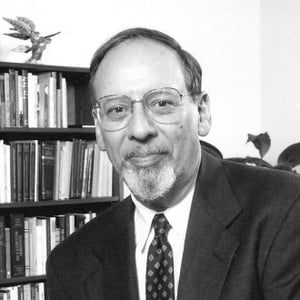
Dean Emeritus, George Mason School of Law
Lauded as a cultural laureate of the Commonwealth of Virginia, former Mason dean Henry G. Manne was the driving force behind the many innovations in legal education implemented at George Mason.
Professor Manne was designated one of the "founders" of the field of law and economics by the American Law and Economics Association. He launched the Law and Economics Center at Emory University and the University of Miami before bringing it to George Mason.
His monograph, An Intellectual History of the School of Law, George Mason University, traces the development of the law and economics movement and highlights the special contributions made by George Mason University School of Law to the movement. Professor Manne's other writings include such seminal works as Insider Trading and the Stock Market; Wall Street in Transition (with E. Solomon); and "Mergers and the Market for Corporate Control", Journal of Political Economy, April 1965. Professor Manne also designed and implemented at George Mason the nation's first system of fully integrated law school specialty track programs.
In August 2012, Dean Manne gave an oral history of his life, including his time at the Law and Economics Center, to the Securities and Exchange Commission Historical Society. An audio recording of the interview and transcript are available on the Society's website: audio (mp3); edited transcript (pdf).
He received a B.A. from Vanderbilt University (1950), J.D. from the University of Chicago (1952), J.S.D. from Yale University (1966), LL.D. from Seattle University (1987), and LL.D. from the Universidad Francesco Marroquin in Guatemala (1987).

Vice President for Legal Affairs, Cato Institute
Roger Pilon is the Cato’s Institute’s vice president for legal affairs, the founding director of Cato’s Robert A. Levy Center for Constitutional Studies, the inaugural holder of Cato’s B. Kenneth Simon Chair in Constitutional Studies, and the founding publisher of the Cato Supreme Court Review.
Prior to joining Cato, Pilon held five senior posts in the Reagan administration, including at State and Justice, and was a national fellow at Stanford’s Hoover Institution. In 1989 the Bicentennial Commission presented him with its Benjamin Franklin Award for excellence in writing on the U.S. Constitution. In 2001 Columbia University’s School of General Studies awarded him its Alumni Medal of Distinction. Pilon lectures and debates at universities and law schools across the country and testifies often before Congress.
His writing has appeared in the Wall Street Journal, the Washington Post, the New York Times, the Los Angeles Times, Legal Times, National Law Journal, Harvard Journal of Law and Public Policy, Stanford Law and Policy Review, and elsewhere. He has appeared on ABC’s Nightline, CBS’s 60 Minutes II, Fox News Channel, NPR, CNN, MSNBC, CNBC, C-SPAN, and other media.
Pilon holds a BA from Columbia University, an MA and a PhD from the University of Chicago, and a JD from the George Washington University School of Law.
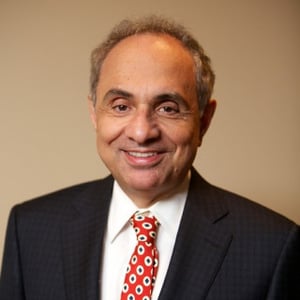
Professor of Economics; Co-Director of Classical liberal Institute, NYU Law School; Director of the Foundations of the Market Economy Program, New York University
Mario Rizzo is the Director of the Program on the Foundations of the Market Economy in the Department of Economics. He is also the Co-Director of the Classical Liberal Institute at the New York University School of Law. He has been a law and economics fellow at Yale Law School and the University of Chicago Law School. He teaches a yearly seminar at the NYU Law School called “Classical Liberalism.” He is the author of many articles in economics and in law journals. He is the coauthor of Austrian Economics Re-Examined: The Economics of Time and Ignorance. Professor Rizzo’s current research is focused on new or soft paternalism, behavioral economics, and the economic theory of rationality. He is completing a book, Puppets and Puppet Masters: Rationality, Behavioral Economics and New Paternalism, for Cambridge University Press.
Laurence A. Tisch Professor of Law and Director, Classical Liberal Institute, New York University School of Law; Director, Classical Liberal Institute, Civitas Institute University of Texas at Austin
Richard A. Epstein is the Laurence A. Tisch Professor of Law, at New York University, a senior research fellow at the Civitas Institute at the University of Texas Austin, and a senior Lecturer, the University of Chicago. He received an LL.D., h.c . from the University of Ghent, 2003 , and an LLD h.c . from the University of Siegen in 2018 and the Bradley Prize in 2011. He has been a member of the American Academy of Arts and Sciences since 1985. He has edited both the Journal of Legal Studies (1981-1991) and the Journal of Law and Economics (1991-2001). He is also a founder and director of the Classical Liberal Institute at NYU Law School. His most recent book is The Classical Liberal Constitution: The Uncertain Quest for Limited Government (2014). His other books include Takings: Private Property and the Power of Eminent Domain ( 1985); Bargaining with the State (1993); Simple Rules for a Complex World (1995); Principles for a Free Society: Reconciling Individual Liberty and the Common Good (1998); Skepticism and Freedom: A Modern Theory of Classical Liberalism (2003); Design for Liberty: Private Property, Public Administration and the Rule of Law (2011), and most recently, The Myth of Birthright citizenship—and Beyond (2026). He has taught courses in , administrative law, antitrust, constitutional, contracts, environmental law, land use planning; real property, torts and water law. He has written and spoken extensively on a wide range of topics, and is writes a regular column for Defining Ideas.
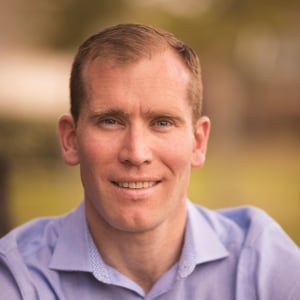
Vice President, Legal, Backflip
Michael Toth is Vice President, Legal at Backflip. Michael is a seasoned tech General Counsel with over 15 years of corporate counsel and litigation experience. He is skilled at leading legal and policy teams to executive on high-impact initiatives that deliver tech solutions in dynamic markets. Michael's work has been featured in Bloomberg, Wall Street Journal, the New York Times, Politico, Newsweek, Law 360, and other publications.
Michael has built out full-service legal and regulatory compliance departments, covering contracting, licensing, data privacy and security, employment, and corporate governance. He has represented companies in numerous capital markets transactions and litigated complex commercial cases in private practice. Michael has public-service experience serving a lawyer in the Marine Corps and a senior counsel at the Texas Office of Attorney General. At the Texas AG's office, Michael led the multistate investigation into Google. Michael's work brought together the 49-state coalition that launched a probe in Google's ad tech practices in 2019. Also during his tenure at the Texas AG's office, Michael worked on the opioid multistate and on human trafficking initiatives. In 2018, Michael was appointed to the Austin-based Third Court of Appeals, where he published several opinions on a range of state law issues.
After graduating law school, Michael served on active duty as a lawyer in the United States Marine Corps. A fluent Spanish speaker, Michael completed three overseas legal engagements in South America. Following active duty, Michael was a law clerk for the Honorable Edith H. Jones of the United States Court of Appeals for the Fifth Circuit and for the Honorable Ursula Ungaro of the United States District Court for the Southern District of Florida.
Michael graduated from Stanford University with an honors degree in history and received his law degree and a Masters in history from the University of Virginia. He has published numerous articles on legal topics as well as a book on the early United States Chief Justice Oliver Ellsworth. He lives outside of Austin, Texas, with his wife and three children.

Deep Dive Episode 129 – Environmental Citizen Suits and SEPs: Do Constitutional and Nondelegation Concerns Outweigh Environmental Benefits?
Richard A. Epstein, Eric Groten, Mario Loyola, Joel Mintz
A Regulatory Transparency Project Teleforum
Environmental laws such as the Clean Air Act allow private plaintiffs and environmental advocacy groups...
The False Claims Act, the CARES Act, and COVID-19: An Enforcement Overview
John C. Richter
The False Claims Act, which imposes civil and criminal liability on those who submit false...
Special Topics in Religious Liberty Series #1: Recent and Upcoming Supreme Court Cases
Anthony J. Dick, Victoria Dorfman, David Timothy Raimer
In the 2019 Term, the U.S. Supreme Court issued three decisions with major implications for...
We’re All Textualists Now? Implementing a Sound Interpretive Approach on the Trial Court and Beyond
Amy Coney Barrett, Wendy Berger, Paige Kilbane, Patrick J. Kilbane
Jacksonville Lawyers Chapter - Online Event
The Federalist Society's Jacksonville Lawyers Chapter held a virtual panel on August 12, 2020 to...
Recent Trends in the Roberts Court
Matthew M. Fernholz
Milwaukee Lawyers Chapter
On August 18, 2020, the Federalist Society's Milwaukee Lawyers Chapter hosted a virtual event on...
Litigation Update: Desrosiers et al. v. Gov. Baker: A Conversation with NCLA’s Michael DeGrandis
Michael P. DeGrandis
The Massachusetts Supreme Judicial Court will soon hear a lawsuit on accelerated consideration brought by...
Free Speech in the Digital Era: Section 230 and the Federal Communications Commission
Jon Adame, Adam Candeub, Eric Goldman, Ashkhen Kazaryan, Jamie Susskind
Section 230 of the Communications Decency Act provides liability protection to platforms, internet service providers,...
The Doctrine of Qualified Immunity
John F. Kness, Joanna C. Schwartz, Jay R. Schweikert, Christopher J. Walker
Chicago Lawyers Chapter
On August 17, 2020, The Federalist Society's Chicago Lawyers Chapter hosted a virtual panel on...
Panel I: Methods of Interpreting the Economic Rights Provisions of the Constitution [Archive Collection]
Mark Kelman, Gary Lawson, Henry G. Manne, Roger Pilon, Mario J. Rizzo
A Symposium in Celebration of the Bicentennial of the Constitution
On October 16-17, 1987, the Federalist Society hosted a symposium in celebration of the bicentennial...
Home Economics: Real Estate Exchanges and the Future of Homebuying
Richard A. Epstein, Michael Toth
Join us as Richard Epstein and Michael Toth discuss how digital innovation is changing the...