
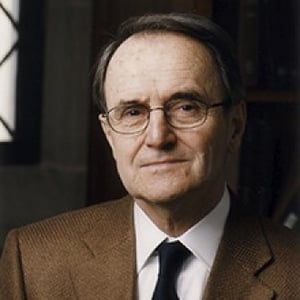
Sterling Professor Emeritus of Law, Yale Law School
Mirjan Damaška is Sterling Professor Emeritus of Law at Yale Law School. He teaches and writes in the fields of comparative and foreign law, procedural law, evidence, international criminal law, and continental legal history.
He is the author of six books, among which The Faces of Justice and Evidence Law Adrift were translated into several languages. He has published more than 100 articles in professional journals of numerous countries.
He received his basic law degree at the University of Zagreb in his native Croatia. He then studied at the Academy of International Law at The Hague, and the Comparative Law Faculty in Luxembourg. He earned his Ph.D. at the University of Ljubljana (Slovenia). Following time spent practicing in the courts of former Yugoslavia, he began his teaching career at the University of Zagreb Law School, rising quickly to the rank of full professor, and briefly serving as Acting Dean. In 1971, he left his native land, and accepted a tenured position at the University of Pennsylvania Law School. Since 1976, he has been on the faculty of Yale Law School.
Damaška is a fellow of the American Academy of Arts and Sciences, a member of the International Academy of Comparative Law, the Croatian Academy of Arts and Sciences, and the American Society of Comparative Law. In 1978-79, he was fellow of the National Endowment for the Humanities. He is also holder of several honorary degrees.
He was keynote speaker and general reporter at many international congresses. Five symposia were organized about his work: Bielefeld (Germany) in 1987; Siena (Italy) in 1988; San Francisco in 1998; Zagreb (Croatia) in 2006; and New Haven in 2008. From 1990 to 1995, he served on the Advisory Board of the Central and East European Legal Initiative of ABA. Since 1995, he has periodically advised the Croatian government in its relations with the International War Crimes Tribunal for the Former Yugoslavia, and the International Court of Justice in The Hague.
In 2005, he was appointed Amicus Curiae of the International War Crimes Tribunal for the Former Yugoslavia in the matter of transferring cases to domestic courts. In 2009, he was presented the lifetime achievement award by the American Society of Comparative Law. In 2014, he was awarded the Life Achievement award by Jadranko Crnic Foundation, Croatia. He does counseling work on foreign law problems for law firms in New York, Los Angeles, and Washington.
In 2010 he was appointed special adviser to the Prime Minister of Croatia, and agent of the Republic of Croatia before the International Court of Justice, heading a team of Croatian and English lawyers in the case of Croatia v. Serbia.
Two books of essays have been published in his honor: Jackson, Langer, & Tillers (eds.), "Crime, Procedure, and Evidence: Essays in honor of Mirjan Damaška (Oxford 2008), and Ackerman, Ambos, Sikiric (eds.), "Visions of Justice, Liber Amicorum Mirjan Damaška" (Berlin 2016).
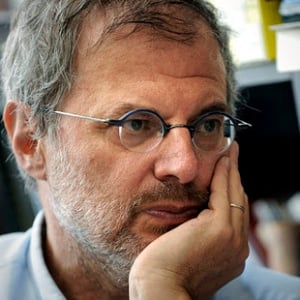
Professor of Comparative Constitutional Law, European University Institute
Since September 2016 Gábor Halmai, professor of law, is the chair of Comparative Constitutional Law at the European University Institute in Florence. Since January 2018 he is the Director of Graduate Studies at the Law Department. His primary research interests are comparative constitutional law, and international human rights. He has published several books and articles, as well as edited volumes on these topics in English, German and Hungarian. He is joining the EUI after a teaching and research career (at the Eötvös Loránd University in Hungary, the Princeton University in the USA, the the European Masters Program in Human Rights and Democratization in Italy) as well as years of professional career as chief advisor to the President of the Hungarian Constitutional Court, member of the EU Fundamental Rights Agency’s Management Board and numerous other civic activities.
Prior to joining to EUI Professor Halmai has worked on various research projects at the IWM in Vienna and the Woodrow Wilson School of Princeton University: Backsliding of liberal democracies within the European Union, with special focus on the development of constitutionalism and human rights in Hungary since its democratic transition in 1989-1990 till now; Models of state-church relations and religious freedom; Constitutionalism and transitional justice in Central and Eastern Europe. His most recent book, „Perspectives on Global Constitutionalism” deals with the use of foreign and international law by domestic courts (published by Eleven International Publishing in 2014). In addition to research, Professor Halmai has also been teaching and supervising students in Budapest, Princeton and Florence on the subjects of comparative constitutional law and human rights, as well as on rule of law.
Besides his academic work he was member of the EU Fundamental Rights Agency’s Management Board based in Vienna, Austria (2007-2010), the national director of the European Masters Program in Human Rights and Democratization in Venice, Italy (2003-2013), vice-chair of the Hungarian National Election Commission (2006-2010; chief counsellor to the President of the Hungarian Constitutional Court (1990-1996).
Gábor Halmai is founder and editor-in-chief of Fundamentum, the Hungarian human right quarterly, and Member of the Scientific Advisory Board of the European Yearbook on Human Rights, the Review of Constitutionalism and Constitutional Change (RC3), and the This Century’s Review.
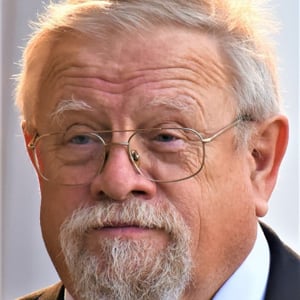
Assistant Professor, University of Ústí nad Labem
Daniel Kroupa is a Czech politician and philosopher, dissident, signatory of Charter 77, President of the Civic Democratic Alliance (ODA) from 1998 to 2001, former MP, Euro MP and senator. After the Velvet Revolution, he taught political philosophy at several faculties of Charles University in Prague. From 2005 to 2015, he was the Head of the Department of Political Science and Philosophy of the Faculty of Arts, University of Ústí nad Labem. Since 2015 he has been an assistant professor at this department.
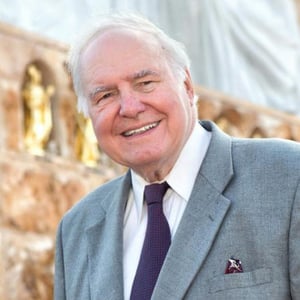
Philosopher, Journalist, Novelist, and Diplomat
Michael John Novak Jr. (1933–2017) was an American Roman Catholic philosopher, journalist, novelist, and diplomat. The author of more than forty books on the philosophy and theology of culture, Novak is most widely known for his book The Spirit of Democratic Capitalism (1982). In 1993 Novak was honored with an honorary doctorate at Universidad Francisco Marroquín due to his commitment to the idea of liberty. In 1994 he was awarded the Templeton Prize for Progress in Religion, which included a million-dollar purse awarded at Buckingham Palace. He wrote books and articles focused on capitalism, religion, and the politics of democratization.
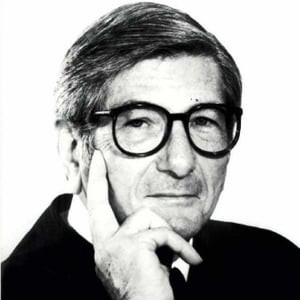
Former Judge, United States Court of Appeals, Fifth Circuit
Alvin Benjamin Rubin's long and storied tenure as a federal judge began with a nomination by President Lyndon B. Johnson in 1966 and ended in 1991 at his death.
Judge Rubin was born in Alexandria, Louisiana, in 1920, and received a B.S. from Louisiana State University in 1941. He started at Louisiana State University Law School in 1940. When World War II broke out, he enlisted in the U.S. Army, was assigned to General Patton's "Big Red 1," and served in the European Theatre of Operations in England, France, Belgium, and Germany, rising to the rank of Captain and serving as an Assistant Judge Advocate. After the war ended, he married Janice Ginsberg, also from Alexandria, and returned to Baton Rouge for law school in an accelerated post-war program for returning war veterans. He graduated first in his law school class in 1942 and was Editor-in-Chief of the Louisiana Law Review.
After his graduation, he began practicing law in Baton Rouge with J.Y. Sanders and Ben Miller, Sr., and after several years the firm of Sanders, Miller, Downing, Rubin and Kean was formed. Judge Rubin specialized in tax law, corporate transactions, and trust and estates law. He also was an arbitrator and mediator.
Soon after he started practice in 1942, the illness of a faculty member at the LSU Law School propelled Judge Rubin back into the classroom as a professor. Judge Rubin taught a variety of subjects continuously at the Law School until 1989, including Admiralty, Civil Code, Ethics, Negotiations, Constitutional Law, Federal Procedure, State and Local Tax Law, Federal Tax Law, Law Office Practice, and many others. Judge Rubin's love of teaching and of student interaction was particularly meaningful to him, and throughout his life Judge Rubin was invited to teach and lecture at schools around the world, including Harvard, Yale, Notre Dame, University of Pennsylvania, Cornell, University of Miami, University of Georgia, University of Texas, Tulane, and Duke. He also traveled to give presentations throughout Europe. Because of his expertise in civil law, during the Vietnam War, Judge Rubin was asked by the State Department to travel to South Vietnam and assist in drafting the constitution for South Vietnam. He also served as a moderator for the Aspen Institute and for many programs for the American Bar Association.
In 1963, Judge Rubin and Dean Henry George McMahon co-authored Louisiana Pleadings and Judicial Forms Annotated. For over 20 years, Judge Rubin continued the annual updates for this vital resource used by Louisiana attorneys. Before 1960, Louisiana civil law prohibited the establishment of Trusts. Judge Rubin was instrumental in the creation of a Trust Code for Louisiana, which was adopted by the Louisiana Legislature in 1960. In 1966 he and his wife, Janice, co-authored the Louisiana Trust Handbook, and later, he wrote Louisiana Wills and Trust: A Drafting System (with Professor Gerald LeVan). Judge Rubin's list of law review and journal articles spans many pages. Two of his most prominent works are "A Causerie on Lawyer's Ethics" and "Hazards of a Civilian Venturer in Federal Court: Travel and Travail on the Erie Railroad" (both in the Louisiana Law Review).
He then practiced law until 1966 when President Johnson nominated him to a new seat on the United States District Court for the Eastern District of Louisiana created by 80 Stat. 75. Judge Rubin served at an important time in the Court's history, hearing many of the desegregation and civil rights cases in the 1960s. He served as Chief Judge of the District and wrote and implemented the first comprehensive written pre-trial procedure rules for the District. He served on and chaired many committees for the Judicial Conference and co-wrote the first law clerk handbook for the federal system. Judge Rubin kept long hours and was often in his Chambers early. He always took home briefs to read and drafts of opinions to edit, keeping two secretaries busy at all times.
After eleven years as a judge on the federal district court, Judge Rubin was nominated in 1977 by President Jimmy Carter to fill a seat on the United States Court of Appeals for the Fifth Circuit vacated by John Minor Wisdom. Judge Rubin assumed senior status on July 1, 1989, and served in that capacity until his death in 1991 in Baton Rouge, Louisiana. In his memory, the Louisiana Law Review published a special edition (Vol. 52, 1992) dedicated solely to his life and work, including articles and remembrances by his wife, Justice Byron White, Judge John Minor Wisdom, Judge Charles Clark, Judge Fred Cassibry, Judge Henry Politz, and many others.
Judge Rubin wrote more than 700 important (and sometimes humorous) opinions during his time as a federal judge. His rulings included ones that ended Louisiana's exemption of women from juries, applied the Voting Rights Act to local elections, and upheld the rights of government employees to criticize their superiors and to organize unions. Judge Rubin's interests spanned poetry, drama, history, art, the classics, and music of all types. He enjoyed writing Gilbert-and-Sullivan-ish parodies concerning legal matters and performing them for students, clerks, lawyers, at judicial seminars, and even for United States Supreme Court Justices.
The judicial activity that Judge Rubin reportedly most enjoyed was conducting naturalization ceremonies in open court. Judge Rubin spoke not as a jurist but as the son of immigrants from Eastern Europe whose parents had lost many relatives to war and hatred. He spoke movingly of his parents, their courage, and their determination to give their children the education and opportunities they had never had. Judge Rubin always emphasized that those citizens, new though they were, had equal rights. They could vote. They could develop their own talents and those of their children. They were entitled to occupy as well as to stand before the bench of justice.
Judge Rubin also enjoyed the close friendship of his many law clerks (serving as officiant of at least one wedding) and was an avid tennis player and jogger, often enlisting law clerks and young lawyers as his tennis or running partner.
Judge Rubin was the first member of the LSU Law Center Hall of Alumni Distinction, and was the First Alumni Member of the LSU Phi Beta Kappa Chapter. He was awarded the Louisiana ACLU Award for his civil rights work and was active in the National Conference of Christians and Jews and his synagogue in Baton Rouge.
Judge John Minor Wisdom wrote that "Alvin Rubin was born to be a judge, a great judge. His intellect, scholarship, and judicial leadership place him in a select group. In recent years, some of this small group graced the Supreme Court: Holmes, Brandeis, and Cardozo. These judges would have welcomed him on equal intellectual terms and as a kindred spirit."
The New Orleans Chapter of the Federal Bar Association hosts an annual symposium in Judge Rubin's honor. The symposium is an annual discussion on aspects of federal law or practice as a living memorial to Judge Rubin's contribution to federal jurisprudence and legal scholarship. The symposium is well attended by his family, friends, former clerks, and lawyers.
Judge Rubin's wife, Janice, best summed him up. "[His] friends spanned continents and age barriers . . . . [He] was the jurist he was because he was the man the boy became, a man who remembered Biblical injunctions about relationships and courage, about discipline and standards, about justice and mercy and integrity, a man whose goal on the bench was the oath taken by judges on the Isle of Man: 'You shall do justice between cause and cause as equally as the backbone of the herring doth lie midmost of the fish.' "
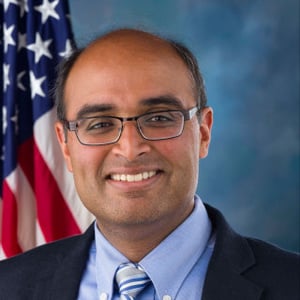
Consultant, American Edge Project and U.S. Chamber of Commerce
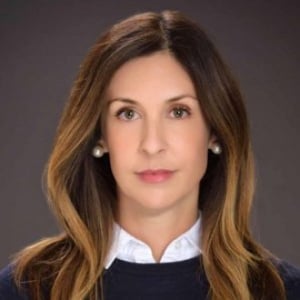
Director, Center for Technology and Innovation, Competitive Enterprise Institute
Jessica Melugin is director of the Center for Technology & Innovation at the Competitive Enterprise Institute. Her research focuses on technology issues including antitrust, online privacy, artificial intelligence, telecommunications, social media content regulation, and Federal Trade Commission oversight. Her writings have appeared in The New York Times, Financial Times, The Wall Street Journal, USA Today, Bloomberg Law, National Review, and Los Angeles Times. She has been cited in The Washington Post, Politico, U.S. News and World Report and Variety, among other publications. Ms. Melugin has appeared on Bloomberg Television, CSPAN’s Washington Journal, CNBC’s Power Lunch, Fox News, and Fox Business Network. She’s been featured on NPR’s Marketplace, The David Webb Show on SiriusXM, and is regularly interviewed on terrestrial radio programs.
Ms. Melugin graduated magna cum laude from Claremont McKenna College where her honors thesis explored the development of American antitrust law as it pertains to the Microsoft trial. She lives in Virginia’s horse country with her family.

Managing Director, Econ One
Hal Singer is an expert in antitrust, consumer protection, and regulation. He has researched, published, and testified on competition-related issues in a wide variety of industries, including media, pharmaceuticals, sports, and finance. He has extensive experience providing expert economic and policy advice to regulatory agencies in the United States and Canada, as well as before congressional committees.
Dr. Singer is also a Senior Fellow at the George Washington Institute of Public Policy and an Adjunct Professor at Georgetown University, McDonough School of Business, where he teaches advanced pricing to MBA candidates. In 2018, the American Antitrust Institute honored Dr. Singer with an antitrust enforcement award for his work in the Lidoderm antitrust litigation.

Laurence A. Tisch Professor of Law and Director, Classical Liberal Institute, New York University School of Law; Director, Classical Liberal Institute, Civitas Institute University of Texas at Austin
Richard A. Epstein is the Laurence A. Tisch Professor of Law, at New York University, a senior research fellow at the Civitas Institute at the University of Texas Austin, and a senior Lecturer, the University of Chicago. He received an LL.D., h.c . from the University of Ghent, 2003 , and an LLD h.c . from the University of Siegen in 2018 and the Bradley Prize in 2011. He has been a member of the American Academy of Arts and Sciences since 1985. He has edited both the Journal of Legal Studies (1981-1991) and the Journal of Law and Economics (1991-2001). He is also a founder and director of the Classical Liberal Institute at NYU Law School. His most recent book is The Classical Liberal Constitution: The Uncertain Quest for Limited Government (2014). His other books include Takings: Private Property and the Power of Eminent Domain ( 1985); Bargaining with the State (1993); Simple Rules for a Complex World (1995); Principles for a Free Society: Reconciling Individual Liberty and the Common Good (1998); Skepticism and Freedom: A Modern Theory of Classical Liberalism (2003); Design for Liberty: Private Property, Public Administration and the Rule of Law (2011), and most recently, The Myth of Birthright citizenship—and Beyond (2026). He has taught courses in , administrative law, antitrust, constitutional, contracts, environmental law, land use planning; real property, torts and water law. He has written and spoken extensively on a wide range of topics, and is writes a regular column for Defining Ideas.
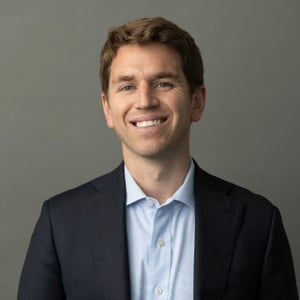
Deputy Associate Attorney General, Office of the Associate Attorney General, U.S. Department of Justice
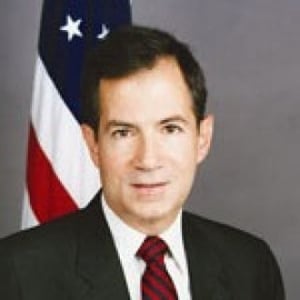
Former General Counsel of the U.S. Immigration and Naturalization, Former United States Ambassador to East Timor
Grover Joseph Rees, a native and resident of Louisiana, served as the first United States Ambassador to East Timor from 2002 to 2006.
From October 2006 until January 2009 Ambassador Rees served as Special Representative for Social Issues in the U.S. Department of State. He was responsible for promoting human dignity, including issues affecting vulnerable persons and the family, within the United Nations system. He served as Acting U.S. Representative to the United Nations Economic and Social Counsel during the fall 2007 session of the UN General Assembly and also served as Deputy Assistant Secretary for International Organizations.
From 1995 until 2002 Rees was a senior staff member on the Foreign Affairs Committee in the United States House of Representatives, where he was responsible for human rights and refugee protection and played a major role in the drafting and enactment of important human rights legislation including the Trafficking Victims Protection Act, the International Religious Freedom Act, and the Torture Victims Relief Act.
Ambassador Rees also formerly served as General Counsel of the United States Immigration and Naturalization Service (1991-93), as Chief Justice of the High Court of American Samoa (1986-1991), and as Special Counsel to the Attorney General of the United States (1985-86).
Prior to his work in Washington, Rees served for seven years as a law professor at the University of Texas. He has written and spoken widely on international law, human rights, refugees, and related issues.
Rees obtained his undergraduate degree from Yale University and his law degree from Louisiana State University Law School, where he served as Editor in Chief of the Louisiana Law Review and was selected for the academic honor society Order of the Coif.
Rees was born in New Orleans, the oldest of 12 children. He is married to Lan Dai Nguyen Rees and has one son. He retired from government service in January 2009 and now lives and works in Lafayette, Louisiana.
In addition to English, Ambassador Rees speaks French, Spanish, Portuguese, Samoan, and Tetum.
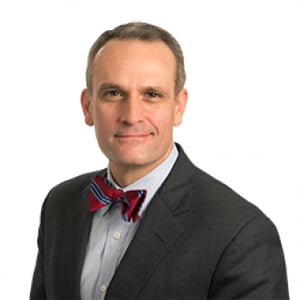
Shareholder, Littler Mendelson PC
Matthew J. Hank practices employment law, including issues arising under the common law and various statutes:
He particularly focuses on disputes concerning (1) wage and hour class actions (including cases involving independent contractor relationships, overtime claims, and payroll debit cards) and (2) noncompetition agreements and trade secrets.
Matthew served as a law clerk to the Hon. Daniel Manion of the U.S. Court of Appeals for the Seventh Circuit and the Hon. Paul V. Gadola of the U.S. District Court for the Eastern District of Michigan. Before attending law school, he served for four years on active duty in the United States Army as an Armor officer.

Professor, University of Minnesota Law School
Ilan Wurman is the Julius E. Davis Professor of Law at the University of Minnesota, where he teaches administrative law and constitutional law. He previously taught at Arizona State University. He writes primarily on the Fourteenth Amendment, administrative law, separation of powers, and constitutionalism. His academic writing has appeared in the Yale Law Journal, the Stanford Law Review, the University of Chicago Law Review, the University of Pennsylvania Law Review, the Virginia Law Review, the Duke Law Journal, the Minnesota Law Review, the Notre Dame Law Review, and the Texas Law Review among other journals.
Professor Wurman is the author of a casebook, Administrative Law Theory and Fundamentals: An Integrated Approach (Foundation Press 2d ed. 2024). He is also the author of A Debt Against the Living: An Introduction to Originalism (Cambridge 2017), and The Second Founding: An Introduction to the Fourteenth Amendment (Cambridge 2020). His next book, The Constitution of 1789: A New Introduction, is also forthcoming with Cambridge University Press.
Professor Wurman practices law with the firm Tully Bailey. He has litigated a variety of administrative law and constitutional law cases, including cases involving COVID-19 restrictions, transmission lines, and Appointments Clause challenges. He also devised winning public nuisance theories to force city governments to address the increasingly challenging public camping crises throughout the country.

Head of U.S. Policy, Hyundai Urban Air Mobility
Diana is the Head of U.S. Policy for Hyundai Urban Air Mobility. She is responsible for working with legislators, regulators, local communities and industry to foster a forward-leaning regulatory and policy framework for UAM and to drive public acceptance. Diana is also co-leading the development of Hyundai UAM’s brand, and participating in the cabin design working group.
Diana previously served as SVP of Policy & Strategy at PrecisionHawk, and as Head of the UAS & Robotics Practice Group at the law firm of LaBarge Weinstein.
Diana is a member of the World Economic Forum UAM Working Group, and Special Advisor to the Chairman of the FAA Drone Advisory Committee.
Diana has held leadership roles across many industry associations including as President of the Small UAV Coalition and President of the Drone Operators Federation. She has participated in government advisory boards and rule-making committees focused on drones, and served as Legal Expert for the United Nations Working Group on Geospatial Information Management.
Diana has testified before the US Congress on aviation policy and regulations on numerous occasions, and frequently speaks at industry conferences.
Diana holds a BA in Politics & Governance, a MA in Globalization Studies and a JD in Law & Technology.
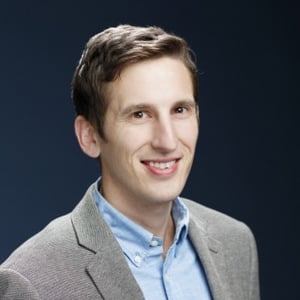
Legal Fellow, Center for Constitutional Studies, Cato Institute
Brent Skorup is a legal fellow in the Cato Institute’s Robert A. Levy Center for Constitutional Studies.
Before joining Cato, he was a senior research fellow at the Mercatus Center at the George Mason University. His research areas include free speech, technology law, Fourth Amendment protections, regulation, and property law. Skorup has published pieces in economics and law journals and in popular media, including The Wall Street Journal, The New York Times, Bloomberg Law, Reuters, and Wired. He’s appeared as a TV and radio interview guest for news outlets like C‑SPAN, NPR, CBS News, ABC News, and CNBC Asia.
The Pennsylvania Supreme Court, a dissenting opinion at the Illinois Supreme Court, and the ALI's Restatement of the Law of Property have cited his legal research and he has testified as a technology and legal expert in legislative hearings in several states. Skorup has been appointed to several federal and state advisory bodies and he is currently a member of the Texas Advanced Air Mobility Advisory Committee.
Skorup has a BA in economics from Wheaton College and a law degree from the George Mason University School of Law, where he was articles editor for the Civil Rights Law Journal. He was a legal clerk at the FCC’s wireless bureau and Office of General Counsel and at the Energy and Commerce Committee in the U.S. House of Representatives.

Senior Fellow, R Street Institute
Prior to R Street, Adam spent 12 years as a senior fellow at the Mercatus Center at George Mason University. Before the Mercatus Center, he served as the president of the Progress and Freedom Foundation. Adam has also worked for the Adam Smith Institute, the Heritage Foundation and the Cato Institute.
Adam has published 10 books on a wide range of topics, including online child safety, internet governance, intellectual property, telecommunications policy, media regulation and federalism.
In 2008, Adam received the Family Online Safety Institute’s “Award for Outstanding Achievement.”
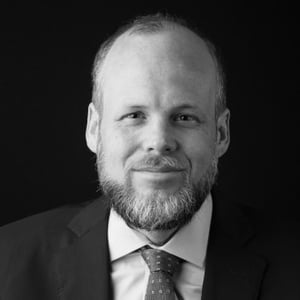
Founder, CGCN Law, PLLC
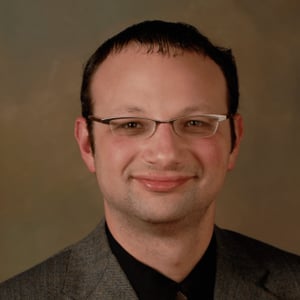
Chief Policy Counsel, Council on Criminal Justice and Senior Advisor, Right on Crime
Marc A. Levin is the Chief Policy Counsel for the Council on Criminal Justice (counciloncj.org) and Senior Advisor for Right on Crime.
An attorney and accomplished author on legal and public policy issues, Marc began the Foundation’s criminal justice program in 2005. This work contributed to nationally praised policy changes that have been followed by dramatic declines in crime and incarceration in Texas. Building on this success, in 2010, Levin developed the concept for the Right on Crime initiative, a TPPF project in partnership with Prison Fellowship and the American Conservative Union Foundation. Right on Crime has become the national clearinghouse for conservative criminal justice reforms and has contributed to the adoption of policies in dozens of states that fight crime, support victims, and protect taxpayers.
In 2014, Levin was named one of the “Politico 50” in the magazine’s annual “list of thinkers, doers, and dreamers who really matter in this age of gridlock and dysfunction.”
Marc has testified on criminal justice policy on four occasions before Congress and has testified before legislatures in states including Texas, Nevada, Kansas, Wisconsin, and California. He also has met personally with leaders such as U.S. Presidents, Speakers of the House, and the Justice Commtitee of the United Kingdom Parliament to share his ideas on criminal justice reform. In 2007, he was honored in a resolution unanimously passed by the Texas House of Representatives that stated, “Mr. Levin’s intellect is unparalleled and his research is impeccable.”
Since 2005, Marc has published dozens of policy papers on topics such as sentencing, probation, parole, reentry, and overcriminalization which are available on the TPPF website. Levin’s articles on law and public policy have been featured in publications such as the Wall Street Journal, USA Today, Texas Review of Law & Politics, National Law Journal, New York Daily News, Jerusalem Post, Toronto Star, Atlanta Journal-Constitution, Philadelphia Inquirer, San Francisco Chronicle, Washington Times, Los Angeles Daily Journal, Charlotte Observer, Dallas Morning News, Houston Chronicle, Austin American-Statesman, San Antonio Express-News and Reason Magazine.
In 1999, Marc graduated with honors from the University of Texas with a B.A. in Plan II Honors and Government. In 2002, Marc received his J.D. with honors from the University of Texas School of Law. Marc was a Charles G. Koch Summer Fellow in 1996. He served as a law clerk to Judge Will Garwood on the U.S. Court of Appeals for the Fifth Circuit and Staff Attorney at the Texas Supreme Court.
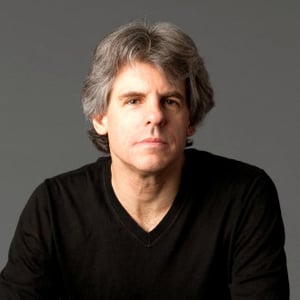
Carmack Waterhouse Professor of Health Law, Policy, and Ethics; Co-Director, Georgetown-Johns Hopkins Joint Program in Law and Public Health, Georgetown University
M. Gregg Bloche, M.D., J.D., is Professor of Law at Georgetown University and author of The Hippocratic Myth: Why Doctors Are Under Pressure to Ration Care, Practice Politics, and Compromise Their Promise to Heal. He is a nationally and internationally recognized expert on health law and policy. Bloche’s writing has appeared in a wide range of venues, including the New England Journal of Medicine, Health Affairs and the Journal of the American Medical Association; leading law reviews; and the New York Times, Washington Post, & other media outlets. He has also been a frequent commentator in national broadcast media. He was a health care advisor to President Obama’s 2008 campaign, as well as the presidential transition, and he spoke frequently for the campaign as a “surrogate.” Bloche has held teaching and research appointments at the University of Chicago, UCLA, and Columbia law schools, as well as the Brookings Institution, and the Harvard School of Public Health. He is a graduate of the law and medical schools at Yale, and he completed a residency in psychiatry at Columbia-Presbyterian Medical Center in New York. His awards and honors include a Guggenheim Fellowship and a Robert Wood Johnson Investigator Award in Health Policy Research. Bloche serves on several editorial boards and has advised governments and non-profits in the U.S. and abroad on a wide range of health policy issues. He lives in Washington, D.C.
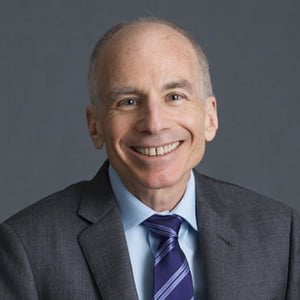
University Professor, Founding Linda D. & Timothy J. O’Neill Professor of Global Health Law, Faculty Director of O’Neill Institute for National & Global Health Law, Georgetown University, Director, World Health Organization Collaborating Center on Public Health Law & Human Rights
Lawrence O. Gostin is University Professor, Georgetown University’s highest academic rank conferred by the University President. Prof. Gostin directs the O’Neill Institute for National and Global Health Law and is the Founding O’Neill Chair in Global Health Law. He served as Associate Dean for Research at Georgetown Law from 2004 to 2008. He is Professor of Medicine at Georgetown University and Professor of Public Health at the Johns Hopkins University.
Prof. Gostin is the Director of the World Health Organization Collaborating Center on National and Global Health Law. The WHO Director-General has appointed Prof. Gostin to high-level positions, including the International Health Regulations (IHR) Roster of Experts and the Expert Advisory Panel on Mental Health. He served on the Director-General’s Advisory Committee on Reforming the World Health Organization, as well as numerous WHO expert advisory committees, including on the Pandemic Influenza Preparedness Framework, smallpox, genomic sequencing data, migrant health, and NCD prevention. He served on the WHO/Global Fund Blue Ribbon Expert Panel: The Equitable Access Initiative to develop a global health equity framework. He co-chairs the Lancet Commission on Global Health Law.
Professor Gostin served on two global commissions to report on the lessons learned from the 2015 West Africa Ebola epidemic. He was also senior advisor to the United Nations Secretary General’s post-Ebola Commission. He also served on the drafting team for the G-7 Summit in Tokyo 2016, focusing on global health security and Universal Health Coverage.
Prof. Gostin holds multiple international academic professorial appointments, including at Oxford University, the University of Witwatersrand (South Africa), and Melbourne University. Prof. Gostin served on the Governing Board of Directors of the Consortium of Universities for Global Health.
Prof. Gostin holds editorial appointments in leading academic journals throughout the world. He is the Legal and Global Health Correspondent for the Journal of the American Medical Association. He is also Founding Editor-in-Chief of Laws (an international open access law journal). He was formally the Editor-in-Chief of the Journal of Law, Medicine & Ethics.
Prof. Gostin holds four honorary degrees. In 1994, the Chancellor of the State University of New York conferred an Honorary Doctor of Laws Degree. In 2006, Her Majesty Queen Elizabeth II and the Vice Chancellor awarded Cardiff University’s (Wales) highest honor, an Honorary Fellow. In 2007, the Royal Institute of Public Health (United Kingdom) appointed Prof. Gostin as a Fellow of the Royal Society of Public Health (FRSPH). In 2012, the Chancellor of the University of Sydney – on the nomination of the Deans of the Law and Medical Schools – conferred a Doctor of Laws (honoris causa), presided by two Justices of Australia’s highest court—Justices Kirby and Haydon.
Prof. Gostin is an elected lifetime Member of the National Academy of Medicine/ National Academy of Sciences. He has served on the National Academy’s Board on Health Sciences Policy, the Board on Population Health, the Human Subjects Review Board, and the Committee on Science, Technology, and Law. He currently serves on the National Academies of Sciences Engineering, and Medicine, Board on Global Health. Gostin chaired the National Academy’s Committee on Global Solutions to Falsified, Substandard, and Counterfeit Medicines. He has chaired National Academy Committees on national preparedness for mass disasters, health informational privacy, public health genomics, and human subject research on prisoners.
Prof. Gostin is also a Member of the Council on Foreign Relations and Fellow of the Hastings Center. In 2016, President Obama appointed Prof. Gostin to a six-year term on the President’s National Cancer Advisory Board to advise the nation on cancer prevention, research, and policy. He also serves on the National Institutes of Health Director’s Advisory Committee on the ethics of public/private partnerships to end the opioid crisis.
Prof. Gostin has led major law reform initiatives in the U.S., including drafting the Model Emergency Health Powers Act (MEHPA) to combat bioterrorism (following the post-9/11 anthrax attacks) and the “Turning Point” Model State Public Health Act. He also spearheaded the World Health Organization and International Development Law Organization’s major report, Advancing the Right to Health: The Vital Role of Law.
Prof. Gostin’s proposal for a Framework Convention on Global Health – an international treaty ensuring the right to health – is now part of a global campaign, endorsed by the UN Secretary-General and Director of UNAIDS.
In the United Kingdom, Lawrence Gostin was the Legal Director of the National Association for Mental Health, Director of the National Council of Civil Liberties (the UK equivalent of the ACLU), and a Fellow at Oxford University. He helped draft the Mental Health Act (England and Wales) and brought landmark cases before the European Court of Human Rights.
Prof. Gostin’s books include: Public Health Law: Power, Duty, Restraint (University of California Press, 3rd ed., 2016); Public Health Law and Ethics: A Reader (University of California Press, 3rd ed., 2018); Human Rights in Global Health: Rights-Based Governance for a Globalizing World (Oxford University Press, 2018); Law and the Health System (Foundation Press, 2014); Principles of Mental Health Law & Practice (Oxford University Press, 2010).
Gostin’s classic text, Global Health Law (Harvard University Press, 2014) is read throughout the world—translated and published in both simplified and traditional Chinese, and in Spanish. Paul Farmer, Partners in Health, says of his book: Global Health Law is “more than the definitive book on a dynamic field. Gostin harnesses the power of international law and human rights as tools to close unconscionable health inequities — the injustices that burden marginalized populations throughout the world. Gostin presents a forceful vision, one that deserves a wide embrace.”
In a 2012 systematic empirical analysis of legal scholarship, independent researchers ranked Prof. Gostin 1st in the nation in productivity among all law professors, and 11th in in impact and influence. A 2017 and 2018 systematic empirical analysis ranked Prof. Gostin 1st in the nation for citations in health law.
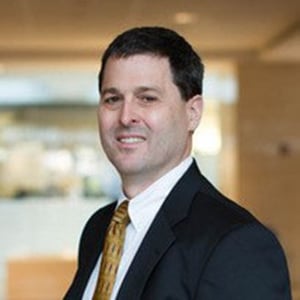
Scott K. Ginsburg Professor of Health Law & Policy, Georgetown University
David A. Hyman, M.D., J.D., is the Scott K. Ginsburg Professor of Health Law & Policy at Georgetown University. Professor Hyman focuses his research and writing on the regulation and financing of health care. He teaches or has taught health care regulation, civil procedure, insurance, medical malpractice, law & economics, professional responsibility, and tax policy.
While serving as Special Counsel to the Federal Trade Commission, Professor Hyman was principal author and project leader for the first joint report ever issued by the Federal Trade Commission and Department of Justice, “Improving Health Care: A Dose of Competition” (2004). He is also the author of Medicare Meets Mephistopheles, which was selected by the U.S. Chamber of Commerce/National Chamber Foundation as one of the top ten books of 2007, and the co-author (with Charles Silver) of Overcharged: Why Americans Pay Too Much for Health Care (2018). He has published widely in student-edited law reviews and peer-reviewed medical, health policy, law, and economics journals.
Professor from Practice, Georgetown University
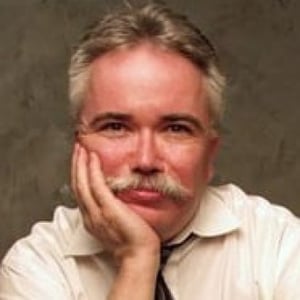
Since 2001, Professor Westmoreland has taught at Georgetown about health law, about federal budgets, and about legislation. Prior to that, he was the senior policy fellow at the Federal Legislation Clinic.
He has worked extensively on public health and health finance policy. He has served as Counsel to the Subcommittee on Health and the Environment in the U.S. House of Representatives and later as the Director of the Medicaid program at HHS. Outside of government, he served as counsel to the Advisory Committee on Tobacco Policy and Public Health and as an advisor to both the Henry J. Kaiser Family Foundation and the Elizabeth Glaser Pediatric AIDS Foundation. He has been the recipient of a Robert Wood Johnson Foundation Investigator in Health Policy Award, working on budget process and health policy.
President, Antitrust Education Project
United States Senator, Utah
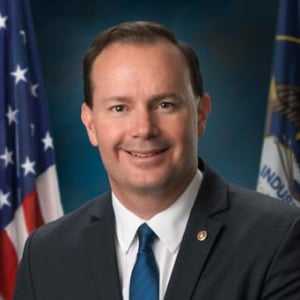
Elected in 2010 as Utah's 16th Senator, Mike Lee has spent his career defending the basic liberties of Americans and Utahns as a tireless advocate for our founding constitutional principles.
Senator Lee acquired a deep respect for the Constitution early on. His father, Rex Lee, who served as the Solicitor General under President Ronald Reagan, would often discuss varied aspects of judicial and constitutional doctrine around the kitchen table, from Due Process to the uses of Executive Plenary Power. He attended most of his father's arguments before the U.S. Supreme Court, giving him a unique, hands-on experience and understanding of government up close.
Lee graduated from Brigham Young University with a Bachelor of Science in Political Science, and served as BYU's Student Body President in his senior year. He graduated from BYU's Law School in 1997 and went on to serve as law clerk to Judge Dee Benson of the U.S. District Court for the District of Utah, and then with future Supreme Court Justice Judge Samuel A. Alito, Jr. on the U.S. Court of Appeals for the Third Circuit.
Lee spent several years as an attorney with the law firm Sidley & Austin specializing in appellate and Supreme Court litigation, and then served as an Assistant U.S. Attorney in Salt Lake City arguing cases before the U.S. Court of Appeals for the Tenth Circuit.
Lee served the state of Utah as Governor Jon Huntsman's General Counsel and was later honored to reunite with Justice Alito, now on the Supreme Court, for a one-year clerkship. He returned to private practice in 2007.
Throughout his career, Lee earned a reputation as an outstanding practitioner of the law based on his sound judgment, abilities in the courtroom, and thorough understanding of the Constitution.
Today, Lee fights to preserve America's proud founding document in the United States Senate. He advocates efforts to support constitutionally limited government, fiscal responsibility, individual liberty, and economic prosperity.
Lee is a member of the Judiciary Committee, and serves as Chairman of the Antitrust, Competition Policy and Consumer Rights Subcommittee protecting business competition and personal freedom.
He also oversees issues critical to Utah as the Chairman of the Water and Power Subcommittee of the Energy and Natural Resources Committee. He serves on the Commerce Committee and the Joint Economic Committee, as well.
In the 114th Congress, Lee also began his tenure as Chairman of the Senate Steering Committee, where he works with his Republican colleagues in the Senate to introduce bold and innovative solutions to issues facing the American people.
Lee and his wife Sharon live in Alpine, Utah, with their three children. He is a member of The Church of Jesus Christ of Latter-day Saints and served a two-year mission for the Church in the Texas Rio Grande Valley.

Executive Vice President, The Federalist Society
Dean Reuter is Executive Vice President at the Federalist Society for Law and Public Policy Studies. He has served in two federal government agency Offices of the Inspector General, as Counsel to the Inspector General and Deputy Inspector General, responsible for policing the use of federal funds granted and contracted through those agencies. As such, he helped conduct and oversee criminal investigations across the country. He is the principal author of the non-fiction book, The Hidden Nazi: The Untold Story of America's Deal with the Devil, and editor of Liberty’s Nemesis: The Unchecked Expansion of the State and Confronting Terror: 9/11 and the Future of American National Security. He was appointed by the President and served as Vice-Chairman of the Board of Directors of the Corporation for National and Community Service, and recently served as an appointee on the U.S. Commission on Presidential Scholars. He is a graduate of Hood College (BA with Honors) and the University of Maryland School of Law.
Senior Counsel, Cahill Gordon & Reindel LLP
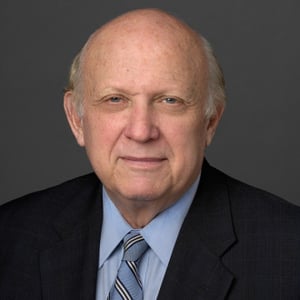
Floyd Abrams is Senior Counsel in Cahill Gordon & Reindel LLP's litigation practice group.
Floyd has a national trial and appellate practice and extensive experience in high-visibility matters, often involving First Amendment, securities litigation, intellectual property, public policy and regulatory issues. He has argued frequently in the Supreme Court in cases raising issues as diverse as the scope of the First Amendment, the interpretation of ERISA, the nature of broadcast regulation, the impact of copyright law and the continuing viability of the Miranda rule. Most recently, Floyd prevailed in his argument before the Supreme Court on behalf of Senator Mitch McConnell as amicus curiae, defending the rights of corporations and unions to speak publicly about politics and elections in Citizens United v. Federal Election Commission. Floyd's clients have included The McGraw-Hill Companies in a large number of litigations around the country involving claims against its subsidiary, Standard & Poor’s Financial Services LLC, The New York Times in the Pentagon Papers case and others, ABC, NBC, CBS, CNN, Time Magazine, Business Week, The Nation, Reader's Digest, Hearst, AIG, and others in trials, appeals and investigations.
Floyd has represented Standard & Poor’s in litigations about its ratings; he defended the Brooklyn Museum of Art in its legal battles with Mayor Rudolph Giuliani; he represented two of the nation’s largest insurers in litigation under Section 17200 in California and he has frequently testified before congressional committees and prepared clients to do so. In 1998, he represented CNN in investigating and issuing a report on its broadcast accusing the United States of using nerve gas on a military mission in Laos in 1970, and again in 1999 in seeking to persuade the United States Senate to permit the public to view its deliberations as it determined whether or not to convict President Clinton of alleged high crimes and misdemeanors. He represented Nina Totenberg and National Public Radio in the 1992 "leak" investigation conducted by the United States Senate arising out of the confirmation hearing of Justice Clarence Thomas and, in 2004 and 2005, Judith Miller and Matthew Cooper in their efforts to avoid revealing their confidential sources.
In 2006, Floyd was elected to the American Academy of Arts & Sciences, an independent research center that conducts multidisciplinary studies of complex and emerging problems advanced by its 4,600 elected members, who are leaders in the academic disciplines, the arts, business and public affairs from around the world. In 2015, Floyd was honored by Yale Law School with its prestigious Award of Merit. Also in 2015, Floyd received the Walter Cronkite Freedom of Information Award presented by the Connecticut Foundation for Open Government. In 2011, Floyd was awarded the CUNY Graduate School of Journalism's Lifetime Achievement Award. In 1998, Floyd was the recipient of the William J. Brennan, Jr. Award for outstanding contribution to public discourse; the Learned Hand Award of the American Jewish Committee; and the Thurgood Marshall Award of the Association of the Bar of the City of New York. In November, 1999, he received the William J. Brennan, Jr. award of the Libel Defense Resource Center. Floyd was awarded, in 1997, the Milton S. Gould Award for outstanding appellate advocacy by the Office of the Appellate Defender in New York. Previously he had been awarded the Ross Essay Prize of the American Bar Association for his study of the Ninth Amendment of the United States Constitution. He has also received awards from, among others, the American Jewish Congress, Catholic University, the New York and Philadelphia Chapters of the Society of Professional Journalists, Sigma Delta Chi, the New York Civil Liberties Union, the Association for Education in Journalism and Mass Communication, and the National Broadcast Editorial Association.
In November, 2011, Yale Law School announced the formation of The Floyd Abrams Institute for Freedom of Expression, whose mission is to promote free speech, scholarship and law reform on emerging questions concerning traditional and new media. Developed in cooperation with Floyd, the Institute includes a clinic for Yale Law students to engage in litigation, draft model legislation, and advise lawmakers and policy makers on issues of media freedom and informational access.
The American Bar Association awarded Floyd its Certificate of Merit for his article published in The New York Times Magazine entitled "The New Effort to Control Information," which was described by the ABA as a "noteworthy contribution to public understanding of the American system of law and justice."
Described by Senator Daniel Patrick Moynihan as "the most significant First Amendment lawyer of our age," Floyd is top-ranked by Chambers USA. He is listed in Who’s Who Legal, Who’s Who in American Law, and has been awarded with Lifetime Achievement Awards by The New York Law Journal and The American Lawyer (2013).
Floyd, who served as chairman of Mayor Edward Koch's Committee on Appointments, New York City, served as the Chairman of the New York State Zenger Commemoration Planning Committee. Previously, he served as the Chairman of the Communications Committee of the Association of the Bar of the City of New York, as well as Chairman of the Committee on Freedom of Speech and of the Press of the Individual Rights Section of the American Bar Association and of the Committee on Freedom of Expression of the Litigation Section of the American Bar Association.
He has appeared frequently on television on Nightline, the News Hour with Jim Lehrer, Charlie Rose and other programs and has published articles and reviews in The New York Times, The Washington Post, The Yale Law Journal, The Harvard Law Review, and elsewhere.
Floyd served on the Technology and Privacy Advisory Committee of the U.S. Department of Defense in 2003-4 and as the Chair of the New York State Commission on Public Access to Court Records in 2004.
For fifteen years, Floyd was the William J. Brennan, Jr. Visiting Professor of First Amendment Law at the Columbia Graduate School of Journalism. He has, as well, been a Visiting Lecturer at Yale Law School and Columbia Law School and he is author of Friend of the Court: On the Front Lines with the First Amendment, published by Yale University Press (2013) and Speaking Freely: Trials of the First Amendment, published by Viking Press (2005).
Partner, Schaerr | Jaffe LLP
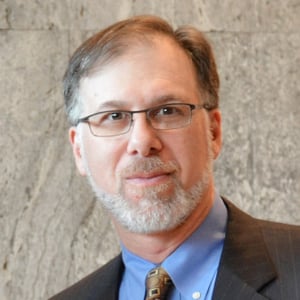
Erik Jaffe has been involved in appeals on a broad range of legal issues, including First Amendment challenges to campaign finance reform, Commerce Clause challenges to Health Care Reform and other federal legislation, Equal Protection Clause challenges to affirmative action in education, First Amendment challenges to school vouchers, Fifth Amendment challenges to takings of property, Second Amendment challenges to restrictions on gun ownership, and a wide variety of cases involving patents, copyrights, ERISA, securities fraud, federal preemption, environmental regulation, and other state and federal constitutional and statutory matters. He has represented businesses and non-profit groups, Judges, Senators, former government officials, Nobel Prize winners, and a broad cross-section of private individuals. Mr. Jaffe has been involved in over 120 Supreme Court matters, including filing over 30 cert. petitions, representing half-a-dozen parties on the merits, and filing over 70 amicus briefs at both the cert. and merits stages.
A 1990 graduate of the Columbia University School of Law, Mr. Jaffe was a law clerk to Judge Douglas H. Ginsburg of the United States Court of Appeals for the District of Columbia Circuit from 1990 to 1991. Following that clerkship he spent five years in litigation practice with the Washington, D.C. law firm of Williams & Connolly. In the summer of 1996 he left Williams & Connolly to clerk for Supreme Court Justice Clarence Thomas. At the end of that clerkship he started his own practice, and he was a sole practitioner from 1997 to 2018. He joined the firm of Schaerr | Jaffe LLP in 2018.

Beauchamp Brogan Distinguished Professor of Law, University of Tennessee College of Law
Professor Reynolds is one of the most prolific scholars on the UT faculty. His special interests are law and technology and constitutional law issues and his work has appeared in a wide variety of publications, including the Columbia Law Review, the Virginia Law Review, the University of Pennsylvania Law Review, the Wisconsin Law Review, the William and Mary Law Review, the Southern California Law Review, the Harvard Journal of Law and Technology, The Columbia Human Rights Law Review, Law and Policy in International Business, Jurimetrics, the Journal of Space Law, and the High Technology Law Journal. Professor Reynolds has also written in the New York Times, the Washington Post, The Atlantic, the Washington Times, the Los Angeles Times, Road & Track, Urb, and the Wall Street Journal, as well as other popular publications. He was for many years a contributing editor at Popular Mechanics magazine, and today writes a regular column for USA Today. He is the co-author of Outer Space: Problems of Law and Policy, and The Appearance of Impropriety: How the Ethics Wars Have Undermined American Government, Business, and Society. His most recent books are The Social Media Upheaval, The Judiciary’s Class War, and The New School: How the Information Age Will Save American Education from Itself.
Professor Reynolds has testified before Congressional committees on space law, international trade, and domestic terrorism. He has been executive chairman of the National Space Society and a member of the White House Advisory Panel on Space Policy. A member of the UT faculty since 1989, Professor Reynolds has received the Harold C. Warner Outstanding Faculty Scholarship Award in W. Allen Separk Outstanding Faculty Scholarship Award, and the Carden Award for Outstanding Scholarship.
A songwriter and producer for such bands as Mobius Dick, The Nebraska Guitar Militia, and The Defenders Of The Faith, Professor Reynolds is a member of the American Society of Composers and Performers and a former member of the National Academy of Recording Arts and Sciences.
Professor Reynolds blogs at InstaPundit.com.

The Judiciary and the Role of the Rule of Law [Archive Collection]
Mirjan R. Dama?ka, Gábor Halmai, Daniel Kroupa, Michael J. Novak, Alvin Rubin
1990 National Lawyers Convention
On November 30- December 1, 1990, the Federalist Society hosted its annual National Lawyers Convention...
Deep Dive Episode 175 – Big Tech and Antitrust
Asheesh Agarwal, Jessica Melugin, Hal Singer, Richard A. Epstein, John Adams
Regulatory Transparency Project's Fourth Branch Podcast
The debate over “Big Tech” and antitrust has intensified. On one side are those who...
Sanchez v. Mayorkas - Post-Argument SCOTUScast
Grover Joseph Rees
featuring Grover Rees
On April 19, 2021 the Supreme Court heard oral argument in Sanchez v. Mayorkas. The question...
The Second Founding: Originalism and the Fourteenth Amendment
Matthew J. Hank, Ilan Wurman
Philadelphia Lawyers Chapter - Online Event
On April 14, 2021, the Federalist Society's Philadelphia Lawyers Chapter hosted Prof. Ilan Wurman to...
Deep Dive Episode 174 – Legal Issues for Commercial Drones: Privacy, Property Rights, and Federalism
Diana Marina Cooper, Brent Skorup, Adam Thierer
Regulatory Transparency Project's Fourth Branch Podcast
Commercial drone technology advanced rapidly in the past decade, and companies like Walmart, Amazon, Verizon,...
Courthouse Steps Oral Argument Teleforum: HollyFrontier Cheyenne Refining v. Renewable Fuels Association
Justin Schwab
On April 27, 2021, the Supreme Court will hear oral argument in the case of HollyFrontier...
Jones v. Mississippi - Post-Decision SCOTUScast
Marc Levin
featuring Marc Levin
On April 22, 2021 the Supreme Court decided Jones v. Mississippi. The issue was whether...
Deep Dive Episode 173 – The State of Healthcare Policy: from COVID-19 to Medicare for All
M. Gregg Bloche, Lawrence Gostin, David Hyman, Timothy M. Westmoreland
Regulatory Transparency Project's Fourth Branch Podcast
On Friday, April 16, 2021, the Federalist Society’s Georgetown Student Chapter hosted a webinar featuring...
The Antitrust Paradox: A Conversation with Sen. Mike Lee and Robert Bork, Jr.
Robert H. Bork, Mike S. Lee, Dean Reuter
Corporations, Securities & Antitrust Practice Group Teleforum
On April 21, 2021, the Federalist Society's Corporations, Securities, & Antitrust Practice Group hosted a...
Revisiting New York Times v. Sullivan
Floyd Abrams, Erik S. Jaffe, Glenn Reynolds
Free Speech & Election Law Practice Group Teleforum
On April 21, 2021, the Federalist Society's Free Speech & Election Law Practice Group hosted...