
Topics:
Sponsors:
San Francisco Lawyer Chapter
•
Los Angeles Lawyer Chapter
•
San Diego Lawyer Chapter
•
Orange County Lawyer Chapter
•
Gold Coast Lawyer Chapter
•
Phoenix Lawyer Chapter
•
Las Vegas Lawyer Chapter
•
Sacramento Lawyer Chapter
•
Portland Lawyer Chapter
•
Silicon Valley Lawyer Chapter
•
Bakersfield Lawyer Chapter
•
New Mexico Lawyer Chapter
- In-Person Event
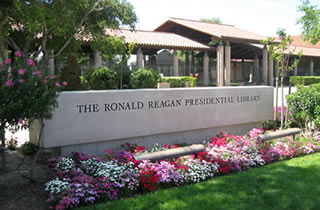
Ronald Reagan Presidential Library
40 Presidential Drive
Simi Valley, CA 93065
40 Presidential Drive
Simi Valley, CA 93065
 Parental and community support for school choice has increased dramatically in recent years, with vouchers, charter schools, home schooling, and other educational alternatives all garnering greater support. Supporters cite gains in reading levels and higher graduation rates amongst reasons why school choice improves education outcomes for low-income, inner-city students. They also cite the importance of offering the same choice in education that higher income families are able to provide. What impediments stand in the way of implementing school choice? How large of a factor is union opposition to school choice? Are unions correct in asserting that vouchers take resources away from the public school system and are financially unaccountable? What about charters? Recently, the California Supreme Court decision upheld the rights of charter schools not to be controlled by the union’s collective bargaining agreements. Will this lead to an increased number of charter schools? How does the national school choice movement encourage reform in California? What trends or alternatives may arise in the future? A panel of experts will discuss these questions and will offer their assessment of school choice programs a decade after Zelman v. Simmons-Harris opened the door for school choice programs.






 Recent lawsuits have been filed in California challenging the state’s system of tenure and pure-seniority based layoffs. Students Matter recently filed a lawsuit in California seeking to overturn the rules governing the tenure system, which require schools to decide after 18 months whether a teacher deserves tenure, before a performance has been fully documented; to lay off teachers based almost solely on seniority; and to go through a protracted appeals process before laying off a teacher for poor performance. These lawsuits follow earlier suits concerning barring seniority-based lawsuits and the use of student performance in teacher reviews. How will this litigation affect education reform in California? Do other legal impediments stand in the way of a student receiving a quality education? How will the California’s teachers union affect these lawsuits? Do unions impede efforts to remove poor performing teachers, or are they a needed safeguard to ensure both a quality education for students and professional rights for educators?