Our Lady Guadalupe School v. Morrissey-Berru - Post-Argument SCOTUScast
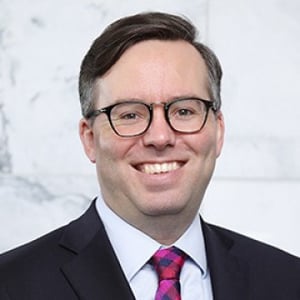
featuring Nathan Chapman




On May 11, 2020, the U.S. Supreme Court heard argument in the consolidated cases Our Lady of Guadalupe School v. Morrissey-Berru and St. James School v. Biel, which involves a dispute over whether the First Amendment's religion clauses prevent civil courts from adjudicating employment-discrimination claims brought by an employee against her religious employer when the employee carried out important religious functions.
In 2012, the case Hosanna-Tabor Evangelical Lutheran Church & Sch. v. EEOC, the Supreme Court, unanimously held that, under the First Amendment’s Religion Clauses, “it is impermissible for the government to contradict a church’s determination of who can act as its ministers.” Accordingly, the Court recognized that there is a “ministerial exception” that precludes the application of employment-discrimination laws to claims concerning the relationship between a religious institution and its ministers. But who qualifies as a minister? The Hosanna-Tabor Court refused “to adopt a rigid formula,” but found that the employee at issue, in that case, was a minister in light of several “considerations”—the formal title given to the employee by the church, the substance reflected in that title, the employee’s own use of that title, and the important religious functions the employee performed.
Eight years later, the question of “who’s a minister?” is back before the Court in Our Lady of Guadalupe v. Morrissey-Berru, and St. James School v. Biel. In each case, teachers at Catholic schools brought discrimination claims, and the Ninth Circuit concluded the ministerial exception did not apply. Now before the Supreme Court, the schools contend that the Ninth Circuit has adopted the “rigid formula” that the Hosanna-Tabor Court eschewed, and they argue that in most cases a “religious functions” test is sufficient.
To discuss the case, we have Nathan Chapman, Associate Professor of Law at the University of Georgia School of Law.
As always, the Federalist Society takes no particular legal or public policy positions. All opinions expressed are those of the speakers.