Atlantic Marine Construction Co. v. United States District Court for the Western District of Texas - Post-Decision SCOTUScast
SCOTUScast 2-3-14 featuring Stephen Sachs
On December 3, 2013, the Supreme Court issued its decision in Atlantic Marine Construction Co. v. United States District Court for the Western District of Texas. This case involves a forum selection clause, which is contractual language specifying the judicial forum for resolution of any litigation that may arise regarding the contract in question. The question before the Supreme Court was twofold: (1) Does the Court's earlier decision in Stewart Organization, Inc. v. Ricoh Corp. require federal courts to enforce forum selection clauses strictly, or are such clauses subject to a discretionary balancing-of-conveniences analysis; and (2) how should courts allocate the burden of proof between parties seeking to enforce or avoid the clause?
The Supreme Court unanimously reversed the judgment of the US Court of Appeals for the Fifth Circuit, which had effectively declined to enforce the forum selection clause. In a decision delivered by Justice Alito, the Court held that a forum-selection clause may be enforced by a motion to transfer venue under 28 U.S.C. § 1404(a). When a defendant files such a motion, the Court declared, the lower courts should transfer the case unless extraordinary circumstances unrelated to the convenience of the parties clearly disfavor a transfer. The burden is on the party acting contrary to the selection clause to show that the public interest overwhelmingly disfavors a transfer. The Court remanded the case for the Fifth Circuit to consider that issue in the context of this case.
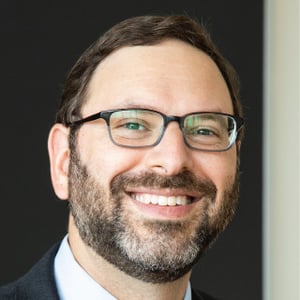
To discuss the case, we have Stephen Sachs, who is an Assistant Professor of Law at Duke University School of Law. It should be noted that Professor Sachs submitted an amicus brief in support of neither party.
[Return to the SCOTUScast menu]

Antonin Scalia Professor of Law, Harvard Law School
Stephen E. Sachs is the Antonin Scalia Professor of Law at Harvard Law School, where he teaches civil procedure, conflict of laws, and seminars on constitutional law. His research focuses on the law and theory of constitutional interpretation, the jurisdiction of state and federal courts, the history of procedure and private law, and the role of the general common law in the U.S. legal system.
Sachs has authored numerous articles, essays, and book chapters. He is an elected member of the American Law Institute, an adviser to the ALI’s project on the Restatement of the Law (Third), Conflict of Laws, a former member of the Judicial Conference’s Advisory Committee on Appellate Rules, and a founding member of the Academic Freedom Alliance.
In 2020, Sachs received the Federalist Society’s Joseph Story Award, which recognizes a young academic who has demonstrated excellence in legal scholarship, a commitment to teaching, a concern for students, and who has made a significant public impact in a manner that advances the rule of law in a free society.
Sachs previously taught at Duke University School of Law and as a visiting professor at the University of Chicago Law School. Before entering academia, he practiced in the Washington, D.C., litigation group of Mayer Brown LLP, and he clerked for Chief Justice John G. Roberts Jr. as well as for Judge Stephen F. Williams of the U.S. Court of Appeals for the D.C. Circuit.
Sachs received his J.D. from Yale Law School, where he was executive editor of the Yale Law Journal and served both as executive editor and articles editor of the Yale Law & Policy Review. A Rhodes Scholar, he graduated from Oxford University with a first-class BA (Hons) degree in philosophy, politics, and economics. He received his A.B. degree summa cum laude in history from Harvard University, earning the Sophia Freund Prize.
Sachs is a licensed attorney in Massachusetts and the District of Columbia, and he is authorized to practice before the D.C. Circuit, the Second Circuit, the Seventh Circuit, and the Supreme Court of the United States.