The Indispensable Man's Indispensable Role in Securing IP Rights
Note from the Editor: The Federalist Society takes no positions on particular legal and public policy matters. Any expressions of opinion are those of the author. We welcome responses to the views presented here. To join the debate, please email us at info@fedsoc.org.
In our recent book, The Constitutional Foundations of Intellectual Property – A Natural Rights Perspective, Seth Cooper, my Free State Foundation colleague, and I recounted the roles played by several key figures of the Founding generation with respect to the inclusion of the Intellectual Property Clause in the Constitution. These key figures included, of course, James Madison, the “Father of the Constitution” and Noah Webster, often called “The Father of Copyright.”
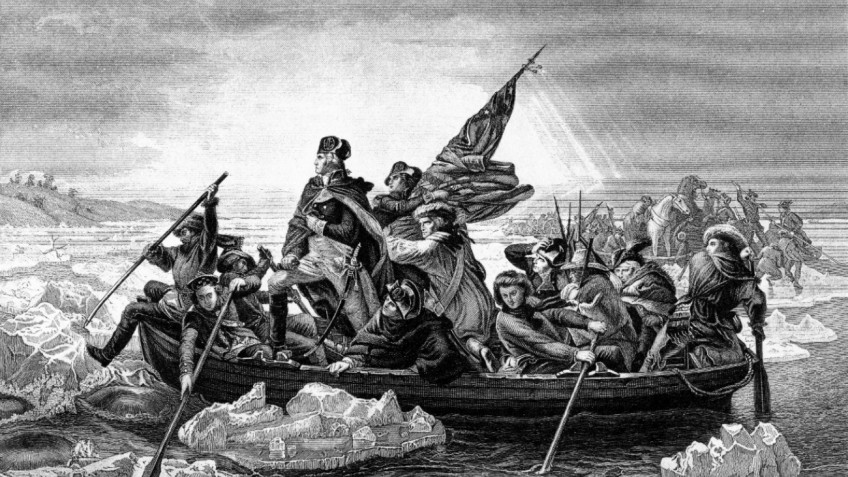
They were not alone, of course. As Seth and I said in the opening of our commentary published in The Tennessean on Presidents’ Day: “George Washington – Revolutionary War hero and first President of the United States – is widely known as the Indispensable Man. Less widely known is Washington's indispensable role regarding intellectual property rights protection. Presidents’ Day is a perfect time to recall Washington's role in securing copyrights and patent rights under the Constitution.”
Our commentary closes this way:
In his first Annual Message to Congress (1790), President Washington called for laws protecting intellectual property rights: "I cannot forbear intimating to you the expediency of giving effectual encouragement, as well to the introduction of new and useful inventions from abroad, as to the exertions of skill and genius in producing them at home." He also called for "the promotion of science and literature." His confidante Madison helped the first Congress enact the Copyright Act of 1790 and the Patent Act of 1790. Washington signed these first federal laws protecting IP.
Intellectual property is especially vital to our economy in the Digital Age. Yet protecting IP is more challenging than ever. George Washington's Birthday is perfect time to recall the indispensable role played by the Indispensable Man in establishing intellectual property rights as an important part of American constitutionalism.
In between, our Tennessean commentary recites other aspects of Washington’s role in the development of our constitutional commitment to securing IP rights.
I hope you’ll take a look at the entire commentary. After all, what better time than Presidents’ Day (or close to it!) to reflect on the indispensable role of the Indispensable Man regarding intellectual property rights protection?

Attorney and Legal Commentator
John Shu is an attorney and legal commentator. His focus areas include constitutional law, securities & corporate law, antitrust law, administrative law, politics, and international affairs. Mr. Shu has lectured and published on a wide variety of issues.
Mr. Shu served President George H.W. Bush and President George W. Bush. He also served Judge Stanley Sporkin, U.S. District Court for the District of Columbia, who was Director of Enforcement at the U.S. Securities & Exchange Commission and General Counsel at the Central Intelligence Agency, and Judge Paul Roney, U.S. Court of Appeals for the Eleventh Circuit, who was Presiding Judge of the Foreign Intelligence Surveillance Court of Review.
Mr. Shu is a member of the National Committee on U.S. - China Relations, the Pacific Council on International Policy, and the Foreign Policy Association.
President, The Free State Foundation
Randolph J. May is Founder and President of The Free State Foundation. The Free State Foundation is an independent, non-profit free market-oriented think tank founded in 2006.
From October 1999-May 2006, May was a Senior Fellow and Director of Communications Policy Studies at The Progress & Freedom Foundation, a Washington, DC-based think tank. Prior to joining PFF, he practiced communications, administrative, and regulatory law as a partner at major national law firms. From 1978 to 1981, May served as Assistant General Counsel and Associate General Counsel at the Federal Communication Commission.
May has held numerous leadership positions in bar associations. He is a past Chair of the American Bar Association’s Section of Administrative Law and Regulatory Practice. He is a Fellow of the National Academy of Public Administration. Mr. May also has served as a Public Member of the Administrative Conference of the United States and currently is a Senior Fellow at ACUS.
Mr. May has published more than two hundred articles and essays on communications, administrative and constitutional law topics. He is author of A Call for a Radical New Communications Policy: Proposals for Free Market Reform, and co-author of #CommActUpdate: A Communications Law Fit for the Digital Age and The Constitutional Foundations of Intellectual Property. Mr. May is editor of two books, Communications Law and Policy in the Digital Age: The Next Five Years and New Directions in Communications Policy. In addition, he is the co-editor of two other books, Net Neutrality or Net Neutering: Should Broadband Internet Services Be Regulated? and Communications Deregulation and FCC Reform. In the past, Mr. May has written regular columns on legal and regulatory affairs for Legal Times and the National Law Journal, leading national legal periodicals.
He received his A.B. from Duke University and his J.D. from Duke Law School, where he serves as a member of the Board of Visitors.