Teleforum Preview: Obama's Foreign Policy
When Will the Damage be Irreversible?
Note from the Editor: The Federalist Society takes no positions on particular legal and public policy matters. Any expressions of opinion are those of the author. We welcome responses to the views presented here. To join the debate, please email us at info@fedsoc.org.
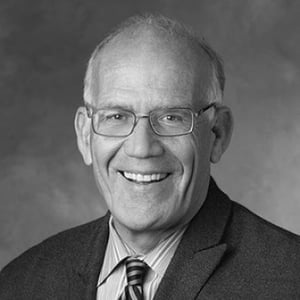
Join the Federalist Society's International and National Security Law Practice Group for a Teleforum conference call with Dr. Victor Davis Hanson, in which he will discuss President Obama’s foreign policy and take questions from the audience. The call is scheduled for Monday, November 16 at 2 p.m. Dr. Hanson is a military historian, prolific columnist, acclaimed political essayist, and the Martin and Illie Anderson Senior Fellow at the Hoover Institution.
Dr. Hanson gives a rundown of his take on the current foreign policy situation below.
* * * * *
The mysteries surrounding the array of foreign policy disasters in Afghanistan, Egypt, Iran, Iraq, Libya, Syria, and Yemen, and our current hostility to Israel and the Gulf states, prompt questions as to whether Obama is incompetent, timid, or a conniving nihilist eager to reduce the Middle East to an anti-American wasteland.
At what point does the present chaos become apocalyptic? Will it be Putin’s new Russian Union? A Chinese Pacific? A Mediterranean of dinghies and rowboats? When flights are cancelled to Dubai? When Iranian rockets and terrorists battle Israeli F-16s? When Munich looks like Mogadishu? When Putin takes Tallinn?
There is a general explanation for the moral equivalence and anemic response from Washington: The Obama “we are the ones we’ve been waiting for” administration is the first postmodern government in American history, and it has adopted almost all the general culture’s flawed relativist assumptions about human nature.
The Westernized world no longer feels threatened in any existential fashion as it often did in the past. Western culture in the 21st century assumes that it has reached a stage of psychological nirvana. This allows Westerners to believe that they no longer are bound by Neanderthal ideas like deterrence, balance of power, military alliances, and the use of force. Their wealth and technology assure them that they are free, then, to enter a brave new world of zero culpability, zero competition, and zero hostility that predicts perpetual tranquility and thus perpetual enjoyment of material bounty.
Who or what might eventually deter the territorial ambitions Iran, China, of Russian President Vladimir Putin? What will be the role of NATO? What will be the fate of former Eastern Bloc’s leaders like Hungary’s Prime Minister Victor Orban who speak out against EU open border practices?

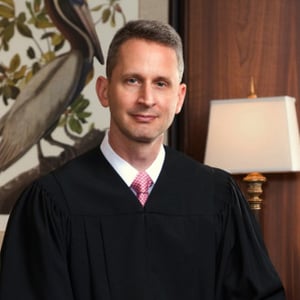
Judge, United States Court of Appeals, Fifth Circuit
Judge Duncan received his B.A. from Louisiana State University in 1994, his J.D. from the Paul M. Hebert Law Center at Louisiana State University in 1997, and his LL.M. from Columbia Law School in 2004.
After graduating from law school, he clerked for Louisiana-based Circuit Judge John Malcolm Duhé Jr. of the United States Court of Appeals for the Fifth Circuit.
From 2008–2012, Duncan served as Appellate Chief for Louisiana's Attorney General's office. From 2012–2014, he served as general counsel of the Becket Fund for Religious Liberty. From 2004-2008, he was an assistant professor of law at the University of Mississippi School of Law.
Before becoming a judge, Duncan practiced at the Washington, D.C. firm of Schaerr Duncan LLP, where he was a founding partner. He was appointed by President Trump to the United States Court of Appeals for the Fifth Circuit on May 1, 2018.
Martin and Illie Anderson Senior Fellow, Hoover Institution
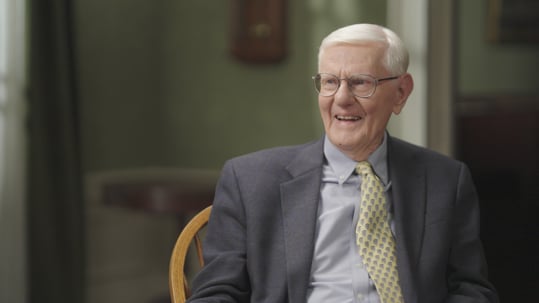
Victor Davis Hanson is the Martin and Illie Anderson Senior Fellow at the Hoover Institution; his focus is classics and military history.
Hanson was a National Endowment for the Humanities fellow at the Center for Advanced Studies in the Behavioral Sciences, Stanford, California (1992–93), a visiting professor of classics at Stanford University (1991–92), the annual Wayne and Marcia Buske Distinguished Visiting Fellow in History at Hillsdale College (2004–), the Visiting Shifron Professor of Military History at the US Naval Academy (2002–3),and the William Simon Visiting Professor of Public Policy at Pepperdine University (2010).
In 1991 he was awarded an American Philological Association Excellence in Teaching Award. He received the Eric Breindel Award for Excellence in Opinion Journalism (2002), presented the Manhattan's Institute's Wriston Lecture (2004), and was awarded the National Humanities Medal (2007) and the Bradley Prize (2008).
Hanson is the author of hundreds of articles, book reviews, and newspaper editorials on Greek, agrarian, and military history and essays on contemporary culture. He has written or edited twenty-four books, the latest of which is The Case for Trump (Basic Books, 2019). His other books include The Second World Wars (Basic Books, 2017); The Savior Generals: How Five Great Commanders Saved Wars That Were Lost - from Ancient Greece to Iraq (Bloomsbury 2013); The End of Sparta (Bloomsbury, 2011); The Father of Us All: War and History, Ancient and Modern (Bloomsbury, 2010); Makers of Ancient Strategy: From the Persian Wars to the Fall of Rome (ed.) (Princeton, 2010); The Other Greeks (California, 1998); The Soul of Battle (Free Press, 1999); Carnage and Culture (Doubleday, 2001); Ripples of Battle (Doubleday, 2003); A War Like No Other (Random House, 2005); The Western Way of War (Alfred Knopf, 1989; 2nd paperback ed., University of California Press, 2000); The Wars of the Ancient Greeks (Cassell, 1999; paperback ed., 2001); and Mexifornia: A State of Becoming (Encounter, 2003), as well as two books on family farming, Fields without Dreams (Free Press, 1995) and The Land Was Everything (Free Press, 1998). Currently, he is a syndicated columnist for Tribune Media Services and a weekly columnist for the National Review Online.
Hanson received a BA in classics at the University of California, Santa Cruz (1975), was a fellow at the American School of Classical Studies, Athens (1977–78), and received his PhD in classics from Stanford University (1980).