Note from the Editor: The Federalist Society takes no positions on particular legal and public policy matters. Any expressions of opinion are those of the author. We welcome responses to the views presented here. To join the debate, please email us at [email protected].
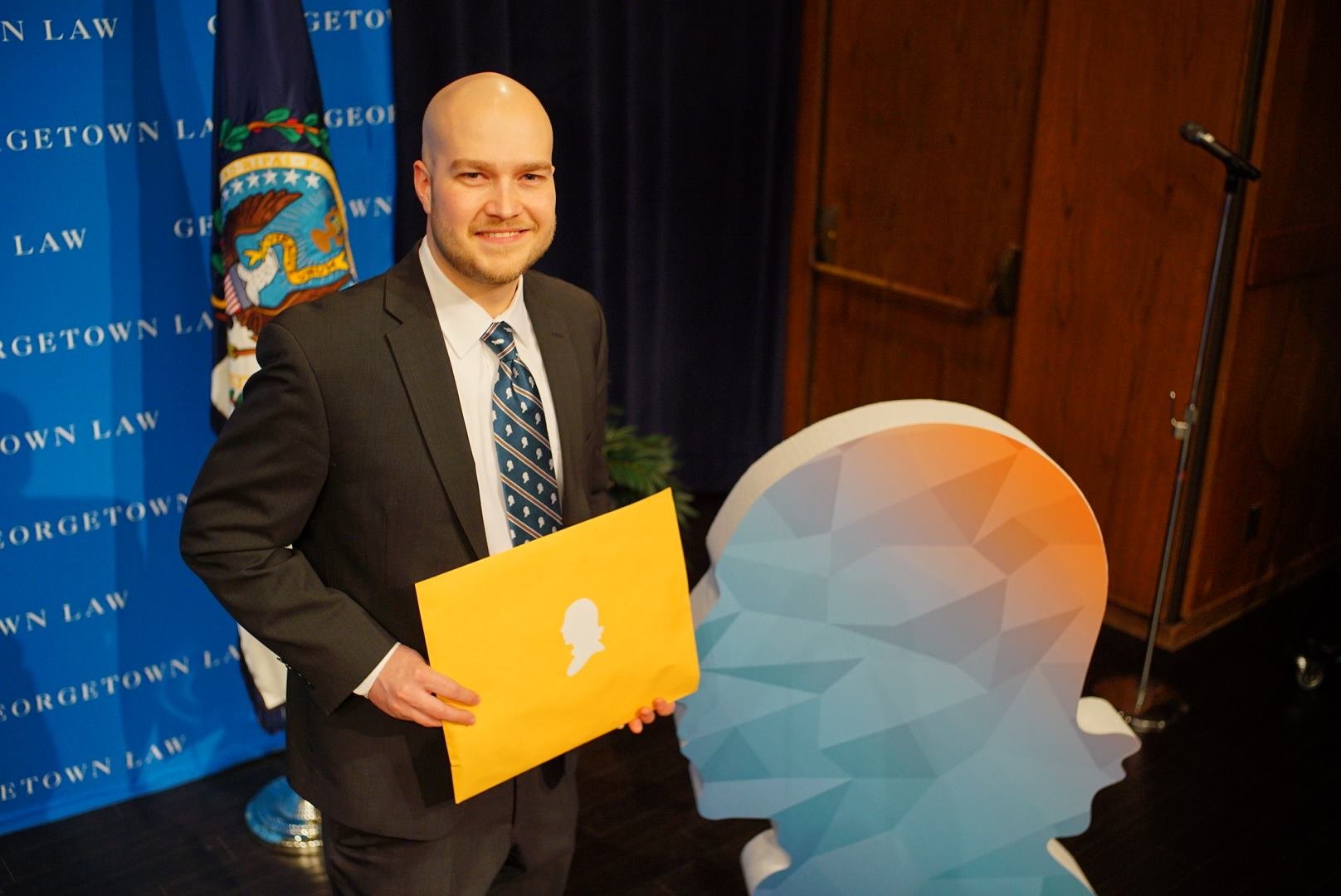
The Federalist Society's Article I Initiative Writing Contest recently sought submissions from across the country with the theme, “Restoring the Constitutional Congress.” Along with my fellow contest Judges, Lillian BeVier and Chris DeMuth, I was happy to review the many interesting papers submitted for our blind review. After careful consideration and discussion, we selected Joel Nolette’s excellent paper titled, “Towards an Administrative Rule of Lenity: Restoring the Constitutional Congress by Reforming Statutory Interpretation,” as the first place winner. In it, he proposes that the Supreme Court adopt a rule of strict construction in all cases, criminal or civil, that arise regarding statutes in which Congress delegates policymaking discretion to an administrative agency. For this new “administrative rule of lenity” he explains:
The Court would use traditional tools of statutory interpretation. If the Court thereby concludes the statute or regulation is ambiguous, then it will construe the provision against the agency. This would replace the Court’s current practice of presuming an agency’s interpretation to be valid unless it is patently wrong. In other words, the Court would flip the presumptions of Chevron and Seminole Rock—if a law or rule is ambiguous, then the “tie” goes to the regulated rather than the regulator.
Joel’s paper and his central thesis are well crafted and worthy of serious consideration; we congratulate him. We also congratulate the other writing contest winners and look forward to more innovative thought and discussion from the Article I Initiative on how the legislative branch may be restored to its rightful place in our constitutional order.

Founding Partner, Boyden Gray & Associates
Ambassador C. Boyden Gray is the founding partner of Boyden Gray & Associates, a law and strategy firm in Washington, D.C., focused on constitutional and regulatory issues.
Mr. Gray worked in the White House for twelve years, first as counsel to the Vice President during the Reagan administration and then as White House Counsel to President George H.W. Bush. In the Reagan administration, he was Counsel to the Presidential Task Force on Regulatory Relief, for which he wrote the original Executive Order 12291 requiring cost-benefit analysis and White House review of regulations (later renumbered as current EO 12866). In the George H.W. Bush Administration, Mr. Gray was in charge of judicial selection and was also instrumental in the enactment of the Clean Air Act Amendments of 1990, the Energy Policy Act of 1992, and a cap-and-trade system for acid rain emissions. In 1993, he received the Presidential Citizens Medal. Under President George W. Bush, Mr. Gray was U.S. Ambassador to the European Union and U.S. Special Envoy to Europe for Eurasian Energy.
Mr. Gray practiced law for 25 years at the law firm of Wilmer, Cutler & Pickering and was chairman of the Administrative Law and Regulatory Practice Section of the American Bar Association from 2000 to 2002. Early in his career, Mr. Gray helped to develop the Business Roundtable and served as its first counsel. He is an adjunct professor at Antonin Scalia Law School and a former adjunct professor at NYU Law School (teaching energy and environmental law). Mr. Gray is on the Board of Directors of the Atlantic Council, the Federalist Society, Reason Foundation, and the Trust for the National Mall.
Mr. Gray earned his A.B. magna cum laude from Harvard, where he was an editor of the Crimson, and his J.D. with high honors from the University of North Carolina at Chapel Hill, where he was editor-in-chief of the Law Review. Mr. Gray served in the United States Marine Corps, and after law school, he clerked for Earl Warren, Chief Justice of the United States Supreme Court.