James Madison, Not Just the “Father of the Constitution”
Note from the Editor: The Federalist Society takes no positions on particular legal and public policy matters. Any expressions of opinion are those of the author. We welcome responses to the views presented here. To join the debate, please email us at [email protected].
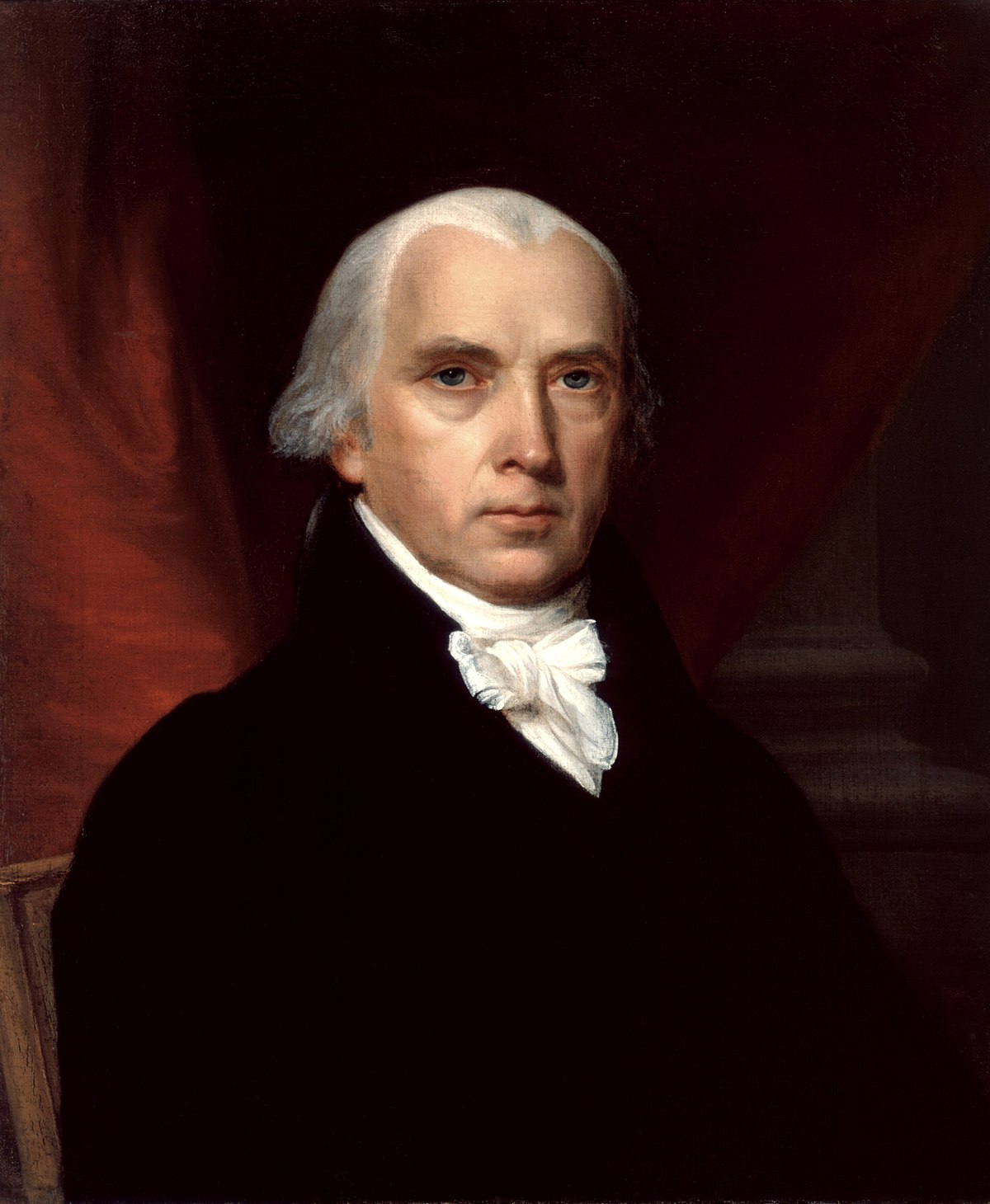
As Federalist Society members, we revere James Madison as the “Father of the Constitution,” because of his key roles in the 1787 Constitutional Convention and the campaign to secure the Constitution’s ratification, including co-authorship of The Federalist papers, and in getting Congress to propose to the states the Bill of Rights. However, what I did not know until recently, when I read Richard Brookhiser’s biography of Madison, entitled simply James Madison (2011), is that Madison was also what Brookhiser calls “the Father of Politics” in the United States. As the book’s jacket points out, Madison “founded the first American first political party,” “pioneered partisan journalism,” “belonged to the first political machine, the Virginia Dynasty,” and “married the first political wife,” Dolley Madison. It is this aspect of Madison’s career on which Brookhiser concentrates, including Madison’s political and personal relationships with other Founding Fathers such as Washington, Hamilton, Jefferson, and John Adams. Not only was the book worth reading because it emphasizes an interesting side of Madison different from that which I expected to find described, but the book is extremely well written, indeed one that at times I found difficult to put down because—not unlike a good historical novel—it made me want to know what Madison did next. I recommend the book highly. And, if you don’t find my recommendation convincing, perhaps you’ll be convinced by the fact that the jacket contains recommendations by such diverse personalities as Akhil Reed Amar and Karl Rove!

Vice President & Legal Director, National Right To Work Legal Defense Foundation
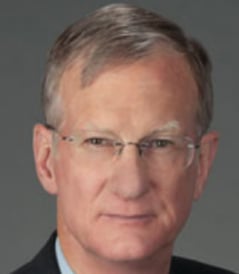
Raymond J. LaJeunesse, Jr., is Vice President and Legal Director of the National Right to Work Legal Defense Foundation, a non-profit legal aid organization. He was the first Staff Attorney employed by the Foundation and has more than forty-five years of experience helping workers in litigation in federal and state courts and administrative agencies over the abuses of compulsory unionism.
Mr. LaJeunesse has argued four cases in the United States Supreme Court. Those cases include Lehnert v. Ferris Faculty Ass’n, 500 U.S. 507 (1991), which limited the purposes for which compulsory union fees collected from public employees may lawfully be spent; Air Line Pilots Ass’n v. Miller, 523 U.S. 866 (1998), which established that unions cannot compel nonmembers to exhaust union-established remedies before going to court to challenge compulsory union fees; and Marquez v. Screen Actors Guild, 525 U.S. 33 (1998), in which the Court recognized that unions must notify employees that they can satisfy the “membership” requirement of “union shop” agreements by just paying fees for union bargaining activities and need not join and pay full dues to keep their jobs. He also was lead attorney in Hohe v. Casey, 956 F.2d 399 (3d Cir. 1992), in which more than $8.3 million in compulsory agency fees was recovered from the American Federation of State, County and Municipal Employees for a class of 57,000 nonmembers.
Mr. LaJeunesse is the author of several published articles about labor law, has testified before Congressional committees several times, and was an Advisor on the Transition Team for Labor- Related Agencies, Office of the President-Elect, in 1980-81 and a legislative aide to a member of the Virginia state legislature. He is a Vice Chairman of the Federalist Society’s Labor and Employment Law Practice Group and has spoken or debated at the Society’s National Lawyers Convention and at many Lawyers and Student Chapters on such topics as Right to Work laws, compulsory unionism arrangements, the misuse of union dues for politics, union organizing tactics (“card check” vs. secret-ballot elections), and the future of the union movement.