ED Texas Patent Docket Facing Headwinds
In re TC Heartland and the Venue Equity Act

In re TC Heartland and the Venue Equity Act
Note from the Editor: The Federalist Society takes no positions on particular legal and public policy matters. Any expressions of opinion are those of the author. We welcome responses to the views presented here. To join the debate, please email us at info@fedsoc.org.
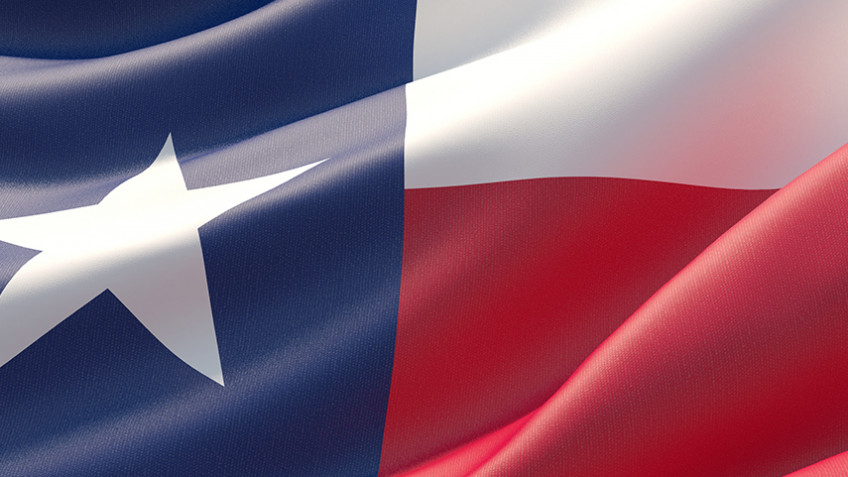
In 2015, patent holders filed 2523 suits in the Eastern District of Texas, according to data compiled by Law 360. That was 45% of all patent cases filed nationwide and 2000 more than the next-busiest forum, the District of Delaware.
On Friday, March 10, the Federal Circuit will hear oral arguments on a Petition for a Writ of Mandamus that could reshape the venue rules for patent litigation. See In re TC Heartland, Case No. 16-105 In summary, the petitioners are asking the court to hold that the patent venue statute, 28 U.S.C. § 1400(b), should not be read in conjunctioni with the general corporate venue statute, 28 U.S.C. § 1391(c), which provides for venue wherever a corporation is subject to personal jurisdiction. Presently, this has meant that a patent holder can sue a corporation wherever it does business - even if it's just one store or only a few sales. If granted, however, the Petition would bring an end to patent suits against defendants based only on having a place of business in the district.
Provisions added to the Innovation Act in June 2015, still pending in the House of Representatives, also would restrict a plaintiff's venue choices.
Finally, Senators Flake and Gardner are about to introduce a simple, stand-alone patent venue reform bill in the Senate. A draft of that bill limits a patent-holder's venue choices to: the defendant's principal place of business, where the defendant has a regular and established physical facility that gives rise to the alleged infringement, where the inventor developed his or her invention, or where a patent holder that is NOT a non-practicing entity has a regular and established physical facility.
While the current venue rules in patent cases seem ripe for some adjustment or "reform," we also should be careful what we wish for. These arguments and proposals would still allow suits to be brought in the state where a defendant is incorporated. For many folks, this could mean simply moving their patent litigation from Texas to Delaware. Ironically, the petitioners in TC Heartland are trying to transfer their case out of Delaware.
See also, Fix Venue - Fix Patent Litigation
http://www.fed-soc.org/blog/detail/fix-venue-fix-patent-litigation
Professor of Law and Public Finance, NSU Florida Shepard Broad College of Law
Tim Canova is a Professor of Law and Public Finance at the NSU Shepard Broad College of Law, with broad experience in law teaching, private practice, and public policy. He teaches Constitutional Law II: First Amendment Law, Corporations, Business Entities, Regulation of Financial Institutions, and a Seminar on Law, Finance, and Markets at Nova. He previously taught at the Chapman University Dale E. Fowler School of Law in Orange, California, where he served as Associate Dean for Academic Affairs and the inaugural Betty Hutton Williams Professor of International Economic Law. He was first granted tenure at the University of New Mexico School of Law and he has taught as a visitor at the University of Arizona and the University of Miami.
Canova's work crosses the disciplines of law, public finance, history, and economics. He has been a leading critic of private central banks, including the Federal Reserve. His work has been published in more than two dozen book chapters and articles in the U.S. and overseas, including in the Oxford University Press, Edward Elgar Publishing, Harvard Law & Policy Review, American Journal of Economics and Sociology, Brooklyn Law Review, Georgetown Journal of Law & Public Policy, and UC Davis Law Review. Canova was an early critic of financial deregulation and the Federal Reserve under Alan Greenspan. In the 1980s, he wrote critically of the federal bailout of Continental Illinois, the nation’s seventh largest commercial bank, and the collapse of the savings & loan industry. In the 1990s, prior to the Asian currency contagion, he argued against the International Monetary Fund’s capital account liberalization program. Throughout the Bush administration, he warned of an impending crisis in the bubble economy. Following the 2008 financial collapse, he lectured and published widely on the causes and consequences of the economic and financial crisis. In 2011, Canova was appointed by Senator Bernie Sanders (I-Vt.) to serve on an Advisory Committee on Federal Reserve Reform with leading economists, including Jeffrey Sachs, Robert Reich, James Galbraith, and Nobel Laureate Joseph Stiglitz.
Canova also writes and advocates in the areas of campaign finance and election reform, a research agenda informed by his 2016 campaign challenging the then chair of the Democratic National Committee for her U.S. House of Representatives seat in a hotly contested election. Canova’s campaign went viral, raising $3.8 million from 209,000 individual donations and setting a record at the time for the highest percentage (76%) of small online donations for any campaign for federal office. The election results were marred by evidence of statistical anomalies, allegations of electronic voting irregularities, and an order by Florida’s 17th Judicial Circuit Court finding that the Broward County Elections Supervisor had illegally destroyed every ballot cast. In 2019, Canova testified to the Florida Advisory Committee of the United States Civil Rights Commission about the systematic electronic disenfranchisement of voters in Florida elections.
Canova received his A.B. degree from Franklin and Marshall College and his J.D. degree, cum laude, from the Georgetown University Law Center. He has a master’s diploma in graduate legal studies from the University of Stockholm where he was a Swedish Institute Visiting Scholar. He previously served as a legislative assistant to the late U.S. Senator Paul E. Tsongas and practiced law in New York City with Gibson, Dunn & Crutcher and Mudge Rose Guthrie Alexander & Ferdon.
Featured Article entitled “Central Bank Independence as Agency Capture: A Review of the Empirical Literature, Banking & Financial Services Policy Report 30:11 (Nov. 2011).
New York University School of Law

Partner, Jackson Walker
Arthur offers clients a winning combination of trial and appellate experience gained as a federal prosecutor and more than 20 years of experience in handling patent, copyright, trademark, and trade secrets litigation.
While his practice concentrates on intellectual property litigation, Arthur also has significant experience in internal investigations, False Claims Act suits, partnership and breach of fiduciary duty, breach of contract, and employment litigation. Arthur also has represented clients testifying before Congressional committees.
Arthur writes and speaks frequently on topics ranging from the case against Boston bomber Dzhokhar Tsarnaev to patent litigation reform.
Prior to joining Michael Best, Arthur served as an Assistant United States Attorney in the Southern District of New York, where he was the lead prosecutor in criminal trials, including federal intellectual property crimes. He also argued numerous appeals.