Administrative agencies can't just "mak[e] it up as [they] go along."
Note from the Editor: The Federalist Society takes no positions on particular legal and public policy matters. Any expressions of opinion are those of the author. We welcome responses to the views presented here. To join the debate, please email us at [email protected].
In late May, Judge James Boasberg of the U.S. Court for the District of Columbia held that the U.S. Department of Agriculture violated the Administrative Procedures Act (APA) because it failed to explain why it ordered a small lumber company pay a tax to fund a private industry marketing program (known as a “check-off order.”) The court concluded that USDA’s determination was arbitrary and capricious because the agency did not show a “rational connection between the facts found and the choice made.”
In Resolute Forest Products v. USDA, the lumber company asked USDA to explain why small companies (normally exempt from such orders) were included in the tax demand. Amidst a housing crisis, the softwood-lumber trade association sought a checkoff order that would require manufacturers who produce or import more than 15 million board feet of lumber per year to pay a mandatory assessment. The marketing order programs are controversial because they are compulsory programs administered by government essentially benefitting private parties.
Despite being provided two opportunities to show its work, USDA could not produce evidence justifying why it chose 15 million as a cutoff point. According to Judge Boasberg, “the little data [USDA] presented in its rulemaking notices was patently misrepresentative, and after two remands it has not provided a more reliable source.” Indeed, USDA contradicted itself through the rulemaking process, either suggesting that “the agency is either uncertain about why it made its decision, or else is simply making it up as it goes along.” Strong words from a judge.
The decision follows a laudable and growing reluctance of judges to extend deference where it isn’t due, and to hold agencies accountable for their decisions. The U.S. Supreme Court recently put more teeth in the APA in two cases argued by Pacific Legal Foundation, Sackett v. EPA and Army Corp of Engineers v. Hawkes, in which the Court made it easier for aggrieved plaintiffs to get judicial review of dubious agency decisions. And in 2015, the Supreme Court held that another type of marketing order—arising out of the raisin industry—effected a taking of private property without compensation. Judge Boasberg has previously taken another federal agency—the IRS—to task for violating the APA in Loving v. IRS. In that case he found that the IRS had acted beyond its statutory authority in attempting to license tax return preparers. The decision was affirmed by the D.C. Circuit in 2013.
Requiring agencies to provide evidence to justify their decisions, insisting that they act within the bounds of their statutory authority, and ensuring that suffering plaintiffs have access to meaningful judicial review are hallmarks of good judging. Those of us concerned to hold administrative agencies accountable to the law can only hope the trend continues.

Vice President for Litigation & Strategy, Pacific Legal Foundation
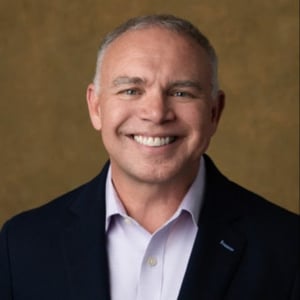
Larry Salzman leads PLF’s litigation program and is responsible for shaping the organization’s overall legal strategy to advance the principles of individual rights and limited government. He oversees the Supreme Court docket at PLF and helps its nearly 75 litigating attorneys and support staff bring cases to secure enduring legal change for liberty.
Larry has been a public interest litigator for nearly two decades, focusing on property rights and economic freedom. Recent highlights include Sheetz v. County of El Dorado and Tyler v. Hennepin County at the Supreme Court. He has been with PLF for more than a decade. Previously, he was a judicial clerk at the U.S. Court of Federal Claims and a litigator at the Institute for Justice.
Between 2007 and 2011, Larry took a hiatus from litigation to work as CEO of an e-commerce company he had co-founded and built while attending law school at night. He loves his current role at PLF because it provides the rare opportunity to continue expressing dual passions for litigation and entrepreneurial management.
Larry’s commitment to liberty crystallized during college by studying philosophy and free-market economics. He experienced the importance of property rights in a very personal way in the 1990s when his family’s auto-repair business was taken by eminent domain and turned over by the city to a private developer on the promise that a big-box store would generate more tax revenue.
He graduated from the University of San Diego School of Law (J.D. 2002), where he was assistant editor of the San Diego Law Review. Larry was inspired in law school to pursue a career in public interest litigation while working as a research assistant to the late Bernard Siegan, a pioneer in the movement to revive constitutional protection for property rights and economic liberty. He also serves on the Board of Directors for the Ayn Rand Institute. When not working, he enjoys travel, an annual pass to Disneyland with family, and learning and growing alongside his daughter.
Larry is a member of the bar only in the state of California.
Associate, Payne & Fears
Ray represents clients in a wide range of employment and labor law matters in state and federal courts, and before administrative agencies. Ray also counsels employers on various labor and employment issues—including complying with federal and state laws.
Ray earned his J.D. from the University of Southern California, Gould School of Law in 2015 and B.A. in Political Science from U.C. Santa Barbara in 2012. In law school, Ray was a Senior Editor on the Southern California Review of Law and Social Justice, co-President of USC’s Federalist Society student chapter, and participated in the Iraqi Refugee Assistance Project. Ray served as a judicial law clerk at the United States District Court: Central District of California.
Ray has been a die-hard Lakers, Dodgers, and Rams fan his entire life. In 2015, Ray parlayed his esoteric sports knowledge into fulfilling his childhood dream of becoming a two-time Sports Jeopardy! Champion (even though the show did not exist when Ray was a lad).