Facts of the Case
In 1942, Congress enacted the Emergency Price Control Act to control commodity prices and prevent inflation during wartime. This case is the consolidation of two cases in which the defendants were tried and convicted in district court on several counts of selling wholesale cuts of beef at prices above the maximum prices set by the Revised Maximum Price Regulation under the Act. During the trial, the district court overruled all motions regarding the validity of the Regulation and the Act, including questions of whether the Act deprived the defendants of their Fifth Amendment rights to due process. The U.S. Court of Appeals for the First Circuit affirmed the convictions.
Questions
(1) Does the Emergency Price Act of 1942 represent an unconstitutional delegation of power from the legislative branch?
(2) Do the regulations provide adequate opportunity for review to meet the demands of due process?
Conclusions
-
No, yes. Chief Justice Harlan Fiske Stone delivered the opinion of the 6-3 majority. The Supreme Court held that Congress sufficiently regulated the powers of the Administrator of the Act in such a way as to be a constitutional delegation of legislative power to obtain a particular objective. The Constitution grants Congress the necessary flexibility to perform its legislative function in a variety of ways. Because the regulations and standards are specific enough to ensure that the enforcement of the Act is conforming to the congressional intent behind it, it is constitutional. The Court also held that, because the Act establishes a procedure for redress for those who feel they have been wronged by the Act, it does not violate due process.
Justice Owen J. Roberts wrote a dissent in which he argued that the Act unconstitutionally delegates legislative power to the Administrator of the Act. Because the standards set by the Act leave many decisions up to the judgment of the Administrator, they cannot be sufficiently overseen by Congress. He also argued that the standard for review of the regulations relies too heavily on the Administrator to be impartial, as it is the Administrator who sets the regulations in the first place. In his dissent, Justice Wiley B. Rutledge argued that the way in which Congress conferred jurisdiction over the Act onto state and federal courts while creating a separate system for the redress of wrongs was unconstitutional. He wrote that Congress cannot require a court to enforce regulations without allowing the court to consider their constitutional validity. Such a piecemeal approach to due process denies the defendants their Fifth and Sixth Amendment rights. Justice Frank Murphy joined in the dissenting opinion.
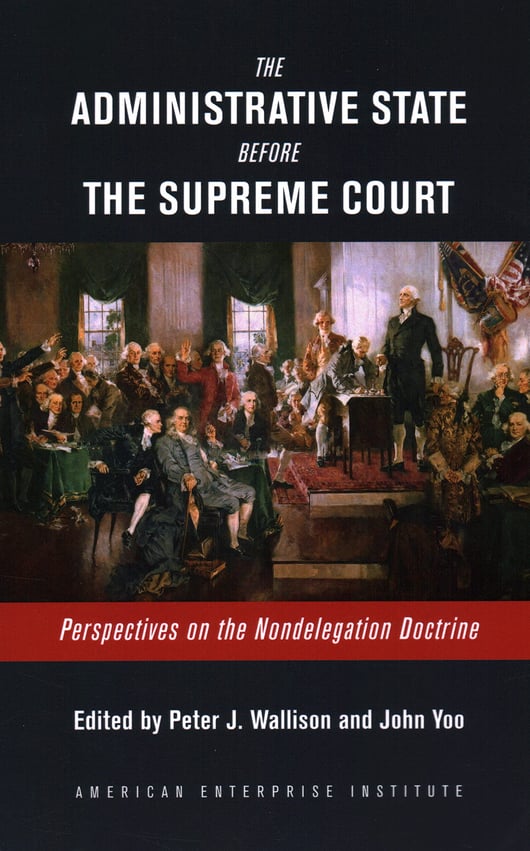
Revitalizing the Nondelegation Doctrine
Federalist Society Review, Volume 23
A Review of The Administrative State Before the Supreme Court: Perspectives on the Nondelegation Doctrine (Peter...
As Far As Reasonably Practicable: Reimagining the Role of Congress in Agency Rulemaking
Federalist Society Review, Volume 21
Note from the Editor: The Federalist Society takes no positions on particular legal and public...
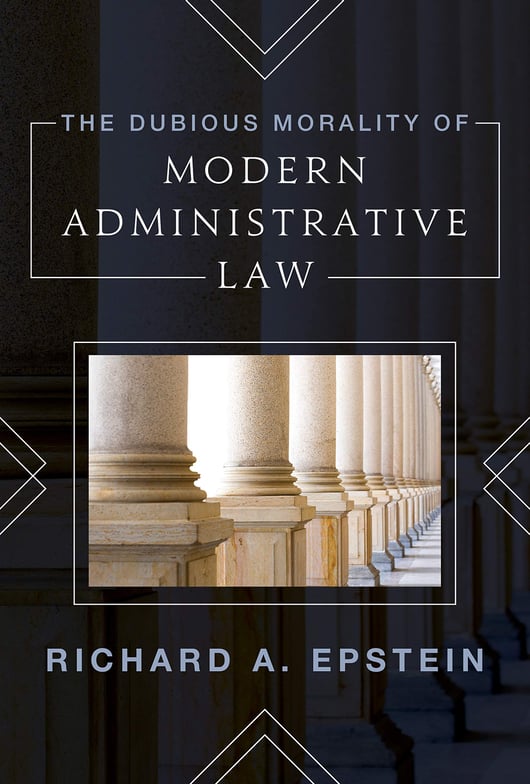
Is Our Modern Administrative State Unmoored from the Morality of Law?
Federalist Society Review, Volume 21
A review of The Dubious Morality of Modern Administrative Law, by Richard A. Epstein (Manhattan Institute...
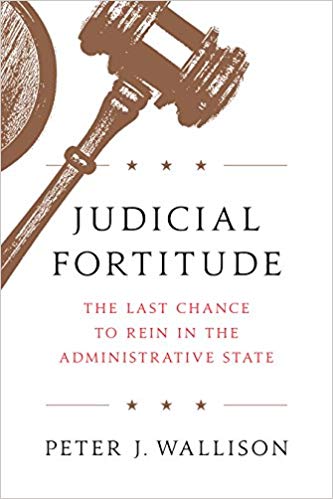
Can and Should the Federal Judiciary Rein In Our Expansive Administrative State?
Federalist Society Review, Volume 20
Note from the Editor: The Federalist Society takes no positions on particular legal and public...
Lions Under the Bureaucracy: Defending Judicial Deference to the Administrative State
Federalist Society Review, Volume 18
A Review of: Law’s Abnegation: From Law’s Empire to the Administrative State, by Adrian Vermeule ...

Domestic Convictions for Foreign Violations
Engage Volume 17, Issue 1
Note from the Editor: This article discusses the Lacey Act and argues that its incorporation of...