Facts of the Case
Since 1997, Microsoft has operated a web-based email service available for public use without charge (most recently called Outlook.com). Much of the data associated with this service is saved on datacenters operated by Microsoft and its subsidiaries, which are located throughout the world.
In 2013, Microsoft was served with a search and seizure warrant for the data pertaining to a particular user. That user's data was stored solely in Microsoft's datacenter in Dublin, Ireland. Microsoft disclosed all other responsive information requested in the warrant but moved the magistrate judge to quash the warrant with respect to the user data stored in Dublin. The magistrate judge denied Microsoft's motion to quash, finding that the Stored Communications Act (SCA) authorized the district court to issue a warrant for "information that is stored on servers abroad." The magistrate judge held that the place where the government would review the content (the United States), not the place where the content was stored (Ireland) was the relevant place of seizure.
Microsoft appealed the magistrate judge's decision, and the district court affirmed after reviewing de novo. The district court also held Microsoft in civil contempt for refusing to comply fully with the warrant. The Second Circuit held that the SCA does not authorize courts to issue and enforce against US-based service providers warrants for the seizure of customer email content that is stored exclusively on foreign servers and thus reversed the district court's denial of the motion to quash, vacated the finding of contempt, and remanded the case to the district court.
Questions
Is an email provider who has been served with a warrant required, under 18 U.S.C. § 2703, to provide the federal government with emails, even when the email records are stored exclusively outside the United States?
Conclusions
-
While this case was pending, Congress passed and the President signed into law the Clarifying Lawful Overseas Use of Data Act, which amended the Stored Communications Act, 18 U.S.C. § 2701, et seq., to require email providers to disclose emails in its "possession, custody, or control," even if the emails are stored outside the United States. The government then procured and served Microsoft with a new warrant pursuant to the amended law, and the parties agreed that the new warrant had replaced the original warrant at issue in this case. The Court explained that because there was no longer any live dispute between the parties, the case had become moot. The Court vacated the ruling on review and remanded the case to the Second Circuit with instructions to vacate the district court's contempt finding and its denial of Microsoft's motion to quash, and to direct the district court to dismiss the case as moot.

An Interview with Makan Delrahim, Former Assistant Attorney General for the Department of Justice Antitrust Division
Svetlana S. Gans, a member of the Federalist Society’s Corporations, Securities, & Antitrust Practice Group...

Why the DOJ Has a Strong Case Against Google
That's Debatable is a new blog initiative bringing together legal and policy experts with differing...

Antitrust and High-tech: Regulatory Risks for Innovation and Competition
Engage Volume 14, Issue 1 February 2013
I. Target Selection in an Innovation Economy A. Regulatory Power, Regulations’ Problems, and Antitrust While...
U.S. v. Microsoft, 10 Years Later: Who Won, Who Lost, and Did It Matter?
San Francisco Lawyers Chapter
Ten years ago, Microsoft dominated the personal computer market with its ever-expanding operating system. Today,...
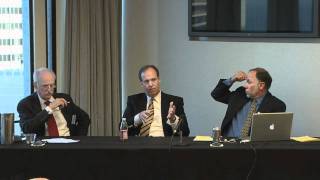
U.S. v. Microsoft, 10 Years Later: Who Won, Who Lost, and Did It Matter?
San Francisco Lawyers Chapter
Ten years ago, Microsoft dominated the personal computer market with its ever-expanding operating system. Today,...

CLOUD Act
Teleforum
Courthouse Steps: U.S. v. Microsoft
Corporations, Securities, and Antitrust Practice Group Teleforum
Teleforum
U.S. v. Microsoft, 10 Years Later: Who Won, Who Lost, and Did It Matter?
San Francisco Lawyers Chapter
Bingham McCutchen3 Embarcadero Center
San Francisco, CA 94111