Facts of the Case
Under the Harmonized Tariff Schedule of the United States, the United States Customs Service is authorized to classify and fix the rate of duty on imports under rules and regulations issued by the Secretary of the Treasury. Under the Secretary's regulations, any port-of-entry Customs office and the Customs Headquarters Office may issue "ruling letters" setting tariff classifications for particular imports. The Mead Corporation's imported "day planners," were classified as duty-free until the Customs Headquarters issued a ruling letter classifying them as bound diaries subject to tariff. Subsequently, Mead filed suit in the Court of International Trade. The court granted the Government summary judgment. In reversing, the Court of Appeals found that ruling letters should not be treated like Customs regulations, which receive the highest level of deference, because they are not preceded by notice and comment as under the Administrative Procedure Act, do not carry the force of law, and are not intended to clarify importers's rights and obligations beyond the specific case. The court gave no deference at all to the ruling letter at issue.
Questions
Does a tariff classification ruling by the United States Customs Service deserve judicial deference?
Conclusions
-
No. In an 8-1 opinion delivered by Justice David H. Souter, the Court held that the "administrative implementation of a particular statutory provision qualifies for [the greatest level of deference accorded under Chevron U.S.A. Inc. v. Natural Resources Defense Council] when it appears that Congress delegated authority to the agency generally to make rules carrying the force of law, and that the agency interpretation claiming deference was promulgated in the exercise of that authority." Justice Souter wrote that "a tariff classification has no claim to judicial deference under Chevron, there being no indication that Congress intended such a ruling to carry the force of law, but we hold that under Skidmore v. Swift & Co., the ruling is eligible to claim respect according to its persuasiveness."

Chevron—Complicated, Start to Finish
Federalist Society Review, Volume 23
A Review of Thomas W. Merrill, The Chevron Doctrine: Its Rise and Fall, and the...

In the Shadow of Skidmore and Seminole Rock?: Chevron and Auer Deference and Their Conceits
When an agency interprets a statute it administers, a court will defer to the agency’s...

Whistling in Chevronland: Why Department of Labor Interpretations of the Sarbanes-Oxley Act Whistleblower Provisions Do Not Deserve Judicial Deference
Federalist Society Review, Volume 20
Note from the Editor: The Federalist Society takes no positions on particular legal and public...

A Shy Frog, the Administrative State, and Judicial Review of Agency Decision-Making: A Preview of Weyerhaeuser v. United States Fish & Wildlife Service
Federalist Society Review, Volume 19
Note from the Editor: This article previews one of the first cases of the Supreme...
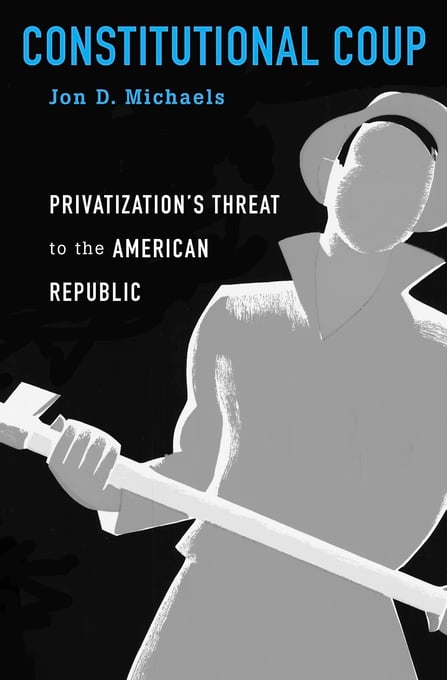
Privatization: Boon to Efficiency or Slow Motion Revolution?
Federalist Society Review, Volume 19
A review of: Constitutional Coup: Privatization’s Threat to the American Republic, by Jon D. Michaels...

Gloucester County School Board v. G.G.: Judicial Overdeference Is Still a Massive Problem
Federalist Society Review, Volume 18
Note from the Editor: This article discusses Auer deference, a central issue in Gloucester County...
Goodbye Tax Exceptionalism
Engage Volume 12, Issue 3, November 2011
In the past few decades, the practices and doctrines governing the interpretation and administration of...