Facts of the Case
In the 1933 Agricultural Adjustment Act, Congress implemented a processing tax on agricultural commodities, from which funds would be redistributed to farmers who promised to reduce their acreage. The Act intended to solve the crisis in agricultural commodity prices which was causing many farmers to go under. Authority to determine which crops would be affected was granted to the Secretary of Agriculture. He decided that one of the crops should be cotton, and Butler received a tax claim as a receivers of the Hoosal Mills Corp., a cotton processor.
Questions
Did Congress exceed its constitutional taxing and spending powers with the Act?
Conclusions
-
In an opinion written by Justice Roberts, the majority declared the Act unconstitutional because it attempted to regulate and control agricultural production, an arena reserved to the states. Congress’ Spending Power (Article I, Section 8) is restricted to situations in which it is being used for the general welfare of the people. Agricultural production historically lies beyond the authority of the federal government to regulate. Although Congress does have the power to tax and appropriate funds, in this case those activities were "but means to an unconstitutional end.” That is, Congress was using the spending power as an enforcement mechanism to control activity that was completely within the authority of the states. Thus, the Act violated the Constitution.
Justice Stone wrote a dissenting opinion and was joined by Justices Brandeis and Cardozo.
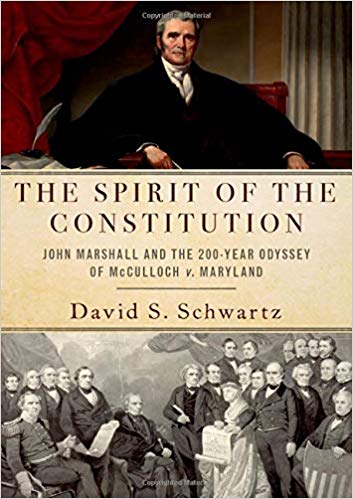
The Mythical McCulloch
Federalist Society Review, Volume 21
A Review of The Spirit of the Constitution: John Marshall and the 200-Year Odyssey of...
More News on Powers Reserved Exclusively to the States
Federalist Society Review, Volume 20
Note from the Editor: The Federalist Society takes no positions on particular legal and public...
The Founders Interpret the Constitution: The Division of Federal and State Powers
Federalist Society Review, Volume 19
Note from the Editor: This article surveys ratification-era statements by defenders of the proposed Constitution...