Facts of the Case
A Nebraska law prohibited any "partial birth abortion" unless that procedure was necessary to save the mother's life. It defined "partial birth abortion" as a procedure in which the doctor "partially delivers vaginally a living unborn child before killing the... child," and defined the latter phrase to mean "intentionally delivering into the vagina a living unborn child, or a substantial portion thereof, for the purpose of performing a procedure that the [abortionist] knows will kill the... child and does kill the... child." Violation of the law is a felony, and it provides for the automatic revocation of a convicted doctor's state license to practice medicine. Leroy Carhart, a Nebraska physician who performs abortions in a clinical setting, brought suit seeking a declaration that the statute violates the U.S. Constitution, claiming the law was unconstitutionally vague and placed an undue burden on himself and female patients seeking abortions. The District Court held the statute unconstitutional. The Court of Appeals affirmed.
Questions
Does the Nebraska statute, which makes the performance of a "partial birth abortions" a crime, violate the liberty protected by due process of the Fourteenth Amendment in the U.S. Constitution?
Conclusions
-
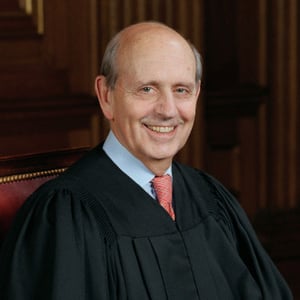
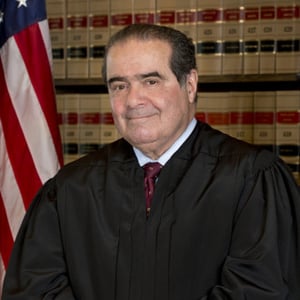
Yes. In a complicated 5-4 decision delivered by Justice Stephen G. Breyer, the Court held that "Nebraska's statute criminalizing the performance of "partial birth abortion[s]" violates the U.S. Constitution, as interpreted in Casey and Roe." The sharply divided Court struck down the statute because it placed an undue burden on a woman's right to have an abortion and did not allow for exception in cases of threatened health. "All those who perform abortion procedures using that method must fear prosecution, conviction, and imprisonment," that results in "an undue burden upon a woman's right to make an abortion decision," wrote Justice Breyer for the Court. Justice Antonin Scalia's dissent concluded that "[t]he notion that the Constitution of the United States... prohibits the States from simply banning this visibly brutal means of eliminating our half-born posterity is quite simply absurd."

A Seat at the Sitting - December 2021
The December Docket in 90 Minutes or Less
Join us for the third episode of the Federalist Society's Supreme Court Show: A Seat at...
Departmentalism: What is the Executive Role in Interpreting laws?
2021 Ohio Lawyers Chapters Conference
On May 7, 2021, the Federalist Society's Ohio lawyers chapters hosted the 2021 Ohio Chapters...
Courthouse Steps Decision Teleforum: June Medical Services LLC v. Russo
On June 29, 2020, the Supreme Court issued its first major abortion decision on the...
Supreme Court Concludes 2015 Term - Podcast
Practice Groups Podcast
On June 27, 2016, the United States Supreme Court concluded its October 2015 term by...
Book Review: The Right to Try
Engage, Volume 17, Issue 1
Note from the Editor: This book review discusses the controversial concept of the constitutional “right...
Panel 3 - Originalism, Precedent and Judicial Restraint
2010 National Student Symposium
We often hear much about the perils of “judicial activism” and how a judge’s proper...
The Unbearable Wrongness of Roe v. Wade
Fordham Student Chapter
The following audio and video were recorded on March 5, 2009. This event was co-sponsored with the Catholic...

Partial-Birth Abortion Ban Act
Online Debate
On April 18, 2007, the Supreme Court upheld the constitutionality of the Partial-Birth Abortion Ban...
SCOTUScast 4-20-07 featuring John Eastman and Erwin Chemerinsky
Gonzales v. Carhart et al. and Gonzales v. Planned Parenthood Federation of America, Inc., et al.
On Wednesday, April 18, 2007, the United States Supreme Court issued its decision in a...
A Conversation on the Constitution with Supreme Court Justices Stephen Breyer and Antonin Scalia
A Conversation on the Constitution: Perspectives from Active Liberty and A Matter of Interpretation ...